

Global Casein and Caseinate Market Size and Share Analysis
The casein and caseinate market are estimated to be valued at USD 3.30 Bn in 2026 and is expected to reach USD 4.86 Bn by 2033, exhibiting a compound annual growth rate (CAGR) of 5.7% from 2026 to 2033.
Key Takeaways
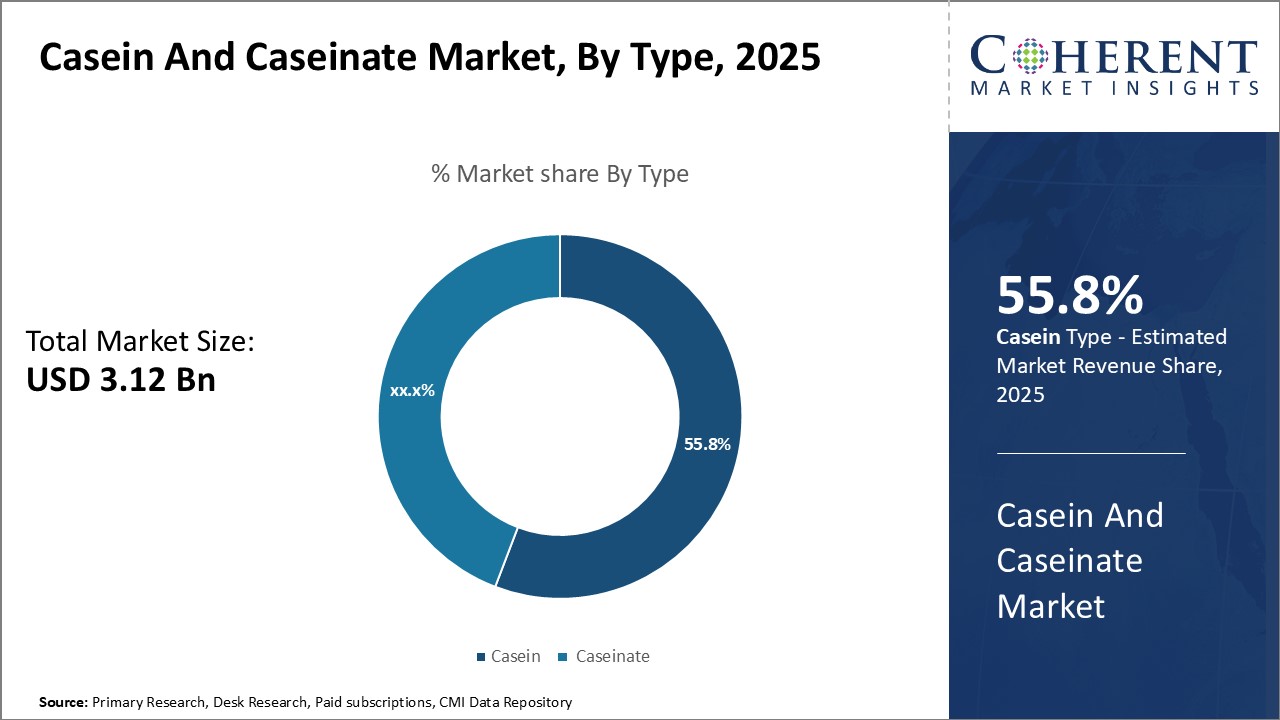
- Based on type, the Casein Segment is expected to contribute 56.8% share of the market in 2026. This is owing to its desirable functional properties.
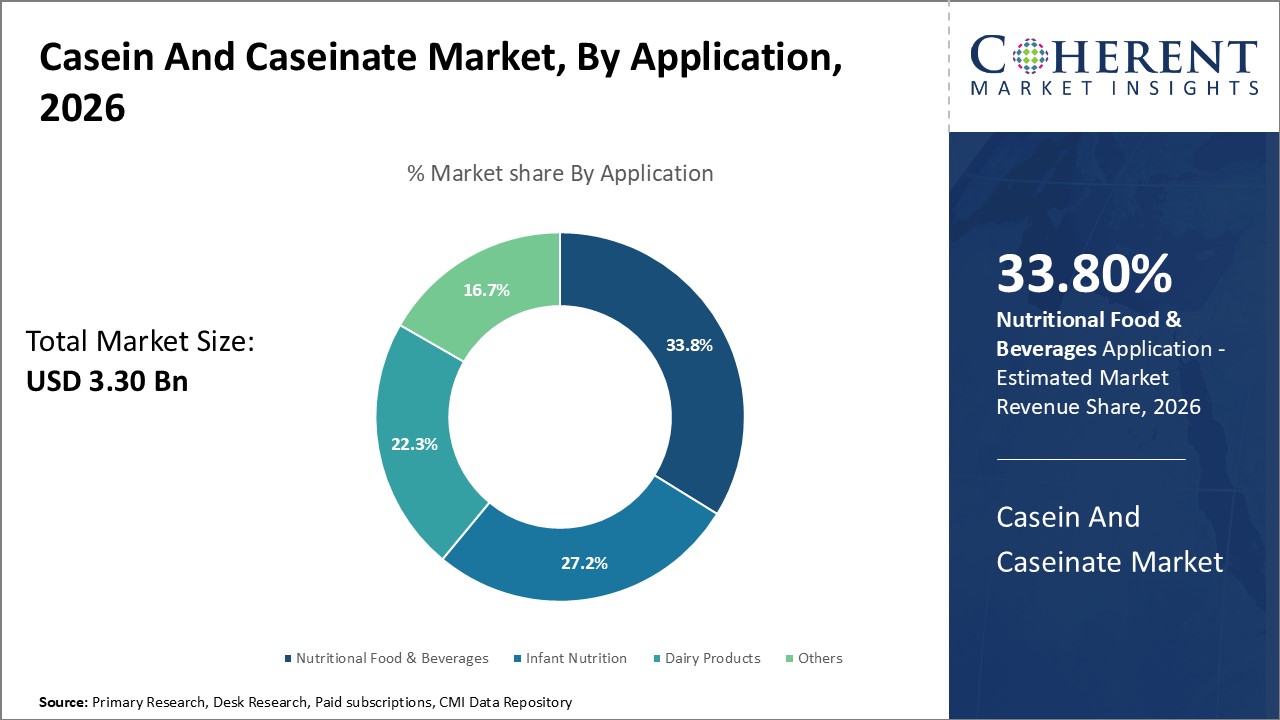
- Based on application, the nutritional food & beverages segment is expected to contribute 33.8% share to the casein and caseinate market in 2026. This is owing to the rising health and wellness trend among consumers.
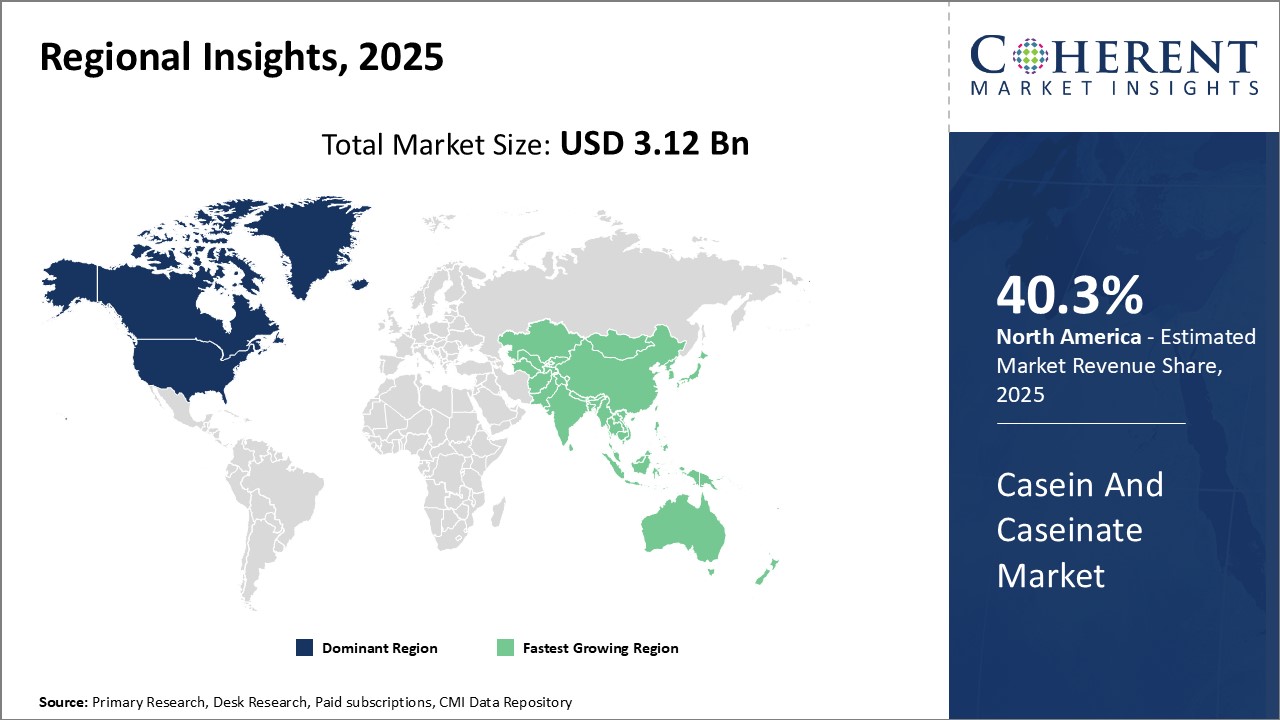
- North America is expected to account for the greatest revenue share, with 40.3% in 2026.
Market Overview
The global casein and caseinate market are facing a major shift, prompted by increasing demand for protein-rich, functional, and clean-label ingredients in food, beverage, pharmaceutical, and nutrition industries. Slow-digesting milk protein casein and its derivatives—sodium and calcium caseinates—are utilized extensively due to their brilliant emulsifying, binding, and nutritional attributes. Increasing health consciousness, larger sports nutrition markets, and greater usage in infant formulas and clinical nutrition are the principal growth drivers.
In 2024, the industry witnessed more innovation where players such as Arla Foods Ingredients and Friesland Campina diversified their premium protein product range, which included micellar casein isolates and organic caseinates.
Current Events and Its Impact on the Casein and Caseinate Market
Current Events | Description and its impact |
Precision Fermentation Vegan Casein |
|
Technological Developments in Casein Manufacture |
|
Vegan and Natural Products Demand in the Casein and Caseinate Market
Growing demand for vegan and natural products all over the world is impacting the casein and caseinate market. As more people are focusing on health, sustainability, and ethical aspects, there is a strong trend towards minimally processed and plant-based options.
Vegan Casein Alternatives
Growing popularity of vegan food and plant-based eating has created a demand for vegan casein alternatives. Players such as Fooditive and Those Vegan Cowboys are leading the way in plant-based casein manufacturing using precision fermentation and other novel techniques. These vegan casein ingredients replicate the functional characteristics of conventional dairy casein, including meltability and stretchability, in non-dairy cheese and other plant-based foods. This innovation appeals to the increasing consumer base that demands dairy-free foods without sacrificing taste and texture.
Natural Casein and Caseinate Products
Concurrently, there is a persistent demand for natural, low-process casein and caseinate ingredients. Growing consumer awareness of health and wellness is prompting the move toward clean-label products. Slow digestion and sustained release of amino acids are characteristics associated with casein and caseinate, which are preferred in sports nutrition, meal replacement, and protein supplements.
In addition, the market is seeing an increase in demand for clean-label products, which is adding to the use of casein and caseinates as natural, low-processing status ingredients. The applications of these proteins to deliver functional benefits, including emulsification and texture contribution, also extend their uses in a broad food and beverage portfolio.
- Current Industry Events of 2026
- Market Size Estimation
- Regional Breakdown
- Competitive Landscape
- Customer Intelligence
- Segmental Analysis
- Pricing Analysis
- Key Market Drivers, Challenges & Future Trends
- Customized Insights Section
Segmentation Insights
Casein And Caseinate Market Insights, By Type
In terms of type, the casein segment is expected to contribute 56.8% share of the market in 2026, owing to its desirable functional properties. Casein possesses great emulsifying and film forming abilities, making it well-suited for a variety of processed food, cosmetic and industrial applications.
The high protein content of casein provides nourishment, whilst its ability to blend with oil and water allows for formulations of creamy textures and shelf-stable products. As a result, food manufacturers extensively use casein in dairy products like cheese, cream, and yogurt to achieve desired mouthfeel and visual appeal. Casein's superior moisture retention also helps extend product shelf lives without the need for excessive preservatives.
Casein And Caseinate Market Insights, By Application
In terms of application, the nutritional food & beverages segment is expected to contribute 33.8% share to the casein and caseinate market in 2026 owing to the rising health and wellness trend among consumers.
Younger populations in particular are displaying stronger preferences for protein-rich diets and on-the-go snack options fortified with casein. Its high biological value and ability to provide sustained energy release throughout the day have made casein a popular ingredient for muscle-gain supplements, protein bars, and meal replacement shakes. Caseinates also act as crucial protein carriers helping the body absorb other important vitamins and minerals present in fortified foods.
Regional Insights
North America Casein and Caseinate Market Analysis and Trends
North America is expected to account for the greatest revenue share, with 40.3% in 2026. In North America, the dominance in the casein and caseinate market can be attributed to strong dairy consumption, a well-established food processing industry, and supportive agricultural policies. Major producers in the region benefit from proximity to key end-use markets and invest significantly in R&D and product innovation.
Asia Pacific Casein and Caseinate Market Analysis and Trends
Asia Pacific exhibits the fastest growth, driven by rising income levels, changing dietary patterns, and increasing adoption of Western food product. Several international players have established production bases in China, India and Southeast Asia to capitalize on the region's growth potential.
Casein and Caseinate Market Dominating Countries
United States Casein and Caseinate Market Analysis and Trends
The U.S. is still one of the biggest consumers of casein and caseinates because of its high demand for nutritional supplements, sports nutrition, and functional foods. Strong domestic demand is fueled by a mature dairy industry and a high health-aware population. Developments in high-protein snacks and clean-label options enhance market growth.
Germany Casein and Caseinate Market Analysis and Trends
Germany is the leading market player in Europe's casein market, driven by a strong dairy processing industry and increasing use in pharmaceutical and food sectors. Germany's focus on high-value dairy exports and bio-based food ingredients positions it as a hub for caseinate manufacturing and innovation in the EU.
Market Concentration and Competitive Landscape
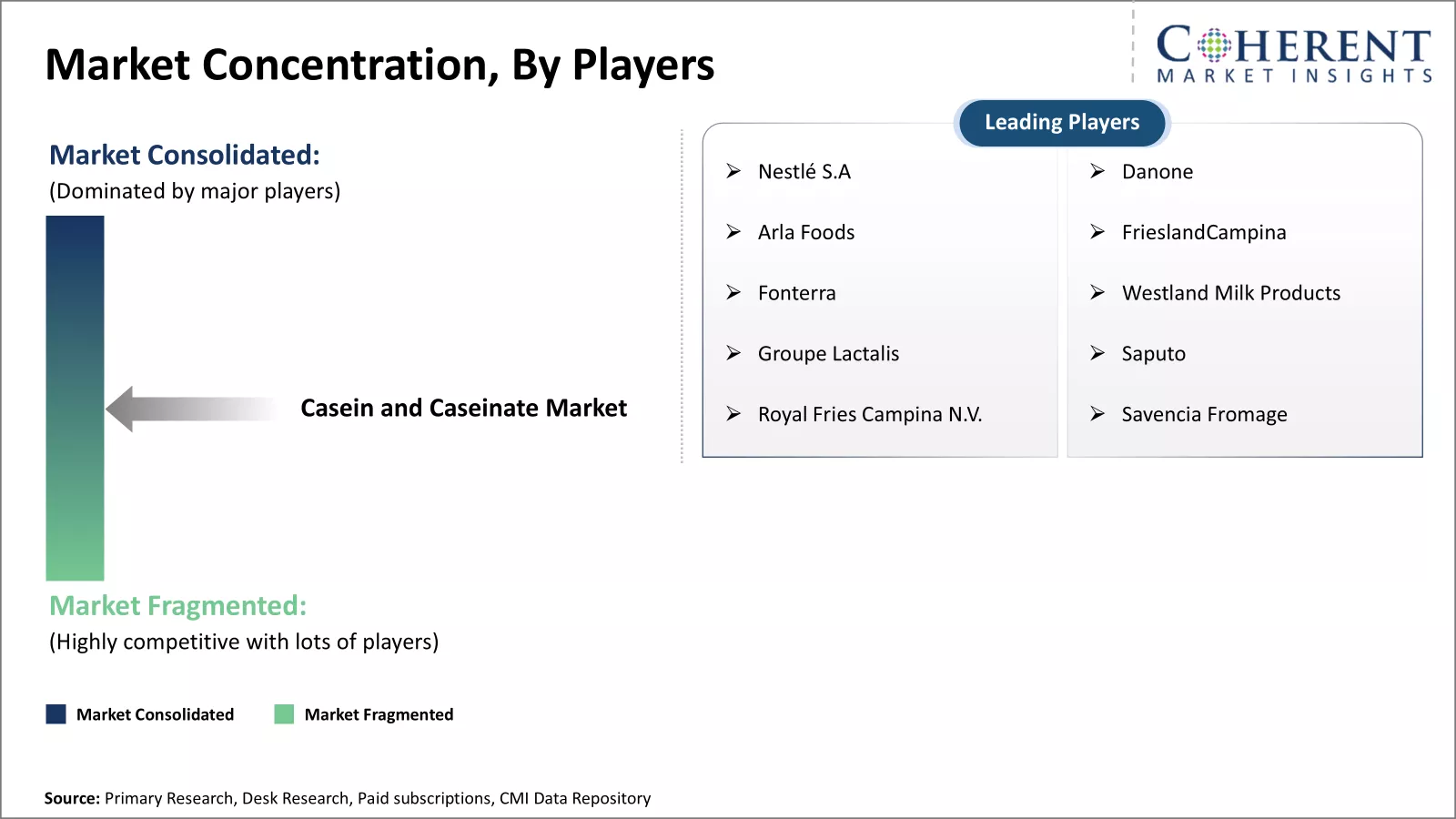
Top Strategies Followed by Casein and Caseinate Market Players
- Established players in the casein and caseinate market focus heavily on research and development to drive product innovation. Companies like Arla Foods and Friesland Campina invest over 5% of their annual revenues into R&D. Their labs continuously work to develop new formulations of casein and caseinates with improved functional properties like emulsification and water-binding.
- Major players also pursue strategic partnerships and global expansion. Amco Proteins recently partnered with Kerry, a leader in taste and nutrition, to broaden the application of its casein micelles. Meanwhile, Erie Foods is expanding its production facilities across South Asia and Latin America to meet the growing demand from food and beverage manufacturers in these regions.
- Mid-level players stay competitive by offering quality casein and caseinate products at affordable price points. Companies such as Glenstal Foods and Optimum Nutrition focus on attaining economies of scale through vendor agreements and cost-efficient production processes. They also form collaborations – Groupe Lactalis joined hands with Great Lakes Bioproducts to boost its North American production capacity in 2021.
- Smaller producers focus on niche segments and adopting new technologies. For example, ProteinCo specializes in customizable whey protein concentrates for sports nutrition brands. NZMP utilizes nanofiltration during casein manufacturing, allowing it to provide customized mineral formulations.
Market Dynamics
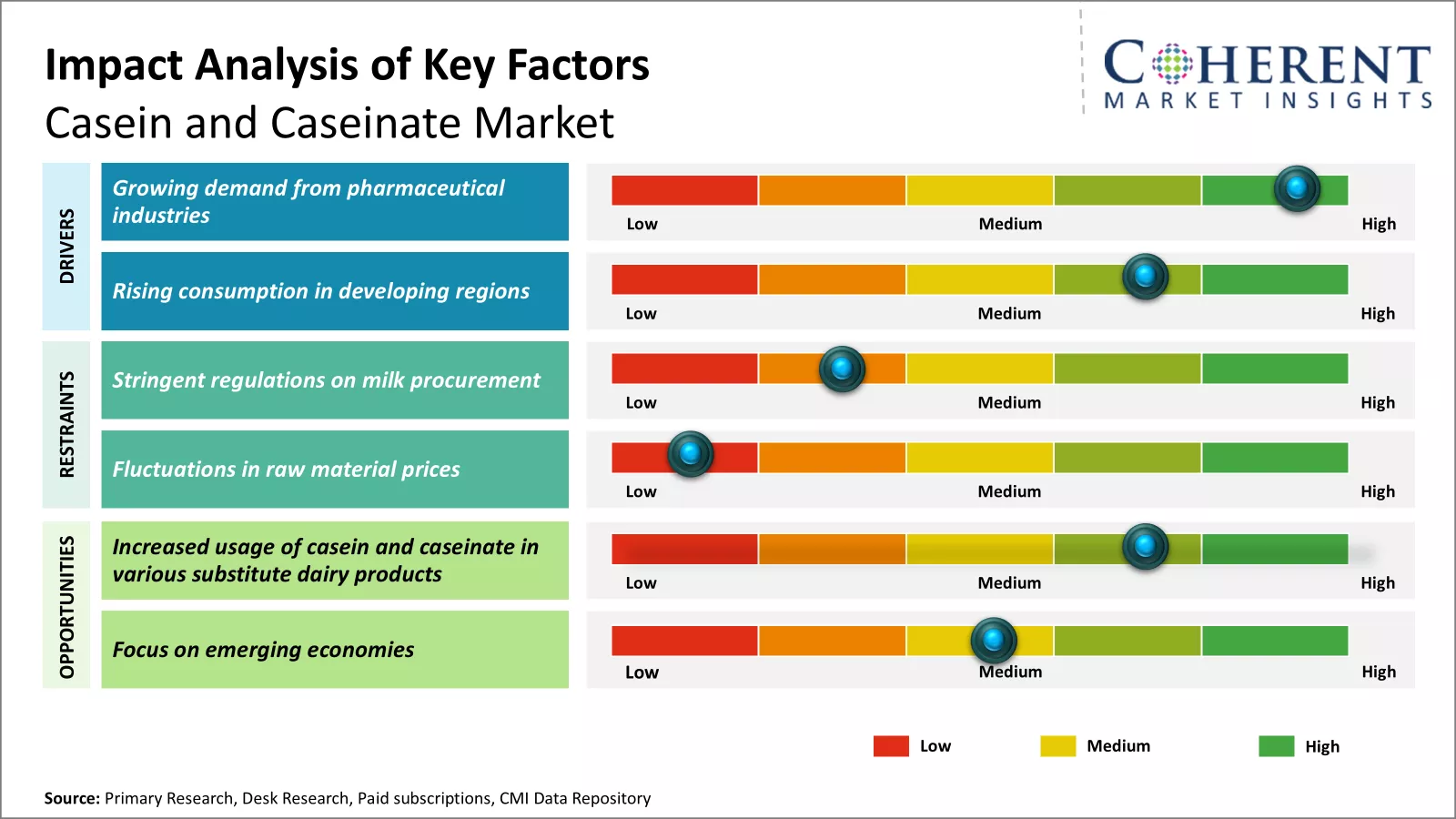
- Growing demand from pharmaceutical industries
The casein and caseinate market have been witnessing significant growth in demand from pharmaceutical industries in recent years. Casein and caseinates have wide applications in the development of various drugs and medicines due to their stability, viscosity, and emulsifying properties. These proteins act as excellent binders and coating agents for tablets and help in the controlled release of drugs in the body over extended periods of time.
According to World Health Organization data, over 50% of prescribed medications fail to achieve their intended therapeutic outcomes due to noncompliance to dosage schedules. Casein based delivery matrices can enable drugs to release gradually over longer durations and minimize fluctuations in blood levels. This makes treatment more efficient and reduces adverse side effects due to overdosing.
They are often used as excipients in the manufacture of myriad pharmaceutical formulations such as capsules, creams, ointments, and parenteral products. For example, India's Covaxin vaccine uses casein in its formulation.
Market Opportunity
- Increased usage of casein and caseinate in various substitute dairy products
One of the key opportunities for growth in this market is the increased usage of these proteins in various substitute dairy products. With the rising global demand for vegan and dairy-free products from health-conscious consumers, casein finds application as a milk protein replacer.
For instance, as per data published by the Good Food Institute in 2023, the U.S. retail sales of plant-based milks increased over 30% in the past 2 year. Such expansion in the non-dairy sector means rising demand for casein and caseinate to produce more of these alternative products. It provides the texture and functionality to create alternatives to traditional dairy such as cheese, yogurt, cream, etc. without using animal milk. The market has seen the popularity of various plant-based dairy substitutes incorporating caseinates. This has boosted the consumption of casein extracts significantly.
Market Report Scope
Casein and Caseinate Market Report Coverage
| Report Coverage | Details | ||
|---|---|---|---|
| Base Year: | 2025 | Market Size in 2026: | USD 3.30 Bn |
| Historical Data for: | 2020 To 2024 | Forecast Period: | 2026 To 2033 |
| Forecast Period 2026 to 2033 CAGR: | 5.7%2033 Value Projection: | USD 4.86 Bn | |
| Geographies covered: |
| ||
| Segments covered: |
| ||
| Companies covered: | Nestlé S.A, Danone, Arla Foods, FrieslandCampina, Fonterra, Westland Milk Products, Groupe Lactalis, Saputo, Royal Fries Campina N.V., and Savencia Fromage | ||
| Growth Drivers: |
| ||
| Restraints & Challenges: |
| ||
Casein And Caseinate Industry News
- In April 2024, Berjé Inc. finalized its acquisition of Global Citrus International and Acelim del Peru, further expanding its footprint in the essential oils and fruit products sector. These Peruvian companies have established significant regional operations and partnerships with Citrolim SA de CV in Mexico, which will enable Berjé to source high-quality ingredients and strengthen its global supply chain.
- In 2024, US-based Perfect Day developed its animal-free casein technology through microbial fermentation, commercializing scale for application in dairy alternatives. This allows for mass production of casein for application in vegan yoghurt and cheese without using livestock.
Key Takeaways from Analyst
- The global casein and caseinate market are expected to witness steady growth over the forecast period driven by increasing demand from food and beverage industries. Casein finds wide application in food formulations owing to its functional properties such as gel formation, water binding and emulsion stabilization abilities. Emerging economies in Asia Pacific and Latin America offer lucrative opportunities for market players given rising health consciousness.
- The market will be challenged by the availability of alternative proteins and rising veganism trend worldwide. Soy and pea proteins are gaining popularity as plant-based alternatives to casein. However, casein still holds an advantage over substitutes in certain applications due to its superior nutritional and textural properties. North America currently dominates global sales, but growth is expected to be higher in developing Asian countries led by China, India, and Southeast Asia.
- Manufacturers must focus on expanding production capacities in these high growth regions to gain an edge. Additionally, the rapid growth of the prepared food industry bodes well for caseinates which are used widely as coagulants in dairy applications along with shelf-life extension.
Market Segmentation
- Type Insights (Revenue, USD, 2021 - 2033)
- Casein
- Edible Casein
- Industrial Casein
- Caseinate
- Sodium Caseinate
- Calcium Caseinate
- Potassium Caseinate
- Casein
- Application Insights (Revenue, USD, 2021 - 2033)
- Nutritional Food & Beverages
- Infant Nutrition
- Dairy Products
- Others
- Regional Insights (Revenue, USD, 2021 - 2033)
- North America
- U.S.
- Canada
- Latin America
- Brazil
- Argentina
- Mexico
- Rest of Latin America
- Europe
- Germany
- U.K.
- Spain
- France
- Italy
- Russia
- Rest of Europe
- Asia Pacific
- China
- India
- Japan
- Australia
- South Korea
- ASEAN
- Rest of Asia Pacific
- Middle East
- GCC Countries
- Israel
- Rest of Middle East
- Africa
- South Africa
- North Africa
- Central Africa
- North America
- Key Players Insights
- Nestle S.A
- Danone
- Arla Foods
- FrieslandCampina
- Fonterra
- Westland Milk Products
- Groupe Lactalis
- Saputo
- Royal Fries Campina N.V.
- Savencia Fromage
Sources
Primary Research Interviews
- Marketing Managers from Dairy and Food Product Companies
- Senior Executives from Functional Foods and Nutraceutical Companies
- Product Development and R&D Personnel in Protein Supplements Industry
- Business Development Managers from Dairy Ingredient Suppliers
- Others
Databases
- Euromonitor International
- Food and Agriculture Organization Corporate Statistical Database (FAOSTAT)
- Mintel Global Market Database
- Others
Magazines
- Dairy Foods Magazine
- Food & Beverage Magazine
- Nutritional Outlook Magazine
- Ingredients Insight Magazine
- Others
Journals
- International Dairy Journal
- Journal of Dairy Science
- Journal of Food Science and Technology
- Others
Newspapers
- Dairy Reporter
- Food Navigator
- The Economic Times
- Business Standard
- Others
Associations
- International Dairy Foods Association (IDFA)
- Global Dairy Platform
- American Dairy Products Institute (ADPI)
- European Dairy Association (EDA)
- Others
Public Domain sources
- World Health Organization (WHO)
- United States Department of Agriculture (USDA)
- European Food Safety Authority (EFSA)
- Food Safety and Standards Authority of India (FSSAI)
- Others
Proprietary Elements
- CMI Data Analytics Tool,
- Proprietary CMI Existing Repository of information for last 8 years
Get access to 250+ pages report
Every segment, forecast, competitor profile and data table behind the analysis above — available for instant download.
- ESOMAR Member
- ISO 9001:2015 Certified
- D-U-N-S Registered
- GDPR & CCPA Compliant
Missing comfort of reading report in your local language? Find your preferred language:
Transform your Strategy with Exclusive Trending Reports
Frequently Asked Questions
The Casein And Caseinate Market size is estimated to be valued at USD 3.30 Bn in 2026, and is expected to reach USD 4.86 Bn by 2033.
The CAGR of the global Market is projected to be 5.7% from 2026 to 2033.
Growing demand from pharmaceutical industries and rising consumption in developing regions are the major factors driving the market growth.
Stringent regulations on milk procurement and fluctuations in raw material prices are the major factors hampering the market growth.
In terms of type, casein is estimated to dominate the market revenue share in 2026.
Nestlé S.A, Danone, Arla Foods, FrieslandCampina, Fonterra, Westland Milk Products, Groupe Lactalis, Saputo, Royal Fries Campina N.V., and Savencia Fromage are the major players.
North America is expected to lead the casein and caseinate market.