

Diabetes Vaccine Market Size and Share Analysis- 2026 To 2033
The Diabetes Vaccine Market size is anticipated to grow at a CAGR of 8% with USD 89.6 Mn in 2026 and is expected to reach USD 153.3 Mn in 2033. The primary drivers are defined by the rising incidence of type 1 diabetes, expanding autoimmune-disease research, increasing clinical development of antigen-specific immunotherapies, and growing demand for treatments that preserve pancreatic beta-cell function. According to the International Diabetes Federation, approximately 9.2 Mn people worldwide live with type 1 diabetes, including 1.8 Mn children and adolescents. This is accelerating investment in tolerogenic vaccines, peptide-based candidates, DNA vaccines, mRNA platforms, and immune-modulating therapies across biotechnology companies, research institutes, specialized hospitals, academic centers, and global clinical trial networks.
Key Takeaways
- Up to 20 years of age segment is likely to dominate the market with 58.7% in 2026. The segment’s growth is owing to the high prevalence of type 1 diabetes among children and adolescents and the growing focus on preventive immunotherapies.
- Hospitals segment is set to lead with 61.5% in 2026. The segment’s growth is owing to the advanced diagnostic facilities, specialist availability, clinical-trial infrastructure, and ability to administer and monitor emerging diabetes vaccines and immunotherapy-based treatments.
- North America is expected to acquire the prominent share 39.8% in 2026. The region’s growth is owing to the high burden of diabetes, strong healthcare expenditure, extensive vaccine research, increasing clinical trials, and early adoption of innovative immunotherapies across the U.S. and Canada. More than 40 Mn Americans, representing approximately 12% of the population, have diabetes.
Segmental Insights
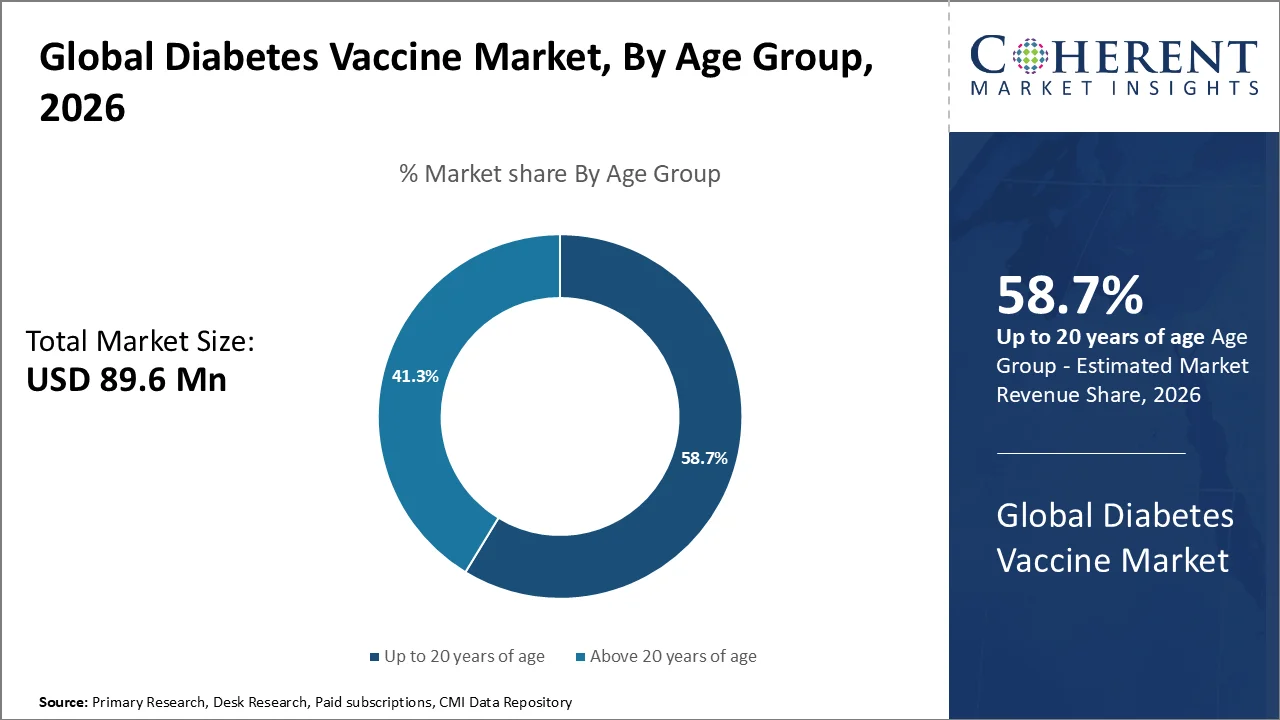
Why is Up to 20 years of age Segment Acquiring the Largest Share?
On the basis of age group, the up to 20 years of age segment is projected to account for the largest Diabetes Vaccine Market share of 58.7% in 2026. The segment’s growth is owing to the high pediatric burden of type 1 diabetes and increasing emphasis on preventing or delaying autoimmune beta-cell destruction before lifelong complications emerge.
According to the CDC’s 2026 National Diabetes Statistics Report, about 314,000 of the U.S. children and adolescents below 20 years are living with diagnosed type 1 diabetes, thereby creating a target population for preventive and immune-modulating approaches. The rising screening rates, earlier diagnosis, and greater clinical focus on preserving insulin production are strengthening the demand for antigen-specific vaccines, immune-tolerance therapies, as well as early intervention programs.
ClinicalTrials.gov also lists an ongoing study of repeat Bacillus Calmette–Guérin vaccination in children aged 8 to under 18 years with newly diagnosed type 1 diabetes, evaluating effects on HbA1c, insulin requirements, and metabolic outcomes over time.
- Current Industry Events of 2026
- Market Size Estimation
- Regional Breakdown
- Competitive Landscape
- Customer Intelligence
- Segmental Analysis
- Pricing Analysis
- Key Market Drivers, Challenges & Future Trends
- Customized Insights Section
Hospitals hold the Largest Market Share
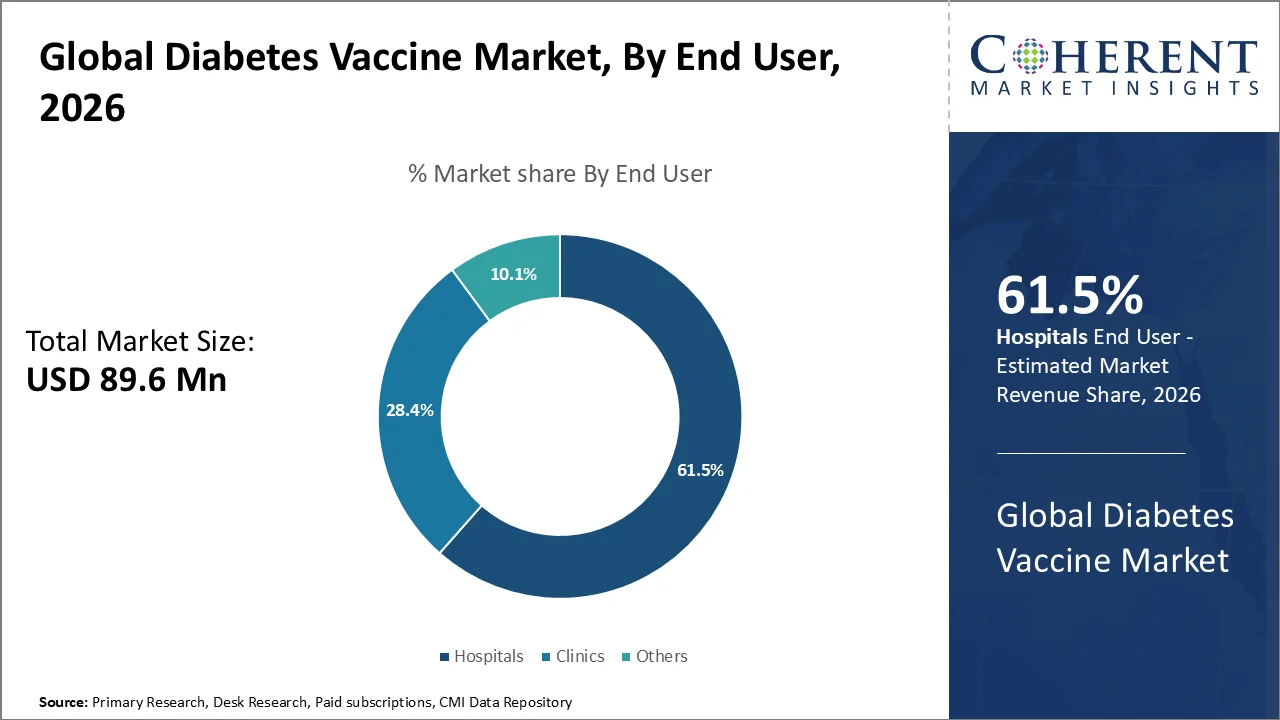
On the basis of end user, the hospitals segment lead with a major 61.5% share in 2026. The growth is owing to the central role in identifying high-risk patients, confirming type 1 diabetes stages, administering immune-modifying therapies, conducting vaccine trials, and monitoring adverse events and metabolic responses.
According to the CDC’s 2026 National Diabetes Statistics Report, approximately 2.1 million people in the U.S. have diagnosed type 1 diabetes, thereby creating a substantial patient base for hospital-based screening and intervention. The CDC also reports that around 30%–40% of U.S. children present with diabetic ketoacidosis at initial diagnosis often requiring urgent hospitalization.
Market Drivers
Growing Clinical Pipeline is Transforming the Diabetes Vaccine Market
Growing clinical development is transforming the diabetes vaccine market by shifting attention beyond conventional glucose control. Antigen-specific approaches are being investigated to preserve pancreatic beta-cell function and modify autoimmune disease progression.
The clinical stage activity in the diabetes vaccine market is represented by the MER3101 program. ClinicalTrials.gov describes MER3101 as a Phase I, randomized, placebo-controlled study which evaluates an MAS-1-adjuvanted islet beta-cell antigen formulation. It is intended to promote tolerogenic immune pathways in people at risk of or affected by type 1 diabetes. The study record was updated in February 2026 and is listed as completed. This demonstrates continual progress in immune-directed diabetes prevention as well as treatment research.
The findings from this program may support the future vaccine development, patient selection, dosing strategies, as well as larger clinical trials aimed at delaying disease onset and reducing long-term dependence on insulin therapy.
Antigen-Specific Immune Tolerance: A Major Breakthrough in the Diabetes Vaccine Market
Antigen-specific immunotherapy represents one of the most important emerging technologies in the diabetes vaccine market. Unlike traditional infectious-disease vaccines that stimulate protective immunity against external pathogens, most therapeutic diabetes vaccine candidates seek to reduce or redirect harmful immune responses against the body’s insulin-producing beta cells. Some of the investigated targets include insulin, proinsulin, GAD65, IA-2, and combinations of beta-cell peptides. Technologies under evaluation include recombinant proteins, synthetic peptides, DNA plasmids, antigen-adjuvant combinations, nanoparticles, as well as tolerogenic immune-cell treatments.
DNA-based immunotherapy is also advancing. A Phase I study published in March 2026 assessed an islet-antigen-specific plasmid encoding preproinsulin and immunoregulatory proteins in adults with type 1 diabetes. The study involved 47 adults and was designed to evaluate safety, tolerability, and pharmacodynamic activity. The treatment was generally reported as safe and well tolerated, but larger trials are needed to determine whether the platform can preserve beta-cell function or reduce insulin dependence.
Current Events and Their Impact on the Diabetes Vaccine Market
Current Event | Description and its Impact |
Full Implementation of the EU Clinical Trials Regulation in 2025 |
|
FDA Master Protocol and Clinical Development Modernization in 2026 |
|
Diabetes Vaccine Market Trends
- The increase in the development of antigen-specific vaccines aims to retrain immune responses, preserve pancreatic beta cells, as well as delay type 1 diabetes progression.
- Personalized immunotherapies using autoantibody profiles, genetic risk markers, and disease staging is supporting the targeted vaccination of high-risk individuals.
- Repurposing established vaccines, particularly BCG, is gaining research interest for improving glucose regulation as well as for reducing insulin requirements.
- Regulatory support for immune-modifying therapies is encouraging the development of vaccine-like approaches targeting the underlying autoimmune process.
- The increasing global diabetes prevalence is strengthening the demand for preventive and disease-modifying approaches beyond conventional insulin therapy. The WHO reports that the number of people living with diabetes increased to 830 million in 2024, while type 1 diabetes requires daily insulin administration. This substantial disease burden is supporting the continued investment in vaccines designed to prevent autoimmune beta-cell destruction or delay clinical onset.
Regional Insights
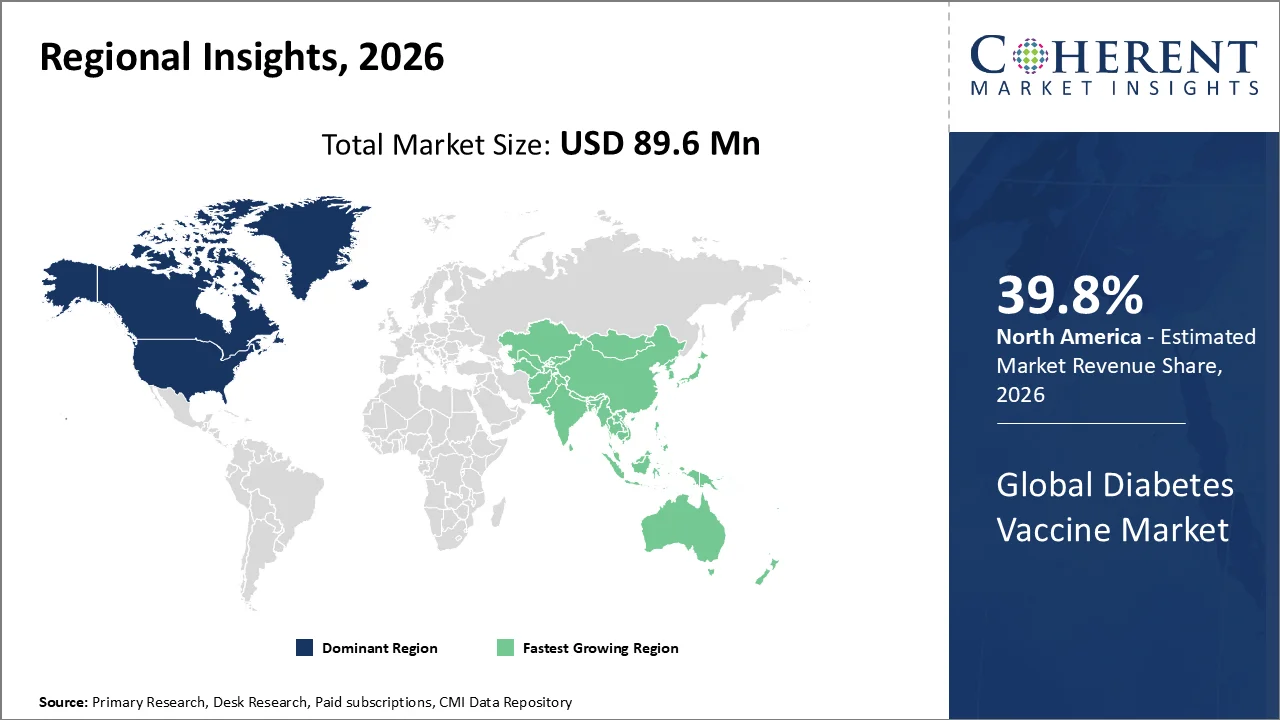
North America Dominates Owing to the High Type 1 Diabetes Burden and Clinical Development
The North America region accounts for 39.8% of the market share in 2026. The region’s growth is owing to the large type 1 diabetes population, advanced clinical-trial networks, access to autoantibody testing, strong biotechnology investment, and an established regulatory pathway for disease-modifying treatments.
The International Diabetes Federation estimates that approximately 1.48 million people of all ages were living with type 1 diabetes in the U.S. in 2024. The IDF also estimates that the country incurred approximately USD 404.5 billion in total diabetes-related health expenditure during the year 2024. This demonstrates the scale of the country’s healthcare burden and treatment infrastructure.
In March 2026, GentiBio dosed the first participant in its Phase I POLARIS study of GNTI-122. The study is enrolling through 10 specialized U.S. clinical sites and is evaluating an autologous engineered regulatory T-cell therapy in adults treated within 120 days of type 1 diabetes diagnosis.
Asia Pacific Diabetes Vaccine Market Trends
Asia Pacific is expected to witness strong growth in market over the forecast period. The region’s growth is owing to the large patient populations, increasing diabetes awareness, expanding private hospital systems, improving endocrinology capacity, and greater participation in multinational clinical research.
India represents a significant long-term opportunity. The IDF estimates that approximately 940,840 people of all ages were living with type 1 diabetes in India in 2024, including approximately 300,788 children and adolescents below 20 years. India also had approximately 89.8 million adults aged 20–79 years living with all forms of diabetes, thereby demonstrating its extensive diabetes-related healthcare requirements.
A notable pipeline development is the SAFEGUARD Phase 2b trial of SAB-142, listed in the Australian New Zealand Clinical Trials Registry and updated in July 2026. The study is evaluating whether the immune-targeted therapy can delay disease progression and preserve C-peptide production in patients aged 5–40 years with newly diagnosed stage 3 type 1 diabetes.
Rising Diabetes Burden and Advances in Preventive Immunotherapy is Accelerating the Diabetes Vaccine Market in Canada
In Canada, the Diabetes Vaccine Market is influenced by the rising diabetes burden along with the progress in preventive immunotherapy. The Public Health Agency of Canada data show that about 3.9 million people aged over one year live with diagnosed diabetes, thus representing 9.7% of the population. This sizeable patient pool is supporting screening, prevention, and disease-modifying research particularly for type 1 diabetes.
In April 2026, the Government of Canada’s Meds Pipeline Monitor highlighted Diamyd, a GAD65-based antigen-specific immunotherapy for type 1 diabetes, undergoing clinical development in Canada. Its ongoing Phase III trial is evaluating the treatment’s ability to preserve insulin-producing beta-cell function, with completion expected in 2027.
China Diabetes Vaccine Market Trends
China’s Diabetes Vaccine Market is growing with a rapid pace. The rising disease prevalence is increasing the demand for preventive and immune-modulating therapies. In February 2025, the Shanghai municipal government reported that latest 2024 national data placed adult diabetes prevalence in China at approximately 12%, thereby highlighting a substantial target population for disease-modifying interventions.
In February 2025, Diamyd Medical expanded its partnership with Breakthrough T1D, securing USD 1.75 million to support the Phase 3 DIAGNODE-3 trial of Diamyd, an antigen-specific therapeutic vaccine designed to preserve insulin production in type 1 diabetes. Diamyd’s relevant administration patent is already protected in China, supporting potential future market entry and strengthening interest in precision vaccines, clinical collaboration, and commercialization across China.
Who are the Major Companies in Diabetes Vaccine Industry
Some of the major key players in Diabetes Vaccine Market are Diamyd Medical AB, Vactech Oy, Novo Nordisk A/S, Imcyse SA, COUR Pharmaceuticals Development Company, Inc., Precigen, Inc., Nova Immunotherapeutics Limited, AnTolRx, Inc., AviSia Therapeutics B.V.
Key News
- In June 2026, the U.S. Food and Drug Administration granted accelerated approval to Tzield (teplizumab) for children aged 8–17 with newly diagnosed Stage 3 type 1 diabetes. It is the first therapy designed to delay insulin-production decline in pediatric patients.
- In May 2026, Eli Lilly used the financial strength of its diabetes and obesity portfolio to acquire three vaccine biotechnology companies in deals valued at up to USD 3.8 billion. The investment diversifies Lilly beyond diabetes into infectious-disease prevention and vaccine innovation.
Market Report Scope
Diabetes Vaccine Market Report Coverage
| Report Coverage | Details | ||
|---|---|---|---|
| Base Year: | 2025 | Market Size in 2026: | USD 89.6 Mn |
| Historical Data for: | 2020 To 2024 | Forecast Period: | 2026 To 2033 |
| Forecast Period 2026 to 2033 CAGR: | 8% | 2033 Value Projection: | USD 153.3 Mn |
| Geographies covered: |
| ||
| Segments covered: |
| ||
| Companies covered: | Diamyd Medical AB, Vactech Oy, Novo Nordisk A/S, Imcyse SA, COUR Pharmaceuticals Development Company, Inc., Precigen, Inc., Nova Immunotherapeutics Limited, AnTolRx, Inc., AviSia Therapeutics B.V. | ||
| Growth Drivers: |
| ||
| Restraints & Challenges: |
| ||
Analyst Opinion
- The diabetes vaccine research is driven by the growing disease burden. The IDF estimates that 589 million adults were living with diabetes in 2024 while 252 million of them remain undiagnosed. This supports investment in preventive and immune-modulating approaches, mainly for individuals at risk of developing type 1 diabetes.
- Diabetes vaccines remain an emerging research field rather than an established treatment category. More than 300 type 1 diabetes clinical trials are underway globally today, thereby supporting the continued investment.
- Therapeutic vaccine approaches are gaining scientific attention, but clinical success remains uncertain. In June 2026, Nature reported that BCG vaccination reduced insulin requirements in a Phase II diabetes trial. However, Diamyd Medical discontinued its Phase III DIAGNODE-3 study in April 2026 after 174 evaluable participants showed no clinically meaningful C-peptide benefit. These mixed outcomes favor diversified pipelines, biomarker-guided patient selection, and rigorous late-stage validation.
Speak to the analyst
Want personalized insights?
Take the findings above to one of our principal consultants, or have the report rebuilt around the segments, geographies and competitors you actually track.
Market Segmentation
- By Age Group (Revenue, USD Mn, 2021-2033)
- Up to 20 years of age
- Above 20 years of age
- By End User (Revenue, USD Mn, 2021-2033)
- Hospitals
- Clinics
- Others
- By Region (Revenue, USD Mn, 2021-2033)
- North America
- U.S.
- Canada
- Latin America
- Brazil
- Mexico
- Argentina
- Rest of Latin America
- Europe
- Germany
- U.K.
- France
- Italy
- Spain
- Russia
- Rest of Europe
- Asia Pacific
- China
- India
- Japan
- Australia
- South Korea
- ASEAN
- Rest of Asia Pacific
- Middle East
- GCC
- Israel
- Rest of Middle East
- Africa
- South Africa
- Central Africa
- North Africa
- North America
Sources
Primary Research Interviews
- Endocrinologists and diabetologists
- Immunologists and vaccinologists
- Diabetes vaccine clinical trial investigators
- Pharmaceutical and biotechnology R&D professionals
- Hospital administrators and diabetes care program managers
- Regulatory affairs and market access professionals
- Pharmaceutical distributors and healthcare procurement specialists
- Key opinion leaders (KOLs) in diabetes, immunology, and preventive medicine
Databases
- World Health Organization (WHO)
- International Diabetes Federation (IDF) Diabetes Atlas
- Centers for Disease Control and Prevention (CDC)
- National Institutes of Health (NIH)
- National Institute of Diabetes and Digestive and Kidney Diseases (NIDDK)
- Organisation for Economic Co-operation and Development (OECD)
- European Medicines Agency (EMA)
- U.S. Food and Drug Administration (FDA)
Magazines
- Endocrine News
- Endocrine Today
- Pharmaceutical Technology
- BioPharma Dive
- The Pharmaceutical Journal
Journals
- Diabetes
- Diabetes Care
- Diabetologia
- The Lancet Diabetes & Endocrinology
- Journal of Clinical Endocrinology & Metabolism
- Nature Reviews Endocrinology
- Vaccine
- Clinical and Experimental Immunology
Newspapers
- The New York Times
- The Guardian
- The Wall Street Journal
- Financial Times
- The Washington Post
Associations
- American Diabetes Association (ADA)
- European Association for the Study of Diabetes (EASD)
- International Diabetes Federation (IDF)
- Immunology of Diabetes Society (IDS)
- American Association of Clinical Endocrinology (AACE)
- Endocrine Society
- International Society for Pediatric and Adolescent Diabetes (ISPAD)
Public Domain Sources
- Company annual reports and investor presentations
- Government health ministry publications
- Clinical trial registries such as ClinicalTrials.gov and the WHO International Clinical Trials Registry Platform
- FDA, EMA, and other national regulatory agency databases
- Peer-reviewed scientific publications and conference proceedings
- Patent databases and vaccine-development pipelines
- National diabetes surveillance and immunization program reports
Proprietary Elements
- CMI Data Analytics Tool
- Proprietary CMI Existing Repository of Information for Last 10 Years
Get access to 250+ pages report
Every segment, forecast, competitor profile and data table behind the analysis above — available for instant download.
- ESOMAR Member
- ISO 9001:2015 Certified
- D-U-N-S Registered
- GDPR & CCPA Compliant
Missing comfort of reading report in your local language? Find your preferred language:
Transform your Strategy with Exclusive Trending Reports
Frequently Asked Questions
The Diabetes Vaccine Market is expected to reach USD 153.3 Mn in 2033.
Major players operating in the global Diabetes Vaccine Market include Diamyd Medical AB, Vactech Oy, Novo Nordisk A/S, Imcyse SA, COUR Pharmaceuticals Development Company, Inc., Precigen, Inc., Nova Immunotherapeutics Limited, AnTolRx, Inc., AviSia Therapeutics B.V.
The immense biological complexity of diabetes, stringent regulatory hurdles, and exorbitant clinical development costs are the key factors hampering growth of the market.
The rising patient numbers, the need for long-term prevention, and scientific innovation is boosting the demand for Diabetes Vaccine.
The Diabetes Vaccine Market is anticipated to grow at a CAGR of 8% between 2026 and 2033.
Among regions, North America is expected to account for a largest market share in the global Diabetes Vaccine Market over the forecast period.
The market outlook remains positive due to rising clinical interest and new developments in peptide and inverse vaccines.