

Research Antibodies Market Analysis & Forecast: 2026-2033
Global research antibodies market is estimated to be valued at USD 13.61 Bn in 2026 and is expected to reach USD 21.86 Bn by 2033, exhibiting a compound annual growth rate (CAGR) of 7.0% from 2026 to 2033.
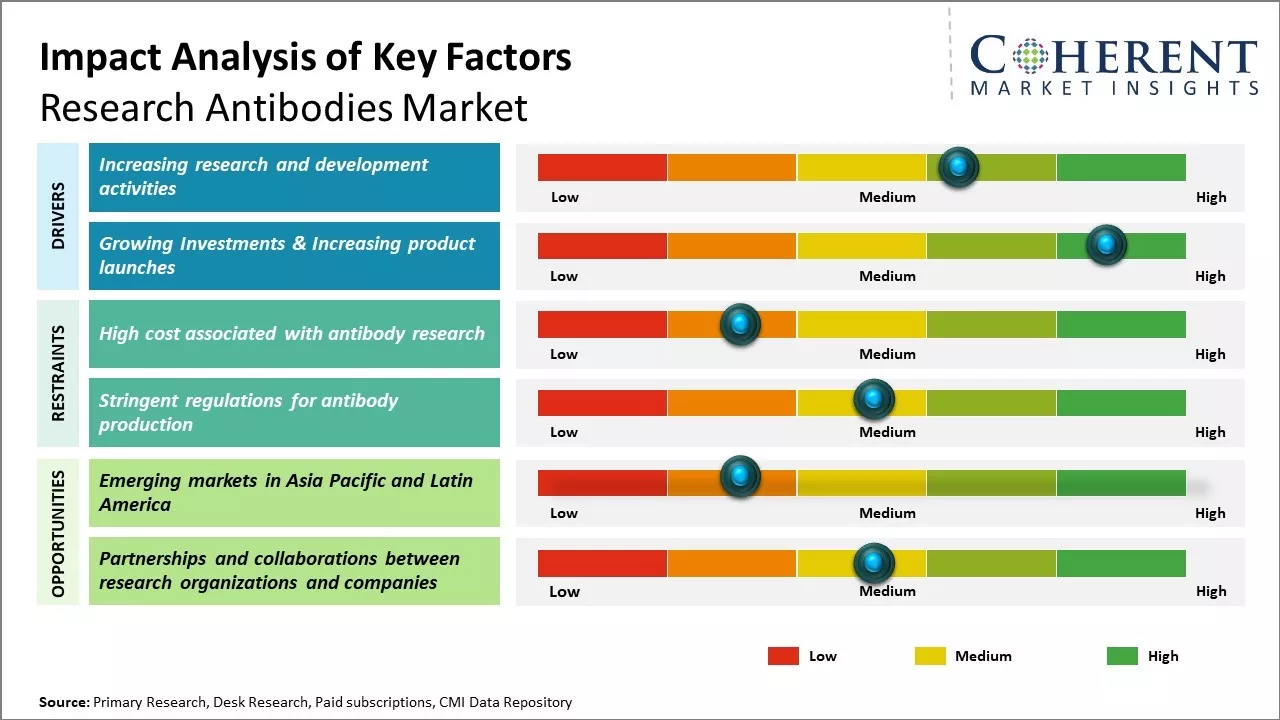
Key Takeaways
- Based on Product Type, the Primary Antibodies segment is projected to capture the largest share of the research antibodies market in 2026, accounting for approximately 46.6%, driven by their essential role in detecting specific proteins in diagnostic and research applications.
- By Form, the Monoclonal Antibodies segment is estimated to hold a dominant share of 61.6% in 2026, owing to their high specificity, reproducibility, and increasing demand in targeted therapeutic research.
- In Terms of Application, the Western Blotting segment is expected to lead the market with a 26.64% share in 2026, reflecting its widespread use in protein analysis and validation across academic, pharmaceutical, and biotech laboratories.
- The North America Region continues to dominate the global research antibodies market and is anticipated to account for 38.7% of the market share in 2026, driven by strong R&D infrastructure, high funding for life sciences research, and presence of major industry players.
Market overview
The Research Antibodies Market growth is powered by a rising need for sophisticated diagnostics methods and personalized medicine, as well as an increase in funding for biomedical research. Improvement in technology in the field of antibody production enhances their specificity and reliability in terms of their application in drug discovery and disease research. An example would be the increase in demand for monoclonal antibodies as key research tools spurred by the increasing cancer research efforts. Alongside this, the consistent prevalence of chronic diseases also supports stable growth in the market.
Current Events and Its Impact on the Research Antibodies Market
Event | Description and Impact |
U.S.-China Trade Relations and Technology Transfer Restrictions |
|
AI and Machine Learning Revolution in Drug Discovery |
|
European Union Regulatory Harmonization and Brexit Implications |
|
Pricing Analysis
The Research Antibodies Market for applications such as Immunohistochemistry, ELISA, Neuroscience, and Cell Signaling exhibits a highly tiered pricing structure influenced by brand, validation level, and specificity. In 2023, the global market was valued at $3.2 billion, with projected growth to $4.8 billion by 2028, driven by increasing demand across academic and biotech sectors.
Monoclonal antibodies, widely used in ELISA and Neuroscience, typically range from $150–$800 per 100μg. Brands like Thermo Fisher and Abcam command premium pricing ($400–$800) for highly validated reagents, especially in Cell Signaling pathways. Polyclonal antibodies, often used in Immunohistochemistry, are more affordable, ranging from $100–$450.
Secondary antibodies with fluorescent or enzyme conjugates add cost depending on application complexity, such as multiplex IHC or quantitative ELISA.
Premium brands like Cell Signaling Technology and Abcam justify higher prices through pathway-specific validation, while mid-tier suppliers like Bio-Rad offer cost-effective options for routine research.
Ultimately, end users—ranging from academic labs to pharma companies—balance performance requirements with budget, driving a pricing spectrum aligned with application demands.
- Current Industry Events of 2026
- Market Size Estimation
- Regional Breakdown
- Competitive Landscape
- Customer Intelligence
- Segmental Analysis
- Pricing Analysis
- Key Market Drivers, Challenges & Future Trends
- Customized Insights Section
Role of Technologies like AI on the Market
The AI revolution is transforming the research antibodies market valued at more than $3 billion by boosting discovery processes, increasing specificity of antibodies, and decreasing development expenditures. The effects of AI are most pronounced in Immunohistochemistry, ELISA, Neuroscience, and Cell Signaling. AbCellera and Absci have emerged as leaders with their AI-based platforms that process epitope binding predictions and sequence optimization for stability and efficacy of antibodies alongside screening millions of antibody candidates. AbCellera AI-powered single cell analysis can reduce discovery timelines from several years to months while Absci’s application of deep learning improves antibody design further streamlining discovery to the point where extensive lab testing is unnecessary.
Ginkgo Bioworks applies real-time data streams for analysis alongside automated laboratory workflows on diverse datasets in pharmaceuticals to enable clients to cut development cycles by 50%, reproducibility improves as well. AI is now an indispensable tool for estimating cross-reactivity, sculpting epitopes, and customizing antibodies to serve diverse research challenges. With broader use, the AI will streamline efficiencies in neuroscience and cell signaling pathway research antibody development providing better quality tools and accelerating therapeutic breakthroughs.
End User Feedback
Insights from prominent end users in the research antibodies market reveal varying needs from different application areas, such as immunohistochemistry, ELISA, neuroscience, and cell signaling. IVF clinics emphasize the need for very specific and validated antibodies directed at reproductive and hormonal biomarkers. Odner's research indicates that consistency, sensitivity, and ease of incorporation into diagnostic workflows rank highest in importance. Users from biotechnology and pharmaceutical companies express the need for research antibodies with high reproducibility, minimal batch-to-batch variation, as well as rigorous validation to assist preclinical development. Especially in fast-paced therapeutic pipelines, speed of delivery and availability of custom antibody services are critically important.
Affordability and reliability of antibodies is of utmost importance for research and academic institutions for a wide range of experiments. End users in this segment require detailed comprehensive documentation as well as strong customer support for more demanding applications such as western blotting or flow cytometry. Biobanks depend on accurate high-quality antibodies for biomarker validation, tissue profiling, and sustained research endeavors. Providing standardized and reliable long-term supply is crucial for maintaining sample integrity and experimental reproducibility. AI-optimized antibodies with enhanced specificity and performance are in demand across all segments and indicate shifting expectations and high standards for innovation.
Market Concentration and Competitive Landscape
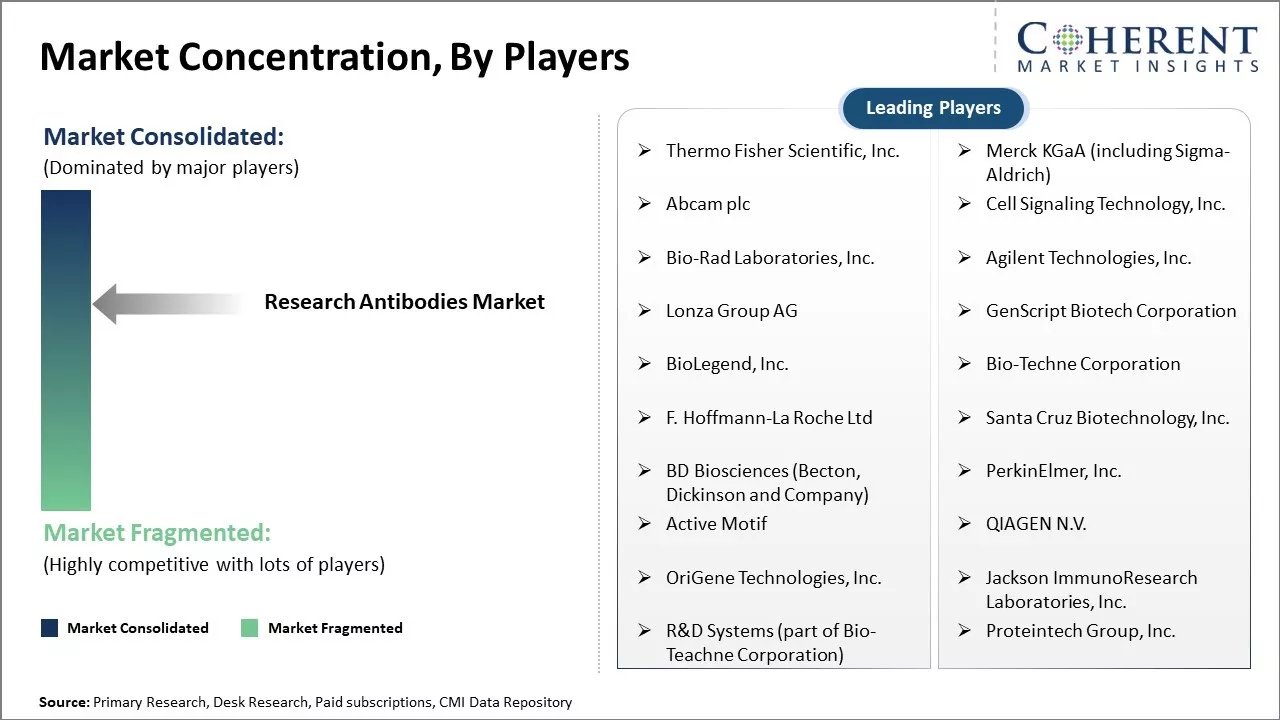
Global Research Antibodies Market Trend
There are several variables that propel the market for research antibodies. Proteomics and genomics research is on the rise, as are research academies and industrial partnerships, as well as increased R&D spending. Research antibodies play a crucial role in biopharmaceutical and pharmaceutical research since they are necessary for understanding the origins of diseases and for examining biological processes. Thus, the market is expanding due to expanding research on stem cells and neurobiology worldwide, as well as product advancements and company collaboration.
Increasing research and development activities
Expanding research and development activities tend to increase the growth of the global research antibodies market. Increased investment in research and development, collaborations between industries and research institutions, as well as a rise in proteomics and genomics studies, all contribute to the global growth of the research antibodies market. Research antibodies are essential in biopharmaceutical and pharmaceutical research, as they aid in the examination of biological systems and the processes underlying diseases. With worldwide expansion of stem cell and neurobiology research, coupled with continuous innovations and collaborations in the industry, there is significant growth in the market.
As an example, a study published by e-life in March 2022 highlighted research conducted by the University of Washington and colleagues from The Max Planck Institute for Dynamics and Self Organization and the University of Cologne focused on broadly neutralizing antibodies (bNAbs). This research showcased how bNAbs could potentially be used to treat HIV while reducing the risk of HIV infection transmission. This study placed significant emphasis on the use of computational methods to devise optimal combinations of bNAbs tailored to target specific viral genetics, thus improving the efficacy of HIV treatments while minimizing the chances of resistant variants developing.
Growing Investments & Increasing product launches
Increased investments from both public and private sectors in life science R&D can drive the research antibodies market growth. This is fueled by the recognition of the importance of basic research in fields like immunology, cancer biology, genetics, and neuroscience. The development of novel antibody-based therapeutics and diagnostics is attracting substantial capital, leading to growing demand for research antibodies in academic and industry labs.
This trend is supported by sophisticated core facilities in leading research institutions, indicating sustained growth potential for the market. Product approvals by industry participants can drive the research antibody market growth during the forecast period. Tepezza (TM) (teprotumumab-trbw), a therapeutic monoclonal antibody for the treatment of thyroid eye disease (TED), was approved by the U.S. Food and Drug Administration on January 21, 2020.
Horizon Therapeutics plc is a biopharmaceutical company that focuses on researching, developing, and commercializing medicines, and it had developed Tepezza (TM) (teprotumumab-trbw). TED is an unusual autoimmune disorder that is severe, progressive, and potentially blinding. It is characterized by pain, inflammation, deformity of the face, diplopia (double vision), proptosis (eye bulging), and blurred vision. The FDA (Food and Drug Administration) in the U.S. had approved Tepezza as the sole drug for TED patients.
Market Opportunities: Demand for antibodies in drug discovery & research
There has been huge demand for antibodies in drug discovery and disease research. Customized antibody services allow for targeting new disease areas. Outsourcing antibody manufacturing to specialized companies can boost efficiency. Adopting single-use technologies assists in avoiding contamination issues. Collaboration between industry and academia helps identify promising new applications.
Segmental Insights
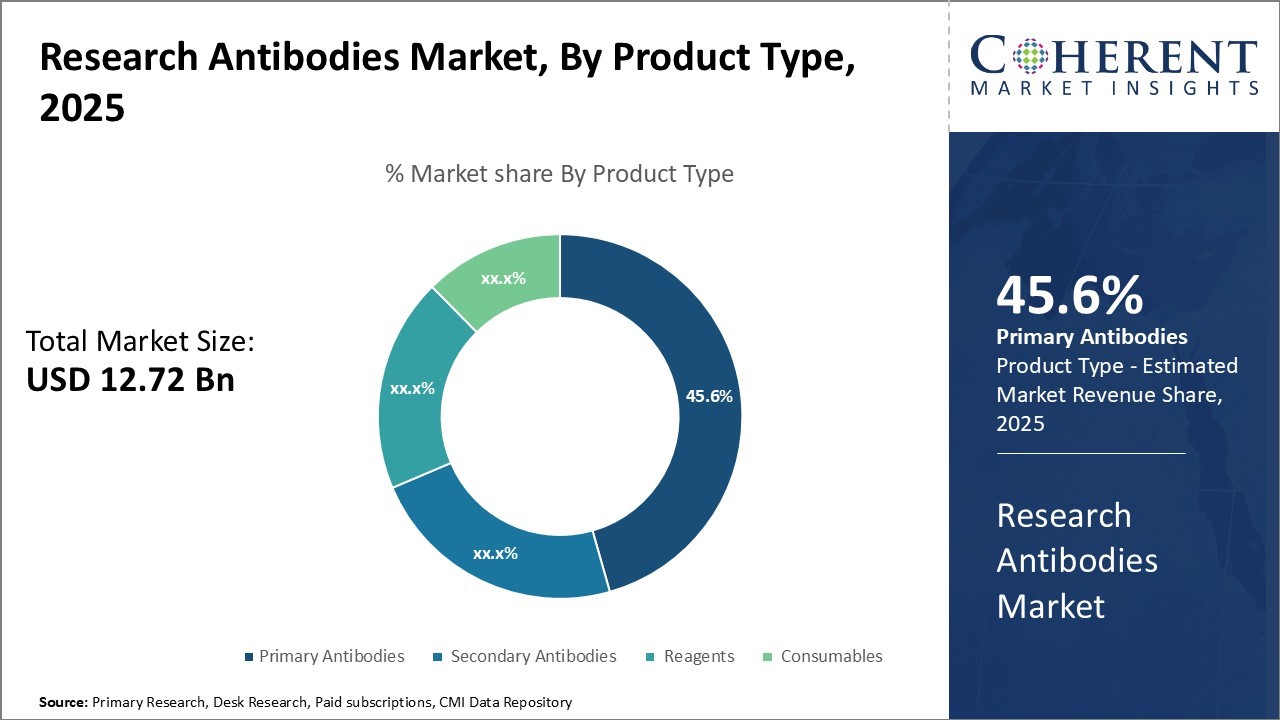
Global Research Antibodies Market Insights, By Product Type
In terms of product type, primary antibodies segment is estimated to contribute the highest market share of 46.6% in 2026, owing to its widespread applications across various research areas. Primary antibodies are highly specific, and are used to detect target antigens or proteins in samples.
This makes them ideal for various detection and localization techniques in cell and tissue imaging. Their ability to bind uniquely to epitopes makes them valuable tools in research applications exploring protein expression and function. Western blotting is one of the most commonly used techniques that relies heavily on high quality primary antibodies for reliable results.
Other techniques like flow cytometry, immunohistochemistry and ELISA also utilize primary antibodies as the critical detection agent. The target-specific binding property of primary antibodies has propelled their adoption across diverse fields like cancer research, neuroscience, immunology and many more.
Researchers prefer primary antibodies due to the confidence these provide in accurately detecting the protein of interest. This widespread applicability and reliability have established primary antibodies as the largest segment in the overall research antibodies market.
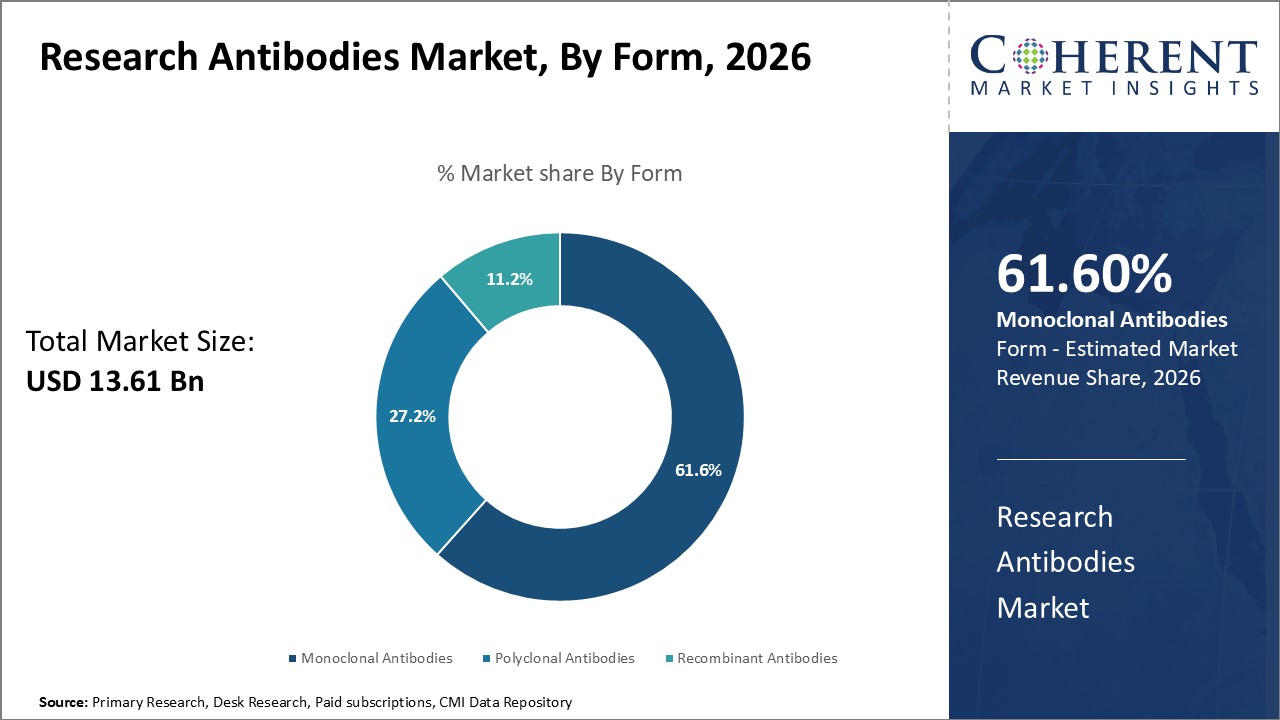
Global Research Antibodies Market Insights, By Form
In terms of form, monoclonal antibodies segment is estimated to contribute the highest market share of 61.6% in 2026 due to their consistent performance and specificity. Monoclonal antibodies are produced by identical immune cells that are all clones of a unique parent cell. This cloning process allows mass production of antibodies that bind exclusively to the same epitope. The consistency in specificity and affinity offered by monoclonal antibodies makes them the antibody of choice for many critical research applications.
These play a key role in techniques like immunoblotting, ELISA and immunohistochemistry by helping deliver reproducible, quantifiable results. Their defined specificity has made them an indispensable tool in research exploring protein expression and functions.
Moreover, monoclonal antibodies can now be produced against a wide variety of target molecules with standardized procedures, fueling their widespread adoption. The uniformity in structure and specificity of monoclonal antibodies has positioned them as the dominant antibody type preferred by researchers.
Global Research Antibodies Market Insights, By Application
In terms of application, western blotting segment is estimated to contribute the highest market share of 26.64% in 2026, owing to continuous methodological advancements. Western blotting is a commonly employed analytical technique that is used to detect specific proteins in a given sample of tissue homogenate or extract. It relies on antibody-based detection of proteins separated through gel electrophoresis.
Advancements in gel electrophoresis, membrane transfer techniques and antibody specificity have significantly improved western blotting performance metrics like speed, sensitivity and accuracy. This has enabled western blotting to evolve into a robust tool for research areas like proteomics. Increased sensitivity allows reliable protein detection even from minute samples. Automated systems have sped up western blot workflows.
Researchers have embraced western blotting for exploratory analyses of protein expression changes. Its ability to detect post-translational modifications has expanded its applications. With persistent developments enhancing western blotting's versatility, it will continue to drive significant antibody demand across varied research domains examining protein functions.
Global Research Antibodies Market - Regional Insights
North America Research Antibodies Market Analysis and Trends
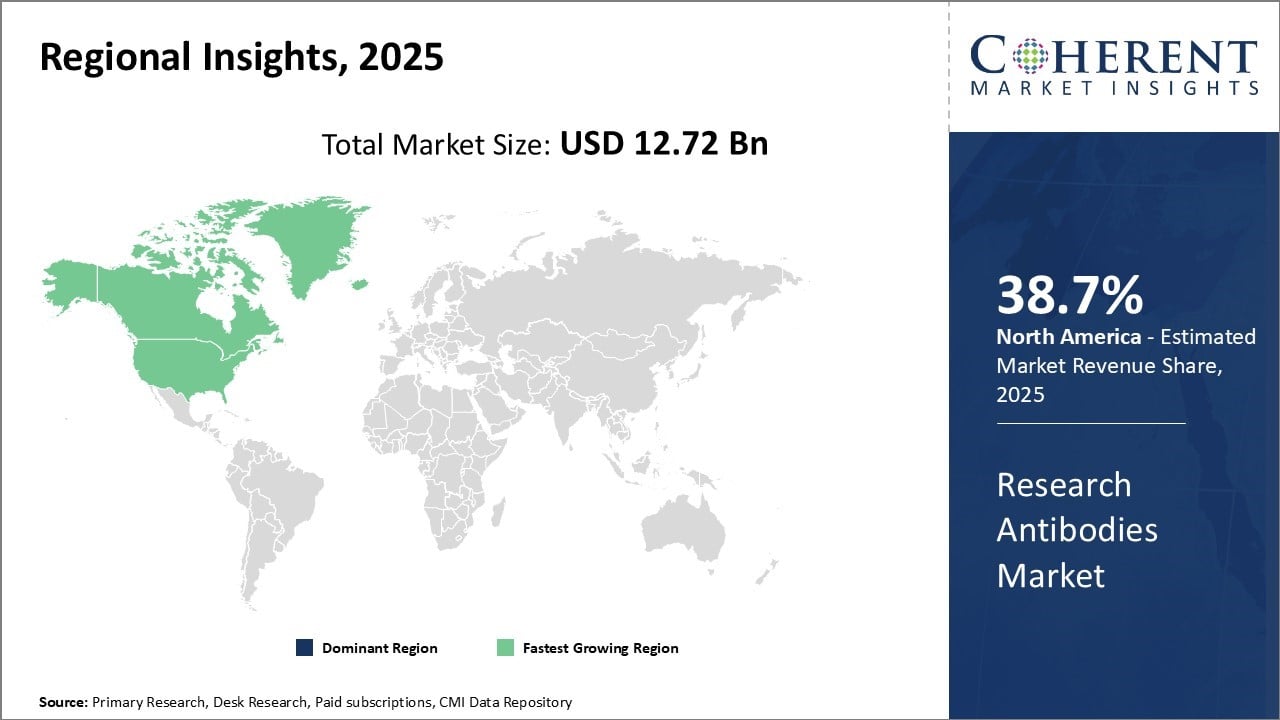
North America continues to lead the global research antibodies market and is expected to account for approximately 38.7% of the global market share in 2026. This regional dominance is driven by the presence of major pharmaceutical companies, contract research organizations (CROs), and leading biotechnology firms across the United States and Canada. These players are at the forefront of antibody-based research and development, contributing significantly to market expansion.
The region benefits from a well-established ecosystem of academic institutions, cutting-edge research laboratories, and skilled scientific talent, particularly in the U.S., which acts as the primary hub. Top-tier universities and research centers in the country facilitate continuous innovation in antibody production and validation, while collaborations between academia and industry accelerate the development and commercialization of novel antibody therapeutics and diagnostics.
Europe Research Antibodies Market Analysis and Trends
Europe holds a strong position in the global research antibodies market, supported by its robust pharmaceutical and biotechnology industries, particularly in countries like Germany, the UK, and France. The region benefits from substantial government funding for life sciences research and public-private partnerships focused on advancing biomedical innovations.
Academic and research institutions across Europe actively contribute to antibody development for both diagnostic and therapeutic applications. European regulatory agencies emphasize safety, efficacy, and transparency, which enhances product credibility and encourages the adoption of high-quality research antibodies across academic labs and industry players alike.
Europe’s emphasis on translational research and personalized medicine has fostered a fertile ground for antibody-based R&D. Moreover, cross-border collaborations and well-established clinical trial networks further amplify the region’s research capabilities, making Europe a key contributor to the global antibody pipeline.
Asia Pacific Research Antibodies Market Analysis and Trends
Asia Pacific is emerging as the fastest-growing region in the global research antibodies market, driven by expanding healthcare and biotechnology sectors in countries such as China, India, Japan, and South Korea. Rising investments in biomedical research, growing academic output, and increasing government support for life sciences are fueling demand for research antibodies across the region.
China and India, in particular, are witnessing rapid growth in antibody production and usage due to favorable government initiatives, rising healthcare awareness, and a burgeoning talent pool of researchers. Local manufacturing capabilities and cost-effective production models enable competitive pricing, enhancing accessibility for regional institutions.
Additionally, the region benefits from increasing international collaboration, growing adoption of western research practices, and a shift toward developing indigenous biopharmaceutical solutions—all of which are expanding the footprint of research antibody applications in diagnostics, drug discovery, and therapeutic development.
Dominating Countries in the Research Antibodies Market
United States Research Antibodies Market Analysis and Trends
The U.S. remains the largest contributor to the global research antibodies market, driven by its world-class pharmaceutical and biotechnology ecosystem. With a high concentration of academic research institutions, government-funded health agencies (such as NIH), and private biotech firms, the U.S. plays a pivotal role in both the innovation and commercialization of antibody technologies. Regulatory oversight from the FDA ensures product quality, while ongoing demand from oncology, immunology, and infectious disease research fuels consistent market growth.
China Research Antibodies Market Analysis and Trends
China has rapidly advanced in the research antibodies landscape, driven by strong government support for biotechnology and the expansion of academic and private sector R&D facilities. The country is investing heavily in developing local biopharmaceutical capabilities, including antibody production, validation, and application in drug discovery. Its large population and rising healthcare needs are creating strong domestic demand for high-quality research tools.
India Research Antibodies Market Analysis and Trends
India is experiencing accelerated growth in the research antibodies market, thanks to an expanding pharmaceutical sector, a rising number of research institutions, and increased public-private partnerships in the life sciences. Government initiatives such as “Make in India” and investments in biotechnology parks support local antibody production and innovation. Cost-effective manufacturing and a growing talent pool are key factors propelling India’s competitiveness in the global market.
Market Report Scope
Research Antibodies Market Report Coverage
| Report Coverage | Details | ||
|---|---|---|---|
| Base Year: | 2025 | Market Size in 2026: | USD 13.61 Bn |
| Historical Data for: | 2020 To 2024 | Forecast Period: | 2026 To 2033 |
| Forecast Period 2026 to 2033 CAGR: | 7.0% | 2033 Value Projection: | USD 21.86 Bn |
| Geographies covered: |
| ||
| Segments covered: |
| ||
| Companies covered: | Thermo Fisher Scientific, Inc., Merck KGaA (including Sigma-Aldrich), Abcam plc, Cell Signaling Technology, Inc., Bio-Rad Laboratories, Inc., Agilent Technologies, Inc., Lonza Group AG, GenScript Biotech Corporation, BioLegend, Inc., Bio-Techne Corporation, F. Hoffmann-La Roche Ltd, Santa Cruz Biotechnology, Inc., BD Biosciences (Becton, Dickinson and Company), PerkinElmer, Inc., Active Motif, QIAGEN N.V., OriGene Technologies, Inc., Jackson ImmunoResearch Laboratories, Inc., R&D Systems (part of Bio-Teachne Corporation), Proteintech Group, Inc. | ||
| Growth Drivers: |
| ||
| Restraints & Challenges: |
| ||
Analyst Viewpoint
- Global research antibodies market is expected to witness steady growth over the next five years. Rising investments by both private and public players in R&D activities can boost demand for research antibodies.
- Furthermore, increasing prevalence of cancer and other chronic diseases is prompting pharmaceutical companies to focus on developing novel therapeutics, thus, propelling the need for research antibodies in drug discovery processes.
- However, stringent regulations surrounding the clinical uses of antibodies may hinder the market growth. High cost involved in the development of antibodies can pose challenge for small research institutions and startups.
- North America currently dominates the research antibodies market and is expected to maintain its lead during the forecast period due to the robust biopharmaceutical industry and mounting healthcare expenditures in the region. Meanwhile, Asia Pacific exhibits high growth potential fueled by expanding R&D facilities, growing biotech hubs in China and India, and improving healthcare infrastructure.
- On the products front, monoclonal antibodies are likely to witness the highest demand owing to their wide applications across various research areas. In terms of application, western blotting, flow cytometry, immunohistochemistry, and immunofluorescence are some dominating techniques fueling the need for research-grade antibodies.
Research Antibodies Market Key Developments
- On May 30, 2024, Scientists from Texas Biomedical Research Institute, the University of Alabama at Birmingham, and Columbia University developed a human monoclonal antibody effective against multiple strains of SARS-CoV-2. Led by Dr. Luis Martinez-Sobrido, the research offers promise for a universal antibody, as it demonstrated efficacy against the original SARS-CoV-2, Omicron, and SARS-CoV.
- In February 2022, Abcam, Biotechnology company, announced its collaboration with Twist Bioscience, a leading provider of synthetic DNA, aiming to enhance antibody discovery for diagnostic and research applications.
- In February 2022, Merck Millipore a life science company announced its acquisition of Exelead for approximately USD 780 million. This acquisition enables Merck's Life Science business division to offer end-to-end CDMO services across the mRNA value chain to its customers.
- In November 2021, Nautilus Biotechnology a development stage life sciences company announced a strategic agreement with Abcam to accelerate research and development of the Proteome. This agreement grants Nautilus Biotechnology's customers access to Abcam's antibody development technology and expertise.
Market Segmentation
- Product Type Insights (Revenue, USD Bn, 2021 - 2033)
- Primary Antibodies
- Secondary Antibodies
- Reagents
- Consumables
- Form Insights (Revenue, USD Bn, 2021 - 2033)
- Monoclonal Antibodies
- Polyclonal Antibodies
- Recombinant Antibodies
- Application Insights (Revenue, USD Bn, 2021 - 2033)
- Western Blotting
- ELISA
- Flow Cytometry
- Immunocytochemistry (ICC)/ Immunofluorescence (IF)
- Immunohistochemistry (IHC)
- Others (Immunoprecipitation, Multiplex Immunosorbent Assay and etc.)
- End User Insights (Revenue, USD Bn, 2021 - 2033)
- Academic & Research Institutes
- Contract Research Organizations
- Pharmaceutical & Biotechnology Companies
- Regional Insights (Revenue, USD Bn, 2021 - 2033)
- North America
- U.S.
- Canada
- Latin America
- Brazil
- Argentina
- Mexico
- Rest of Latin America
- Europe
- Germany
- U.K.
- Spain
- France
- Italy
- Russia
- Rest of Europe
- Asia Pacific
- China
- India
- Japan
- Australia
- South Korea
- ASEAN
- Rest of Asia Pacific
- Middle East
- GCC Countries
- Israel
- Rest of Middle East
- Africa
- South Africa
- North Africa
- Central Africa
- Key Players Insights
- Thermo Fisher Scientific, Inc.
- Merck KGaA (including Sigma-Aldrich)
- Abcam plc.
- Cell Signaling Technology, Inc.
- Bio-Rad Laboratories, Inc.
- Agilent Technologies, Inc.
- Lonza Group AG
- GenScript Biotech Corporation
- BioLegend, Inc.
- Bio-Techne Corporation
- F. Hoffmann-La Roche Ltd.
- Santa Cruz Biotechnology, Inc.
- BD Biosciences (Becton, Dickinson and Company)
- PerkinElmer, Inc.
- Active Motif
- QIAGEN N.V.
- OriGene Technologies, Inc.
- Jackson ImmunoResearch Laboratories, Inc.
- R&D Systems (part of Bio-Teachne Corporation)
- Proteintech Group, Inc.
Sources
Primary Research Interviews
- Biotechnology company executives and R&D directors
- Research antibody manufacturers and suppliers
- Academic researchers and principal investigators
- Contract research organization (CRO) managers
- Others
Databases
- BioWorld Intelligence Database
- PharmaProjects Database
- GlobalData Healthcare Database
- Scientific Research Database
- Others
Magazines
- BioWorld Magazine
- Genetic Engineering & Biotechnology News (GEN)
- Drug Discovery & Development Magazine
- The Scientist Magazine
- Others
Journals
- Nature Biotechnology
- Journal of Immunological Methods
- Biotechnology Progress
- Others
Newspapers
- BioPharma Dive
- FierceBiotech
- Biotech Business Journal
- Life Science Leader
- Others
Associations
- International Society for Pharmaceutical Engineering (ISPE)
- Biotechnology Innovation Organization (BIO)
- American Association for Clinical Chemistry (AACC)
- Association of Biotechnology Led Enterprises (ABLE)
- Others
Public Domain Sources
- FDA (Food and Drug Administration) databases
- NIH (National Institutes of Health) publications
- European Medicines Agency (EMA) reports
- WHO (World Health Organization) publications
- Others
Proprietary Elements
- CMI Data Analytics Tool
- Proprietary CMI Existing Repository of information for last 8 years
*Definition: The research antibodies market consists of companies that manufacture and sell antibodies for research purposes in biotechnology and pharmaceutical industries. Researchers use antibodies in various laboratory techniques like ELISA, Western blot, immunofluorescence and immunohistochemistry to study the presence, location and concentration of antigens in biological samples which helps gain insights into causes of diseases and develop diagnostics and therapeutics. The key players in this market focus on developing monoclonal and polyclonal antibodies against a wide range of antigen targets.
Get access to 250+ pages report
Every segment, forecast, competitor profile and data table behind the analysis above — available for instant download.
- ESOMAR Member
- ISO 9001:2015 Certified
- D-U-N-S Registered
- GDPR & CCPA Compliant
Missing comfort of reading report in your local language? Find your preferred language:
Transform your Strategy with Exclusive Trending Reports
Frequently Asked Questions
The Research Antibodies Market size is estimated to be valued at USD 13.61 Bn in 2026, and is expected to reach USD 21.86 Bn by 2033.
The CAGR of the global Market is projected to be 7.0% from 2026 to 2033.
Increasing research and development activities and growing investments & increasing product launches are the major factors driving the growth of global market.
High cost associated with antibody research and stringent regulations for antibody production are the major factors hampering the growth of global market.
In terms of product type, primary antibodies segment is estimated to dominate the market in 2026.
Thermo fisher scientific, inc., merck kgaa (including sigma-aldrich), abcam plc, cell signaling technology, inc., bio-rad laboratories, inc., agilent technologies, inc., lonza group ag, genscript biotech corporation, biolegend, inc., bio-techne corporation, f. Hoffmann-la roche ltd, santa cruz biotechnology, inc., bd biosciences (becton, dickinson and company), perkinelmer, inc., active motif, qiagen n.v., origene technologies, inc., jackson immunoresearch laboratories, inc., r&d systems (part of bio-teachne corporation), proteintech group, inc.
North America is expected to lead the global research antibodies industry.