Heat Pump Market Analysis & Forecast: 2025-2032

The global heat pump market is estimated to be valued at USD 86.38 Bn in 2025 and is expected to reach USD 177.19 Bn by 2032, growing at a compound annual growth rate (CAGR) of 10.8% from 2025 to 2032.
To learn more about this report, Download Free Sample
The increasing demand for energy-efficient and eco-friendly heating and cooling solutions is the major factor driving the heat pump market growth. Heat pumps provide advantages like lower energy consumption, reduced carbon emissions, and year-round heating and cooling capabilities. Additionally, current heat pump designs also have lower sound emissions, minimal outdoor units, and compatibility with smart homes, thereby increasing their convenience. With growing environmental consciousness and various subsidies being provided for the development of more environmentally friendly products, the market for heat pumps is increasing.
|
Current Events |
and its impact |
|
Global Energy Transition and Climate Policy Acceleration |
|
|
Supply Chain Disruptions and Raw Material Shortages |
|
Uncover macros and micros vetted on 75+ parameters: Get instant access to report
Smart and connected heat pumps are transforming the heat pump market in 2025 by integrating intelligence, energy efficiency, and user convenience to meet evolving residential and commercial demands.
Smart and connected systems, in the perspective of heat pumps, represent those units that come with IoT connectivity, mobile application-based control, adaptive features for thermostats, and AI-based energy management capabilities. These technologies have been drawing increasing interest at home, schools, offices, and small commercial buildings for their energy efficiency, maintenance diagnosis, and dynamic usage insight.
Energy efficiency driven by the government's push in incentives for renewable heating technologies has accelerated the interest in smart heat pumps. Improvement in inverter technology, variable speed compressors, and hybrid heating modes are seen to have greatly improved the system's reliability and performance in sub-zero climate conditions. Also, the solution development is being done in such a way that it integrates solar panels and home energy management systems, thereby aligning well with the sustainability goals.
For instance, in March 2025, Daikin launched the Multi+ heat pump system, offering heating, cooling, and domestic hot water from a single outdoor unit with remote monitoring via the Daikin Onecta App and cloud connectivity, bridging smart control and energy efficiency in both residential and smaller commercial applications.
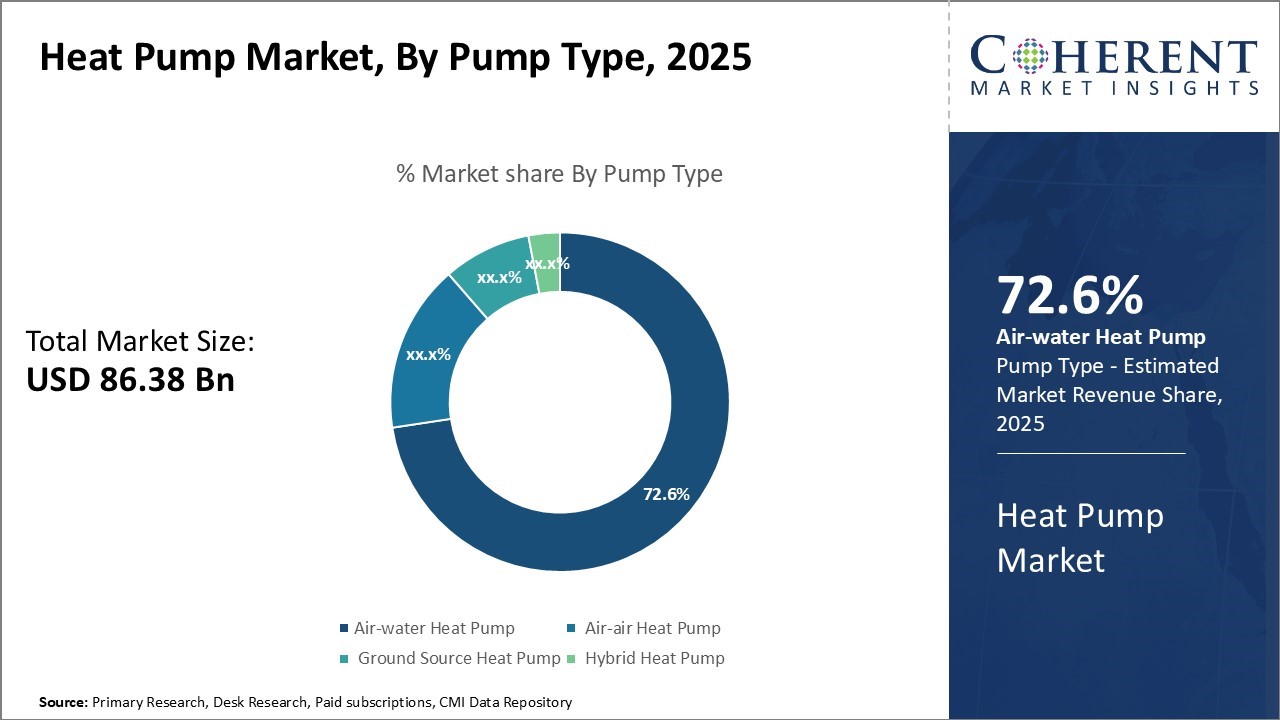
By pump type, air-water heat pumps contribute 72.6% of the market share in 2025, driven by rapid technological advancements and superior energy efficiency In air-water heat pumps, heat is extracted from outdoor air by refrigerants and transferred indoors for heating; they also cool by transferring heat from indoor air outdoors. Modern models of such devices function with a high level of efficiency even in sub-zero temperatures, using technologies such as an inverter system, improved compression cycles, and heating boost functions.
The installation process is easier when contrasted with other types of heat pumps, considering the minimal outdoor equipment and pipework. Raising awareness among both contractors and consumers about the superiority of the air-water type of heat pumps over the conventional system has added to the reasons why the market is expanding. Organizations that make the equipment are innovating, focusing on higher-capacity air-water heat pumps.
For instance, in September 2025, Vaillant announced the market launch of its fully redesigned aroTHERM plus air‑to‑water heat pump in Germany and Austria.
In terms of capacity, the highest share is held by the 20-30kW range, which currently has a market share of 39.21% in the year 2025. This range has plenty of adaptability as it can be suited to medium commercial establishments like small hotels, shopping malls, schools, and office complexes. It also has economies of scale with the capability of part load operation.
The 20-30kW capacity is the best in terms of power and capacity match. Hence, it eliminates either over-sizing or under-sizing, which would otherwise be a problem with larger machines. The modularity design approach for such machines presents a chance for an upgrade in capacity in the future. It is for this reason that 20-30kW remains the most preferred capacity.
For instance, in March 2024, Panasonic announced new Aquarea M Series R290 air‑to‑water heat pumps with capacities of 20 kW, 25 kW, and 30 kW designed for commercial and multi‑dwelling buildings
In terms of application, the residential segment accounts for a significant share of the market of 68.63% in 2025, assisted by the growth in the construction of housing units and the rising affordability of people. The growing demand for energy-effective cooling and heating solutions boosts the demand for air-source heat pumps as they are more eco-friendly and cost-effective.
The adoption rate is supported by the fact that there are incentives from the government through customer rebates and tax credits, as well as the option to get favorable financing for the installation in both old and new houses through companies. The functionality, sustainability, and economic advantages offered make heat pumps an appealing alternative to consider within the residential sector.
For instance, in March 2024, Aira introduced its Aira Heat Pump, a smart connected system for residential heating and hot water, featuring app control, intelligent learning routines, and an all‑inclusive ownership model aiming to accelerate home electrification.
To learn more about this report, Download Free Sample
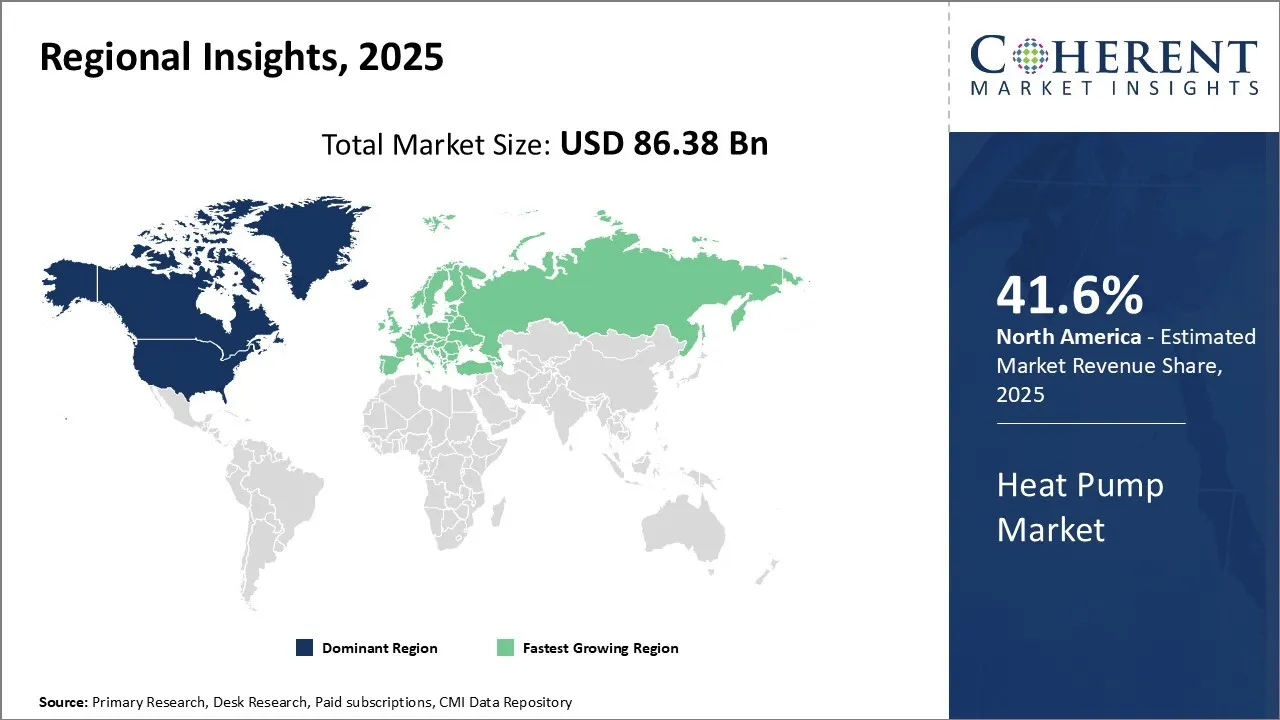
North America is projected to be the leading region in the global heat pump market by virtue of a 41.6% share by 2025, due to the growing acceptance of energy-saving heating and cooling systems. Government incentives, regulations that drive the development of low-carbon technologies, and acceptance and promotion of energy-saving capabilities by consumers ensure the use of heat pumps. There already exists a well-developed infrastructure for the production and supply chain of heating, ventilation, and air-conditioning systems in the American market, which provides the impetus for immediate adoption and innovative creations like smart heat pumps. Rising numbers of residential and commercial units being constructed ensure the increased use of heat pump technologies.
For instance, in March 2025, Daikin showcased its EWYK-QZ modular air-to-water heat pump at ISH 2025 in Germany, aimed at North American commercial and residential applications. Featuring R290 refrigerant, modular scalability, and smart connectivity, this launch highlights North America’s focus on energy-efficient and eco-friendly heating solutions.
The Asia Pacific region is expected to emerge as the fastest-growing geography in the heat pump market, due to the rising trend of urbanization, growing per capita income, and rising developments in emerging countries such as China, India, and Japan. The growing middle-class population and awareness of energy efficiency and sustainability are major factors for the growing demand for the installation of heat pumps in the residential and small commercial segments.
For instance, in September 2025, Panasonic introduced its Aquarea M Series R290 air-to-water heat pumps with capacities suitable for medium-sized commercial and residential applications in Asia Pacific.
The U.S. heat pump market is expanding in 2025 due to rising demand for energy-efficient and eco-friendly heating and cooling solutions. Encouragement by government policies and rising awareness about energy savings are key factors propelling the adoption of these systems. Technological advancements for developing intelligent and networked heat pumps, inverter compressors with low GWP refrigerants, and improvement in efficiencies for enhanced usability are increasingly replacing traditional heating and cooling systems in buildings due to their popularity and increasing adoption worldwide.
For instance, in August 2025, Carrier introduced its Opti‑V heat pump system, a variable refrigerant flow (VRF) solution for residential and light commercial applications with high efficiency ratings (SEER2 up to 29.7 and HSPF2 up to 12.2). This launch reinforces Carrier’s focus on sustainability and performance in the U.S. HVAC market.
China’s heat pump market is growing rapidly in 2025 due to increasing urbanization, rising disposable incomes, and strong government policies promoting energy efficiency and low-carbon technologies The residential and commercial sectors also embrace high-efficiency air-to-water and air-to-air heat pumps. There is an emerging demand for smart and networked heat pumps using low-GWP refrigerants among consumers and developers due to their desire for eco-friendly solutions for both new and existing buildings.
For instance, In May 2025, China’s National Development and Reform Commission and several ministries released an “Action Plan for Promoting High‑Quality Development of the Heat Pump Industry” aimed at improving energy efficiency, core technology breakthroughs, and broader adoption of heat pumps across buildings, industry, agriculture, and transportation sectors.
| Report Coverage | Details | ||
|---|---|---|---|
| Base Year: | 2024 | Market Size in 2025: | USD 86.38 Bn |
| Historical Data for: | 2020 To 2024 | Forecast Period: | 2025 To 2032 |
| Forecast Period 2025 to 2032 CAGR: | 10.8% | 2032 Value Projection: | USD 177.19 Bn |
| Geographies covered: |
|
||
| Segments covered: |
|
||
| Companies covered: |
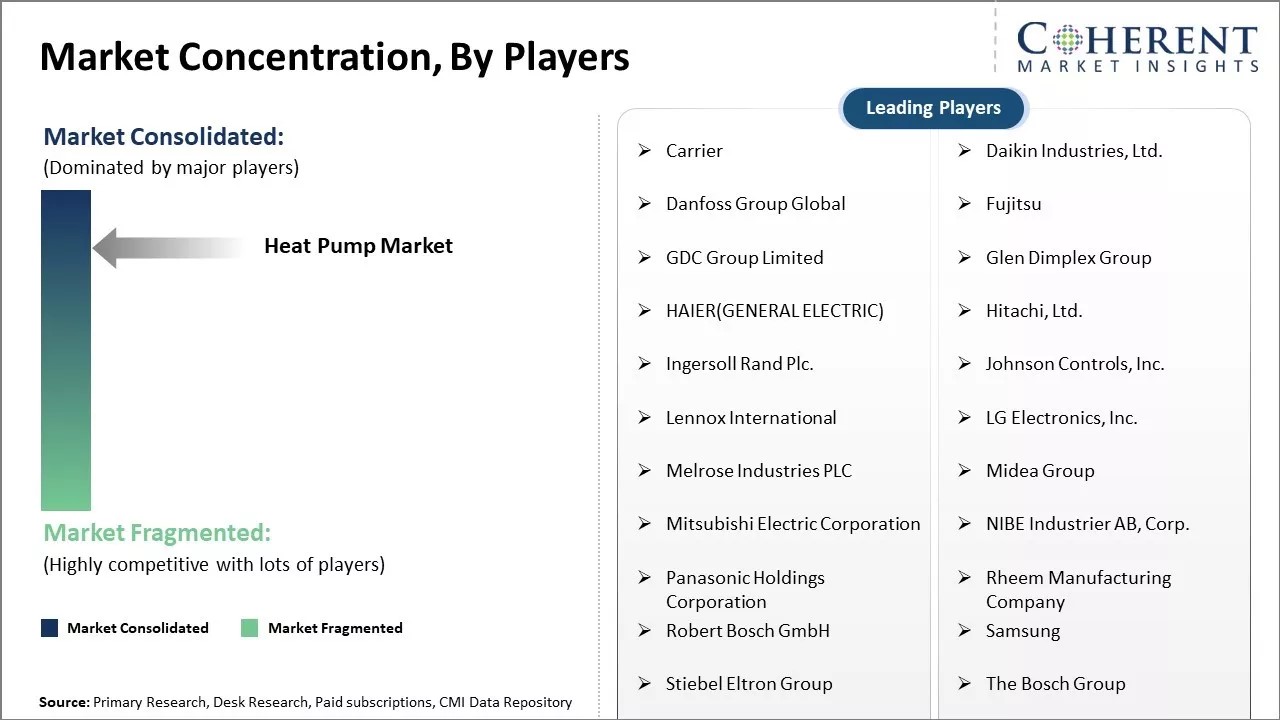
Carrier, Daikin Industries, Ltd., Danfoss Group Global, Fujitsu, GDC Group Limited, Glen Dimplex Group, HAIER(GENERAL ELECTRIC), Hitachi, Ltd., Ingersoll Rand Plc., Johnson Controls, Inc., Lennox International, LG Electronics, Inc., Melrose Industries PLC, Midea Group, Mitsubishi Electric Corporation, NIBE Industrier AB, Corp., Panasonic Holdings Corporation, Rheem Manufacturing Company, Robert Bosch GmbH, Samsung, Stiebel Eltron Group, The Bosch Group, United Technologies Corporation, Vaillant Group, and ViessmannWerke GmbH & Co. KG |
||
| Growth Drivers: |
|
||
| Restraints & Challenges: |
|
||
Uncover macros and micros vetted on 75+ parameters: Get instant access to report
To learn more about this report, Download Free Sample
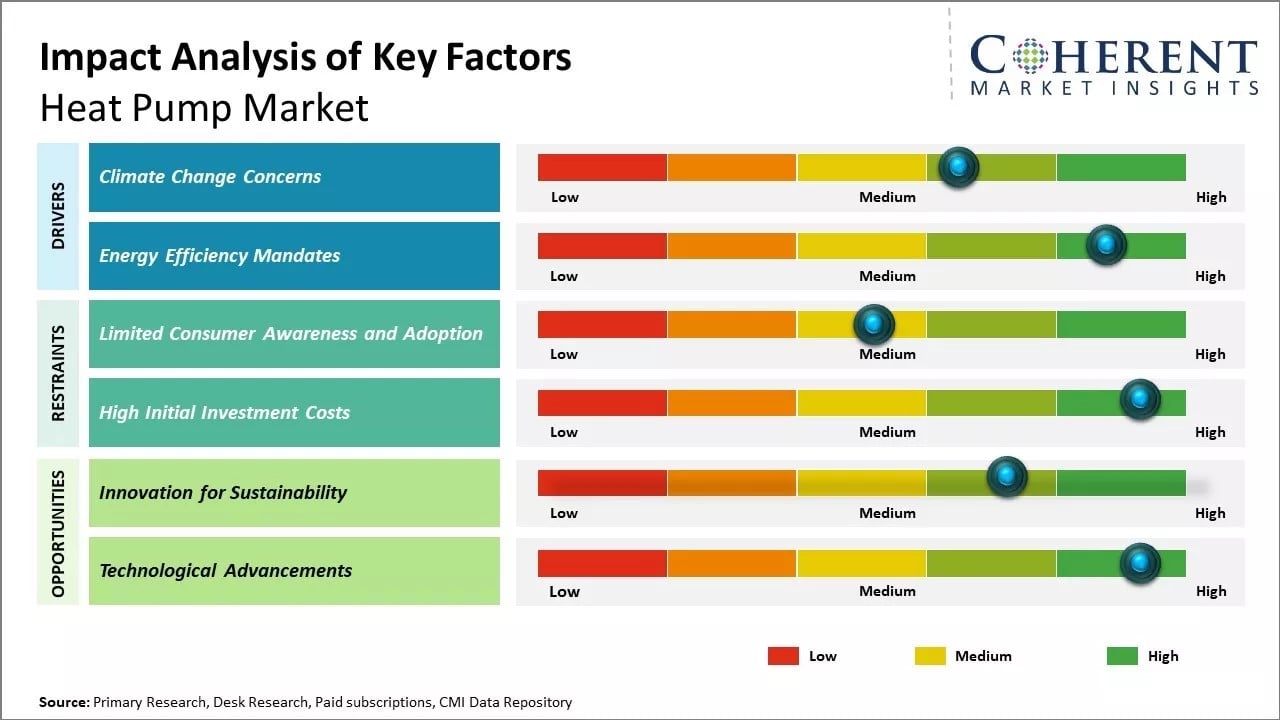
Innovation for Sustainability and Government Subsidies
The heat pump industry provides great opportunities. Government support through subsidies and incentives can make heat pump pricing comparable to gas furnaces and increase consumer demand. More energy-efficient and innovative designs can appeal to green consumers.
Share
Share
About Author
Ramprasad Bhute is a Senior Research Consultant with over 6 years of experience in market research and business consulting. He manages consulting and market research projects centered on go-to-market strategy, opportunity analysis, competitive landscape, and market size estimation and forecasting. He also advises clients on identifying and targeting absolute opportunities to penetrate untapped markets.
Missing comfort of reading report in your local language? Find your preferred language :
Transform your Strategy with Exclusive Trending Reports :
Frequently Asked Questions
Joining thousands of companies around the world committed to making the Excellent Business Solutions.
View All Our Clients
 Schedule a meeting with report Author