

Medical Micro-Electro Mechanical Systems Market Size and Share Analysis - 2026 to 2033
The global medical micro-electro mechanical systems market size is expected to reach approximately USD 14,970 Mn in 2026 and is projected to grow at a compound annual growth rate (CAGR) of 18% during the forecast period (2026-2033), reaching USD 47,700 Mn by 2033. This growth is attributable to rising adoption of minimally invasive surgical procedures and the increasing demand for wearable medical devices for continuous patient monitoring.
Key Takeaways from the Medical Micro-Electro Mechanical Systems Market Report
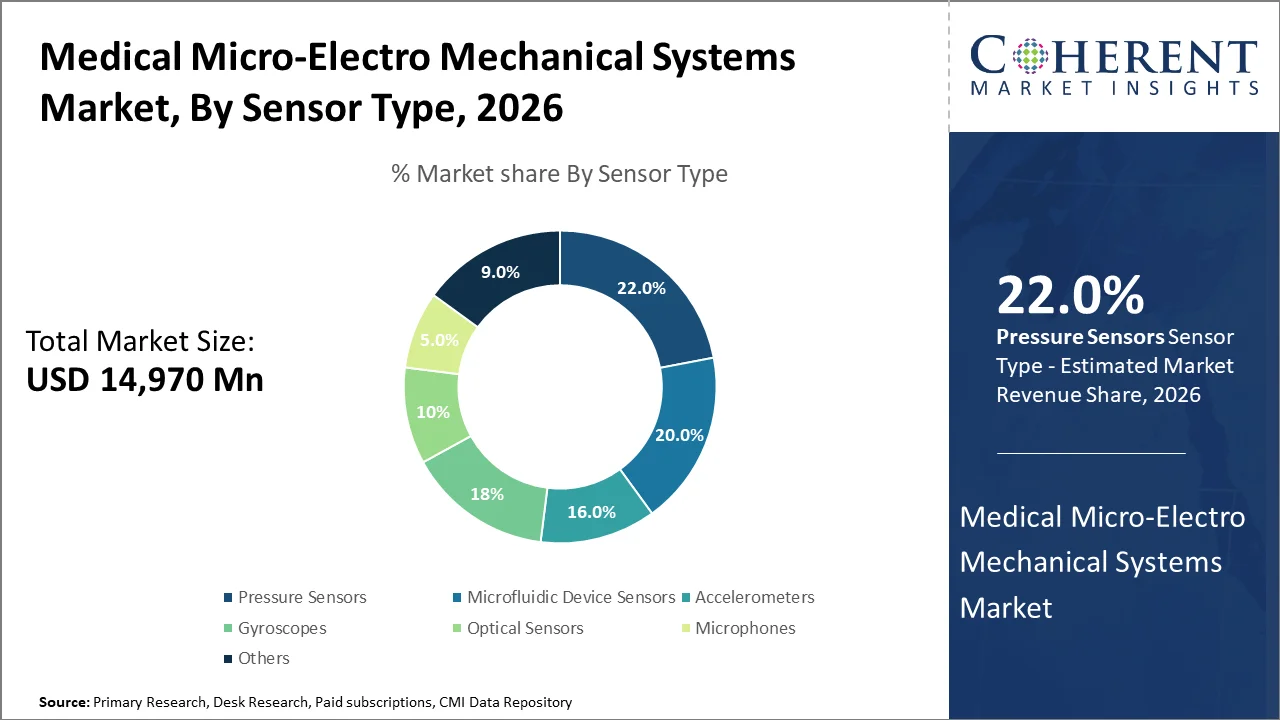
- Based on sensor type, pressure sensors segment is expected to dominate the market with a share of 22% in 2026 because of their high demand in vital sign monitoring and respiratory devices.
- By application, monitoring & diagnostic devices segment is slated to account for 45% of the global medical micro-electro mechanical systems market share in 2026, thanks to rising chronic illness tracking, wearable integration, and point of care diagnostics.
- In terms of end user, hospitals & clinics segment is forecast to hold a market share of over 50% in 2026 because they deploy diagnostic/monitoring MEMS devices at scale.
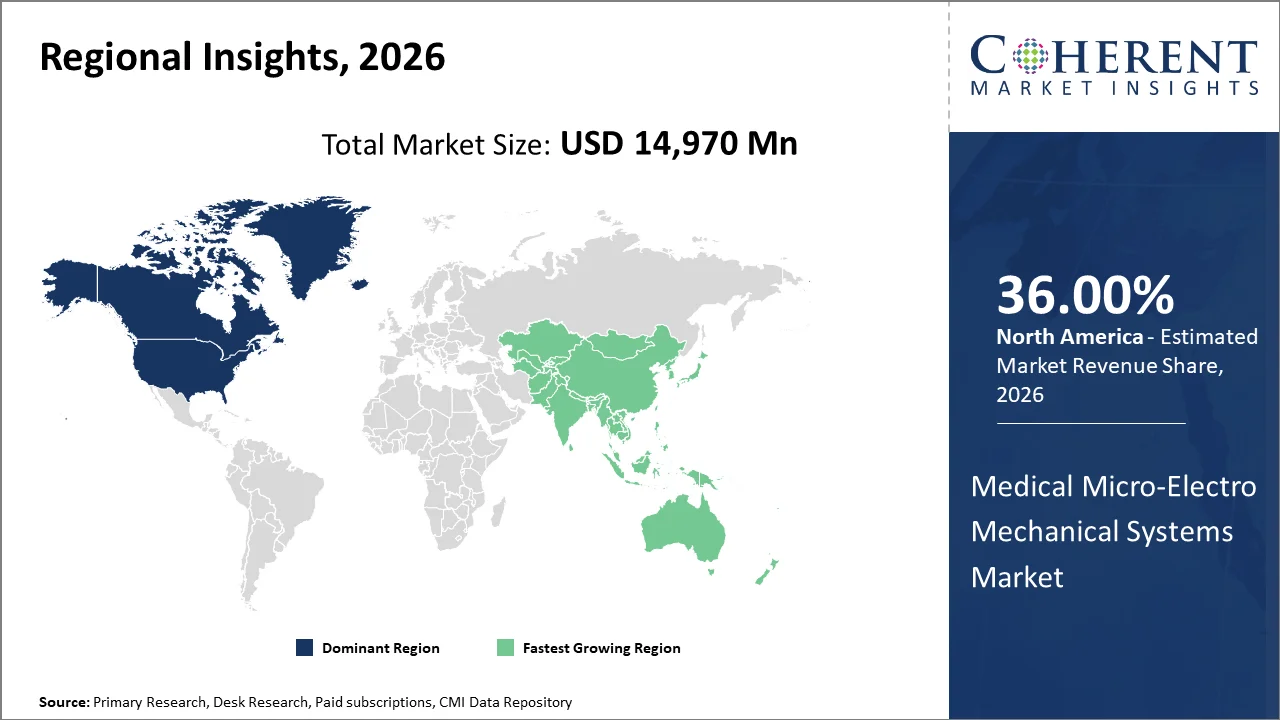
- North America is anticipated to lead the global medical micro-electro mechanical systems industry, capturing a share of 36% in 2026, mostly due to advanced healthcare infrastructure, high adoption of wearable and diagnostic MEMS devices, and supportive regulatory frameworks.
- Asia Pacific, with a share of 20% in 2026, is poised to emerge as the most lucrative pocket for medical micro-electro mechanical system manufacturers during the forecast period, thanks to rapid healthcare infrastructure development, increasing adoption of wearable and home-based diagnostic devices, and growing prevalence of chronic diseases.
Medical Micro-Electro Mechanical Systems Market Overview
The global medical micro-electro mechanical systems (MEMS) market is expected to grow rapidly during the forecast period. This is primarily due to rising incidence of chronic diseases, increasing adoption of advanced healthcare technologies and rising demand for minimally invasive diagnostic and therapeutic devices.
Micro-electro-mechanical systems (MEMS) are innovative technologies used to manufacture small mechanical and electromechanical devices through microfabrication techniques. The basic elements of MEMS include miniaturized structures, actuators, sensors, and microelectronics. MEMS are widely applied in medical devices to enhance patient monitoring and enable faster, more accurate detection of physiological signals.
MEMS technology allows the creation of compact, precise, and cost-effective medical devices. These devices are widely used in drug delivery systems, biosensors, and implantable medical devices. In addition, growing number of chronic diseases like diabetes and cardiovascular disorders is increasing the demand for medical MEMS, since these conditions need continuous patient monitoring and real-time diagnostics.
The growing use of wearable technologies like smartwatches is driving growth of the micro‑electro‑mechanical systems (MEMS) market, as these devices use MEMS sensors to track motion and physiological signals. For example, in September 2024, Apple launched the Apple Watch Series 10, which includes MEMS-based sensors such as an electrical heart sensor, optical heart sensor, high‑g accelerometer, and gyroscope. These sensors allow ECG recording, heart rate monitoring, blood oxygen tracking, and irregular rhythm alerts, showing how modern smartwatches boost demand for MEMS technology.
The integration of MEMS into implantable and therapeutic devices is driving market growth. MEMS components are increasingly used in implantable sensors, drug delivery systems, and robotic-assisted surgical tools. Furthermore, the shift toward remote and preventive healthcare is boosting sales of medical micro‑electro‑mechanical systems. Growing demand for remote patient monitoring, along with the rise of telemedicine, is creating new applications for MEMS in continuous health tracking and early warning systems.
Current Events and Their Impact on the Medical Micro-Electro Mechanical Systems Market
Current Event | Description and its Impact |
Global Healthcare Technology Integration and Digital Health Transformation |
|
Regulatory Harmonization and Approval Acceleration |
|
Segmental Insights
- Current Industry Events of 2026
- Market Size Estimation
- Regional Breakdown
- Competitive Landscape
- Customer Intelligence
- Segmental Analysis
- Pricing Analysis
- Key Market Drivers, Challenges & Future Trends
- Customized Insights Section
Which Sensor Type Leads the Medical MEMS Market?
Pressure Sensors Lead Due to Their Versatility
By sensor type, pressure sensors segment is likely to retain its market dominance during the assessment period, accounting for a share of 22% in 2026. This is mostly due to widespread applications across various medical devices, including blood pressure monitors, respiratory equipment, and infusion pumps.
Pressure sensors are prized for their accuracy, reliability, and compact design, making them essential for wearable health devices and critical care equipment. Advances in microfabrication and MEMS technology are improving their sensitivity and lowering production costs, further boosting their use in hospitals, clinics, and home healthcare settings.
Which is the Most Lucrative Application of Medical MEMS?
Monitoring & Diagnostic Devices Remain the Most Remunerative Application
According to Coherent Market Insights, monitoring & diagnostic devices segment is expected to account for the highest revenue share of 45% in 2026. This is mostly due to growing demand for accurate and real-time patient monitoring, rise in chronic diseases, and increasing adoption of advanced medical technologies. These devices, which include wearable sensors, implantable monitors, and point-of-care diagnostic tools, help healthcare professionals track vital signs, detect health issues early, and improve treatment outcomes, making them the most lucrative application of medical micro-electro mechanical systems (MEMS).
Regional Insights
Miniaturization Trend Fueling Demand in North America
North America is expected to retain its dominance over the global medical micro electro mechanical systems (MEMS) market, capturing a share of 36% in 2026. This is because of increasing demand for miniaturized and high precision medical devices, rising incidence of chronic diseases necessitating continuous monitoring, and rapid adoption of wearable and implantable MEMS-enabled solutions.
Technological advances in microfluidics and biosensors, along with the integration of MEMS with IoT and AI for smarter health tracking, are boosting their use in diagnostics, monitoring, and therapy. North America’s advanced healthcare infrastructure, strong R&D investment, and supportive regulations continue to boost growth. The United States, especially, is a leader in using these miniaturized medical systems in hospitals and clinics. These systems help improve early disease detection, remote monitoring, and personalized care delivery.
Asia Pacific Emerging as the Fastest Growing Medical MEMS Market
Asia Pacific medical MEMS market is anticipated to emerge as the most lucrative market for medical micro-electro mechanical system companies during the forecast period. This can be attributed to rapid healthcare infrastructure development, growing emphasis on cost effective diagnostic and monitoring tools, and rising adoption of compact MEMS technologies in wearable health devices and point-of-care systems.
Demand for medical micro-electro mechanical systems in Asia Pacific is also growing due to increasing healthcare spending and a larger patient population seeking early and accurate diagnosis. According to Coherent Market Insights’ latest medical micro-electro mechanical systems market outlook, Asia Pacific is set to account for a global market share of 22% in 2026.
Medical Micro-Electro Mechanical Systems Market Outlook – Country-wise
U.S. Medical Micro-Electro Mechanical Systems Market Trends
The U.S. is expected to remain the market leader in medical MEMS, thanks to advanced healthcare infrastructure, high patient volumes, and rapid adoption of miniaturized and smart medical devices. Hospitals and outpatient centers are increasingly investing in wearable and implantable MEMS-enabled solutions, automated monitoring systems, and smart catheters to improve patient safety as well as reduce complications and enhance workflow efficiency.
China Medical Micro-Electro Mechanical Systems Market Forecast
China is becoming a happy hunting ground for medical MEMS manufacturers due to rapid expansion of modern hospitals, rising surgical volumes, and increasing healthcare spending, supported by initiatives like Healthy China 2030. The growing use of minimally invasive and robotic-assisted surgeries is boosting demand for precise monitoring devices and MEMS-enabled intravenous access tools. Domestic manufacturing capabilities and government support for advanced medical technologies further accelerate the adoption of MEMS in hospitals and surgical centers.
Medical Micro-Electro Mechanical Systems Industry News
- In early 2026, Abbott Laboratories received FDA approval for the CardioMEMS HERO device. The new device is smaller, lighter, and designed for remote heart failure monitoring.
- In October 2025, Omron Corporation won the Best in Class award at the 2025 Digital Health Awards. The award recognized its IntelliSense™ blood pressure monitors with AFib detection.
- In June 2025, Agilent Technologies showcased new products and innovations at HPLC 2025. The new launches include Hybrid Multisampler, LC Single Quadrupole Mass Spectrometers and other medical solutions.
Market Report Scope
Medical Micro-Electro Mechanical Systems Market Report Coverage
| Report Coverage | Details | ||
|---|---|---|---|
| Base Year: | 2025 | Market Size in 2026: | USD 14,970 Mn |
| Historical Data for: | 2020 To 2024 | Forecast Period: | 2026 To 2033 |
| Forecast Period 2026 to 2033 CAGR: | 18% | 2033 Value Projection: | USD 47,700 Mn |
| Geographies covered: |
| ||
| Segments covered: |
| ||
| Companies covered: | Honeywell Sensing and Control, Abbott Laboratories, Flexpoint Sensor Systems, Analog Device Inc., GE measurement and control solutions, Omron Corporation, Integrated Sensing Systems, MemsTech Bhd., and Agilent Technologies | ||
| Growth Drivers: |
| ||
| Restraints & Challenges: |
| ||
Medical Micro-Electro Mechanical Systems Market Drivers
Rising Prevalence of Chronic Diseases
The global prevalence of chronic conditions like diabetes, cardiovascular disease, and respiratory disorders is increasing significantly. This trend is fueling demand for continuous monitoring and early diagnosis. MEMS-enabled sensors and devices play a critical role in real-time patient tracking and long-term health management, especially in wearable and implantable applications. Thus, rising incidence of chronic diseases is expected to provide a strong impetus for the growth of medical micro-electro mechanical systems market during the forecast period.
Increasing Adoption of Portable and Wearable Medical Devices
Healthcare in the contemporary world is shifting toward patient centric and home care models, which rely on portable, compact, and connected medical solutions. MEMS technology, with its miniaturized sensors and low power requirements, is essential for wearables and remote monitoring systems. Consequently, growing adoption of wearable medical technologies is driving higher demand for medical micro‑electro‑mechanical systems.
Medical Micro-Electro Mechanical Systems Market Trends
Rise of Microfluidic Biochips and Lab-on-Chip Devices
Rising adoption of microfluidic biochips and lab-on-chip devices is a key growth-shaping trend in the medical micro-electro mechanical systems market. MEMS-based microfluidic technology is transforming point-of-care diagnostics by enabling rapid testing with high accuracy using tiny fluid samples. This allows doctors to get faster results and makes testing simpler in clinics and hospitals.
Integration of MEMS with Advanced Digital Health Technologies
Leading manufacturers of medical micro-electro mechanical systems are integrating MEMS sensors with IoT platforms and artificial intelligence (AI). This enables real time data transmission, predictive analytics, and smarter clinical decisions, expanding use in connected healthcare systems.
Medical Micro-Electro Mechanical Systems Market Opportunities
Rising Demand for Minimally Invasive Procedures
There is a rising shift toward minimally invasive surgeries and diagnostics, where MEMS components such as tiny sensors, actuators, and microfluidic devices are increasingly used. MEMS-enabled tools, including optical sensors and microfluidic systems, enhance precision, reduce device size, and improve patient outcomes by shortening recovery times. This trend toward minimally invasive procedures is expected to create growth opportunities for medical micro-electro mechanical systems market during the forecast period.
Miniaturization and Technological Innovation
Advances in MEMS fabrication and design are enabling ultra‑small, energy-efficient devices that can be integrated into compact medical tools and wearable devices. This miniaturization enhances device performance and expands applications in diagnostics and health monitoring. These innovations support sophisticated technologies such as lab-on-a-chip diagnostics, precision microsurgical instruments, and implantable sensors for real-time patient monitoring.
Analyst Opinion (Expert Opinion)
- Precision and miniaturization are redefining device utility. MEMS sensors in medical devices are now delivering resolution down to nanometer scales, allowing wearable glucose monitors to detect glucose fluctuations with 95 % accuracy in real time. Hospitals and biotech firms in the contemporary world increasingly prioritize MEMS-enabled tools that provide actionable data at the micro-scale, signaling that future adoption will favor performance precision over traditional sensor robustness.
- Integration with AI and IoT is a game-changer. MEMS-based biosensors connected to cloud analytics have reduced diagnostic lag in ICU monitoring by up to 28 %, according to a recent multicenter study in Europe. Clinicians are now favoring devices that seamlessly communicate with electronic health records and predictive algorithms, showing that MEMS success is moving beyond mechanical ingenuity toward full-system intelligence.
- Reliability under physiological stress is non-negotiable. In vivo testing demonstrates that MEMS pressure sensors maintain accuracy within 2 % even under rapid hemodynamic changes, outperforming legacy mechanical transducers. Critical care teams report fewer false alarms as well as faster response times, proving that mechanical resilience under real-world conditions is becoming the primary determinant for procurement rather than brand legacy.
- Material innovation directly impacts clinical confidence. MEMS implants with biocompatible silicon coatings have reduced tissue reaction and device rejection rates by 18 % in long-term trials. Hospitals and surgical centers now demand devices whose micro-scale materials are optimized for both performance and safety, indicating that MEMS adoption increasingly hinges on material science excellence alongside miniaturization and signal fidelity.
Speak to the analyst
Want personalized insights?
Take the findings above to one of our principal consultants, or have the report rebuilt around the segments, geographies and competitors you actually track.
Market Segmentation
- By Sensor Type Insights ( Revenue, USD Mn, 2021 - 2033)
- Pressure Sensors
- Microfluidic Device Sensors
- Accelerometers
- Gyroscopes
- Optical Sensors
- Microphones
- Others
- By Application Insights ( Revenue, USD Mn, 2021 - 2033)
- Monitoring and Diagnostic Devices
- Surgical Devices
- Therapeutic Devices
- By End User ( Revenue, USD Mn, 2021 - 2033)
- Hospitals and Clinics
- Research Institutions
- Biotechnology Companies
- By Region Insights ( Revenue, USD Mn, 2021 - 2033)
- North America
- U.S.
- Canada
- Latin America
- Brazil
- Argentina
- Mexico
- Rest of Latin America
- Europe
- Germany
- U.K.
- Spain
- France
- Italy
- Russia
- Rest of Europe
- Asia Pacific
- China
- India
- Japan
- Australia
- South Korea
- ASEAN
- Rest of Asia Pacific
- Middle East
- GCC Countries
- Israel
- Rest of Middle East
- Africa
- South Africa
- North Africa
- Central Africa
- North America
- Key P layers in the Medical Micro-Electro Mechanical Systems Market
- Honeywell Sensing and Control
- Abbott Laboratories
- Flexpoint Sensor Systems
- Analog Device Inc.
- GE Measurement and Control Solutions
- Omron Corporation
- Integrated Sensing Systems
- MemsTech Bhd.
- Agilent Technologies
Sources
Primary Research interviews
- Interviews with medical device engineers and product development leads
- Interviews with OEMs in the MEMS healthcare segment
- Discussions with procurement heads of hospitals using MEMS‑embedded devices
- Expert inputs from clinical application specialists in minimally invasive technologies
Databases:
- PubMed database for biomedical research and device validation data
- ClinicalTrials.gov for clinical evaluation of MEMS‑based diagnostics and monitoring systems
- U.S. Food and Drug Administration (FDA) medical device database
- World Health Organization (WHO) digital health device listings
- National Center for Biotechnology Information (NCBI) repositories
Magazines
- Medical Device and Diagnostic Industry (MD+DI)
- IEEE Pulse – Biomedical Engineering Magazine
- Medical Design Technology
- Healthcare Technology & Management Magazine
Journals
- Journal of Microelectromechanical Systems (IEEE)
- Sensors and Actuators A: Physical / Sensors and Actuators B: Chemical
- Biomedical Microdevices (Springer)
- Journal of Micromechanics and Microengineering
- Lab on a Chip (Royal Society of Chemistry)
Newspapers
- The New York Times – Health Section
- The Wall Street Journal – Health & Technology
- The Guardian – Science & Technology
- The Hindu – Health & Technology
Associations
- Institute of Electrical and Electronics Engineers (IEEE) – Engineering in Medicine & Biology Society
- Biomedical Engineering Society (BMES)
- Association for the Advancement of Medical Instrumentation (AAMI)
- International Society for Optical Engineering (SPIE)
Public Domain sources
- National Institutes of Health (NIH) publications and reports
- U.S. Centers for Disease Control and Prevention (CDC) device safety reports
- World Bank healthcare technology adoption statistics
- Patent filings via USPTO and WIPO related to MEMS medical technologies
- Government healthcare digital transformation strategy documents
Proprietary Elements
- CMI Data Analytics Tool
- Proprietary CMI Existing Repository of information for last 8 years
Get access to 250+ pages report
Every segment, forecast, competitor profile and data table behind the analysis above — available for instant download.
- ESOMAR Member
- ISO 9001:2015 Certified
- D-U-N-S Registered
- GDPR & CCPA Compliant
Missing comfort of reading report in your local language? Find your preferred language:
Transform your Strategy with Exclusive Trending Reports
Frequently Asked Questions
The global market is estimated to be valued at USD 14,970 Mn in 2026.
The global Medical Micro-Electro Mechanical Systems Market value is expected to reach USD 47,700 Mn by 2033.
The global market is poised to exhibit a CAGR of 18% from 2026 to 2033.
Major growth factors include increasing prevalence of chronic diseases and rising adoption of wearable technologies.
High development costs of MEMS devices and stringent government regulations for product approval are slowing down market growth.
Pressure sensors, with about 20% market share in 2026, dominate the market.