

Middle East and Africa Animal Healthcare Market Analysis and Forecast: 2026-2033
The Middle East and Africa Animal Healthcare Market is anticipated to grow at a CAGR of 5.4% with USD 5,538.1 Mn share in 2026 and is expected to reach USD 7,895.7 Mn in 2033. Rising livestock population & food security needs (livestock plays a critical economic role, especially in Africa, for instance, according to the data published by the Food and Agricultural Organization, approximately 30% of agricultural GDP in Sub-Saharan Africa is generated from livestock farming, with significant contributions from cattle, sheep, goats, and poultry), increasing demand for animal-based protein, and rising pet ownership are the significant factors responsible for the Middle East and Africa animal healthcare market growth over the forecast period.
FA0;
Key Takeaways
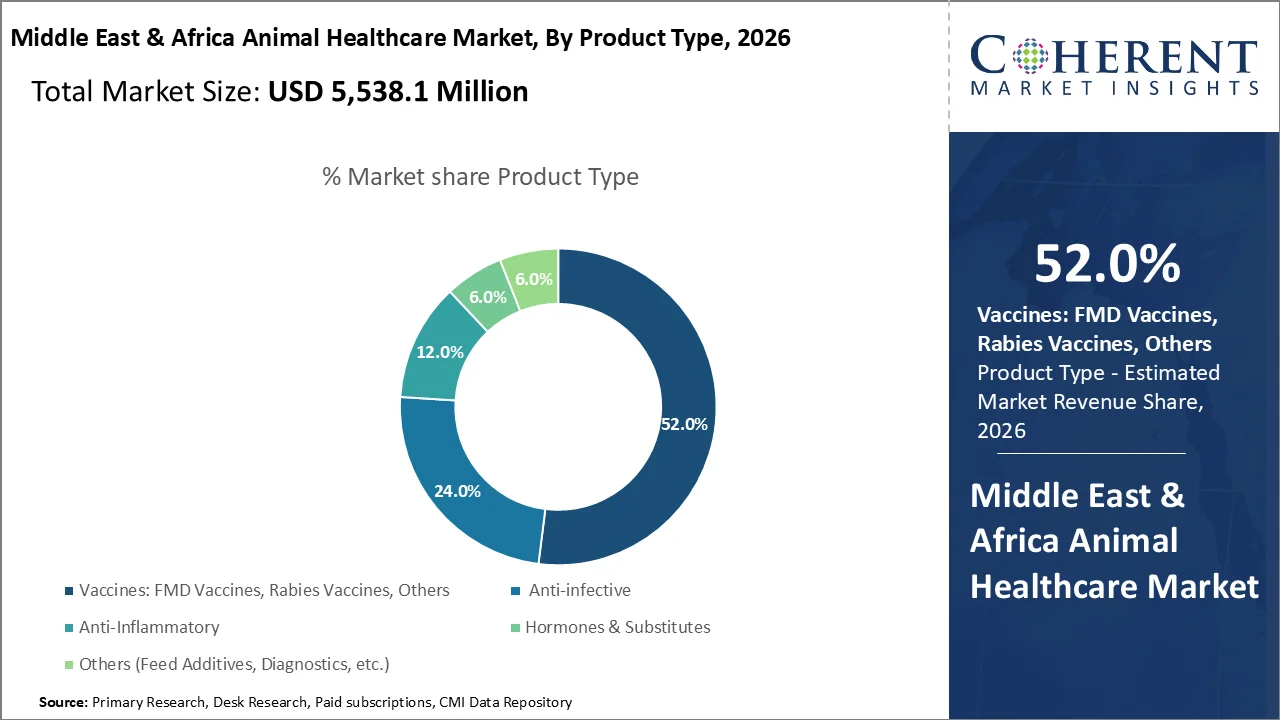
- Vaccines segment expected to account the largest share of 52.0% in 2026, driven by the rapid adoption of pets and large animal population. In 2026, according to data published by the FAO, Africa alone has more than 300 million cattle and nearly 700 million poultry, highlighting the immense livestock base requiring animal health services such as vaccines, feed additives, disease monitoring, and preventive care. This large livestock population directly drives market demand for veterinary vaccines and health products in the region.
Source: FAO
- Livestock segment will dominate with 78.0% in 2026, supported by the large livestock populations and rural livelihoods, disease burden and veterinary demand. In May 2025, according to the data published by the World Organisation for Animal Health’s (WOAH) 2024/25 “Animal Health Situation Worldwide” report, in Africa, multiple significant livestock diseases were reported, with outbreaks such as Foot‑and‑Mouth Disease (FMD: 159 outbreaks), Lumpy Skin Disease (LSD: 120 outbreaks), African Swine Fever (ASF: 41 outbreaks), and Rabies (28 outbreaks) beginning in 2024 illustrating the ongoing animal health challenges in the region and the need for vaccines and prevention.
Source: WOAH
- Distribution Channel segment -veterinary clinics hold the dominant share of 38% in 2026 owing to swift adoption of professional animal healthcare service infrastructure and preventive care delivery systems. In order to minimize zoonotic spillovers and safeguard the health of both humans and animals, FAO and WOAH (together with WHO) collaborate to support the Tripartite One Health framework, which promotes coordinated animal disease prevention initiatives like immunization, surveillance, and joint risk assessments. This increases the uptake of preventative veterinary care in animal health markets around the world, including MEA.
Source: FAO
- Middle East is expected to acquire the dominant share of 55.0% in 2026, attributed to strong public and private investment in animal health infrastructure and food safety initiatives. In 2025, According to the data published Food and Agriculture Organization, Saudi Arabia, for instance, has been extending veterinary care facilities throughout the area, introducing national immunization programs, and greatly boosting its investments in livestock health. In order to enhance the livestock production chain and meet the growing consumer demand for premium meat and dairy products, the Gulf Cooperation Council (GCC) countries have implemented a number of food safety measures. The region's leadership in the animal healthcare industry is anticipated to be strengthened by these initiatives.
Source: FAO
Segmental Insights
Why is Vaccines Acquiring the Largest Market Share?
Vaccines are projected to account for the largest share of Middle East and Africa animal healthcare in 2026, representing approximately 52.0% of the total volume. Government across Middle East and Africa actively run national immunization campaigns. GCC countries have strict vaccination for imported livestock and African countries are donor-supported vaccination drives (FAO, WOAH). Hence, due to government vaccination programs and strict vaccination laws there is bulk procurement of vaccines and regular repeated demand cycles. For instance, the Food and Agriculture Organization (FAO) supported a nationwide livestock vaccination campaign targeting highly contagious animal diseases such as Peste des Petits Ruminants (PPR), sheep and goat pox, contagious bovine pleuro‑pneumonia (CBPP) and African horse sickness, running from October 2025 through January 2026 to protect approximately 9.4 million livestock in Sudan. This initiative was driven by FAO and national government veterinary services to immunize herds and reduce disease spread in key animal populations. This shows that government immunization programs backed by the FAO produce cycles of bulk buying and repeated need for vaccinations in Africa, which keeps demand high in the vet healthcare sector.
- Current Industry Events of 2026
- Market Size Estimation
- Regional Breakdown
- Competitive Landscape
- Customer Intelligence
- Segmental Analysis
- Pricing Analysis
- Key Market Drivers, Challenges & Future Trends
- Customized Insights Section
Livestock holds the Largest Market Share
Based on animal type, livestock dominate the market, accounting for a significant 78.0% share in 2026, attributing to region’s economy, food systems, and public health priorities are heavily tied to livestock. Large livestock population base has driven the segment growth significantly in the market. According to the Food and Agriculture Organization (FAO) estimates Eastern Africa’s cattle herd alone exceeds 150 million animals and represents nearly 40% of Africa’s total cattle population. Furthermore, according to the data published by the Springer Nature, in November 2025, chickens alone made up roughly 59.4% of the primary livestock population in Africa's livestock production systems, followed by goats (13.5%), sheep (11.7%), and cattle (10.5%). This illustrates the vast and varied livestock population base that continues to support the region's high demand for animal health products. Hence, large number of animals increases the demand for routine treatment, disease prevention and veterinary services. This directly makes livestock the largest revenue-generating segment. In addition, Livestock export markets require disease-free certification and vaccinated animals which is important for Middle East livestock imports and African export economies and encourages systematic healthcare adoption.
Why Veterinary Clinics segment dominates the market?
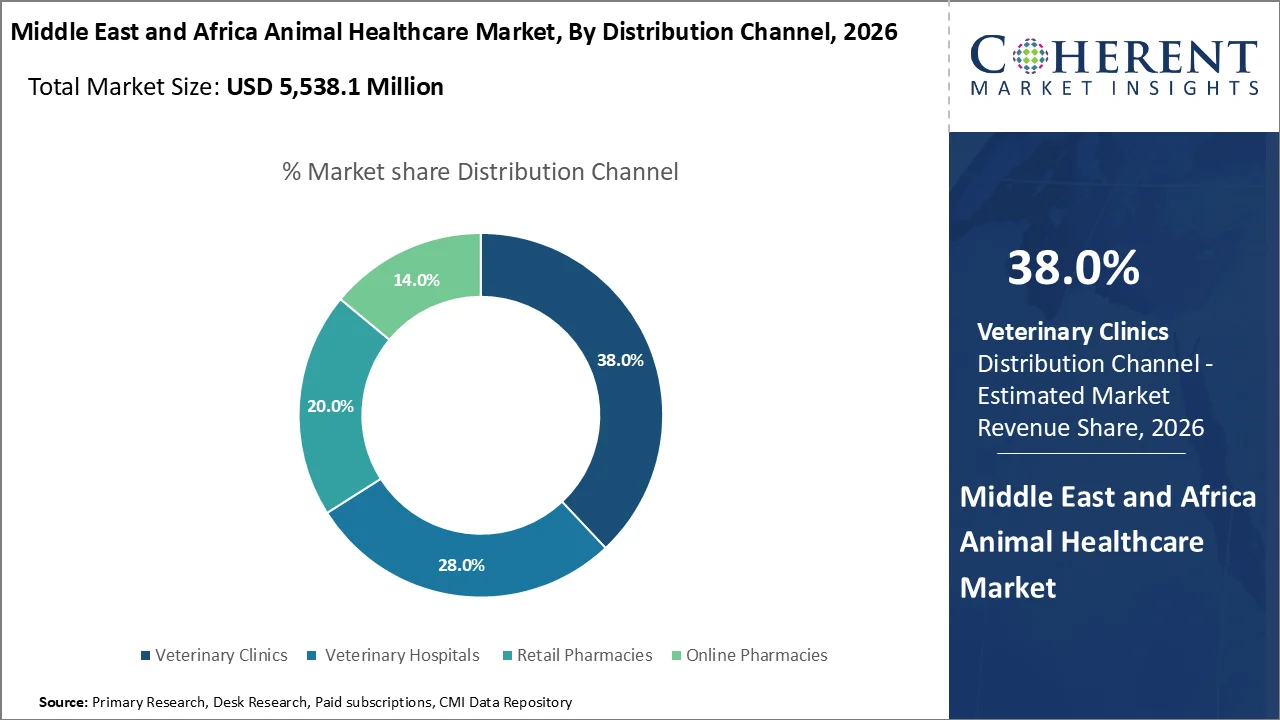
Veterinary Clinics account for the largest share of 38.0% in 2026 due to increasing awareness of animal health & welfare, growth in companion animal (Pet) ownership and rising demand for professional veterinary services. By 2024–2025, around 66% of U.S. households—approximately 86.9 to 95 million—own a pet, reflecting a strong increase over the past three decades. Dogs are the most common, present in about 65.1 million homes, followed by cats in roughly 46.5 million households. Rising demand for professional veterinary services has significantly driven the growth of the segment in the market. Increasing need for diagnosis, treatment, surgeries, and emergency care has increased frequency of veterinary clinics visits. Veterinary clinics provide comprehensive services, making them the primary point of care. Increasing awareness of animal health & welfare leads to regular check-ups and preventive care (vaccination, deworming). Clinics are the main delivery channel for these services. Rapid increase in pet adoption in UAE, South Africa and Saudi Arabia has increased demand for the routine health care and specialized treatments. Veterinary clinics become the primary service providers for pets. Rapid urban growth in cities like Riyadh, Dubai, and Nairobi leads to higher disposable income and willingness to spend on animal healthcare which drives more visits to clinics and hospitals. For instance, according to the government of Dubai’s official statistics authority estimates the emirate’s population at 4.248 million at end-2024, up from 3.718 million in 2022, which is about 14.3% growth in two years. The same bulletin shows 5.938 million active individuals during peak hours, reflecting a much larger daytime service base. In parallel, the official Dubai Pulse dataset for animal hospitals and clinics showed 400 records, updated on 26 January 2026, while the IMF’s April 2026 outlook puts UAE GDP per capita at about US$54,210 in 2026. Together, these indicators support stronger affordability and higher use of organized veterinary services.
Rising Demand for Animal-Based Food (Milk, Eggs, Meat)
Rapid population growth and increasing urbanization has increased the demand for the higher protein consumption. Middle East and Africa countries are increasing meat and dairy production to reduce import dependency. Increasing demand for animal-based food has expanded livestock farming. Expansion of livestock farming has eventually increased demand for anti-infectives, vaccines, and feed additives.
According to FAO, the demand for animal products in emerging nations is predicted to more than quadruple by 2030 as a result of population increase, rising affluence, and shifting diets that prioritize consuming more protein. In order to safeguard herd health and guarantee food safety, this ongoing livestock expansion highlights the increased need for vaccinations, anti-infectives, and other veterinary health inputs.
According to the OECD Agricultural Outlook, global meat production was approximately 365 million tonnes in 2024, with Africa contributing about 6 % of this output, underscoring increasing regional livestock production. FAO’s FAOSTAT database, which tracks livestock populations and production volumes up to the most recent year, provides the statistical basis for projecting continued demand growth in 2026 and beyond.
High Prevalence of Animal & Zoonotic Diseases
Rising cases of animal & zoonotic diseases is a major factor influencing the growth of the Middle East and Africa animal healthcare market size over the forecast period. Frequent outbreaks such as avian influenza, African swine fever and foot and mouth disease have increased demand for diagnostics, vaccines and therapeutics which has driven the growth of the market.
For instance, in 2026, according to the data published by the official WOAH/WAHIS, numerous outbreaks of foot-and-mouth disease (including SAT-1) were confirmed in African nations like Botswana, Lesotho, Zambia, Eswatini, and Zimbabwe. Additionally, cases of African swine fever were reported in Kenya and Cabo Verde, and other diseases like anthrax and African horse sickness continue to affect livestock health. All of these factors have increased demand for diagnostics, vaccines, and treatments in the Middle East and Africa animal healthcare market. These ongoing disease pressures are consistent with WOAH's worldwide reporting that priority illnesses including FMD, avian influenza, and African swine fever continue to pose serious risks and call for more veterinary intervention. Moreover, as of 26 February 2026, there were 64 total reported outbreaks of SAT2 FMD, affecting a susceptible livestock population of approximately 51,178 cattle and swine. While this is predominantly SAT2, it illustrates the high burden of FMD variants in southern Africa in 2026.
Source: WOAH;
Rising Government Initiatives & International Support Programs is transforming the Middle East and Africa Animal Healthcare Market
Increasing government initiatives and international support programs has created significant opportunity for the growth of the Middle East and Africa animal healthcare market over the forecast period. In 2026, governments in the Middle East and Africa have strengthened official animal healthcare programs in collaboration with international partners, expanding opportunities for veterinary services, vaccines, and diagnostics. For instance, the World Organisation for Animal Health (WOAH) and regional authorities organized a webinar on 17 March 2026 on advancing the One Health approach for control of zoonotic tuberculosis in Africa, bringing together national Programme managers, veterinary and public health experts to enhance cross‑sectoral disease surveillance and control capacities across African countries. This represents a government‑supported initiative integrating animal health and public health systems to better prevent and manage zoonotic diseases, directly increasing demand for veterinary healthcare solutions. Furthermore, in 2026, the Food and Agriculture Organization's 2026 animal health event calendar features a number of government-aligned webinars, such as "Current global situation and emerging risks for foot-and-mouth disease" on April 1, 2026, and the introduction of a new animal mpox case detection guide on February 18, 2026, with the goal of enhancing national disease prevention strategies, surveillance, and laboratory capacity in areas like the Middle East and Africa. These official programs promote investment in diagnostics, vaccinations, and treatments while bolstering preventative veterinary care.
Current Events and Their Impact on the Middle East and Africa Animal Healthcare Market
Current Event | Description and its Impact |
Ministerial Ban on Import of Live Birds in Oman |
|
Reformation of South African and UAE Veterinary Regulations
|
|
UN High‑Level Emphasis on Animal Health in 2026 Pandemic Prevention Agenda |
|
Middle East and Africa Animal Healthcare Market Trends
- Increasing focus on vaccination, regular health check-ups, and disease prevention of pets and animals. Preventive care adoption is rising due to zoonotic disease risks and awareness. According to the data published by WHO’s Africa rabies factsheet it has been estimated that rabies remains a major preventable zoonosis: dogs account for up to 99% of transmission to humans, over 95% of human rabies deaths occur in Asia and Africa, and 40% of suspected rabid-animal bite victims are children under 15. WHO also notes that more than 15 million people globally receive post-bite vaccination each year, which shows how prevention and early treatment are central to animal-health systems. In another 2026 WHO One Health signal, a 24 March 2026 zoonotic-TB webinar brought together 300+ participants, while a 33-country assessment found only 15 countries had One Health coordination and none had joint animal-human surveillance, reinforcing why preventive veterinary monitoring is gaining importance in Africa.
- Rapid growth in the companion animal (Pet) healthcare is significant factor driving the Middle East and Africa animal healthcare market demand. According to the data published by the World Health Organization, it states that vaccinating at least 70% of dogs in at-risk areas is the most effective way to prevent human rabies deaths, yet dog-vaccination coverage in many parts of Asia and Africa is only 30–50%, leaving significant room for more pet vaccination, check-ups, and awareness programmes. WHO also estimates 21,476 human rabies deaths per year in Africa and 229 per year in the Middle East, showing why companion-animal vaccination, bite prevention, and responsible pet ownership are becoming more important in the region’s animal healthcare demand mix.
- Rising demand for animal protein & livestock health has increased spending on anti-infectives, feed additives and vaccines. Increasing consumption of meat, milk and poultry has driven the growth of the market over the forecast period. For instance, in march 2026, according to the data published by the Food and Agriculture Organization (FAO), the Meat Price Index rose 1.0% month on month in March 2026, while the Dairy Price Index rose 1.2% to 120.9 points in the same month. Rising meat and dairy prices are a strong demand-side signal and support the case that livestock producers are under pressure to protect output, which in turn lifts demand for animal-health inputs. Furthermore, in 2026, Kenya received PPR vaccines and cold-chain support. In February 2026, World Organization for Animal Health stated that the handover of cold-chain equipment and PPR vaccines was directly supporting Kenya’s national livestock vaccination campaign. This is another official instance showing that stronger livestock-protection efforts are pushing animal-health procurement in 2026.
Regional Insights
Middle East dominates owing to Increasing Prevalence of the Animal Disease
Middle East account 55.0% market share in 2026, supported by rapidly expanding livestock healthcare services and investment in preventive veterinary care (including livestock disease control, vaccinations, and pharmaceuticals). The region’s emphasis on food security, rising demand for animal‑derived proteins, and expanding veterinary infrastructure have supported its market dominance within the Middle East & Africa segment. The emphasis on Foot and Mouth Disease prevention and herd protection in the Middle East is in line with rising veterinary expenditures and the requirement for widespread immunization to reduce the dangers of transboundary diseases, which increases demand for preventive care solutions. For instance, in January 2026, according to Food and Agriculture Organization's immunization report, more than 3.9 million animals, including cattle, goats, sheep, and donkeys, received vaccinations. This widespread vaccination of animals is a reflection of rising regional investments in preventative care, which is consistent with a rise in the use of efficient livestock health management strategies, particularly in Middle Eastern countries with high disease risks. The Middle East's expanding animal healthcare business is supported by these vaccination campaigns.
Similarly, the Foot and Mouth Disease vaccination strategy can be referenced under "Disease Control in the Middle East" to show how regional efforts are focusing on preventing the spread of transboundary diseases and improving livestock protection. For instance, in March 2026, FAO’s Rapid Risk Assessment for Foot‑and‑Mouth Disease (FMD) highlighted the very likely risk of FMDSAT1 spread across several Middle Eastern and neighboring countries as of Feb 2026, which underscores the necessity for mass vaccination coverage and herd protection strategies in the region to mitigate transboundary risk.
Africa Animal Healthcare Market Trends
The Africa region is poised to be as the fastest-growing region through 2026-2033, owing to growing livestock health investments, especially in preventive care (vaccines, parasiticides, and nutritional interventions) to support rising animal protein production and food security goals. Market expansion is underpinned by: Increasing awareness of livestock disease impacts on productivity and income, Greater adoption of modern veterinary practices & pharmaceuticals. Rising government and NGO initiatives targeting livestock disease control and animal welfare in Africa has significantly driven the growth of the market over the forecast period. In Africa, the growing demand for vaccination, parasiticides, and veterinary care as part of a preventive health strategy to safeguard livestock populations against diseases that affect food security. For instance, in January 2026, according to the data published by the Food and Agriculture Organization updated reports it have been estimated that nearly 4 million animals (including 1.3 million cattle, 1.8 million goats, and 777,000 sheep) were vaccinated in Africa during 2025. This large‑scale vaccination effort underscores the expanding preventive health measures being adopted across the region, supporting the growing animal healthcare market. Such initiatives directly contribute to the region’s increasing demand for veterinary services, with vaccines and treatment strategies becoming integral components of the broader livestock health investment framework.
Growing Livestock Production & Food Security Initiatives is Accelerating the Animal Healthcare Market Demand in Saudi Arabia
In order to meet the growing domestic demand for meat and dairy products, Saudi Arabia's livestock industry keeps growing. The need for vaccines, anti-infectives, parasiticides, and veterinary medications is directly rising as livestock numbers increase and farmers invest more in animal health services to maintain production and guarantee food security. For instance, in order to achieve food security, self-sufficiency, and agricultural modernization, Saudi Arabia is making significant investments in animal health programs as part of its Vision 2030. The Ministry of Environment, Water, and Agriculture of Saudi Arabia aggressively supports improved animal husbandry, widespread vaccination campaigns (such as against avian influenza and FMD), and disease surveillance. By lowering the risk of disease and enhancing herd health, these programs support steady demand for veterinarian care and animal health products.
Source: Saudi vision 2030
South Africa Animal Healthcare Market Trends
The South Africa is the dominant country in the Africa animal healthcare market, driven by rising disease awareness among livestock producers, increasing preventive care adoption, and strategic responses to infectious disease pressure that emphasize vaccination and improved herd health management. Increasing launch of domestically produced foot and mouth disease vaccine in South Africa is significantly driving the growth of the market. For instance, On February 6, 2026, South Africa formally introduced its first locally manufactured foot-and-mouth disease (FMD) vaccine in more than 20 years. This project, which was created by the Agricultural Research Council (ARC) at its Onderstepoort Veterinary Research facility, is an essential step toward attaining vaccine sovereignty and containing the worst FMD outbreak in the nation. This program, which aims to vaccinate up to 80% of about 12 million cattle, including 7.2 million on commercial farms, is essential to lowering the spread of disease and productivity loss.
Source: africavet.com
Who are the Major Companies in Middle East and Africa Animal Healthcare Market
Some of the major key players in Zoetis Inc., Elanco, Merck & Co., Inc., Boehringer Ingelheim GmbH, Ceva, Bayer AG, Evonik Industries AG, and Archer Daniels Midland Company.
Key News
- In April 2026, researchers from the University of Toronto (U of T) reached an important milestone for a next‑generation livestock vaccine targeting hemorrhagic septicemia, a deadly bacterial disease. A commercialization agreement with GALVmed and an animal health manufacturer aims to advance the vaccine toward use in sub‑Saharan Africa and South Asia, potentially improving preventive disease control options for cattle and other livestock in the region.
- In February 2026, the World Organisation for Animal Health (WOAH) initiated the Ambassadors' Dialogue Series to get more politicians involved in animal health issues. This will help countries like those in the Middle East and Africa put more money into systems for preventing and controlling animal diseases at the government level.
Market Report Scope
Middle East and Africa Animal Healthcare Market Report Coverage
| Report Coverage | Details | ||
|---|---|---|---|
| Base Year: | 2025 | Market Size in 2026: | USD 5,538.1 Mn |
| Historical Data for: | 2020 To 2024 | Forecast Period: | 2026 To 2033 |
| Forecast Period 2026 to 2033 CAGR: | 5.4% | 2033 Value Projection: | USD 7,895.7 Mn |
| Geographies covered: |
| ||
| Segments covered: |
| ||
| Companies covered: | Zoetis Inc., Elanco, Merck & Co., Inc., Boehringer Ingelheim GmbH, Ceva, Bayer AG, Evonik Industries AG, and Archer Daniels Midland Company. | ||
Analyst Opinion
- In 2026, governments in the Middle East and Africa are increasingly integrating animal health into their public health policies. For instance, WOAH’s One Health Approach continues to foster cooperation between animal, human, and environmental health sectors. This approach has been crucial in regions like Africa, where zoonotic diseases pose major risks. An official WOAH webinar on One Health and zoonotic tuberculosis held in March 2026 underscored the importance of cross-sectoral collaboration to manage animal disease outbreaks. This initiative is expected to boost the adoption of animal healthcare services, including vaccines and diagnostics.
- The demand for animal healthcare services is rising as livestock production continues to develop as a result of population growth and rising meat and dairy consumption in the Middle East and Africa. According to FAO's 2026 forecasts, Africa's livestock industry will quadruple by 2030, increasing the demand for veterinary care to preserve animal health. Investments in vaccines, anti-infectives, and feed additives all essential for preserving animal production and public health have expanded as a result of this expansion.
- 2026 data indicates that international aid programs continue to support veterinary healthcare infrastructure in developing African and Middle Eastern countries. For insatnce, WOAH and the Gulf Cooperation Council (GCC) have launched joint veterinary infrastructure projects to tackle transboundary diseases. These programs are designed to improve disease surveillance and early warning systems, contributing significantly to the growth of the animal healthcare market. In Saudi Arabia, a 2026 veterinary hospital network expansion program is underway, backed by international partnerships to enhance local capacity in disease control.
- The Middle East and Africa region has witnessed a rise in zoonotic disease outbreaks, including avian influenza, African swine fever, and foot-and-mouth disease, prompting a significant surge in demand for vaccines, diagnostics, and therapeutics. In 2026, FAO launched a new "Mpox case detection in animals" guide, reflecting the urgency of early disease detection. This initiative has been vital for African and Middle Eastern countries, where zoonotic diseases can quickly escalate into widespread public health issues.
Speak to the analyst
Want personalized insights?
Take the findings above to one of our principal consultants, or have the report rebuilt around the segments, geographies and competitors you actually track.
Middle East and Africa Animal Healthcare Market Segmentation
- By Product Type
- Anti-infective
- Anti-Inflammatory
- Vaccines
- FMD Vaccines
- Rabies Vaccines
- Others
- Hormones & Substitutes
- Others
- By Animal Type
- Livestock: Bovine, Porcine, Ovine, Poultry
- Companion: Canine, Feline
- By Route of Administration
- Oral
- Parenteral
- By Disease Indication
- Viral Diseases
- Bacterial Diseases
- Fungal Diseases
- Others
- By Distribution Channel
- Veterinary Hospitals
- Veterinary Clinics
- Retail Pharmacies
- Online Pharmacies
- Middle East and Africa Animal Healthcare Market, By Region
- Middle East
- Saudi Arabia
- Israel
- UAE
- Iran
- Rest of Middle East
- Africa
- Egypt
- Nigeria
- South Africa
- Rest of Africa
- Middle East
Sources
Primary Research Interviews
- Interviews with veterinarians, animal health specialists, and industry practitioners to understand the regional adoption of animal healthcare solutions, treatment methodologies, and the impact of new technologies on animal well-being.
- Insights from government officials and regulatory bodies on policies, animal health regulations, and government initiatives to enhance veterinary care and control animal diseases in the region.
- Discussions with livestock farmers, poultry managers, and other animal caregivers to gauge challenges in animal healthcare management, disease prevention, and the need for affordable and effective healthcare solutions.
- Conversations with industry analysts, market consultants, and healthcare executives to evaluate the competitive landscape, emerging trends, and the role of animal health technologies in improving operational efficiency within the Middle Eastern and African regions.
Databases for the Middle East and Africa Animal Healthcare Market
- World Animal Health Information System (WAHIS)
- FAO (Food and Agriculture Organization) Database
- OECD Agricultural Policy Monitoring and Evaluation Database
- UN FAO Animal Production and Health Database
- National Animal Health Monitoring Systems (NAHMS)
Magazines
- The Journal of Veterinary Science & Technology
- Pet Business Magazine
- The Veterinary Journal
- Veterinary Times
- Animal Health International Magazine
Journals
- Journal of Animal Science (Elsevier)
- Journal of Veterinary Research (Wiley)
- Journal of Exotic Pet Medicine
- Preventive Veterinary Medicine (Elsevier)
- Journal of Veterinary Internal Medicine (Wiley)
Newspapers
- Al Jazeera (Health Section)
- Africa Business Magazine
- The Guardian (Middle East Section)
- The National (UAE)
- The Times (Africa Section)
Associations
- Middle East Veterinary Association (MEVA)
- African Union-Interafrican Bureau for Animal Resources (AU-IBAR)
- Veterinary Association of South Africa (VASA)
- World Veterinary Association (WVA)
- International Federation of Animal Health Africa (IFAH Africa)
Public Domain Sources
- World Health Organization (WHO) Animal Health Reports
- FAO Animal Health and Production Reports
- National Animal Health Surveillance System (NAHSS) Reports
- African Union-IBAR Official Publications
- National Livestock and Veterinary Data from Regional Ministries
Proprietary Elements
- CMI Data Analytics Tool
- Proprietary CMI Existing Repository of information for last 10 years
Get access to 250+ pages report
Every segment, forecast, competitor profile and data table behind the analysis above — available for instant download.
- ESOMAR Member
- ISO 9001:2015 Certified
- D-U-N-S Registered
- GDPR & CCPA Compliant
Missing comfort of reading report in your local language? Find your preferred language:
Transform your Strategy with Exclusive Trending Reports
Frequently Asked Questions
The Middle East and Africa Animal Healthcare Market is expected to reach USD 7,895.7 Mn in 2033.
Major players operating in the Middle East and Africa Animal Healthcare Market include Zoetis Inc., Elanco, Merck & Co., Inc., Boehringer Ingelheim GmbH, Ceva, Bayer AG, Evonik Industries AG, and Archer Daniels Midland Company.
Limited veterinary-service capacity, regulatory and antimicrobial-use control gaps and cold-chain and vaccine-delivery challenges are the major factors hampering the growth of the Middle East and Africa animal healthcare market.
Rising demand for animal-based food (milk, eggs, meat) and high prevalence of animal and zoonotic disease are the key factors driving the growth of the market.
The Middle East and Africa Animal Healthcare Market is anticipated to grow at a CAGR of 5.4% between 2026 and 2033.
Among regions, Middle East is expected to account for a largest market share in the Middle East and Africa Animal Healthcare Market over the forecast period.