

Molecular Quality Control Market Size and Forecast — 2026-2033
Global molecular quality control market is estimated to be valued at USD 240.0 Mn in 2026 and is expected to reach USD 398.2 Mn by 2033, exhibiting a compound annual growth rate (CAGR) of 7.5% from 2026 to 2033.
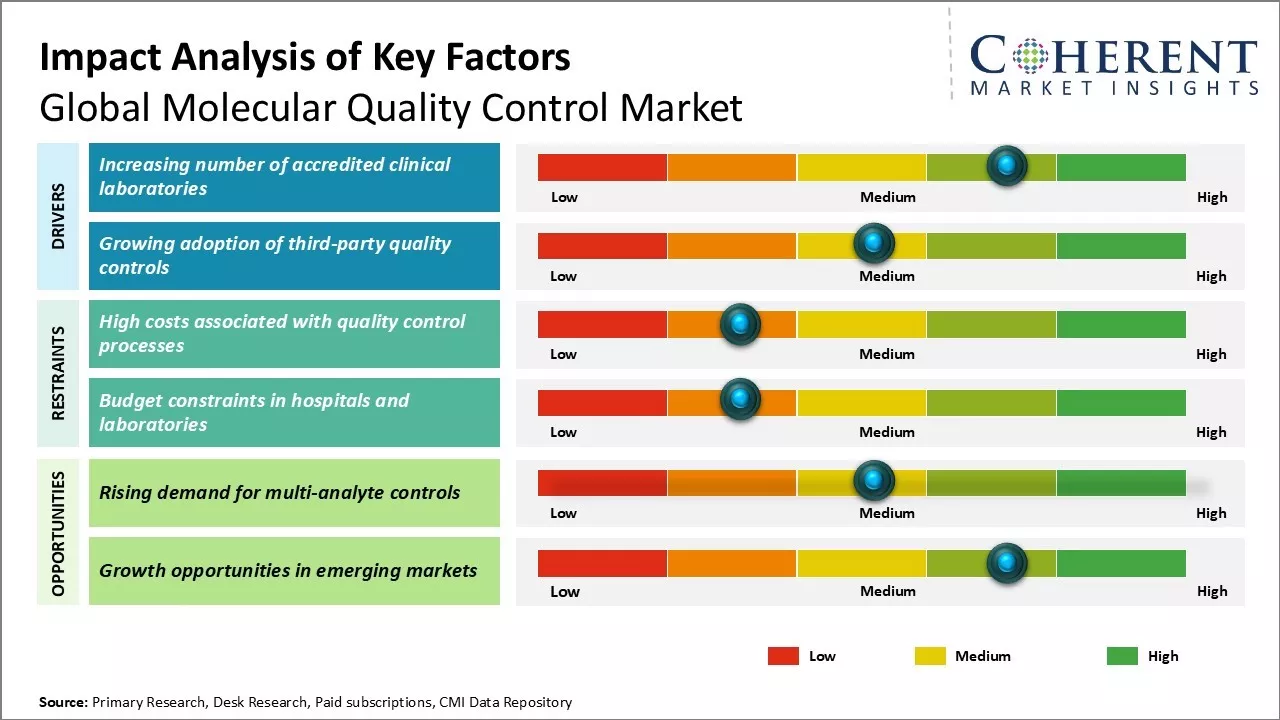
The molecular quality control industry can witness positive growth during the forecast period due to rising incidence of infectious diseases and increasing application of molecular diagnostic techniques for diagnosis. Moreover, increasing focus on improving quality of diagnostic tests and growth in biotechnology and pharmaceutical industries can also aid the market growth. However, high cost of these quality control kits may hamper the market growth to during the forecast period. New product launches with advanced technologies and growing adoption in developing countries are expected to offer lucrative opportunities for market players.
Insights By Product Type
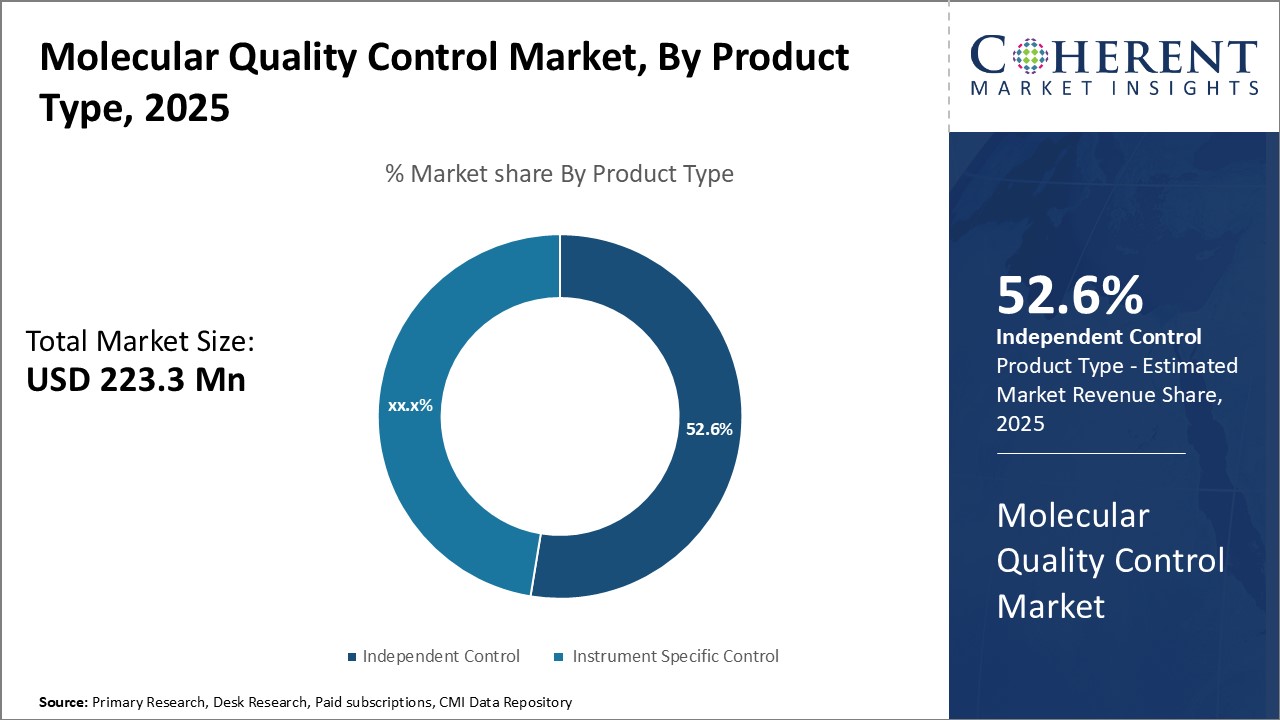
Insights By Product Type - Independent control segment dominates due to crucial quality control needs
In terms of product type, independent control segment is estimated to contribute the highest market share of 53.6% in 2026, owing to its necessity across various molecular testing applications. Independent controls are not specific to any instrument or assay and can be used universally to validate assay performance. These play a pivotal role in ensuring assay accuracy and reproducibility. Compared to instrument-specific controls, independent controls have wider applicability and allow laboratories to check multiple platforms with a single control sample.
Insights By Analyte Type
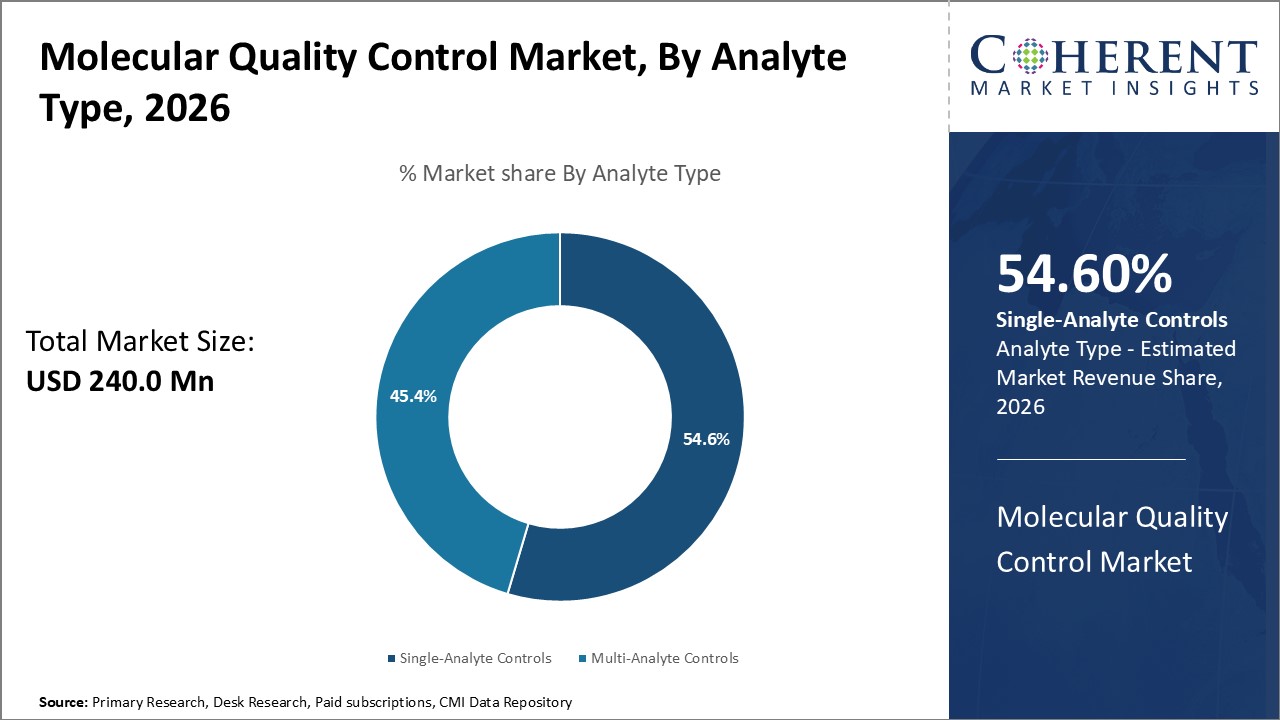
Insights By Analyte Type - Ensuring single analyte accuracy boosts demand for single-analyte controls
In terms of analyte type, single-analyte controls segment is estimated to contribute the highest market share of 54.6% in 2026, owing to the need for precision in molecular testing of individual analytes. Single-Analyte Controls contain only one purified analyte, enabling targeted and accurate quality assessment of a specific molecular marker or gene sequence. These are optimised to check the analytical measurement of individual targets without interference from other components.
Insights, By Application
Insights, By Application - Infectious disease diagnostics leverages controls for improved sensitivity
In terms of application, infectious disease diagnostics segment is estimated to contribute the highest market share of 35.62% in 2026, owing to the crucial role of controls in enhancing test sensitivity. Early and accurate diagnosis of infectious diseases optimizes clinical outcomes. Molecular quality controls catering to infectious disease testing applications ensure correct identification of pathogens down to the lowest detection limits. These certified tests are performing as intended before patient sample analysis. This helps reduce the chances of false negatives.
Regional Insights
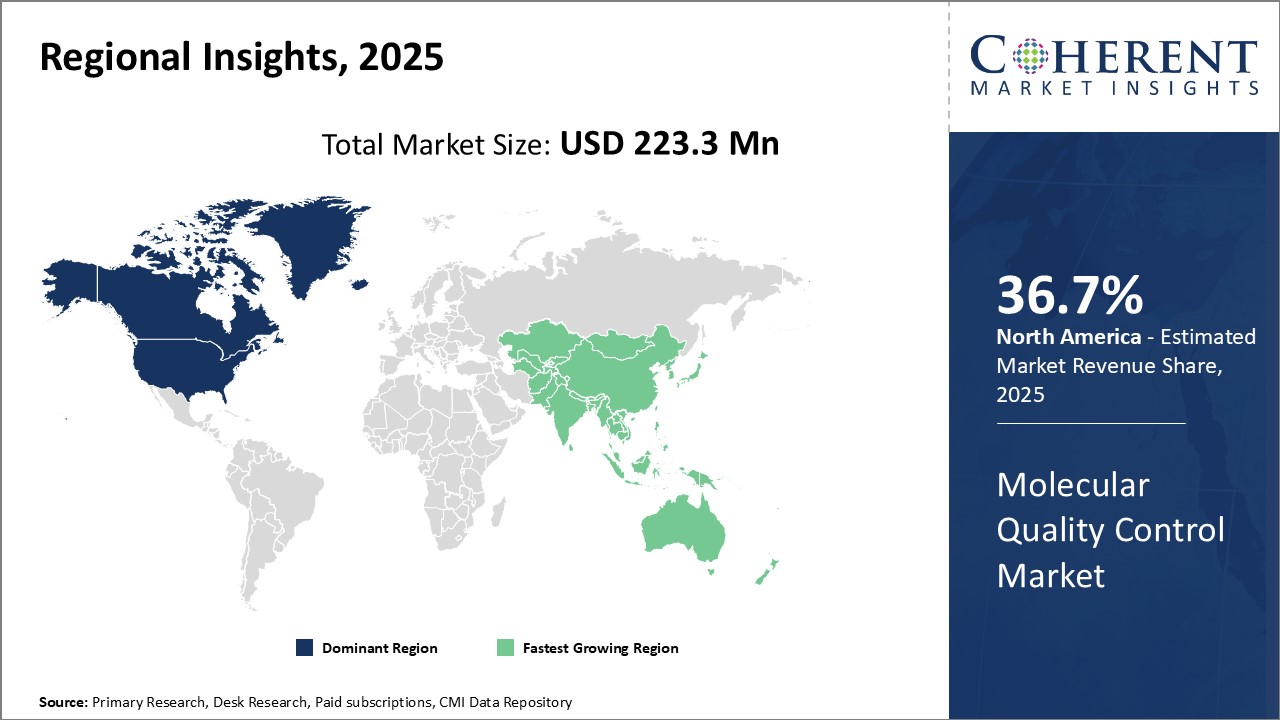
Dominating Region- North America
North America dominates the molecular quality control industry with an estimated market share of 36.7% in 2026, due to robust research funding and presence of leading global players like Bio-Rad Laboratories, Inc. in the region. High adoption of precision medicine and companion diagnostics along with advanced healthcare infrastructure boosts the market growth.
Fastest-Growing Region- Asia Pacific
Asia Pacific region exhibits the fastest growth due to increasing healthcare expenditure, growing focus on pharmaceutical and biotech R&D, and expanding patient pool in countries like China and India. Improving regulatory guidelines are also encouraging global players to tap into opportunities in Asia Pacific.
Molecular Quality Control Market Outlook for Key Regions
U.S.- Dominance Driven by Large Patient Pool and High Infectious Disease Prevalence
The U.S. dominates the North America’s molecular quality control industry due to various factors. The country has a large and growing patient pool, particularly in infectious diseases such as HIV. In August 2026, according to the U.S. Department of Health & Human Services, approximately 38,000 new HIV infections occur annually in the U.S. and its dependent areas, leading to a rapid spread of various infectious diseases, including meningitis and urinary tract infections.
Japan- Growth Driven by Advancements in Diagnostic Technologies and Regulatory Approvals
Japan’s molecular quality control market is growing due to advancements in diagnostic technologies and stringent regulatory standards. For instance, on June 13, 2024, ELITechGroup announced the successful approval of its Blood Borne Virus (BBV) panel by Japan’s Pharmaceuticals and Medical Devices Agency (PMDA). The BBV panel includes assays for Human Immunodeficiency Virus (HIV-1), Hepatitis B Virus (HBV), and Hepatitis C Virus (HCV), offering fully automated Polymerase Chain Reaction (PCR) solutions for monitoring these viruses.
India- Market Leadership Fueled by Growing Healthcare Infrastructure and Rising Diagnostic Demand
India is dominant in the molecular quality control market due to its growing healthcare infrastructure, rising demand for diagnostic solutions, and increasing investments in biotechnology and pharmaceuticals. In July 2020, Thermo Fisher Scientific introduced the Thermo Scientific MAS Omni Infectious Disease quality control sets for serological assays, covering HIV 1&2, Hepatitis B & C, Syphilis, and HTLV I/II. These third-party, independent external controls help assess assay performance and support the growing demand for serology testing in infectious disease diagnosis, monitoring, and treatment.
Market Players, Key Development, and Competitive Intelligence
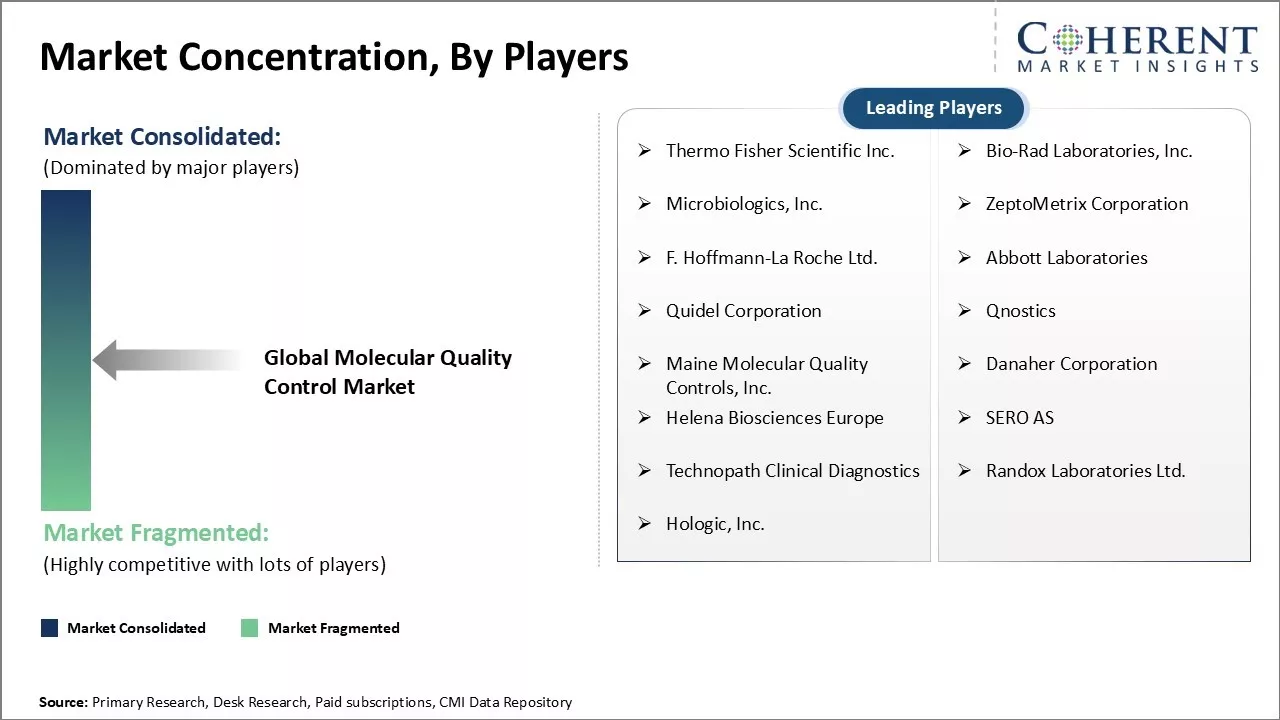
Top Strategies Followed by Global Molecular Quality Control Industry Players
- Established Players- Leading companies in the global molecular quality control market heavily invest in research and development to drive innovation. For instance, top players like Thermo Fisher Scientific, Bio-Rad Laboratories, and Roche Diagnostics routinely spend over 10% of their annual revenues on R&D. This allows them to develop high-performance quality control products using cutting-edge technologies.
- Mid-Level Players- Mid-sized players in the molecular quality control market pursue strategies focused on delivering cost-effective products. These target price-sensitive segments like hospitals and diagnostic laboratories in developing regions. For example, companies like Zeptometrix and Seracare Life Sciences offer generic quality control materials at competitive prices.
- Small-Scale Players- Small molecular quality control providers focus on niche areas not addressed by larger competitors. These introduce innovative products tailored to the requirements of specific test procedures or disease areas. For instance, Microbiologics targets the microbial QC needs of microbiology labs. Maine Molecular Quality Controls provides niche solutions for seafood testing.
Emerging Startups in the Global Molecular Quality Control Market
Innovative Technologies- The industry has witnessed entry of startups developing smart solutions based on emerging technologies like Cloudink and Precytron. Cloudink creates miniature wireless biosensors integrated with machine learning algorithms. These sensors can monitor the performance of molecular diagnostic kits and instruments in real-time. Precytron has pioneered a handheld molecular diagnostics platform equipped with an AI-powered sensor. Adoption of such advanced technologies could transform quality monitoring processes and drive efficiencies.
Sustainable Solutions- Sustainability is a major focus among emerging startups. Firms like PBC and Moleculars21 are introducing eco-friendly quality control products made from biodegradable or recycled materials. PBC produces biosynthetic controls from plant-based polymers that degrade harmlessly. Moleculars21 recovers PCR plastics from used diagnostic kits and converts them into new QC samples. Such initiatives are in line with the industry's environmental objectives and support the growth of startups.
Key Developments
- On November 6, 2024, Microbiologics, a global leader in infectious disease reference materials and contract research, announced the acquisition of SensID, a Germany-based manufacturer specializing in molecular diagnostics for oncology and precision medicine. This marks Microbiologics' first international location and strengthens its portfolio in oncology while maintaining leadership in infectious disease diagnostics.
- On June 11, 2024, Bio-Rad Laboratories, a life science company, expanded its molecular quality control portfolio with the launch of Exact Diagnostics GBS Positive and Negative Run Controls. These ready-to-use controls are designed for Group B Streptococcus (GBS) molecular assays to evaluate assay performance, operator proficiency, and workflow accuracy.
- In February 2022, ZeptoMetrix, an Antylia Scientific company, launched the SARS-CoV-2 Omicron Control, expanding its infectious disease quality control portfolio. The product, now available for pre-order, supports reliable testing by addressing Severe Acute Respiratory Syndrome Coronavirus 2, SARS-CoV-2 mutations.
- On November 18, 2021, Roche, a pharmaceutical company, introduced the cobas 5800 System, a compact molecular laboratory instrument, in CE-mark-accepting countries. Designed to meet growing testing demands, it offers timely and reliable results, supports diverse testing needs, and helps laboratories manage increasing workloads and reimbursement complexities.
- Current Industry Events of 2026
- Market Size Estimation
- Regional Breakdown
- Competitive Landscape
- Customer Intelligence
- Segmental Analysis
- Pricing Analysis
- Key Market Drivers, Challenges & Future Trends
- Customized Insights Section
Market Report Scope
Molecular Quality Control Market Report Coverage
| Report Coverage | Details | ||
|---|---|---|---|
| Base Year: | 2025 | Market Size in 2026: | USD 240.0 Mn |
| Historical Data for: | 2020 To 2024 | Forecast Period: | 2026 To 2033 |
| Forecast Period 2026 to 2033 CAGR: | 7.5% | 2033 Value Projection: | USD 398.2 Mn |
| Geographies covered: |
| ||
| Segments covered: |
| ||
| Companies covered: | Thermo Fisher Scientific Inc., Bio-Rad Laboratories, Inc., Microbiologics, Inc., ZeptoMetrix Corporation, F. Hoffmann-La Roche Ltd., Abbott Laboratories, Quidel Corporation, Qnostics, Maine Molecular Quality Controls, Inc., Danaher Corporation, Helena Biosciences Europe, SERO AS, Technopath Clinical Diagnostics, Randox Laboratories Ltd., and Hologic, Inc. | ||
| Growth Drivers: |
| ||
| Restraints & Challenges: |
| ||
Market Dynamics
Market Driver- Increasing number of accredited clinical laboratories
Global molecular quality control market growth is driven by growing number of accredited clinical laboratories worldwide, which are increasingly adopting advanced molecular diagnostic technologies. These advancements enable laboratories to offer highly sensitive and specific tests, enhancing diagnostic accuracy. For instance, in May 2024, Bruker Corporation acquired ELITechGroup for USD 870 million, integrating ELITech’s automated sample-to-answer platforms (InGenius and BeGenius), which specializes in esoteric infectious disease testing for mid-sized hospitals. This integration highlights the rising demand for innovative molecular diagnostics systems in accredited laboratories.
Market Challenge- High costs associated with quality control processes
Major challenges faced by global molecular quality control market includes high costs associated with quality control processes. Implementing quality control protocols requires continuous monitoring and testing, which involves significant costs in terms of equipment, reagents, and manpower. Molecular diagnostic assays need to be standardized and validated on a regular basis through rigorous quality testing using multiple controls and calibrators. This adds to research and development expenses for market players.
Market Opportunity- Rising demand for multi-analyte controls
Major opportunity in the global molecular quality control market includes rising demand for multi-analyte controls. Contemporary molecular diagnostics involves multiplexing of assays to simultaneously detect and quantify several biomarkers or analytes. This allows for streamlined and high-throughput testing. Consequently, there has been increasing demand for controls capable of verifying the performance of complex multiplex assays. Multi-analyte controls help validate multiple targets in a single reaction and analyse interferences.
Analyst Opinion (Expert Opinion)
Key Takeaways from Analyst
Global molecular quality control market growth is driven by rising demand for quality management in molecular diagnostics, increasing prevalence of infectious diseases and genetic disorders, and growing awareness regarding the importance of accurate diagnostic results and reliable testing procedures. Asia Pacific is expected to witness the fastest growth due to improving healthcare infrastructure and expanding clinical labs, while North America dominates due to robust healthcare systems and accreditation programs. Key opportunities include growing use of molecular diagnostics in oncology, personalized medicine, and non-invasive testing. Development of customized internal controls and integrated quality control programs further boosts market prospects, with emerging nations contributing to long-term growth.
Speak to the analyst
Want personalized insights?
Take the findings above to one of our principal consultants, or have the report rebuilt around the segments, geographies and competitors you actually track.
Market Segmentation
- By Product Type Insights (Revenue, USD Mn, 2021 - 2033)
- Independent Control
- Instrument Specific Control
- DNA Sequencing and Next-Generation Sequencing
- Polymerase Chain Reaction
- Others
- By Analyte Type Insights (Revenue, USD Mn, 2021 - 2033)
- Single-Analyte Controls
- Multi-Analyte Controls
- By Application Insights (Revenue, USD Mn, 2021 - 2033)
- Infectious Disease Diagnostics
- Oncology Testing
- Genetic Testing
- Microbiology
- Other Applications (Tissue Typing, etc.)
- By End Users Insights (Revenue, USD Mn, 2021 - 2033)
- Clinical & Diagnostic Laboratories
- Hospitals and Clinics
- Academic and Research Institutes
- Contract Research Organizations
- Others
- Regional Insights (Revenue, USD Mn, 2021 - 2033)
- North America
- U.S.
- Canada
- Latin America
- Brazil
- Argentina
- Mexico
- Rest of Latin America
- Europe
- Germany
- U.K.
- Spain
- France
- Italy
- Russia
- Rest of Europe
- Asia Pacific
- China
- India
- Japan
- Australia
- South Korea
- ASEAN
- Rest of Asia Pacific
- Middle East
- GCC Countries
- Israel
- Rest of Middle East
- Africa
- South Africa
- North Africa
- Central Africa
- North America
- Key Players Insights
- Thermo Fisher Scientific Inc.
- Bio-Rad Laboratories, Inc.
- Microbiologics, Inc.
- ZeptoMetrix Corporation
- Hoffmann-La Roche Ltd.
- Abbott Laboratories
- Quidel Corporation
- Qnostics
- Maine Molecular Quality Controls, Inc.
- Danaher Corporation
- Helena Biosciences Europe
- SERO AS
- Technopath Clinical Diagnostics
- Randox Laboratories Ltd.
- Hologic, Inc.
Key Stakeholders
What growth in global molecular quality control market mean for different stakeholders?
Molecular quality control market has multiple players with varied designations and offers multiple opportunities based on their scope of operations.
Key Clinical Diagnostics Stakeholder | Opportunities Due to Molecular Quality Control Industry Growth |
Diagnostic Equipment Manufacturers | Expansion of markets for advanced diagnostic instruments, including PCR machines, immunoassay analysers, and next-generation sequencing systems. |
Clinical Laboratories | Growth in demand for comprehensive diagnostic services, including molecular testing, genetic screening, and personalized health assessments. |
Healthcare Providers | Enhanced ability to offer personalized medicine and early disease detection, improving patient outcomes and expanding clinical services. |
Healthcare IT Firms | Expanding into diagnostic data management, laboratory information systems (LIS), and integration of diagnostic data with electronic health records. |
Medical Device Companies | Collaborating with diagnostic firms to develop integrated diagnostic devices and expanding into new areas such as wearable diagnostics. |
Pharmaceutical Companies | Leveraging diagnostic tools for drug development and personalized medicine, enhancing drug efficacy and patient stratification in clinical trials. |
Biotech Firms | Developing and commercializing biomarkers and companion diagnostics, supporting personalized treatment plans and targeted therapies. |
Venture Capitalists in Diagnostics | Investment opportunities in startups developing innovative diagnostic technologies, including AI-driven diagnostics and home testing solutions. |
Private Equity Investors | Potential to invest in diagnostic companies with cutting-edge technologies and scalable business models, driving industry consolidation. |
Diagnostic Consultants | Providing expertise in regulatory compliance, market access, and the commercialization of new diagnostic products and services. |
Retail Pharmacies | Offering diagnostic services and home testing kits, expanding customer care services and increasing market reach. |
Get access to 250+ pages report
Every segment, forecast, competitor profile and data table behind the analysis above — available for instant download.
- ESOMAR Member
- ISO 9001:2015 Certified
- D-U-N-S Registered
- GDPR & CCPA Compliant
Missing comfort of reading report in your local language? Find your preferred language:
Transform your Strategy with Exclusive Trending Reports
Frequently Asked Questions
The Molecular Quality Control Market is estimated to be valued at USD 240.0 Mn in 2026, and is expected to reach USD 398.2 Mn by 2033.
The CAGR of the Molecular Quality Control Market is projected to be 7.5% from 2026 to 2033.
Increasing number of accredited clinical laboratories and growing adoption of third-party quality controls are the major factors driving the growth of global molecular quality control market.
High costs associated with quality control processes and budget constraints in hospitals and laboratories are the major factors hampering the growth of global molecular quality control market.
In terms of product type, independent control segment is estimated to dominate the market in 2026.
Thermo Fisher Scientific Inc., Bio-Rad Laboratories, Inc., Microbiologics, Inc., ZeptoMetrix Corporation, F. Hoffmann-La Roche Ltd., Abbott Laboratories, Quidel Corporation, Qnostics, Maine Molecular Quality Controls, Inc., Danaher Corporation, Helena Biosciences Europe, SERO AS, Technopath Clinical Diagnostics, Randox Laboratories Ltd., and Hologic, Inc. are the major players.
North America is expected to lead the global molecular quality control market in 2026.