

Octreotide Market Size and Forecast — 2026 - 2033
The Global Octreotide Market size is estimated to be valued at USD 1.25 billion in 2026 and is expected to reach USD 2.35 billion by 2033, exhibiting a compound annual growth rate (CAGR) of 9.2% from 2026 to 2033.
Overview
The Octreotide market is driven by the rising prevalence of hormone-related disorders such as acromegaly, carcinoid tumors, and neuroendocrine tumors, which require long-term somatostatin analog therapy. Increasing incidence of gastrointestinal bleeding, particularly from esophageal varices in patients with liver cirrhosis, is further boosting demand for octreotide-based treatments. Growing awareness of early diagnosis and improved access to endocrine and oncology care are also supporting market growth. Advancements in long-acting release (LAR) formulations enhance patient compliance and treatment efficacy. Additionally, expanding healthcare infrastructure, rising geriatric population, and increasing R&D activities for novel peptide-based therapeutics are contributing to the steady expansion of the octreotide market globally.
Key Takeaways
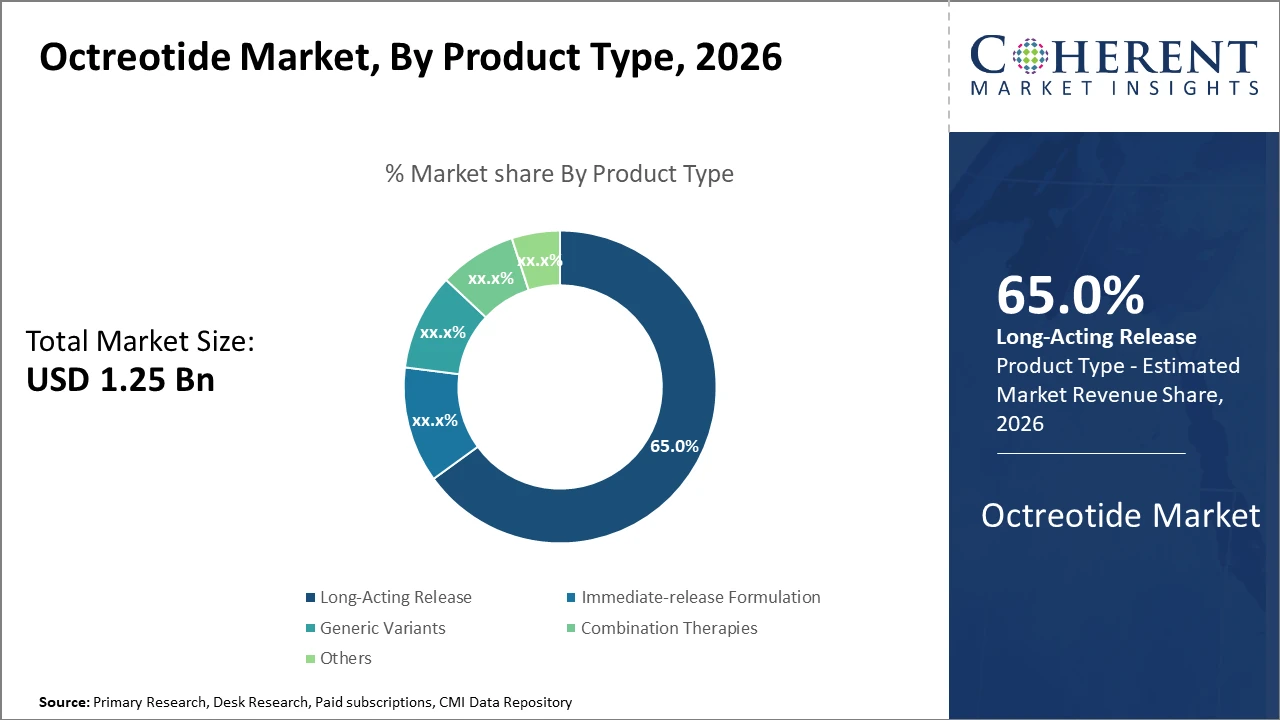
The Long-Acting Release (LAR) formulation segment dominates the octreotide market with around 65% share, driven by improved patient compliance, reduced dosing frequency, and better long-term treatment outcomes compared to immediate-release options. Immediate-release formulations maintain a smaller but stable share, primarily used in acute hospital settings for rapid symptom management.
Neuroendocrine tumors represent the leading segment, supported by rising disease diagnosis rates and expanding clinical approvals for octreotide-based therapies. Gastrointestinal bleeding remains a smaller yet steadily growing application area due to evolving treatment protocols and increasing hospital adoption.
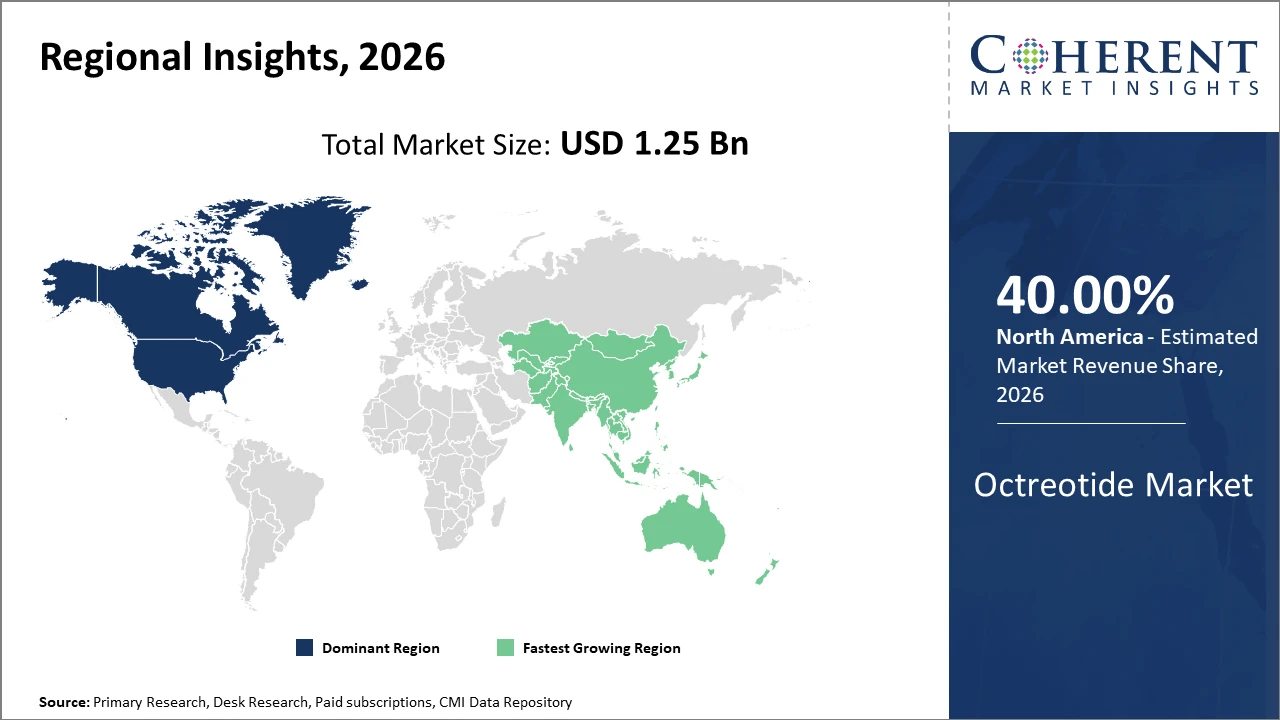
North America holds the largest market share at over 40%, backed by advanced healthcare infrastructure, strong reimbursement systems, and high R&D investment. Asia Pacific is the fastest-growing region, with a CAGR exceeding 10%, driven by improved healthcare access, regulatory reforms, and expanding specialty care services.
Octreotide Market Segmentation Analysis
Octreotide Market Insights, By Product Type
Long-Acting Release (LAR) formulations dominate the octreotide market with approximately 65% share, driven by improved patient adherence due to reduced dosing frequency and sustained therapeutic effect. Advances such as injectable microspheres and lyophilized powder technologies have further enhanced drug stability, efficacy, and controlled release, strengthening their market leadership. Immediate-Release formulations continue to serve important roles in acute care settings where rapid symptom control is required, though their usage is limited by frequent dosing needs. Generic variants are expanding in cost-sensitive regions, but face regulatory and bioequivalence challenges. Meanwhile, combination therapies are emerging, integrating octreotide with other agents to improve outcomes in oncology applications.
Octreotide Market Insights, By Application
Neuroendocrine tumors represent the largest application segment in the octreotide market, supported by strong clinical evidence, rising global incidence, and improved diagnostic techniques such as advanced imaging and biomarker testing. This has significantly increased demand for octreotide in tumor growth control and symptom management. Acromegaly, although a smaller segment, continues to grow steadily due to better endocrinology screening programs and increased patient awareness. Gastrointestinal bleeding is emerging as a rapidly expanding indication, particularly in emergency hospital care settings where fast therapeutic intervention is required. Hormone-secreting tumors also contribute to demand through multi-modal treatment approaches, while other niche applications remain in experimental or off-label stages of development.
Octreotide Market Insights, By End User
Hospitals account for the largest share of the octreotide market due to their central role in diagnosing and managing endocrine disorders, supported by well-established oncology and endocrinology departments. Their large patient volumes and access to advanced treatment infrastructure enable frequent administration of octreotide therapies. Specialty clinics, particularly endocrinology and oncology centers, represent the fastest-growing end-user segment, driven by increasing specialist-led diagnosis and a shift toward personalized treatment approaches. Home care settings are also expanding, supported by improved drug delivery systems such as prefilled syringes and patient training programs. Research institutions contribute through clinical trials and innovation, while other segments like pharmacies and tertiary centers support broader distribution.
Octreotide Market Trends
The octreotide market is increasingly shifting toward long-acting release (LAR) formulations, supported by advancements in drug delivery systems that enhance patient convenience and treatment adherence.
In 2025, extended-release octreotide products recorded a revenue increase of around 14%, reflecting stronger preference for less frequent dosing and improved therapeutic compliance.
Combination therapies, including integration with peptide receptor radionuclide therapy (PRRT), are expanding the clinical application scope and driving further market diversification.
North America leads the global market with over 40% share, supported by strong healthcare infrastructure, regulatory support, and significant R&D investments from key pharmaceutical players.
Asia Pacific is the fastest-growing region with a CAGR above 10%, driven by improving healthcare access, rising cancer awareness, and the expansion of cost-effective generic drug offerings.
Octreotide Market Insights, By Geography
North America Octreotide Market Analysis and Trends
In North America, the octreotide market holds a dominant position, acquiring a share of 40%, due to high adoption rates supported by advanced healthcare infrastructure and strong diagnostic capabilities. The United States leads regional demand, driven by well-established hospital networks and widespread integration of octreotide into treatment protocols for neuroendocrine tumors and acromegaly, guided by standardized clinical practices. High awareness levels among healthcare professionals and patients further contribute to early diagnosis and treatment uptake. Additionally, the presence of major pharmaceutical companies investing heavily in research, clinical trials, and drug innovation strengthens market consolidation, ensuring continuous advancement of octreotide-based therapies across the region’s healthcare system.
Asia Pacific Octreotide Market Analysis and Trends
Asia Pacific is the fastest-growing region in the octreotide market, driven by rising healthcare expenditure, increasing prevalence of endocrine disorders and neuroendocrine tumors, and the rapid expansion of specialty care centers. Governments in countries such as China and India are implementing supportive regulatory reforms that streamline drug approvals and reduce market entry barriers, improving access to advanced therapies. This has encouraged both global and domestic pharmaceutical companies to expand their presence in the region. Additionally, strong focus on developing affordable generic versions of octreotide is helping address cost-sensitive patient populations, further accelerating adoption and significantly boosting overall regional market growth.
Octreotide Market Outlook for Key Countries
USA Octreotide Market Analysis and Trends
The U.S. octreotide market is strongly supported by substantial investments in neuroendocrine tumor research, with more than 15 active clinical trials in 2025 focused on novel formulations and combination therapies. Leading pharmaceutical companies such as Ipsen and Novartis have implemented targeted marketing and physician education programs, contributing to a year-over-year therapy uptake increase of around 12%. These initiatives have improved awareness and early adoption among specialists in oncology and endocrinology. Furthermore, streamlined FDA approval pathways for new indications are accelerating product innovation and market entry, reinforcing the United States’ dominant position in global octreotide revenue generation and therapeutic advancement.
Germany Octreotide Market Analysis and Trends
Germany plays a significant role in the global Octreotide market due to its advanced healthcare infrastructure, strong pharmaceutical industry, and high prevalence of endocrine disorders such as acromegaly and neuroendocrine tumors. The market is characterized by widespread adoption of long-acting release (LAR) formulations, which enhance patient compliance and reduce treatment frequency. Trends indicate increasing use of biosimilars and cost-effective somatostatin analogs, supported by Germany’s strict drug pricing and reimbursement policies. Additionally, strong clinical research activity and hospital-based treatment systems drive demand.
Analyst Opinion
Pricing strategies in the octreotide market have evolved to balance affordability and innovation, with Long-Acting Release (LAR) formulations commanding premium pricing due to improved patient compliance and sustained therapeutic benefits, contributing to nearly 65% of total market revenue in 2025.
Expansion of therapeutic indications, including increased off-label use in gastrointestinal bleeding and hormone-secreting tumors, has broadened market demand, with clinical adoption in complex cases rising by approximately 8.7% between 2024 and 2026, supporting specialized care segment growth.
Manufacturing capacity has been significantly expanded across Asia Pacific and North America, with production volumes increasing by about 15% by mid-2026, ensuring supply stability and meeting rising global demand.
Improved trade dynamics and regulatory easing, particularly in Southeast Asia, have enhanced market access, with octreotide imports increasing by nearly 20% in late 2024, strengthening regional penetration and market expansion.
- Current Industry Events of 2026
- Market Size Estimation
- Regional Breakdown
- Competitive Landscape
- Customer Intelligence
- Segmental Analysis
- Pricing Analysis
- Key Market Drivers, Challenges & Future Trends
- Customized Insights Section
Market Scope
| Report Coverage | Details | ||
|---|---|---|---|
| Base Year: | 2025 | Market Size in 2026: | USD 1.25 billion |
| Historical Data for: | 2020 To 2024 | Forecast Period: | 2026 To 2033 |
| Forecast Period 2026 to 2033 CAGR: | 9.2% | 2033 Value Projection: | USD 2.35 billion |
| Geographies covered: |
| ||
| Segments covered: |
| ||
| Companies covered: | Ipsen Pharma, Novartis AG, Pfizer Inc., Mylan N.V., Lupin Limited, Cipla Limited, Takeda Pharmaceutical Company, Sandoz International GmbH, Recordati S.p.A, Ferring Pharmaceuticals | ||
| Growth Drivers: |
| ||
Octreotide Market Growth Factors
The growing incidence of neuroendocrine tumors globally remains the primary driver of the octreotide market, supported by improved diagnostic capabilities and rising awareness initiatives led by organizations such as the North American Neuroendocrine Tumor Society. Advancements in drug delivery systems, including injectable microspheres and long-acting release (LAR) formulations, have significantly improved dosing convenience and patient adherence, contributing to a 14% increase in LAR therapy initiation in 2025 compared to 2024. Expanding healthcare infrastructure in emerging economies, particularly across Asia Pacific, is further widening market access, supported by increased government investment in oncology and endocrinology care. Additionally, rising off-label applications are creating new growth avenues, with clinical trials showing a 9% annual increase in novel therapeutic uses between 2024 and 2026.
Octreotide Market Development
In 2025, several pharmaceutical companies advanced the octreotide market by launching next-generation long-acting release (LAR) formulations in key regulated markets such as the United States and Germany. These updated therapies offered improved drug stability and more consistent hormone suppression, reducing injection frequency and enhancing patient adherence. Regulatory approvals from health authorities further supported their rapid integration into hospital treatment protocols for acromegaly and neuroendocrine tumors.
In another 2025 development, biosimilar octreotide products saw expanded commercialization across Asia Pacific and Latin America. Companies introduced cost-effective versions of somatostatin analog therapies to improve affordability in public healthcare systems. Strategic collaborations between multinational pharmaceutical firms and regional distributors strengthened supply chains, while government reimbursement programs in emerging economies significantly increased patient access to octreotide-based treatments for rare endocrine disorders.
Key Players
Leading Companies of the Market
Ipsen Pharma
Mylan N.V.
Pfizer Inc.
Novartis AG
Cipla Limited
Lupin Limited
Takeda Pharmaceutical Company
Recordati S.p.A.
Sandoz International GmbH
Ferring Pharmaceuticals
Competitive strategies adopted by leading octreotide market players primarily focus on product innovation, lifecycle extension, and strategic partnerships to strengthen global presence. For instance, Ipsen Pharma improved its competitive positioning in 2025 by launching an advanced long-acting release (LAR) formulation supported by extended patent protection, resulting in a 12% increase in its market share across North America. This innovation-driven approach enhanced patient adherence and reinforced brand loyalty among healthcare providers. Similarly, Novartis expanded its footprint in Asia Pacific through targeted licensing agreements and distribution partnerships, enabling broader market access and contributing to a 10% revenue growth within the first year of implementation. These strategies collectively strengthen competitive advantage and accelerate regional market penetration.
Octreotide Market Future Outlook
The global octreotide market is expected to witness steady growth driven by rising prevalence of neuroendocrine tumors, acromegaly, and gastrointestinal endocrine disorders. Future demand will be supported by increasing adoption of long-acting release (LAR) formulations, which improve patient compliance and treatment efficiency. Expanding healthcare access in emerging economies and growing investments in oncology and rare disease management will further strengthen market expansion. The rise of biosimilars is expected to enhance affordability and broaden patient reach globally. Additionally, advancements in drug delivery systems and sustained-release technologies will improve therapeutic outcomes, while supportive regulatory approvals and increased clinical research activity will continue to drive innovation.
Octreotide Market Historical Analysis
The global octreotide market has evolved steadily over the past few decades, driven by increasing recognition and diagnosis of rare endocrine disorders such as acromegaly and neuroendocrine tumors. Initially, treatment relied heavily on short-acting injectable formulations, which required frequent dosing and limited patient compliance. In the early 2000s, the introduction of long-acting release (LAR) formulations marked a major advancement, significantly improving treatment convenience and adherence. Over time, expanding clinical applications and growing hospital-based adoption strengthened market penetration. In recent years, increased awareness, improved diagnostic capabilities, and the emergence of biosimilars have further supported market expansion, making octreotide a key therapy in endocrine disorder management globally.
Sources
Primary Research Interviews:
Pharmaceutical manufacturers, biotech companies, hospital pharmacists, endocrinologists, oncologists, and clinical trial investigators involved in octreotide drug development, distribution, and therapeutic application.
Regulatory affairs specialists, medical researchers, pharmacovigilance experts, healthcare consultants, and R&D directors specializing in somatostatin analogs, endocrine disorder treatments, and rare disease therapies.
Magazines:
PharmaTimes – Coverage of pharmaceutical innovations, endocrine disorder therapies, and drug development trends.
Pharmaceutical Technology – Insights into biologics, drug delivery systems, and injectable formulation advancements.
BioPharm International – Updates on biosimilars, long-acting injectables, and global pharmaceutical market developments.
Journals:
The Journal of Clinical Endocrinology & Metabolism – Research on acromegaly, neuroendocrine tumors, and octreotide-based therapies.
Endocrine-Related Cancer – Studies on hormone-secreting tumors and somatostatin analog treatment outcomes.
European Journal of Endocrinology – Clinical studies on endocrine disorders and therapeutic advancements in somatostatin analogs.
Newspapers:
Financial Times – Coverage of pharmaceutical investments, biotech market growth, and healthcare industry trends.
Bloomberg – Insights into biotech companies, drug pricing strategies, and global pharmaceutical market expansion.
Reuters – Reporting on drug approvals, clinical research developments, and pharmaceutical supply chain updates.
Associations:
Endocrine Society – Guidelines, research, and standards for endocrine disorder treatment.
European Society of Endocrinology – Research collaboration and clinical practice updates in endocrine therapies.
International Society of Endocrinology – Global initiatives and research on hormonal disorders and treatment advancements.
Get access to 250+ pages report
Every segment, forecast, competitor profile and data table behind the analysis above — available for instant download.
- ESOMAR Member
- ISO 9001:2015 Certified
- D-U-N-S Registered
- GDPR & CCPA Compliant
Missing comfort of reading report in your local language? Find your preferred language:
Transform your Strategy with Exclusive Trending Reports
Frequently Asked Questions
Leading companies in the global octreotide market include Ipsen Pharma, Novartis AG, and Pfizer Inc. These players maintain strong market positions through innovation-driven portfolios, strong clinical pipelines, and extensive global distribution networks.
The octreotide market is projected to grow from USD 1.25 billion in 2026 to USD 2.35 billion by 2033, reflecting a CAGR of 9.2%, supported by rising disease prevalence and advancements in drug formulations.
Hospitals represent the largest end-user segment, driven by increasing adoption of octreotide therapies in both inpatient and outpatient care, supported by improved diagnostic and treatment protocols.
Market trends will increasingly focus on personalized medicine, expansion of off-label applications, and greater penetration of biosimilar products, improving accessibility and affordability globally.
The market is highly competitive and innovation-led, with challenges including pricing pressure from generics, regulatory complexities, and slower penetration in emerging markets.
Common strategies include strategic licensing agreements, distribution partnerships, pipeline diversification, and increased investment in clinical trials to expand approved therapeutic indications.