

Polycystic Ovary Syndrome (PCOS) Treatment Market Size and Forecast: 2026-2033
Polycystic Ovary Syndrome (PCOS) Treatment Market is expected to be USD 1,255.7 Mn in 2026 and is anticipated to reach USD 1,773.9 Mn in 2033 at a compound annual growth rate (CAGR) of 5.1% for the forecast period of 2026 to 2033
Key Takeaways
- By Drug Class, Ornithine Decarboxylase Inhibitors segment will account for 21.3% market share by 2026 because research and development are ongoing and they are effective in curing symptoms of PCOS.
- By Distribution Channels, Hospital Pharmacies segment will lead the market, with increasing demand for PCOS medications and specialist care in hospitals.
- Regionally, the North American region will lead the PCOS treatment market with a market share of 45.1% in 2026 owing to a high incidence rate for PCOS and strong research and development activities by industry players in the U.S. and Canada.
Polycystic Ovary Syndrome (PCOS) Treatment Market Overview
Global market for treating PCOS is growing at a very fast rate, stimulated by rising awareness, better research in the field of medicine, and broadening base of population with PCOS in women of childbearing age. This will hold true for all methods of treatment, ranging from drug therapy to lifestyle management treatments. Large drug companies are interested in making newer, more active, and more selective treatments for PCOS covering both its hormonal and metabolic facet.
Current Events and Its Impact on Polycystic Ovary Syndrome (PCOS) Treatment Market
Current Events | Description and its impact |
Introduction of new drug therapies for PCOS treatment |
|
Growth of personalized medicine in PCOS treatment |
|
Advances in non-invasive treatment options for PCOS |
|
Market Dynamics
Raising Incidence of PCOS in Women of Reproductive Age Forces Expansion
The worldwide PCOS treatment market is being led by the rising prevalence of PCOS among reproductive-age women, heightened disease awareness, and technological advancements in the therapeutic process. The mounting need for individualized care, enhanced diagnostic procedures, and favourable health policies are also propelling market growth. Enhanced availability of healthcare in emerging economies, as well as digital health solutions, is also fuelling the adoption of PCOS treatments across the globe
Natural Alternatives Replace Conventional PCOS Treatments: Disrupting A Booming Market
The global PCOS treatment market can be dissuaded by the alternative treatment for treating polycystic ovary syndrome. Alternative treatment, such as herbal supplements, acupuncture, and nutritional supplements, may dissuade the global PCOS treatment market. Natural therapies are extensively preferred by the majority of women because of perceived fewer side effects or personal preference. Thus, reliance on conventional medical treatment can be reduced, affecting growth in the pharmaceutical market.
Opportunities in Innovation and Digital Health
Reproductive medicine advancements in the way of assisted reproductive technologies (ART) and in vitro fertilization (IVF) are bringing new hope for the treatment of polycystic ovary syndrome (PCOS) for infertility. Along with that, personalized medicine strategies like genetic profiling and focused therapies are transforming the treatment environment of PCOS to make it possible for more effective and targeted therapies. The intersection of telemedicine with e-health services also provides new methods of tracking and treating PCOS in a remote role, improving care and outcome in patients. Government spending and support towards reproductive medicine research is driving market growth.
- Current Industry Events of 2026
- Market Size Estimation
- Regional Breakdown
- Competitive Landscape
- Customer Intelligence
- Segmental Analysis
- Pricing Analysis
- Key Market Drivers, Challenges & Future Trends
- Customized Insights Section
Segmental Insights
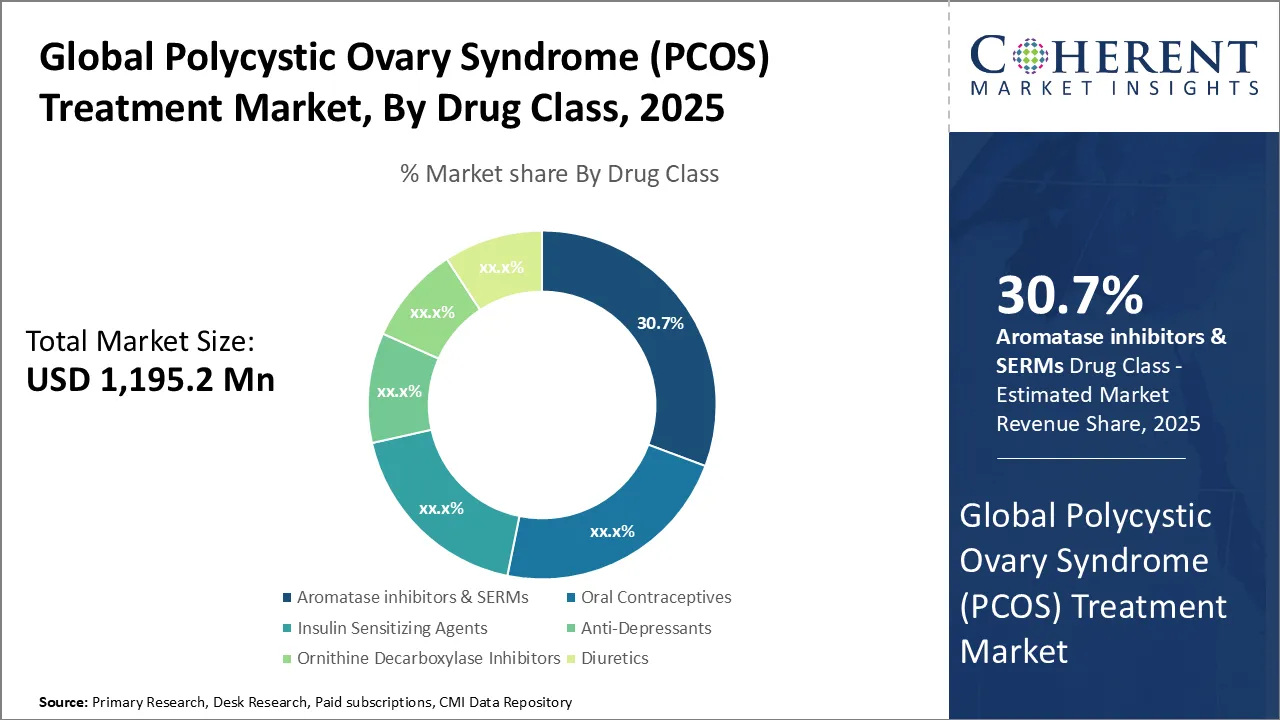
Global Polycystic Ovary Syndrome (PCOS) Treatment Market Insight, by drug class- Aromatase Inhibitors and SERMs has the highest share due to the enhanced efficacy of the drugs
According to drug class, SERMs (Selective Estrogen Receptor Modulators) and aromatase inhibitors will probably rule the market for the treatment of polycystic ovary syndrome (PCOS) worldwide throughout the forecast period. This is due to the fact that they are more effective in symptom management, for instance, hormone imbalance and infertility. Their effect on estrogen production and receptor modulation leads to hormonal balance and reproductive potential enhancement among women suffering from PCOS and thus make them a drug of choice.
Global Polycystic Ovary Syndrome (PCOS) Treatment Market Insight, by Distribution Channel- Hospital Pharmacies lead the PCOS Treatment market owing to growing prescription-based drug demand
By distribution channel, hospital pharmacies will dominate the market share in the PCOS treatment market over the forecast period. This is primarily because of the higher demand for drugs that are prescription-based, including oral contraceptives and other treatment drugs for PCOS that are traditionally offered by hospital pharmacies. The rising number of patients and medical practitioners looking for specialist care in hospital facilities also fuels this segment's growth.
Reimbursement Scenario in Global Polycystic Ovary Syndrome (PCOS) Treatment Market
The reimbursement situation for treating PCOS differs considerably from one market to another, impacting compliance and availability of patients. Within the developed markets of Europe and the U.S., insurance for the treatment of PCOS—e.g., oral contraceptives, insulin sensitizers, and surgeries like laparoscopic ovarian drilling—is mostly robust. Coverage is, however, not consistently available since certain payers ask for pre-authorization or only pay for particular treatments.
On the contrary, in developing and low-income regions, limited medical facilities and cultural aspects are to blame for lack of awareness and late diagnosis that hinder the access to PCOS care.
The cost of advanced diagnostic equipment and treatment also restricts PCOS care, since it is unaffordable to the majority of women in such regions. To overcome the disparities requires enormous investment in health facilities, schools, and subsidized treatment programs to enhance equal access to PCOS care globally.
Regional Analysis
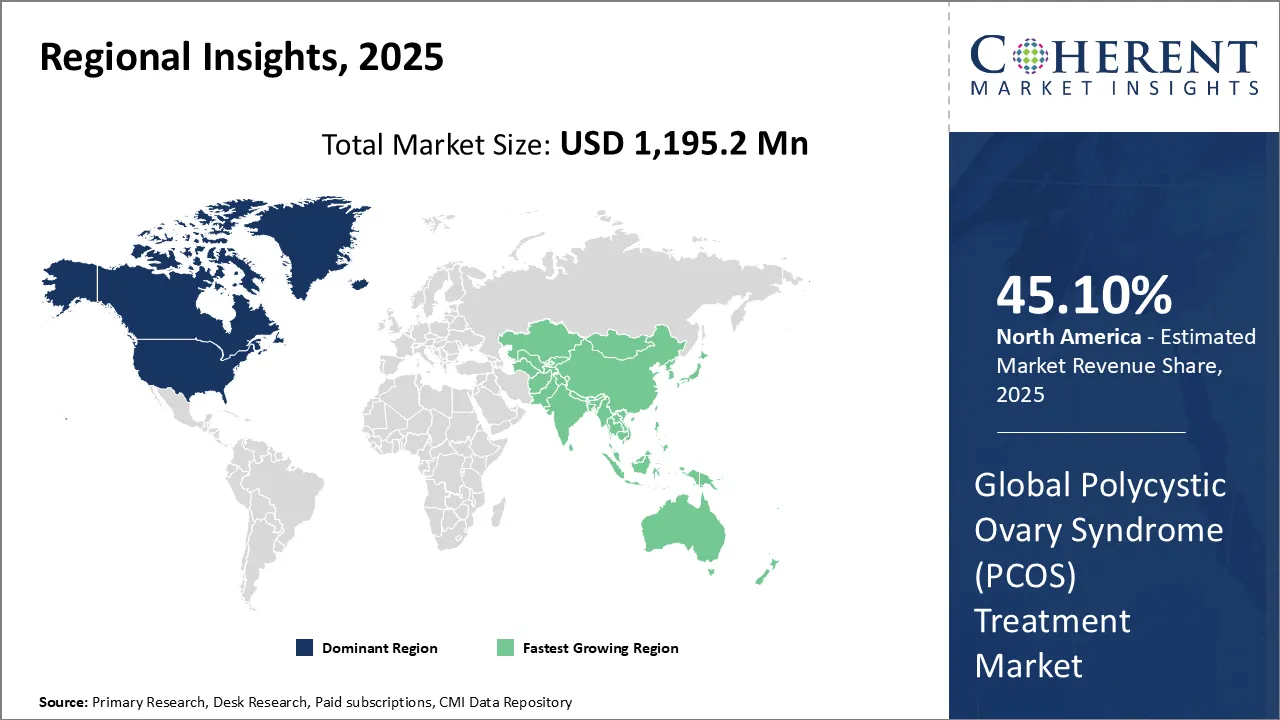
Global Polycystic Ovary Syndrome (PCOS) Treatment Market- Regional Analysis
North America is the biggest market for PCOS treatment globally with high rates of occurrence of the disease, improved healthcare facilities management, and extensive availability of treatment. Early detection and good control of PCOS are due to the established healthcare system and growing awareness.
In December 2025, the Centers for Disease Control and Prevention, the national public health agency of the United States, published data, according to which polycystic ovary syndrome (PCOS) is among the common causes of female infertility, which happen to 6% to 12% (up to 5 million) of reproductive-age U.S. women.
European countries like the UK, Germany, and France have high rates of prevalence. In the UK, one in five women has PCOS. The European Union has launched initiatives such as SPIOMET4Health to improve treatment access and harmonize care throughout member states.
Asia-Pacific is the most emerging market for treating PCOS. China has a 50.3% share of the PCOS treatment market in East Asia, and every year, more women are infected with the disease. Governments of such nations make investments in the healthcare infrastructure and awareness campaigns that create awareness for the rising trend of PCOS.
Overview of the Emerging Pipeline in the Global PCOS Treatment Market
The worldwide market for treating PCOS is changing with a strong pipeline of drugs for the complicated symptoms of the condition, such as hormonal imbalance, infertility, and metabolic derangements.
Oral contraceptives, anti-androgens, insulin-sensitizing drugs, and novel treatments for insulin resistance and metabolic control are some of the pipeline leader therapies. Biologics, such as monoclonal antibodies and targeted therapies that are designed to treat the underlying causes of PCOS, such as hormonal imbalance and inflammation, are also being investigated by companies. Moreover, progress in fertility treatments such as the application of hormonal therapies for ovulation induction and novel strategies for the treatment of long-term complications such as diabetes is also picking up pace. Most of the clinical trials are evaluating combination therapy, and genetically tailored medicine approaches based on genetic markers. Thus, the pipeline has great opportunities for PCOS women, which can enhance outcomes and provide additional treatment options in the worldwide market.
Patent Landscape of the Global Polycystic Ovary Syndrome (PCOS) Treatment Market
The worldwide treatment market for polycystic ovary syndrome (PCOS) is being revolutionized with radical innovation, with a number of patents targeting new therapeutic interventions.
For example, EP3923932A4 discloses a PCOS treatment regimen, pointing to progress in targeted therapies.
Following is US20220072018, which discloses a nutraceutical composition of proteins, inositol, and vitamins to treat insulin resistance and other features of PCOS. These developments indicate a transition from piecemeal and conventional treatment practices to more holistic and individualized ones in the PCOS market.
Prescribers' Preferences in the Global Polycystic Ovary Syndrome (PCOS) Treatment Market
Side-effect-free Polycystic Ovary Syndrome (PCOS) treatment is preferred by prescribers, which successfully treat PCOS symptoms.
Major preferences are:
- Hormonal Treatments: COCs are being used extensively in the treatment of irregular menstruations, acne, and hirsutism. COCs that contain third- or fourth-generation progestins such as desogestrel or drospirenone are used because of their lower androgenic effects.
- Anti-Androgens: Spironolactone, finasteride, and flutamide are used to limit hyperandrogenic symptoms. Spironolactone is used in less than 25% of the cases in India, whereas finasteride is used in more than 55%.
- Insulin Sensitizers: Metformin is used extensively, particularly in insulin-resistant or metabolic-compromised patients. It is also used as a first-line therapy for anovulatory infertility in lean women with PCOS.
- Personalized Methods: Prescribers also prefer individualized treatment protocols with a combination of pharmacotherapy with lifestyle modification such that a complete management of PCOS can be achieved.
Market Report Scope
Polycystic Ovary Syndrome (PCOS) Treatment Market Report Coverage
| Report Coverage | Details | ||
|---|---|---|---|
| Base Year: | 2025 | Market Size in 2026: | USD 1,255.7 Mn |
| Historical Data for: | 2020 To 2024 | Forecast Period: | 2026 To 2033 |
| Forecast Period 2026 to 2033 CAGR: | 5.1% | 2033 Value Projection: | USD 1,773.9 Mn |
| Geographies covered: |
| ||
| Segments covered: |
| ||
| Companies covered: | Sanofi S.A., Amneal Pharmaceuticals, Inc., Laurus Labs Limited, Zydus Pharmaceuticals, Inc., Prasco Laboratories, Dr. Reddy's Laboratories, Cadila Pharmaceuticals, Novartis International AG, Concordia Pharmaceuticals Inc., Covis Pharmaceuticals, Inc., Cardinal Health, Aphena Pharma Solutions Tennessee, Inc., Mylan N.V., Evotec SE, McKesson Corporation, Teva Pharmaceutical Industries Ltd, Lupin Pharmaceutical and Sun Pharmaceutical Industries Ltd., Bayer AG | ||
| Growth Drivers: |
| ||
| Restraints & Challenges: |
| ||
Global Polycystic Ovary Syndrome (PCOS) Treatment Market: Key Developments
- In May 2024, clinical-stage medical device organization May Health for PCOS secured a $25 million Series B funding round. The financing was co-led by Trill Impact and Bpifrance with the aim to drive the pipeline development of medicines that cater to the needs of PCOS sufferers.
- In December 2024, Gytree introduced India's first protein supplement, which is aimed at managing PCOS. This product contains a combination of inositol and over 16 superfoods and essential nutrients and is meant to promote hormonal balance and overall wellness in PCOS women.
Polycystic Ovary Syndrome (PCOS) Treatment Market Industry News
- In January 2025, Celmatix Therapeutics initiated a new drug program for endometriosis based on a JNK inhibitor developed in collaboration with Baylor College of Medicine. It is a pioneering strategy to counteract pain and inflammation, holding promise for diseases like PCOS and ovarian aging.
- CORONA Remedies is establishing a world-class facility for the production of hormonal drugs in Bhayla, Ahmedabad, in November 2024 which will begin production in FY 2026. The facility will produce major female hormone products like PCOS, infertility, PMS, and hormonal disorder treatments, with the aim of serving domestic as well as overseas demand.
Analysts' Viewpoint on Global Polycystic Ovary Syndrome (PCOS) Treatment Market
- The global PCOS treatment market is expected to increase steadily as there is an increasing awareness of the reproductive health of women and more and more women become victims of lifestyle disorders such as obesity and insulin resistance. PCOS accounts for a majority of childbearing age women and remains one of the largest public health issues. Increasing rates of diagnosis will continue to fuel demand for both pharmacologic and non-pharmacologic therapy.
- Anti-androgens and oral contraceptives, and metformin, insulin-sensitizing drug, are the most frequently used hormonal therapies and drug. Long-term use of these drugs, however, is problematic in terms of side effects and patient compliance, thus prompting efforts to identify alternative drugs with less side effect burden. Personalized medicine, drug and diet and lifestyle therapy, is on the rise.
Market Segmentation
- By Drug Class (Revenue, USD Mn, 2021 - 2033)
- Oral contraceptives
- Insulin Sensitizing Agents
- Anti-Depressants
- Ornithine Decarboxylase Inhibitors
- Aromatase Inhibitors & SERMs
- Diuretics
- By Distribution Channel (Revenue, USD Mn, 2021 - 2033)
- Hospital Pharmacies
- Retail Pharmacies
- Online Pharmacies
- By Region (Revenue, USD Mn, 2021 - 2033)
- North America
- U.S.
- Canada
- Latin America
- Brazil
- Argentina
- Mexico
- Rest of Latin America
- Europe
- Germany
- U.K.
- Spain
- France
- Italy
- Russia
- Rest of Europe
- Asia Pacific
- China
- India
- Japan
- Australia
- South Korea
- ASEAN
- Rest of Asia Pacific
- Middle East
- GCC Countries
- Israel
- Rest of Middle East
- Africa
- South Africa
- North Africa
- Central Africa
- North America
- Company Profiles
- Sanofi S.A.
- Amneal Pharmaceuticals, Inc.
- Laurus Labs Limited
- Zydus Pharmaceuticals, Inc.
- Prasco Laboratories
- Reddy's Laboratories
- Cadila Pharmaceuticals
- Novartis International AG
- Concordia Pharmaceuticals Inc.
- Covis Pharmaceuticals, Inc.
- Cardinal Health
- Aphena Pharma Solutions Tennessee, Inc.
- Mylan N.V.
- McKesson Corporation
- Teva Pharmaceutical Industries Ltd
- Lupin Pharmaceutical
- Sun Pharmaceutical Industries Ltd.
Sources
Primary Research Interviews of the following stakeholders
Stakeholders
- Pharmaceutical Companies and Biotechnology Firms (e.g., Bayer, Teva, Ferring Pharmaceuticals)
- Healthcare Practitioners and Gynecologists specializing in reproductive endocrinology
- Clinical Researchers and Trial Investigators (specializing in PCOS and endocrine disorders)
- Nutritionists and Lifestyle Coaches (with a history of integrative PCOS treatment)
- Patient Advocacy Groups and PCOS Support Groups
Databases
- WHO Global Health Observatory
- U.S. FDA Drug Database
- CDC (Centers for Disease Control and Prevention)
- Eurostat
- National Institutes of Health (NIH)
- GlobalData Healthcare
Magazines
- Pharma Times
- BioPharma Dive
- Women's Health Magazine
- Endocrine Today
- Drug Discovery & Development
Journals
- Journal of Clinical Endocrinology & Metabolism
- Fertility and Sterility
- Human Reproduction Journal
- Nature Reviews Endocrinology
- Gynecological Endocrinology3
Newspapers
- The Guardian (UK) – Health Section
- The New York Times – Science & Health
- The Economic Times (India) – Pharma & Healthcare
Associations
- Endocrine Society
- American Society for Reproductive Medicine (ASRM)
- PCOS Challenge The National Polycystic Ovary Syndrome Association
- International Federation of Fertility Societies (IFFS)
- European Society of Human Reproduction and Embryology (ESHRE)
Public Domain Sources
- U.S. Census Bureau
- Eurostat
- United Nations Population Division
- World Bank
- ResearchGate
- WHO and NIH Publications
Proprietary Elements
- CMI Data Analytics Tool
- Proprietary CMI Repository of Market Data (last 8 years)
- CMI Expert Interviews and Transcripts (Healthcare & Pharma segment)
*Definition: A hormonal disorder leading to enlarged ovaries with small cysts on the outer edges. The cause of polycystic ovary syndrome is unknown, but potentially a combination of genetic and environmental factors symptoms are irregular menstruation, hirsutism, acne and obesity.
Get access to 250+ pages report
Every segment, forecast, competitor profile and data table behind the analysis above — available for instant download.
- ESOMAR Member
- ISO 9001:2015 Certified
- D-U-N-S Registered
- GDPR & CCPA Compliant
Missing comfort of reading report in your local language? Find your preferred language:
Transform your Strategy with Exclusive Trending Reports
Frequently Asked Questions
The Polycystic Ovary Syndrome (PCOS) Treatment size Market is estimated to be valued at USD 1,255.7 Mn in 2026, and is expected to reach USD 1,773.9 Mn by 2033.
The CAGR of the global Market is projected to be 5.1% from 2026 to 2033.
Increasing prevalence of polycystic ovary syndrome is expected to drive the market.
Oral contraceptives are the leading drug type segment in the market.
The factors which hampering the market are unavailability of U.S. Food and Drug Administration (FDA) approved drugs and alternative treatment options.
Key companies covered as a part of this study Sanofi S.A., Amneal Pharmaceuticals, Inc., Laurus Labs Limited, Zydus Pharmaceuticals, Inc., Prasco Laboratories, Dr. Reddy's Laboratories, Cadila Pharmaceuticals, Novartis International AG, Concordia Pharmaceuticals Inc., Evotec SE, Covis Pharmaceuticals, Inc., Cardinal Health, Aphena Pharma Solutions Tennessee, Inc., Mylan N.V., McKesson Corporation, Teva Pharmaceutical Industries Ltd, Lupin Pharmaceutical and Sun Pharmaceutical Industries Ltd., Bayer AG, and other prominent players