

Regenerative Therapies Market Analysis & Forecast: 2026-2033
Regenerative Therapies Market is estimated to be valued at USD 145.16 Bn in 2026 and is expected to reach USD 407.80 Bn in 2033, exhibiting a compound annual growth rate (CAGR) of 15.9% from 2026 to 2033.
Key Takeaways
- Based on Tissue Type, the Allograft segment is expected to lead the market with 50.3% share in 2026, due to its high compatibility and effectiveness in healing damaged tissues.
- Based on Application, the Orthopedic segment is expected to hold the largest share of the market in 2026, as regenerative solutions address rising musculoskeletal disorders and injury recovery.
- Based on End User, the Hospitals are projected to account for the highest share of the market in 2026, driven by their advanced infrastructure and access to cutting-edge therapies.
- Based on Region, North America is set to lead the global regenerative market with 43.5% share in 2026. While, Asia Pacific is anticipated to be the fastest growing region.
Market Overview
The regenerative therapies market is experiencing robust growth, driven by advancements in cell and gene therapies, tissue engineering, and protein-based treatments. Increasing prevalence of chronic diseases and rising awareness of personalized medicine are fueling regenerative therapies market demand. Applications span musculoskeletal, cardiovascular, and neurological disorders, with hospitals and research institutions leading adoption. Continued innovation and supportive regulatory frameworks are expected to accelerate clinical integration and global expansion.
Current Events and their Impact on the Regenerative Therapies Market
Current Event | Description and its Impact |
Regulatory Framework Evolution and Harmonization |
|
Healthcare Infrastructure and Reimbursement Policy Changes |
|
Reimbursement Policy
Reimbursement for regenerative therapies is gradually expanding, though it remains complex and varies by region, treatment type, and insurance provider. In the United States, select FDA-approved therapies, especially those with RMAT designation, may be covered under Medicare, Medicaid, or private insurance plans, provided they meet criteria for medical necessity and proper coding.
However, many regenerative treatments, such as stem cell injections or PRP therapies, are still considered experimental or elective by insurers, limiting coverage. Globally, countries like Germany, the UK, Japan, and South Korea are advancing reimbursement frameworks for regenerative medicine, particularly for therapies with strong clinical evidence.
As the global regenerative therapies market grows and more treatments reach clinical maturity, reimbursement policies are expected to evolve, improving access and affordability for patients.
- Current Industry Events of 2026
- Market Size Estimation
- Regional Breakdown
- Competitive Landscape
- Customer Intelligence
- Segmental Analysis
- Pricing Analysis
- Key Market Drivers, Challenges & Future Trends
- Customized Insights Section
Segmental Insights
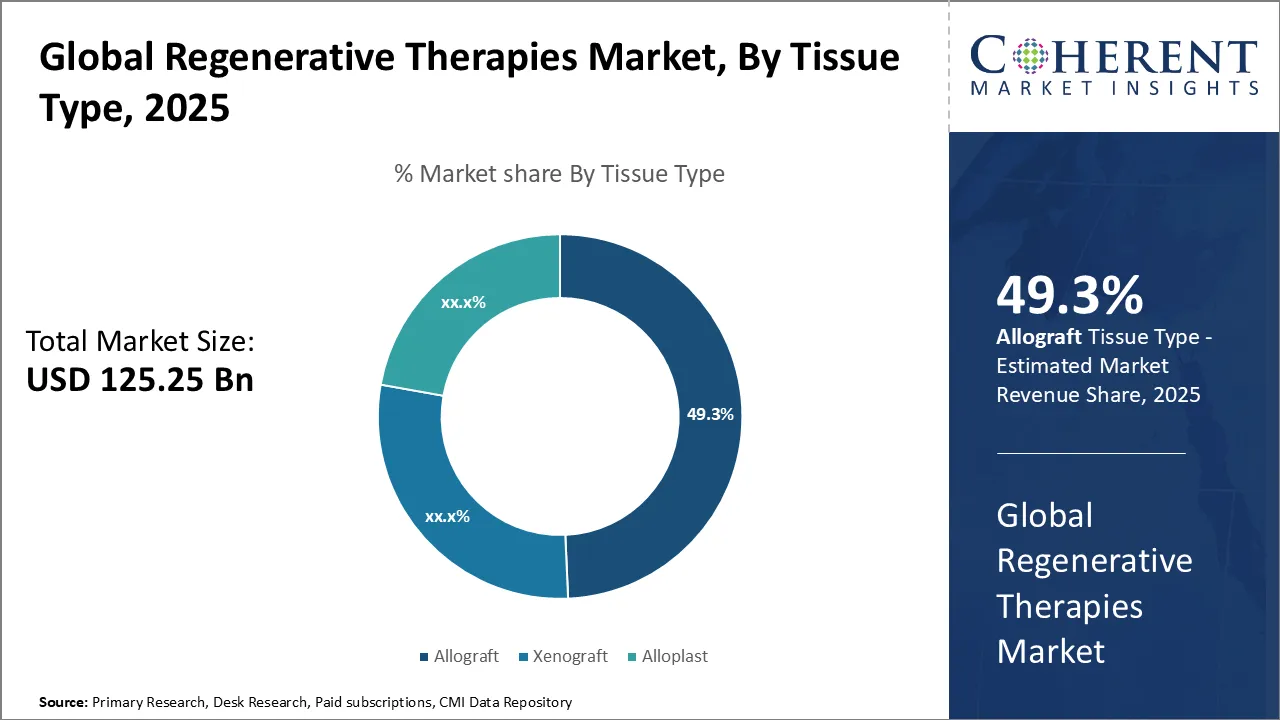
Regenerative Therapies Market Insights, By Tissue Type: Allograft Leads Due To Its High Compatibility and Effectiveness in Healing Damaged Tissues
In terms of tissue type, the Allografts segment is expected to lead the market with 50.3% share in 2026, due to their high compatibility and reduced immunogenic response. These grafts, sourced from human donors, are widely used in orthopedic and soft tissue repair procedures. Their ability to integrate seamlessly with host tissue and promote natural healing makes them a preferred choice among surgeons and clinicians. Technological advancements in sterilization and preservation have further enhanced their safety and efficacy.
For instance, in May 2025, Xtant Medical introduced OsteoFactor PRO™, a next-generation allograft solution designed to enhance bone healing and regeneration. This biologic product expands the company’s portfolio of regenerative offerings, targeting orthopedic and spinal procedures. The launch underscores Xtant’s commitment to innovation in tissue-based therapies for improved patient outcomes.
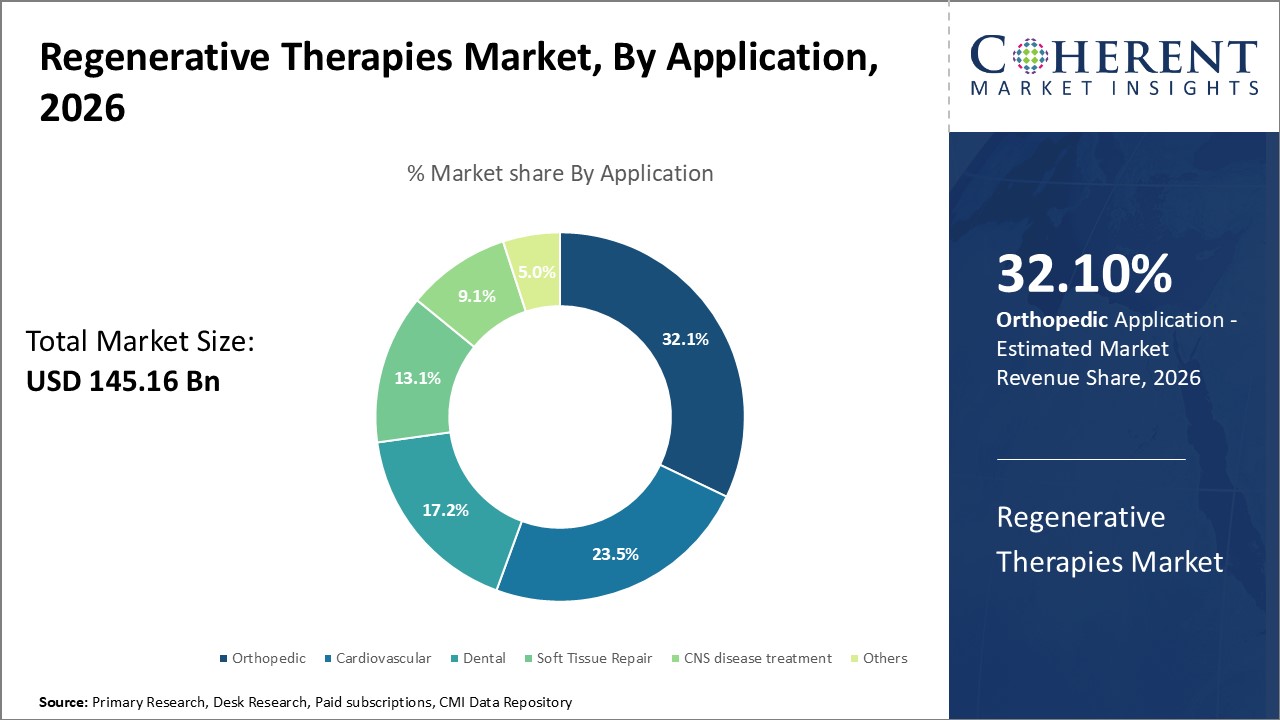
Regenerative Therapies Market Insights, By Application: Orthopedic Dominate as Regenerative Solutions Address Rising Musculoskeletal Disorders and Injury Recovery
In terms of application, the Orthopedic segment is expected to hold the largest share of the market in 2026, driven by the increasing prevalence of musculoskeletal disorders, sports injuries, and age-related degenerative conditions. Regenerative therapies in orthopedics focus on bone regeneration, cartilage repair, and joint restoration, offering minimally invasive solutions with faster recovery times. The growing demand for alternatives to traditional surgical interventions has accelerated the adoption of regenerative techniques in this field.
For instance, in August 2025, KK Care Hospital joined forces with OrthoRenew to introduce cutting-edge regenerative therapies in orthopedic care. The collaboration aims to enhance treatment for musculoskeletal disorders using biologics and stem cell technologies. This initiative marks a significant step in bringing advanced, patient-centric orthopedic solutions to Pune’s healthcare landscape.
Regenerative Therapies Market Insights, By End User: Hospitals Are at the Top Driven by their Advanced Infrastructure and Access to Cutting-Edge Therapies
In term so end user, the hospitals segment is projected to account for the highest share of the market in 2026, owing to their advanced infrastructure, access to skilled medical professionals, and ability to conduct complex procedures. These institutions are at the forefront of adopting innovative treatments, supported by clinical trials and research collaborations. Their role in delivering specialized care and managing high patient volumes makes them central to the market’s expansion and integration of regenerative solutions.
For instance, in August 2025, Kauvery Hospital Vadapalani launched a state-of-the-art Sports Medicine and Arthroscopy Center in Chennai, focusing on advanced care for athletic injuries and joint conditions. The facility is expected to integrate regenerative therapies like PRP and stem cell treatments, offering minimally invasive solutions to enhance recovery and performance for sports enthusiasts and active individuals.
Regional Insights
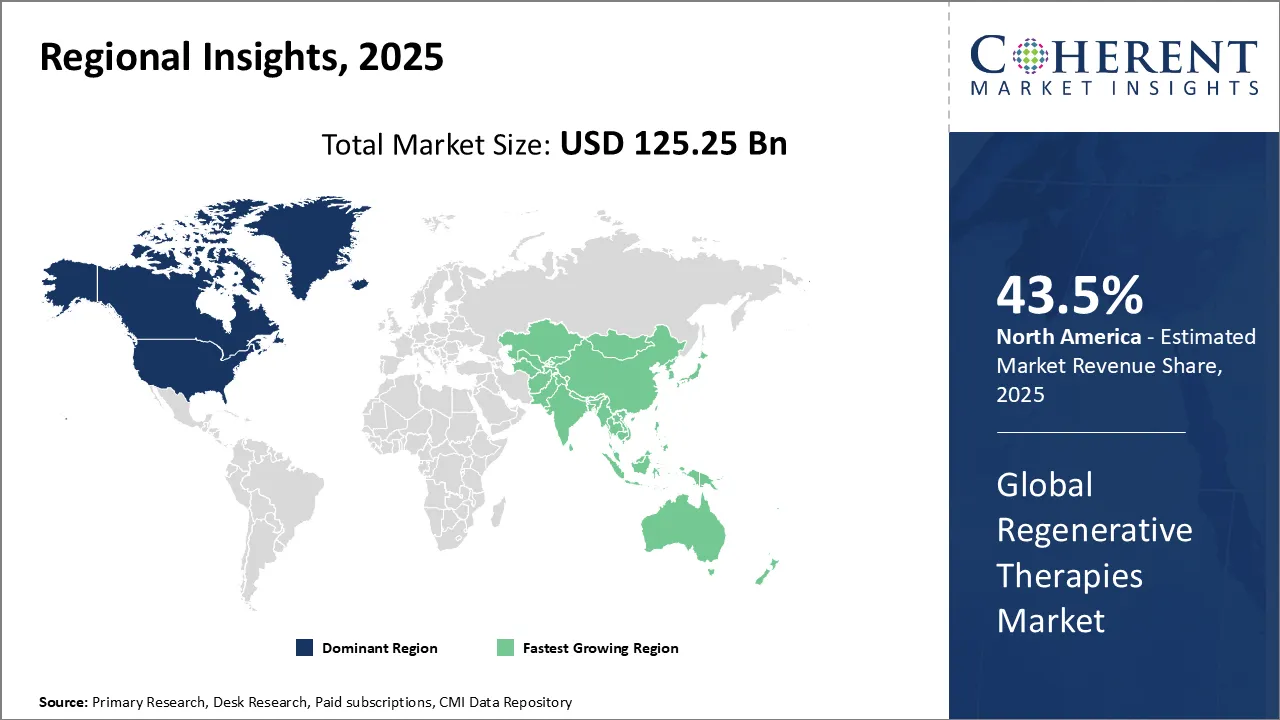
North America Regenerative Therapies Market Analysis & Trends
North America, holding 43.5% share, is expected to dominate the regenerative therapies market in 2026, due to advanced healthcare infrastructure, strong investment in biotechnology, and a high prevalence of chronic and degenerative diseases. The region benefits from robust research initiatives, favorable regulatory support, and early adoption of innovative treatments like stem cell and gene therapies.
Additionally, the presence of leading pharmaceutical companies and academic institutions accelerates clinical translation and commercialization. Rising patient awareness and demand for personalized, minimally invasive therapies further fuel market growth across the United States and Canada.
For instance, in September 2026, Encoded Therapeutics received the FDA’s Regenerative Medicine Advanced Therapy (RMAT) designation for ETX101, a gene therapy targeting SCN1A-positive Dravet Syndrome. The designation recognizes the therapy’s potential to address serious neurological conditions and supports its expedited development, marking a significant milestone in advancing regenerative medicine for rare genetic disorders.
Asia Pacific Regenerative Therapies Market Analysis & Trends
Asia Pacific is anticipated to show the fastest growth in the regenerative therapies market, due to rising chronic diseases, aging populations, and strong government support for biotech innovation. The region's demand is driven by increased prevalence of degenerative conditions, rapid advancements in stem cell and gene therapies, and growing investments in personalized medicine.
Countries like Japan, China, and South Korea lead with robust R&D infrastructure and favorable regulatory frameworks. Additionally, collaborative efforts between academia and industry are accelerating clinical translation and commercialization. This dynamic ecosystem positions Asia Pacific as a global hub for cutting-edge regenerative solutions.
For instance, in November 2026, Bharat Biotech unveiled NuceLION, a cutting-edge Cell and Gene Therapy CRDMO facility aimed at advancing regenerative medicine. Located in India, the center will support research, development, and manufacturing of next-gen biologics, positioning the country as a rising hub for innovative therapies targeting complex and chronic health conditions.
Regenerative Therapies Market Outlook Country-Wise
The U.S. Regenerative Therapies Market Trends
The U.S. regenerative therapies market is booming due to high chronic disease prevalence, aging demographics, and strong biotech investment. Supportive FDA pathways like RMAT designation, advanced R&D in stem cell and gene therapies, and growing demand for personalized medicine are accelerating adoption. Hospitals and specialty clinics increasingly integrate regenerative solutions for orthopedic, neurological, and cardiovascular conditions.
For instance, in August 2026, Beam Therapeutics secured the FDA’s Regenerative Medicine Advanced Therapy (RMAT) designation for BEAM-101, a gene therapy targeting sickle cell disease. The therapy uses base-edited autologous stem cells to boost fetal hemoglobin levels, aiming to reduce disease symptoms. This designation accelerates regulatory support for advancing regenerative treatments in the United States.
China Regenerative Therapies Market Trends
China’s regenerative therapies market is expanding rapidly due to its aging population, rising chronic disease rates, and strong government support for biotech innovation. Increased investment in stem cell research, gene therapy, and advanced manufacturing, along with growing consumer interest in personalized and aesthetic medicine, is fueling demand across hospitals, research centers, and wellness clinics nationwide.
For instance, in September 2026, Galderma has introduced its Alastin® skincare range in China, featuring products designed to support skin regeneration before and after aesthetic procedures. Powered by TriHex Technology®, the line includes Regenerating Skin Nectar and Restorative Skin Complex, marking a strategic expansion into Asia’s growing market for science-driven regenerative skincare solutions.
Market Report Scope
Regenerative Therapies Market Report Coverage
| Report Coverage | Details | ||
|---|---|---|---|
| Base Year: | 2025 | Market Size in 2026: | USD 145.16 Bn |
| Historical Data for: | 2020 To 2024 | Forecast Period: | 2026 To 2033 |
| Forecast Period 2026 to 2033 CAGR: | 15.9% | 2033 Value Projection: | USD 407.80 Bn |
| Geographies covered: |
| ||
| Segments covered: |
| ||
| Companies covered: | Shire Pharmaceuticals, Kinetic Concepts, Inc., Mesoblast Ltd., Metcela Inc., Nuo Therapeutics (Cytomedix Inc.), Integra LifeSciences, Advanced Cell Technology Inc., BioStem Life Sciences,Akron Biotechnology, LLC, Organovo Holdings Inc., Orgenesis Inc., Pluristem Therapeutics Inc., Genzyme, Athersys, Inc., RenovaCare, Inc., Cytori Therapeutics, Inc. | ||
| Growth Drivers: |
| ||
| Restraints & Challenges: |
| ||
Global Regenerative Therapies Market Driver
Growing Investments Drive Research and Collaboration in the Regenerative Medicine Market
Heightened investments in the regenerative medicine market have sparked extensive research and development initiatives, as numerous investors pour funds into start-up firms dedicated to advancing innovative therapies and products within the industry. Consequently, this has opened avenues for notable mergers, research collaborations, and partnerships, enabling the sharing of benefits derived from R&D endeavors.
Availability of Funding and Rising Investments Drive Regenerative Medicine Research
Increased funding and investments in the regenerative medicine field have spurred extensive research and development activities. The demand for improved therapies for various medical conditions has led to a surge in funding availability. Investments in the sector have reached significant levels, with key investors such as Amgen, Sanofi, and Gilead Sciences playing a prominent role. This financial support has facilitated the exploration of innovative solutions, including new cell therapies, gene therapies, and tissue-engineered products, driving advancements in regenerative medicine research.
Global Regenerative Therapies Market Opportunity
Stem Cell Therapy Expansion
Stem cell therapy is emerging as a cornerstone of innovation in the global regenerative therapies market forecast, driven by its transformative potential across multiple medical domains. These therapies are increasingly used to treat complex conditions such as neurodegenerative diseases, orthopedic injuries, and autoimmune disorders, offering hope where conventional treatments fall short. Advances in induced pluripotent stem cells (iPSCs) and mesenchymal stem cells (MSCs) are enhancing safety, precision, and scalability, enabling more targeted and personalized interventions. As research matures and clinical applications expand, stem cell therapy is expected to play a pivotal role in shaping the future of regenerative medicine worldwide.
Analyst Opinion (Expert Opinion)
The regenerative therapies market growth is entering a decisive execution phase, where scalability, regulatory precision, and manufacturing agility define competitiveness more than scientific novelty. Despite over 3,500 active gene, cell, and RNA therapy programs globally, only a small subset shows commercial readiness due to high capital intensity and process bottlenecks.
Manufacturing remains the primary obstacle, as limited vector and cell-processing capacity continues to delay delivery timelines and inflate costs. In parallel, pluripotent stem-cell (PSC)–based therapies are maturing, with more than 100 clinical trials evaluating 80 distinct products by 2024, marking diversification beyond CAR-T and autologous models. Regulatory agencies are expanding approvals for cell and gene therapies, validating efficacy yet leaving reimbursement and logistics challenges unresolved.
Strategically, vertically integrated platform owners and firms with strong CDMO partnerships are best positioned to capitalize. Success in this market increasingly depends on operational excellence, regional manufacturing networks, and early health-economic validation. Overall, the sector is shifting from experimental to scalable medicine, and only those combining scientific innovation with disciplined execution will sustain long-term advantage.
Speak to the analyst
Want personalized insights?
Take the findings above to one of our principal consultants, or have the report rebuilt around the segments, geographies and competitors you actually track.
Recent Developments
- In October 2025, the Lundquist Institute received $9 million to establish a Community Center of Excellence for Regenerative Medicine. The initiative aims to expand access to advanced regenerative therapies, particularly for underserved populations, and foster innovation in stem cell and tissue-based treatments through research, education, and community engagement.
- In August 2025, the International Atomic Energy Agency (IAEA) initiated a global research project to explore stem cell therapy for treating radiation-induced skin injuries. Focused on mesenchymal stem cell applications, the initiative aims to enhance recovery for patients with cutaneous radiation syndrome, marking a significant step in advancing regenerative medicine in radiation treatment.
- In June 2025, the University of Bridgeport, in collaboration with TulsiHub Institute, introduced a 12-week certificate program in regenerative medicine. Designed for healthcare professionals, the course covers stem cell therapy, gene therapy, PRP, and exosome treatments, equipping participants with advanced skills to deliver cutting-edge regenerative care in clinical practice.
- In May 2025, Minaris Advanced Therapies launched as a leading global partner dedicated to cell therapy development, manufacturing, and testing. The company offers end-to-end services for clinical and commercial cell therapies, supporting biotech firms with production, quality control, and regulatory expertise, strengthening its role in advancing regenerative medicine worldwide.
Market Segmentation
- Global Regenerative Therapies Market, By Tissue Type (Revenue, USD Bn, 2021 - 2033)
- Allograft
- Xenograft
- Alloplast
- Global Regenerative Therapies Market, By Application (Revenue, USD Bn, 2021 - 2033)
- Soft Tissue Repair
- Cardiovascular
- Dental
- Orthopedic
- CNS disease treatment
- Others
- Global Regenerative Therapies Market, By End User (Revenue, USD Bn, 2021 - 2033)
- Hospitals
- Ambulatory Surgical Centers
- Educational Institutes
- Global Regenerative Therapies Market, By Geography (Revenue, USD Bn, 2021 - 2033)
- North America
- U.S.
- Canada
- Europe
- U.K.
- Germany
- Italy
- France
- Spain
- Russia
- Rest of Europe
- Asia Pacific
- China
- India
- Japan
- ASEAN
- Australia
- South Korea
- Rest of Asia Pacific
- Latin America
- Brazil
- Mexico
- Argentina
- Rest of Latin America
- Middle East
- GCC
- Israel
- Rest of Middle East
- Africa
- Central Africa
- South Africa
- North Africa
- North America
- Company Profiles
- Shire Pharmaceuticals
- Kinetic Concepts, Inc.
- Mesoblast Ltd.
- Metcela Inc.
- Nuo Therapeutics (Cytomedix Inc.)
- Integra LifeSciences
- Advanced Cell Technology, Inc.
- BioStem Life Sciences
- Akron Biotechnology, LLC
- Organovo Holdings Inc.
- Orgenesis Inc.
- Pluristem Therapeutics Inc.
- Genzyme
- Athersys, Inc.
- RenovaCare, Inc.
- Cytori Therapeutics, Inc.
Sources
Primary Research Interviews from the following stakeholders
Stakeholders
- Interviews with biotechnology firms, cell therapy manufacturers, regenerative medicine R&D teams, clinical trial coordinators, stem cell banks, and hospital procurement heads across leading global markets.
Specific stakeholders
- Chief Scientific Officers and R&D Directors at cell and gene therapy developers (e.g., Novartis, Vertex Pharmaceuticals, Astellas Pharma)
- Regenerative medicine researchers and clinicians at leading academic hospitals (e.g., Mayo Clinic, Cleveland Clinic, Karolinska Institute)
- Quality assurance and regulatory affairs managers at GMP-compliant cell manufacturing facilities
- Procurement and biomedical engineering heads at specialty hospitals and research centers
- Medical directors at tissue engineering and wound healing centers
- Stem cell biobank managers and laboratory automation specialists
- Clinical trial operations and CRO partners involved in regenerative therapy studies
- Technology leads and manufacturing engineers for biomaterials and 3D bioprinting firms
Databases
- World Health Organization (WHO) – Global Health Observatory
- gov (U.S. National Library of Medicine)
- World Intellectual Property Organization (WIPO) – PatentScope (Biotech & Regenerative Medicine Patents)
- U.S. Food and Drug Administration (FDA) – Regenerative Medicine Advanced Therapy (RMAT) Approvals Database
- European Medicines Agency (EMA) – Advanced Therapy Medicinal Products (ATMP) Reports
- National Institutes of Health (NIH) – Research Portfolio Online Reporting Tools (RePORT)
- UN Comtrade Database
- Organisation for Economic Co-operation and Development (OECD) Biotechnology Statistics
- Japan Agency for Medical Research and Development (AMED)
- Department of Biotechnology (DBT), Government of India
Magazines
- Regenerative Medicine Magazine
- Cell & Gene Therapy Insights
- Genetic Engineering & Biotechnology News (GEN)
- Biopharma Dealmakers
- BioProcess International
- Pharma Manufacturing
- MedTech Insight
- Stem Cell News & Reports
- BioWorld
- Pharmaceutical Technology
Journals
- Journal of Regenerative Medicine
- Stem Cell Reports (Cell Press)
- Regenerative Biomaterials (Oxford Academic)
- Tissue Engineering (Mary Ann Liebert, Inc.)
- Stem Cells Translational Medicine (Wiley)
- Journal of Tissue Engineering and Regenerative Medicine
- Advanced Healthcare Materials (Wiley)
- Frontiers in Bioengineering and Biotechnology
- Cell Stem Cell (Elsevier)
- npj Regenerative Medicine (Nature Publishing Group)
Newspapers
- The Wall Street Journal – Health & Biotech
- Financial Times – Healthcare Innovation Section
- The Economic Times – Pharma & Biotechnology
- The Hindu Business Line – Life Sciences & Healthcare
- The Guardian – Science and Medicine
- Nikkei Asia – Pharmaceuticals & Life Sciences
- South China Morning Post – Health & Technology
- The Washington Post – Health & Science
Associations
- International Society for Stem Cell Research (ISSCR)
- Alliance for Regenerative Medicine (ARM)
- European Society for Biomaterials (ESB)
- American Society for Gene and Cell Therapy (ASGCT)
- Tissue Engineering and Regenerative Medicine International Society (TERMIS)
- Biotechnology Innovation Organization (BIO)
- Regenerative Medicine Foundation (RMF)
- Indian Society for Stem Cell Research (InStem/DBT)
- Japan Regenerative Medicine Society (JSRM)
Public Domain Sources
- U.S. Food and Drug Administration (FDA) – Center for Biologics Evaluation and Research (CBER) Publications
- European Medicines Agency (EMA) – ATMP Regulation Reports
- National Institutes of Health (NIH), U.S. – Regenerative Medicine Program
- Department of Health and Human Services (HHS), U.S.
- Ministry of Health, Labour and Welfare (MHLW), Japan
- Department of Biotechnology (DBT), India
- National Health Service (NHS) – Regenerative and Cellular Medicine Reports
- European Commission – Directorate-General for Research and Innovation (DG RTD)
- NITI Aayog – Biotechnology and Health Innovation Reports
- World Health Organization (WHO) – Global Report on Advanced Therapies
Proprietary Elements
- CMI Data Analytics Tool
- Proprietary CMI Existing Repository of information for last 8 years
Definition: The global regenerative therapies market refers to the market for medical treatments and therapies that aim to restore, repair, or replace damaged or diseased cells, tissues, or organs using biological materials, such as stem cells, gene therapies, tissue engineering, and other advanced techniques. These therapies have the potential to revolutionize healthcare by offering new solutions for various chronic conditions and degenerative diseases.
Get access to 250+ pages report
Every segment, forecast, competitor profile and data table behind the analysis above — available for instant download.
- ESOMAR Member
- ISO 9001:2015 Certified
- D-U-N-S Registered
- GDPR & CCPA Compliant
Missing comfort of reading report in your local language? Find your preferred language:
Transform your Strategy with Exclusive Trending Reports
Frequently Asked Questions
The Regenerative Therapies Market is estimated to be valued at USD 145.16 Bn in 2026, and is expected to reach USD 407.80 Bn by 2033.
The CAGR of the Regenerative Therapies Market is projected to be 15.9% from 2026 to 2033.
The major drivers of the market are the rising prevalence of chronic diseases, technological advancements, growing aging population, favorable regulations, R&D investments, demand for organ transplantation alternatives, and increasing awareness and acceptance of regenerative therapies.
Currently, the leading segment in the regenerative therapy market is allografts. Allografts refer to the use of tissues or cells from a donor within the same species. They are extensively utilized in a range of medical procedures and treatments.
Key factors hampering the growth of the market include high costs, regulatory challenges, ethical and legal concerns, limited insurance coverage, manufacturing and scalability issues, and long development and approval timelines.
Major players operating in the regenerative therapies market include Shire Pharmaceuticals, Kinetic Concepts, Inc., Mesoblast Ltd., Metcela Inc., Nuo Therapeutics (Cytomedix Inc.), Integra LifeSciences, Advanced Cell Technology Inc., BioStem Life Sciences,Akron Biotechnology, LLC, Organovo Holdings Inc., Orgenesis Inc., Pluristem Therapeutics Inc., Genzyme, Athersys, Inc., RenovaCare, Inc., Cytori Therapeutics, Inc.