

U.S. Sterile Injectables Market Size and Forecast — 2026-2033
The U.S. sterile injectables market is estimated to be valued at USD 187.78 Bn in 2026 and is expected to reach USD 365.93 Bn by 2033, exhibiting a compound annual growth rate (CAGR) of 10.0% from 2026 to 2033.
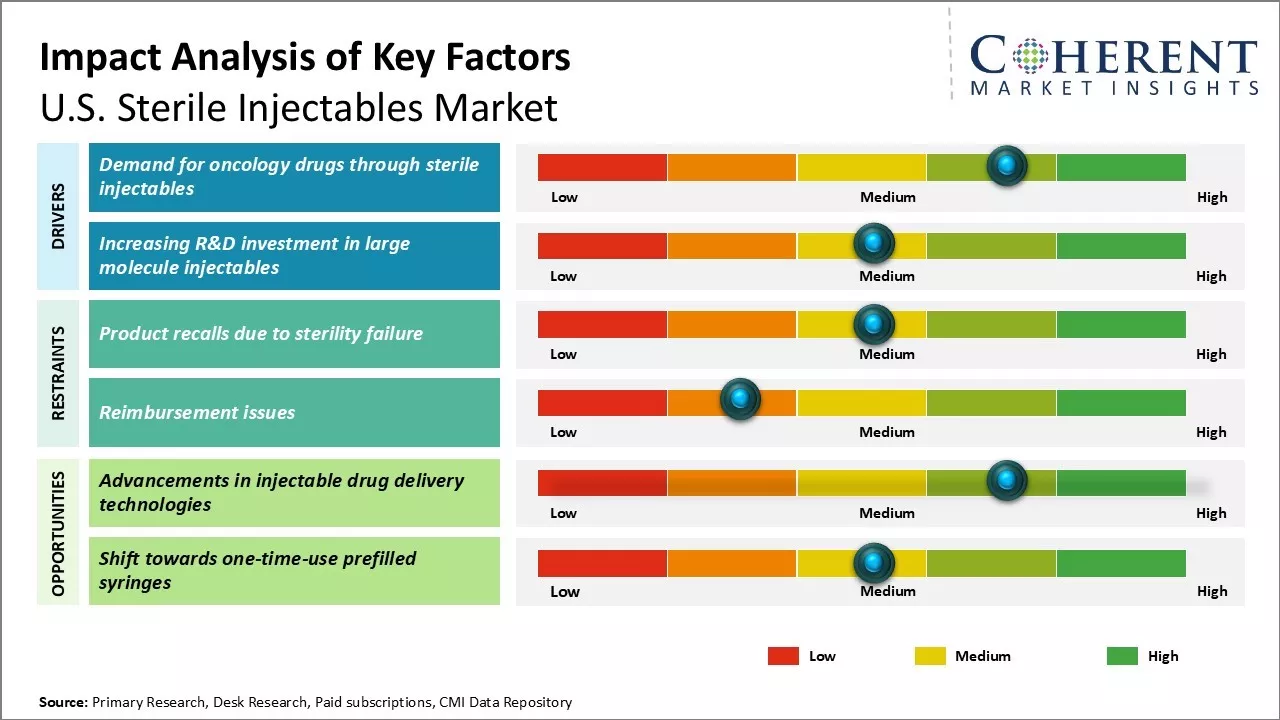
The U.S. sterile injectables industry is experiencing robust growth, driven by the rising prevalence of chronic diseases such as cancer and diabetes. The increasing reliance on injectable therapies for effective treatment options enhances market growth. However, challenges include high development costs and regulatory hurdles that can delay product approvals. Additionally, market players face competition from alternative drug delivery methods, which may restrict the market growth. Despite these restraints, advancements in biotechnology and personalized medicine are expected to provide new opportunities for innovation and expansion within the sterile injectables sector.
Insights by Molecule Type:
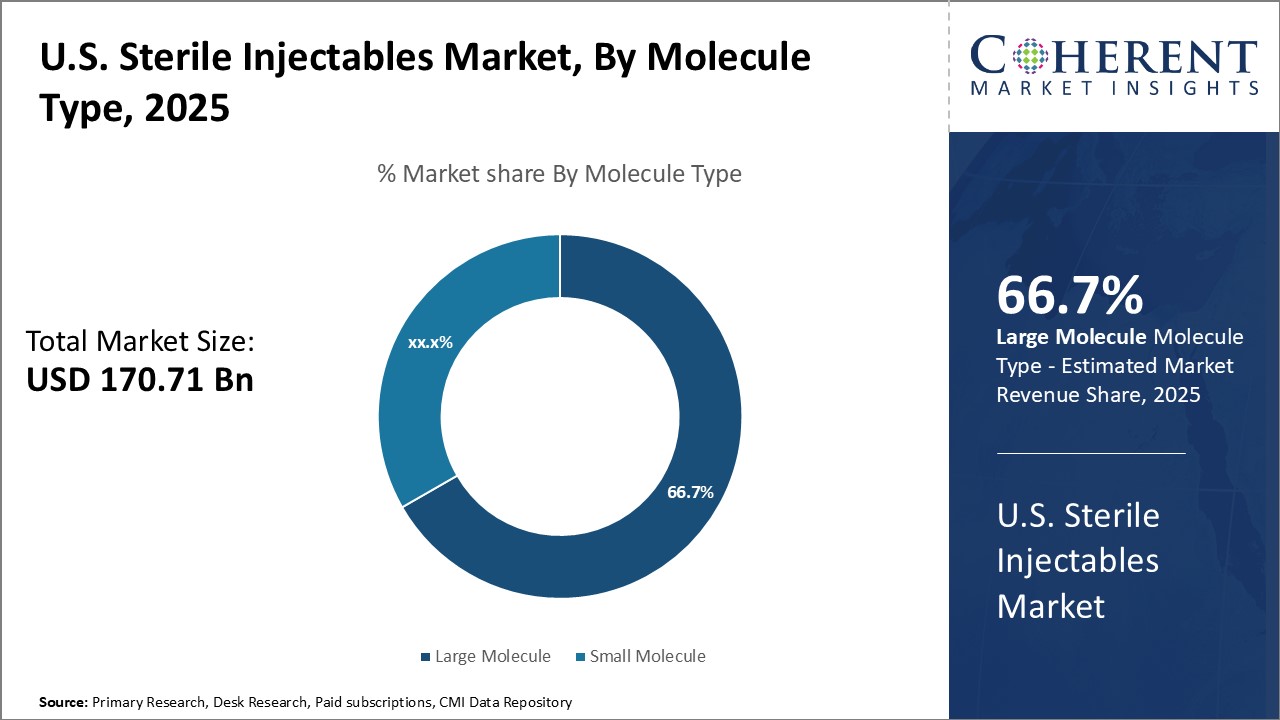
Insights by Molecule Type: The rise of biologics is driving the large molecule segment growth
In terms of molecule type, large molecule segment is expected to contribute the highest market share of 67.7% in 2026, driven by the rapid growth of biologics. Monoclonal antibodies are increasingly preferred for treating chronic diseases due to their high specificity and efficacy. However, challenges such as complex manufacturing processes and high costs may hinder market expansion.
Insights by Drug Type
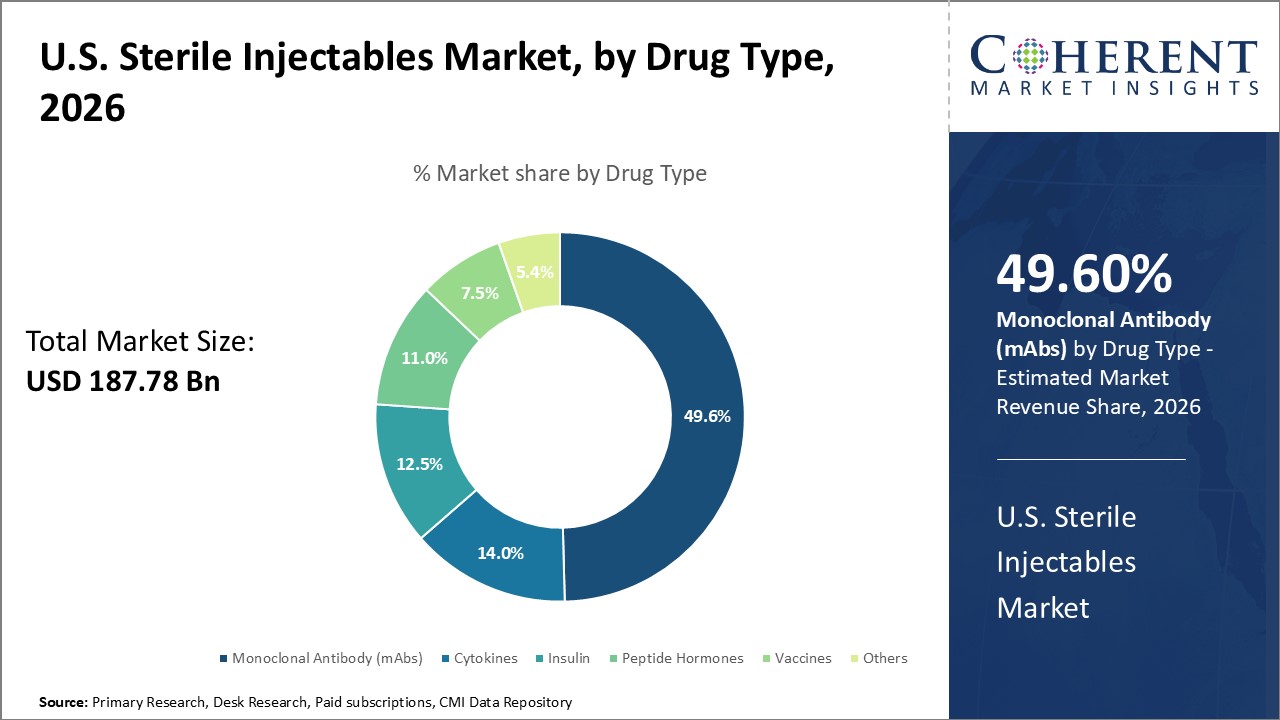
Insights by Drug Type: Monoclonal antibody’s supremacy in cancer treatment drives the segment growth
In terms of drug type, monoclonal antibody (mAbs) segment is expected to contribute the highest market share of 49.6% in 2024, driven by their pivotal role in treating various cancers and chronic inflammatory diseases. mAbs have become essential for treating various cancers and chronic inflammatory diseases. Continuous innovation in antibody engineering is expanding treatment indications, ensuring that monoclonal antibodies remain dominant in the U.S. sterile injectables industry.
Insights by Therapeutic Application
Insights by Therapeutic Application: Increasing Prevalence of Cancer Drives Segment Growth
In terms of therapeutic application, cancer segment is expected to contribute the highest market share of 54.9% in 2026. Cancer prevalence is increasing significantly driven by aging populations and changing lifestyles globally. It has become one of the leading causes of mortality, elevating the demand for advanced oncology treatment options.
Market Players, Key Development, and Competitive Intelligence
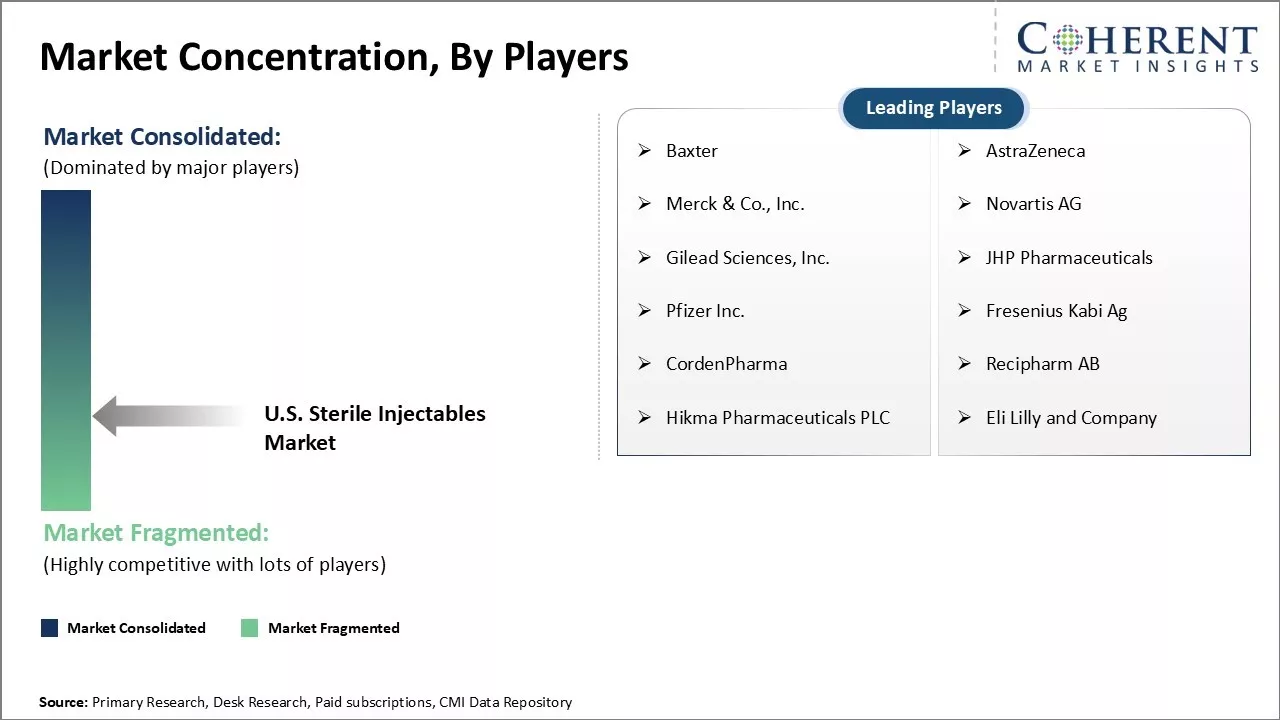
Top Strategies Followed by U.S. Sterile Injectables Market Players
- Established players in the U.S. sterile injectables industry focus extensively on research and development to deliver innovative product solutions. Companies like Pfizer, Baxter, and Hospira invest over 10% of their annual revenues into R&D. Their goal is to develop high-performance drugs and therapies to treat complex medical conditions.
- Large companies have significantly increased their global footprint through strategic acquisitions and regional expansions over the past five years. For example, Pfizer acquired Hospira to boost its injectables and biosimilars segment in key international territories.
- Mid-sized players survive competitive pressures by offering cost-competitive generic drugs and biosimilars. Companies like Fresenius Kabi focus on quality assurance and optimized supply chains to manufacture affordable therapeutics. They often tie up with local manufacturers in emerging markets for improved market penetration at regional levels.
- These small-scale players complement the broader market dynamics by providing specialized solutions and driving innovation, ensuring a diverse range of options for healthcare providers and patients alike.
Emerging Startups in the U.S. Sterile Injectables Market
- Several startups are developing advanced technologies like targeted drug delivery systems and digital monitoring solutions for sterile injectables. For instance, Novalung develops smart sensors integrated with injectables to track dosage intake and transmit therapeutic levels remotely. Such innovations could enhance treatment outcomes while reducing healthcare costs significantly.
- Sustainability is a key focus area for startup ventures as well. GreenPharm delivers biodegradable polymer formulations as an eco-friendly alternative to plastic packaging typically used for sterile vials and prefillable syringes. Their plant-based solutions help lower environmental footprints sustainably.
- New entrants also target specific niche segments often overlooked by larger players. For example, Clinverse Biotherapeutics is developing therapies for rare blood disorders using stem cell isolation techniques. Their personalized solutions aim to address the needs of small patient populations.
- Current Industry Events of 2026
- Market Size Estimation
- Regional Breakdown
- Competitive Landscape
- Customer Intelligence
- Segmental Analysis
- Pricing Analysis
- Key Market Drivers, Challenges & Future Trends
- Customized Insights Section
Market Report Scope
U.S. Sterile Injectables Market Report Coverage
| Report Coverage | Details | ||
|---|---|---|---|
| Base Year: | 2025 | Market Size in 2026: | USD 187.78 Bn |
| Historical Data for: | 2020 To 2024 | Forecast Period: | 2026 To 2033 |
| Forecast Period 2026 to 2033 CAGR: | 10.0% | 2033 Value Projection: | USD 365.93 Bn |
| Segments covered: |
| ||
| Companies covered: | Baxter, AstraZeneca, Merck & Co., Inc., Novartis AG, Gilead Sciences, Inc., JHP Pharmaceuticals, Pfizer Inc., Fresenius Kabi Ag, CordenPharma, Recipharm AB, Hikma Pharmaceuticals PLC, and Eli Lilly and Company | ||
| Growth Drivers: |
| ||
| Restraints & Challenges: |
| ||
Market Dynamics
Market Driver - Demand for oncology drugs through sterile injectables
The rising prevalence of cancer is driving a significant demand for effective treatment options, as it remains a leading cause of mortality worldwide, impacting millions each year. Scientific studies project that new cancer cases will continue to increase due to lifestyle changes and an aging population. This trend poses a major challenge for healthcare systems, necessitating the development of innovative therapies to address the growing complexity of cancer care and improve patient outcomes.
Market Challenge - Product recalls due to sterility failure
The U.S. sterile injectables industry is grappling with significant challenges due to product recalls stemming from sterility failures. Even minor sterility issues can lead to severe health risks, prompting large-scale recalls that burden manufacturers financially and damage brand reputations. Stricter regulatory norms will require increased investment in advanced manufacturing and quality systems, potentially straining profit margins for suppliers.
Market Opportunity - Advancements in injectable drug delivery technologies
The U.S. sterile injectables market is poised for growth due to advancements in drug delivery technologies. Innovations like pre-filled syringes, auto-injectors, and microencapsulation are improving patient experiences and adherence, particularly for chronic conditions. Additionally, alternative administration methods, such as 3D-printed patches, are expanding treatment options, enhancing the market's potential for accelerated drug development.
Analyst Opinion (Expert Opinion)
Key Takeaways from Analyst
The U.S. sterile injectables market growth is driven by the rising prevalence of chronic diseases such as cancer, infections and autoimmune diseases that require drug administration through injectables. Biologics and biosimilars are dominating the market and their uptake continue to rise. Furthermore, the complexity of drug molecules is increasing with more specialty drugs entering the pipeline, which will boost the U.S. sterile injectables industry.
The market offers opportunities for contract manufacturing as larger players are outsourcing production to CMOs. Outsourcing injectable production helps optimize manufacturing capacity and focus on core competencies.
The North-Eastern region in the U.S. dominates due to the concentration of pharmaceutical companies while the Western region is witnessing faster growth led by biosimilar uptake in cancer and immune-oncology.
Speak to the analyst
Want personalized insights?
Take the findings above to one of our principal consultants, or have the report rebuilt around the segments, geographies and competitors you actually track.
Market Segmentation
- By Molecule Type Insights (Revenue, USD Bn, 2021 - 2033)
- Large Molecule
- Small Molecule
- By Drug Type Insights (Revenue, USD Bn, 2021 - 2033)
- Monoclonal Antibody (mAbs)
- Cytokines
- Insulin
- Peptide Hormones
- Vaccines
- Others
- By Therapeutic Application Insights (Revenue, USD Bn, 2021 - 2033)
- Cancer
- Metabolic Disorder
- Cardiovascular Diseases
- Infectious Diseases
- Musculoskeletal Disorders
- Others
- By Route of Administration Insights (Revenue, USD Bn, 2021 - 2033)
- Subcutaneous
- Intravenous
- Intramuscular
- Others
- By Distribution Channel Insights (Revenue, USD Bn, 2021 - 2033)
- Hospital Pharmacies
- Retail Pharmacies
- Online Pharmacies
- Key Players Insights
- Baxter
- AstraZeneca
- Merck & Co., Inc.
- Novartis AG
- Gilead Sciences, Inc.
- JHP Pharmaceuticals
- Pfizer Inc.
- Fresenius Kabi Ag
- CordenPharma
- Recipharm AB
- Hikma Pharmaceuticals PLC
- Eli Lilly and Company
Get access to 250+ pages report
Every segment, forecast, competitor profile and data table behind the analysis above — available for instant download.
- ESOMAR Member
- ISO 9001:2015 Certified
- D-U-N-S Registered
- GDPR & CCPA Compliant
Missing comfort of reading report in your local language? Find your preferred language:
Transform your Strategy with Exclusive Trending Reports
Frequently Asked Questions
The U.S. Sterile Injectables Market is estimated to be valued at USD 187.78 Bn in 2026, and is expected to reach USD 365.93 Bn by 2033.
The CAGR of the U.S. Sterile Injectables Market is projected to be 10.0% from 2026 to 2033.
Demand for oncology drugs through sterile injectables and increasing R&D investment in large molecule injectables are the major factors driving the growth of the U.S. sterile injectables market.
Product recall due to sterility failure and reimbursement issues are the major factors hampering the growth of the U.S. sterile injectables market.
In terms of molecule type, large molecule segment is estimated to dominate the market revenue share in 2026.
Baxter, AstraZeneca, Merck & Co., Inc., Novartis AG, Gilead Sciences, Inc., JHP Pharmaceuticals, Pfizer Inc., Fresenius Kabi Ag, CordenPharma, Recipharm AB, Hikma Pharmaceuticals PLC, and Eli Lilly and Company are the major players.