

Central Precocious Puberty Market Size and Share Analysis - Growth Trends and Forecast (2026 – 2033)
The Central Precocious Puberty Market is anticipated to grow at a CAGR of 7.9% with USD 2,164.7 Mn market value in 2026 and is expected to reach USD 3,685.4 Mn by 2033. The market growth is driven by the increasing prevalence of central precocious puberty, rising awareness regarding early diagnosis and treatment, growing adoption of gonadotropin-releasing hormone (GnRH) therapies, improving access to pediatric endocrinology services, and advancements in long-acting treatment formulations, supported by expanding healthcare infrastructure and improved access to specialized care.
Key Takeaways
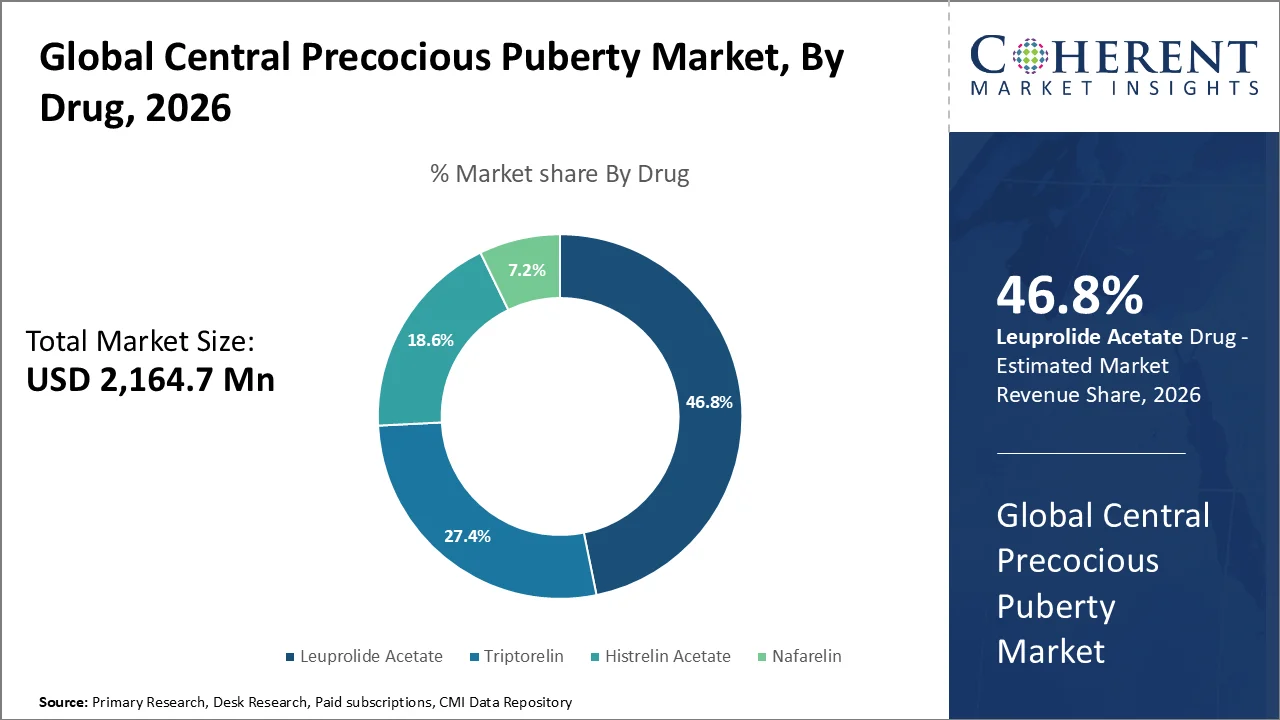
- The Leuprolide Acetate segment is expected to lead the market with a share of 46.8% in 2026 owing to its established efficacy, multiple long-acting depot formulations, and broad physician adoption as a first-line therapy for Central Precocious Puberty (CPP). According to the U.S. National Library of Medicine (MedlinePlus), leuprolide injection is specifically approved for the treatment of CPP in pediatric patients.
- The Hospital Pharmacies segment is expected to hold the largest share of 57.6% in 2026, owing to the specialist-driven nature of CPP diagnosis and treatment, frequent administration of injectable GnRH agonists in healthcare settings and the need for continuous monitoring by pediatric endocrinologists. According to the Journal of the Endocrine Society, long-acting GnRH analogs are the gold-standard treatment for CPP worldwide. The International Journal of Pediatric Endocrinology reported that the administration of GnRH analogs is the treatment of choice for CPP, reconfirming the dominant role of hospital-based dispensing channels.
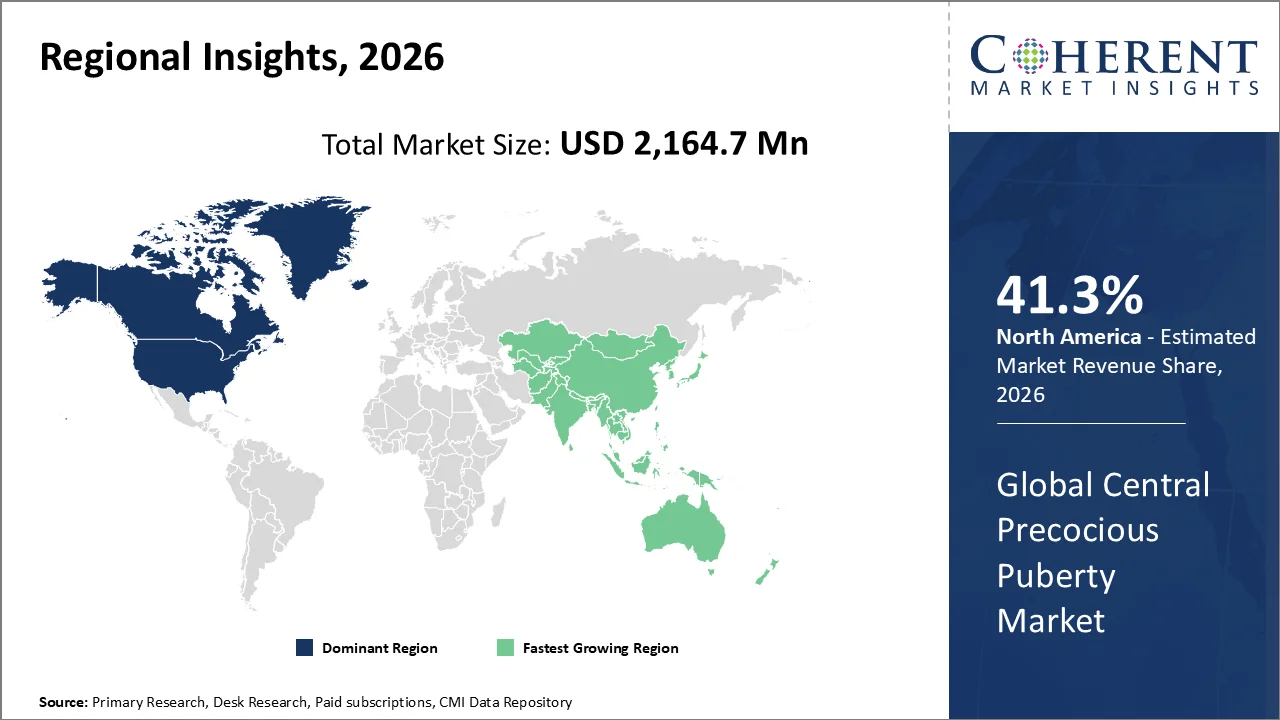
- North America is projected to hold the largest share of 41.3% in the global Central Precocious Puberty market in 2026. High disease awareness, early diagnosis rates, favorable reimbursement policies, and availability of approved gonadotropin-releasing hormone (GnRH) treatments are the factors responsible for the dominance. Central precocious puberty is around 10 times more common in girls than boys, as stated by the U.S. National Institutes of Health (NIH), highlighting the need for early identification and treatment.
Segmental Insights
Why is Leuprolide Acetate Acquiring the Largest Market Share?
Leuprolide acetate is expected to hold the highest market share in the Central Precocious Puberty (CPP) industry in 2026, accounting for approximately 46.8% of the overall market by drug type. Its dominance is a reflection of its demonstrated long-term efficacy, wide clinical experience, various depot formulations and strong physician preference as a first line treatment for CPP. Leuprolide acetate efficiently reduces early activation of the hypothalamic-pituitary-gonadal axis thus helping preserve adult height potential and delay pubertal progression.
In May 2026, Foresee Pharmaceuticals announced that it had successfully completed the Last Patient Last Visit (LPLV) phase of its pivotal Phase III Casppian trial evaluating FP-001 (Leuprolide Mesylate 42 mg), an investigational sustained-release GnRH agonist administered once every six months for children with Central Precocious Puberty (CPP).
- Current Industry Events of 2026
- Market Size Estimation
- Regional Breakdown
- Competitive Landscape
- Customer Intelligence
- Segmental Analysis
- Pricing Analysis
- Key Market Drivers, Challenges & Future Trends
- Customized Insights Section
Which Distribution Channel Segment Dominates the Market?
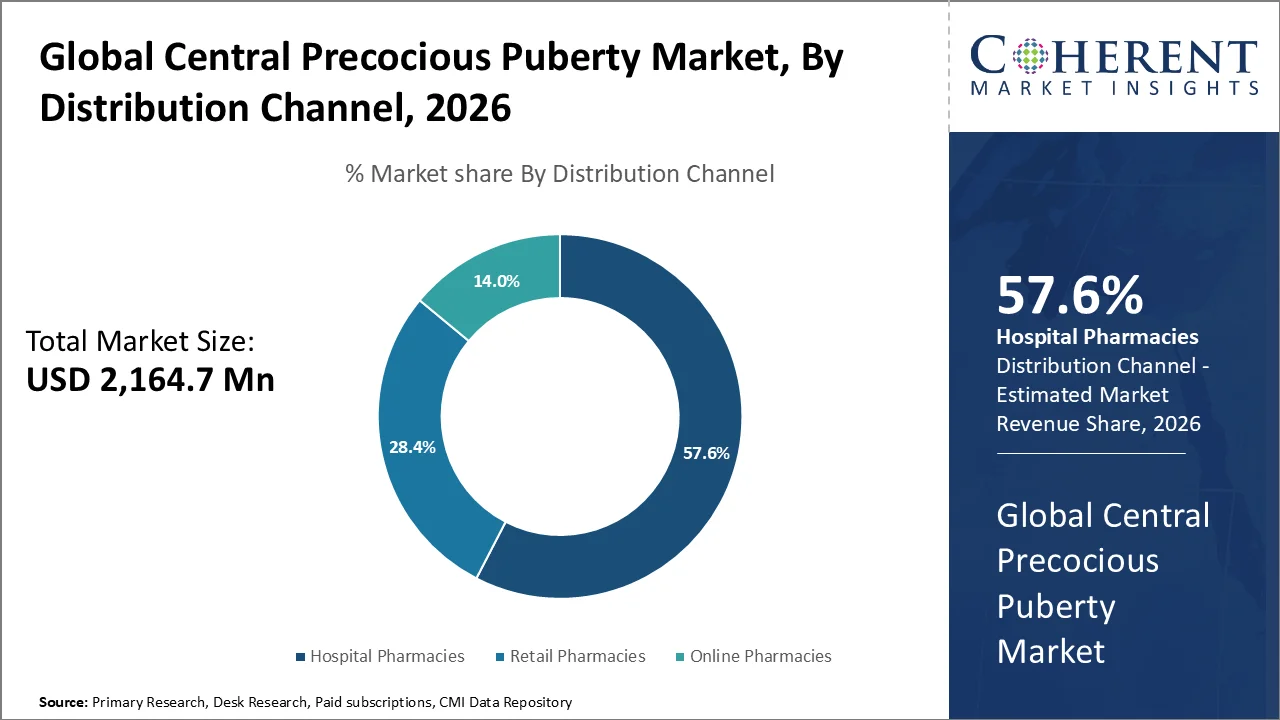
Hospital Pharmacies dominated the Central Precocious Puberty market with the biggest share, accounting for around 57.6% in 2026. This is attributed to the specialist-driven nature of CPP diagnosis and treatment. With CPP management, pediatric endocrinologist examination, hormonal testing, imaging assessments and administration of injectable GnRH agonists are usually needed, so hospitals are still the major entry point for starting and following up treatment.
Hospitals are equipped with multidisciplinary pediatric teams that can evaluate growth velocity, bone maturation and therapy response over long periods. The growing availability of pediatric endocrine care has further reinforced the role of hospital pharmacy in providing CPP medications. Based on American Board of Pediatrics (ABP) data, there were 1,494 pediatric endocrinologists who are currently certified and age 70 years or younger in the United States in 2023, which is around 2.0 pediatric endocrinologists per 100,000 children aged 0–18 years.
Rising Incidence and Early Diagnosis of CPP are Driving the Central Precocious Puberty Market
Rising incidence of Central Precocious Puberty (CPP) internationally is a major growth driver for the Central Precocious Puberty market. Increased understanding of the physical and psychological consequences of untreated CPP for parents and pediatricians has led to earlier diagnosis and greater treatment uptake.
Moreover, a 2025 global systematic review and meta-analysis estimated the pooled prevalence of precocious puberty to be 7.87% in females and 3.98% in boys, highlighting the growing population of patients in need of medical intervention.
Advancements in Long-Acting GnRH Therapies are Transforming CPP Treatment
Innovations in the creation of long-acting GnRH agonist preparations have improved compliance in children suffering from central precocious puberty due to reduced frequency of injections. Long-acting therapies provide sustained hormone suppression, reduce hospital visits, and improve convenience for patients and caregivers. These benefits may improve treatment adherence and enhance quality of life.
Clinical evidence also supports the effectiveness of these formulations. A 2025 study published in the Turkish Archives of Pediatrics found that pubertal suppression was achieved in 72.1% of girls receiving monthly leuprolide acetate (3.75 mg) and 78.0% of those receiving the 3-month formulation (11.25 mg), with no statistically significant difference between the groups (P = 0.291). This highlights the comparable efficacy of longer-acting options while offering greater convenience in CPP management.
Current Events and Their Impact
Current Event | Description and its Impact |
Expansion of Long-Acting GnRH Treatment Options in the U.S. |
|
Increasing Incidence of Central Precocious Puberty and Growing Healthcare Burden |
|
Central Precocious Puberty Market Trends
- Increasing use of long-acting GnRH agonists like 3-month and 6-month formulations improves compliance with the treatment regimen, decreases the frequency of injections and trips to the hospital among children suffering from CPP.
- Modern diagnostic techniques like hormonal assessments and MRI scanning help detect the disorder and develop an effective treatment strategy for the patients.
- The increase in the coverage and funding for GnRH therapy is boosting patient access to the treatment. The CMS reported that the national health expenditures in the US increased by 7.5%, reaching USD 4.9 trillion, in 2023 due to higher funding of specialist medical services.
- Scientific innovations are fueled by the rising pipeline and clinical trials conducted on the treatment of pediatric endocrine diseases using alternative CPP therapy options.
Regional Insights
North America Dominates Owing to High Awareness and Early Diagnosis of CPP
North America is projected to account for 41.3% of the Central Precocious Puberty market share in 2026 due to high illness awareness, early diagnosis rate, advantageous reimbursement policies, and high availability of licensed gonadotropin-releasing hormone (GnRH) therapies. The region has a well-developed network of pediatric endocrinology and advanced healthcare infrastructure that allows for quick diagnosis and treatment of CPP.
In November 2025,
Asia Pacific Central Precocious Puberty Market Trends
Asia Pacific is expected to be the fastest-growing regional market between 2026 and 2033, growing at a projected CAGR of 9.1%. Growth will be supported by growing awareness regarding early puberty, increased availability of pediatric endocrine facilities, growing healthcare spending, and higher rates of diagnosis in emerging countries like China, India, South Korea, and Japan.
In June 2025, Taiwan-based Foresee Pharmaceuticals announced the completion of patient enrollment in its pivotal Phase III Casppian trial evaluating FP-001 (Leuprolide Mesylate 42 mg), a six-month sustained-release GnRH agonist for children with CPP.
Rising Awareness and Expanding Access to Long-Acting Therapies are Driving the Central Precocious Puberty Market in the United States
The United States Central Precocious Puberty market is experiencing steady expansion, driven by rising awareness of early puberty, timely referrals to pediatric endocrinologists, and wide availability of licensed gonadotropin-releasing hormone (GnRH) therapies. The country has advanced diagnostic capabilities, advantageous payment structures, and a large network of specialized pediatric endocrine institutions.
The Journal of Clinical Endocrinology & Metabolism reported that gonadotropin suppression with histrelin implant (SUPPRELIN LA) was effective and safe for long-term use and increased predicted adult height among children with CPP.
Japan Central Precocious Puberty Market Trends
The Japan Central Precocious Puberty Market is expected to grow steadily during the forecast period owing to high healthcare accessibility, increasing awareness of pediatric endocrine problems and availability of standardized treatment regimens. Children with CPP can receive specialist advice, diagnostic testing and GnRH agonist therapy within Japan’s universal healthcare system.
Who are the Major Companies in Central Precocious Puberty Industry
Some of the major key players in Central Precocious Puberty are Teva Pharmaceutical Industries Ltd., AbbVie Inc., Arbor Pharmaceuticals, LLC, Pfizer Inc., Tolmar Pharmaceuticals, Inc., Endo International plc, Ipsen Pharma, Debiopharm Group, and Sun Pharmaceutical Industries Limited.
Key News
- In October 2025, LG Chem announced the commercial launch of Leupone Inj. (leuprorelin), a GnRH agonist indicated for the treatment of central precocious puberty (CPP) in children, expanding the availability of long-acting therapeutic options for pediatric patients.
- In December 2023, GenSci announced the launch of its Global Innovation Hub in Shanghai, a new R&D center dedicated to advancing innovative healthcare solutions for women and children. The firm is known for developing solutions for precocious puberty, including rapid sex hormone testing and long-acting GnRH analogs for the treatment of central precocious puberty.
Market Report Scope
Central Precocious Puberty Market Report Coverage
| Report Coverage | Details | ||
|---|---|---|---|
| Base Year: | 2025 | Market Size in 2026: | USD 2,164.7 Mn |
| Historical Data for: | 2020 To 2024 | Forecast Period: | 2026 To 2033 |
| Forecast Period 2026 to 2033 CAGR: | 7.9% | 2033 Value Projection: | USD 3,685.4 Mn |
| Geographies covered: |
| ||
| Segments covered: |
| ||
| Companies covered: | Teva Pharmaceutical Industries Ltd., AbbVie Inc., Arbor Pharmaceuticals, LLC, Pfizer Inc., Tolmar Pharmaceuticals, Inc., Endo International plc, Ipsen Pharma, Debiopharm Group, and Sun Pharmaceutical Industries Limited | ||
| Growth Drivers: |
| ||
| Restraints & Challenges: |
| ||
Analyst Opinion
- The Central Precocious Puberty (CPP) market is anticipated to exhibit stable expansion, as therapy is a medical necessity with increased emphasis on the preservation of long-term health outcomes and quality of life in affected children. A meta-analysis of 10 studies involving 720 children found that GnRH agonist treatment improved final adult height by an average of 3.3 cm compared with controls, reinforcing the long-term clinical benefits of treatment.
- Moving to long-acting and patient-friendly GnRH treatments is changing the treatment paradigm by reducing treatment burden, boosting adherence, and increasing convenience for patients and caregivers. In a long-term study of leuprolide acetate depot therapy, treated girls achieved a mean adult height gain of 4.0 cm over their pretreatment predicted adult height, demonstrating the effectiveness of sustained GnRH suppression.
- Higher treatment uptake and market expansion in both developed and emerging nations will probably be driven by increased awareness, earlier diagnosis, and expanded access to pediatric endocrinology services. Among 353 girls with idiopathic CPP, 60% developed symptoms between 7 and 8 years of age, indicating that increased awareness and timely evaluation can facilitate earlier diagnosis and intervention.
Speak to the analyst
Want personalized insights?
Take the findings above to one of our principal consultants, or have the report rebuilt around the segments, geographies and competitors you actually track.
Market Segmentation
- By Drug (Revenue, USD Mn, 2021-2033)
- Leuprolide Acetate
- Triptorelin
- Histrelin Acetate
- Nafarelin
- By Distribution Channel (Revenue, USD Mn, 2021-2033)
- Hospital Pharmacies
- Retail Pharmacies
- Online Pharmacies
- Global Central Precocious Puberty Market, By Region (Revenue, USD Mn, 2021-2033)
- North America
- U.S.
- Canada
- Latin America
- Brazil
- Mexico
- Argentina
- Rest of Latin America
- Europe
- Germany
- U.K.
- France
- Italy
- Spain
- Russia
- Rest of Europe
- Asia Pacific
- China
- India
- Japan
- Australia
- South Korea
- ASEAN
- Rest of Asia Pacific
- Middle East
- GCC
- Israel
- Rest of Middle East
- Africa
- South Africa
- Central Africa
- North Africa
- North America
- Key Players
- Teva Pharmaceutical Industries Ltd.
- AbbVie Inc.
- Arbor Pharmaceuticals, LLC
- Pfizer Inc.
- Tolmar Pharmaceuticals, Inc.
- Endo International plc
- Ipsen Pharma
- Debiopharm Group
- Sun Pharmaceutical Industries Limited
Sources
Primary Research Interviews
- Pediatric endocrinologists
- Pediatricians and pediatric specialists
- Hospital administrators
- Specialty pharmacy managers
- Retail pharmacy executives
- Key opinion leaders (KOLs) in pediatric endocrinology
- Clinical researchers involved in CPP studies
- Healthcare reimbursement and market access experts
Databases
- World Health Organization (WHO)
- Centers for Disease Control and Prevention (CDC)
- National Institutes of Health (NIH)
- U.S. Food and Drug Administration (FDA)
- ClinicalTrials.gov
- National Library of Medicine (PubMed)
- Organisation for Economic Co-operation and Development (OECD)
- European Medicines Agency (EMA)
Magazines
- Endocrine News
- Contemporary Pediatrics
- Pharmacy Times
- Managed Healthcare Executive
- Drug Topics
Journals
- Journal of Clinical Endocrinology & Metabolism (JCEM)
- Hormone Research in Paediatrics
- Journal of Pediatric Endocrinology and Metabolism
- Frontiers in Endocrinology
- Frontiers in Pediatrics
- Pediatrics
- Endocrine Reviews
Newspapers
- The New York Times
- The Wall Street Journal
- USA Today
- Financial Times
- The Guardian
Associations
- Pediatric Endocrine Society (PES)
- European Society for Paediatric Endocrinology (ESPE)
- Japanese Society for Pediatric Endocrinology (JSPE)
- Endocrine Society
- American Academy of Pediatrics (AAP)
- American Board of Pediatrics (ABP)
Public Domain Sources
- Company Annual Reports and Investor Presentations
- U.S. FDA Drug Approval Announcements and Prescribing Information
- Clinical Trial Registries such as ClinicalTrials.gov
- Company Press Releases and Official Websites
- Government Health Ministry Publications
- PubMed and PubMed Central Publications
- SEC Filings and Regulatory Disclosures
- EMA Regulatory Documents
Proprietary Elements
- CMI Data Analytics Tool
- Proprietary CMI Existing Repository of Information for the Last 10 Years
- Internal Market Modeling and Forecasting Frameworks
- Expert Validation Through Primary Research Interviews
Get access to 250+ pages report
Every segment, forecast, competitor profile and data table behind the analysis above — available for instant download.
- ESOMAR Member
- ISO 9001:2015 Certified
- D-U-N-S Registered
- GDPR & CCPA Compliant
Missing comfort of reading report in your local language? Find your preferred language:
Transform your Strategy with Exclusive Trending Reports
Frequently Asked Questions
The Central Precocious Puberty Market is expected to reach USD 3,685.4 Million by 2033.
Major players operating in the global Central Precocious Puberty market include Teva Pharmaceutical Industries Ltd., AbbVie Inc., Arbor Pharmaceuticals, LLC, Pfizer Inc., Tolmar Pharmaceuticals, Inc., Endo International plc, Ipsen Pharma, Debiopharm Group, and Sun Pharmaceutical Industries Limited.
High treatment costs, limited access to pediatric endocrinologists, delayed diagnosis, and reimbursement variability across regions continue to challenge market growth.
Increasing awareness and early diagnosis of CPP, growing adoption of long-acting GnRH therapies, improving access to pediatric endocrine care, and advancements in diagnostic technologies are driving market expansion.
The Central Precocious Puberty Market is anticipated to grow at a CAGR of 7.9% between 2026 and 2033.
North America is expected to account for the largest share of the global Central Precocious Puberty market during the forecast period, owing to high disease awareness, early diagnosis rates, and the availability of approved GnRH therapies.
Central Precocious Puberty is primarily treated using gonadotropin-releasing hormone (GnRH) agonists, such as leuprolide, triptorelin, and histrelin, which temporarily suppress premature puberty and help preserve adult height potential.