

Weight Loss Supplements Market Size and Trends
The Global Weight Loss Supplements Market is estimated to be valued at USD 42.10 Bn in 2026 and is expected to reach USD 107.96 Bn by 2033, exhibiting a compound annual growth rate (CAGR) of 14.4% from 2026 to 2033.
Key Takeaways
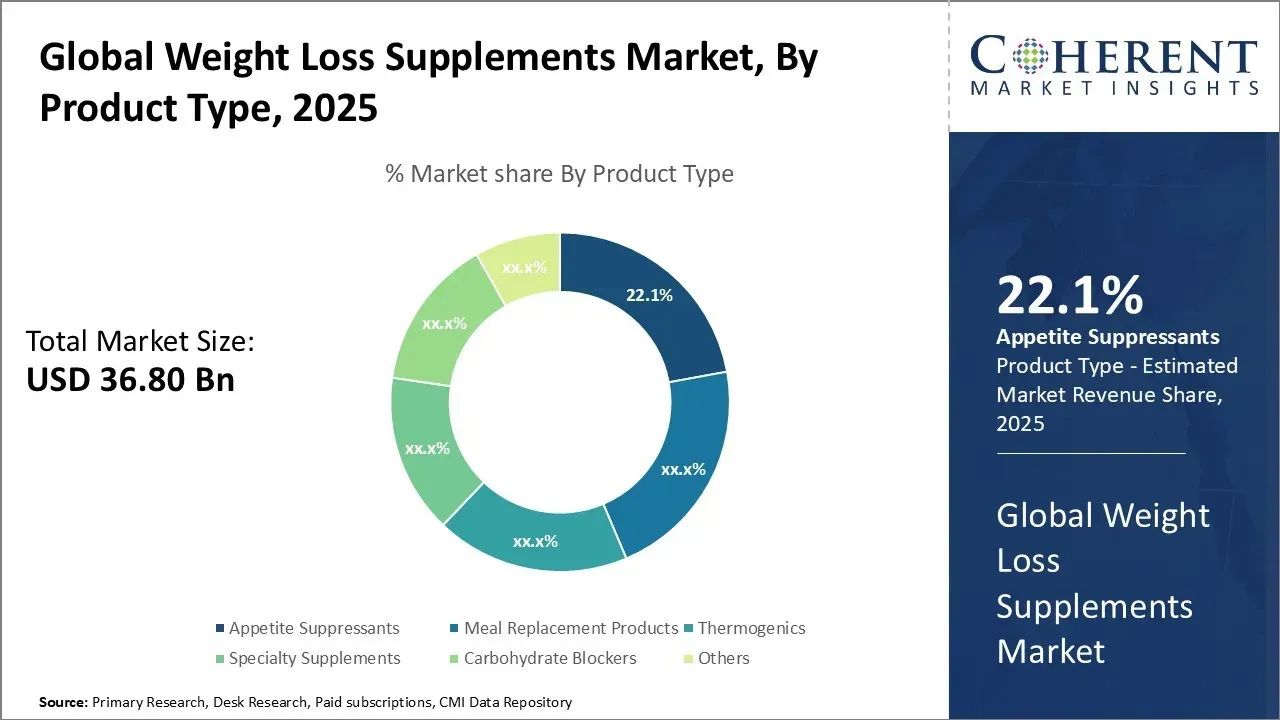
- By Product Type, the Appetite Suppressants segment is estimated to occupy the largest share in the global weight loss supplements market with 23.1% in 2026.
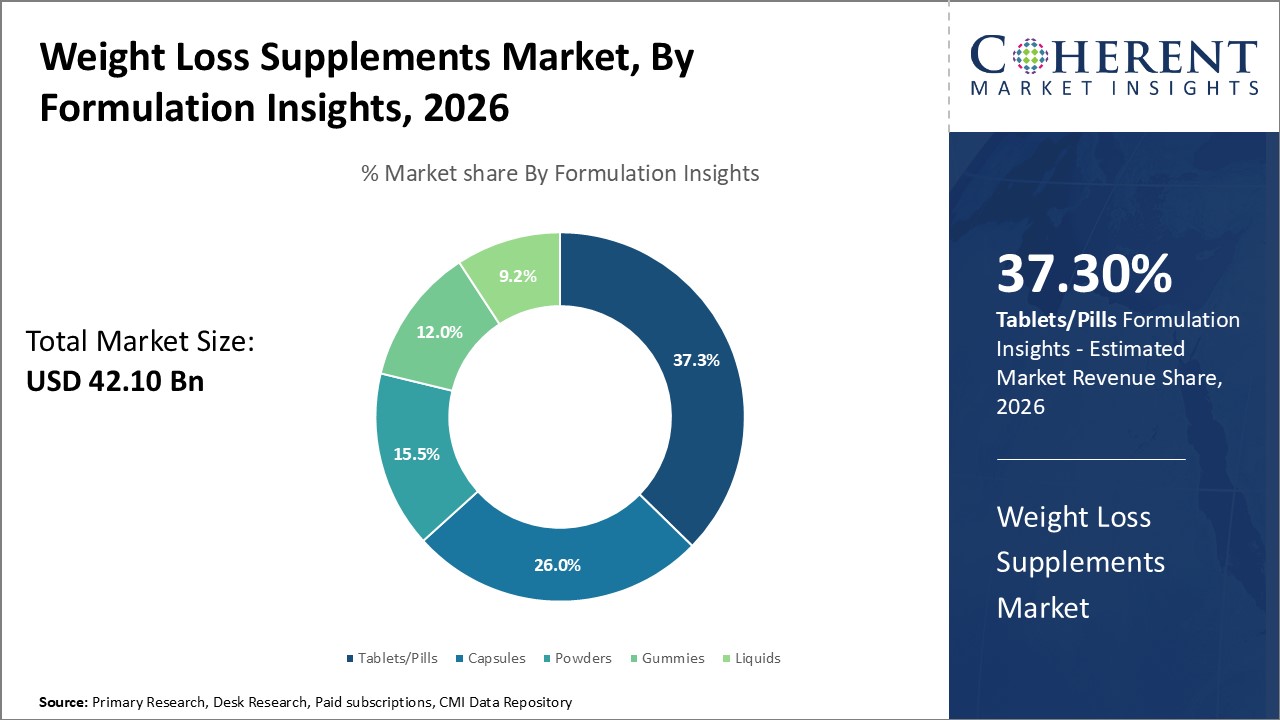
- By Formulation, the Tablets/Pills segment is projected to be the leading segment in the global weight loss supplements market with a share of 37.3% in 2026.
- Based on Distribution Channels Segment, the online segment is estimated to hold a share of 54.2% in 2026.
- Based on the End User Insights, the adult-based segment dominates the market due to health trends and Awareness.
- Based on the Age Group Insights, where the 18 to 40 years segment dominates the market due to growth targeting.
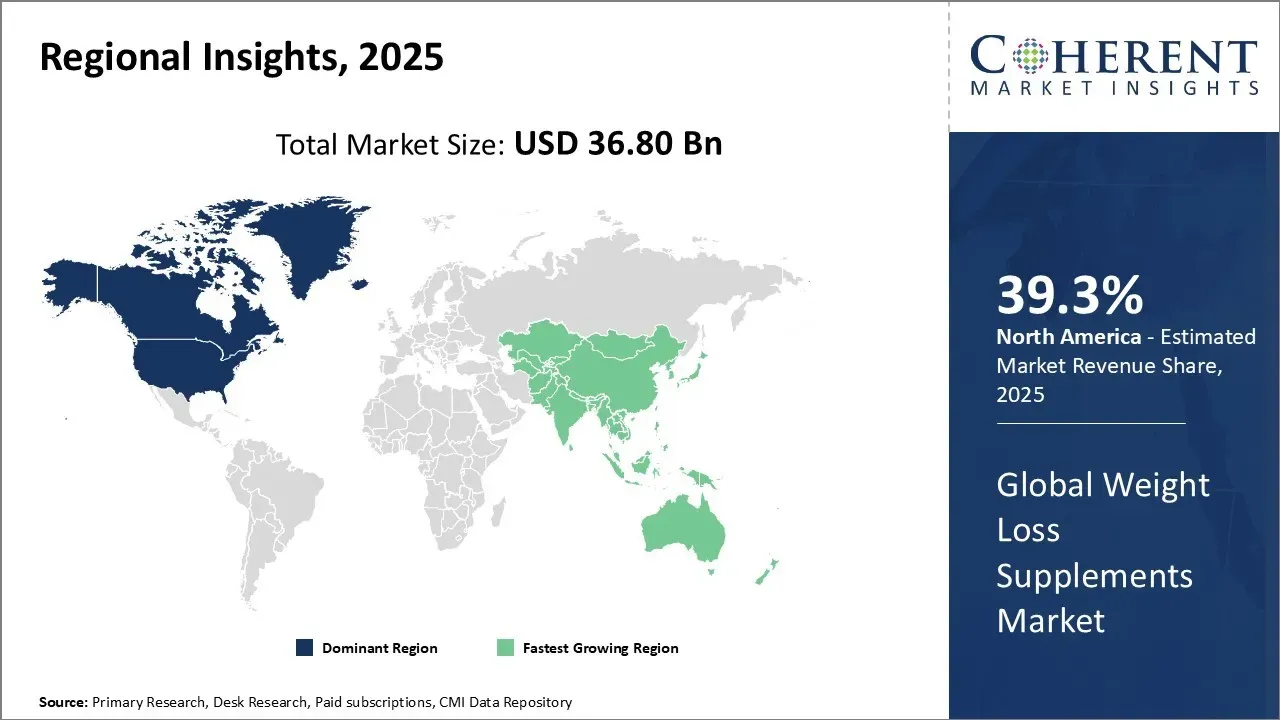
- North America is estimated to top the global market with a 39.3% share, followed by Asia Pacific with a 25.3% share in 2026.
Market Overview
The weight loss supplements market is witnessing positive trends driven by rising health consciousness among individuals. With increasing awareness about the risks of obesity, diabetes, and heart diseases, consumers are more inclined towards adopting a healthy lifestyle and consuming weight loss products. Additionally, the high obesity rate globally due to sedentary jobs and changing eating habits is prompting people to use dietary supplements to lose weight. Manufacturers are launching innovative products containing natural ingredients which are finding higher acceptance. Many studies indicating the efficacy of herbal and plant-based formulations in aiding weight loss are further supporting the weight loss supplements market growth.
Current Events and Their Impact on the Weight Loss Supplements Market
Current Events | Description and its impact |
Technological and Regulatory Collisions |
|
Consumer Behavior Shifts |
|
End Use Application for Weight Loss Supplements Market
- Sports and Fitness Centers: Supplements used by athletes and gym-goes to accelerate fat loss, preserve muscle mass, and boost energy during workouts, and some common products are thermogenics, L-carnitine, CLA, and caffeine-based fat burner.
- Health and Clinical Settings: Prescribed or recommended under medical supervision for obesity management, especially in cases of metabolic disorders, PCOS, or Type 2 diabetes.
- Online and Retail Consumers: Mass-market consumption through e-commerce and retail stores by individuals pursuing self-managed weight loss where products include meal replacement shakes, detox teas, green tea extracts, and natural fat burners.
- Corporate Wellness Programs: It is offered by companies to support employee health and productivity which includes bundled nutrition, supplements, and coaching for weight loss.
- Current Industry Events of 2026
- Market Size Estimation
- Regional Breakdown
- Competitive Landscape
- Customer Intelligence
- Segmental Analysis
- Pricing Analysis
- Key Market Drivers, Challenges & Future Trends
- Customized Insights Section
End-user Feedback and Unmet Needs in the Weight Loss Supplements Market
End-user Feedback
- Effectiveness: Consumers often express dissatisfaction with supplements that show minimal results or slow progress. There is a strong desire for faster and more visible weight loss outcomes.
- Side Effects: Many users report experiencing side effects like jitteriness, digestive issues, and headaches, leading to a preference for supplements with natural ingredients and fewer adverse reactions.
- Ease of Use: Convenience is a key concern. Users prefer supplements that are easy to incorporate into their daily routine, such as pills, powders, or drinks that are easy to consume.
Unmet Needs
- Long-Term Sustainability: Many users struggle with maintaining weight loss after using supplements, indicating a need for products that not only help with immediate weight reduction but also promote long-term maintenance without regaining the lost weight.
- Personalization: There is a growing demand for personalized weight loss solutions tailored to an individual’s specific metabolism, body type, and dietary needs.
- Combination with Lifestyle Factors: Consumers are looking for supplements that work synergistically with exercise routines and healthy eating habits. There’s a gap in the market for supplements that are part of a holistic approach to weight management.
Segmental Insights
Weight Loss Supplements Market Insights, By Product Type: The Appetite Suppressants Dominate Due to Effectiveness and Safety
By product type, the appetite suppressants segment is estimated to hold the largest share in the global weight loss supplements market with 23.1% in 2026 as they effectively help control food cravings and reduce appetite. A major factor driving the appetite suppressant segment growth is the relatively low risk of side effects compared to other options. While all supplements should be taken under medical guidance, appetite suppressants are generally well-tolerated when consumed as directed. For instance, Nestle’s Boost launched a mocha-flavored pre-meal drink designed to boost GLP-1 production, which can help suppress appetite and promote feelings of fullness.
Weight Loss Supplements Market Insights, By Formulation: Tablets/Pills dominates Weight Loss Supplements Market Due to Convenience and Efficacy
By formulation, the tablets/pills segment is estimated to lead in the global weight loss supplements market with a share of 37.3% in 2026, driven by several key factors. These formulations are highly preferred due to their ease of use, offering consumers a convenient and straightforward way to incorporate supplements into their daily routines. Tablets and pills also provide precise dosage, ensuring consistency and accuracy in weight loss regimens, which is essential for achieving desired results.
Another advantage of tablets/pills is their long shelf life and stability compared to other forms like liquids or gummies, making them a cost-effective option for both consumers and manufacturers. Additionally, they are widely available in various formulations, including appetite suppressants, metabolism boosters, and fat burners, catering to a broad spectrum of consumer needs. For instance, In July 2025, Nixol launched its plant-based weight loss tablets in the UK and Ireland. This vegan the supplement supports healthy weight management by boosting metabolism and reducing cravings—without synthetic stimulants or restrictive diets.
Weight Loss Supplements Market Insights, By Distribution Channel: Ease of Access Contributes to Online Channel’s Dominance
By distribution channel, the online segment is estimated to dominate with a share of 54.2% in 2026 due to the seamless access it provides. In current times, more and more consumers rely on quick e-commerce platforms to shop for their daily needs, including health and wellness products. Being able to browse a wide variety of supplements from different brands on the go and order them with a few clicks ensures utmost convenience. This addresses key barriers like lack of time, transportation issues to physical stores, and limited local availability that plague brick-and-mortar retail options. Online portals also allow easy price, ingredient, and brand comparisons to pick the most suitable product. For instance, Amazon boasts a wide variety of weight loss supplements, including popular brands like OZiva, Herbalife, and Himalaya Wellness.
Weight Loss Supplements Market Insights, By End User Insights: Adult based segment dominates the market due to health trends and Awareness
Based on the End User Insights, Adult based segment dominates the market due to health trends and Awareness. As adults are more engaged in fitness, wellness trends, and diet culture, driving demand for such products. And as Adults have more disposable income and autonomy to make health-related purchases, including supplements compared to adolescents and children. For instance, Abbott launched ProTality which supports adults on their weight loss journey, this brand offers a high-protein nutrition shake designed to support muscle health during weight loss, addressing the concerns that some weight loss can come from muscle loss.
Weight Loss Supplements Market Insights, By Age Group Insights: The 18 to 40 years segment dominates the market due to growth targeting
Based on the Age Group Insights, where the 18 to 40 years segment dominates the market due to more mature consumers as the supplement brands focus primarily on 18-40 for big returns, and develop product formats and campaigns tailored to fitness, aesthetics, and social impact. It also helps these brands in investing in youth-oriented formulations and marketing to capture the fast-expanding age of 18 years and to create metabolism and age-health-focused products to engage the 40-50 and above 50 segments.
Regional Insights
North America Weight Loss Supplements Market Trends
North America’s dominance in the weight loss supplements market growth with an estimated share of 39.3% in 2026 can be attributed to factors such as increasing obesity rates, growing health and wellness trends, and robust product promotion by regional players. The region also has a strong distribution network and pharmacy chains that ensure the wide availability of products. For, instance GNC has introduced multi-action supplements like Total Lean GlucaTrim, designed to help with weight and inch reduction while preserving lean muscle mass and supporting healthy blood sugar levels.
Asia Pacific Weight Loss Supplements Market Trends
The Asia Pacific region exhibits the fastest growth with an estimated share of 25.3% in 2026, led by countries like China, India, and Japan. Rising health awareness, growing disposable incomes, and changing lifestyles have been driving the demand for weight management products in the region. Local manufacturers are also introducing innovative products tailored to the dietary preferences and needs of Asian consumers. For, instance Nestle Health Science has introduced a range of plant-based supplements in the Asia-Pacific region, focusing on clinically tested ingredients and traceable supply chains. This is further contributing to the weight loss supplements market share.
U.K. Weight Loss Supplements Market Trends
The U.K. weight loss supplements market held a substantial share in 2024, driven by the rising prevalence of obesity and the public's demand for effective weight management solutions. For instance, 28% of adults in England were classified as obese while 36% were overweight. These figures highlight the growing public health concern and the increasing need for solutions to address weight-related issues, thereby adding to the weight loss supplements market revenue.
Germany Weight Loss Supplements Market Trends
The weight loss supplements market in Germany is thriving, supported by a health-conscious population, advanced healthcare infrastructure, and access to high-quality products. For instance, according to the National Library of Medicine report released in September 2022, over 53% of adult Germans struggle with overweight issues, with men being more frequently affected than women. Obesity prevalence stands at 19% for both genders, with rates of overweight and obesity increasing with age across both sexes.
Market Players, Key Development, and Competitive Intelligence
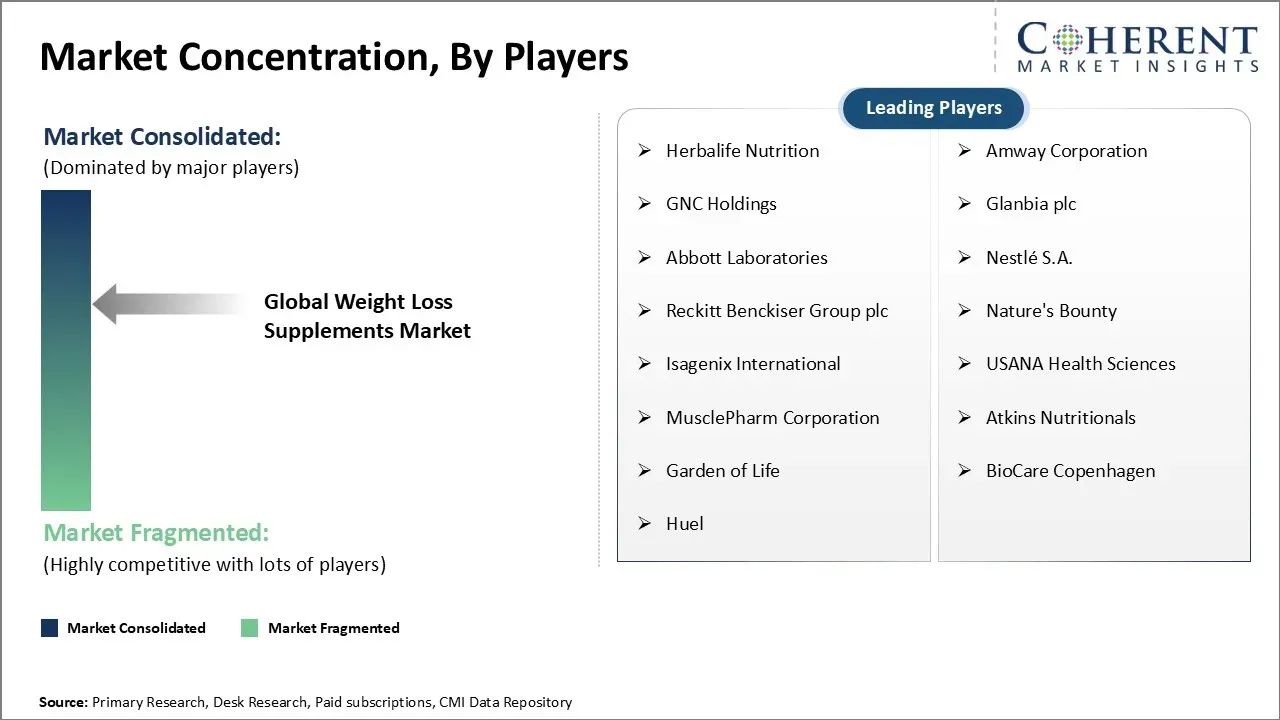
Key Developments
- In March 2024, Novo Nordisk, a global healthcare company, announced that the U.S. FDA had extended its approval for Wegovy. This new approval includes the reduction of major cardiovascular events, such as heart attacks and strokes, in adults with heart disease who are obese or overweight, in combination with a reduced calorie diet and increased physical activity.
- In February 2024, Herbalife, a global nutrition company, unveiled its Herbalife GLP-1 Nutrition Companion. This new line combines food and supplements, available in both Classic and Vegan options, to provide consumers in the U.S. and Puerto Rico with a diverse range of flavors for weight management and nutrition.
- In January 2024, Abbott, a U.S.-based health and nutrition company, launched its new PROTALITY brand. The line features a high-protein nutrition shake, designed to help adults manage weight loss while preserving muscle mass and ensuring optimal nutrition.
- In January 2024, GNC, a U.S.-based leader in health and wellness products, introduced GNC Total Lean GlucaTrim, a multi-action weight loss supplement. This innovative formula helps with weight and inch reduction while preserving lean muscle mass and supporting healthy blood sugar and insulin levels.
Market Report Scope
Weight Loss Supplements Market Report Coverage
| Report Coverage | Details | ||
|---|---|---|---|
| Base Year: | 2025 | Market Size in 2026: | USD 42.10 Bn |
| Historical Data for: | 2020 To 2024 | Forecast Period: | 2026 To 2033 |
| Forecast Period 2026 to 2033 CAGR: | 14.4% | 2033 Value Projection: | USD 107.96 Bn |
| Geographies covered: |
| ||
| Segments covered: |
| ||
| Companies covered: | Herbalife Nutrition, Amway Corporation, GNC Holdings, Glanbia plc, Abbott Laboratories, Nestlé S.A., Reckitt Benckiser Group plc, Nature's Bounty, Isagenix International, USANA Health Sciences, MusclePharm Corporation, Atkins Nutritionals, Garden of Life, BioCare Copenhagen, and Huel | ||
| Growth Drivers: |
| ||
| Restraints & Challenges: |
| ||
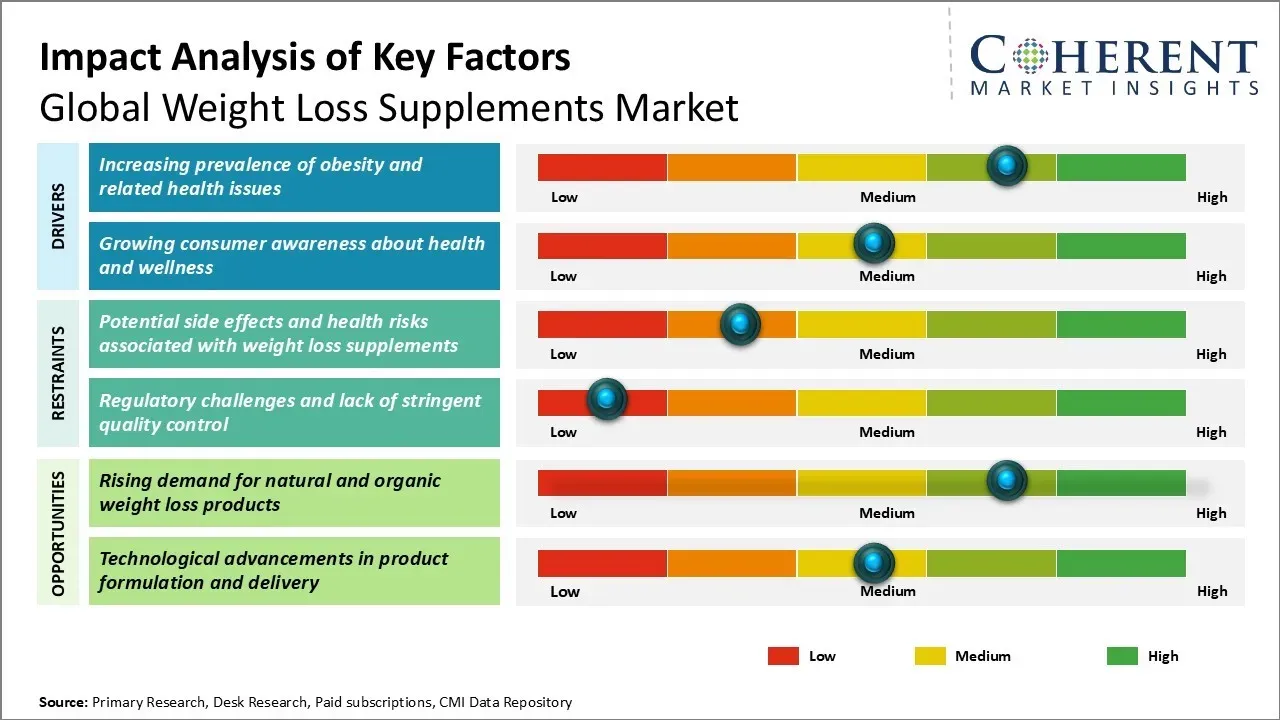
Market Driver - Increasing prevalence of obesity and related health issues
One of the key drivers for the growth of the global weight loss supplements market is the rising incidence of obesity worldwide. The lifestyle changes over the past few decades with less physical activity and increased consumption of calorie-dense processed foods has contributed significantly to the growing obesity rates. Obesity is considered by many health experts to be one of the leading risk factors for a host of chronic diseases and health issues. Some of the major issues linked with weight gain and obesity include cardiovascular diseases like heart attack and stroke, musculoskeletal problems, type 2 diabetes, fatty liver disease, certain forms of cancer, etc. For instance, according to the WHO, in March 2022, approximately 37 million children under the age of 5 were reported to be overweight. Furthermore, over 390 million children and adolescents aged 5 to 19 faced weight-related challenges, with 160 million classified as obese.
Market Opportunity - Rising demand for natural and organic weight loss products
One major opportunity for the global weight loss supplements market is the rising demand for natural and organic products. With growing health consciousness, customers are increasingly looking for weight management solutions that do not involve harsh chemicals or synthetic ingredients. There is a strong demand for supplements containing plant-based or herb-derived ingredients that are perceived as safer and more natural compared to conventional options involving stimulants. Products featuring ingredients like acai berry, green tea, green coffee bean extracts, turmeric, and garcinia cambogia are gaining popularity. Manufacturers focusing on organic, non-GMO, and clean-label products crafted from natural sources can attract new consumers worried about the potential side effects of other supplements. This fast-growing segment of natural and organic weight loss supplements offers significant growth opportunities for companies.
Analyst Opinion (Expert Opinion)
- The increasing prevalence of obesity around the world due to sedentary lifestyles and poor eating habits will continue driving demand for effective weight loss aids. Growing health concerns among consumers and their quest to maintain a healthy body weight are key factors boosting the sales of dietary supplements for weight management.
- Furthermore, the rising number of fitness centers and gyms joining hands with supplement brands to promote their products is creating new opportunities in this space. However, regulations regarding advertising claims could pose a challenge for manufacturers. Stricter labeling norms and limits on advertising health benefits without clinical evidence might hamper revenue growth to some extent.
- The Asia Pacific region excluding Japan is anticipated to emerge as the fastest-growing regional market owing to rising health awareness and rapidly changing consumer lifestyles. Meanwhile, North America will likely remain the dominant regional market supported by a growing obese population and high discretionary spending on health and wellness products.
- The entry of global supplement giants and private labels introduced by major retailers in the weight management category will intensify competition. This may lead to pricing pressures and demand for innovative products with improved formulations and effects.
Speak to the analyst
Want personalized insights?
Take the findings above to one of our principal consultants, or have the report rebuilt around the segments, geographies and competitors you actually track.
Market Segmentation
- By Product Type Insights (Revenue, USD Bn, 2021 - 2033)
- Appetite Suppressants
- Meal Replacement Products
- Thermogenics
- Specialty Supplements
- Carbohydrate Blockers
- Others
- By Formulation Insights (Revenue, USD Bn, 2021 - 2033)
- Capsules
- Tablets/Pills
- Powders
- Gummies
- Liquids
- By Distribution Channel Insights (Revenue, USD Bn, 2021 - 2033)
- Online
- Offline
- By End User Insights (Revenue, USD Bn, 2021 - 2033)
- Adults
- Adolescents
- Children
- By Age Group Insights (Revenue, USD Bn, 2021 - 2033)
- Under 18 years
- 18 to 40 years
- 40 to 50 years
- Above 50 years
- Regional Insights (Revenue, USD Bn, 2021 - 2033)
- North America
- U.S.
- Canada
- Latin America
- Brazil
- Argentina
- Mexico
- Rest of Latin America
- Europe
- Germany
- U.K.
- Spain
- France
- Italy
- Russia
- Rest of Europe
- Asia Pacific
- China
- India
- Japan
- Australia
- South Korea
- ASEAN
- Rest of Asia Pacific
- Middle East
- GCC Countries
- Israel
- Rest of the Middle East
- Africa
- South Africa
- North Africa
- Central Africa
- North America
- Key Players Insights
- Herbalife Nutrition
- Amway Corporation
- GNC Holdings
- Glanbia plc
- Abbott Laboratories
- Nestlé S.A.
- Reckitt Benckiser Group plc
- Nature's Bounty
- Isagenix International
- USANA Health Sciences
- MusclePharm Corporation
- Atkins Nutritionals
- Garden of Life
- BioCare Copenhagen
- Huel
Sources
Interviews from the following stakeholders
Stakeholders
- In-depth interviews with marketing managers, business development heads, regulatory affairs officers, formulation scientists, production supervisors, quality assurance leads, procurement specialists, and supply chain managers involved in the manufacturing, distribution, and retail of weight loss supplements across key segments such as nutraceuticals, functional foods, dietary supplements, and herbal formulations.
- Specific stakeholders Supplement manufacturers, contract manufacturers (CMOs), raw ingredient suppliers, nutraceutical formulation experts, fitness and wellness brand strategists, retail chain buyers, e-commerce category managers, clinical nutritionists, dietitians, regulatory consultants, and health policy advisors.
Databases
- Euromonitor International
- IBISWorld
- MarketWatch Industry Data
- Mintel GNPD
Magazines
- Nutraceuticals World
- Natural Products Insider
- Nutrition Business Journal
- Functional Ingredients Magazine
- WholeFoods Magazine
Journals
- Journal of Dietary Supplements
- Obesity Reviews
- International Journal of Obesity
- Nutrition & Metabolism
- Journal of Functional Foods
Newspapers
- The Wall Street Journal – Health & Wellness Section
- Financial Times – Consumer Goods & Healthcare Insights
- The New York Times – Well Section
- Reuters – Health and Consumer Trends
- The Economic Times – FMCG & Nutraceuticals Coverage
Associations
- Council for Responsible Nutrition (CRN)
- International Alliance of Dietary/Food Supplement Associations (IADSA)
- American Herbal Products Association (AHPA)
- Indian Nutritional and Dietary Supplement Association (INDSA)
- European Food Safety Authority (EFSA)
Public Domain Sources
- U.S. Food and Drug Administration (FDA) – Dietary Supplement Regulations
- European Food Safety Authority (EFSA) – Health Claims and Supplement Data
- Ministry of AYUSH (India) – Herbal and Nutraceutical Regulations
- World Health Organization (WHO) – Guidelines on Nutrition and Supplement Use
- National Institutes of Health (NIH) – Office of Dietary Supplements Database
Proprietary Elements
- CMI Data Analytics Tool and proprietary CMI repository of weight loss supplement market intelligence, consumer preference analysis, ingredient trend tracking, regulatory landscape insights, and competitive benchmarking developed over the past 8 years.
Get access to 250+ pages report
Every segment, forecast, competitor profile and data table behind the analysis above — available for instant download.
- ESOMAR Member
- ISO 9001:2015 Certified
- D-U-N-S Registered
- GDPR & CCPA Compliant
Missing comfort of reading report in your local language? Find your preferred language:
Transform your Strategy with Exclusive Trending Reports
Frequently Asked Questions
The global weight loss supplements market is estimated to be valued at USD 36.80 Bn in 2025 and is expected to reach USD 93.01 Bn by 2032.
The CAGR of the global weight loss supplements market is projected to be 14.2% from 2025 to 2032.
The increasing prevalence of obesity and related health issues and growing consumer awareness about health and wellness are the major factors driving the growth of the global weight loss supplements market.
Potential side effects and health risks associated with weight loss supplements and regulatory challenges and lack of stringent quality control are the major factors hampering the growth of the global weight loss supplements market.
In terms of product type, the appetite suppressants segment is estimated to dominate the market revenue share in 2025.
Herbalife Nutrition, Amway Corporation, GNC Holdings, Glanbia plc, Abbott Laboratories, Nestlé S.A., Reckitt Benckiser Group plc, Nature's Bounty, Isagenix International, USANA Health Sciences, MusclePharm Corporation, Atkins Nutritionals, Garden of Life, BioCare Copenhagen, and Huel are the major players.
North America is expected to lead the global weight loss supplements market in 2025.