

Idiopathic Hypersomnia Treatment Market Size and Share Analysis: 2026 - 2033
The global idiopathic hypersomnia treatment market size is projected to grow from USD 394.7 Mn in 2026 to USD 709.6 Mn by 2033, registering a compound annual growth rate (CAGR) of 8.7% during the forecast period (2026–2033). The reason for the growing market size is the increase in the number of diagnoses for patients suffering from sleep disorders and idiopathic hypersomnia, and the availability of new CNS stimulants and wake-promoting agents.
Key Takeaways from the Idiopathic Hypersomnia Treatment Market Report (2026)
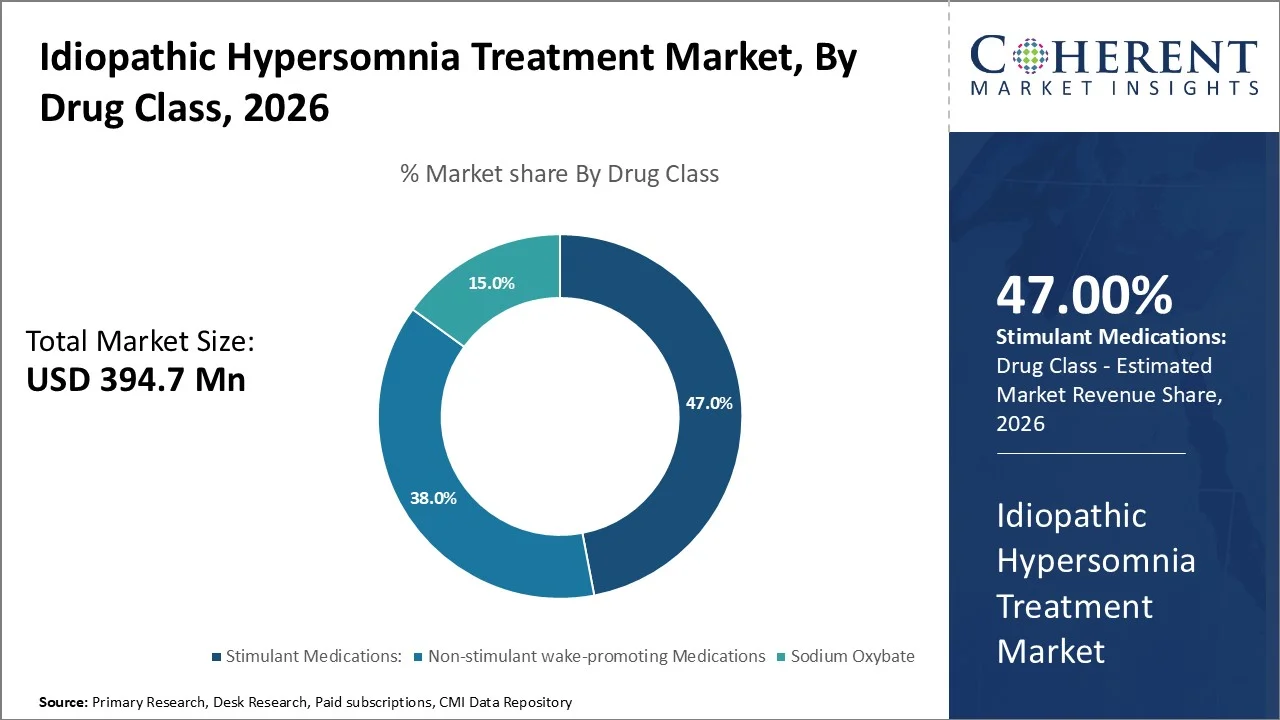
- By drug class, stimulant medications are expected to dominate the market with an estimated share of 47% in 2026, primarily driven by their widespread clinical use as first-line therapy for excessive daytime sleepiness. As per the AASM Clinical Practice Guideline, wake-promoting drugs continue to be one of the primary treatment choices for hypersomnia disorders.
- Hospitals are expected to hold the largest market share with a projected share of 42% in 2026 on account of specific diagnosis procedures, controlled dispensation policies, and commencement of CNS medications for patients. Sleep disorder therapies usually begin at sleep centers and neurology departments, as pointed out by the National Sleep Foundation.
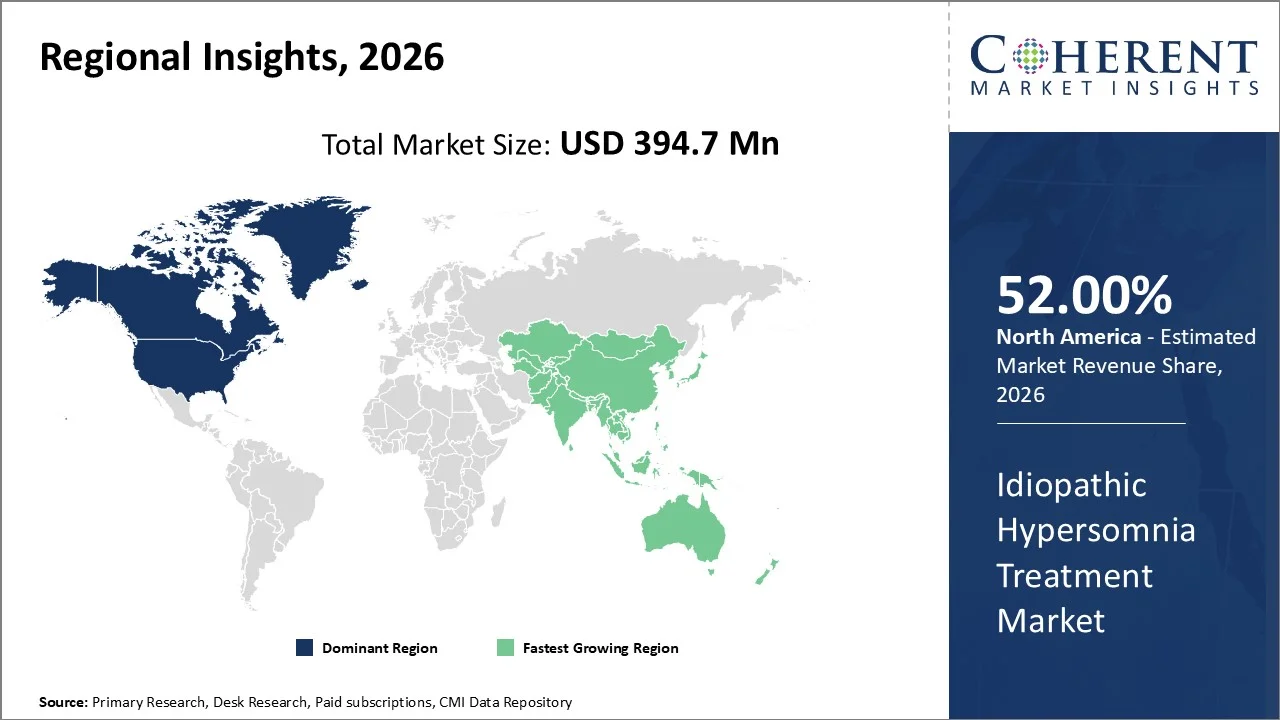
- North America region will dominate the global market for Idiopathic Hypersomnia Treatment during the forecast period, with a projected market share of 52% in 2026, due to high levels of disease awareness, well-developed infrastructure for sleep disorder diagnosis, and availability of wake-promoting agents and CNS stimulants. The NINDS reports that hypersomnia disorders are usually diagnosed in sleep clinics and neurology centers in the United States due to superior health care infrastructure and diagnostic procedures.
Segmental Insights
Why are Stimulant Medications Acquiring the Largest Market Share?
Stimulant medications segment is anticipated to dominate the idiopathic hypersomnia market in terms of revenue share in 2026, contributing to about 47% of the total revenue share generated by the drug type category. This dominance is primarily attributed to their existing status as first-line treatments for EDS along with high efficacy levels.
Additionally, FDA-approved stimulant and wake-promoting drugs continue to be widely prescribed in sleep medicine practice, reinforcing their dominance in real-world treatment patterns.
In June 2025, Jazz Pharmaceuticals highlighted continued clinical and research advancement of Sunosi (solriamfetol), a wake-promoting stimulant approved by the U.S. FDA for excessive daytime sleepiness in narcolepsy and obstructive sleep apnea
- Current Industry Events of 2026
- Market Size Estimation
- Regional Breakdown
- Competitive Landscape
- Customer Intelligence
- Segmental Analysis
- Pricing Analysis
- Key Market Drivers, Challenges & Future Trends
- Customized Insights Section
Which Distribution Channel Segment Dominates the Market?
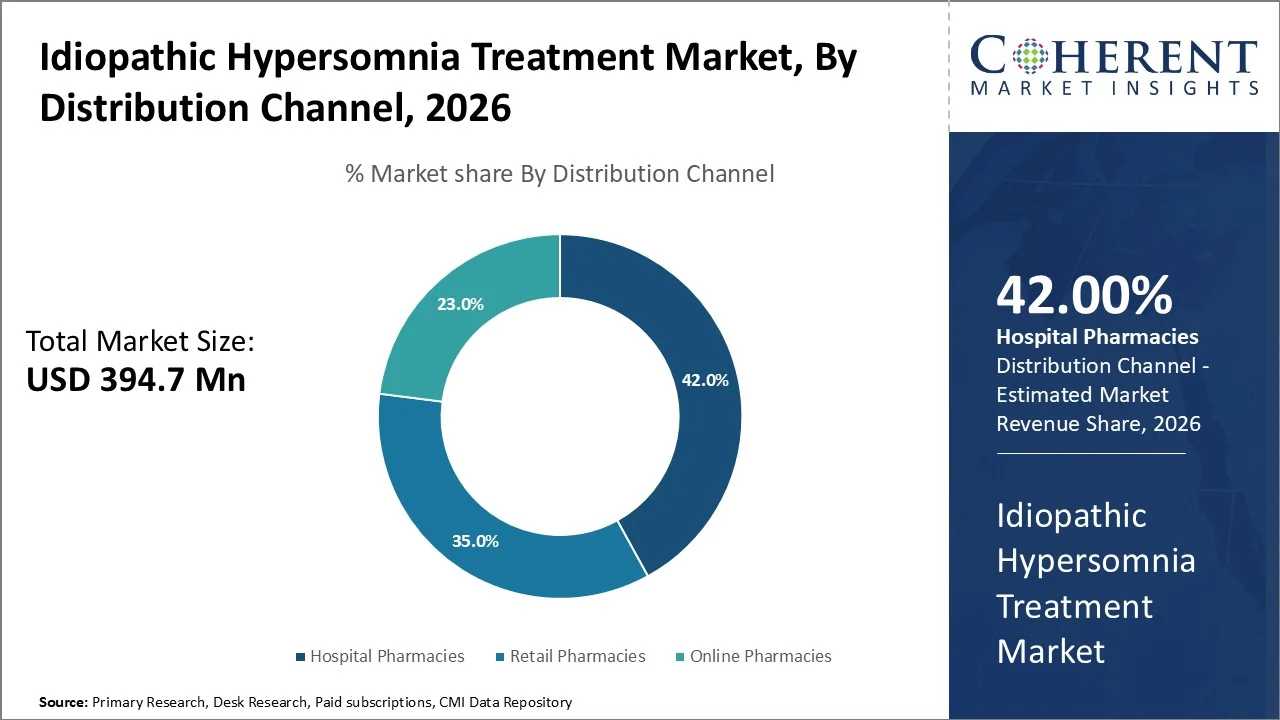
Hospital pharmacies account for the largest share of about 42% in 2026 due to their significant contribution to the specialty diagnosis, treatment initiation, and the regulated supply of CNS acting drugs for hypersomnolence disorders.
Hospitals and sleep centers act as the main source for diagnostic procedures and the start of treatment because of the need for specific tests, including polysomnography and multiple sleep latency test. The National Institute of Neurological Disorders and Stroke in the United States notes that patients with hypersomnia should be clinically evaluated in special centers, thus promoting drug dispensing in hospitals.
Market Drivers
Rising Prevalence and Underdiagnosis of Central Sleep Disorders is Accelerating Market Growth
Idiopathic hypersomnia is increasingly recognized as part of the broader group of central disorders of hypersomnolence, yet it remains significantly underdiagnosed, creating a growing treatment gap and driving demand for pharmacological therapies.
As per the U.S. National Institute of Neurological Disorders and Stroke (NINDS), hypersomnias are disorders of the neurological system that are chronic in nature and marked by daytime sleepiness impacting everyday activities.
Expanding Adoption of Wake-Promoting and CNS Stimulant Therapies is Strengthening Market Expansion
The growth of the market is propelled by the rising use of wake-promoting drugs like modafinil-based medications and new central nervous system stimulants.
The American Academy of Sleep Medicine (AASM) recommends wake-promoting agents as first-line therapy for excessive daytime sleepiness in central hypersomnolence disorders, supporting consistent prescription growth.
Current Events and Their Impact on the Idiopathic Hypersomnia Treatment Market
Current Event | Description and its Impact |
Growing Regulatory Recognition and FDA Support for Orphan Drug Development in Rare Sleep Disorders (2025–2026) |
|
Expansion of National Sleep Health Policies and Diagnostic Guidelines (U.S. & EU, 2025–2026) |
|
Idiopathic Hypersomnia Treatment Market Trends
- Regulatory approvals of first targeted drugs have revolutionized the market, with FDA approval of Xywav (sodium oxybate) for idiopathic hypersomnia being the first drug approved for the specific treatment of the disease.
- The increase in the use of wake-promoting medications (modafinil, solriamfetol, pitolisant, sodium oxybate) is causing the standardization of treatment, since these drugs are recommended by clinical guidelines in all cases of managing idiopathic hypersomnia.
- The trend towards using oxybate treatment (especially low sodium versions) is strong due to the effectiveness of these treatments in improving nighttime sleep and daytime alertness, being the only FDA approved medication that has an indication specifically for idiopathic hypersomnia.
- Rising clinical trial activity and orphan drug incentives are expanding the pipeline, as idiopathic hypersomnia remains a rare disorder with unmet treatment needs, encouraging pharmaceutical innovation and faster regulatory pathways
Regional Insights
North America Idiopathic Hypersomnia Treatment Market Trends
North America is estimated to contribute to 52% of the market share in 2026 due to high levels of early diagnosis, well-established centers for sleep disorders, and faster adoption of new drugs like sodium oxybate. The North American Idiopathic Hypersomnia Treatment Market is considered dominant due to the higher levels of disease awareness, advanced sleep disorder diagnostic facilities, and the presence of treatments to stimulate wakefulness and central nervous system function.
The region benefits from innovative clinical sleep testing facilities (polysomnography labs and MSLT availability), which support higher diagnosis rates compared to other regions. Moreover, strong presence of pharmaceutical companies and faster regulatory approvals (FDA pathways for sleep disorder drugs and orphan indications) are accelerating treatment adoption.
In March 2025, Jazz Pharmaceuticals announced new Phase 4 DUET study results, showing that Xywav significantly improved excessive daytime sleepiness and symptom severity in patients with idiopathic hypersomnia, reinforcing its clinical effectiveness in real-world settings.
Asia Pacific Idiopathic Hypersomnia Treatment Market Trends
Asia-Pacific region will emerge as the fastest growing region for treatment of idiopathic hypersomnia during the forecast period due to increasing awareness about sleep disorders, improvement in diagnostics, and development of health care infrastructure in developing countries like India and China, as well as in developed nations like Japan and South Korea.
In April 2026, Alkermes plc announced the initiation of its Phase 3 “Brilliance Studies” program evaluating alixorexton, an investigational oral orexin-2 receptor agonist for narcolepsy and idiopathic hypersomnia.
United States Idiopathic Hypersomnia Treatment Market Trends
The United States idiopathic hypersomnia treatment market is witnessing steady growth, driven by increasing diagnosis rates of central disorders of hypersomnolence and strong innovation in wake-promoting therapies. Growing awareness of sleep-related issues combined with the developments in neuropharmacology in the treatment of orexin pathway disorder is fueling the demand for drugs.
In March 2026, Eli Lilly and Company acquired Centessa Pharmaceuticals to gain access to cleminorexton, an orexin receptor-2 agonist in Phase 2 trials for idiopathic hypersomnia.
Japan Idiopathic Hypersomnia Treatment Market Trends
Japan idiopathic hypersomnia treatment market is expected to show significant growth in the coming years, owing to the aging demographics and greater awareness about sleep disorders. Japan being among the fastest aging nations in the world, there exists growing demand for treatments that address excessive daytime sleepiness.
Additionally, global pipeline advancements such as the development of orexin agonists by firms such as Alkermes plc, are anticipated to impact future approval processes and marketing strategies in Japan.
Who are the Major Companies in Idiopathic Hypersomnia Treatment Industry
Some of the major key players in Idiopathic Hypersomnia Treatment are Takeda Pharmaceutical Company Limited, Teva Pharmaceutical Industries Ltd., Jazz Pharmaceuticals, Inc., BIOPROJET, Avadel Pharmaceuticals, Plc. GlaxoSmithKline plc, Pfizer Inc., Theranexus, Fisher & Paykel Healthcare Limited, Drive DeVilbiss Healthcare LLC, and Merck & Co. Inc.
Key News
- In February 2026, Takeda Pharmaceutical Company Limited announced that the U.S. FDA accepted and granted Priority Review for oveporexton (TAK-861), an investigational oral orexin receptor-2 agonist designed to restore orexin signaling.
- In September 2025, Jazz Pharmaceuticals, Inc. announced results from a Phase 4 study of Xywav, highlighting real-world evidence and improved outcomes in excessive daytime sleepiness at higher doses, reinforcing its position as the first FDA-approved treatment for idiopathic hypersomnia.
- In October 2025, Avadel Pharmaceuticals plc announced a strategic acquisition agreement with Alkermes (valued up to $2.1 billion), centered around LUMRYZ, with a contingent milestone tied to potential FDA approval for idiopathic hypersomnia by 2028.
Market Report Scope
Idiopathic Hypersomnia Treatment Market Report Coverage
| Report Coverage | Details | ||
|---|---|---|---|
| Base Year: | 2025 | Market Size in 2026: | USD 394.7 Mn |
| Historical Data for: | 2020 To 2024 | Forecast Period: | 2026 To 2033 |
| Forecast Period 2026 to 2033 CAGR: | 8.7% | 2033 Value Projection: | USD 709.6 Mn |
| Geographies covered: |
| ||
| Segments covered: |
| ||
| Companies covered: | Takeda Pharmaceutical Company Limited, Teva Pharmaceutical Industries Ltd., Jazz Pharmaceuticals, Inc., BIOPROJET, Avadel Pharmaceuticals, Plc. GlaxoSmithKline plc, Pfizer Inc., Theranexus, Fisher & Paykel Healthcare Limited, Drive DeVilbiss Healthcare LLC, and Merck & Co. Inc. | ||
| Growth Drivers: |
| ||
| Restraints & Challenges: |
| ||
Analyst Opinion
- The market is driven by high unmet medical need, as Idiopathic Hypersomnia remains widely underdiagnosed, leading to delayed or missed treatment in many patients globally.
- Growing clinical focus on orexin-based drug development is reshaping the treatment landscape, with multiple late-stage candidates targeting the underlying sleep-wake regulation pathway rather than just symptoms.
- Despite recent progress such as approved oxybate therapies, treatment options remain limited, which is accelerating investment in novel CNS and wake-promoting agents and supporting long-term market expansion.
Speak to the analyst
Want personalized insights?
Take the findings above to one of our principal consultants, or have the report rebuilt around the segments, geographies and competitors you actually track.
Idiopathic Hypersomnia Treatment Market Segmentation
- By Drug Class
- Stimulant Medications
- Non-stimulant wake-promoting Medications
- Sodium Oxybate
- By Distribution Channel
- Hospital Pharmacies
- Retail Pharmacies
- Online Pharmacies
- Global Idiopathic Hypersomnia Treatment Market, By Region
- North America
- U.S.
- Canada
- Latin America
- Brazil
- Mexico
- Argentina
- Rest of Latin America
- Europe
- Germany
- U.K.
- France
- Italy
- Spain
- Russia
- Rest of Europe
- Asia Pacific
- China
- India
- Japan
- Australia
- South Korea
- ASEAN
- Rest of Asia Pacific
- Middle East
- GCC
- Israel
- Rest of Middle East
- Africa
- South Africa
- Central Africa
- North Africa
- North America
Sources
Primary Research interviews
- Interviews with sleep medicine specialists, neurologists, pulmonologists, hospital pharmacy heads, clinical researchers in sleep disorders, and pharmaceutical industry experts involved in CNS stimulant and orexin-based drug development
Databases
- U.S. National Institute of Neurological Disorders and Stroke (NINDS) databases
- National Sleep Foundation datasets and clinical reports
- American Academy of Sleep Medicine (AASM) clinical guidelines database
- European Sleep Research Society (ESRS) publications and datasets
- FDA drug approval and orphan drug designation database
- Clinical trial registries (e.g., ClinicalTrials.gov) for hypersomnia and orexin-targeting therapies
Magazines
- Sleep Medicine Reviews industry publications
- Neurology and CNS therapeutics trade magazines
- Pharmaceutical technology and drug development magazines
- Healthcare and life sciences industry publications covering sleep disorders and CNS drugs
Journals
- Peer-reviewed sleep medicine journals (e.g., Sleep, Journal of Clinical Sleep Medicine, Sleep Medicine, Neurology, The Lancet Neurology)
- Neuroscience and neuropharmacology research journals
- Circadian rhythm and hypersomnolence disorder research publications
- CNS drug development and clinical pharmacology journals
Newspapers
- Leading national and international newspapers covering pharmaceutical approvals and biotech developments
- Financial and healthcare business sections reporting on CNS drug pipelines and FDA approvals
- Science and medical news coverage in global press outlets
Associations
- American Academy of Sleep Medicine (AASM)
- European Sleep Research Society (ESRS)
- World Sleep Society (WSS)
- National Sleep Foundation
- U.S. National Institutes of Health (NIH)
- International classification committees for sleep disorders
Public Domain sources
- U.S. FDA drug approval announcements and orphan drug designation records
- National Institutes of Health (NIH) and NINDS public reports
- Government healthcare statistics on sleep disorder prevalence and treatment
- Clinical trial registries (ClinicalTrials.gov)
- WHO publications on neurological and sleep disorders
- Publicly available pharmaceutical company filings and annual reports
Proprietary Elements
- CMI Data Analytics Tool
- Proprietary CMI Existing Repository of information for last 8 years
Get access to 250+ pages report
Every segment, forecast, competitor profile and data table behind the analysis above — available for instant download.
- ESOMAR Member
- ISO 9001:2015 Certified
- D-U-N-S Registered
- GDPR & CCPA Compliant
Missing comfort of reading report in your local language? Find your preferred language:
Transform your Strategy with Exclusive Trending Reports
Frequently Asked Questions
The global market is estimated to be valued at USD 394.7 Mn in 2026.
The global Idiopathic Hypersomnia Treatment Market value is expected to reach USD 709.6 Mn by 2033.
The global market is poised to exhibit a CAGR of 8.7% from 2026 to 2033.
Major growth factors include rising diagnosis rates of central sleep disorders, increasing awareness of idiopathic hypersomnia, expanding availability of wake-promoting and CNS stimulant therapies, and ongoing advancements in neurological and sleep disorder treatment options.
The stimulant medications segment, with about 47% share in 2026, dominates the market.
Some major companies in the Idiopathic Hypersomnia Treatment Market include Takeda Pharmaceutical Company Limited, Teva Pharmaceutical Industries Ltd., Jazz Pharmaceuticals, Inc., BIOPROJET, Avadel Pharmaceuticals plc, GlaxoSmithKline plc, Pfizer Inc., Theranexus, Fisher & Paykel Healthcare Limited, Drive DeVilbiss Healthcare LLC, and Merck & Co., Inc.
North America, with about 52% share in 2026, is set to lead the market during the forecast period.