

Equine Healthcare Market Size and Forecast — 2026 - 2033
The Global Equine Healthcare Market size is estimated to be valued at USD 3.9 billion in 2026 and is expected to reach USD 7.1 billion by 2033, exhibiting a compound annual growth rate (CAGR) of 9.1% from 2026 to 2033.
Overview
The equine healthcare market is driven by rising awareness of animal health, increasing equine population for sports and recreation, and growing demand for advanced veterinary care. Expansion of equestrian activities, including racing and polo, boosts spending on preventive care, diagnostics, and therapeutics. Technological advancements in veterinary medicine, such as improved imaging and regenerative therapies, further support market growth. Additionally, higher disposable incomes and willingness among owners to invest in premium care contribute significantly. Government initiatives and veterinary infrastructure development also play a role, alongside increased focus on disease prevention, vaccination programs, and overall equine welfare standards globally.
Key Takeaways
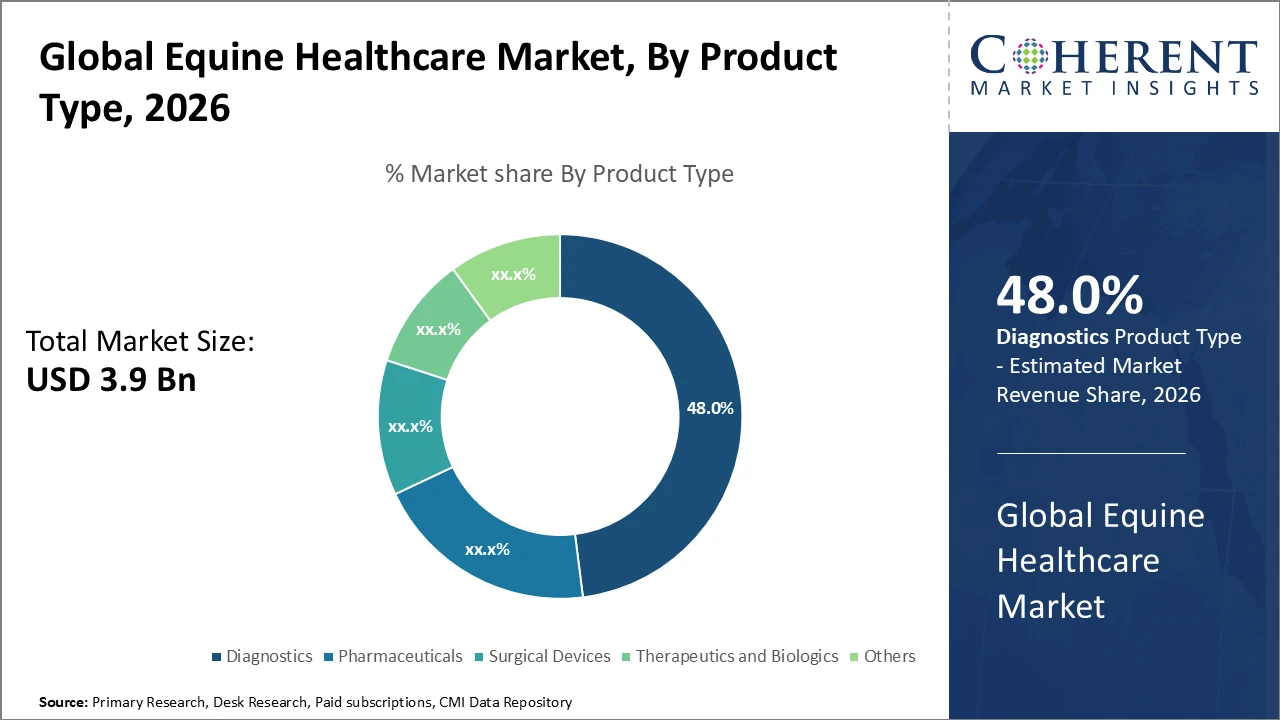
Diagnostics dominate with a 48% market share, driven by technological innovation and demand for non-invasive procedures.
Pharmaceuticals are rapidly growing due to new drug approvals targeting chronic equine ailments.
Musculoskeletal Disorders present the largest growth opportunity, owing to increased sports injuries and rehabilitation demand post-2024.
Infectious Diseases management is expanding through vaccines and biologics.
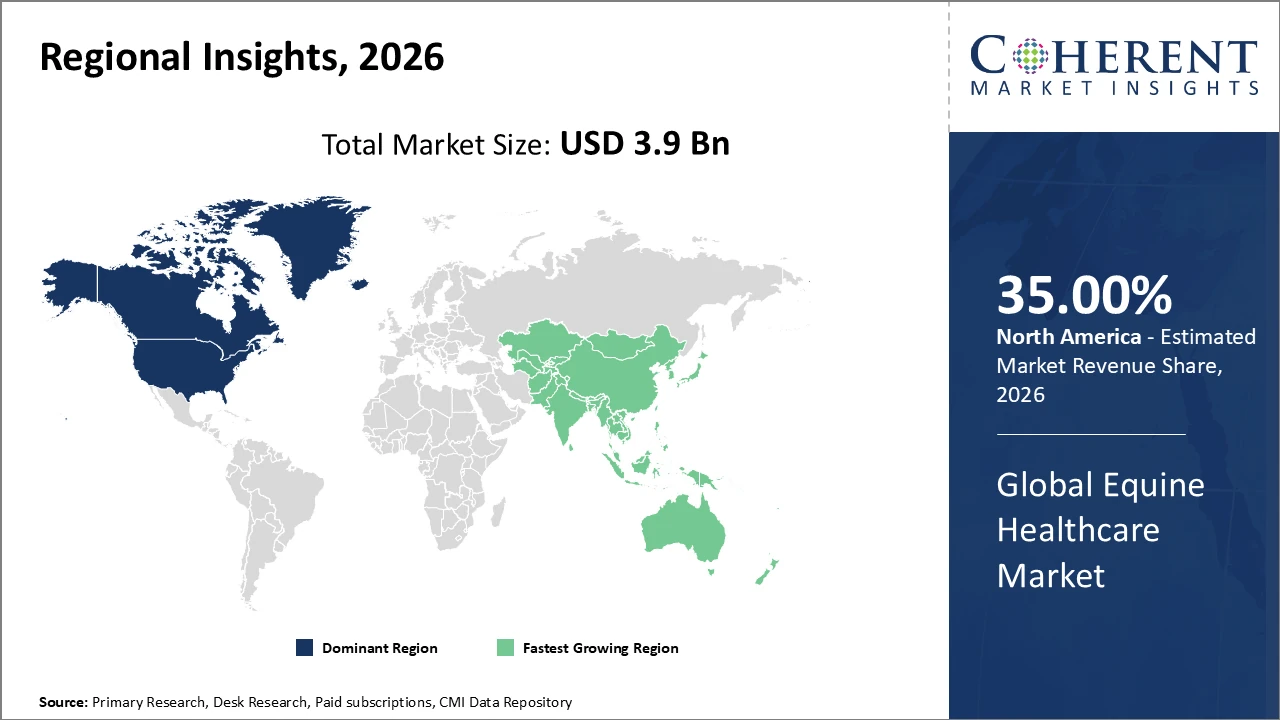
North America holds a commanding share, accounting for approximately 35% of market revenue by 2026, supported by robust veterinary infrastructure.
Asia Pacific is the fastest-growing market, registering a CAGR of nearly 11%, fueled by rising equine populations and favorable government policies in India and China.
Equine Healthcare Market Segmentation Analysis
Equine Healthcare Market Insights, By Product Type
Diagnostics dominate the equine healthcare market with a 48% share, driven by rising demand for advanced imaging and laboratory testing for disease prevention. The fastest-growing subsegment is Therapeutics and Biologics, fueled by regenerative medicine applications, including stem cell therapy and platelet-rich plasma treatments. Pharmaceuticals continue steady growth due to the increasing prevalence of equine infectious diseases requiring vaccines and drug therapy. Surgical Devices, such as arthroscopic tools and orthopedic implants, are expanding in equine sports medicine. The Others category, including supplements and hygiene-related products, holds a smaller share. Collectively, these product types support innovation and revenue growth in the market.
Equine Healthcare Market Insights, By Application
Musculoskeletal Disorders dominate the application segment due to the high incidence of injuries in horses involved in sports and work-related activities. This subsegment benefits from advanced diagnostics and innovative therapeutic solutions. Infectious Diseases follow, supported by improved vaccines and disease management protocols. Respiratory Conditions are emerging as a concern, driven by growing awareness of equine asthma and allergies, offering notable growth potential. Metabolic Diseases, including equine metabolic syndrome, are gaining attention through enhanced diagnostics and treatments. Other conditions, such as gastrointestinal and dermatological issues, are addressed via emerging pharmacologic and therapeutic solutions. Musculoskeletal health remains a key focus for veterinary clinics and hospitals.
Equine Healthcare Market Insights, By End User
Veterinary Clinics hold the largest share at 54%, driven by their convenience, accessibility, and comprehensive services for horse owners. This segment also leads in adopting integrated health solutions, including diagnostics, pharmaceuticals, and post-treatment rehabilitation. Equine Hospitals are expanding rapidly due to growing demand for specialized inpatient and surgical care. Research Centers contribute through clinical trials and new product development, supporting market innovation. The Others subsegment, including equestrian facilities providing emergency and preventive care, accounts for a smaller revenue share. The dominance of veterinary clinics reflects a broader shift toward decentralized and preventive healthcare, sustaining market growth.
Equine Healthcare Market Trends
The Equine Healthcare market is increasingly embracing digital transformation and sustainable practices.
In 2025, North American manufacturers introduced handheld diagnostic devices for real-time health monitoring, which have been rapidly adopted due to convenience and accuracy.
Europe and Asia Pacific are leading sustainable product development, with biodegradable biologics becoming standard in veterinary care.
The rise of telemedicine is shaping market dynamics by enabling remote consultations and improving equine welfare in rural regions.
Equine Healthcare Market Insights, By Geography
North America Equine Healthcare Market Analysis and Trends
North America maintains dominance in the Equine Healthcare market, supported by well-established veterinary healthcare ecosystems, advanced research facilities, and high equine ownership rates. The region accounted for nearly 35% of the market share in 2026, with the U.S. contributing a significant portion due to sustained private investments and government funding in equine health research. Leading companies such as Merck Animal Health and Zoetis are headquartered in the region, providing advanced therapies, vaccines, and diagnostic tools. Their innovation and presence strengthen market growth, ensuring North America remains a central hub for equine healthcare products, services, and technological advancements.
Asia Pacific Equine Healthcare Market Analysis and Trends
The Asia Pacific region is the fastest-growing market for equine healthcare, with a CAGR of approximately 11% from 2026 to 2033. This growth is driven by increasing participation in horse leisure activities, rising disposable incomes, and the expansion of veterinary infrastructure in key countries such as India and China. Government initiatives promoting advancements in animal healthcare further support market development. Additionally, growing demand for equine sports, breeding farms, and competitive events contributes to market expansion. These factors collectively position Asia Pacific as a dynamic and rapidly evolving market, attracting investments and fostering innovation across the equine healthcare industry.
Equine Healthcare Market Outlook for Key Countries
USA Equine Healthcare Market Analysis and Trends
The USA plays a pivotal role in shaping the global Equine Healthcare market. In 2025, the country saw a 20% year-over-year revenue increase in equine pharmaceuticals and biologics, driven by innovation and early adoption of novel therapies. Regulatory frameworks, including the Animal Medicinal Drug Use Clarification Act, have streamlined approvals for equine-specific treatments. Leading companies such as Zoetis Inc. and Merck Animal Health invest heavily in U.S.-based R&D centers, advancing regenerative medicine and digital diagnostics. The United States represents about 60% of North America’s equine healthcare expenditure, underscoring its market significance and influence.
Germany Equine Healthcare Market Analysis and Trends
Germany’s equine healthcare market is characterized by well-established veterinary infrastructure, high equine ownership, and strong regulatory frameworks. Advanced diagnostics, including imaging technologies and laboratory testing, are widely adopted, supporting preventive care and early disease detection. Pharmaceuticals and biologics, particularly vaccines, drive steady growth due to rising awareness of infectious and chronic equine diseases. The country is also seeing innovation in regenerative medicine and digital health solutions, including telemedicine platforms. Government support for animal health research and professional training strengthens market development. Increasing participation in equestrian sports and breeding activities further fuels demand, positioning Germany as a key European market.
Analyst Opinion
The prevalence of musculoskeletal disorders among sport horses drives demand, shaping market size. In 2025, diagnostic imaging adoption in equine therapy grew by 15%, reflecting a shift toward precise, non-invasive techniques. This aligns with a doubling of equine surgical interventions between 2024 and 2026, expanding revenue streams in surgical care products.
Supply-side dynamics show a 12% year-over-year increase in biologic product manufacturing capacity by 2026, particularly in regenerative medicine. New facilities for autologous stem cell therapies enhance treatment efficacy and attract higher healthcare spending.
Equine pharmaceutical pricing exhibits steady growth, supported by investments in innovative formulations, including extended-release therapeutics. Moderate pricing elasticity, coupled with growing insurance penetration, facilitates stable market growth.
Imports of advanced diagnostic devices, mainly from North America and Europe, rose 18% in 2024, reflecting expanded international trade. Increased adoption across sports, breeding farms, and rehabilitation centers broadens the market’s revenue base.
- Current Industry Events of 2026
- Market Size Estimation
- Regional Breakdown
- Competitive Landscape
- Customer Intelligence
- Segmental Analysis
- Pricing Analysis
- Key Market Drivers, Challenges & Future Trends
- Customized Insights Section
Market Scope
| Report Coverage | Details | ||
|---|---|---|---|
| Base Year: | 2025 | Market Size in 2026: | USD 3.9 billion |
| Historical Data for: | 2020 To 2024 | Forecast Period: | 2026 To 2033 |
| Forecast Period 2026 to 2033 CAGR: | 9.1% | 2033 Value Projection: | USD 7.1 billion |
| Geographies covered: |
| ||
| Segments covered: |
| ||
| Companies covered: | Heska Corporation, Zoestis Inc., Virbac Group, Henry Schein Inc., Merck Animal Health, Idexx Laboratories Inc., Vetoquinol SA, Biopharm Australia, Patterson Companies Inc. | ||
| Growth Drivers: |
| ||
Equine Healthcare Market Growth Factors
Market expansion in equine healthcare is driven by increased equine sports activities, prompting demand for advanced healthcare solutions, and rising governmental and private investments in veterinary infrastructure. Advances in biologics and regenerative medicine enhance treatment efficacy, while growing awareness of equine welfare fuels demand for preventive care products. International equestrian events, such as the FEI World Equestrian Games, saw a 30% increase in therapeutic product usage from 2024 to 2026. Supportive policies in countries like the U.S. and Germany incentivize veterinary research, and the growing adoption of digital tools, including telemedicine, further strengthens market growth and reflects evolving industry dynamics.
Equine Healthcare Market Development
In April 2026, CVS Equine, in collaboration with its Axiom Vet Labs, introduced guidelines to promote evidence-based antimicrobial use across its 22 UK sites.
Key Players
Leading Companies of the Market
Heska Corporation
Zoetis Inc.
Virbac Group
Biopharm Australia
Henry Schein Inc.
Patterson Companies Inc.
Idexx Laboratories Inc.
Vetoquinol SA
Merck Animal Health
These market players emphasize innovation as a core competitive strategy. In 2025, Zoetis Inc. focused heavily on developing biosimilar therapeutics, which led to a 20% increase in their equine pharmaceutical portfolio revenue. Similarly, Dechra Pharmaceuticals expanded its distribution network across the Asia Pacific region in 2024, resulting in a 25% rise in regional sales and strengthening overall market penetration. Such strategic initiatives highlight how leading companies leverage product innovation and geographic expansion to enhance their competitive position and drive growth in the global equine healthcare market.
Equine Healthcare Market Future Outlook
The future outlook for the Equine Healthcare market is highly positive, driven by rising equine sports participation, increasing horse ownership, and growing awareness of animal welfare. Technological advancements, including digital diagnostics, telemedicine, and regenerative medicine, are expected to expand treatment options and improve preventive care. Emerging markets in Asia Pacific and Latin America will see accelerated growth due to rising disposable incomes and government support for veterinary infrastructure. Sustainability trends, such as biodegradable biologics and eco-friendly therapeutics, will shape product development. Overall, continued innovation, supportive regulations, and increasing global demand are poised to drive significant market growth through 2033.
Equine Healthcare Market Historical Analysis
The Equine Healthcare market has experienced steady growth over the past decade, driven by rising equine ownership, increasing participation in equestrian sports, and advancements in veterinary care. Historically, North America and Europe dominated the market due to well-established veterinary infrastructure, advanced diagnostics, and strong pharmaceutical development. Adoption of preventive healthcare practices, including vaccination and routine screening, expanded steadily, while surgical interventions and regenerative therapies gained traction in specialized clinics. Emerging markets in Asia Pacific began contributing to growth in the late 2010s, supported by government initiatives and rising awareness of equine welfare. These historical trends laid the foundation for current market expansion and innovation.
Sources
Primary Research Interviews:
Veterinarians, R&D managers, and production engineers from companies manufacturing equine pharmaceuticals, biologics, and diagnostic tools.
Project managers and technical specialists from firms producing regenerative therapies, vaccines, and surgical devices for horses.
Industry experts from equipment providers specializing in imaging systems, laboratory diagnostics, and telemedicine platforms for equine care.
Magazines:
Equine Veterinary Journal – Trends in equine healthcare, innovations, and best practices.
Horse & Hound – Market developments, equestrian sports impact, and veterinary solutions.
Veterinary Practice News – Updates on equine health products, research, and emerging technologies.
Journals:
Journal of Equine Veterinary Science – Studies on equine diseases, diagnostics, and therapeutics.
Equine Veterinary Education – Research on clinical care, treatment protocols, and preventive healthcare.
Veterinary Record – Insights on equine healthcare practices, innovations, and global standards.
Newspapers:
The Wall Street Journal – Corporate activities, mergers, and investments in equine healthcare companies
Financial Times – Market trends, policy updates, and industry developments affecting equine healthcare.
Reuters – News on product launches, veterinary technology adoption, and market performance.
Bloomberg – Company strategies, market growth, and revenue trends in equine healthcare.
Associations:
American Association of Equine Practitioners (AAEP) – Guidelines, research, and data on equine health.
European College of Equine Internal Medicine – Updates on European equine healthcare, clinical research, and technological developments.
International Society for Equitation Science (ISES) – Insights on global trends, equine welfare, and innovations in care.
Get access to 250+ pages report
Every segment, forecast, competitor profile and data table behind the analysis above — available for instant download.
- ESOMAR Member
- ISO 9001:2015 Certified
- D-U-N-S Registered
- GDPR & CCPA Compliant
Missing comfort of reading report in your local language? Find your preferred language:
Transform your Strategy with Exclusive Trending Reports
Frequently Asked Questions
Dominant players in the Equine Healthcare market include Zoetis Inc., Merck Animal Health, Heska Corporation, and Virbac Group, who collectively lead through innovation and expansive distribution networks.
The Equine Healthcare market size is projected to expand from USD 3.9 billion in 2026 to USD 7.1 billion by 2033, with a CAGR of 9.1%, driven by demand for advanced treatment modalities and growing equine populations globally.
Veterinary Clinics represent the largest end-user segment, capturing over 54% of the market share, buoyed by increasing specialized equine care services and infrastructural upgrades.
Market trends will likely tilt toward personalized medicine, integration of digital technologies, and expansion of biologics and regenerative therapies, fostering efficiency and treatment precision.
Competition is intense with a strong focus on innovation, product portfolio expansion, and geographic expansion. Key challenges include high manufacturing costs and regulatory hurdles in veterinary pharmaceuticals.
Leading companies emphasize strategic partnerships, investments in R&D, geographic diversification, and enhanced supply chain management to optimize market penetration and customer reach.