

Vasopressin Market Size and Share Analysis- Growth Trends and Forecasts (2026-2033)
The Vasopressin Market size is anticipated to grow at a CAGR of 14.7% with USD 2.21 Bn in 2026 and is expected to reach USD 5.77 Bn by 2033. The market growth is primarily driven by the increasing prevalence of vasodilatory shock and septic shock, rising incidence of cardiovascular disorders, and growing demand for critical care therapeutics. The World Health Organization reported that sepsis caused 48.9 million cases and 11 million deaths globally, accounting for nearly 20% of all deaths worldwide.
Key Takeaways
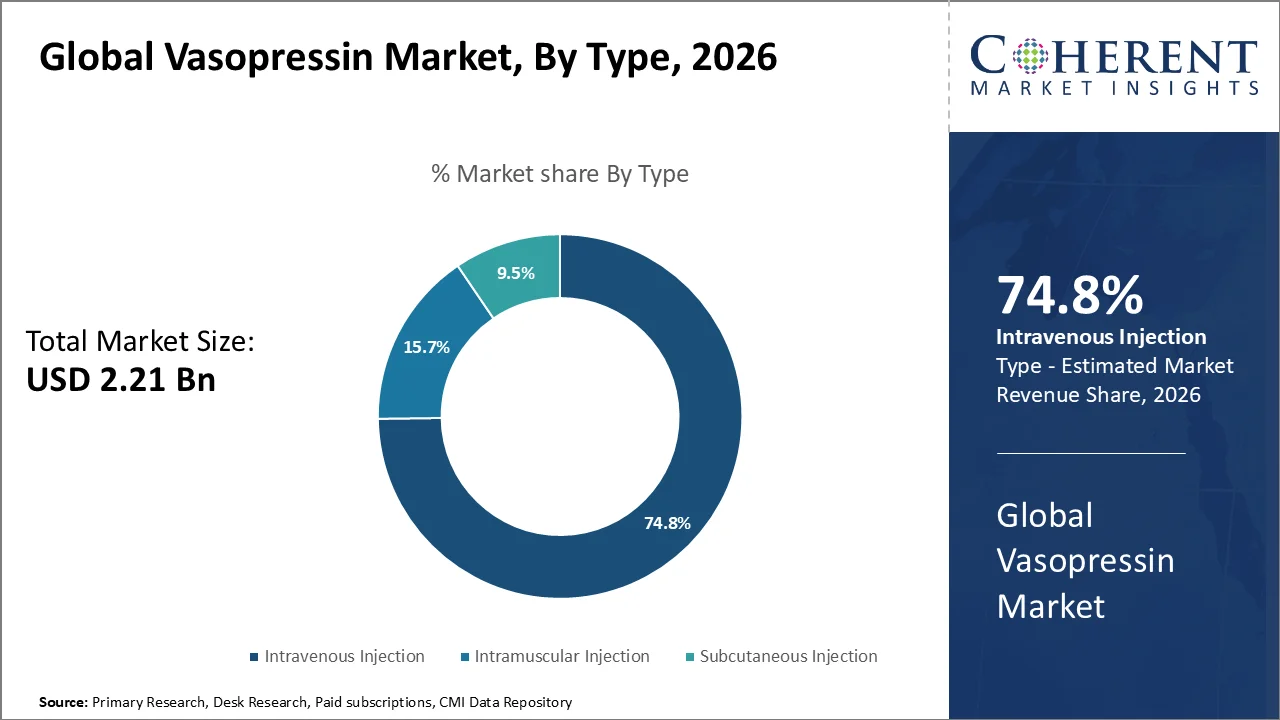
- Intravenous injection segment is likely to dominate the market with 74.8% in 2026. The segment’s growth is owing to the widespread use of intravenous vasopressin in intensive care units for the treatment of septic shock and vasodilatory shock, where rapid hemodynamic stabilization is critical. According to a meta-analysis published in 2025 involving 3,993 patients, initiation of vasopressin in less than 6 hours resulted in lower short-term mortality and decreased hospital mortality, thus favoring the intravenous route.
- Vasodilatory shock segment will dominate with a market share of 56.9% by 2026. This segment’s growth is due to the high prevalence of sepsis and septic shock around the world and rising use of vasopressin as an adjunctive vasopressor. As per WHO, about 49 million cases of sepsis occur annually leading to 11 million deaths worldwide.
- Hospitals segment is expected to dominate the market with 79.2% in 2026. The segment’s growth is owing to the high utilization of vasopressin in emergency departments, critical care units, and inpatient settings. Recent 2026 updates to the Surviving Sepsis Campaign emphasized earlier vasopressor intervention and continued use of vasopressin alongside norepinephrine for individualized management of septic shock, further strengthening hospital demand.
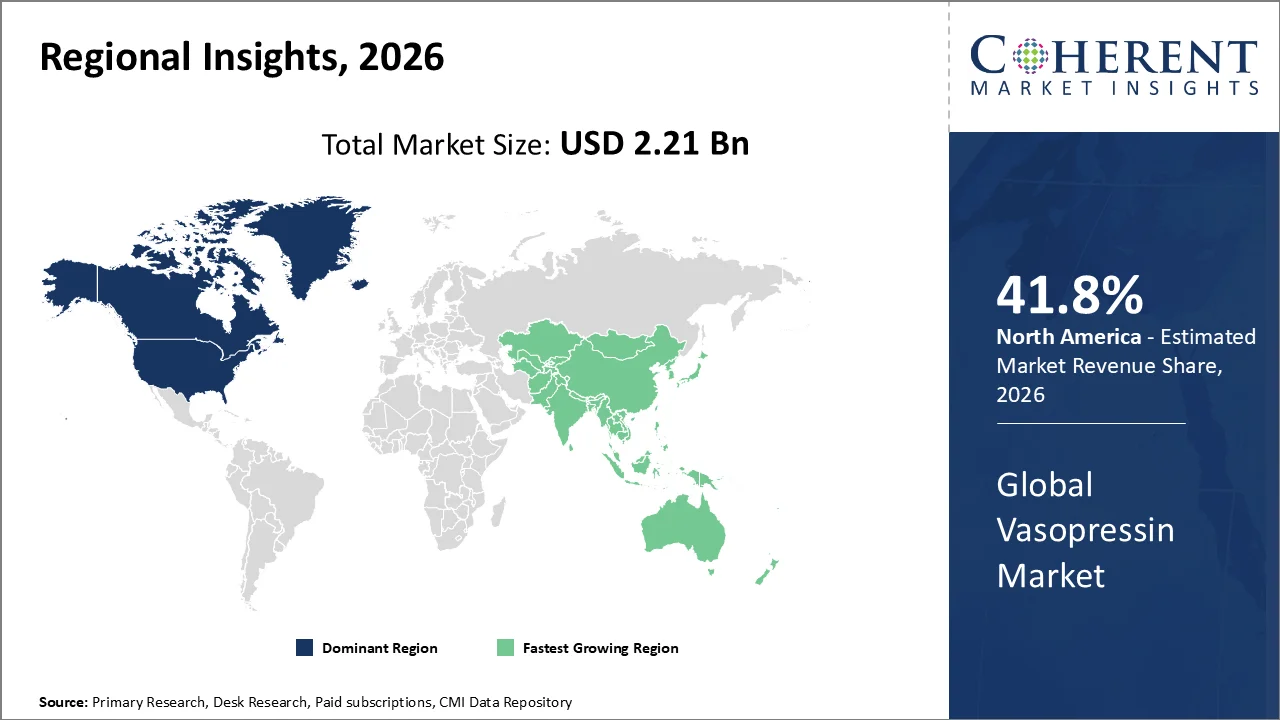
- The North America region is anticipated to hold a market share of 41.8% of the worldwide vasopressin market by 2026. Growth in this region is due to the high occurrence of septic shock and cardiovascular diseases, prevalence of critical care therapies, availability of well-established hospital facilities, and positive clinical guidelines encouraging the use of vasopressin. As stated by CDC (2025), about 1.7 million adults are admitted to hospitals each year with sepsis in the United States, and about 350,000 people die from the disease while staying in the hospital or upon discharge to hospices.
Rising Burden of Sepsis and Septic Shock is Driving Growth in the Vasopressin Market
The rise in the number of cases of sepsis and septic shock is expected to be one of the main drivers of the vasopressin market, due to the extensive use of vasopressin as a second-line vasopressor for treating refractory hypotension. Growth in ICU admission, expansion in critical care facilities, and growing compliance to sepsis management guidelines will boost the market. Increasing incidences of chronic disease among aging population will further fuel the market.
Critical Care Medicine 2025 study in a multicenter study found that septic shock is responsible for about 10% of all ICU admissions globally, with mortality exceeding 30%. Therefore, there is a need for advanced vasopressors.
In March 2026, the Society of Critical Care Medicine (SCCM) revised the Surviving Sepsis Campaign guidelines, and they still advocated the use of vasopressin together with norepinephrine in adult patients with septic shock who required increasing doses of vasopressors.
Current Events and Their Impact on the Vasopressin Market
Current Event | Description and its Impact |
American Heart Association Releases 2025 Cardiovascular Statistics Update (January 2025) |
|
FDA Approves Generic Vasopressin Injection by Amneal Pharmaceuticals (December 2024) |
|
- Current Industry Events of 2026
- Market Size Estimation
- Regional Breakdown
- Competitive Landscape
- Customer Intelligence
- Segmental Analysis
- Pricing Analysis
- Key Market Drivers, Challenges & Future Trends
- Customized Insights Section
Segmental Insights
Why is Intravenous Injection Acquiring the Largest Share?
On the basis of type, the intravenous injection segment is projected to account for the largest Vasopressin Market share of 74.8% in 2026. The segment’s growth is owing to the widespread use of intravenous vasopressin in intensive care units for the treatment of septic shock and vasodilatory shock, where rapid hemodynamic stabilization is critical. Intravenous administration provides immediate bioavailability and enables precise titration, making it the preferred route in critically ill patients.
According to a 2025 article published in the journal Critical Care, based on a study conducted with 3,105 patients with septic shock, early addition of vasopressin to therapy is related to low ICU mortality within 30 days, stressing the significance of IV administration.
In December 2024, Amneal launched Vasopressin Injection USP for intravenous administration following FDA approval. The product is indicated to increase blood pressure in adults with vasodilatory shock and is intended for hospital and ICU settings.
Vasodilatory Shock Holds the Largest Market Share
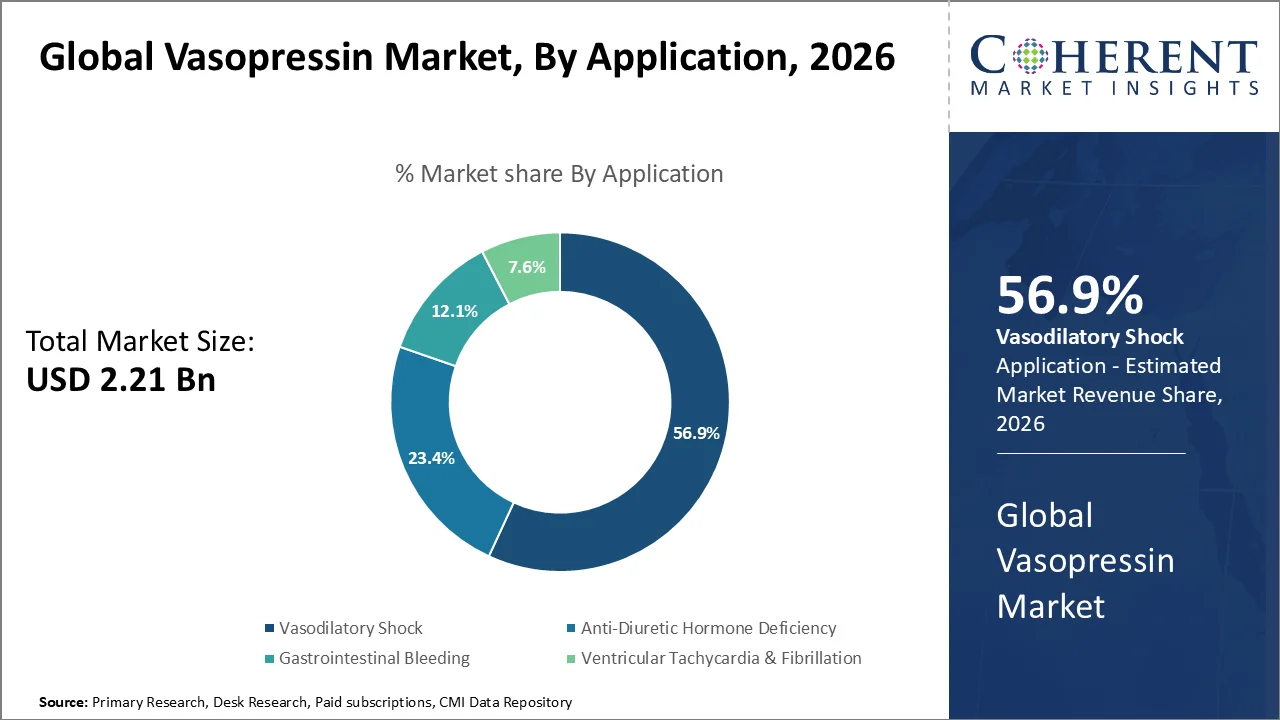
On the basis of application, the vasodilatory shock segment is expected to lead with a major 56.9% share in 2026. The segment’s growth is owing to the increasing burden of sepsis and septic shock worldwide and the growing adoption of vasopressin as an adjunct vasopressor therapy. Growing awareness regarding early intervention and updated clinical guidelines are further contributing to segment expansion.
In addition, a study carried out nationally in 2025 on critical care revealed that out of the 4,426,342 cases of sepsis, 649,082 people (14.7%) developed septic shock, and their in-hospital mortality rate was 36.5%.
In October 2024, American Regent, Inc. issued revised prescribing information (RQ1093-D) for Vasopressin Injection, USP, reaffirming its indication for increasing blood pressure in adults with vasodilatory shock who remain hypotensive despite fluids and catecholamines.
Why do Hospitals hold the Largest Market Share?
On the basis of end user, the hospitals segment is projected to account for the largest Vasopressin Market share of 79.2% in 2026. The segment’s growth is owing to the high utilization of vasopressin in emergency departments, intensive care units, and inpatient settings. Hospitals remain the primary sites for management of septic shock, cardiac arrest, and vasodilatory shock requiring continuous hemodynamic monitoring and vasopressor therapy.
As per a review published in The Lancet Regional Health – Europe in the year 2025, sepsis is one of the causes of almost 20 percent of deaths worldwide, wherein most patients require hospital admission for the condition. As such, there is need for vasopressors, which include vasopressin, in hospitals.
Vasopressin Market Trends
- Increasing presence of many commercial suppliers is enhancing supply chain resilience in critical care medicines. Based on the American Society of Health-System Pharmacists (ASHP) Drug Shortage Database, drug suppliers like Amneal Pharmaceuticals, American Regent, Amphastar Pharmaceuticals, Fresenius Kabi, Long Grove Pharmaceuticals, and Sagent Pharmaceuticals continue to provide vasopressin injection medicines, thereby eliminating dependency on any one supplier.
- The expanding use of vasopressin for indications other than septic shock will generate additional growth opportunities. Based on the 2025 PRESS Survey supported by the European Society of Intensive Care Medicine (ESICM), vasopressin is being used for various types of shock such as vasoplegic shock, cardiogenic shock, and hemorrhagic shock.
- The increasing number of studies on shock management after cardiac arrest has led to the increasing application of vasopressin in treatment. In May 2025, the HYVAPRESS study began assessment of the use of hydrocortisone and arginine vasopressin for treatment of circulatory failure after resuscitation in patients. The multicenter study will include 380 patients.
Regional Insights
North America Dominates Owing to Advanced Critical Care Infrastructure and High Sepsis Burden
North America accounts for 41.8% of the global Vasopressin Market share in 2026. The growth of the region is due to the presence of highly developed healthcare facilities, high ICU admissions, high implementation of evidence-based sepsis management guidelines, and availability of both branded and generic vasopressin medicines. Increased prevalence of cardiovascular diseases and high healthcare expenditure boost the market.
According to AHA Fast Facts on U.S. Hospitals, 2026, there are 6,100 hospitals in the United States with 907,216 staffed beds, indicating that there is enough infrastructure available for delivery of critical care therapies including vasopressor therapy. There are a huge number of hospitals in the United States where the drug can be used extensively.
In May 2024, American Regent issued a voluntary recall of one lot of Vasopressin Injection, USP 10 mL multiple-dose vials because of storage condition concerns, with no reported adverse events.
Asia Pacific Vasopressin Market Trends
Asia Pacific is expected to witness the fastest growth in the Vasopressin Market over the forecast period. The region's growth is owing to rising healthcare expenditure, increasing prevalence of sepsis and cardiovascular diseases, expanding critical care infrastructure, and improving access to essential medicines across China, India, Japan, and Southeast Asia.
Furthermore, according to the India Brand Equity Foundation (IBEF), the Indian healthcare market is expected to grow to USD 638 billion by 2025 due to the growth in hospitals and infrastructure development in the healthcare sector.
In November 2025, Terumo Corporation announced the expansion of its cardiovascular and critical care portfolio in Asia, strengthening its presence in intensive care and hemodynamic monitoring solutions throughout the region.
Rising Sepsis Burden and Expanding Critical Care Infrastructure are Accelerating the Vasopressin Market in the United States
The U.S. Vasopressin Market is growing strongly due to rising incidences of sepsis and cardiovascular diseases, evidence-based critical care practice, and well-established hospital infrastructure. Branded as well as generic versions of vasopressin and expansion of intensive care facilities will be aiding market growth.
In February 2026, Eton Pharmaceuticals, the U.S. FDA approved DESMODA™ (desmopressin acetate oral solution), the first FDA-approved oral liquid formulation for arginine vasopressin deficiency (AVP-D).
Growing Critical Care Demand and Healthcare Investments are Strengthening the Vasopressin Market in China
China's Vasopressin Market is seeing growth due to higher healthcare spending, increasing prevalence of sepsis and heart conditions, and sustained investments in critical care facilities. The growing number of seniors and growth in the number of tertiary hospitals are driving the demand for vasopressors.
According to the Council on Foreign Relations (October 2024), China recorded 301 million hospital admissions in 2023, representing 21.4% of its population. Furthermore, individuals aged 60 years and above reached 296.97 million, accounting for 21.1% of the population, while hospital bed density increased to 7.23 beds per 1,000 population.
Who are the Major Companies in Vasopressin Industry
Some of the major key players in Vasopressin Market are Par Pharmaceutical, Pfizer Inc., Novartis AG, Ferring Pharmaceuticals, Fresenius Kabi Canada, Astellas Pharma, Shanghai Soho-Yiming Pharmaceuticals, Endo International, Hybio Pharmaceutical, Hainan Zhonghe Pharmaceutical, and Cumberland Pharmaceuticals.
Market Report Scope
Vasopressin Market Report Coverage
| Report Coverage | Details | ||
|---|---|---|---|
| Base Year: | 2025 | Market Size in 2026: | USD 2.21 Bn |
| Historical Data for: | 2020 To 2024 | Forecast Period: | 2026 To 2033 |
| Forecast Period 2026 to 2033 CAGR: | 14.7% | 2033 Value Projection: | USD 5.77 Bn |
| Geographies covered: |
| ||
| Segments covered: |
| ||
| Companies covered: | Par Pharmaceutical, Pfizer Inc., Novartis AG, Ferring Pharmaceuticals, Fresenius Kabi Canada, Astellas Pharma, Shanghai Soho-Yiming Pharmaceuticals, Endo International, Hybio Pharmaceutical, Hainan Zhonghe Pharmaceutical, and Cumberland Pharmaceuticals | ||
| Growth Drivers: |
| ||
| Restraints & Challenges: |
| ||
Analyst Opinion
- The Vasopressin Market is benefiting from the increasing global critical care burden and the growing complexity of hospitalized patients. Nearly 5 million patients are admitted to intensive care units annually in the United States, creating sustained demand for vasoactive therapies and advanced hemodynamic support.
- Analysts believe that an aging population will continue to expand the addressable patient pool for vasopressin. The global population aged 65 years and older is projected to reach 1.6 billion by 2050, increasing the incidence of cardiovascular diseases, sepsis, and critical illnesses requiring hospitalization.
- Analysts view hospital digitalization and patient monitoring technologies as key enablers of vasopressin adoption. Approximately 94% of U.S. hospitals have adopted certified electronic health records (EHRs), facilitating protocol-driven sepsis management and optimized vasopressor administration.
Speak to the analyst
Want personalized insights?
Take the findings above to one of our principal consultants, or have the report rebuilt around the segments, geographies and competitors you actually track.
Market Segmentation
- By Type (Revenue, USD Bn, 2021-2033)
- Intravenous Injection
- Intramuscular Injection
- Subcutaneous Injection
- By Application (Revenue, USD Bn, 2021-2033)
- Anti-Diuretic Hormone Deficiency
- Gastrointestinal Bleeding
- Vasodilatory Shock
- Ventricular Tachycardia & Fibrillation
- By End User (Revenue, USD Bn, 2021-2033)
- Hospitals
- Clinics
- Others
- By Region (Revenue, USD Bn, 2021-2033)
- North America
- U.S.
- Canada
- Latin America
- Brazil
- Mexico
- Argentina
- Rest of Latin America
- Europe
- Germany
- U.K.
- France
- Italy
- Spain
- Russia
- Rest of Europe
- Asia Pacific
- China
- India
- Japan
- Australia
- South Korea
- ASEAN
- Rest of Asia Pacific
- Middle East
- GCC
- Israel
- Rest of Middle East
- Africa
- South Africa
- Central Africa
- North Africa
- North America
Sources
Primary Research Interviews
- Critical Care Physicians & Intensivists
- Hospital Pharmacists
- Emergency Medicine Specialists
- Cardiologists & Cardiovascular Surgeons
- Endocrinologists
- Pharmaceutical Manufacturers of Vasopressin Products
- Contract Manufacturing Organizations (CMOs)
- Hospital Procurement Managers
- Healthcare Distributors & Wholesalers
- Others
Databases
- Bloomberg Terminal
- Thomson Reuters Eikon
- S&P Global Market Intelligence
- FactSet
- D&B Hoovers
- IQVIA
- GlobalData
- PitchBook
- Others
Magazines
- Critical Care Medicine
- Pharmacy Times
- Drug Topics
- Pharmaceutical Technology
- Fierce Pharma
- MedTech Dive
- BioPharma Dive
- Others
Journals
- Critical Care
- Critical Care Medicine
- Journal of Intensive Care
- BMC Anesthesiology
- Therapeutics and Clinical Risk Management
- The Lancet Regional Health – Europe
- JACC: Advances
- New England Journal of Medicine (NEJM)
- Others
Newspapers
- Financial Times
- The Wall Street Journal
- Reuters
- Bloomberg News
- The Economic Times
- Business Standard
- Nikkei Asia
- Others
Associations
- Society of Critical Care Medicine (SCCM)
- American Heart Association (AHA)
- American Society of Health-System Pharmacists (ASHP)
- European Society of Intensive Care Medicine (ESICM)
- American College of Cardiology (ACC)
- Infectious Diseases Society of America (IDSA)
- European Society of Cardiology (ESC)
- Others
Public Domain Sources
- World Health Organization (WHO)
- U.S. Food and Drug Administration (FDA)
- Centers for Disease Control and Prevention (CDC)
- American Hospital Association (AHA)
- National Institutes of Health (NIH)
- World Bank Open Data
- OECD Health Statistics
- United Nations World Population Prospects
- Council on Foreign Relations (CFR)
- National Medical Products Administration (NMPA), China
- India Brand Equity Foundation (IBEF)
- Others
Company Websites & Press Releases
- Amneal Pharmaceuticals
- American Regent, Inc.
- Novartis AG
- Ferring Pharmaceuticals
- Pfizer Inc.
- Fresenius Kabi
- Astellas Pharma
- Hybio Pharmaceutical
- Shanghai Soho-Yiming Pharmaceuticals
- Cumberland Pharmaceuticals
- Endo International
- Others
Proprietary Elements
- CMI Data Analytics Tool
- Proprietary CMI Existing Repository of Information for the Last 10 Years
Get access to 250+ pages report
Every segment, forecast, competitor profile and data table behind the analysis above — available for instant download.
- ESOMAR Member
- ISO 9001:2015 Certified
- D-U-N-S Registered
- GDPR & CCPA Compliant
Missing comfort of reading report in your local language? Find your preferred language:
Transform your Strategy with Exclusive Trending Reports
Frequently Asked Questions
The Vasopressin Market is expected to reach USD 5.77 Bn by 2033.
Major players operating in the global Vasopressin Market include Par Pharmaceutical, Pfizer Inc., Novartis AG, Ferring Pharmaceuticals, Fresenius Kabi Canada, Astellas Pharma, Shanghai Soho-Yiming Pharmaceuticals, Endo International, Hybio Pharmaceutical, Hainan Zhonghe Pharmaceutical, and Cumberland Pharmaceuticals.
The high treatment and hospitalization costs associated with critical care, risk of adverse effects and dosing-related complications, stringent regulatory requirements for injectable products, and supply chain disruptions are the key factors hampering market growth.
The rising prevalence of sepsis and septic shock, increasing incidence of cardiovascular diseases and cardiac emergencies, growing ICU admissions, expanding critical care infrastructure, and increasing adoption of evidence-based vasopressor therapies are driving the demand for vasopressin.
The Vasopressin Market is anticipated to grow at a CAGR of 14.7% between 2026 and 2033.
Among regions, North America is expected to account for the largest share of the global Vasopressin Market over the forecast period.
Hospitals are the major end users of vasopressin owing to the high incidence of septic shock, cardiac arrest, and vasodilatory shock requiring continuous hemodynamic monitoring and intravenous vasopressor administration in intensive care units and emergency departments.