

Global Hospital Services Market Size and Forecast – 2026 to 2033
The global hospital services market is estimated to be valued at USD 4.75 Tn in 2026 and is expected to reach USD 6.56 Tn by 2033, exhibiting a compound annual growth rate (CAGR) of 4.7% from 2026 to 2033. Increasing demand for advanced healthcare services, rising geriatric population, and greater healthcare infrastructure investments worldwide are driving the market growth. Expansion in private healthcare facilities and adoption of innovative hospital management technologies also contribute significantly to this market trajectory.
Key takeaways of the Global Hospital Services Market
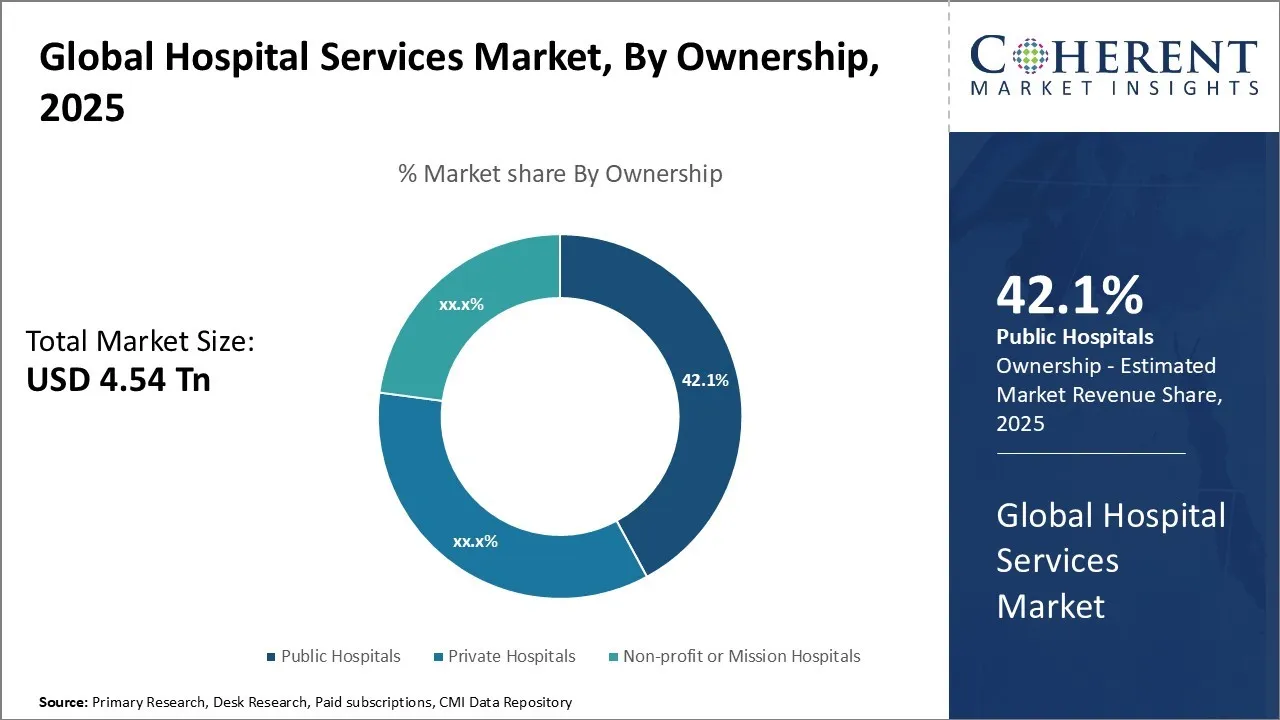
- Public hospitals segment is expected to lead the global hospital services market, accounting for 43.1% share in 2026
- Inpatient services segment is estimated to dominate by service type, holding 28.5% of the market share in 2026
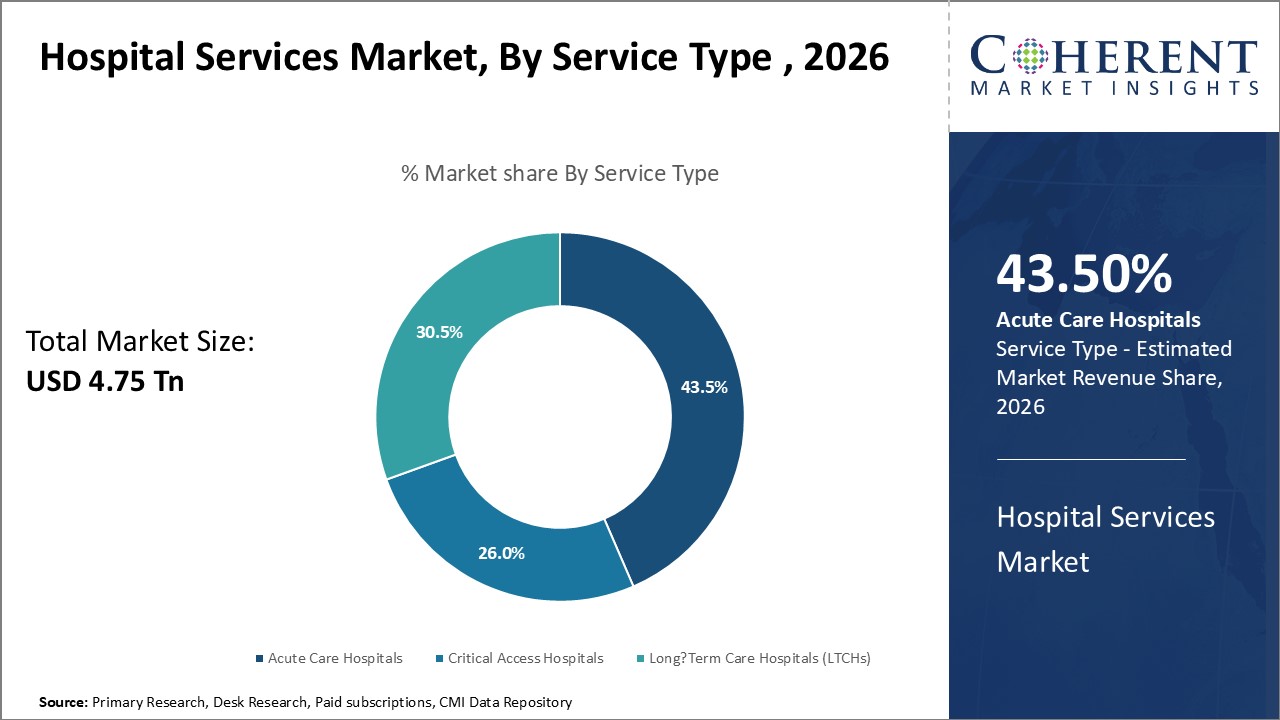
- Within treatment type, the acute care hospitals segment is projected to hold the largest share at 43.5% in 2026.
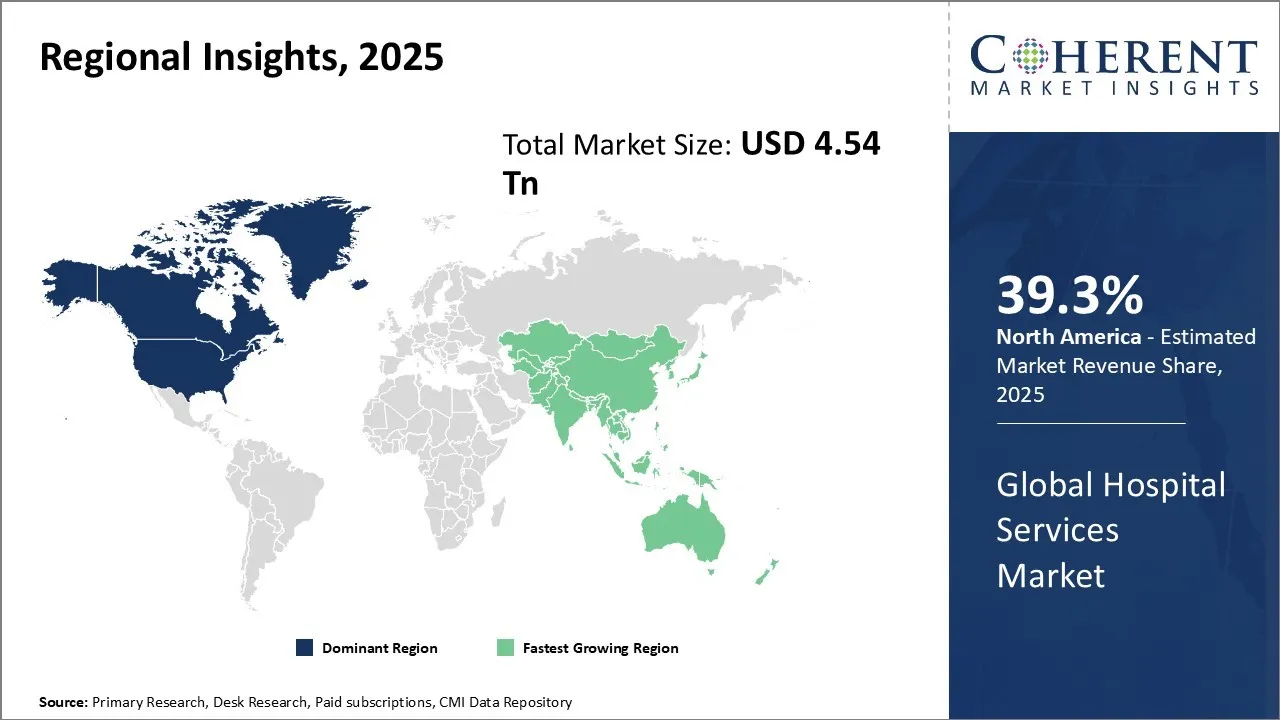
- North America is expected to lead the market, holding a share of 39.3% in 2026. Asia Pacific is anticipated to be the fastest-growing region, with an estimated market share of 23.5% in 2026.
Market Overview
The market trend is characterized by a growing emphasis on digital transformation within hospital services, including telemedicine, AI diagnostics, and electronic health records. Hospitals are increasingly focusing on patient-centric care models and integrating sustainable practices to enhance operational efficiency and reduce environmental impact. Additionally, the rise in chronic diseases and pandemic preparedness is pushing healthcare providers to enhance service quality and capacity. These trends collectively underscore the shift towards more accessible, efficient, and technologically advanced hospital services globally.
Currents Events and Its Impact
Current Events | Description and its Impact |
Expansion of Single‑Specialty Hospitals in India |
|
Widespread Adoption of Generative AI |
|
Segmental Insights
- Current Industry Events of 2026
- Market Size Estimation
- Regional Breakdown
- Competitive Landscape
- Customer Intelligence
- Segmental Analysis
- Pricing Analysis
- Key Market Drivers, Challenges & Future Trends
- Customized Insights Section
Hospital Services Market Insights, By Ownership - Public Hospitals Contributes the Highest Market Share Owing to their Widespread Accessibility and Government Support
By virtue of their very first role as the provider of universal access to healthcare services, public hospitals are dominant in the global hospital services market with an estimated share of 43.1% in 2026, especially in the case of emerging and low-income regions. Public hospitals are mainly funded and operated by the government, which allows them to provide medical care to a larger number of people including the low-income population that cannot afford private healthcare.
In June 2026, the Centre for Medical Innovation (CMI) at the Government Institute of Medical Sciences (GIMS) Greater Noida a 630-bed public hospital accredited by NABH and NABL treating more than 500,000 patients annually launched India's first hospital-based MedTech cohort program. This program will allow hospitals to incubate and provide support for early-stage MedTech startups, which will lead to the transformation of the hospital services industry by direct innovation through clinical settings
Hospital Services Market Insights, By Service Type - Inpatient Services Leads the Segment Propelled by Complex Care Needs and Hospitalization Trends
Inpatient services account for the largest market share, with an estimated share of 28.5% in 2026, because of their important role in the management of critical, acute, and complex health conditions that require prolonged hospital stays. The patients seeking inpatient care are predominantly those suffering from chronic diseases like heart diseases, cancer, respiratory diseases, and others who cannot be treated in the outpatient setup due to their need for continuous monitoring and specialized care.
This therefore calls for the availability of sophisticated inpatient wards with multidisciplinary physicians present. Aging populations are the primary reason for the growth of inpatient care services since these individuals usually suffer from multiple diseases and thus require longer hospitalization for both acute treatments and elective surgeries.
Hospital Services Market Insights, By Treatment Type - Acute Care Hospitals Command the Highest Market Share Driven by Immediate and High-Volume Care Demand
In 2026, acute care hospitals will lead with a share of 43.5%, because of their essential function in providing quick and immediate medical care for a wide range of medical conditions from trauma, and infections to surgical emergencies. Quick, easy accessibility to treatment especially in acute care settings is a primary factor behind the growing trend; this is particularly true as lifestyle-related diseases, road accidents, and urgent surgical interventions occur more frequently around the world.
The main function of these hospitals is to accept and treat a great number of patients who require short-term treatment for serious injuries or episodes of illness. This situation calls for rapid diagnostic evaluation, surgery, therapy, or monitoring.
Comparative Analysis of Care Models, Investment Patterns, and Infrastructure Readiness in the Hospital Services Market
Dimension | Key elements | Strategic implications |
Care Models | Traditional inpatient hospital care dominates globally. | Inpatient‑first remains core, but pressure to evolve is rising. |
Growth of outpatient, home‑based & hybrid delivery. | Organizations must build capabilities beyond brick‑and‑mortar. | |
Value‑based care, consumer‑centric pathways gaining. | Payors & providers must align outcomes, not just volume. | |
Investment Patterns | Large investment in private hospital chains and expansion. | Private equity and corporate M&A are accelerating hospital consolidation. |
Government/public sector infrastructure and subsidies. | Public‑private models can bridge gaps; policy and regulation matter. | |
Technology/IT, digital health, analytics getting more capital. | Digital enablement is no longer optional for competitiveness. | |
Infrastructure Readiness | Variable bed‑capacity, equipment levels across geographies. | Emerging markets lag in basic readiness; tropical geographies underserved. |
Digital maturity (EHRs, IoT, smart‑hospital systems). | Hospitals need upgrade paths to avoid being left behind. | |
Rural/underserved areas face infrastructure constraints. | Growth will depend on decentralized models and lower capex alternatives. |
Regional Insights
North America Hospital Services Market Analysis and Trends
North America is projected to continue leading the global hospital services market with a huge share of 39.3% in 2026, and the reason for this is the well-functioning and matured healthcare ecosystem with the main features like the advanced infrastructure, technology, and a good amount of healthcare spending. The market is made even bigger because of the presence of a large number of world-class hospitals, specialized hospitals, and the private healthcare sector, which altogether makes up for a stronghold in the market.
The region's extensive regulatory frameworks not only support but also set very high standards for the quality of healthcare and the safety of patients, which in turn, prompts the continuous advancement of hospital services. Big companies like HCA Healthcare, Universal Health Services, and Tenet Healthcare are the ones who actually affect the way service delivery is done through their heavy investments in digital health and integrated care services.
Asia Pacific Hospital Services Market Analysis and Trends
Asia Pacific is going to be the one with the fastest development in the hospital services market with a share of 23.5% in 2026, and this is thanks to the quick urbanization, healthcare being more and more recognized as a right, and governments investing more in healthcare infrastructure. China, India, Japan, and South Korea are some of the countries which are increasing their hospital capacity to provide for the baby boomers and the ageing population.
The region has gained through trade factors such as technology transfer and foreign direct investment, and this has led to better quality and more varied hospital services available. The likes of Apollo Hospitals (India), Bumrungrad International Hospital (Thailand), and Samsung Medical Center (South Korea) are the ones who really drive the market forward, as they adopt and make use of advanced medical technologies and broaden up their specialty care services to attract new patients.
Global Hospital Services Market Outlook for Key Countries
U.S. Hospital Services Market Trends
The hospital services market in the U.S. truly reaps the benefits of a well-established hospital infrastructure along with the effective use of the latest and most advanced technologies like telemedicine, AI, and robotic surgeries. The U.S. lays down the standard for hospitals and clinics worldwide by the digital transformation and the patient-centric care models in the health system. Over time, the government facilities that promote healthcare accessibility and quality have been influencing the market so that the healthcare sector is always innovating, and service is delivered extensively.
In September 2026, the Centers for Medicare & Medicaid Services (CMS) launched the USD 50 billion Rural Health Transformation Program. The program aims to improve rural health care by supporting innovative care models, workforce development, and technology use. States can apply for funding to address local health challenges, with USD 10 billion available annually starting in 2026.
Germany Hospital Services Market Trends
In Germany, the hospitals services market is very beneficial due to a strong social insurance system and a strict regulatory framework which, in a way, set the standard for the whole country regarding the quality of care in public and private facilities. Germany has a very well-distributed network of hospitals with important players like Helios Kliniken and Asklepios Kliniken that not only provide health services but also promote medical research and development. The government is investing a lot in healthcare modernization as well as in the digital health sector since these investments are generating savings in the operations and better patient outcomes.
In December 2024, Sweco, a leading architecture and engineering firm, secured major contracts for two hospital projects in Germany. Sweco will provide services for a new parent-child care center at the University Medical Center Göttingen and the expansion of Martha-Maria Hospital in Nuremberg.
China Hospital Services Market Trends
China's hospital services are acquiring public sector-led reforms that are pushing for universal coverage and improving quality that are readily available in the private sector. Co-invention across the board including AI-assisted diagnosis and telehealth engagement, among others, has made the service closer to clientele than ever before. Some of the major hospitals and organizations in the industry like China Resources Medical and Shanghai United Family Hospital are knocking heavily on the doors of modernization including the expansion of specialty care thus putting the country on the map as the next healthcare hub in the Asia Pacific region.
In September 2026, Huawei and Zhongshan Hospital, Fudan University launched a global showcase for intelligent healthcare during HUAWEI CONNECT 2026 in Shanghai, China. The showcase highlights advanced digital and AI-driven healthcare models, emphasizing smart hospital ecosystems and scenario-based solutions.
India Hospital Services Market Trends
India’s hospital services market is characterized by a trend from public to private and a growing demand for high-tech medical treatments, which is mainly caused by an increase in population and the people being more health-aware. To provide better customer service, hospitals like Apollo and Fortis are opening new hospitals and updating the existing ones with new technology. The Indian government is pushing healthcare accessibility even further with its Ayushman Bharat program and others, thus increasing the demand for hospital services.
In July 2026, Even Healthcare launched its first hospital, Even Hospital, in Central Bengaluru, aiming to bridge gaps in India’s secondary care. The 70-bed facility focuses on coordinated care, outcome-based compensation, and reducing unnecessary hospitalizations. Unlike traditional models, doctors at Even Hospital are compensated based on health outcomes, not the number of procedures.
Overview of Hospital Facility Types
- Public Hospitals: Account for a significant portion of the market, offering essential healthcare services, often subsidized by government funding. They provide broad access, particularly in rural and underserved areas.
- Private Hospitals: Known for higher quality services and specialized care, these facilities cater to higher-income patients. They often feature advanced technologies and personalized services.
- Multi-specialty Hospitals: These hospitals offer a wide range of specialized services under one roof, such as cardiology, orthopedics, and neurology, attracting patients looking for comprehensive care.
- Specialty Centers: Focused on specific medical fields (e.g., oncology, dermatology), these centers provide highly specialized care with advanced treatment options, often using the latest technologies and techniques.
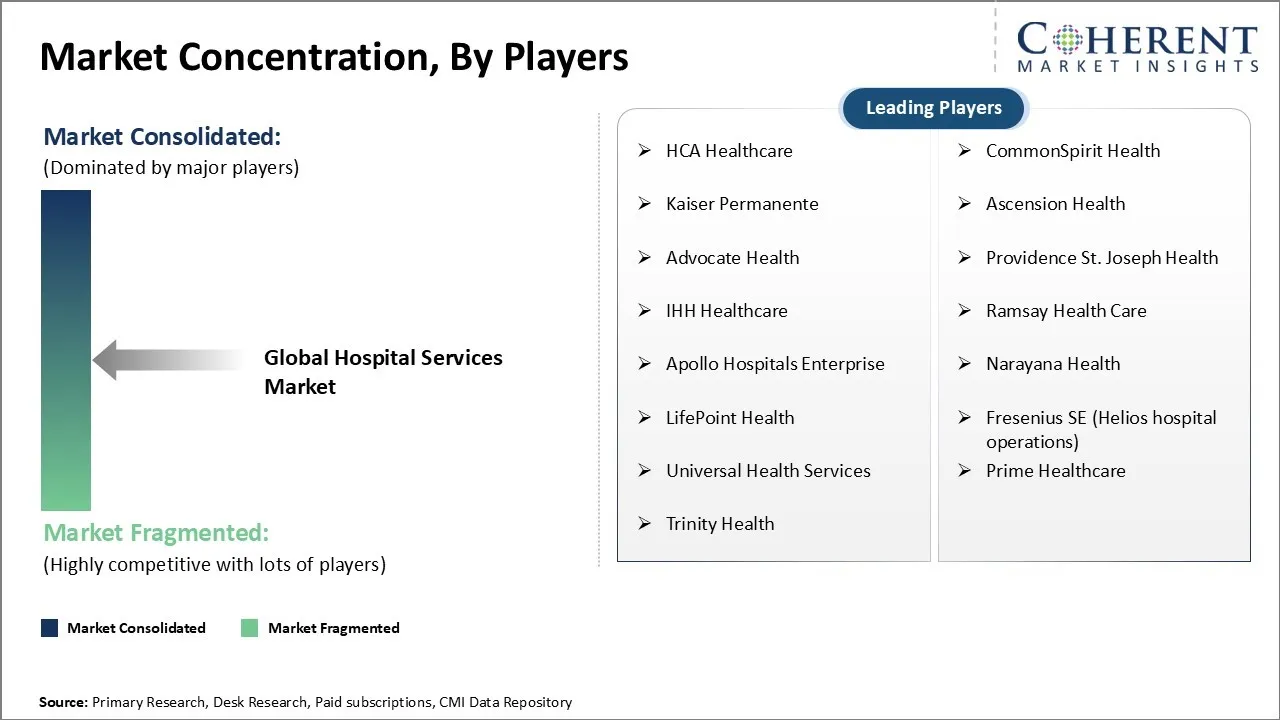
Market Players, Key Developments, and Competitive Intelligence
Key Developments
- On November 18, 2025, ARC Innovation at Sheba Medical Center and Icahn School of Medicine at Mount Sinai announced a groundbreaking three-year partnership with NVIDIA to use AI in decoding the human genome. The collaboration will focus on the 98% of the genome previously unexplored, aiming to unlock new pathways for disease prevention and personalized medicine.
- In October 2025, Pristyn Care announced the launch of three new super‑specialty hospitals in Pune, Indore, and Hyderabad, expanding its network to over 11 owned hospitals with 700+ beds, 30+ modular operating theatres and 100+ ICU units.
- In August 2025, Mahatma Gandhi Memorial Hospital (MGMH) in Warangal, Telangana, launched comprehensive Patient Support Services in collaboration with Helping Hand Foundation (HHF). The initiative, which aims to improve accessibility and streamline patient care, was inaugurated by Dr. Satya Sharada, IAS, Collector of Warangal.
- In June 2025, D. Hinduja Hospital, a leading multi-specialty hospital in India, launched the country’s first Living Will Clinic. The clinic helps individuals document their healthcare preferences through a legally recognized Living Will, ensuring their decisions are respected if they cannot communicate later. This initiative empowers people to plan their future medical care, making end-of-life decisions easier for families.
Top Strategies Followed by Global Hospital Services Market Players
- The established companies that dominate the market have a huge R&D budget as a part of their ongoing strategy to innovate and create performance products that are in line with the changing needs of the healthcare providers. They invest in new medical technology and hospital services so they can lead in the industry. They also collaborate and become partners with other companies that are of strategic importance, such as Original Equipment Manufacturers (OEMs), to share and combine their strengths, thus, increase the variety of the products offered and better the market position.
- In September 2025, Apollo Hospitals, a prominent healthcare provider in India, acquired a significant equity stake in its retail healthcare subsidiary, Apollo Health and Lifestyle Limited (AHLL), gaining full control. This acquisition strengthens Apollo’s presence in retail healthcare, which operates Apollo Clinics.
- Mid-market players in the hospital services industry take a very realistic and practical approach which is very economical and of good quality at the same time. They take the price sensitivity of the healthcare providers in developing countries into consideration, especially, and thus try to come up with highly reliable and affordable solutions that meet the minimum performance and safety standards without compromising on others.
- A company such as Narayana Health, which is based in India, stands out for being a mid-level player in the hospital services market. They concentrate on providing accessible cardiac care that is both advanced and quality-controlled, thus reaching out to and catering to a wider patient base without the risk of losing quality. Likewise, Ahli Hospital in Qatar is another example of a mid-level player that provides affordable yet good healthcare.
- Globally the hospital services market has small players that often focus on a few segments with the help of innovations and specialization. While these companies have limited financial resources, they work on making products that stand out through special functions or that are made for specific clinical use.
- To illustrate the point of small players, CureMD in the U.S. is a good example of bringing healthcare innovation through providing specialized electronic health record (EHR) solutions for a wide range of providers, including small hospitals or independent practitioners. Galenica in Switzerland, rather small in size, is another one that concentrates on the lesser-known areas of dermatology and wound management like an innovative treatment and personalized care to niche patient groups.
Market Report Scope
Global Hospital Services Market Report Coverage
| Report Coverage | Details | ||
|---|---|---|---|
| Base Year: | 2025 | Market Size in 2026: | USD 4.75 Tn |
| Historical Data for: | 2020 To 2024 | Forecast Period: | 2026 To 2033 |
| Forecast Period 2026 to 2033 CAGR: | 4.7% | 2033 Value Projection: | USD 6.56 Tn |
| Geographies covered: |
| ||
| Segments covered: |
| ||
| Companies covered: | HCA Healthcare, CommonSpirit Health, Kaiser Permanente, Ascension Health, Advocate Health, Providence St. Joseph Health, IHH Healthcare, Ramsay Health Care, Apollo Hospitals Enterprise, Narayana Health, LifePoint Health, Fresenius SE (Helios hospital operations), Universal Health Services, Prime Healthcare, and Trinity Health | ||
| Growth Drivers: |
| ||
| Restraints & Challenges: |
| ||
Hospital Services Market Dynamics
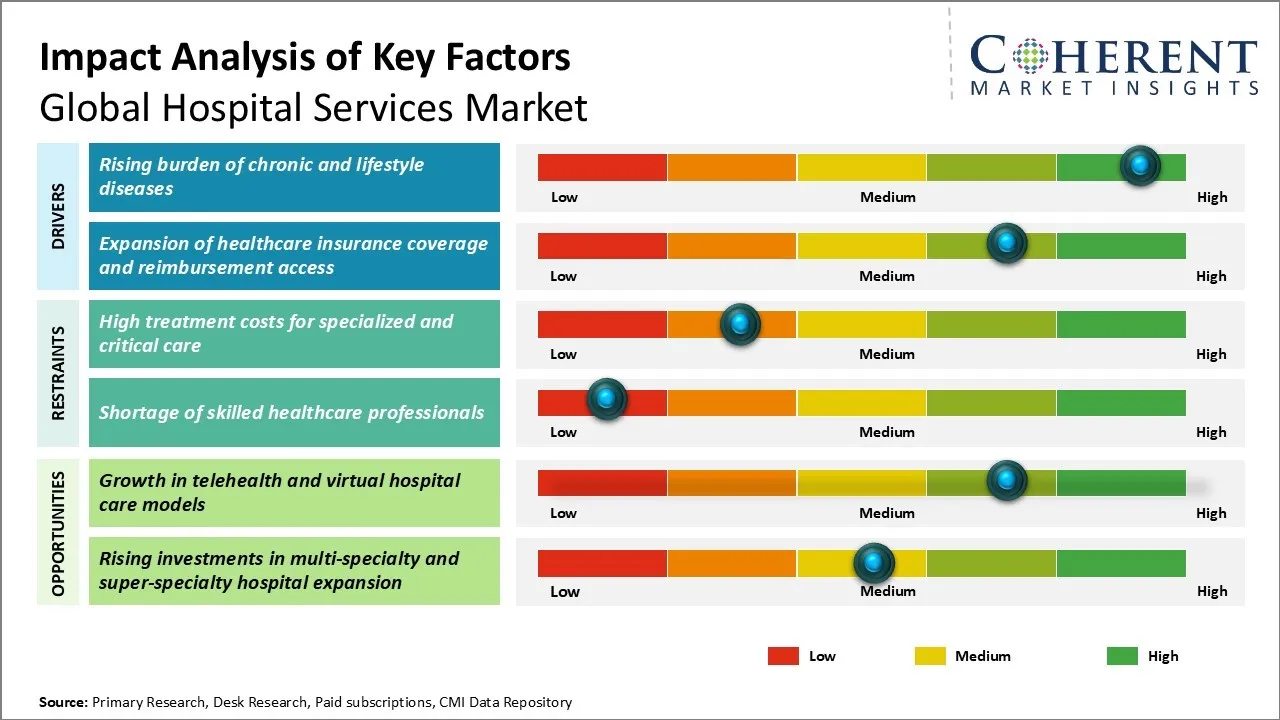
Hospital Services Market Driver - Rising Burden of Chronic and Lifestyle Diseases
The ever-increasing occurrence of chronic and lifestyle-related diseases, such as diabetes, heart disorders, obesity, and respiratory diseases, is the main reason for the global demand for hospital services. The demand for hospitals is growing because they are able to provide patients with all the necessary medical services diagnostics, treatment, rehabilitation, and emergency interventions—at one place and for a long time, since these diseases need continuous medical attention, long-term management, and regular monitoring. Shifting dietary habits, lack of physical activity, migration to urban areas, and aging populations are the major factors that lead to such health problems, to more patients visiting hospitals and to the need for more advanced healthcare infrastructure.
In September 2025, the World Health Organization (WHO) reported a sharp rise in the global burden of chronic or noncommunicable diseases, which claimed around 43 million lives in 2021—accounting for 75% of non-pandemic-related deaths. The data highlighted cardiovascular diseases, cancers, chronic respiratory conditions, and diabetes as the leading causes, with 80% of premature deaths occurring in low- and middle-income countries.
In February 2025, the Department of Biotechnology reported that chronic and lifestyle diseases now cause over half of all deaths in India, led by heart disease, cancer, respiratory disorders, and diabetes. The government aims to cut premature deaths from these conditions by one-third by 2030 through stronger preventive medical wellness initiatives.
Hospital Services Market Opportunity - Expansion of Telehealth and Virtual Hospital Care Models
The global hospital services market is well-positioned to experience a substantial impact from the rapid advancement of telehealth and virtual hospital care models, as these trends are being fueled by patient demand for health care that is easy to access, convenient, and affordable. The healthcare industry was empowered by the advances made in digital technology, the penetration of smartphones on a large scale, and the enhancement of internet connectivity to the point where it was possible to conduct remote consultations, virtual monitoring, and telemedicine services, thus beating the usual barriers that were the geographical limitations and the limited capacity of the hospitals. The COVID-19 pandemic greatly influenced the situation; it made the adoption of telehealth solutions by hospitals all over the world much faster and this development is still going on because providers have started to consider virtual care as part of their standard service.
In December 2024, Mulk International from the U.A.E. and India’s Ajeenkya DY Patil Group launched the first large-scale virtual hospital in the MENA and Asia Pacific regions through their joint venture, Mulk Med Healthcare. The initiative brings together over 20,000 doctors, USD 27.2 million in funding, and advanced virtual healthcare solutions. The Mulk Med Virtual Hospitals ecosystem offers telehealth services, 24/7 consultations, and doorstep delivery of medicines, reaching over 170 countries.
Analyst Opinion (Expert Opinion)
- The hospital services market is expanding very quickly because of the progress in technology, regulatory backing, and an increased demand for healthcare. Telemedicine, AI in diagnostics, and electronic health records are among the major contributors to the transformation of medical practice and the improved efficiency of operations. Rising global cases of chronic diseases along with the aging population are factors that increase the need for hospital services. Nevertheless, issues like the lack of skilled staff, the high cost of operations, and tough regulations are still there.
- There are virtual healthcare platforms and mobile health services as opportunities, these are ways to access improving in the underserved areas. Examples of such platforms and services are the Seha Virtual Hospital and Mulk Med’s virtual hospital ecosystem that are paving the way for the new concept. The HIMSS Global Health Conference and the World Health Summit are among the events that are presenting innovation and policy discussions, thus determining the coming days of the hospital services industry with emphasis on the digital health and AI integration.
Speak to the analyst
Want personalized insights?
Take the findings above to one of our principal consultants, or have the report rebuilt around the segments, geographies and competitors you actually track.
Market Segmentation
- Ownership Insights (Revenue, USD Tn, 2021 - 2033)
- Public Hospitals
- Private Hospitals
- Non-profit or Mission Hospitals
- Service Type Insights (Revenue, USD Tn, 2021 - 2033)
- Inpatient Services
- General Medicine
- General Surgery
- Specialty and Super-Specialty Care
- Critical Care ICU and CCU
- Maternity and Neonatal Care
- Others (Rehabilitation and Long-term Acute Care)
- Outpatient Services
- OPD Consultations
- Day-care Procedures
- Minor Surgeries
- Diagnostic Visits
- Others (Preventive Health Check-ups)
- Emergency Services
- Trauma and Accident Care
- Emergency Surgery
- Emergency Cardiac Care
- Poisoning and Toxicology
- Others (Disaster and Mass Casualty Response)
- Diagnostic Services
- Pathology Clinical and Molecular
- Radiology X-ray CT MRI Ultrasound
- Nuclear Medicine
- Others (Endoscopy and Imaging-guided Procedures)
- Surgical Services
- General Surgery
- Orthopedic Surgery
- Cardiovascular Surgery
- Neurosurgery
- Gastrointestinal Surgery
- Urology and Nephrology Procedures
- Others (Plastic and Reconstructive Surgery)
- Therapeutic Services
- Dialysis
- Chemotherapy and Radiation Therapy
- Physiotherapy and Occupational Therapy
- Respiratory Therapy
- Others (Pain Management Services)
- Treatment Type Insights (Revenue, USD Tn, 2021 - 2033)
- Acute Care Hospitals
- Critical Access Hospitals
- Long-Term Care Hospitals (LTCHs)
- Hospital Size Insights (Revenue, USD Tn, 2021 - 2033)
- Micro‑Hospitals (<25 beds)
- Small Hospitals (25‑199 beds)
- Mid‑Size Hospitals (200‑499 beds)
- Large Hospitals (≥500 beds)
- Regional Insights (Revenue, USD Tn, 2021 - 2033)
- North America
- U.S.
- Canada
- Latin America
- Brazil
- Argentina
- Mexico
- Rest of Latin America
- Europe
- Germany
- U.K.
- Spain
- France
- Italy
- Russia
- Rest of Europe
- Asia Pacific
- China
- India
- Japan
- Australia
- South Korea
- ASEAN
- Rest of Asia Pacific
- Middle East
- GCC Countries
- Israel
- Rest of Middle East
- Africa
- South Africa
- North Africa
- Central Africa
- North America
- Key Players Insights
- HCA Healthcare
- CommonSpirit Health
- Kaiser Permanente
- Ascension Health
- Advocate Health
- Providence St. Joseph Health
- IHH Healthcare
- Ramsay Health Care
- Apollo Hospitals Enterprise
- Narayana Health
- LifePoint Health
- Fresenius SE (Helios hospital operations)
- Universal Health Services
- Prime Healthcare
- Trinity Health
Sources
Primary Research Interviews
Industry Stakeholders list
- Chief Executive Officers of major hospital networks
- Heads of Operations or Services at large hospitals
- Procurement/Supply‑chain heads in hospital services
- Senior policy‑makers in Ministries of Health or equivalent departments
- Health insurance payor decision‑makers (public sector)
- Technology/IT vendors supplying hospital services
End users list
- Department heads of physicians in tertiary hospitals
- Chief Nursing Officers of hospitals
- Facility management leaders in hospital inpatient/outpatient services
- Directors of Patient Experience and Quality Assurance in hospitals
- Business Development/Strategy heads in hospital chains
- Clinicians actively involved in both outpatient and inpatient care
Government and International Databases
- World Health Organization – annual “World Health Statistics” series
- United States Department of Health & Human Services – HealthData.gov datasets
- National Center for Health Statistics (US)
- India Ministry of Statistics & Programme Implementation – Health and Family Welfare statistics
- Open Government Data (OGD) in India – hospital directory & related hospital services data
- Directorate of Health Services (state‑level government statistics)
Trade Publications
- Becker’s Hospital Review
- Modern Healthcare
- Healthcare Dive
- HealthInvestor
- Healthcare Business International
- The Cutter Report (Healthcare IT & services)
Academic Journals
- Health Services Research
- International Journal of Health Services
- Journal of Healthcare Management
- BMJ Quality & Safety
- Health Policy
- Journal of Hospital Administration
Reputable Newspapers
- The Wall Street Journal – health/healthcare industry section
- The New York Times – health & business sections
- Financial Times – healthcare industry coverage
- The Guardian – health policy and systems coverage
- Reuters – healthcare services business news
- Bloomberg News – healthcare market and company analysis
Industry Associations
- International Hospital Federation
- American Hospital Association
- Association of Healthcare Providers (India)
- Healthcare Information and Management Systems Society (HIMSS)
- International Society for Quality in Health Care (ISQua)
- European Hospital and Healthcare Federation
Public Domain Resources
- Government policy white‑papers on hospital infrastructure
- National health accounts publications
- Accreditation reports published by governmental bodies
- Hospital inpatient/outpatient volume data in public statistical yearbooks
- Open access research repositories (e.g., PubMed Central)
- Dataset portals hosted by government agencies for hospital performance metrics
Proprietary Elements
- CMI Data Analytics Tool: Proprietary analytics tool to analyze real-time market trends, consumer behavior, and technology adoption in market
- Proprietary CMI Existing Repository of Information for Last 8 Years
Get access to 250+ pages report
Every segment, forecast, competitor profile and data table behind the analysis above — available for instant download.
- ESOMAR Member
- ISO 9001:2015 Certified
- D-U-N-S Registered
- GDPR & CCPA Compliant
Missing comfort of reading report in your local language? Find your preferred language:
Transform your Strategy with Exclusive Trending Reports
Frequently Asked Questions
The global hospital services market is estimated to be valued at USD 4.75 Tn in 2026 and is expected to reach USD 6.56 Tn by 2033.
The CAGR of the global hospital services market is projected to be 4.7% from 2026 to 2033.
Rising burden of chronic and lifestyle diseases and expansion of healthcare insurance coverage and reimbursement access are the major factors driving the growth of the global hospital services market.
High treatment costs for specialized and critical care and shortage of skilled healthcare professionals are the major factors hampering the growth of the global hospital services market.
In terms of ownership, the public hospitals are estimated to dominate the market revenue share in 2026.
HCA Healthcare, CommonSpirit Health, Kaiser Permanente, Ascension Health, Advocate Health, Providence St. Joseph Health, IHH Healthcare, Ramsay Health Care, Apollo Hospitals Enterprise, Narayana Health, LifePoint Health, Fresenius SE (Helios hospital operations), Universal Health Services, Prime Healthcare, and Trinity Health are the major players.
North America is expected to lead the global hospital services market in 2026.