

Global Veterinary Hospital Market Size and Forecast – 2026 to 2033
The global veterinary hospital market is estimated to be valued at USD 70.69 Bn in 2026 and is expected to reach USD 121.14 Bn by 2033, exhibiting a compound annual growth rate (CAGR) of 8.0% from 2026 to 2033. This significant growth is driven by increasing pet ownership, rising awareness about pet health, and advancements in veterinary technology, which collectively contribute to the expanding market footprint worldwide.
Key Takeaways of the Global Veterinary Hospital Market
- By service type, the general health check-ups segment is projected to account for 26.2 % share in 2026.
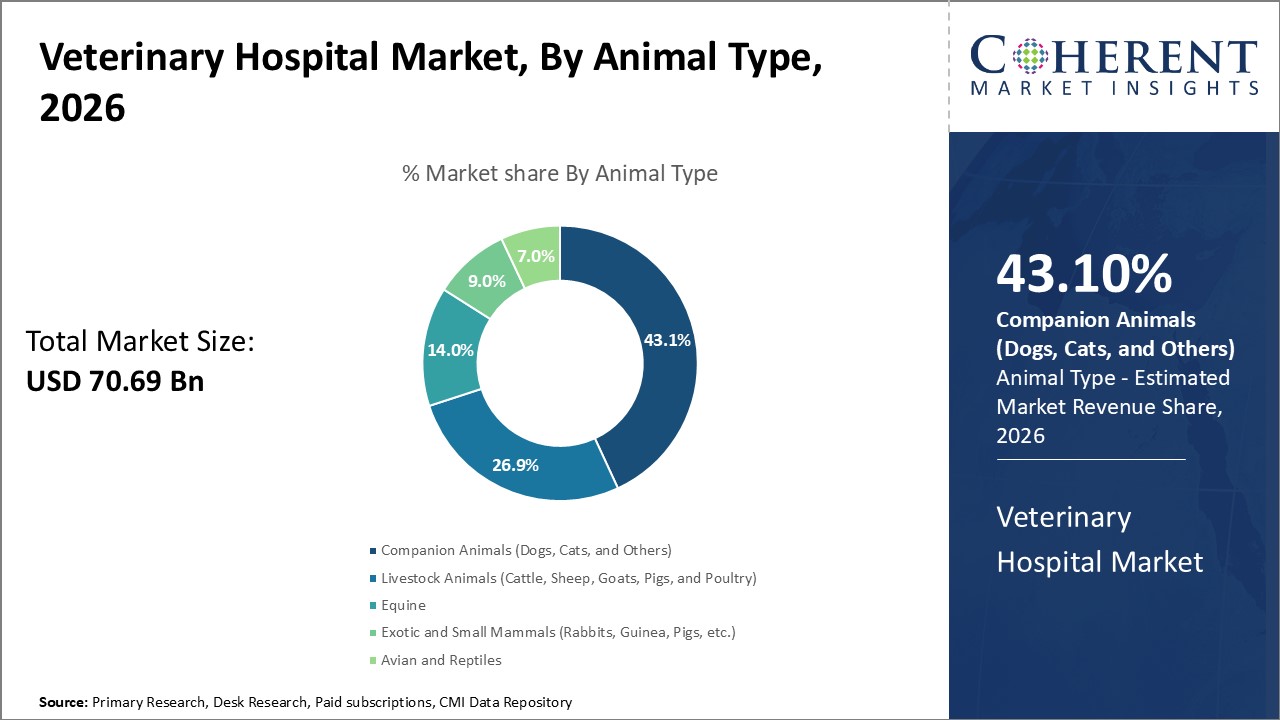
- By animal type, the companion animals (dogs, cats, and others) segment is expected to capture 43.1 % share in 2026.
- On the basis of ownership model, the private veterinary hospitals segment is projected to hold 33.3% share in 2026.
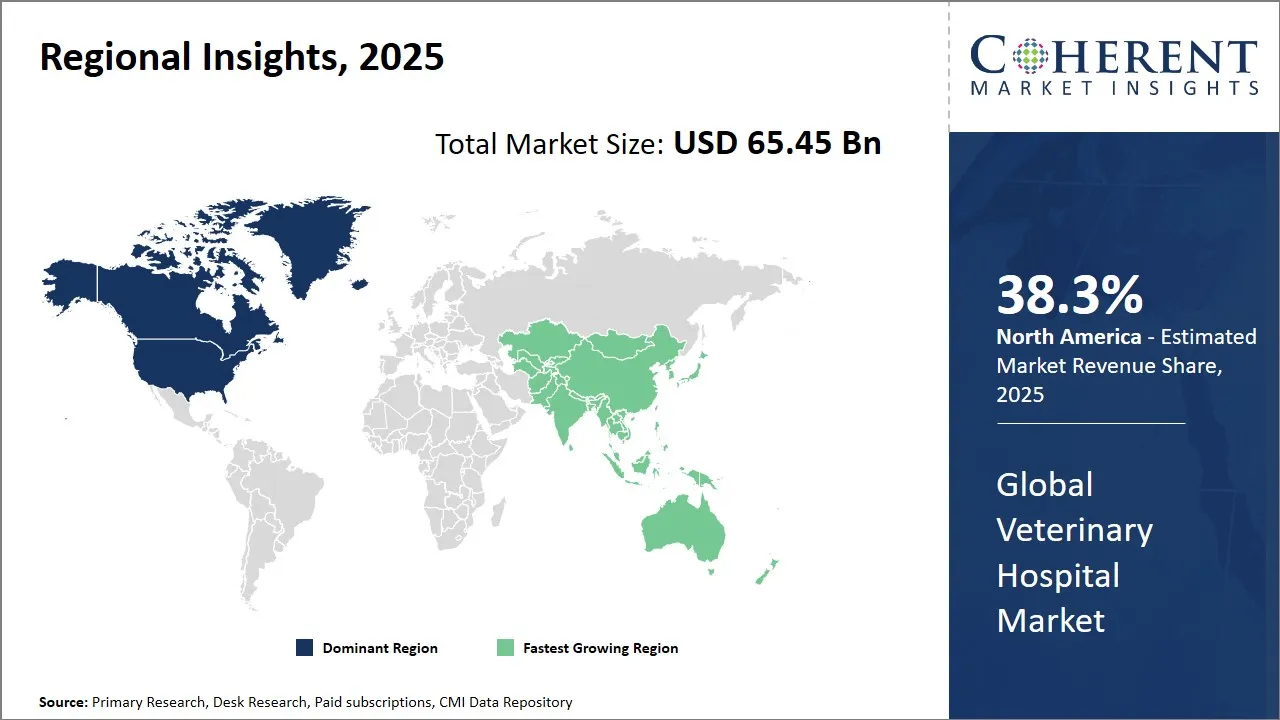
- North America is expected to lead the market, holding a share of 38.3% in 2026. Asia Pacific is anticipated to be the fastest-growing region, with an expected market share of 25.2% in 2026.
Market Overview
Current market trends indicate a shift towards specialized veterinary services and advanced diagnostic technologies, including telemedicine and AI-driven solutions, enhancing the efficiency and quality of animal care. Additionally, the growing the demand for pet insurance and wellness programs is propelling investment in veterinary infrastructure. Sustainability and preventive healthcare are also gaining traction, further shaping the evolution of the veterinary hospital sector globally.
Current Events and Its Impact
Current Events | Description and its Impact |
Strategic Collaborations and Hospital Expansions |
|
Advancements in Veterinary Technology and AI Integration |
|
Segmental Insights
- Current Industry Events of 2026
- Market Size Estimation
- Regional Breakdown
- Competitive Landscape
- Customer Intelligence
- Segmental Analysis
- Pricing Analysis
- Key Market Drivers, Challenges & Future Trends
- Customized Insights Section
Veterinary Hospital Market Insights, by Service Type - Comprehensive Preventive Care Drives Dominance of General Health Check-ups Segment
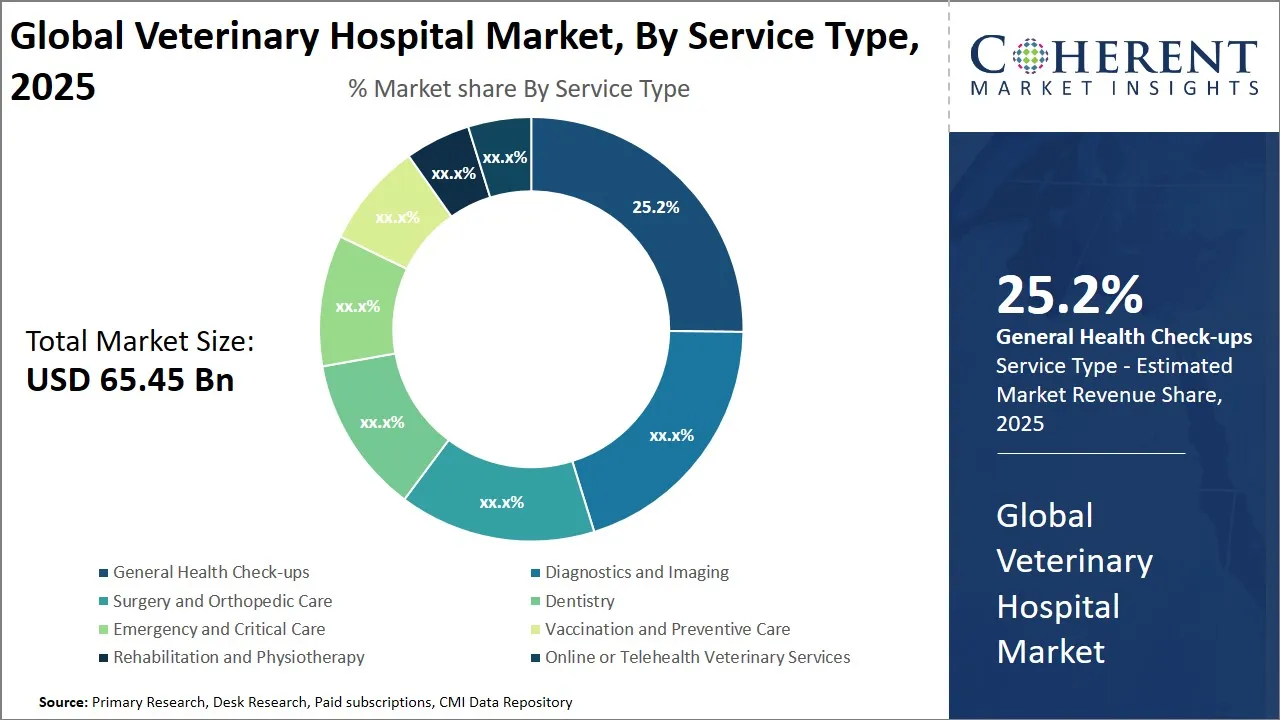
The general health check-ups segment is projected to account for 26.2% share in 2026, driven by the increasing emphasis on preventive healthcare among pet owners and livestock handlers alike. Routine health screenings are pivotal in early disease detection and overall maintenance of animal well-being, reducing the risk of severe illnesses that demand intensive intervention. As public awareness grows about the importance of preventive care, the demand for regular veterinary examinations has escalated, particularly for companion animals.
Moreover, the rising trend of pet humanization has significantly fueled this segment's growth. Pet owners consider their animals family members and prioritize their health, routinely seeking wellness visits to maintain optimal health. These health check-ups commonly include physical examinations, blood work, parasite screenings, and nutritional counseling, making them fundamental within veterinary care portfolios. For livestock animals, general health check-ups are essential for monitoring herd health, improving productivity, and preventing the outbreak of contagious diseases, which can lead to economic losses in agriculture.
Veterinary Hospital Market Insights, by Animal Type - Companion Animals (dogs, cats, and others) Lead the Market Share Fueled by Urbanization and Pet Ownership Patterns
The companion animals (dogs, cats, and others) segment is expected to capture 43.1% share in 2026. This trend reflects broader demographic and social shifts, including increasing urbanization, rising disposable incomes, and changing lifestyles that favor pet adoption as a source of companionship and emotional support.
Urban populations, particularly in developed and emerging economies, drive heightened the demand for veterinary services tailored to companion animals. Pet ownership patterns have shifted towards smaller animals, such as dogs and cats, which are well-suited for urban living. These animals require continuous medical attention ranging from routine preventive care to treatment for injuries or illnesses that can arise in a domestic environment.
Veterinary Hospital Market Insights, by Ownership Model - Private Veterinary Hospitals Dominate Due to Service Diversity and Customer-Centric Care Models
The private veterinary hospitals segment is projected to hold 33.3% share in 2026, due to their ability to offer diversified and customer-focused veterinary services. Private hospitals often provide a comprehensive range of specialized treatments and advanced diagnostics that cater to the evolving the demands of pet owners and animal caregivers, distinguishing them from other ownership models.
One key growth driver is the flexibility and innovation found within the private veterinary sector. These hospitals typically invest significantly in state-of-the-art medical technologies and human resources, ensuring high-quality service delivery across multiple veterinary specialties such as surgery, dentistry, rehabilitation, and telehealth services.
In April 2025, Soulmates Vet Hospital, a new private multi-specialty veterinary facility founded by physician and animal lover Dr. Vijayalakshmi Kulgod, is set to open in Belagavi on April 27, 2025, coinciding with World Veterinary Day. Designed to bring comprehensive pet care under one roof, the hospital offers advanced diagnostics, modern surgical units, ICUs, and 24×7 emergency services for dogs and cats. Positioned as a first-of-its-kind full-service center in North Karnataka and South Maharashtra, the launch reflects the rising the demand for quality veterinary services and highlights the growing intersection of animal healthcare with the broader veterinary hospital market.
Veterinary Hospital Policies and Reimbursement Trends
- Veterinary hospitals today are balancing the need to deliver advanced, high-quality care with transparent financial policies that help clients manage costs. Institutions like the University of Florida Veterinary Hospitals emphasize structured payment systems, requiring upfront deposits for admissions and full payment for outpatient services, while private hospitals such as Stoney Brook Veterinary Hospital provide flexible options through credit cards, CareCredit, and Scratchpay. These approaches ensure hospitals can maintain premium facilities, cutting-edge equipment, and skilled staff, while still offering pet owners accessible pathways to cover expenses.
- In July 2025, CareVet, a veterinary practice management company with over 200 hospitals across the U.S., partnered with Scratch Financial, a fintech provider specializing in payment solutions, to upgrade in-hospital payment processing across its network. The collaboration introduces streamlined tools, flexible payment options, and secure transactions that ease administrative work and improve client experience, allowing staff to focus more on patient care.
- Alongside these payment structures, reimbursement through pet insurance is becoming increasingly important. Many hospitals encourage owners to enroll with providers like Trupanion, Embrace, FIGO, Hartville, and Nationwide, which reimburse clients directly after treatment. This model allows hospitals to receive timely payment for services while giving pet owners a safety net against rising veterinary costs. Much like trends seen in the veterinary hospital market, the integration of insurance and financing tools reflects a broader shift toward sustainable healthcare access, where affordability and innovation go hand in hand.
Regional Insights
North America Veterinary Hospital Market Analysis and Trends
North America region is projected to lead the market with a 38.3% share in 2026, driven by a well-established veterinary healthcare infrastructure, a high pet ownership rate, and increased spending on animal healthcare. The region benefits from a comprehensive market ecosystem featuring advanced veterinary services, innovative medical technologies, and significant R&D investments. Supportive government policies, such as subsidies for animal health improvement and rigorous animal health regulations, also expedite adoption of cutting-edge treatments and pharmaceuticals.
The U.S., in particular, houses many of the leading veterinary hospital chains and technology providers, including Banfield Pet Hospitals, VCA Inc., and IDEXX Laboratories, which contribute substantially to market innovation and service penetration. The presence of numerous veterinary colleges and research institutes facilitates continuous talent flow and technological advancements. Moreover, strategic partnerships and mergers among players in the U.S. and Canada further consolidate their market leadership.
Asia Pacific Veterinary Hospital Market Analysis and Trends
Asia Pacific exhibits the fastest growth in the veterinary hospital market due to rising pet ownership with 25.2% in 2026, increasing disposable incomes, and growing awareness about animal health and wellness. The expanding middle class in countries like China and India is driving the demand for professional veterinary services. The market ecosystem is evolving rapidly, with greater private sector participation and growing investments in veterinary infrastructure. Government initiatives aimed at improving livestock health and controlling zoonotic diseases bolster the hospital segment. Trade dynamics such as imports of veterinary equipment and pharmaceuticals enhance service quality and availability.
In June 2021, Pune Zilla Parishad the district authority announced that the government veterinary polyclinic on Aundh Road will be upgraded into a super specialty veterinary hospital at a total investment of about USD 0.94 million including nearly USD 922,000 for infrastructure and USD 15,800 for staffing; the new facility will feature CT scan MRI laparoscopy sonography inpatient care and both large and small operation theatres to provide advanced treatment for big animals like cattle and horses as well as pets such as dogs and cats under one roof.
Global Veterinary Hospital Market Outlook for Key Countries
U.S. Veterinary Hospital Market Analysis and Trends
The U.S. veterinary hospital market remains at the forefront due to high pet healthcare expenditure and a robust network of veterinary specialists and multi-specialty hospitals. Dominant players like Banfield Pet Hospitals, VCA Inc., and Mars Petcare have extensive hospital chains offering advanced surgical and diagnostic services. Substantial investment in veterinary education and innovation, alongside a strong regulatory framework, supports sustained market evolution. The adoption of digital health records and telehealth services is also prominent, improving veterinary care efficiency.
In September 2022, VCA Animal Hospitals one of the largest veterinary hospital chains in the U.S. launched its first urgent care clinic in the Mar Vista area of Los Angeles with plans to open 17 more locations across Arizona Southern California Colorado and Texas the following year and eventually expand to 100 sites nationwide focusing on same-day and next-day treatment for non-life-threatening pet health issues.
China Veterinary Hospital Market Analysis and Trends
China veterinary hospital market is rapidly expanding propelled by increasing urban pet ownership and government-backed animal health programs targeting food safety and disease control. Key players such as Sinovac Biotech and Ceva Santé Animale are introducing veterinary vaccines and therapeutics adapted for local needs. The rise of veterinary service startups, combined with technology adoption like AI diagnostics and online consultation, is transforming market accessibility.
In January 2026, Joy Pet Hospital, founded by entrepreneur Yang Zhong in Hangzhou, quickly grown into a network of over 30 hospitals across cities like Shanghai and Ningbo, employing around 400 staff and treating more than 100,000 pets. The expansion reflects China’s booming pet economy, where dogs and cats increasingly outnumber infants and toddlers, driven by aging populations and younger adults choosing pets over parenthood.
Germany Veterinary Hospital Market Analysis and Trends
Germany continues to lead the Europe veterinary hospital market due to the country’s strong veterinary education infrastructure and a well-regulated market environment. Established firms such as IDEXX Laboratories and VetPlus contribute significantly through the provision of diagnostics and specialty pharmaceuticals. Germany’s focus on preventive care and animal welfare enhances the demand for specialized veterinary hospital services. The integration of technology-driven healthcare solutions further advances market capabilities.
On August 01, 2026, Mars Inc., a global leader in food and pet care, rolled out recyclable mono polypropylene pouches for its WHISKAS cat food brand in the UK and Germany, replacing hard-to-recycle multi-material packs. First launched with the WHISKAS Tasty Mix Country Collection 12 Pack at UK retailers and Germany’s Rewe, the new design cuts carbon footprint by 46% while supporting modern recycling systems. This move strengthens Mars’ sustainability push, aligning with rising eco-friendly practices in the pharmaceutical market and reflecting growing the demand from pet owners and veterinary hospitals for responsible, health-focused solutions.
India Veterinary Hospital Market Analysis and Trends
India veterinary hospital market is on the rise, underpinned by growing awareness about pet and livestock health amid increasing economic prosperity. The government’s push for improved livestock productivity and animal disease control programs fuels expansion. Emerging players and veterinary chains are focusing on enhancing quality and accessibility in urban and rural segments. Collaborations with international pharmaceutical companies and growing use of telemedicine platforms are notable trends contributing to the market growth.
In February 2024, Tata Trusts led by industrialist Ratan Tata one of India’s most respected philanthropists announced the launch of a 1.65 billion Small Animal Hospital in Mahalaxmi Mumbai inspired by his own struggle to treat a pet dog; spanning 98,000 sq ft with five floors and over 200 beds it is set to be India’s largest 24x7 facility for cats dogs rabbits and other small animals with intensive care services and is slated to open in March 2024.
Market Players, Key Developments, and Competitive Intelligence
Key Developments
- On August 29, 2025, BMC, the civic body of Mumbai, announced plans to develop a 100-bed veterinary hospital in Malad in partnership with the Shrimad Rajchandra Jivdaya Trust under a public-private model. This advanced facility, expected to be operational within two years, will span 2,240 sq m and include amenities like X-ray and MRI diagnostics, surgical and ICU suites, a small animal crematorium, a stray animal shelter, veterinary training center, and on-campus housing for staff.
- In July 2025, Zigly, a tech-enabled omnichannel pet care brand from Cosmo First Limited and known as India’s first integrated platform for all pet needs, launched its first pet hospital and experience center in Mumbai by acquiring the Small Animal Clinic & Surgical Centre in Khar West and converting it into a full-fledged Zigly ecosystem; the 1,520 sq. ft. facility now offers consultations, diagnostics, surgeries, pharmacy, grooming, and specialized veterinary care, marking a major step in Zigly’s Western India expansion and strengthening its mission to provide complete pet healthcare under one roof.
- In July 2025, Pune Municipal Corporation PMC, the civic body responsible for managing Pune’s urban infrastructure and services, announced plans to establish a new 10,000 sq ft veterinary hospital in Bhugaon after an earlier project in Hadapsar stalled; the facility will provide 24x7 treatment for stray animals free of cost and offer affordable services for pet owners, with operations handed to a private agency for 30 years, marking a major step in expanding accessible veterinary care in the city.
- In July 2025, DCC Animal Hospital, a global chain known for world-class veterinary services and Japanese-standard facilities launched its first hospital in Jaipur at the IDB Building in Gayatri Nagar Durgapura offering advanced surgical care preventive health solutions diagnostics and lifestyle services for pets; led by Head Veterinarian and Director Dr Vinod Sharma the expansion marks a strategic move to bring high-quality pet healthcare to Jaipur’s growing community of pet parents.
Top Strategies Followed by Global Veterinary Hospital Market Players
- The competitive landscape of the global veterinary hospital market is characterized by a dynamic interplay of players across various scales, each adopting distinct strategies to strengthen their market footprint. Established players in this sector typically lead the industry through significant investments in research and development (R&D), aiming to innovate high-performance products and services that meet the evolving needs of veterinary care. These companies prioritize advancements in diagnostics, treatment technologies, and animal health monitoring tools, thereby maintaining their competitive edge.
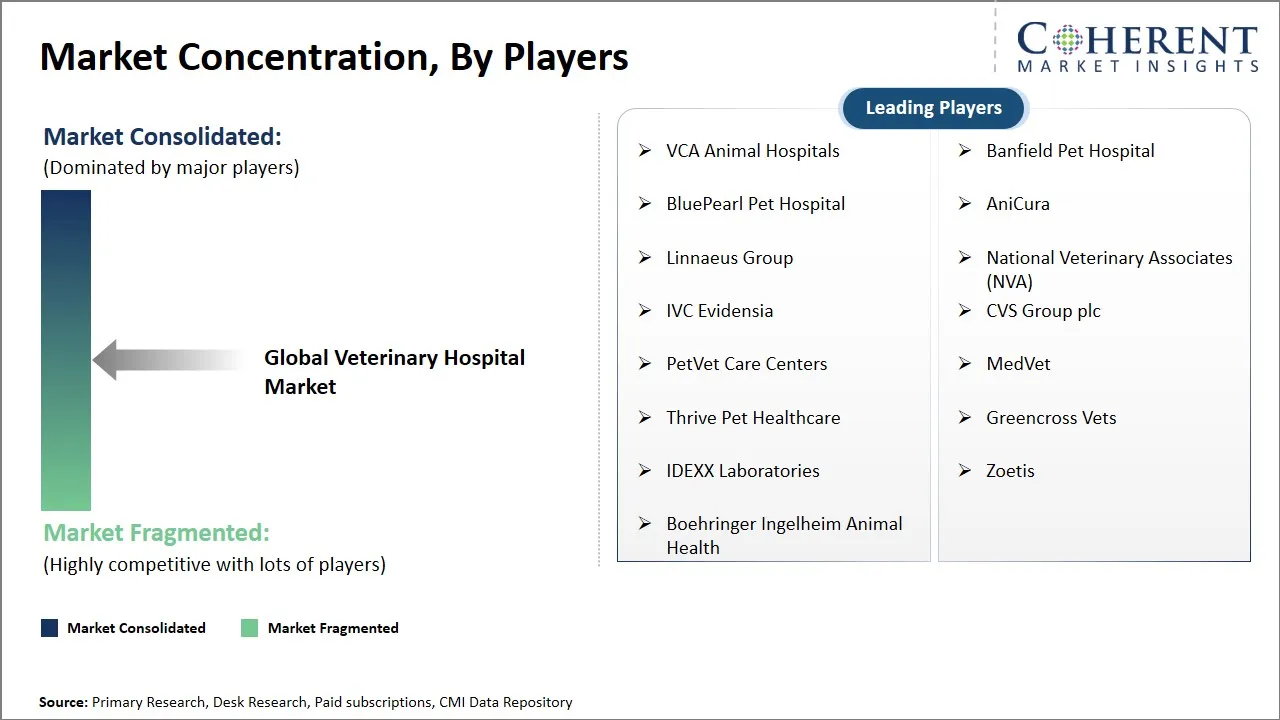
- For established players, companies such as Mars Petcare (Banfield Pet Hospitals, VCA Animal Hospitals) and IDEXX Laboratories stand out. Mars Petcare dominates through its expansive network of veterinary hospitals and ongoing R&D investments in diagnostics and treatment services. IDEXX, on the other hand, drives innovation with advanced veterinary diagnostic solutions, laboratory services, and health monitoring technologies, reinforcing its global leadership position.
- Mid-level players in the veterinary hospital market adopt a more balanced approach, focusing primarily on delivering cost-effective solutions that strike a careful balance between quality and affordability. These companies target price-sensitive consumer segments, such as small veterinary clinics and rural markets, where budget constraints influence purchasing decisions. To enhance their competitiveness without compromising quality, mid-level firms often leverage collaborations and alliances to boost production capabilities, enhance technology access, and extend their market presence.
- Among mid-level players, companies like Greencross Vets (Australia) and National Veterinary Associates (U.S.) adopt strategies focused on affordability and accessibility while maintaining quality. Greencross Vets has built a strong regional network by offering standardized, cost-effective veterinary services. National Veterinary Associates targets community-based practices, leveraging alliances and acquisitions to expand reach, especially in suburban and rural markets where price sensitivity is more pronounced.
- Small-scale players in the global veterinary hospital market distinguish themselves by carving out niche segments that emphasize specialized features or innovative products tailored to specific veterinary needs. These companies often adopt cutting-edge technologies such as telemedicine platforms, AI-driven diagnostic tools, and portable monitoring devices to stay competitive and meet the demands of modern veterinary practices.
- For small-scale players, examples include TeleVet and Vetster, both of which emphasize telemedicine and digital health solutions to carve out a niche. Startups such as AirVet or regional clinic networks in emerging markets provide localized, technology-enabled care that meets specific demands like remote consultations and portable diagnostic tools. These companies highlight how smaller firms can differentiate by focusing on innovation and agility, often collaborating with local service providers to enhance adoption and visibility.
Market Report Scope
Veterinary Hospital Market Report Coverage
| Report Coverage | Details | ||
|---|---|---|---|
| Base Year: | 2025 | Market Size in 2026: | USD 70.69 Bn |
| Historical Data for: | 2020 To 2024 | Forecast Period: | 2026 To 2033 |
| Forecast Period 2026 to 2033 CAGR: | 8.0% | 2033 Value Projection: | USD 121.14 Bn |
| Geographies covered: |
| ||
| Segments covered: |
| ||
| Companies covered: | VCA Animal Hospitals, Banfield Pet Hospital, BluePearl Pet Hospital, AniCura, Linnaeus Group, National Veterinary Associates (NVA), IVC Evidensia, CVS Group plc, PetVet Care Centers, MedVet, Thrive Pet Healthcare, Greencross Vets, IDEXX Laboratories, Zoetis, and Boehringer Ingelheim Animal Health | ||
| Growth Drivers: |
| ||
| Restraints & Challenges: |
| ||
Veterinary Hospital Market Dynamics
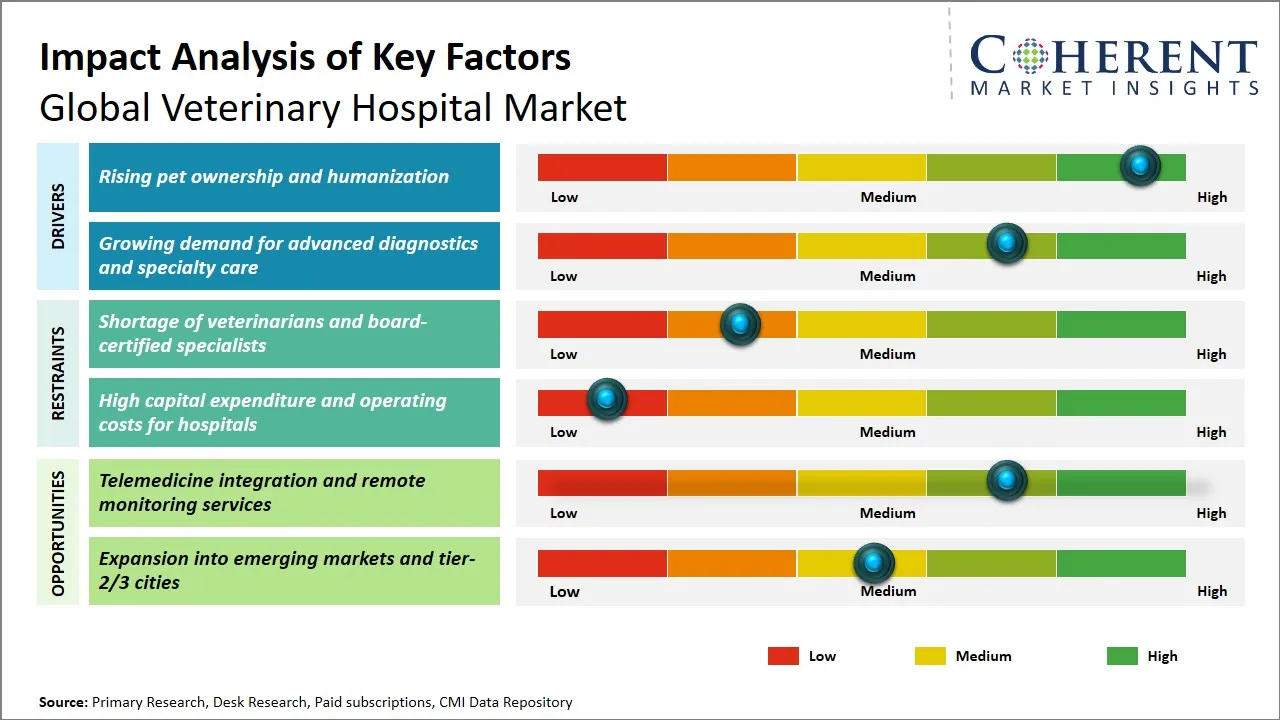
Veterinary Hospital Market Driver - Rising Pet Ownership and Humanization
The increasing trend of pet ownership across both urban and rural areas is significantly fueling the demand for veterinary hospital services. As pets are increasingly regarded as integral family members rather than mere animals, the humanization of pets has led owners to seek higher standards of healthcare for their companions. This evolving relationship fosters a greater willingness to invest in advanced medical treatments, preventive care, and wellness programs tailored specifically for various pets’ needs. Pet owners are now more informed and conscious of maintaining their pets’ health, which drives frequent visits to veterinary hospitals and clinics.
In June 2024, the American Pet Products Association (APPA) released its 2025 State of the Industry Report, revealing a surge in pet ownership across the U.S. In 2024, U.S. pet industry expenditures reached USD 152 billion, with projections of USD 157 billion for 2025. Pet ownership continues to expand, now reaching 94 million U.S. households, up from 82 million in 2023. Gen Z is leading the charge, with 43.5% more Gen Z households owning pets in 2024, and a strong trend towards multi-pet ownership.
Veterinary Hospital Market Opportunity - Telemedicine Integration and Remote Monitoring Services
The global veterinary hospital market stands to benefit significantly from the integration of telemedicine and remote monitoring services, presenting a pivotal growth opportunity. With increasing pet ownership worldwide and rising awareness about animal health, veterinary hospitals are compelled to adopt innovative solutions that enhance accessibility and continuous care. Telemedicine enables veterinarians to offer consultations, follow-ups, and diagnostics remotely, breaking geographical barriers and addressing the demand from pet owners for convenient, timely care. This technology also facilitates early detection of health issues through remote monitoring devices, such as wearable sensors that track vital signs and behavioral changes in animals. These capabilities not only improve treatment outcomes but also reduce hospital readmissions and operational costs.
In October 2024, Mella Pet Care a Chicago-based startup known for its smart pet health devices, partnered with Vetster a leading veterinary telemedicine platform to integrate remote health monitoring with 24/7 online consultations across the US Canada and UK a collaboration that not only advances digital care but also strengthens the role of Veterinary Hospitals and the pharmaceutical market in creating more connected accessible and technology-driven healthcare solutions for pets.
Analyst Opinion (Expert Opinion)
- The global veterinary hospital market continues to evolve as advancements in diagnostic imaging, surgical techniques, and digital health platforms improve clinical outcomes and expand service accessibility. Growing pet ownership, coupled with a rising awareness of animal health and welfare, is driving steady the demand across developed and emerging regions. Supportive regulations around veterinary standards, increasing investments in animal healthcare infrastructure, and the integration of telemedicine and AI-powered diagnostic tools are creating new opportunities. However, the industry still faces challenges such as the shortage of skilled veterinary professionals, uneven distribution of advanced facilities between urban and rural regions, and cost pressures associated with high-end equipment. Over the past few years, events such as the World Veterinary Congress and the International Veterinary Emergency and Critical Care Symposium have played an important role in sharing research, shaping global best practices, and showcasing new technologies for hospitals and clinics.
- On the ground, collaborations between companies and veterinary platforms are also reshaping the market landscape. For example, partnerships like Mella Pet Care with Vetster to integrate connected devices into virtual veterinary consultations, or Mars Veterinary Health’s expansion of specialty and emergency hospitals, highlight the shift toward integrated, tech-enabled care. Governments in markets such as the U.K. and Canada have rolled out programs supporting animal welfare and digital adoption in veterinary services, while pilot projects in Asia are testing tele-triage systems for livestock and pets to bridge access gaps. Together, these initiatives, policies, and industry collaborations are expected to shape a more connected and resilient veterinary hospital ecosystem in the coming years.
Speak to the analyst
Want personalized insights?
Take the findings above to one of our principal consultants, or have the report rebuilt around the segments, geographies and competitors you actually track.
Market Segmentation
- Service Type Insights (Revenue, USD Bn, 2021 - 2033)
- General Health Check-ups
- Diagnostics and Imaging
- Surgery and Orthopedic Care
- Dentistry
- Emergency and Critical Care
- Vaccination and Preventive Care
- Rehabilitation and Physiotherapy
- Online or Telehealth Veterinary Services
- Animal Type Insights (Revenue, USD Bn, 2021 - 2033)
- Companion Animals (Dogs, Cats, and Others)
- Livestock Animals (Cattle, Sheep, Goats, Pigs, and Poultry)
- Equine
- Exotic and Small Mammals (Rabbits, Guinea, Pigs, etc.)
- Avian and Reptiles
- Ownership Model Insights (Revenue, USD Bn, 2021 - 2033)
- Private Veterinary Hospitals
- Public or Government Veterinary Hospitals
- University or Teaching Veterinary Hospitals
- Non-profit or Charity Veterinary Hospitals
- Facility Size Insights (Revenue, USD Bn, 2021 - 2033)
- Small-scale Veterinary Hospitals (1–10 beds)
- Medium-scale Veterinary Hospitals (11–50 beds)
- Large-scale Veterinary Hospitals (51+ beds)
- End User Insights (Revenue, USD Bn, 2021 - 2033)
- Pet Owners
- Government Agencies and NGOs
- Veterinary Research and Academia
- Others
- Regional Insights (Revenue, USD Bn, 2021 - 2033)
- North America
- U.S.
- Canada
- Latin America
- Brazil
- Argentina
- Mexico
- Rest of Latin America
- Europe
- Germany
- U.K.
- Spain
- France
- Italy
- Russia
- Rest of Europe
- Asia Pacific
- China
- India
- Japan
- Australia
- South Korea
- ASEAN
- Rest of Asia Pacific
- Middle East
- GCC Countries
- Israel
- Rest of Middle East
- Africa
- South Africa
- North Africa
- Central Africa
- North America
- Key Players Insights
- VCA Animal Hospitals
- Banfield Pet Hospital
- BluePearl Pet Hospital
- AniCura
- Linnaeus Group
- National Veterinary Associates (NVA)
- IVC Evidensia
- CVS Group plc
- PetVet Care Centers
- MedVet
- Thrive Pet Healthcare
- Greencross Vets
- IDEXX Laboratories
- Zoetis
- Boehringer Ingelheim Animal Health
Sources
Primary Research Interviews
- Industry Stakeholders List
- Veterinary hospital administrators
- Practicing veterinarians
- End Users List
- Pet owners
- Livestock farmers
Government and International Databases
- World Health Organization (WHO)
- Food and Agriculture Organization (FAO)
- World Organization for Animal Health (WOAH/OIE)
- U.S. Department of Agriculture (USDA)
- European Medicines Agency (EMA)
- Indian Ministry of Fisheries, Animal Husbandry & Dairying
Trade Publications
- Veterinary Practice News
- Clinician’s Brief
- The Veterinary Record
- DVM360 Magazine
- Veterinary Times
- JAVMA News
Academic Journals
- Journal of the American Veterinary Medical Association (JAVMA)
- BMC Veterinary Research
- Veterinary Medicine and Science
- Frontiers in Veterinary Science
- Preventive Veterinary Medicine
- Journal of Small Animal Practice
Reputable Newspapers
- The New York Times
- The Guardian
- The Times of India
- The Washington Post
- The Hindu
- Financial Times
Industry Associations
- American Veterinary Medical Association (AVMA)
- Federation of Veterinarians of Europe (FVE)
- British Veterinary Association (BVA)
- World Small Animal Veterinary Association (WSAVA)
- Canadian Veterinary Medical Association (CVMA)
- Australian Veterinary Association (AVA)
Public Domain Resources
- United Nations Statistics Division (UNSD)
- OECD Statistics
- World Bank Open Data
- Eurostat
- National Center for Biotechnology Information (NCBI)
Proprietary Elements
- CMI Data Analytics Tool: Proprietary analytics tool to analyze real-time market trends, consumer behavior, and technology adoption in market
- Proprietary CMI Existing Repository of Information for Last 8 Years
Get access to 250+ pages report
Every segment, forecast, competitor profile and data table behind the analysis above — available for instant download.
- ESOMAR Member
- ISO 9001:2015 Certified
- D-U-N-S Registered
- GDPR & CCPA Compliant
Missing comfort of reading report in your local language? Find your preferred language:
Transform your Strategy with Exclusive Trending Reports
Frequently Asked Questions
The global veterinary hospital market is estimated to be valued at USD 70.69 Bn in 2026 and is expected to reach USD 121.14 Bn by 2033.
The CAGR of the global veterinary hospital market is projected to be 8.0% from 2026 to 2033.
Rising pet ownership and humanization and growing demand for advanced diagnostics and specialty care are the major factors driving the growth of the global veterinary hospital market.
Shortage of veterinarians and board-certified specialists and high capital expenditure and operating costs for hospitals are the major factors hampering the growth of the global veterinary hospital market.
In terms of service type, the general health check-ups segment is estimated to dominate the market revenue share in 2026.
Telehealth is expected to complement in-person care, especially for follow-ups, preventive advice, and minor ailments.
Hospitals are integrating telehealth, AI-driven diagnostics, and preventive care models to meet modern pet parent needs.