

Clinical Laboratory Services Market Analysis & Forecast
The global clinical laboratory services market is estimated to be valued at USD 319.49 Bn in 2026 and is expected to reach USD 509.69 Bn by 2033, exhibiting a compound annual growth rate (CAGR) of 6.9% from 2026 to 2033.
Key Takeaways
- Based on the Test Type, the Clinical Chemistry segment dominates the market due to widespread diagnostic applications.
- Based on the Service Provider, the Hospital-Based Laboratories segment dominates the market due to advantages in scale and clinical integration.
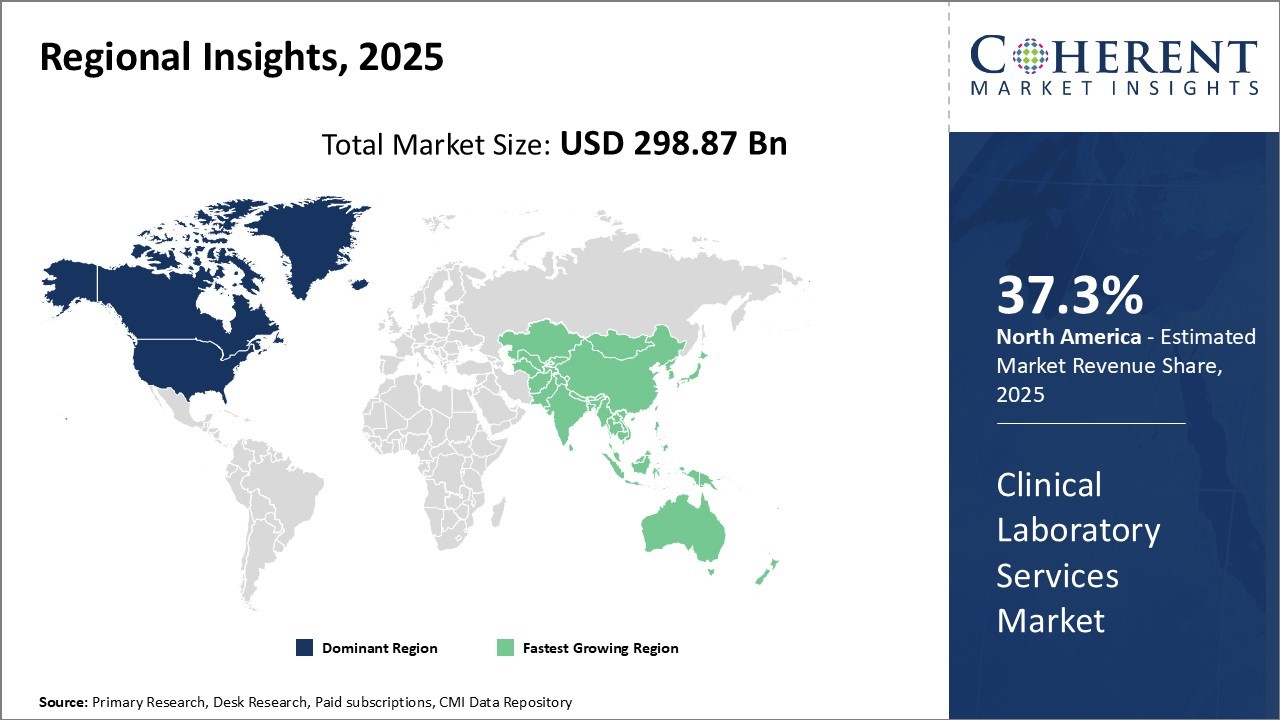
- Based on Region, North America dominates the global clinical laboratory services market with an estimated market share of 36.8% in 2026.
Market Overview
The rise in the clinical laboratory services market is driven by the increasing demand for early disease diagnosis and personalized treatment, especially with the surge in chronic and infectious diseases. Additionally, favorable government initiatives and growing health awareness, and accelerating routine health checkups and preventive testing.
Current Events and Their Impact on the Clinical Laboratory Services Market
Current Events | Description and its impact |
US Regulatory Shifts for Laboratory-Developed Tests (LDTs) |
|
EU IVDR Implementation Challenges |
|
Life Sciences M&A Reshaping Service Demands |
|
Supply Chain Disruptions Impacting Operations |
|
End Use Application for Clinical Laboratory Services
- Disease Diagnosis and Monitoring: Primary application for identifying infections, for example, HIV, influenza, and chronic conditions like diabetes, cardiovascular diseases, and cancers. It includes routine blood tests, urinalysis, and advanced molecular diagnostics.
- Drug Development and Clinical Trials: Labs support pharmaceutical and biotech companies with biomarker testing, PK/PD assays, and genetic profiling. It is used for critical patients' stratification and efficacy monitoring in clinical research.
- Personalized and Precision Medicine: Uses of genomic, proteomic, and metabolomic testing to tailor treatments to individual patient profiles, for example, companion for oncology and targeted therapies.
- Preventive Health Screening: Population-level testing for early detection of risk factors, for example, cholesterol, blood sugar genetic predispositions. It includes wellness programs by employers and insurance providers.
- Current Industry Events of 2026
- Market Size Estimation
- Regional Breakdown
- Competitive Landscape
- Customer Intelligence
- Segmental Analysis
- Pricing Analysis
- Key Market Drivers, Challenges & Future Trends
- Customized Insights Section
End-user Feedback and Unmet Needs in the Clinical Laboratory Services Market
End user Feedback
- Demand for Faster Turnaround Time (TAT): Physicians and hospitals frequently express dissatisfaction with delays in receiving diagnostic results, particularly in rural and low-resource settings.
- Desire for an Integrated Digital Platform: Healthcare providers prefer labs that offer electronic health record (EHR) integration and real-time test tracking, but many labs still lack interoperability.
- Concerns Over Accuracy & Consistency: Inconsistent results across laboratories, especially for advanced molecular or genetic tests, lead to distrust and repeated testing.
Unmet Needs
- Access in Tire ⅔ Cities & Rural Areas : There is a clear service gap in diagnostics accessibility beyond urban centers, limiting early detection and disease management.
- Personalized Testing Solutions: There’s a growing unmet need for tailored diagnostic panels, for example, oncology, prenatal, and pharmacogenomics, that align with patient-specific risk profiles.
- Standardization & Accreditation: Many labs lack global or national quality accreditations, for example, CAP, NABL, raising concerns about result reliability and quality control.
Role of Artificial Intelligence (AI) in Clinical Laboratory Services Market
In October 2024, GE HealthCare launched its AI Innovation Lab to accelerate early-stage AI developments in medical devices, digital tools, and clinical workflows. A key focus of this initiative is advancing the role of AI in clinical laboratory services—improving diagnostic accuracy, automating routine tasks, and optimizing lab operations. The lab supports GE HealthCare’s broader strategy to integrate AI across the healthcare continuum, aiming to enhance clinical decision-making, increase efficiency, and improve patient outcomes.
Segmental Insights
Clinical Laboratory Services Market Insights, By Test Type
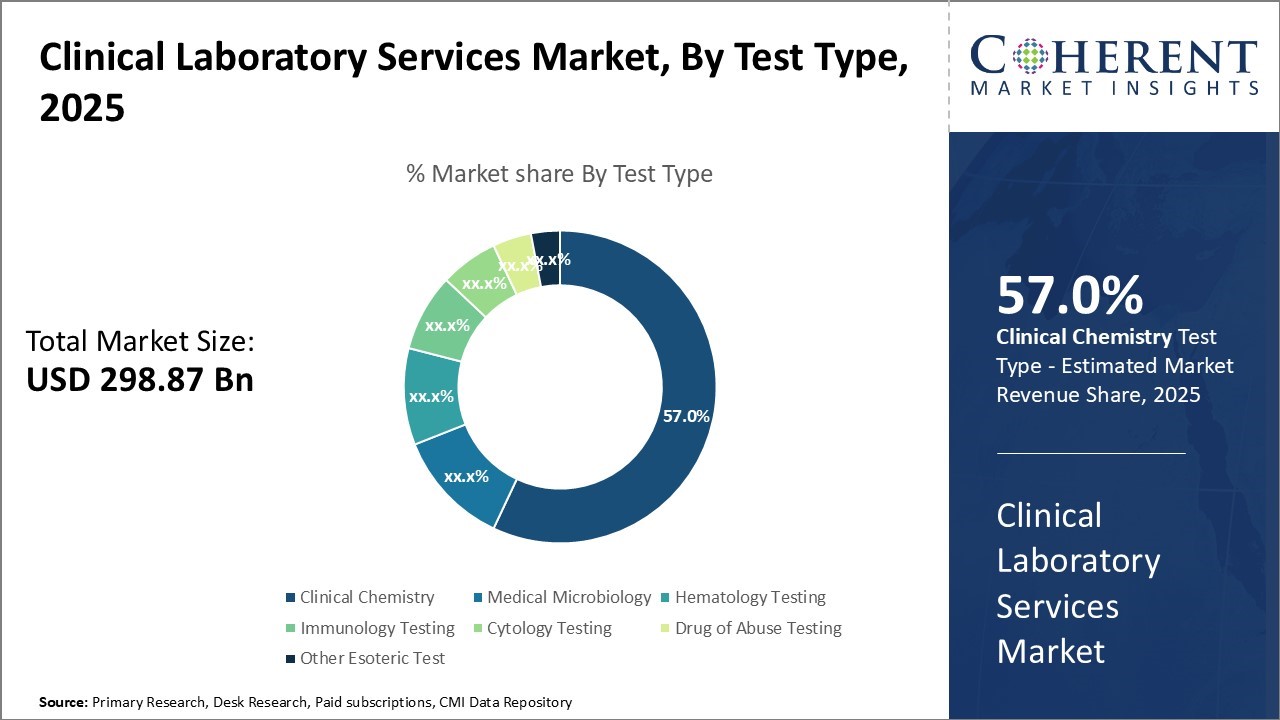
The Clinical Chemistry segment dominates the market due to widespread diagnostic applications
By test type, the clinical chemistry segment is estimated to contribute the highest market share of 58.0% in 2026. Clinical chemistry testing analyzes blood and other body fluids for conditions affecting organs and systems throughout the body. It is one of the most frequently performed types of laboratories testing worldwide due to its ability to provide diagnostic insights into common disorders. Clinical chemistry tests evaluate kidney and liver function, analyze electrolyte and blood gas levels, detect enzyme abnormalities, and screen for metabolic conditions. Disorders of the cardiovascular, gastrointestinal, endocrine, and other major bodily systems can often be initially diagnosed or monitored through routine clinical chemistry panels. Tests like complete blood counts, basic metabolic panels, liver function tests, and lipid profiles have become standards of care in disease screening and management. The versatility of clinical chemistry in the diagnosis and treatment of conditions across multiple medical specialties boosts its demand. Clinical chemistry analyses are minimally invasive and produce rapid results.
Blood specimens are easily obtainable, and testing methods have advanced to enable automated, high-throughput processing. Laboratory instruments can perform dozens of individual clinical chemistry assays simultaneously from a single patient sample. For instance, Siemens Healthineers launched ATellica CI Analyzers, which are designed for both immunoassay and clinical chemistry testing, offering a compact solution to address laboratory challenges. This is further accelerating the clinical laboratory services market demand.
Clinical Laboratory Services Market Insights, By Service Provider
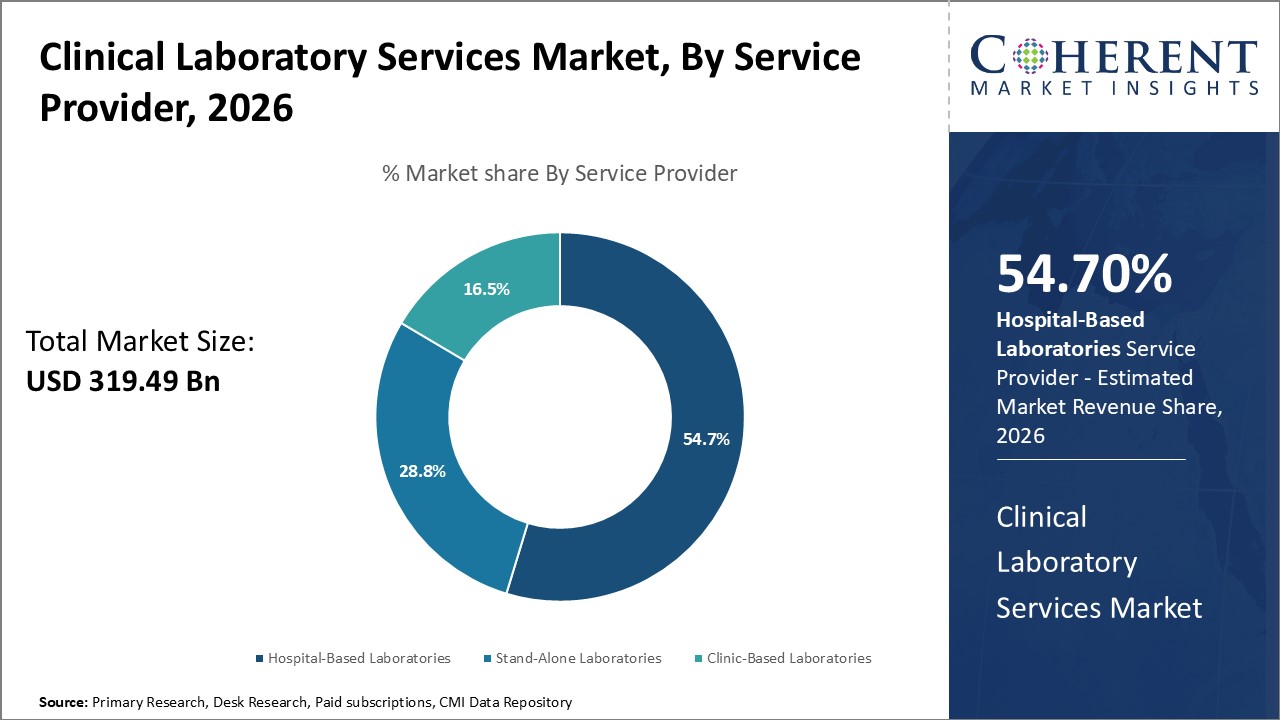
The Hospital-Based Laboratories segment dominates the market due to advantages in scale and clinical integration
By service provider, the hospital-based laboratories segment is estimated to contribute the highest market share of 54.7% in 2026. As the primary providers of diagnostic testing for hospitalized patients, these facilities leverage scale to optimize efficiency and offer the most extensive test menus. Hospital-based laboratories also benefit from close proximity to clinicians, thus allowing for rapid consultation, stat testing, and short turnaround times important for emergency cases. Physical co-location within healthcare facilities streamlines specimen collection, documentation, and result reporting essential for informed clinical decision making. With dedicated phlebotomy staff and courier services, hospital-based laboratories face fewer constraints than other providers in obtaining samples from scattered outpatient draw sites. Their scale enables investment in advanced technologies like robotic automation, large volume analyzers, and specialized modalities beyond the means of small operators.
Relations with hospital administrators and embeddedness in clinical workflow provide these facilities with negotiating leverage for favorable reimbursement. Many also derive sizable revenue from esoteric and genetic tests not widely accessible outside academic medical centers. For instance, Lupin Diagnostics opened a new regional reference lab in Chennai, expanding its network of 36 labs and 600+ collection centers across India.
Regional Insights
North America Clinical Laboratory Services Market Trends
North America dominates the global clinical laboratory services market with an estimated market share of 37.3% in 2026 due to the well-established healthcare infrastructure and presence of major industry players in the region. Advanced diagnostic technologies are highly adopted in this region due to the higher per capita healthcare spending of the consumers.
Moreover, the growing prevalence of chronic diseases such as cancer has boosted demand for early detection through laboratory tests. This has ensured steady cash flows for the clinical laboratories, encouraging further investments and expansion of their service portfolios. For instance, the U.S. LabNet launched mobile lab testing services. These units provide on-site testing at homes and workplaces, improving access to testing for individuals with mobility issues or time constraints.
Asia Pacific Clinical Laboratory Services Market Trends
Asia Pacific has emerged as the fastest-growing regional market for clinical laboratory services globally. Rapid economic development and growing healthcare expenditures have boosted healthcare infrastructure development across the Asia Pacific countries. Furthermore, rising medical tourism along with increasing public awareness about early diagnostic tests can drive the market growth.
Countries like China, India, and Japan exhibit high export demand for diagnostic services due to their large patient pools and improving recognition of worldwide accredited laboratories. However, pricing pressures stemming from regional regulatory policies and reimbursement scenarios continue to challenge new market entrants. For instance, Labcorp expanded its bioanalytical services in the Asia Pacific region with a new integrated laboratory in Singapore, aiming to support pharmaceutical and biotechnology companies.
United States Clinical Laboratory Services Market Trends
The rise in the United States clinical laboratory services market is driven by a surge in chronic disease prevalence, where nearly 60% of the U.S. adults have at least one chronic condition, fueling consistent diagnostic demand.
Widespread adoption of personalized medicine and companion diagnostics is pushing labs to offer more advanced molecular and genetic testing services. For instance, Neuberg Diagnostics launched its first clinical laboratory in the U.S. in North Carolina, which is focusing on genomic and molecular testing. Additionally, the adoption of advanced technologies like molecular diagnostics and AI-based testing solutions is enhancing accuracy and scalability. This is further accelerating the clinical laboratory services market in India.
India Clinical Laboratory Services Market Trends
The rise in India’s clinical laboratory services market is driven by increased healthcare awareness, expanding urban population, and a growing burden of chronic diseases such as diabetes and cardiovascular conditions. The surge in demand for preventive health checkups and early diagnostic infrastructure, especially in tier II and III cities.
For instance, in May 2026, Teddy Laboratory, a subsidiary of Tigermed, entered into a strategic partnership with LabConnect, LLC, a central laboratory services company. Under this agreement, Teddy Laboratory will serve as LabConnect’s preferred lab partner in China, delivering laboratory services that comply with international regulatory standards and supporting global pharmaceutical companies with clinical trials conducted in China.
Key Developments for Clinical Laboratory Services Market
- In April 2025, Scientist.com, an R&D procurement platform for life sciences, launched Clinical Labs Navigator™, a new tool designed to streamline the sourcing and management of clinical trial services. Created to meet the demand for more efficient, collaborative procurement, the platform simplifies engagement with CROs and replaces outdated processes.
- In March 2025, IQVIA Laboratories launched Site Lab Navigator where which suite that includes an eRequisition solution that allows investigator sites to submit requisitions and manage lab specimens electronically. This aims to reduce manual processes, minimize errors, and improve study execution.
- In February 2025, SK pharmteco, a global contract development and manufacturing organization (CDMO), unveiled an upgraded analytical testing laboratory focused exclusively on High Potency Active Pharmaceutical Ingredients (HPAPIs).
- In August 2024, LEAP Consulting Group launched a Practice to support clinical labs with compliance, including FDA regulations on laboratory-developed tests (LDTs).
Analyst Opinion (Expert Opinion)
- The rising adoption of point-of-care (POC) testing, especially in chronic disease management and infectious disease detection, is eroding the exclusive value proposition of centralized labs. For example, the U.S. saw a 23% YoY increase in POC HbA1c testing in primary care settings in 2024, driven by demand for faster diabetes diagnostics. Traditional labs like LabCorp and Quest Diagnostics must evolve toward hybrid models to retain relevance.
- Reimbursement bottlenecks are the biggest structural barrier to innovation adoption in the space. Despite the FDA approval of cutting-edge NGS-based tests, such as Guardant360 and FoundationOne CDx, CMS reimbursement delays are stifling clinical uptake, especially in oncology. In 2023, over 41% of oncology practices in the U.S. cited reimbursement uncertainty as the top reason for underutilization of advanced molecular diagnostics, which exposes the misalignment between regulatory progress and payer policies.
- Clinical labs are no longer just test processors; they are becoming data-driven care enablers, and few are ready for that leap. With the explosion of AI-based decision support tools, there is a growing expectation for labs to deliver not just results but actionable insights. Yet, a 2024 HIMSS survey showed that only 14% of U.S.-based labs had integrated clinical decision support systems (CDSS) or AI-based analytics. This digital immaturity is a strategic blind spot in an otherwise data-rich industry.
Speak to the analyst
Want personalized insights?
Take the findings above to one of our principal consultants, or have the report rebuilt around the segments, geographies and competitors you actually track.
Market Report Scope
Clinical Laboratory Services Market Report Coverage
| Report Coverage | Details | ||
|---|---|---|---|
| Base Year: | 2025 | Market Size in 2026: | USD 319.49 Bn |
| Historical Data for: | 2020 To 2024 | Forecast Period: | 2026 To 2033 |
| Forecast Period 2026 to 2033 CAGR: | 6.9% | 2033 Value Projection: | USD 509.69 Bn |
| Geographies covered: |
| ||
| Segments covered: |
| ||
| Companies covered: | Quest Diagnostics Incorporated, Sonic Healthcare, LabCorp (Laboratory Corporation of America Holdings), Bio-Reference Laboratories, Mayo Medical Laboratories, Eurofins Scientific, Synlab International GmbH, Mérieux NutriSciences, Cerba Healthcare, Unilabs, BioReliance (Merck KGaA), ACM Medical Laboratory, Adicon Clinical Laboratories, Arup Laboratories, Abbott Laboratories, Charles River Laboratories, Neogenomics Laboratories, Genomic Health | ||
| Growth Drivers: |
| ||
| Restraints & Challenges: |
| ||
Market Dynamics
Clinical Laboratory Services Market Growth Drivers
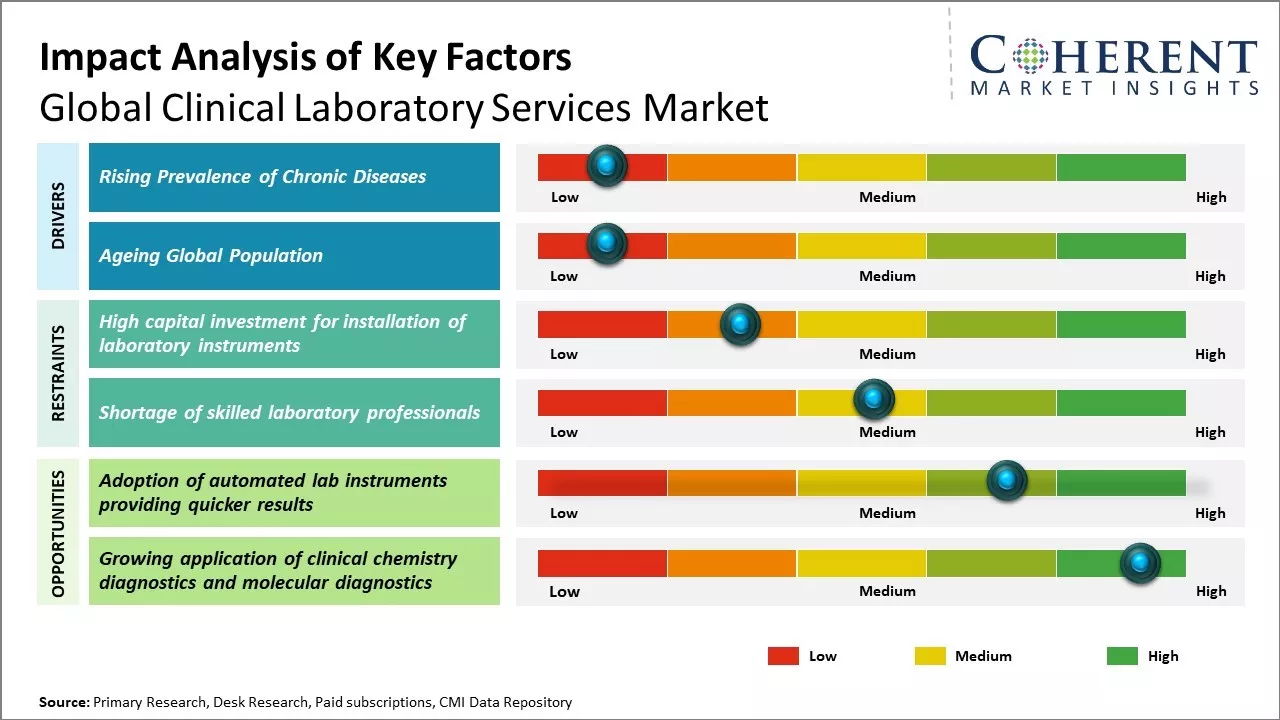
The global clinical laboratory services market is expected to witness growth over the forecast period, owing to the rising prevalence of chronic and infectious diseases worldwide. A growing geriatric population susceptible to various diseases, rising demand for advanced diagnostic techniques for accurate diagnosis, increasing awareness regarding preventive health checkups, and favorable government initiatives can drive the global clinical laboratory services market Growth.
Rising Prevalence of Chronic Diseases
The global burden of chronic diseases like diabetes, cancer, cardiovascular diseases, and respiratory diseases has been steadily rising over the past few decades. These diseases often require long-term medical supervision and management, which involves periodic diagnostic tests and clinical tests. For example, diabetes patients need to monitor their blood glucose levels on a regular basis through blood glucose tests. Cancer patients undergo various types of pathological tests and biopsies to determine the stage and appropriate treatment of cancer. Cardiovascular patients rely on tests like electrocardiograms (ECGs), echocardiograms, stress tests, and blood tests to manage their conditions. The growing prevalence of chronic diseases worldwide boosts demand for clinical laboratory tests and services. As more people are diagnosed with these conditions, these people need continuous medical care involving routine clinical investigations throughout their treatment and management journey.
Clinical laboratory tests play a crucial role in disease screening and early detection. This has prompted more people to regularly visit clinical laboratories and pathology clinics to order various types of tests related to their health conditions. Rising disease burden can drive the clinical laboratory services market growth. For instance, the American Society of Nephrology have introduced a new initiative focused on Acute Kidney Injury (AKI), thus aiming to promote excellence in AKI prevention and treatment. This initiative establishes a foundational program aimed at transforming education and the delivery of AKI care.
Ageing Global Population
The rising elderly population aged 65 years and above in all regions can drive the market growth. Medical advancements and improving standards of healthcare have greatly enhanced longevity and life expectancy. According to reports, the number of people aged 65 years and older was 524 million in 2010, and this figure is projected to double to around 1.5 billion by 2050. An aging population profile has substantial implications for the demand for diagnostic and clinical laboratory services.
Older individuals are more susceptible to chronic health issues, cancers, neurological disorders and need frequent medical monitoring, even when no symptoms are present. With age, the body's immune system weakens, thus making it more difficult to fight diseases. Therefore, senior citizens generally require more diagnostic tests for screening, detecting health deteriorations at an early stage, and managing existing medical ailments.
Market Opportunities: Adoption of automated lab instruments providing quicker results
Increasing adoption of automated lab instruments and technologies can offer growth opportunities for the global clinical laboratory services market. Automated instruments can help labs perform a high volume of complex tests accurately and reliably in a shorter period of time as compared to manual methods. This improves turnaround times for test results, which is critical for timely clinical diagnosis and commencement of appropriate treatment.
The ability to provide quicker results through automation addresses a key pain point for labs and clinicians. It allows for more efficient workflows and enables labs to handle rising test volumes due to the growing prevalence of chronic and infectious diseases worldwide. With time being an important factor in critical care pathways, automated technologies help improve clinical outcomes. These also enhance the overall patient experience by expediting the diagnosis journey.
Market Segmentation
- Test Type Insights (Revenue, USD Bn, 2021 - 2033)
- Clinical Chemistry
- Medical Microbiology
- Hematology Testing
- Immunology Testing
- Cytology Testing
- Drug of Abuse Testing
- Other Esoteric Test
- Service Provider Insights (Revenue, USD Bn, 2021 - 2033)
- Hospital-Based Laboratories
- Stand-Alone Laboratories
- Clinic-Based Laboratories
- Regional Insights (Revenue, USD Bn, 2021 - 2033)
- North America
- U.S.
- Canada
- Latin America
- Brazil
- Argentina
- Mexico
- Rest of Latin America
- Europe
- Germany
- U.K.
- Spain
- France
- Italy
- Russia
- Rest of Europe
- Asia Pacific
- China
- India
- Japan
- Australia
- South Korea
- ASEAN
- Rest of Asia Pacific
- Middle East
- GCC Countries
- Israel
- Rest of Middle East
- Africa
- South Africa
- North Africa
- Central Africa
- North America
- Key Players Insights
- Quest Diagnostics Incorporated
- Sonic Healthcare
- LabCorp (Laboratory Corporation of America Holdings)
- Bio-Reference Laboratories
- Mayo Medical Laboratories
- Eurofins Scientific
- Synlab International GmbH
- Mérieux NutriSciences
- Cerba Healthcare
- Unilabs
- BioReliance (Merck KGaA)
- ACM Medical Laboratory
- Adicon Clinical Laboratories
- Arup Laboratories
- Abbott Laboratories
- Charles River Laboratories
- Neogenomics Laboratories
- Genomic Health
Sources
Primary Research
Interviews from the following stakeholders
Stakeholders
Interviews were conducted with clinical operations managers, regulatory affairs directors, business development heads, project managers, laboratory directors, quality assurance managers, R&D heads, supply chain leaders, and procurement managers involved in the development, operations, accreditation, and commercialization of clinical laboratory services across pathology, molecular diagnostics, microbiology, genetic testing, and specialty diagnostics segments.
Databases
- ClinicalTrials.gov
- U.S. FDA
- CMS CLIA Database
- European Commission EUDAMED
- India ICMR and CDSCO
- China NMPA
- WHO Essential Diagnostics List (EDL)
Magazines
- Medical Laboratory Observer (MLO)
- Clinical Lab Products (CLP)
- CAP Today – College of American Pathologists
- Lab Manager Magazine
- Infectious Disease Special Edition (IDSE)
- Medical Design & Outsourcing
- Nature Biotechnology News & Diagnostics World
Journals
- Journal of Clinical Microbiology
- Clinical Chemistry
- The Journal of Molecular Diagnostics
- American Journal of Clinical Pathology
- BMJ Open Diagnostic Research
- Frontiers in Laboratory Medicine
- Archives of Pathology & Laboratory Medicine
Newspapers
- The Economic Times – Healthcare & Diagnostics Section
- Business Standard – Life Sciences Coverage
- The Hindu BusinessLine – Health & Lab Innovation Reports
- Reuters – Global Lab Services & IVD News
- Financial Times – Diagnostics and Clinical Lab Market Updates
Associations
- U.S. FDA – Center for Devices and Radiological Health (CDRH)
- Centers for Medicare & Medicaid Services (CMS) – CLIA Program
- European Commission – In Vitro Diagnostic Regulation (IVDR) Unit
- Indian Council of Medical Research (ICMR)
- National Accreditation Board for Testing and Calibration Laboratories (NABL)
- Clinical and Laboratory Standards Institute (CLSI)
- World Health Organization (WHO) – Essential Diagnostics Guidance
Public Domain Sources
- Ministry of Health & Family Welfare (India) – Diagnostics policy, GSR notifications
- U.S. NIH – Grants related to clinical lab innovation
- European Commission – Horizon Europe Diagnostics & Lab Research Projects
- OECD – Laboratory Testing & Diagnostics Sector Data
- UNCTAD – Global trade statistics on lab instruments and reagents
- WHO Global Observatory on Diagnostics and Laboratory Services
Proprietary Elements
- CMI Data Analytics Tool, Proprietary CMI Existing Repository of information for last 8 years
Get access to 250+ pages report
Every segment, forecast, competitor profile and data table behind the analysis above — available for instant download.
- ESOMAR Member
- ISO 9001:2015 Certified
- D-U-N-S Registered
- GDPR & CCPA Compliant
Missing comfort of reading report in your local language? Find your preferred language:
Transform your Strategy with Exclusive Trending Reports
Frequently Asked Questions
The Clinical Laboratory Services Market is estimated to be valued at USD 319.49 Bn in 2026, and is expected to reach USD 509.69 Bn by 2033.
The CAGR of the Clinical Laboratory Services Market is projected to be 6.9% from 2026 to 2033.
Rising prevalence of chronic diseases and ageing global population are the major factors driving the growth of global clinical laboratory services market.
High capital investment for installation of laboratory instruments and shortage of skilled laboratory professionals are the major factors hampering the growth of global clinical laboratory services market.
In terms of test type, clinical chemistry segment is estimated to dominate the market in 2026.
Quest Diagnostics Incorporated, Sonic Healthcare, LabCorp (Laboratory Corporation of America Holdings), Bio-Reference Laboratories, Mayo Medical Laboratories, Eurofins Scientific, Synlab International GmbH, Mérieux NutriSciences, Cerba Healthcare, Unilabs, BioReliance (Merck KGaA), ACM Medical Laboratory, Adicon Clinical Laboratories, Arup Laboratories, Abbott Laboratories, Charles River Laboratories, Neogenomics Laboratories, Genomic Health are the major players.
North America is expected to lead the global clinical laboratory services market.