

Sleep Aids Market Analysis & Forecast : 2026-2033
The global sleep aids market is estimated to be valued at USD 90.45 Bn in 2026 and is expected to reach USD 155.02 Bn by 2033, exhibiting a compound annual growth rate (CAGR) of 8.0% from 2026 to 2033.
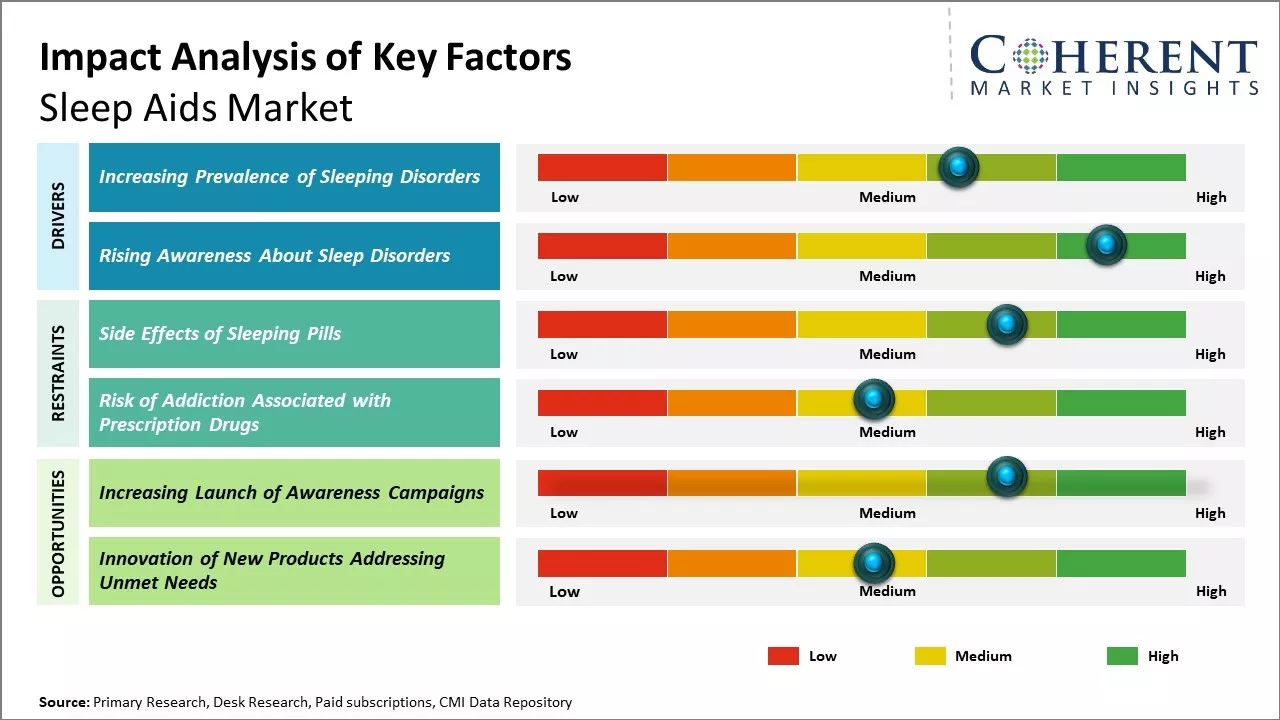
Key Takeaways
- By Product Type, Medications Segment is expected to dominate the market with a 53.9% share in 2026, driven by their widespread availability, physician prescriptions, and established efficacy in treating sleep disorders with drugs like zolpidem, eszopiclone, and zaleplon.
- By Sleep Disorder, Sleep Apnea commands a 38.9% share in 2026 in the global market, reflecting its high prevalence globally, and commercialization of devices and therapies tailored for this disorder.
- By Region, North America leads with a 44.2% market share in 2026, driven by heightened public awareness of sleep disorders and acceptance of prescription and OTC sleep aids.
Market Overview
The market is experiencing strong growth due to increasing prevalence of sleep disorders (insomnia, sleep apnea) linked to hectic lifestyles, stress, and poor sleep hygiene. Moreover, advancements in medical devices (e.g., CPAP machines, wearables, sleep apps) are expanding non-pharmacological treatment options. However, side effects and dependency risk from prescription drugs, high costs of advanced devices, and stringent regulatory barriers are expected to hamper the global sleep‑aids market growth.
Current Events and Its Impact on the Sleep Aids Market
Event | Description and Impact |
Regulatory Crackdowns on Prescription Sleep Medications |
|
Technological Revolution in Sleep Health |
|
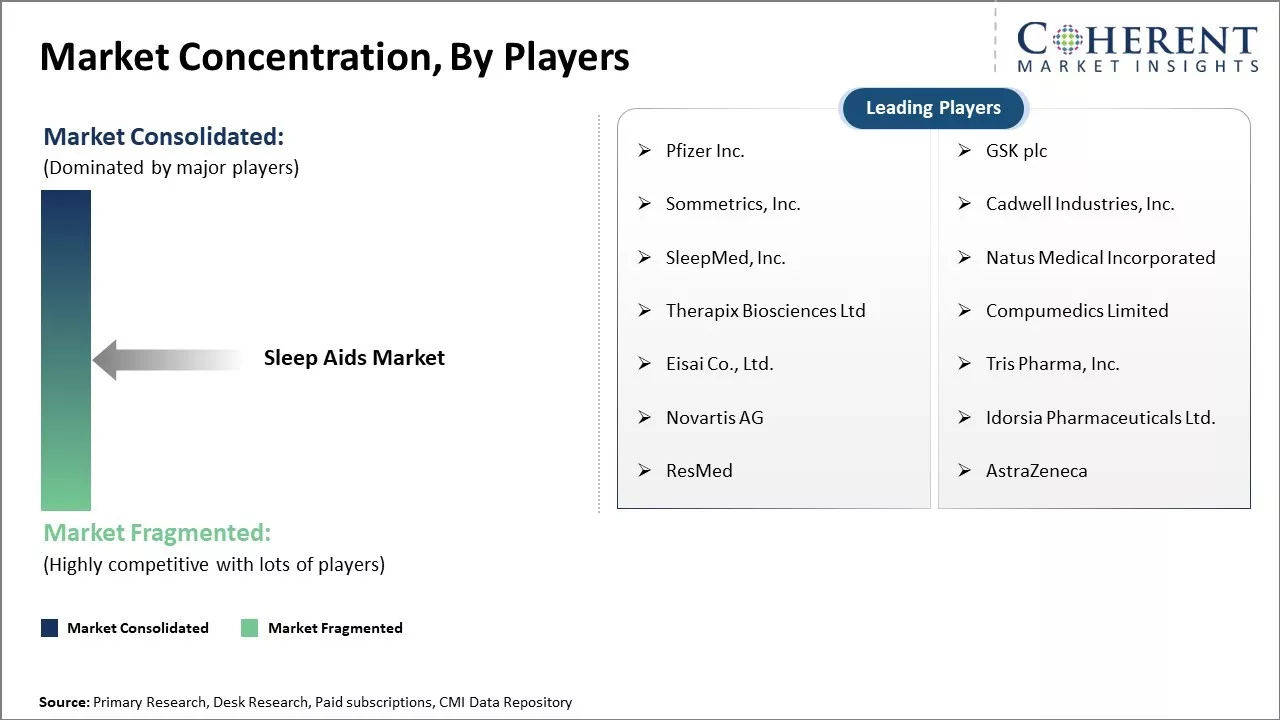
Market Concentration and Competitive Landscape
- Current Industry Events of 2026
- Market Size Estimation
- Regional Breakdown
- Competitive Landscape
- Customer Intelligence
- Segmental Analysis
- Pricing Analysis
- Key Market Drivers, Challenges & Future Trends
- Customized Insights Section
Segmental Insights
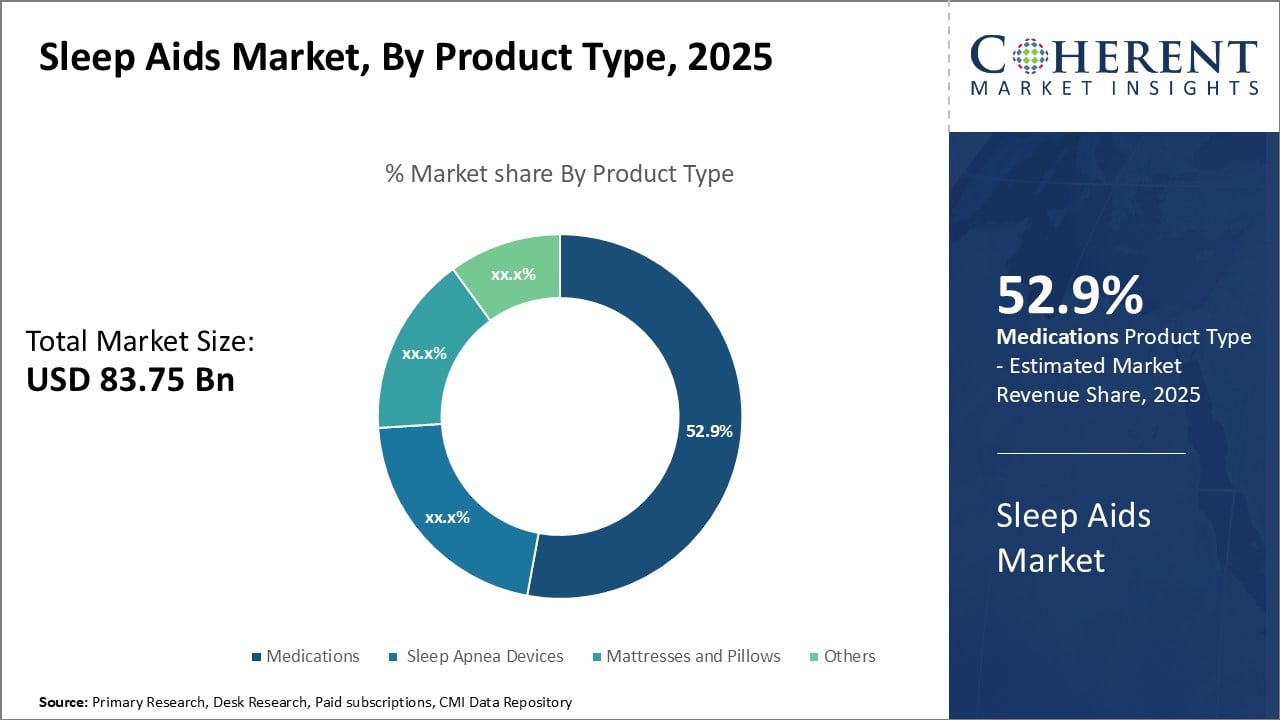
Global Sleep Aids Market Insights, By Product Type
The product type, medications sub-segment is estimated to hold 53.9% of the market share in 2026 owing to their widespread availability and them being prescribed by doctors for sleep disorders. Sleeping pills are commonly prescribed for the short-term treatment of insomnia and other sleep issues.
The easy accessibility of over-the-counter sleep medications and their effectiveness in inducing sleep drives their high demand. Various prescription sleep drugs targeting different stages of sleep are available in the market. Popular ones include zolpidem, eszopiclone, zaleplon, etc. that act on the GABA receptors in the brain to calm the nervous system.
The well-established distribution channels of pharmaceutical companies ensure medicines reach consumers easily. While certain natural supplements are also emerging, they are yet to gain similar medical endorsement for sleep problems. Overall, the doctor's role in suggesting sleeping pills and proven results continue augmenting the medications segment.
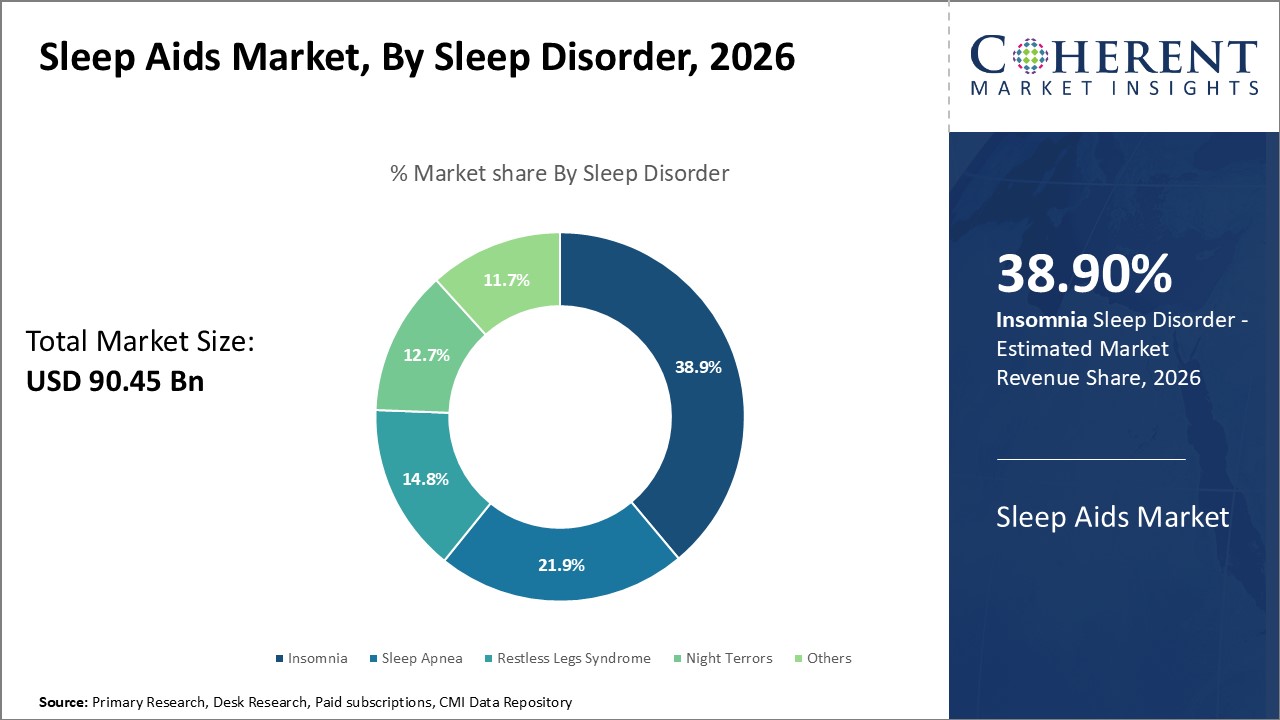
Global Sleep Aids Market Insights, By Sleep Disorder
The sleep apnea sub-segment is estimated to hold 38.9% of the market share in 2026 due to the high prevalence of insomnia. Insomnia is one of the most common sleep disorders affecting people of all ages.
As per studies, nearly 30% of adults experience insomnia occasionally, while 10% have chronic insomnia. The disorder involves difficulty falling asleep, frequent awakenings, early rising or non-restorative sleep. Its impact on daytime functioning and quality of life has raised awareness. Both short and long-term insomnia can be caused by stress, anxiety, depression, medical issues, lifestyle factors, etc.
Considering it does not require significant medical diagnosis, the overall awareness about insomnia as a sleep problem is higher compared to other disorders. This brings more people seeking treatment options for it. Consequently, the large insomnia patient pool looking for solutions ensures its primacy in the sleep aids market price.
Regional Insights
North America Sleep Aids Market Analysis and Trends
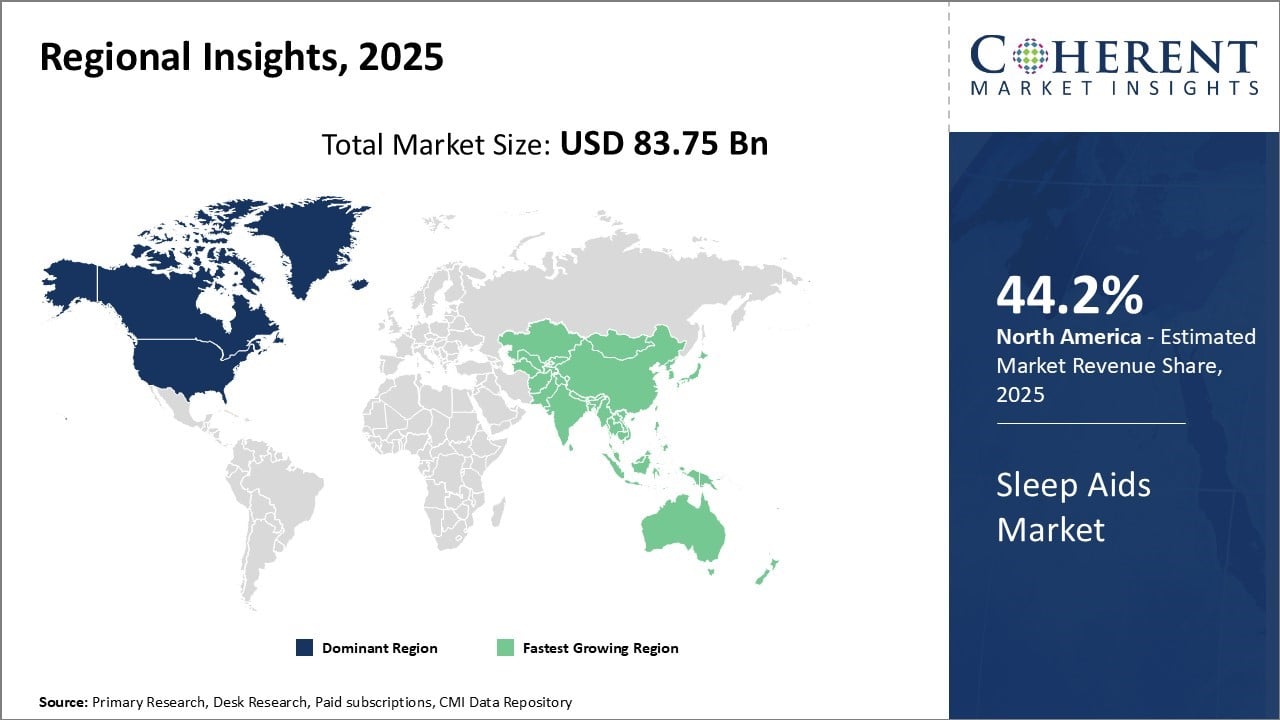
North America remains the dominant region in the global sleep aids market companies and is estimated to hold 44.2% of the market share in 2026. The U.S. accounts for the bulk of the market owing to the high consumer awareness about various sleep disorders like insomnia.
According to The National Academy of Medicine, nearly 50-70 million American adults suffer from chronic sleep and wakefulness disorders annually. This has boosted the demand for over-the-counter as well as prescription sleep aids across various distribution channels in the region. The easy availability and wide acceptance of prescription drugs for insomnia plays a crucial role in consolidating North America's leadership position.
Asia Pacific Sleep Aids Market Analysis and Trends
Asia Pacific has emerged as the fastest growing regional market driven by economic development and rising consumer incomes of markets like China, India, and Indonesia. Large untapped opportunities prevail in these emerging countries owing to changing lifestyles, increasing urbanization, rising stress levels, and growing health issues.
The growing middle class affords greater affordability and access to healthcare and wellness products. This has augmented the demand for sleep aids in Asia Pacific. While the market currently remains concentrated on traditional herbal medicines and supplements, the growing adoption of international products points to lucrative prospects. Export and manufacturing hubs in countries such as China and India bolster availability while positioning the region as an attractive investment destination.
Sleep Aids Market – Dominating Countries
The U.S. Sleep Aids Market Analysis and Trends
The U.S. is considered as a leading country in the global sleep aids market during the forecast period. This dominance in attributed by high prevalence of sleep-related issues such as insomnia, restless leg syndrome, and sleep apnea. Additionally, strong pharmaceutical and wellness industries, widespread access to over-the-counter and prescription sleep medications, and consumer receptivity to both medical and alternative therapies fuels market growth.
Japan Sleep Aids Market Analysis and Trends
Japan is considered as another player in the sleep aid market; it reflects the countries aging population and work-centric culture that resulted in sleep deprivation. The Japanese market is particularly active in non-pharmaceutical sleep aids, such as sleep-promoting mattresses, relaxation beverages, and innovative tech-driven solutions.
Market Report Scope
Sleep Aids Market Report Coverage
| Report Coverage | Details | ||
|---|---|---|---|
| Base Year: | 2025 | Market Size in 2026: | USD 90.45 Bn |
| Historical Data for: | 2020 To 2024 | Forecast Period: | 2026 To 2033 |
| Forecast Period 2026 to 2033 CAGR: | 8.0% | 2033 Value Projection: | USD 155.02 Bn |
| Geographies covered: |
| ||
| Segments covered: |
| ||
| Companies covered: | Pfizer Inc., GSK plc, Sommetrics, Inc., Cadwell Industries, Inc., SleepMed, Inc., Natus Medical Incorporated, Therapix Biosciences Ltd, Compumedics Limited, Eisai Co., Ltd., Tris Pharma, Inc., Novartis AG, Idorsia Pharmaceuticals Ltd., ResMed, and AstraZeneca | ||
| Growth Drivers: |
| ||
| Restraints & Challenges: |
| ||
Market Driver
Factors such as hectic lifestyles, erratic work schedules, and increasing stress levels have greatly impacted people's sleep cycles. Many users have increasingly relied on sleep aids to help them sleep better at night. Advancements in medical technology have also helped introduce new products and solutions in the market. Sleep aids devices and apps that use calming noises or guided meditation are becoming increasingly popular for treating occasional insomnia. However, traditional medications like sleeping pills continue to dominate the market. Looking ahead, the widespread adoption of digital-first solutions and the entry of newer startups in this space are expected to further drive innovative growth in the global sleep aids market value.
- Increasing Prevalence of Sleeping Disorders
The increasing prevalence of sleeping disorders, such as insomnia and sleep apnea, is expected to propel the growth of the global sleep aids market outlook during the forecast period.
- Rising Awareness about Sleep Disorders
Another important growth driver for sleep aids market trends has been increasing awareness about sleep disorders and available treatment options. While sleep problems were previously considered more of a lifestyle issue, they are now recognized as serious medical conditions that require clinical interventions.
This has promoted greater acceptance of sleeping pills and other medications to induce normal sleep under doctor's supervision. Better education regarding sleep hygiene, benefits of sound slumber, and availability of prescribed relief has motivated individuals to seek timely help and treatment.
Sleep Aids Market Opportunities
Increasing Launch of Awareness Campaigns
For instance, in February 2023, the American Academy of Sleep Medicine, launched the national “More than a Snore” campaign to raise awareness about obstructive sleep apnea, a chronic disease that involves the repeated collapse of the upper airway during sleep. This campaign raised awareness about obstructive sleep apnea and encourage undiagnosed patients to advocate for themselves and seek treatment.
Sleep Aids Industry News
- In February 2024, ResMed, a medical device company, announced that it had launched its AirCurve 11 series. The AirCurve 11 series is combined with digital tech to help treat sleep apnea. The AirCurve 11 is a bi-level positive airway pressure (PAP) that provides higher pressure during inhalation and lower pressure during exhalation. As per the company, the design lets the device align more closely with natural breathing patterns.
- In November 2023, The DeRUCCI Group, a public company and sleep technology brand, launched the DeRUCCI T11 Pro Smart Mattress, an artificial intelligence of things (AIoT) intelligent sleep solution.
Analyst Opinion ( Expert Opinion)
- The global sleep-aids market is experiencing strong momentum, fueled by rising prevalence of insomnia, sleep apnea, and related disorders, driven by hectic modern lifestyles, stress, and digital overexposure. Advances in medical devices and pharmaceuticals, including CPAP machines, DORAs (dual orexin receptor antagonists), and non-habit forming prescription drugs are enhancing treatment efficacy, cementing sleep aids’ role in preventative and therapeutic healthcare.
- Opportunities are expanding with the emergence of digital-first solutions, such as smart mattresses, AI-powered wearable headbands (e.g., Somnee by StimScience), and remote sleep health platforms combining apps and coaching, unlocked by partnerships between technology and sleep health firms.
- Challenges include ongoing concerns about the side effects and dependency risks of prescription medications, which continue to hinder long-term use and encourage pivoting toward OTC and Herbal sleep aids market growth. Moreover, the high cost of advanced devices (e.g., CPAP, AIoT-enabled mattresses) and fragmented insurance coverage remain key obstacles to mass adoption.
- Regional trends: North America currently leads with ~44.2% of the market in 2025, supported by high disease awareness, advanced infrastructure, and early technology adoption. Meanwhile, the Asia-Pacific region is the fastest-growing market, driven by urbanization, rising incomes, and the growing acceptance of both pharmaceutical and non-pharmaceutical sleep aids.
Speak to the analyst
Want personalized insights?
Take the findings above to one of our principal consultants, or have the report rebuilt around the segments, geographies and competitors you actually track.
Global Sleeping-Aids Market: Key Developments
- In February 2024, ResMed launched AirCurve 11 series CPAP/Bi‑level devices, integrating digital technologies for enhanced sleep apnea treatment, improving user comfort and compliance.
- In November 2023, DeRUCCI Group introduced the T11 Pro Smart Mattress, an AIoT-enabled intelligent bed solution aimed at enhancing sleep quality via integrated sensors and app-driven analytics.
Market Segmentation
- Product Type Insights (Revenue, USD Bn, 2021 - 2033)
- Medications
- Sleep Apnea Devices
- Mattresses and Pillows
- Others
- Sleep Disorder Insights (Revenue, USD Bn, 2021 - 2033)
- Insomnia
- Sleep Apnea
- Restless Legs Syndrome
- Night Terrors
- Others
- Regional Insights (Revenue, USD Bn, 2021 - 2033)
- North America
- U.S.
- Canada
- Latin America
- Brazil
- Argentina
- Mexico
- Rest of Latin America
- Europe
- Germany
- U.K.
- Spain
- France
- Italy
- Russia
- Rest of Europe
- Asia Pacific
- China
- India
- Japan
- Australia
- South Korea
- ASEAN
- Rest of Asia Pacific
- Middle East
- GCC Countries
- Israel
- Rest of Middle East
- Africa
- South Africa
- North Africa
- Central Africa
- Key Players Insights
- Pfizer Inc.
- GSK plc.
- Sommetrics, Inc.
- Cadwell Industries, Inc.
- SleepMed, Inc.
- Natus Medical Incorporated
- Therapix Biosciences Ltd
- Compumedics Limited
- Eisai Co., Ltd.
- Tris Pharma, Inc.
- Novartis AG
- Idorsia Pharmaceuticals Ltd.
- ResMed
- AstraZeneca
Sources
Primary Research Interviews
- Sleep aid manufacturers and suppliers
- Healthcare professionals and sleep specialists
- E-commerce platform managers
- Digital health technology providers
- Others
Databases
- IBISWorld Industry Reports
- Euromonitor International
- Global Market Database (GMD)
- Others
Magazines
- Sleep Review Magazine
- Nutraceuticals World
- Natural Products Insider
- Functional Foods & Nutraceuticals
- Others
Journals
- Journal of Sleep Research
- Sleep Medicine Reviews
- Nature and Science of Sleep
- Others
Newspapers
- The Wall Street Journal
- Financial Times
- Reuters Health News
- Bloomberg Healthcare
- Others
Associations
- American Sleep Association (ASA)
- National Sleep Foundation
- International Association of Sleep Technologists (IAST)
- Consumer Healthcare Products Association (CHPA)
- Others
Public Domain Sources
- FDA (Food and Drug Administration) databases
- WHO (World Health Organization) reports
- National Institutes of Health (NIH) publications
- Centers for Disease Control and Prevention (CDC) data
- Others
Proprietary Elements
- CMI Data Analytics Tool
- Proprietary CMI Existing Repository of information for last 8 years
Get access to 250+ pages report
Every segment, forecast, competitor profile and data table behind the analysis above — available for instant download.
- ESOMAR Member
- ISO 9001:2015 Certified
- D-U-N-S Registered
- GDPR & CCPA Compliant
Missing comfort of reading report in your local language? Find your preferred language:
Transform your Strategy with Exclusive Trending Reports
Frequently Asked Questions
The Sleep Aids Market Size is estimated to be valued at USD 90.45 Bn in 2026, and is expected to reach USD 155.02 Bn by 2033.
The CAGR of the global Market is projected to be 8.0% from 2026 to 2033.
Increasing prevalence of sleeping disorders and rising awareness about sleep disorders are the major factors driving the growth of the global market.
Side effects of sleeping pills and risk of addiction associated with prescription drugs are the major factors hampering the sleep aids industry share.
In terms of product type, medications is estimated to dominate the market revenue share in 2026.
Pfizer Inc., GSK plc, Sommetrics, Inc., Cadwell Industries, Inc., SleepMed, Inc., Natus Medical Incorporated, Therapix Biosciences Ltd, Compumedics Limited, Eisai Co., Ltd., Tris Pharma, Inc., Novartis AG, Idorsia Pharmaceuticals Ltd., ResMed, and AstraZeneca are the major players.
North America is expected to lead the sleep aids industry demand.