

Chronic Gingivostomatitis Treatment Market Size and Share Analysis – 2026 To 2033
The chronic gingivostomatitis treatment market is anticipated to grow at a CAGR of 6.5%, reaching approximately USD 20,100 Mn in 2026 and is expected to attain around USD 31,200 Mn by 2033. Growth of the market is driven by the rising prevalence of chronic oral inflammatory conditions in companion animals, increasing pet healthcare expenditure, growing awareness among pet owners regarding oral hygiene, and advancements in veterinary diagnostics and therapeutics.
Key Takeaways
- Physical Examination is expected to lead the diagnosis segment with 38% share in 2026, as it remains the primary and most cost-effective diagnostic approach in routine veterinary practice. According to the American Veterinary Medical Association (AVMA) and related veterinary guidelines, oral diseases in pets are initially evaluated through a clinical oral/physical examination, while biopsy or other laboratory tests (e.g., microbial culture) are used as confirmatory diagnostic procedures.
- NSAIDs are projected to account for 42% of the treatment segment in 2026, as they remain widely used as first-line therapy for pain and inflammation associated with feline chronic gingivostomatitis. The Merck Veterinary Manual states that NSAIDs are generally used in companion animals for oral inflammatory diseases as they provide effective relief from pain and improve their quality of life, which is usually followed by antibiotics or dental procedures in extreme cases.
- Hospital & Clinics End User segment is projected to hold maximum market share of 70% in 2026 owing to increased clinical visits, presence of better diagnostics tools, and preference for specialized veterinary care. According to the World Small Animal Veterinary Association (WSAVA), most companion animal oral disease cases are diagnosed and managed in clinical settings due to the need for professional assessment, anesthesia-assisted procedures, and follow-up care.
- The North American market is anticipated to lead the Chronic Gingivostomatitis Treatment Market by accounting for 42% of market share by 2026, attributed to high pet healthcare spending, state-of-the-art veterinary hospitals, and extensive use of therapies aimed at treatment of oral diseases in pets. The American Pet Products Association (APPA) estimates that total spending on U.S. pets’ industry was USD 158 Bn in 2025, with veterinary care being a significant share and expected to grow further to USD 165 Bn in 2026.
Segmental Insights
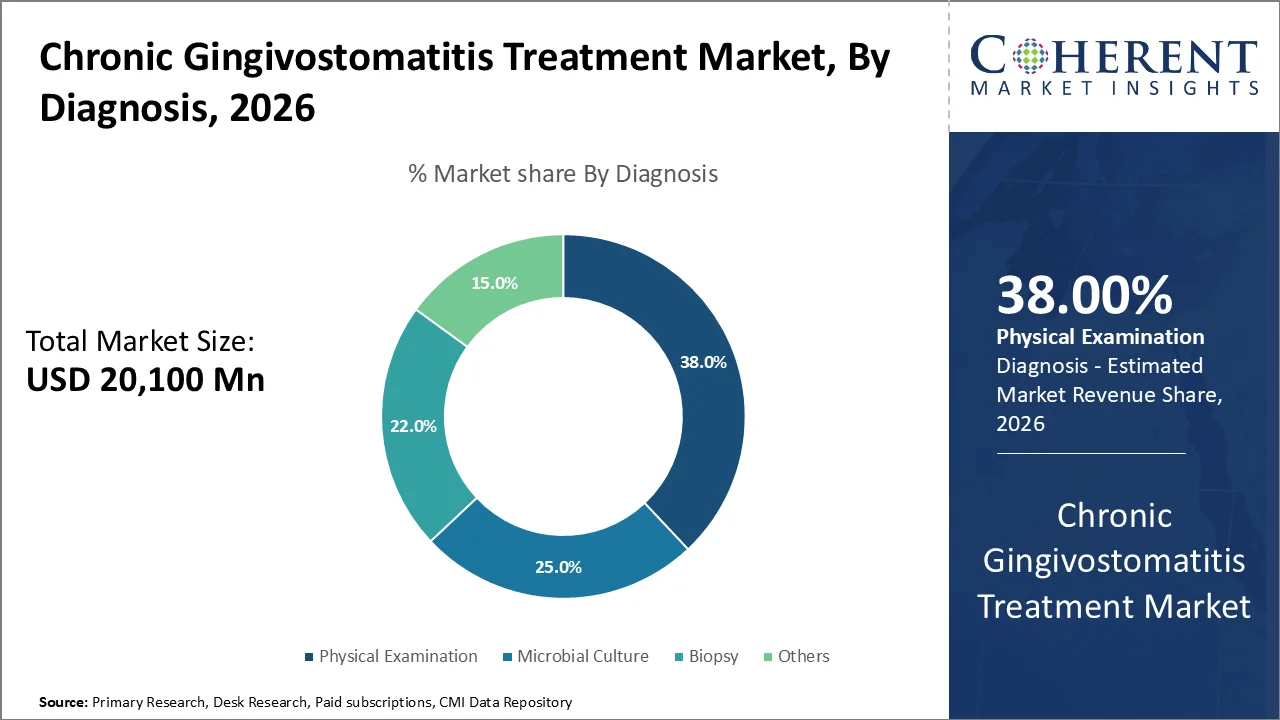
Why Does Physical Examination Lead the Diagnosis Segment?
Physical Examination procedure is anticipated to dominate the diagnosis segment, with a projected market share of around 38% in 2026, owing to its continued popularity, cost-efficiency, and ease of accessibility.
Veterinarians rely on direct oral inspection to identify symptoms such as inflammation, ulceration, and plaque buildup before recommending advanced diagnostic procedures like biopsy or microbial culture.
According to ISFM’s (International Society of Feline Medicine) recommendation, clinical examination of the mouth is a crucial initial step in the diagnosis of inflammatory conditions in the cat’s oral cavity.
- Current Industry Events of 2026
- Market Size Estimation
- Regional Breakdown
- Competitive Landscape
- Customer Intelligence
- Segmental Analysis
- Pricing Analysis
- Key Market Drivers, Challenges & Future Trends
- Customized Insights Section
Why Do NSAIDs Dominate the Treatment Segment?
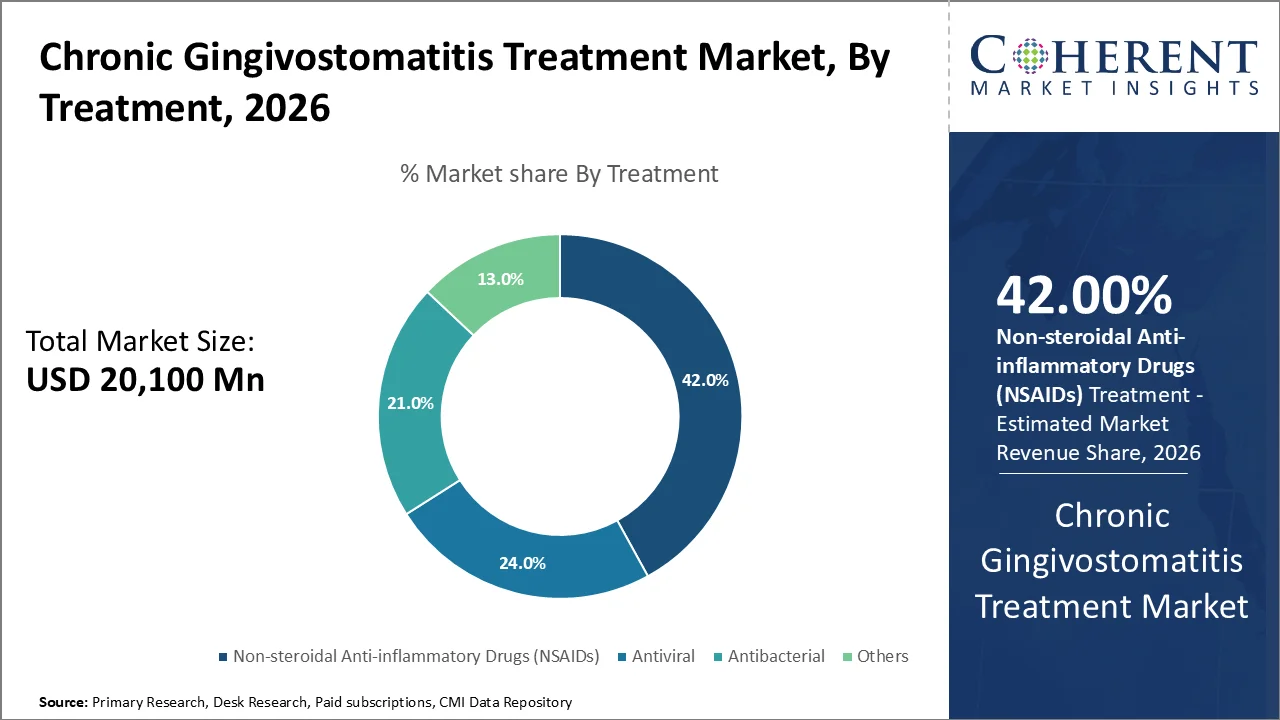
The NSIADs (Non-Steroidal Anti-Inflammatory Drug) segment in 2026 will account for above 42%, since these are used primarily as the main drug for pain management and other issues related to pain management like gingivostomatitis in cats.
The FDA (Center for Veterinary Medicine) says that approved veterinary NSAIDs have an important function in pain and inflammation management in pets and are one of the most widely used groups of veterinary drugs.
In February 2025, Zoetis Inc. expanded the clinical use of its veterinary NSAID portfolio including meloxicam-based formulations to support pain and inflammation management in chronic companion animal diseases.
Which End-User Segment Dominates the Chronic Gingivostomatitis Treatment Market?
The hospitals & clinics end user segment is estimated to dominate the industry in terms of market share by 2026, holding nearly 70% of the entire market demand. The reason behind such domination is the presence of these entities as major players in providing veterinary care and treating chronic mouth conditions in animals.
In December 2025, the American Association of Feline Practitioners (AAFP) released updated feline oral health and dental care guidelines strengthening clinical hospital-based treatment protocols.
Market Driver
Rising Prevalence of Feline Oral Inflammatory Diseases is Driving Market Expansion
Gingivostomatitis is becoming a common disorder among cats, which is one of the main reasons behind the expansion of the market. This disease is caused by allergies and viruses. It requires long-term treatment, meaning that frequent visits to the veterinarian are required.
According to the International Society of Feline Medicine (ISFM), dental and oral diseases affect a significant proportion of adult cats, with periodontal and inflammatory oral conditions being among the most frequently diagnosed chronic disorders in companion felines.
Advancements in Veterinary Therapeutics and Pain Management are Improving Treatment Outcomes
Improvements in drugs targeting inflammation, immunomodulation, and ancillary care have been contributing to better treatment protocols and increased quality of life in affected pets. NSAIDs and drugs based on corticosteroids have been found more frequently useful in treating inflammation and secondary infection in affected pets.
According to the U.S. Food and Drug Administration (FDA – Animal Drugs), approved veterinary NSAIDs and anti-inflammatory therapies are critical for managing chronic pain conditions in animals, including oral inflammatory diseases, due to their effectiveness in reducing inflammation and improving recovery outcomes.
Current Events and Their Impact on the Chronic Gingivostomatitis Treatment Market
Current Event | Description and its Impact |
Expansion of Veterinary Drug Approvals and Regulatory Oversight (FDA – Animal Drug Guidelines Updates, 2025–2026) |
|
Government-Led Animal Welfare and Companion Animal Healthcare Policies (EU & U.S. Veterinary Welfare Programs, 2024–2026) |
|
Chronic Gingivostomatitis Treatment Market Trends
- Increasing usage of NSAIDs as first-line therapy is fueling the market growth, which has been confirmed by the FDA-CVM that NSAIDs are the major FDA-approved drugs for pain and inflammation in companion animals.
- Rising awareness and diagnosis of Feline Chronic Gingivostomatitis is expanding the treatment market. Research indicates the disease can affect up to 26% of cats in some populations, highlighting a significant clinical burden.
- Growing trend of multimodal treatment is making it easier to achieve effective treatment in severe cases. Studies cited in PubMed index indicate improved remission and quality of life outcomes using multimodal treatments.
Regional Insights
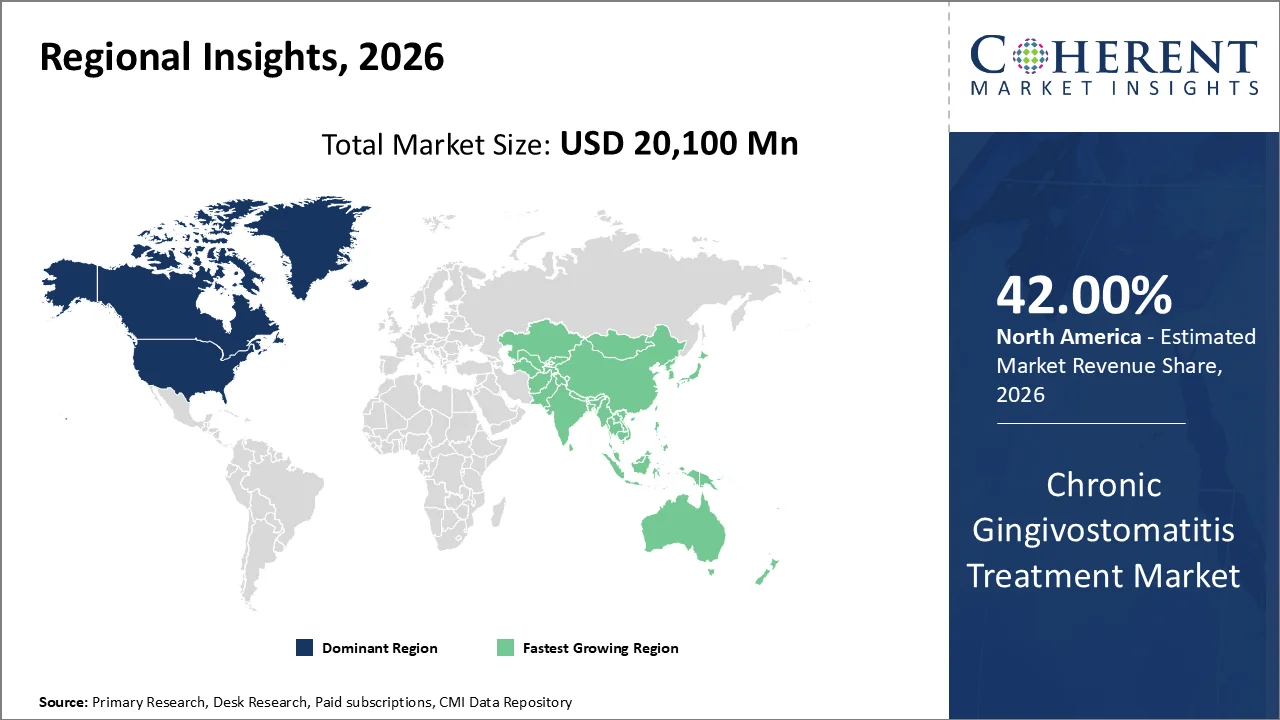
North America dominates the Chronic Gingivostomatitis Treatment Market
North America is expected to occupy the leading position within the market with a share of 42% in 2026 owing to the huge amount spent on pet health care, development of the infrastructure in veterinary hospitals, and usage of oral disease treatment drugs among pets. North America has an advantage of early diagnostics, well-established clinics, and wide use of NSAIDs and other veterinary medicines.
According to the American Pet Products Association (APPA), U.S. pet industry expenditure reached approximately USD 158 billion in 2025, with veterinary care remaining one of the fastest-growing segments.
In March 2025, Zoetis Inc. announced expanded clinical validation of NSAID-based pain management therapies for companion animals in North America
Asia-Pacific is the fastest-growing region in the Chronic Gingivostomatitis Treatment Market
The Asia-Pacific region is expected to be the fastest-growing market during the forecast period (2026–2033), driven by rapid growth in pet ownership, improving veterinary healthcare infrastructure, and increasing awareness of companion animal oral diseases.
Countries such as China, India, and Japan are witnessing rising demand for veterinary services due to expanding middle-class pet ownership and increasing willingness to spend on animal healthcare. India alone has seen a strong rise in veterinary clinical visits and specialized pet treatment services in urban areas.
U.S. Chronic Gingivostomatitis Treatment Market Trends
The U.S. chronic gingivostomatitis treatment market is expected to show strong and steady growth during the forecast period, driven by high pet healthcare expenditure, advanced veterinary infrastructure, and increasing awareness of feline oral diseases. The country’s well-established veterinary care ecosystem supports early diagnosis and advanced treatment adoption, particularly for chronic inflammatory oral conditions in companion animals.
In June 2025, the U.S. Food and Drug Administration (FDA) Center for Veterinary Medicine (CVM) updated its regulatory framework for veterinary analgesics and anti-inflammatory drugs, emphasizing streamlined review pathways for new NSAIDs and biologic therapies while strengthening post-market safety monitoring for long-term use in companion animal chronic conditions
China Chronic Gingivostomatitis Treatment Market Forecast
The chronic gingivostomatitis treatment market in China is expected to grow rapidly during the forecast period, supported by increasing pet ownership, expanding veterinary healthcare infrastructure, and rising awareness of companion animal oral health. Urbanization and growing middle-class income levels are significantly contributing to higher spending on pet healthcare services, especially in cities.
Who are the Major Companies in Chronic Gingivostomatitis Treatment Industry
Some of the major key players in Chronic Gingivostomatitis Treatment are Pfizer Inc., Taj Pharmaceutical limited, Ciron pharma, Johnson & Johnson, GlaxoSmithKline PLC, Merck & CO., Inc., Novartis AG, F. Hoffman La Roche AG, Eli Lily and Company, and AstraZeneca Plc.
Key News
- In February 2026, Merck Animal Health announced FDA approval of NUMELVI (atinvicitinib) tablets for dogs to control pruritus associated with allergic dermatitis, strengthening its veterinary immunology and inflammation portfolio that supports broader management of inflammatory conditions in companion animals.
- In March 2025, AstraZeneca PLC expanded its immunology research portfolio with continued development of biologic therapies targeting inflammatory disease pathways, supporting broader innovation in chronic immune-mediated conditions.
Market Report Scope
Chronic Gingivostomatitis Treatment Market Report Coverage
| Report Coverage | Details | ||
|---|---|---|---|
| Base Year: | 2025 | Market Size in 2026: | USD 20,100 Mn |
| Historical Data for: | 2020 To 2024 | Forecast Period: | 2026 To 2033 |
| Forecast Period 2026 to 2033 CAGR: | 6.5% | 2033 Value Projection: | USD 31,200 Mn |
| Geographies covered: |
| ||
| Segments covered: |
| ||
| Companies covered: | Pfizer Inc., Taj Pharmaceutical limited, Ciron pharma, Johnson & Johnson, GlaxoSmithKline PLC, Merck & CO., Inc., Novartis AG, F. Hoffman La Roche AG, Eli Lily and Company, and AstraZeneca Plc. | ||
| Growth Drivers: |
| ||
| Restraints & Challenges: |
| ||
Analyst Opinion
- Market expansion will be fueled by the increasing prevalence of chronic oral inflammatory conditions in cats, necessitating prolonged treatment by veterinarians.
- Increasing adoption of NSAIDs and multimodal therapy is improving clinical outcomes and supporting steady treatment demand
- Veterinary hospitals and specialty clinics remain the primary treatment centers due to need for anesthesia-assisted procedures
- The increased humanization of pets along with their owners’ readiness to invest in quality medical care ensures broader access to high-end veterinary services.
Speak to the analyst
Want personalized insights?
Take the findings above to one of our principal consultants, or have the report rebuilt around the segments, geographies and competitors you actually track.
Market Segmentation
- By Diagnosis (Revenue, USD Mn, 2021-2033)
- Physical Examination
- Microbial Culture
- Biopsy
- Others
- By Treatment (Revenue, USD Mn, 2021-2033)
- Non-steroidal Anti-inflammatory Drugs
- Antiviral
- Antibacterial
- Others
- By End User (Revenue, USD Mn, 2021-2033)
- Hospitals & Clinics
- Academic & Research
- Others
- By Region (Revenue, USD Mn, 2021-2033)
- North America
- U.S.
- Canada
- Latin America
- Brazil
- Mexico
- Argentina
- Rest of Latin America
- Europe
- Germany
- U.K.
- France
- Italy
- Spain
- Russia
- Rest of Europe
- Asia Pacific
- China
- India
- Japan
- Australia
- South Korea
- ASEAN
- Rest of Asia Pacific
- Middle East
- GCC
- Israel
- Rest of Middle East
- Africa
- South Africa
- Central Africa
- North Africa
- North America
Sources
Primary Research Interviews
- Veterinary ophthalmologists and dental specialists
- Companion animal veterinarians (general practitioners)
- Veterinary hospital administrators and clinic managers
- Veterinary pharmaceutical and drug distributors
- Key opinion leaders (KOLs) in veterinary dentistry and feline medicine
- Animal health researchers and academic veterinarians
Databases
- World Health Organization (WHO – Animal Health & Zoonotic Disease Programs)
- Food and Agriculture Organization (FAO) of the United Nations
- World Organisation for Animal Health (WOAH)
- U.S. Food and Drug Administration (FDA – Center for Veterinary Medicine)
- National Institutes of Health (NIH – Veterinary & Comparative Medicine Research)
- Organisation for Economic Co-operation and Development (OECD – Animal Health Statistics)
Magazines
- Veterinary Practice News
- Veterinary Times
- DVM360
- Journal of the American Veterinary Medical Association (JAVMA Insights sections)
- Veterinary Record
Journals
- Journal of Veterinary Internal Medicine
- Journal of Feline Medicine and Surgery
- Veterinary Dentistry and Oral Surgery Journal
- Frontiers in Veterinary Science
- Journal of Veterinary Dentistry
- BMC Veterinary Research
Newspapers
- The New York Times (Science & Health section)
- The Guardian (Science & Environment section)
- The Wall Street Journal (Health & Pharma coverage)
- Financial Times (Healthcare industry coverage)
Associations
- American Veterinary Medical Association (AVMA)
- World Small Animal Veterinary Association (WSAVA)
- International Society of Feline Medicine (ISFM)
- American Animal Hospital Association (AAHA)
- European Veterinary Dental Society (EVDS)
- World Organisation for Animal Health (WOAH)
Public Domain Sources
- Veterinary pharmaceutical company annual reports and investor presentations
- Government animal health and veterinary care policy documents
- Clinical trial registries (ClinicalTrials.gov, EU Clinical Trials Register)
- FDA CVM drug approval announcements and guidance documents
- WHO/WOAH animal health surveillance reports
Proprietary Elements
- CMI Data Analytics Tool
- Proprietary CMI Veterinary Health Market Repository (historical data analysis over the last 10+ years)
Get access to 250+ pages report
Every segment, forecast, competitor profile and data table behind the analysis above — available for instant download.
- ESOMAR Member
- ISO 9001:2015 Certified
- D-U-N-S Registered
- GDPR & CCPA Compliant
Missing comfort of reading report in your local language? Find your preferred language:
Transform your Strategy with Exclusive Trending Reports
Frequently Asked Questions
The Chronic Gingivostomatitis Treatment Market is expected to reach approximately USD 31,200 Mn in 2033.
Major players operating in the global Chronic Gingivostomatitis Treatment market include Pfizer Inc., Johnson & Johnson, Merck & Co., Inc., Novartis AG, GlaxoSmithKline PLC, F. Hoffmann-La Roche AG, Eli Lilly and Company, AstraZeneca Plc, Ciron Pharma, and Taj Pharmaceutical Limited.
High cost of advanced veterinary treatments and procedures, along with regulatory constraints on approval of veterinary drugs, are key factors restraining market growth.
Rising prevalence of chronic oral inflammatory diseases in companion animals and increasing pet healthcare expenditure are major growth drivers of the market.
The Chronic Gingivostomatitis Treatment Market is anticipated to grow at a CAGR of 6.5% between 2026 and 2033.
Among regions, North America is expected to account for the largest market share in the global Chronic Gingivostomatitis Treatment market over the forecast period.
Treatment costs vary widely depending on severity, diagnostics, and procedures such as dental surgery or long-term medication, typically ranging from moderate outpatient veterinary costs to higher expenses for advanced clinical interventions.