

Alprazolam Tablets Market Size and Share Analysis - 2026 To 2033
The Alprazolam Tablets is anticipated to grow at a CAGR of 5.0% with USD 3.4 Bn in 2026 and is expected to reach USD 4.9 Bn in 2033. The alprazolam tablets market is expanding as anxiety and panic disorders remain prevalent worldwide. Government‑verified data from the International Narcotics Control Board (INCB) shows that alprazolam was the most consumed psychotropic substance in 2024, reflecting its continued high usage in anxiety management, which influences 2026 market demand projections. Rising mental health awareness, increasing prescriptions backed by national policies, and strong generic penetration fuel the market. North America remains the largest regional market, while Asia Pacific shows robust growth. Market growth is supported by accessible formulations, stable supply chains, and broad clinician adoption, underscoring sustained global demand through 2030.
Source: INCB
Key Takeaways
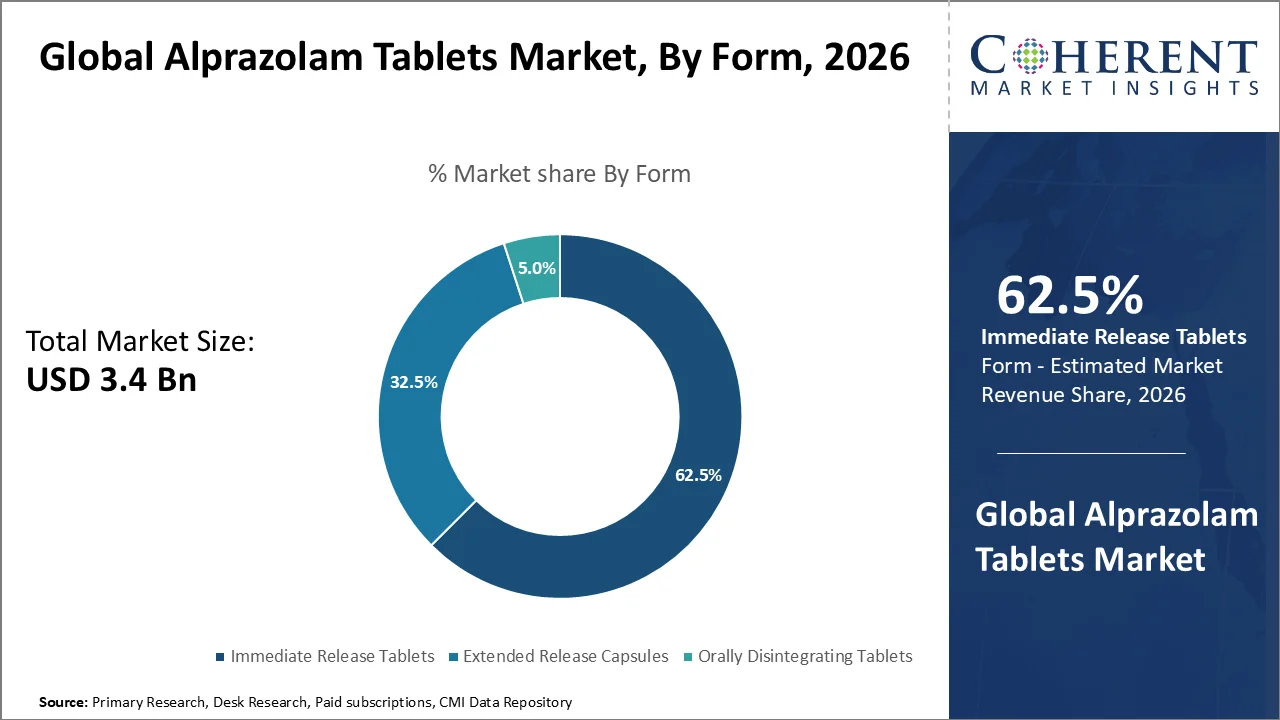
- Immediate Release Tablets is expected to account the largest share of 62.5% in 2026, due to its rapid onset of action, making it ideal for acute anxiety and panic episodes. Regulatory agencies, including the U.S. FDA and DEA in 2026, continue emphasizing short-term IR use with strict prescription controls to mitigate abuse. Public health data from WHO and CDC highlight rising anxiety prevalence, with approximately 4.5% of adults globally experiencing panic or anxiety disorders, driving the preference for fast-acting, clinically monitored IR formulations.
- Anxiety disorder will dominate with 45.0% in 2026, supported by anxiety and related conditions are among the top causes of non‑fatal health loss globally, contributing to millions of years lived with disability. In 2026, regulatory bodies like the U.S. FDA and DEA reinforced short‑term controlled prescribing for alprazolam to limit dependence. Recent WHO estimates show anxiety disorders affect over 284 million people worldwide, while China, Japan, and India report rising mental health consultations and telehealth usage, broadening access to clinically supervised anxiolytic care.
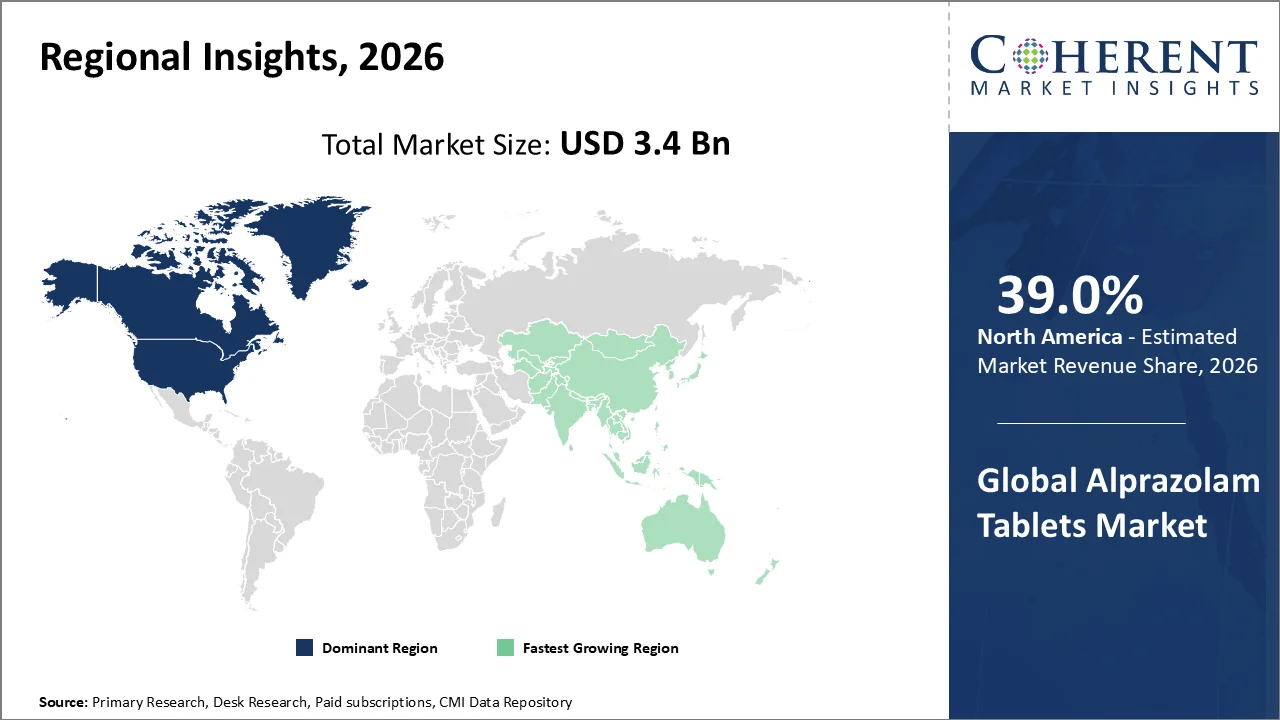
- North America is expected to acquire the dominant share of 39.0% in 2026, due to high awareness of mental health conditions, well-established healthcare infrastructure, and widespread access to prescription medications. Regulatory frameworks by the U.S. FDA and DEA in 2026 ensure controlled, clinically supervised use, promoting trust in prescription therapy. Public health data from CDC indicate that approximately 19% of U.S. adults experience anxiety disorders annually, driving demand for effective anxiolytic medications. Additionally, telemedicine expansion and mental health initiatives support broader patient access to alprazolam under physician supervision.
Segmental Insights
Why is Immediate Release Tablets Acquiring the Largest Market Share?
Immediate Release Tablets is projected to account for the largest share of cognitive systems spending in 2026, representing approximately 62.5% of the total volume. Immediate release tablets remain dominant because they provide fast drug absorption and rapid onset of action, which are crucial in acute anxiety and panic symptom management. Immediate‑release alprazolam is designed to dissolve rapidly in the gastrointestinal tract, enabling drug levels to peak in about 1–2 hours after administration, unlike extended‑release forms that delay absorption for later onset. Immediate dissolution improves symptom relief and allows flexible dosing adjustments tailored to patient needs, enhancing clinical utility and patient compliance. Immediate release formulations are also easier and less costly to manufacture and widely preferred by clinicians for quick therapeutic effect. For instance, according to the ClinCalc drug‑usage database (an aggregation of U.S. outpatient prescription data), alprazolam accounted for approximately 15,881,367 prescriptions in 2023, representing about 43.9% of all benzodiazepine prescriptions higher than other agents like clonazepam and lorazepam.
- Current Industry Events of 2026
- Market Size Estimation
- Regional Breakdown
- Competitive Landscape
- Customer Intelligence
- Segmental Analysis
- Pricing Analysis
- Key Market Drivers, Challenges & Future Trends
- Customized Insights Section
Anxiety Disorder holds the Largest Market Share
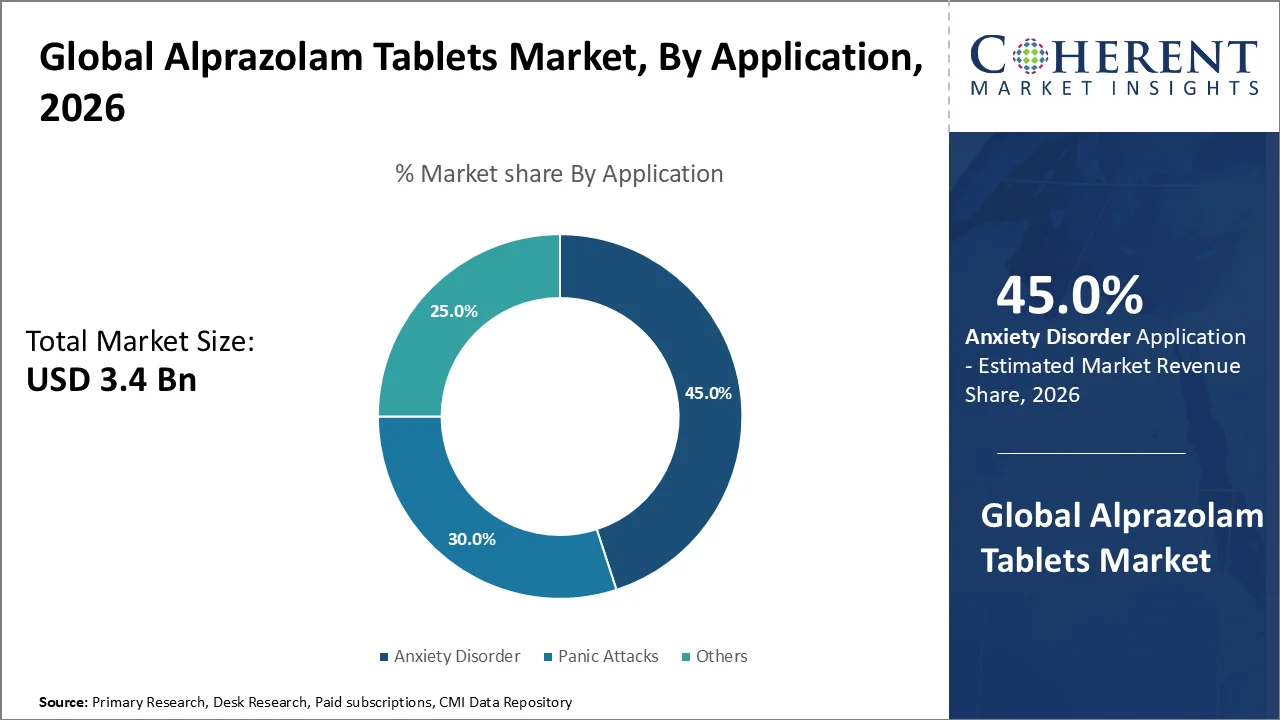
Anxiety disorder dominates the market, accounting for a significant 45.0% share in 2026. The Anxiety Disorder segment dominates the Alprazolam Tablets Market because anxiety conditions remain highly prevalent and clinically recognized, leading to extensive treatment demand. For instance, the World Health Organization reported on 8 September 2025 that anxiety disorders affect an estimated 4.4% of the global population, making them the most common mental disorder worldwide. In the U.S., data show anxiety diagnoses rising, with generalized anxiety disorder prevalence increasing from 5.4% (2020) to 6.6% by 2023, per a March 2026 study in the Journal of Mood & Anxiety Disorders. These high and growing diagnosis rates drive prescription demand for effective anxiolytics like alprazolam.
Market Drivers
Rising Prevalence of Anxiety and Panic Disorders
The rising prevalence of anxiety and panic disorders significantly fuels the market demand for clinically effective anxiolytics such as alprazolam, especially for short‑term relief. For instance, in March 14, 2026, according to a 2026 study published in the Journal of Mood and Anxiety Disorders reported that diagnosed generalized anxiety disorder in the U.S. increased from 5.4% in 2020 to 6.6% in 2023, with over 10.3% cumulative prevalence, highlighting growing clinical disease burden. According to the CDC’s March 2026 Emergency Department data, anxiety‑related visits reached 2,572 per 100,000 ED visits, reflecting acute symptom episodes. Global WHO data (published September 8, 2025) show anxiety disorders affect 359 million people worldwide, underscoring broad unmet need for therapeutic intervention.
Growing Awareness and Diagnosis of Mental Health Disorders
Growing awareness and diagnosis of mental health disorders is a key driver for the Alprazolam tablets market because more diagnosed cases translate into increased clinical demand for pharmacological treatment options. For instance, the World Health Organization (WHO) reported in September 2025 that anxiety disorders affect an estimated 4.4% of the global population and are the most common mental disorders worldwide, yet only about 27.6% receive treatment, highlighting both awareness gaps and opportunities for therapy uptake. Additionally, a March 2026 study in the Journal of Mood and Anxiety Disorders found that generalized anxiety disorder prevalence in the U.S. increased from 5.4% (2020) to 6.6% (2023), likely reflecting enhanced screening and clinical recognition. As governments, associations like the Anxiety and Depression Association of America, and regulatory bodies emphasize mental health screening and destigmatization, diagnoses rise, expanding the population eligible for anxiolytic therapy including alprazolam.
New Formulations and Innovative Delivery Systems Ignite Growth in the Alprazolam Tablets Market
New formulations and innovative delivery systems (like orally disintegrating tablets, extended‑release forms, and novel excipient matrices) enhance patient compliance, onset time, and dosing convenience in anxiety therapy, igniting growth in the Alprazolam Tablets Market. For instance, a January 2026 MDPI Journal of Clinical Medicine study found that 90% of patients with swallowing difficulties preferred orally disintegrating formulations, improving adherence and therapeutic outcomes. Additionally, the U.S. FDA issued Draft Guidance in May 2026 encouraging patient‑centric drug design, signaling regulatory support for innovative dosage forms that address unmet patient needs and broaden market uptake.
Furthermore, Aspire Biopharma Holdings, Inc. announced in March 2026 that it has partnered with Microsize to develop the first‑ever rapid‑delivery sublingual alprazolam powder formulation designed for faster anxiety relief. A Phase 1 clinical trial is planned for mid‑2026 to support eventual market introduction of this innovative delivery option.
Current Events and Their Impact on the Alprazolam Tablets
Current Event | Description and its Impact |
Stricter Benzodiazepine Safety Labeling and Prescribing Controls |
|
Extension of Telemedicine Prescribing Flexibilities for Controlled Medicines |
|
Government Action Against Unauthorized Pharmacy Sales of Scheduled Drugs |
|
Government Funding for Overdose Prevention and Addiction Response |
|
Expansion of Government Mental Health Access Programs |
|
Alprazolam Tablets Market Trends
- Strengthening of dependence and withdrawal warnings- In 2026, the market is shifting toward safer and more controlled use of alprazolam tablets as regulators intensify warnings on addiction, dependence, tolerance, and withdrawal. This is increasing demand for clear patient leaflets, tapering guidance, and physician-supervised use for safer long-term management. In January 2026, the UK MHRA announced stronger benzodiazepine packaging and patient-information warnings, including “May cause addiction, dependence, and withdrawal reactions.”
- Greater caution with opioids and other CNS depressants- Co-prescribing risk is becoming a central market trend because alprazolam can increase sedation and respiratory depression when used with opioids, cough or pain medicines, alcohol, or other depressants. This pushes prescribers toward lower doses, alternative therapies, and stronger patient counselling. In March 2026, MedlinePlus/NIH warned alprazolam may cause serious or life-threatening breathing problems, sedation, or coma with certain medicines.
- Sustained demand from anxiety and panic disorder treatment- Demand remains supported by the clinical role of alprazolam tablets in anxiety disorders and panic disorder, especially where rapid oral symptom control is required. However, demand is increasingly balanced with safety restrictions and low-dose initiation. In March 2026, MedlinePlus/NIH stated alprazolam is used for anxiety disorders and panic disorder, and FDA labeling lists acute GAD treatment and panic disorder as adult indications.
- Quality surveillance and dissolution testing of oral tablets- Regulatory attention is rising around whether oral tablets release the active ingredient consistently, especially for modified-release and immediate-release formulations. This trend is important for alprazolam because dose consistency, onset, and withdrawal control depend on reliable tablet performance. In March 2026, FDA CDER highlighted dissolution testing as a core drug-quality parameter that checks whether the active ingredient becomes available for absorption.
- Overdose and misuse surveillance shaping prescribing- Misuse monitoring is influencing alprazolam tablet prescribing because public-health data continue to link the drug with overdose deaths, often involving multiple substances. This trend supports tighter monitoring, limited refills, patient-risk assessment, and safe-storage messaging. In a 2026 NCHS report, alprazolam was the fifth most common drug involved in U.S. overdose deaths during 2017–2023 and was involved in 4,642 deaths in 2023.
Regional Insights
North America dominates owing to Increasing R&D
North America account 39.0% market share in 2026, because of high diagnosed anxiety prevalence, robust healthcare infrastructure, and extensive prescription practices. U.S. public‑health data show that about 19% of adults have ever been diagnosed with an anxiety disorder, and 12% regularly experience significant anxiety symptoms, reflecting a substantial patient base requiring treatment. A March 2026 study published in the Journal of Mood & Anxiety Disorders reported that generalized anxiety disorder prevalence in the U.S. rose from 5.4% (2020) to 6.6% (2023), highlighting increasing clinical recognition and therapeutic demand. Additionally, North America’s advanced clinical diagnostic systems, accessible psychiatric care, and strong regulatory oversight by the FDA prioritizing approved anxiety treatments facilitate high prescription volumes of anxiolytic agents like alprazolam tablets, reinforcing the region’s leading market position.
Asia Pacific Alprazolam Tablets Trends
The Asia Pacific region is the fastest‑growing market for Alprazolam tablets mainly because of rising mental health burdens, improving healthcare access, and increasing awareness of anxiety and related disorders. According to the OECD/World Health Organization Health at a Glance: Asia/Pacific 2024 report (published November 2024), depressive and anxiety disorders together accounted for approximately 60 % of the burden of mental health conditions in the region, highlighting a large unmet need for therapeutic interventions. Additionally, the WHO South‑East Asia Region launched a mental health dashboard in July 2025 to strengthen data‑driven responses to mental, neurological and substance use conditions, indicating growing policy focus on mental health care planning and treatment capacity. These factors combined with expanding pharmaceutical infrastructure, rising diagnosis rates, and broader adoption of psychiatric treatment fuel demand for anxiolytic medications like alprazolam tablets across Asia Pacific.
Growing Prevalence and Clinica Research is Accelerating the Alprazolam Tablets Demand in United States
The United States leads the North America alprazolam tablets market due to its large and well‑established pharmaceutical ecosystem with robust regulatory oversight by the U.S. Food and Drug Administration (FDA), which maintains comprehensive drug approval, safety, and database systems (updated June 2026). High prevalence of anxiety disorders (affecting 40 million adults annually) ensures strong domestic therapeutic demand. The U.S. also has widespread prescription drug use infrastructure, with retail pharmacies dispensing the majority of prescriptions. Large insurance coverage and primary care management further underpin market size and penetration relative to other North American countries.
Additionally, the U.S. maintains dominance due to its high prevalence of anxiety and related mental health treatment, with CDC data showing about 19% of U.S. adults ever diagnosed with an anxiety disorder in 2024, reflecting substantial patient demand and associated prescriptions. A robust prescription drug infrastructure and treatment reporting system supports widespread outpatient dispensing and clinical oversight. Additionally, the U.S. has stringent regulatory oversight via the FDA, driving consistent approval, safety monitoring, and guidance on CNS depressant use. The sheer scale of mental health care delivery and regulatory depth underpins the U.S. market’s leadership in North America.
China Alprazolam Tablets Trends
China’s dominance stems from its massive active pharmaceutical ingredient (API) production capacity, where it accounted for over 35% of global API output in 2023, supplying both generics and intermediates essential for benzodiazepines like alprazolam (WorldMetrics Report, published Feb 12, 2026, verified May 4, 2026). The National Medical Products Administration (NMPA) has streamlined approvals and GMP inspections, boosting quality compliance for export‑oriented drug manufacturing. China’s API clusters achieve economies of scale and competitive costs, making it a key source for global pharmaceutical supply chains. Additionally, robust contract manufacturing and rising innovative biopharma deals (e.g., US$56.7 billion in out‑licensing deals in early 2026) underscore its expanding pharmaceutical influence.
Source: Worldmetrics; SourcifyChina; pharmaceutical-tech.com
Who are the Major Companies in Alprazolam Tablets
Some of the major key players in Alprazolam Tablets Market are Aurobindo Pharma Ltd., Mylan N.V., Par Pharmaceuticals, Pfizer Inc., Taj Pharmaceuticals Ltd., Terrace Pharmaceuticals, Avalanche Pharmaceuticals Pvt. Ltd., Cooper Pharma Ltd., Sun Pharmaceuticals Industries Ltd., Cadila Pharmaceuticals Ltd., Lupin Limited, and Novartis International AG.
Key News
- In January 2026, Aspire Biopharma Holdings, Inc. filed a provisional patent application with the U.S. Patent and Trademark Office (USPTO) for an industry‑first sublingual powder formulation of alprazolam designed for rapid anxiety relief. This novel delivery aims to enhance bioavailability and onset speed, with a Phase I clinical trial planned for mid‑2026, signaling a new therapeutic approach beyond traditional tablets.
- In March 2026, Aspire Biopharma partnered with Microsize, a specialized contract development organization, to advance the rapid‑delivery sublingual alprazolam powder formulation targeting faster relief for anxiety and panic disorders, with optimization and testing underway toward anticipated mid‑year clinical evaluation.
Source: Aspire Biopharma & Microsize
- In March 2026, the U.S. Food and Drug Administration (FDA) granted approval for Alprazolam ODT C‑IV (orally disintegrating tablet), a new dosage form of alprazolam intended to improve ease of administration and patient compliance, officially added to the human prescription drug label listings.
Market Report Scope
Alprazolam Tablets Market Report Coverage
| Report Coverage | Details | ||
|---|---|---|---|
| Base Year: | 2025 | Market Size in 2026: | USD 3.4 Bn |
| Historical Data for: | 2020 To 2024 | Forecast Period: | 2026 To 2033 |
| Forecast Period 2026 to 2033 CAGR: | 5.0% | 2033 Value Projection: | USD 4.9 Bn |
| Geographies covered: |
| ||
| Segments covered: |
| ||
| Companies covered: | Aurobindo Pharma Ltd., Mylan N.V., Par Pharmaceuticals, Pfizer Inc., Taj Pharmaceuticals Ltd., Terrace Pharmaceuticals, Avalanche Pharmaceuticals Pvt. Ltd., Cooper Pharma Ltd., Sun Pharmaceuticals Industries Ltd., Cadila Pharmaceuticals Ltd., Lupin Limited, and Novartis International AG. | ||
Analyst Opinion
- The global alprazolam tablets market is increasingly shaped by stricter regulatory frameworks and heightened mental health awareness, making prescription management and patient adherence core components of pharmaceutical investment. As healthcare providers expand access to anxiety and panic disorder treatments through telemedicine and government programs, global market spending on regulated anxiolytic therapies is expected to reach roughly USD 3.2 billion in 2026, reflecting a 12% increase from the previous year. This growth indicates strong confidence in prescription-based therapeutic interventions and the ongoing clinical relevance of alprazolam for short-term management of anxiety and panic disorders.
- Hospitals, outpatient clinics, and mental health service providers are major drivers of alprazolam adoption, particularly for anxiety and panic disorder treatment in adults. Telemedicine platforms are increasingly being used to monitor patient use and adjust dosages in real time, reducing risks of dependency and adverse effects. For instance, as of March 2026, approximately 45% of licensed telepsychiatrists in the U.S. reported managing anxiety or panic disorder patients with controlled benzodiazepines under virtual supervision, highlighting the growing integration of alprazolam therapy into structured digital care pathways.
- Pharmaceutical companies are allocating a significant portion of their R&D and compliance budgets to enhance labeling, patient education, and abuse-mitigation programs for alprazolam tablets. A 2026 IQVIA survey shows that 68% of anxiolytic drug manufacturers have implemented updated risk management strategies, including digital prescription tracking and pharmacist training, compared to 57% in 2025. This indicates that controlled therapies like alprazolam are increasingly embedded into formal clinical and operational practices rather than treated solely as legacy products.
- Asia Pacific is emerging as a rapidly growing regional market, driven by expanding healthcare access, telehealth adoption, and government mental health initiatives in countries such as India, China, and Japan. In India, government programs like Tele-MANAS are improving early diagnosis and structured treatment for anxiety disorders, positioning the region as a key future contributor to global demand for clinically supervised alprazolam tablets.
Speak to the analyst
Want personalized insights?
Take the findings above to one of our principal consultants, or have the report rebuilt around the segments, geographies and competitors you actually track.
Market Segmentation
- By Form (Revenue, USD Bn, 2021-2033)
- Immediate Release Tablets
- Extended-Release Capsules
- Orally Disintegrating Tablets
- By Application (Revenue, USD Bn, 2021-2033)
- Anxiety Disorder
- Panic Attacks
- Others
- By Region (Revenue, USD Bn, 2021-2033)
- North America
- U.S.
- Canada
- Latin America
- Brazil
- Mexico
- Argentina
- Rest of Latin America
- Europe
- Germany
- U.K.
- France
- Italy
- Spain
- Russia
- Rest of Europe
- Asia Pacific
- China
- India
- Japan
- Australia
- South Korea
- ASEAN
- Rest of Asia Pacific
- Middle East
- GCC
- Israel
- Rest of Middle East
- Africa
- South Africa
- Central Africa
- North Africa
- North America
Sources
Primary Research Interviews
- Interviews with psychiatrists, neurologists, general physicians, and mental health specialists to understand alprazolam prescribing patterns, dosage preferences, patient adherence, and clinical use in anxiety and panic disorders.
- Insights from pharmaceutical manufacturers, generic drug producers, and formulation experts on alprazolam tablet production, immediate-release and extended-release formulation demand, pricing pressure, and regulatory compliance.
- Discussions with hospital pharmacists, retail pharmacy chains, and online pharmacy operators to evaluate prescription volume, distribution trends, generic substitution, and patient purchasing behavior.
- Conversations with healthcare consultants, regulatory experts, and drug safety professionals to assess market trends, controlled-substance regulations, misuse concerns, prescription monitoring, and future demand outlook.
Databases
- U.S. Food and Drug Administration (FDA) Drug Database
- European Medicines Agency (EMA) Clinical Trials Database
- IQVIA (formerly IMS Health) Pharmaceutical Sales and Prescription Database
- U.S. National Library of Medicine (NLM) – DailyMed & PubMed
- WHO Global Health Observatory (GHO) Pharmaceutical Consumption Data
Magazines
- Pharmaceutical Executive Magazine (Drug Development & Market Trends)
- Drug Topics (Community Pharmacy and Prescription Trends)
- PharmaVoice (Industry Insights and Innovation in Pharmaceuticals)
- Pharmaceutical Technology Magazine (Formulation & Manufacturing)
- The Pharma Letter (Regulatory, Market, and R&D Updates)
Journals
- Journal of Clinical Psychopharmacology (Benzodiazepine Studies)
- International Journal of Neuropsychopharmacology
- CNS Drugs (Central Nervous System Drug Research)
- Journal of Anxiety Disorders (Clinical Applications and Drug Efficacy)
- Therapeutic Advances in Psychopharmacology
Newspapers
- The New York Times (Health & Medicine Section)
- Financial Times (Pharmaceuticals & Healthcare Section)
- The Guardian (Health & Mental Health Section)
- The Wall Street Journal (Pharma and Biotech News)
- Times of India (Healthcare and Pharma Updates)
Associations
- American Psychiatric Association (APA)
- Anxiety and Depression Association of America (ADAA)
- International Society for CNS Clinical Trials and Methodology (ISCTM)
- American Pharmacists Association (APhA)
- European Federation of Pharmaceutical Industries and Associations (EFPIA)
Public Domain Sources
- U.S. FDA Drug Approval and Labeling Documents (Drugs@FDA)
- ClinicalTrials.gov (U.S. National Library of Medicine)
- WHO Reports on Mental Health and CNS Drug Use
- National Institutes of Health (NIH) – Research Publications
- Company Annual Reports and Investor Presentations from publicly listed pharmaceutical firms
Proprietary Elements
- CMI Data Analytics Tool
- Proprietary CMI Existing Repository of information for last 10 years
Get access to 250+ pages report
Every segment, forecast, competitor profile and data table behind the analysis above — available for instant download.
- ESOMAR Member
- ISO 9001:2015 Certified
- D-U-N-S Registered
- GDPR & CCPA Compliant
Missing comfort of reading report in your local language? Find your preferred language:
Transform your Strategy with Exclusive Trending Reports
Frequently Asked Questions
The Alprazolam Tablets is expected to reach USD 4.9 Bn in 2033.
Major players operating in the global Alprazolam Tablets include Aurobindo Pharma Ltd., Mylan N.V., Par Pharmaceuticals, Pfizer Inc., Taj Pharmaceuticals Ltd., Terrace Pharmaceuticals, Avalanche Pharmaceuticals Pvt. Ltd., Cooper Pharma Ltd., Sun Pharmaceuticals Industries Ltd., Cadila Pharmaceuticals Ltd., Lupin Limited, and Novartis International AG.
Stringent regulatory frameworks and growing preference for non-pharmacological therapies are the major factors hampering the growth of the alprazolam tablets market.
Rising prevalence of anxiety and panic disorders and growing awareness and diagnosis of mental health disorders are the major factors driving the growth of the alprazolam tablets market.
The Alprazolam Tablets is anticipated to grow at a CAGR of 5.0% between 2026 and 2033.
Among regions, North America is expected to account for a largest market share in the global Alprazolam Tablets over the forecast period.
Alprazolam tablets are oral dosage forms of alprazolam, a short-acting benzodiazepine. They are primarily prescribed for the management of anxiety disorders, panic disorders, and related conditions, acting on the central nervous system by enhancing the effect of the neurotransmitter GABA to produce sedative and anxiolytic effects. In the market, they are considered Schedule IV controlled substances in the U.S. and similarly regulated in other regions due to potential for dependence and abuse.