

Women’s Health Products Market Size and Forecast – 2026 to 2033
The Women’s Health Products Market is anticipated to grow at a CAGR of 5.6% with USD 57.4 Bn in 2026 and is expected to reach USD 77.7 Bn in 2033. Rising awareness of reproductive and maternal health drives the Women’s Health Products Market, while consumers increasingly adopt menstrual care and fertility products. According to the WHO, more than 700 women died each day in 2023 from preventable pregnancy- and childbirth-related causes.
Key Takeaways
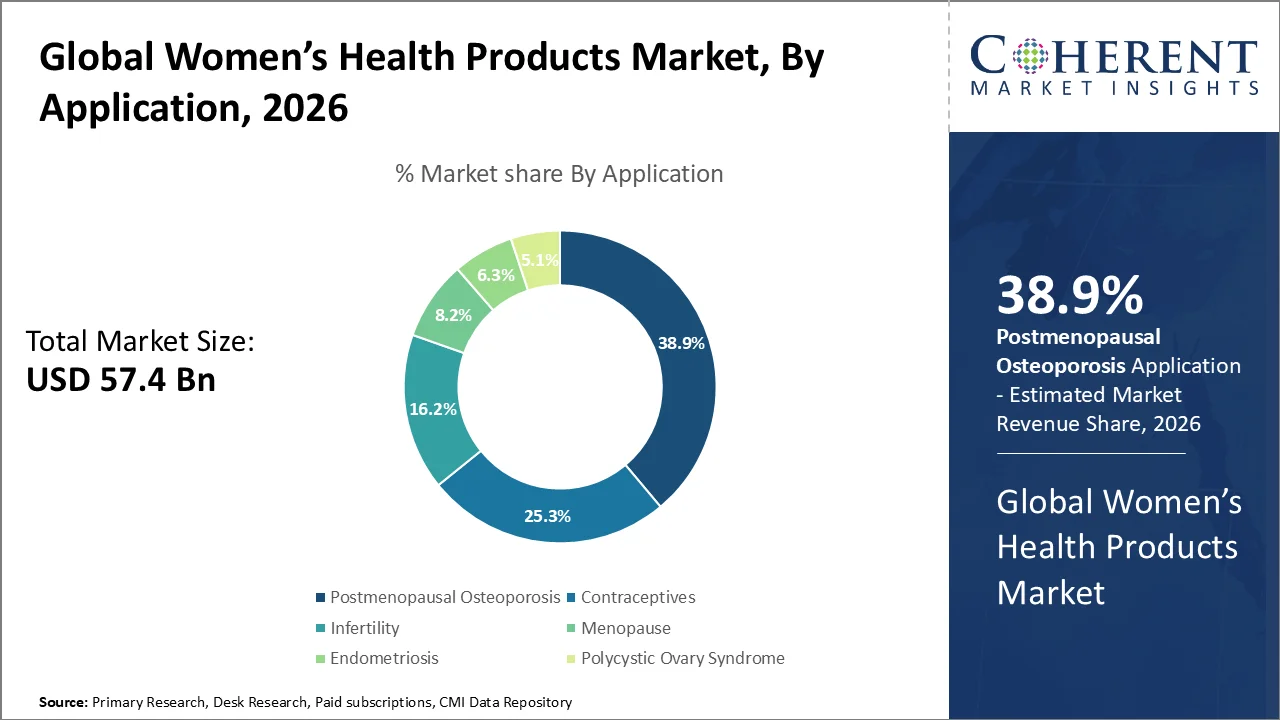
- Postmenopausal Osteoporosis hold the largest market share of 38.9% in 2026 owing to its rising prevalence of osteoporosis among postmenopausal women. Osteoporosis affects an estimated 200 million women worldwide, with prevalence rising sharply with age, from 10% at age 60 to 67% at age 90.
- North America is expected to acquire the dominant share of 42.7% in 2026 owing to the growing ageing female population. In 2023, 27% of U.S. women aged 65–74 lived alone, rising to 39% among those aged 75–84 and 50% among women aged 85 and older.
Current Events and Their Impact on the Women’s Health Products Market
Current Event | Description and its Impact |
FDA Removes Boxed Warnings from Menopausal Hormone Therapy Labels – 2025 |
|
Expansion of Government-Supported Family Planning in India |
|
Segmental Insights
- Current Industry Events of 2026
- Market Size Estimation
- Regional Breakdown
- Competitive Landscape
- Customer Intelligence
- Segmental Analysis
- Pricing Analysis
- Key Market Drivers, Challenges & Future Trends
- Customized Insights Section
Why is Postmenopausal Osteoporosis Acquiring the Largest Market Share?
Postmenopausal Osteoporosis hold the largest market share of 38.9% in 2026. Ageing female populations, declining estrogen levels after menopause, rising osteoporosis prevalence, and the growing risk of fragility fractures drive the postmenopausal osteoporosis segment in the Women’s Health Products Market. Poor calcium and vitamin D intake, physical inactivity, low bone mass, and inadequate sunlight exposure further increase demand for preventive and therapeutic products. Greater awareness of bone health, increased screening, and wider use of calcium, vitamin D, and osteoporosis treatments continue to support market growth, while longer life expectancy expands the postmenopausal consumer base. For instance, In November 2025, Ingenus Pharmaceuticals announced a major advancement in women’s health after the FDA approved its Conjugated Estrogens Tablets, USP, the first generic equivalent to Premarin. The company said the product is now available across the U.S. in all FDA-approved strengths: 0.3 mg, 0.45 mg, 0.625 mg, 0.9 mg, and 1.25 mg.
Women’s Health Products Market Trends
- Growing adoption of digital health and telehealth solutions is expanding access to gynecology, obstetrics, mental health, nutrition, and reproductive-health services. A WHO/Europe review found that digital health technologies can improve women’s access to healthcare and support areas including gynecology, obstetrics, pregnancy management, and mental health.
- Advances in fertility and reproductive health technologies are supporting demand for fertility diagnostics, assisted reproductive technologies, contraceptives, hormonal treatments, and home-based reproductive-health solutions. WHO estimates that around 1 in 6 people of reproductive age, approximately 17.5% globally, experience infertility during their lifetime, highlighting the substantial need for accessible fertility care.
- Growing awareness of women-specific diseases is strengthening demand for earlier diagnosis and targeted treatment. WHO estimates that PCOS affects approximately 13% of reproductive-aged women, while endometriosis affects approximately 10% or 190 million reproductive-age women worldwide. These disease burdens support continued demand for diagnostics, therapeutics, and disease-management solutions.
Regional Insights
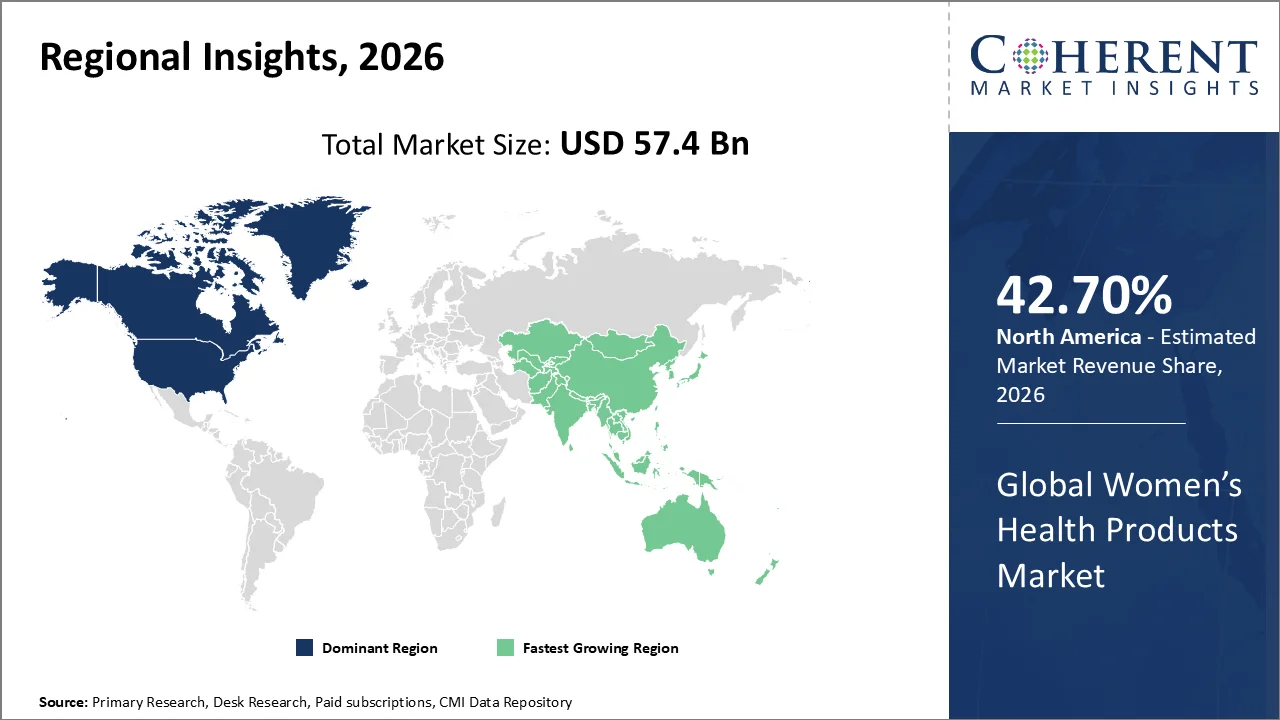
North America dominates owing to increasing regulatory support and new product approvals
North America is expected to acquire the dominant share of 42.70% in 2026. High healthcare spending, advanced medical infrastructure, an ageing female population, and greater awareness of women-specific health conditions drive the North American Women’s Health Products Market. Consumers increasingly seek preventive care, early diagnosis, and personalized treatments, supporting market growth. The rising prevalence of menopause-related disorders, osteoporosis, infertility, and gynecological conditions also increases demand for specialized products and therapies. Advances in diagnostics, digital health, and telehealth, combined with supportive insurance coverage and established screening programs, improve healthcare access and encourage women to adopt innovative health solutions. In October 2025, Searchlight Pharma Inc., through Apotex Inc.’s Branded Medicines Division, announced a strategic licensing agreement with Kissei Pharmaceutical Co., Ltd. to secure exclusive Canadian rights to linzagolix, a once-daily oral GnRH antagonist treatment.
Asia Pacific Women’s Health Products Market Trends
The Asia Pacific women’s health products market is expanding as women increasingly prioritize reproductive, maternal, menstrual, and menopausal health. Governments and healthcare providers are strengthening infrastructure and awareness initiatives, while rising healthcare spending, urbanization, and disposable incomes encourage consumers to purchase preventive and specialized health products. E-commerce platforms, digital health services, and FemTech solutions are also improving product accessibility and engagement. Furthermore, the region’s large female population, aging population, growing fertility awareness, and increasing acceptance of women-focused wellness products continue to drive market growth. In June 2026, Lupin Limited unveiled Azilsartan Medoxomil Tablets, 40 mg and 80 mg, in the U.S. after receiving FDA approval for its Abbreviated New Drug Application (ANDA).
United States Women’s Health Products Market Trends
The United States women’s health products market benefits from growing awareness of preventive healthcare, rising rates of conditions such as PCOS, endometriosis, infertility, menopause-related disorders, and osteoporosis, and increasing demand for personalized wellness solutions. Consumers increasingly seek contraceptives, fertility services, and menopause care, while digital health platforms, telehealth services, and at-home diagnostics improve access to care. Higher healthcare spending, continuous product innovation, expanding e-commerce channels, and stronger consumer interest in hormonal, reproductive, and holistic wellness further drive market growth. In April 2026, Uqora, a rapidly growing urinary tract health brand, expanded into Target stores and Target.com. Through its growing omnichannel presence, the company is making science-backed urinary health solutions more accessible to consumers.
Japan Women’s Health Products Market Trends
Japan’s women’s health products market benefits from growing awareness of menstrual, reproductive, and menopausal health and increasing adoption of FemTech solutions. Japan’s aging female population is driving demand for menopause, incontinence, vaginal dryness, and postmenopausal care products. Approximately 20.5 million women in Japan are aged 65 and older. Companies are expanding consumer choices through innovative products, digital health tools, and smart wellness solutions. E-commerce platforms offer greater convenience, privacy, and accessibility, while drugstores and variety stores strengthen product distribution. Employers are also promoting women’s health initiatives, further encouraging demand for related products.
Who are the Major Companies in Women’s Health Products Industry
Some of the major key players in Women’s Health Products are Allergan Pharmaceuticals, Pfizer Pharmaceuticals, Bayer Healthcare, Merck & Co., Teva Pharmaceutical industries, Lupin Ltd., Novo Nordisk Pharmaceutical, GlaxoSmithKline plc., AstraZeneca, Novartis AG, and Sanofi.
Key News
- In March 2026, PharmEasy unveiled WomenCare, a dedicated category that provides comprehensive, end-to-end support for women’s health. The company introduced the new category alongside exclusive offers to mark International Women’s Day.
Market Report Scope
Women’s Health Products Market Report Coverage
| Report Coverage | Details | ||
|---|---|---|---|
| Base Year: | 2025 | Market Size in 2026: | USD 57.4 Bn |
| Historical Data for: | 2020 To 2024 | Forecast Period: | 2026 To 2033 |
| Forecast Period 2026 to 2033 CAGR: | 5.6% | 2033 Value Projection: | USD 77.7 Bn |
| Geographies covered: |
| ||
| Segments covered: |
| ||
| Companies covered: | Allergan Pharmaceuticals, Pfizer Pharmaceuticals, Bayer Healthcare, Merck & Co., Teva Pharmaceutical industries, Lupin Ltd., Novo Nordisk Pharmaceutical, GlaxoSmithKline plc., AstraZeneca, Novartis AG, and Sanofi. | ||
Analyst Opinion
- Women’s health is moving from an underserved category to a priority consumer-health segment. An estimated 1.9 billion women worldwide are of reproductive age, creating a substantial recurring need for menstrual, fertility, pregnancy, and postpartum products. The strongest market driver is not simply greater awareness; it is the willingness of consumers to spend on products that address previously overlooked needs.
- Menstrual health remains the market’s volume engine, but innovation is shifting toward higher-value solutions. Approximately 1.8 billion people menstruate globally, with many experiencing pain, heavy bleeding, or other menstrual-health challenges. Products such as menstrual cups, period underwear, reusable pads, and digitally enabled tracking solutions are gaining relevance because consumers increasingly expect better comfort, convenience, and personalization rather than basic sanitary protection alone.
- Menopause represents the most underpenetrated commercial opportunity. More than 1 billion women globally are expected to be experiencing menopause or postmenopause by 2025, yet treatment and product adoption remain uneven. This gap creates considerable room for specialized supplements, intimate-care products, cooling solutions, pelvic-health devices, and digital therapeutics. The commercial opportunity is particularly compelling because menopause typically requires sustained support rather than a single purchase.
- Fertility and reproductive-health products are also benefiting from delayed childbearing and rising fertility awareness. In Japan, for example, the average age of women at first birth has risen to around 31 years, reinforcing demand for ovulation tests, fertility-monitoring devices, and assisted-reproduction-related products. This segment will increasingly compete on clinical credibility and personalization, rather than price alone.
- The strongest winners will be products that combine clinical evidence with everyday usability. For example, pelvic-floor devices, period-monitoring technologies, and menopause-focused digital platforms are moving beyond wellness positioning toward measurable health outcomes. In my opinion, companies that can demonstrate efficacy through clinical validation while maintaining discreet, convenient designs will have a structural advantage over generic women’s wellness products.
Speak to the analyst
Want personalized insights?
Take the findings above to one of our principal consultants, or have the report rebuilt around the segments, geographies and competitors you actually track.
Market Segmentation
- By Application (Revenue, USD Bn, 2021-2033)
- Postmenopausal Osteoporosis
- Contraceptives
- Infertility
- Menopause
- Endometriosis
- Polycystic Ovary Syndrome
- By Region (Revenue, USD Bn, 2021-2033)
- North America
- U.S.
- Canada
- Latin America
- Brazil
- Mexico
- Argentina
- Rest of Latin America
- Europe
- Germany
- U.K.
- France
- Italy
- Spain
- Russia
- Rest of Europe
- Asia Pacific
- China
- India
- Japan
- Australia
- South Korea
- ASEAN
- Rest of Asia Pacific
- Middle East
- GCC
- Israel
- Rest of Middle East
- Africa
- South Africa
- Central Africa
- North Africa
- North America
Sources
Primary Research interviews
- Gynecologists, obstetricians, reproductive-health specialists, fertility specialists, endocrinologists, and other women’s-health physicians
- Healthcare professionals including nurses, midwives, pharmacists, nutritionists, and women’s-health practitioners
- Hospital and clinic procurement managers and healthcare administrators
- Product distributors, wholesalers, retailers, pharmacy representatives, and e-commerce channel participants
- Manufacturers, product developers, regulatory professionals, quality-assurance specialists, and industry executives
- Women consumers and patient/user groups across relevant age, income, and geographic segments
- Interviews with experts involved in menstrual health, contraception, fertility, pregnancy, menopause, pelvic health, breast health, and other women’s-health product categories
Databases
- World Health Organization (WHO) databases and health-product information resources
- World Bank Data
- United Nations Data and UN Population Division databases
- OECD Health Statistics
- National Health Service (NHS) datasets and statistics
- U.S. National Institutes of Health (NIH) databases
- National Library of Medicine (NLM) databases
- PubMed/MEDLINE
- ClinicalTrials.gov
- CDC data and surveillance databases
- U.S. Food and Drug Administration (FDA) databases and product information
- European Medicines Agency (EMA) databases and regulatory information
- U.S. Census Bureau demographic and population databases
- Eurostat
- India Ministry of Health & Family Welfare data and publications
- Government of India health and demographic databases, including relevant National Family Health Survey (NFHS) datasets
- National Health Authority (India) and related public healthcare datasets
- UNFPA demographic and reproductive-health data
- WHO Global Health Observatory and related health-statistics resources
Magazines
- Women’s Health
- Prevention
- SELF
- Health
- Cosmopolitan – health and wellness coverage
- Marie Claire – health and wellness coverage
- Good Housekeeping – health and wellness coverage
- Men’s Health / Hearst Health & Wellness publications where relevant for comparative consumer-health trends
- Medical and healthcare trade magazines covering medical devices, pharmaceuticals, diagnostics, consumer healthcare, and wellness products
Journals
- Journal of Women’s Health
- Women’s Health
- Obstetrics & Gynecology
- American Journal of Obstetrics and Gynecology
- BJOG: An International Journal of Obstetrics & Gynaecology
- The Lancet
- The Lancet Women’s and Children’s Health
- JAMA
- JAMA Network Open
- BMJ
- BMC Women’s Health
- Reproductive Health
- Human Reproduction
- Fertility and Sterility
- Menopause
- Maturitas
- Journal of Midwifery & Women’s Health
- International Journal of Gynecology & Obstetrics
- PLOS ONE
- Scientific Reports
- Cochrane Database of Systematic Reviews
Newspapers
- The New York Times
- The Wall Street Journal
- The Washington Post
- The Guardian
- Financial Times
- Reuters
- Bloomberg
- The Times of India
- The Hindu
- Business Standard
- The Economic Times
- Mint
- Indian Express
- Other reputable national and regional newspapers covering healthcare, pharmaceuticals, medical devices, consumer products, demographics, and women’s health
Associations
- American College of Obstetricians and Gynecologists (ACOG)
- American Society for Reproductive Medicine (ASRM)
- North American Menopause Society / The Menopause Society
- International Federation of Gynecology and Obstetrics (FIGO)
- International Society of Gynecology and Endocrinology (ISGE)
- International Society for the Study of Women’s Sexual Health (ISSWSH)
- Society for Maternal-Fetal Medicine (SMFM)
- Society of Obstetricians and Gynaecologists of Canada (SOGC)
- Royal College of Obstetricians and Gynaecologists (RCOG)
- Federation of Obstetric and Gynaecological Societies of India (FOGSI)
- Indian Society of Assisted Reproduction (ISAR)
- Indian Menopause Society (IMS)
- International Planned Parenthood Federation (IPPF)
- International Confederation of Midwives (ICM)
- World Federation of Public Health Associations (WFPHA)
- Relevant national medical, gynecological, reproductive-health, pharmacy, and healthcare associations
Public Domain sources
- World Health Organization (WHO) publications, guidelines, statistics, databases, and technical reports
- United Nations and UNFPA reports and demographic statistics
- World Bank health and socioeconomic indicators
- U.S. Food and Drug Administration (FDA) regulatory information, product databases, safety communications, and Office of Women’s Health resources
- U.S. Centers for Disease Control and Prevention (CDC) women’s-health statistics, surveillance data, and publications
- National Institutes of Health (NIH) research, grants, clinical-trial information, and women’s-health resources
- National Library of Medicine (NLM) and PubMed scientific literature
- ClinicalTrials.gov
- European Medicines Agency (EMA) public regulatory information
- Government of India – Ministry of Health & Family Welfare
- Government of India – Ministry of Statistics & Programme Implementation
- National Family Health Survey (NFHS)
- Sample Registration System (SRS), India
- Census of India
- National Health Authority and other relevant Indian government health datasets
- National Health Service (NHS) publications and statistics
- Eurostat and other national statistical agencies
- Publicly available regulatory filings, product approvals, safety notices, recalls, clinical guidelines, government publications, and health-policy documents
- FDA’s Office of Women’s Health research and regulatory resources, including its Women’s Health Research Roadmap and research publications.
- CDC Office of Women’s Health reports, research, prevention programs, and public-health resources.
- WHO public databases and market-information resources covering health products, medicines, medical devices, clinical trials, and related information.
Proprietary Elements
- CMI Data Analytics Tool
- Proprietary CMI Existing Repository of information for last 10 years
Get access to 250+ pages report
Every segment, forecast, competitor profile and data table behind the analysis above — available for instant download.
- ESOMAR Member
- ISO 9001:2015 Certified
- D-U-N-S Registered
- GDPR & CCPA Compliant
Missing comfort of reading report in your local language? Find your preferred language:
Transform your Strategy with Exclusive Trending Reports
Frequently Asked Questions
The Women’s Health Products Market is anticipated to grow at a CAGR of 5.6% with USD 57.4 Bn in 2026 and is expected to reach USD 77.7 Bn in 2033.
Rising health awareness, reduced stigma around menstruation and reproductive health, preventive-care adoption, and greater access to digital health information are key demand drivers.
Menopause and pregnancy-related products stand out for their relatively high consumer spending.
FemTech is expanding the market through cycle-tracking applications, fertility-monitoring devices, wearables, telehealth platforms, and personalized health technologies.
Menopause is emerging as a commercially attractive segment because consumers increasingly seek dedicated solutions for symptoms and long-term health management.