

Contraceptives Market Analysis & Forecast: 2026-2033
Global contraceptive market was valued USD 22.44 Bn in 2026 and is expected to reach USD 54.12 Bn by 2033 exhibiting a compound annual growth rate (CAGR) of 13.4% from 2026 to 2033.
Key Takeaways
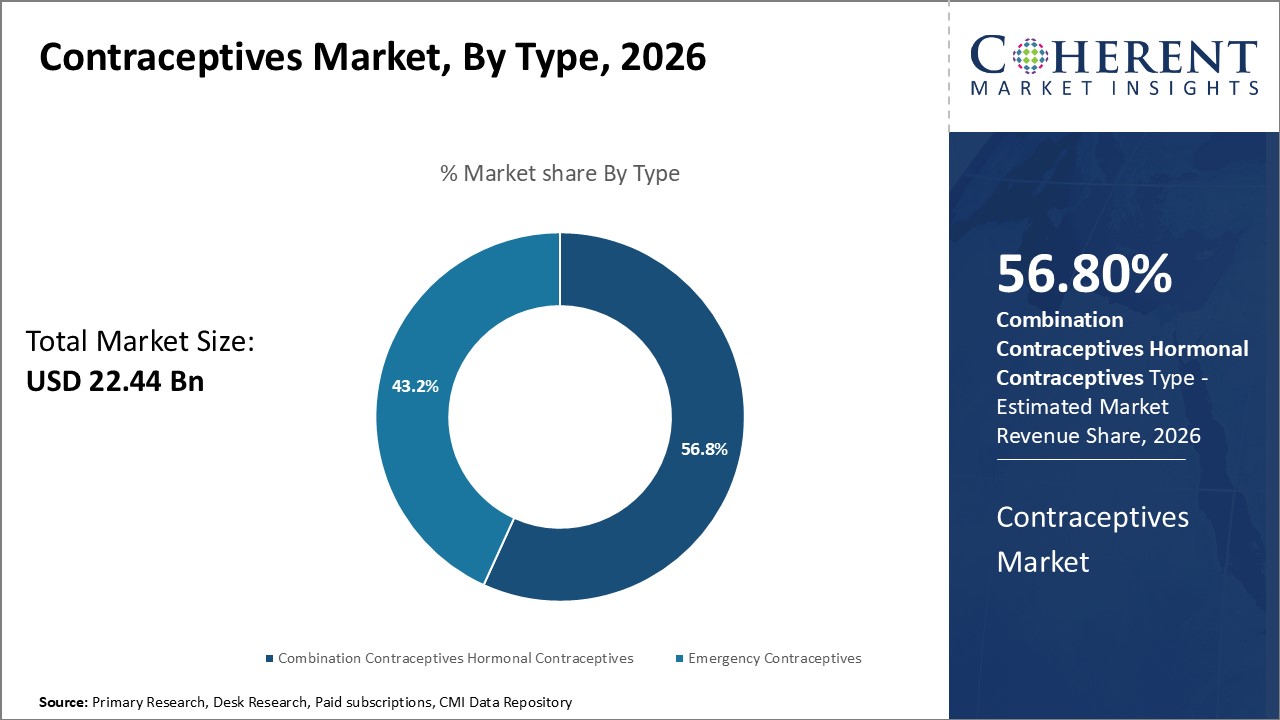
- Based on Type, the Combination Contraceptives segment is expected to hold the largest share of the market in 2026, due to their effectiveness and widespread availability.
- Based on Route of Administration, the Oral segment is projected to acquire the highest share of the market in 2026, favored for their convenience, affordability, and ease of use.
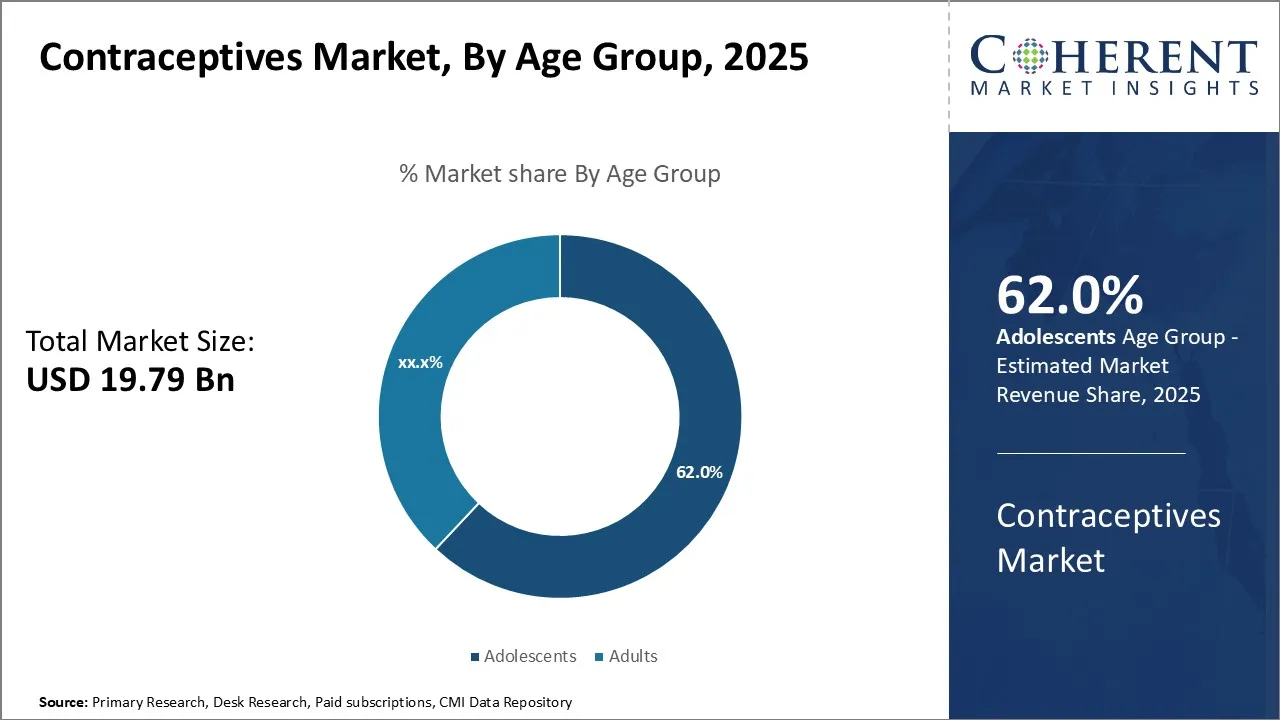
- Based on Age Group, the Adolescents segment is expected to hold the estimate share of 63% of the market in 2026, due to rising awareness, digital access, and youth-friendly healthcare services.
- Based on Distribution Channel, the Retail Pharmacies segment is projected to capture the greatest share of the market in 2026, leading in accessibility and consumer trust, offering over-the-counter options and pharmacist guidance.
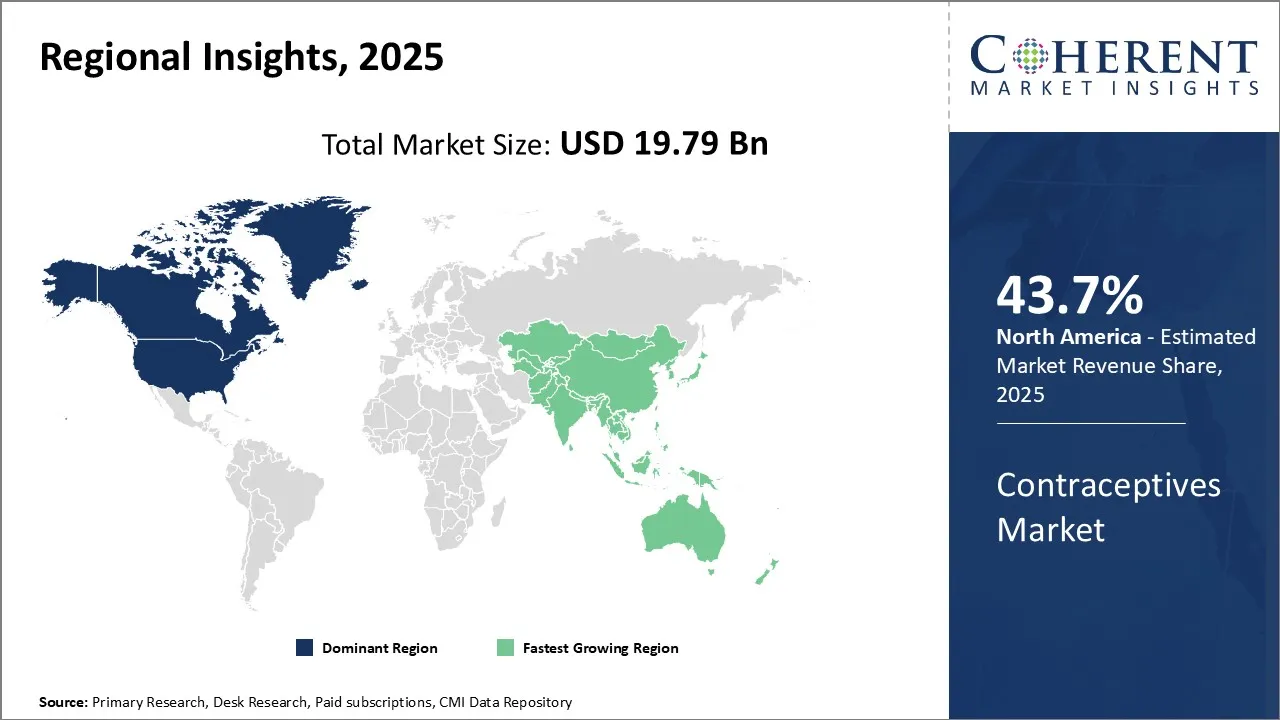
- Based on Region, North America is set to lead the market with 43.7% in 2026. While, Asia Pacific is anticipated to be the fastest growing region, with 25.2% in 2026.
Market Overview
The contraceptive market is witnessing steady growth driven by rising awareness, improved healthcare access, and evolving lifestyle choices. Increasing adoption of modern contraceptive methods, especially among younger populations, is fueling Contraceptive Market demand. Innovations in drug formulations and supportive government initiatives further contribute to expanding consumer interest and accessibility across both developed and emerging regions.
Current Events and their Impact on the Contraceptive Market
Current Event | Description and its Impact |
US Federal Policy Overhaul and Reproductive Health Restrictions (2025) |
|
Market Consolidation and Pharmaceutical M&A Activity |
|
Segmental Insights
- Current Industry Events of 2026
- Market Size Estimation
- Regional Breakdown
- Competitive Landscape
- Customer Intelligence
- Segmental Analysis
- Pricing Analysis
- Key Market Drivers, Challenges & Future Trends
- Customized Insights Section
Contraceptive Market Insights, By Age Group: Adolescents Are Fueling Due To Rising Awareness, Digital Access, And Youth-Friendly Healthcare Services
In terms of age group, the adolescents’ segment is expected to capture 63% share in 2026, due to rising awareness, better access to sex education, and youth-friendly healthcare services. Digital platforms and e-pharmacies offer discreet access, empowering teens to make informed reproductive choices. This shift reflects changing social norms and a growing emphasis on early reproductive health management.
For instance, in July 2026, WHO’s PMNCH unveiled a new strategy to safeguard the health and rights of women, children, and adolescents amid global challenges. The initiative emphasizes equitable access to reproductive health services, including contraception, and aims to accelerate progress through multisectoral partnerships and targeted investments in vulnerable communities.
Contraceptive Market Insights, By Type: Combination Contraceptives Remain the Most Widely Used Due To Their Effectiveness and Widespread Availability
In terms of type, the combination contraceptive segment is expected to hold the highest share of the market in 2026. Combination contraceptives, including monophasic, multiphasic, and extended-cycle pills, dominate due to their proven efficacy and hormonal balance. These formulations offer predictable cycles and fewer side effects, making them a preferred choice among women seeking reliable and manageable birth control options.
For instance, in April 2026, the Drug Office of Hong Kong released updated educational material on oral contraceptives, highlighting the importance of proper use and medical consultation. It outlines various formulations, including monophasic and multiphasic preparations, which offer different hormone dosing schedules. The guidance aims to support safe, informed contraceptive choices among consumers.
Contraceptive Market Insights, By Route of Administration: Oral Contraceptives Dominate, Favored for Their Convenience, Affordability, And Ease of Use
In terms of route of administration, the oral segment is projected to account for the largest contraceptives market share in 2026. Their ease of use, affordability, and widespread availability through pharmacies and healthcare providers make them a convenient option for users across various age groups and regions.
For instance, in February 2026, Pharmac announced a proposal to fund the progestogen-only oral contraceptive pill desogestrel (Cerazette). Expected to benefit around 43,000 people in its first year, the pill offers a wider dosing window and suits those unable to take estrogen.
Contraceptive Market Insights, By Distribution Channel: Retail Pharmacies Lead in Accessibility and Consumer Trust, Offering Over-The-Counter Options and Pharmacist Guidance
In terms of distribution channel, the retail pharmacies segment is expected to contribute the greatest share of the market in 2026. Their accessibility, trusted service, and ability to offer over-the-counter contraceptive products make them a go-to source for consumers seeking convenience and privacy in purchasing birth control.
For instance, in August 2026, Green Lane Pharmacy in Liverpool will become the first in the UK to pilot an NHS-funded contraceptive implant service starting September 2026. The initiative aims to expand access to long-acting reversible contraception (LARC), reduce unintended pregnancies, and improve reproductive health equity, especially for students and underserved communities.
Regional Insights
North America Contraceptive Market Analysis & Trends
North America is expected to be the largest market for temporary healthcare staffing during the forecast period, accounting for over 43.7% of the market share in 2026. Within the global contraceptives market, North America similarly holds a dominant position, driven by factors such as high awareness levels, favorable government initiatives, and advanced healthcare infrastructure. In countries like the United States and Canada, access to contraceptives is widespread, with various options available over the counter or through healthcare providers. Moreover, comprehensive sexual education programs in schools and community settings contribute to increased awareness and usage of contraceptives among the population. The presence of leading pharmaceutical companies in North America further boosts market growth, as they continue to innovate and develop new contraceptive products to meet evolving consumer needs and preferences.
For instance, in April 2026, at the American Urological Association (AUA) 2026 meeting, researchers presented promising results for ADAM, a long-term injectable male contraceptive. Developed by Contraline, ADAM uses a hydrogel injected into the vas deferens to block sperm flow. Early trials show strong safety and tolerability, marking a potential breakthrough in male birth control options.
Asia Pacific Contraceptive Market Analysis & Trends
Asia Pacific is expected to be the fastest growing region in the contraceptive market revenue, accounting for over 25.2% of the market share in 2026. In contrast, the Asia Pacific region presents unique challenges and opportunities within the contraceptives market. While the region encompasses diverse countries with varying levels of economic development and cultural norms, access to contraceptives remains a significant issue in many areas. Limited awareness, social stigmas, and inadequate healthcare infrastructure pose barriers to contraceptive use in certain parts of Asia Pacific. However, increasing efforts by governments, non-governmental organizations, and healthcare providers to address these challenges are driving market growth.
For instance, in September 2026, Bangladesh-based Techno Drugs Ltd launched South Asia’s first-ever single-rod contraceptive implant under the brand ETO Plant. This innovation replaces the traditional double-rod system, offering a safer, long-term solution. The company now operates the region’s only dedicated facility for such implants, marking a major leap in reproductive healthcare manufacturing.
Contraceptive Market Outlook Country-Wise
The U.S. Contraceptive Market Trends
The U.S. contraceptive market is expanding due to increased awareness of sexual health, government-supported access programs, and technological advances in birth control methods. Rising rates of unintended pregnancies and a growing preference for preventive healthcare also fuel demand.
For instance, in March 2026, Researchers at the University of Minnesota have achieved a major milestone in developing the first hormone-free male birth control pill. The non-hormonal approach targets sperm mobility without affecting testosterone levels, offering a safer alternative to traditional methods. This breakthrough could reshape male contraceptive options and expand reproductive health equity.
Singapore Contraceptive Market Trends
The demand for contraceptives in Singapore is driven by increased awareness of reproductive health, rising use of hormonal and long-acting reversible contraceptives (LARCs), and support from healthcare providers. Urbanization and shifting family planning preferences also contribute to market expansion.
For instance, in September 2026, On World Contraception Day 2026, Organon APAC pledged $18,000 to UNFPA to support reproductive health initiatives across Asia-Pacific. The donation aims to improve access to contraception, promote education, and empower women and girls with informed choices. This commitment reinforces Organon’s mission to advance women’s health globally.
Market Report Scope
Global Contraceptive Market Report Coverage
| Report Coverage | Details | ||
|---|---|---|---|
| Base Year: | 2025 | Market Size in 2026: | USD 22.44 Bn |
| Historical Data for: | 2020 To 2024 | Forecast Period: | 2026 To 2033 |
| Forecast Period 2026 to 2033 CAGR: | 13.4% | 2033 Value Projection: | USD 54.12 Bn |
| Geographies covered: |
| ||
| Segments covered: |
| ||
| Companies covered: | Bayer AG, Pfizer Inc., Teva Pharmaceutical Industries, Merck & Co., Janssen Pharmaceutical Companies, Allergan, Piramal Enterprises, Glenmark Pharmaceuticals, Lupin Pharmaceuticals, Mylan Pharmaceuticals, Mithra Pharmaceuticals, Gedeon Richter, HLL Lifecare, Cadila Healthcare, Organon and Other Prominent Players | ||
| Growth Drivers: |
| ||
| Restraints & Challenges: |
| ||
Global Contraceptive Market Drivers
Increasing popularity of contraceptive drugs
The increasing popularity of contraceptive drugs is reshaping the global contraceptive market. With growing awareness around reproductive health and family planning, more individuals are opting for modern contraceptive methods, especially oral pills and hormonal injectables. This shift is driven by improved access to healthcare, rising education levels, and supportive government initiatives promoting safe sex practices. As a result, the contraceptive market size continues to expand steadily, reflecting a broader societal embrace of proactive health management. The trend also highlights changing attitudes toward personal autonomy and reproductive choices, making contraceptive drugs a central component of public health strategies worldwide.
Growing government initiatives for promoting access to family planning and contraceptives
Growing government initiatives aimed at expanding access to family planning and contraceptives are playing a pivotal role in shaping the contraceptive market. Programs such as India's Mission Parivar Vikas and global efforts led by organizations like UNFPA are increasing awareness, subsidizing products, and integrating contraceptive services into public healthcare systems. These initiatives target underserved populations, promote informed reproductive choices, and reduce barriers to access. As a result, the demand for modern contraceptive methods continues to rise, contributing to the overall growth in Contraceptive Market value. This reflects a broader commitment to reproductive health and empowerment across diverse regions.
Global Contraceptive Market Opportunities
Growing demand in developing countries
Growing government initiatives aimed at expanding access to family planning and contraceptives are significantly influencing the contraceptive market landscape. Public health campaigns, subsidies, and integration of contraceptive services into national healthcare systems are increasing awareness and accessibility, particularly in developing regions. These efforts are not only empowering individuals with reproductive choices but also driving demand for modern contraceptive methods such as pills, injectables, and implants. As a result, the Contraceptive Market forecast indicates sustained growth in the coming years. This momentum reflects a global commitment to reproductive health, gender equality, and population management through strategic policy and healthcare investments.
Growing female population opting for contraceptive drugs
The growing number of women opting for contraceptive drugs is reshaping the dynamics of the contraceptive market. As female populations become more informed and empowered about reproductive health, the demand for modern contraceptive methods, particularly oral pills and hormonal injectables, continues to rise. This shift is especially prominent in urban and developing regions where education and healthcare access are improving. In response, Contraceptive Market research is increasingly focused on understanding the evolving preferences, usage patterns, and regional disparities among women. These insights are guiding product innovation and policy development, ensuring that contraceptive solutions align with the needs of a diverse and expanding female consumer base.
Global Contraceptive Market Trends
Customization and innovation in pill formulations
Customization and innovation in contraceptive pill formulations are transforming the contraceptive market by catering to diverse user needs and preferences. Pharmaceutical companies are developing pills with varied hormone combinations, extended-cycle regimens, and reduced side effects to enhance user comfort and compliance. These advancements address concerns such as hormonal sensitivity, lifestyle compatibility, and long-term health impacts. As a result, consumers now have access to more personalized contraceptive options, driving greater adoption and satisfaction. This trend reflects a broader shift in the contraceptive market toward user-centric solutions, where innovation plays a key role in expanding accessibility, effectiveness, and overall market growth.
Analyst Opinion (Expert Opinion)
The contraceptives market is undergoing a structural transformation, driven by evolving social norms, policy support, and technological innovation. Adoption of long-acting reversible contraceptives (LARCs), such as IUDs and hormonal implants. Markets like Sweden and the Netherlands, where over 20% of women rely on LARCs, demonstrate how public health endorsement accelerates uptake.
Male contraceptive innovation is gaining momentum. Non-hormonal options, such as reversible inhibition of sperm under guidance (RISUG), suggest a gradual shift toward shared contraceptive responsibility. While commercialization is pending, biotech investment in India and the U.S. underscores growing interest.
Digital health platforms are reshaping access. Telemedicine prescriptions and fertility-tracking apps reduce barriers, particularly in underserved areas. Companies like Nurx have shown that direct-to-consumer digital models normalize contraceptive use among younger populations.
Regional dynamics remain divergent: high-income markets prioritize technological sophistication, while emerging markets focus on affordability and awareness. Cultural sensitivities and regulatory inconsistencies continue to limit adoption in parts of Latin America and the Middle East. Patent expirations drive generic competition, prompting innovation in delivery systems and digital integration.
Overall, the market reflects broader societal attitudes toward reproductive autonomy. Stakeholders aligning medical innovation with accessibility and user-centric design are positioned to lead in this evolving landscape.
Speak to the analyst
Want personalized insights?
Take the findings above to one of our principal consultants, or have the report rebuilt around the segments, geographies and competitors you actually track.
Recent Developments
- In May 2025, The Society of Gynecologic Oncology (SGO) and the Society of Family Planning (SFP) released updated clinical guidance on contraception for individuals affected by cancer. The recommendations address safety, efficacy, and personalized contraceptive choices, aiming to support reproductive autonomy and improve care for patients navigating cancer treatment and survivorship.
- In January 2025, Sebela Women’s Health has announced the publication of Phase 3 trial results for its investigational 175 mm² copper intrauterine device (IUD). The study demonstrated high contraceptive efficacy and safety over seven years, supporting its potential as a long-acting, hormone-free birth control option for women seeking reliable, reversible contraception.
- In July 2023, Perrigo Company plc., one of the leading providers of Consumer Self-Care Products announced that the U.S. Food and Drug Administration (FDA) approved Opill, a progestin-only daily oral contraceptive, for over-the-counter (OTC) use for all ages. Opill is the first ever birth control pill available over the counter in the U.S.
- In July 2023, the U.S. Food and Drug Administration approved Opill (norgestrel) tablet for nonprescription use to prevent pregnancy, the first daily oral contraceptive approved for use in the U.S. without a prescription.
Market Segmentation
- By Type (Revenue, USD Bn, 2021 - 2033)
- Combination Contraceptives
- Monophasic pills
- Multiphasic pills
- Extended-cycle pills
- Hormonal Contraceptives
- Progestin-Only Pills
- Emergency Contraceptives
- Levonorgestrel-based
- Ulipristal acetate-based
- Combination Contraceptives
- By Route of Administration (Revenue, USD Bn, 2021 - 2033)
- Oral
- Injectable
- Intrauterine
- Vaginal
- Others (Patches, etc.)
- By Age Group (Revenue, USD Bn, 2021 - 2033)
- Adolescents
- Adults
- By Distribution Channel (Revenue, USD Bn, 2021 - 2033)
- Online Pharmacies
- Hospital Pharmacies
- Retail Pharmacies
- By Region (Revenue, USD Bn, 2021 - 2033)
- North America
- U.S.
- Canada
- Latin America
- Brazil
- Argentina
- Mexico
- Rest of Latin America
- Europe
- Germany
- U.K.
- Spain
- France
- Italy
- Russia
- Rest of Europe
- Asia Pacific
- China
- India
- Japan
- Australia
- South Korea
- ASEAN
- Rest of Asia Pacific
- Middle East
- GCC Countries
- Israel
- Rest of Middle East
- Africa
- South Africa
- North Africa
- Central Africa
- North America
- Top Companies in the Global Contraceptive Market
- Bayer AG
- Pfizer Inc.
- Teva Pharmaceutical Industries
- Merck & Co.
- Janssen Pharmaceutical Companies
- Allergan
- Piramal Enterprises
- Glenmark Pharmaceuticals
- Lupin Pharmaceuticals
- Mylan Pharmaceuticals
- Mithra Pharmaceuticals
- Gedeon Richter
- HLL Lifecare
- Cadila Healthcare
- Organon
- Other Prominent Players
Sources
Primary Research Interviews from the following stakeholders
Stakeholders
- Interviews with contraceptive manufacturers, pharmaceutical distributors, gynecologists, family planning advisors, public health officials, retail pharmacy managers, and NGO program directors across major global markets.
Specific stakeholders
- Product and marketing managers at contraceptive product manufacturers (e.g., oral pills, condoms, injectables, IUDs, implants).
- Procurement officers at public health agencies and family planning programs (e.g., UNFPA, USAID, NHS, National Health Mission – India).
- Gynecologists, obstetricians, and reproductive health specialists from hospitals and clinics across Asia, Europe, and North America.
- NGO and non-profit representatives from reproductive health and population welfare initiatives (e.g., Marie Stopes International, Pathfinder International).
- Supply chain and distribution managers from major pharmacy chains and e-commerce healthcare platforms.
- Policy advisors from ministries of health and population welfare departments.
- Manufacturing operations managers from API and hormonal ingredient suppliers.
- Marketing leads for sexual wellness and reproductive healthcare brands.
Databases
- World Health Organization (WHO) Global Health Observatory
- UNFPA Contraceptive Commodities Database
- World Bank – Reproductive Health Indicators
- United Nations Department of Economic and Social Affairs (UN DESA) – Population Division
- OECD Health Data
- Eurostat – Healthcare and Pharmaceuticals Data
- Centers for Disease Control and Prevention (CDC) – Reproductive Health Surveys
- National Family Health Survey (NFHS), India
- Demographic and Health Surveys (DHS) Program
- World Trade Organization (WTO) Trade Statistics
- Directorate General of Commercial Intelligence and Statistics (DGCIS), India
- China Customs Statistics
- S. Food and Drug Administration (FDA) Database
- European Medicines Agency (EMA) Reports
Magazines
- PharmaTimes
- Medical Device Network – Women’s Health Section
- Pharmaceutical Technology
- Healthcare Global
- Modern Healthcare
- Drug Development & Delivery
- Contemporary OB/GYN
- Healthcare Packaging
- Population Reports
Journals
- Contraception (Elsevier)
- International Journal of Gynecology & Obstetrics
- The Lancet – Reproductive Health
- BMJ Sexual & Reproductive Health
- Journal of Family Planning and Reproductive Health Care
- Human Reproduction (Oxford University Press)
- Journal of Women’s Health
- Reproductive Health (BioMed Central)
- Frontiers in Global Women’s Health
Newspapers
- The Wall Street Journal – Healthcare & Life Sciences
- The Economic Times – Pharmaceuticals & Healthcare
- The Hindu Business Line – Life Sciences
- Financial Times – Global Health and Pharma
- Nikkei Asia – Health & Biotechnology
- New York Times – Health Section
- Reuters Health
- South China Morning Post – Life Sciences
Associations
- World Health Organization (WHO) – Department of Sexual and Reproductive Health
- International Planned Parenthood Federation (IPPF)
- United Nations Population Fund (UNFPA)
- American College of Obstetricians and Gynecologists (ACOG)
- International Federation of Gynecology and Obstetrics (FIGO)
- Population Council
- Family Planning 2030 (FP2030)
- Reproductive Health Supplies Coalition (RHSC)
- European Society of Contraception and Reproductive Health (ESC)
- Federation of Obstetric and Gynaecological Societies of India (FOGSI)
Public Domain Sources
- Ministry of Health and Family Welfare (Government of India)
- U.S. Department of Health & Human Services (HHS)
- National Institutes of Health (NIH), U.S.
- Public Health England (PHE)
- National Health Service (NHS), U.K.
- European Medicines Agency (EMA)
- World Bank – Population and Reproductive Health Division
- UN Data Portal – Health and Population Indicators
- National Institute for Health and Care Excellence (NICE), U.K.
- World Population Prospects Reports (UN DESA)
Proprietary Elements
- CMI Data Analytics Tool
- Proprietary Repository of contraceptive product data spanning over 8 years across product types (oral, barrier, implantable, hormonal, emergency)
- End-user channels (hospital, retail, public health programs), and regional adoption trends.
Definition: Contraceptive pills which is also known as birth control pills or oral contraceptives, are pharmaceutical medications that are designed to prevent pregnancy. These pills typically contain synthetic hormones, such as estrogen and progestin (synthetic progesterone), which work to inhibit ovulation (the release of an egg from the ovary) and thicken cervical mucus to impede sperm movement. By altering hormonal levels in the body, contraceptive pills aim to create conditions that make fertilization less likely.
Get access to 250+ pages report
Every segment, forecast, competitor profile and data table behind the analysis above — available for instant download.
- ESOMAR Member
- ISO 9001:2015 Certified
- D-U-N-S Registered
- GDPR & CCPA Compliant
Missing comfort of reading report in your local language? Find your preferred language:
Transform your Strategy with Exclusive Trending Reports
Frequently Asked Questions
The Contraceptives Market is estimated to be valued at USD 22.44 Bn in 2026, and is expected to reach USD 54.12 Bn by 2033.
Side effects associated with pills and risks of blood clots and cardiovascular diseases are the key factor hampering the growth of the global contraceptive market.
Increasing popularity of contraceptive drugs and growing government initiatives for promoting access to family planning and contraceptives are the major factors driving the global contraceptive market.
The adolescents segment is the leading age group segment in the global contraceptive market.
The major players operating in the global contraceptive market are Bayer AG, Pfizer Inc., Teva Pharmaceutical Industries, Merck & Co., Janssen Pharmaceutical Companies, Allergan, Piramal Enterprises, Glenmark Pharmaceuticals, Lupin Pharmaceuticals, Mylan Pharmaceuticals, Mithra Pharmaceuticals, Gedeon Richter, HLL Lifecare, Cadila Healthcare, Organon and Other Prominent Players
North America leads the global contraceptive market.
The CAGR of the Contraceptives Market is projected to be 13.4% from 2026 to 2033.