

Coronavirus Treatment Drugs Market Size and Share Analysis- 2026 To 2033
The coronavirus treatment drugs market size is anticipated to grow at a CAGR of 13.3% with USD 24.8 Bn in 2026 and is expected to reach USD 62 Bn in 2033. The market is growing with the increasing adoption of oral antiviral treatments and monoclonal antibodies. As per the FDA's 2023 approval, the drugs like Paxlovid (nirmatrelvir/ritonavir) and Veklury (remdesivir) continue to be vital in treating COVID-19, especially among high-risk populations. The continuous clinical trials along with the new treatments like molnupiravir and baricitinib, also contribute to the market’s growth.
Key Takeaways
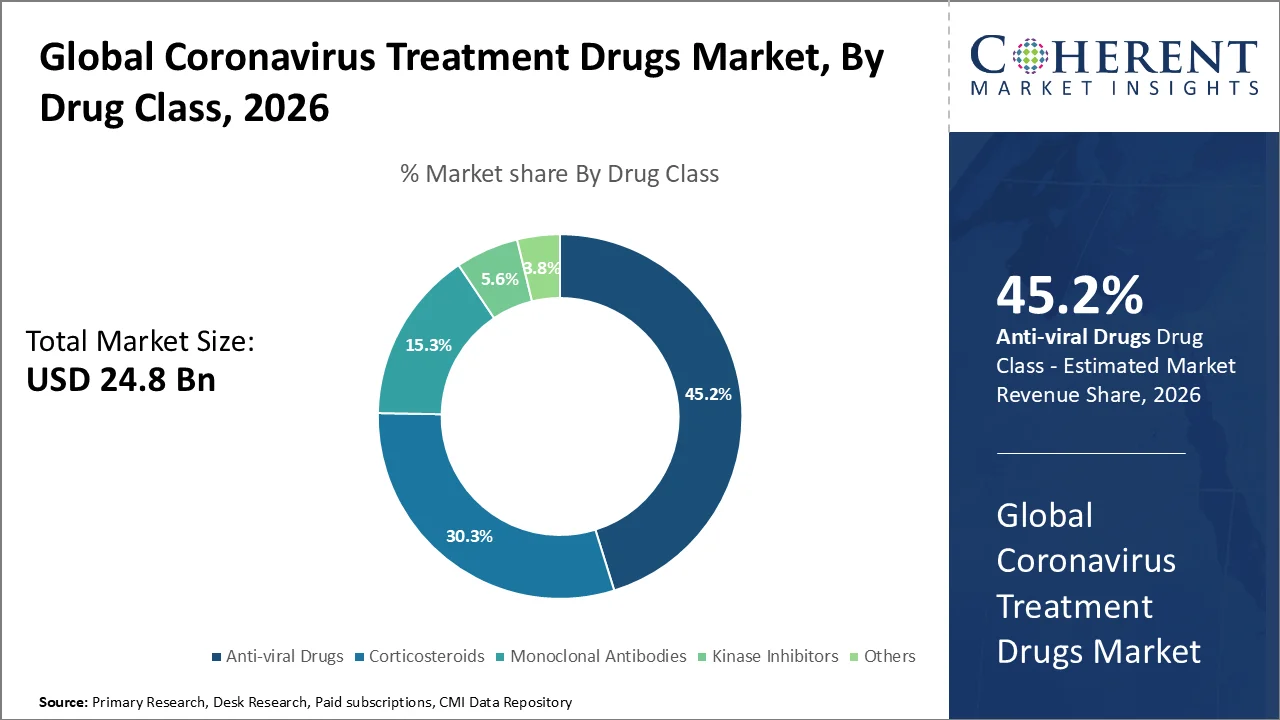
- On the basis of drug class, the anti‑viral drugs segment is projected to account for the largest share of 45.20% in 2026, due to the continued dominance of antivirals such as nirmatrelvir/ritonavir, remdesivir, and molnupiravir in official COVID‑19 treatment guidance. According to FDA listings, 3 of the 7 drugs authorized/approved for COVID
- By route of administration, the oral segment is projected to account for the largest share of 70.5% in 2026. The segment’s growth is owing to the wide clinical adoption of oral antiviral regimens. The data from the CDC MMWR from June 1, 2023–September 30, 2025 indicate that among outpatients aged ≥65 years who received a COVID
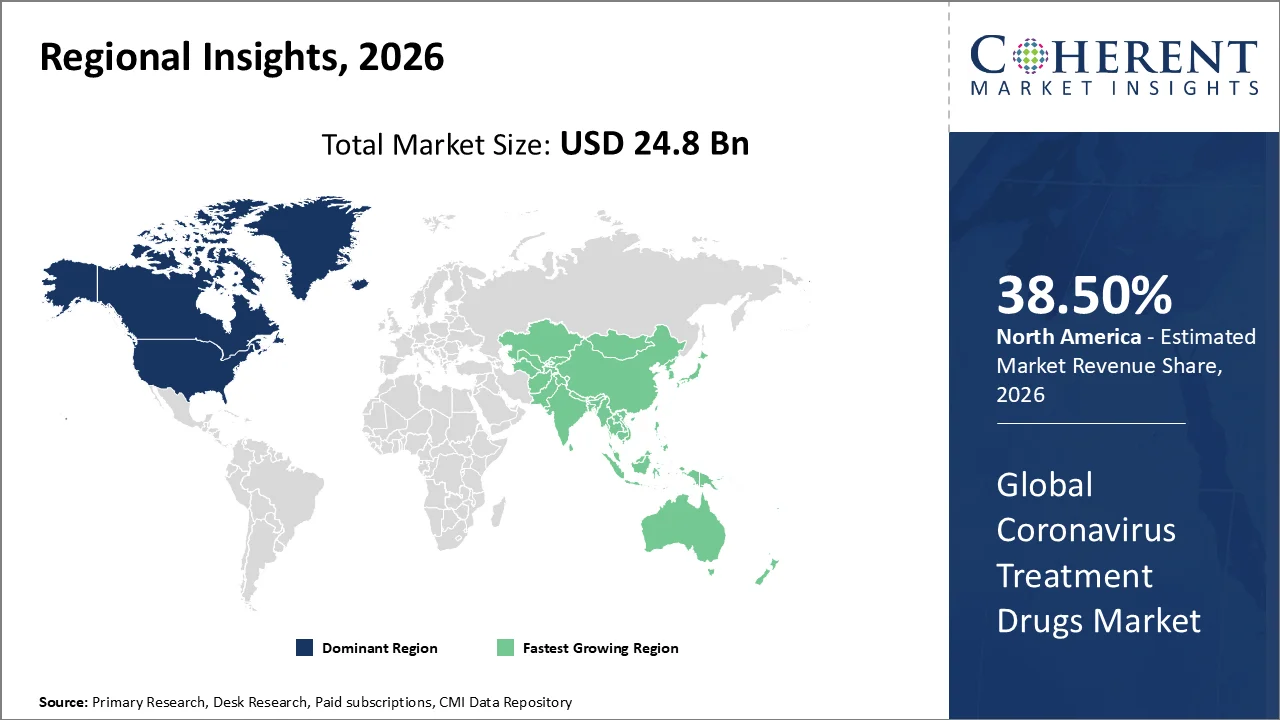
- North America is expected to secure the highest proportion of 38.5% in 2026, attributable to robust healthcare infrastructure, continued public health promotion of early antiviral use, and measurable prescription uptake. For example, U.S. outpatient data show that between 16%–38% of older adults (≥65 years) with COVID, reflecting regional treatment trends and access.
Segmental Insights
Which Drug Class Segment Dominates the Market?
On the basis of drug class, the anti-viral drugs segment accounts for the largest coronavirus treatment drugs market share of 45.2% in 2026. The segment’s growth is due to widespread use of both oral and intravenous antiviral treatments such as Paxlovid (nirmatrelvir/ritonavir) and Veklury (remdesivir), which are FDA-approved to reduce the risk of hospitalization and death in patients with mild to moderate COVID-19. These antiviral drugs have played a significant role in managing COVID-19 cases since their authorization.
The recent clinical developments continue to strengthen the position of antiviral treatments. For instance, in November 2022, Enanta Pharmaceuticals, Inc., a clinical-stage biotechnology firm focused on developing small molecule drugs for viral infections, launched the SPRINT (SARS-CoV-2 PRotease INhibitor Treatment) Phase 2 clinical trial. The trial was designed to assess the safety, tolerability, as well as the antiviral efficacy of EDP-235, Enanta's lead oral 3CL protease inhibitor. The study will likely involve non-hospitalized adults with mild to moderate COVID-19.
In addition, new monoclonal antibody as well as biologic treatments are navigating regulatory pathways with the FDA, aiming for potential Biologics License Applications (BLAs) for next-generation COVID-19 therapies. These ongoing approvals, clinical trial progress, and the high demand for antiviral prescriptions ensure the continued dominance of the antiviral drug class in the overall market for COVID-19 treatment.
- Current Industry Events of 2026
- Market Size Estimation
- Regional Breakdown
- Competitive Landscape
- Customer Intelligence
- Segmental Analysis
- Pricing Analysis
- Key Market Drivers, Challenges & Future Trends
- Customized Insights Section
Oral Segment to Secure the Largest Share
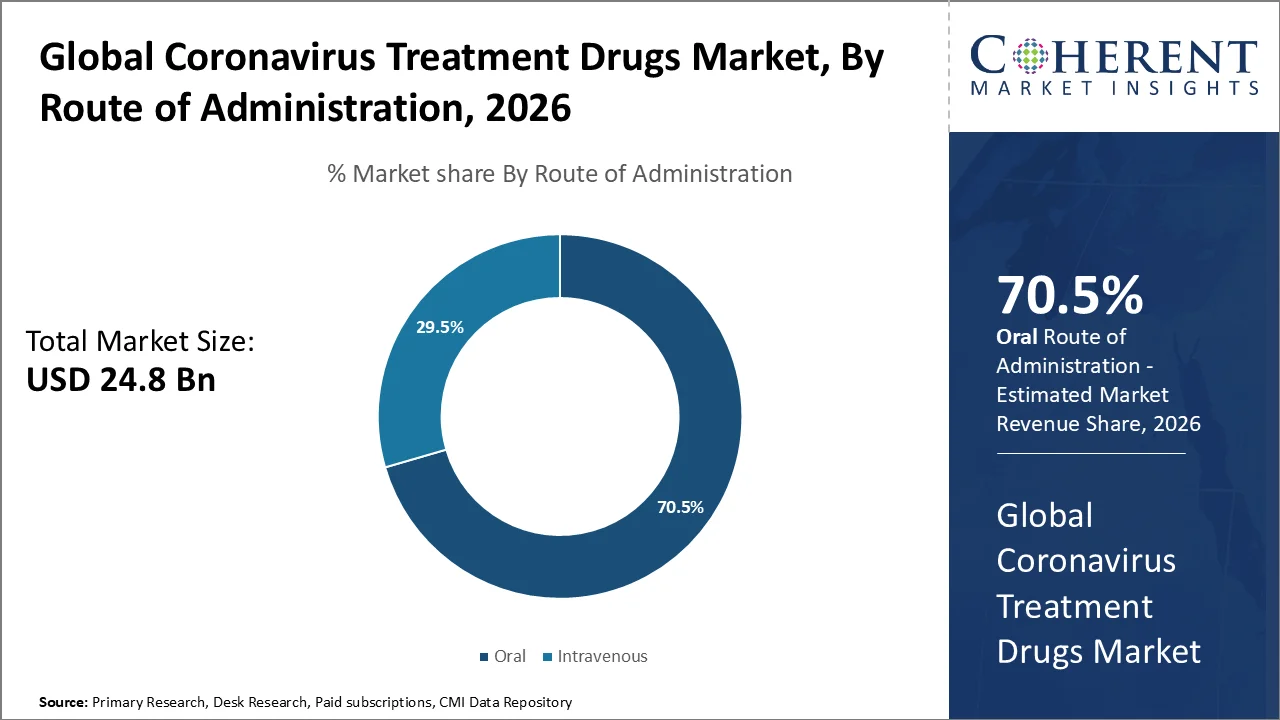
The oral segment accounts for the largest Coronavirus Treatment Drugs Market share of 70.5% in 2026. This growth is driven by the shift toward convenient, early-stage, prescription-based COVID-19 treatment outside hospital settings. The growth is led by oral antivirals which can be initiated soon after diagnosis, thus reducing the burden on infusion centers as well as improving access for high-risk adults.
For instance, in May 2023, the U.S. FDA approved Paxlovid (nirmatrelvir/ritonavir) for mild-to-moderate COVID-19 in adults at high risk of progression to severe disease. Earlier, in December 2021, the FDA granted EUA to molnupiravir (Lagevrio) for certain high-risk adults when other authorized treatments were not accessible or clinically appropriate, thereby broadening oral therapeutic options.
The pipeline momentum further supports this segment, with oral antiviral ibuzatrelvir under Phase III evaluation for COVID-19 treatment. Meanwhile, ensitrelvir/Xocova gained full approval in Japan in March 2024. It became available in Singapore through a special access route in 2023, and has a U.S. FDA PDUFA target date of June 16, 2026 for post-exposure prevention.
Ongoing R&D and Scientific Innovation is Transforming the Coronavirus Treatment Drugs Market in the United States
The U.S. continues to be at the forefront of COVID‑19 treatment advancements mainly driven by continual research and regulatory updates. The CDC as well as the FDA have authorized several antiviral medications like nirmatrelvir/ritonavir (Paxlovid), remdesivir (Veklury), and molnupiravir (Lagevrio in order to treat mild-to-moderate COVID‑19 in high-risk patients. These treatments are critical to managing COVID‑19, with the CDC recommending their early initiation within five days of symptom onset to prevent progression to severe disease.
The recent real-world data from the CDC reveals that from June 2023 to September 2025, 31% of high-risk COVIDThese statistics highlight the growing role of antiviral medications in preventing severe COVID‑19 outcomes in the U.S.
In addition to these treatments, the ongoing clinical research is continually exploring new antiviral regimens and combination therapies to improve efficacy, particularly for patients with emerging variants of the virus. The National Institutes of Health (NIH) is supporting numerous clinical trials to assess new therapies, including combination treatments that pair antivirals with immune modulators for more robust responses.
COVID-19 Treatment Drugs Market: Breakthrough in RNA ‑Targeted Antiviral Drug Discovery
One of the major breakthroughs in the industry is the development of RNA-targeted antiviral drugs. For instance, in October 2025, the researchers from the Wertheim UF Scripps Institute discovered a promising antiviral compound that specifically targets the viral RNA machinery of SARS-CoV-2. This new drug is a part of a growing wave of next-generation treatments, thus offering the potential for more effective as well as broad-spectrum therapies compared to current drugs. Unlike traditional antiviral drugs, this compound works by interfering directly with the virus’s genetic material and thus prevents any replication.
This advancement could pave the way for more potent treatments for both COVID-19 as well as also for other RNA viruses. It is a considerable step forward as it enhances the ability to treat viral infections with a higher efficacy along with fewer side effects. In addition, the discovery signals a shift in drug development strategies, thereby putting a greater emphasis on genetic mechanisms rather than solely relying on traditional approaches. This innovation is expected to propel further advancements in antiviral therapies as well as boost the market substantially.
Current Events and Their Impact on the Coronavirus Treatment Drugs Market
Current Event | Description and its Impact |
Continued U.S. FDA Emergency Use Authorization Framework for COVID‑19 Therapeutics |
|
WHO Ongoing Guideline Development for COVID‑19 Therapeutics |
|
Coronavirus Treatment Drugs Market Trends
- Oral antivirals are strengthening the outpatient treatment base, as COVID-19 treatment is increasingly focused on early intervention among high-risk patients. The U.S. FDA approved Paxlovid in May 2023 for mild-to-moderate COVID-19 in adults at high risk of progression to severe disease, making it the first FDA-approved oral antiviral for adult COVID-19 treatment.
- Prescription access gaps are creating growth opportunities for antiviral awareness and distribution programs. CDC’s February 2026 MMWR reported that among 482,456 U.S. outpatient encounters aged 65 years and above during June 2023–September 2025, only 31% received a COVID-19 antiviral prescription, while 80% of treated patients received nirmatrelvir/ritonavir.
- Treatment guidelines continue to prioritize early antiviral use, especially for patients at higher risk of hospitalization or death. The data from CDC states that Paxlovid should be started within five days of symptom onset. While a three-day remdesivir course can be started within seven days when clinically appropriate.
- Pipeline activity is shifting toward next-generation oral antivirals. The data from ClinicalTrials.gov lists ibuzatrelvir studies evaluating safety and efficacy in non-hospitalized adults/adolescents at high risk and in severely immunocompromised adults with COVID-19, thereby constituting to continued innovation beyond existing therapies.
- Regulatory listings support a broader treatment mix beyond antivirals. The FDA lists Paxlovid, Veklury, Lagevrio, Actemra, Olumiant, Kineret, and Gohibic among approved or authorized COVID-19 drugs, thus indicating sustained demand for both antiviral as well as immune-modulating therapies.
Regional Insights
North America Leads Owing to Antiviral Therapies and Strong Regulatory Frameworks
The North America region accounts for 38.50% of the market in 2026. The region’s growth is backed by the region’s broad access to antiviral therapies, strong regulatory frameworks, and ongoing clinical guidance. In the U.S., the Food and Drug Administration (FDA) authorized oral antivirals such as Pfizer’s Paxlovid and Merck’s Molnupiravir for use in non
In Canada, Health Canada has authorized key COVIDThese treatments including Remdesivir (Veklury) and Paxlovid (nirmatrelvir/ritonavir), for adults with COVID‑19 to reduce disease progression and hospitalization. These are available under terms aligned with regulatory review and safety monitoring.
Clinical prescribing guidance in Ontario confirms that oral Paxlovid and intravenous Remdesivir are recommended for eligible high‑risk patients early in the course of illness to prevent severe COVID‑19 outcomes.
Asia Pacific Coronavirus Treatment Drugs Market Trends
The Asia Pacific region is poised to be as the fastest-growing region through 2026-2033 driven by continued high-risk patient management, wider oral antiviral access, and regulator-led safety monitoring. The World Health Organization (WHO)'s global COVID-19 risk assessment, released in February 2026, stated that by end-2025, public-health risk remained moderate, while deaths and hospitalizations had declined due to population immunity and improved clinical management, keeping antivirals relevant for vulnerable group.
In China, the National Medical Products Administration (NMPA) granted conditional approval for Pfizer’s Paxlovid for mild-to-moderate COVID-19 adults at higher risk in February 2022 while Azvudine became the country’s first domestically developed oral COVID-19 antiviral under emergency authorization and treatment-protocol inclusion.
Japan is also strengthening prescription governance. The Pharmaceuticals and Medical Devices Agency (PMDA)’s 2024 review supported Xocova Tablets 125 mg, and the Ministry of Health, Labour and Welfare (MHLW) issued precaution revisions for Xocova and Lagevrio in December 2024, including pregnancy-related cautions and Shionogi.
Australia’s Therapeutic Goods Administration (TGA) provisionally approved Paxlovid in January 2022 and Singapore’s Health Sciences Authority (HSA) granted interim authorization in February 2022 for Paxlovid for high-risk adults.
Early Antiviral Access is Accelerating Coronavirus Treatment Drugs Demand in the U.S.
The United States Coronavirus Treatment Drugs Market is driven by updated outpatient care protocols emphasizing early antiviral prescribing for high‑risk COVID‑19 patients. FDA‑approved oral antiviral Paxlovid remains a core treatment option for mild‑to‑moderate COVID‑19 in adults at risk for severe illness, starting within five days of symptom onset.
CDC’s February 2026 analysis shows that from June 2023 through September 2025, 16%–23% of COVID‑19 patients aged ≥65 years received an antiviral prescription during low incidence periods, rising to 37%–38% during high incidence periods, indicating significant seasonal and access variation. Among treated older adults, 99% received antivirals within seven days of diagnosis and 80% were prescribed nirmatrelvir/ritonavir (Paxlovid), while 13% received molnupiravir and 7% received remdesivir, according to official outpatient electronic health record data.
These trends signal expanding utilization yet persistent underuse relative to eligible high‑risk populations.
India Coronavirus Treatment Drugs Market Trends
India’s Coronavirus Treatment Drugs Market continues to be shaped by official clinical guidance and real‑time surveillance of COVID‑19 caseloads, while domestic regulatory agencies maintain oversight of approved antiviral therapies. According to the Ministry of Health and Family Welfare (MoHFW) COVIDThe MoHFW has published national clinical management guidance updating COVID‑19 protocols, and earlier advisories from MoHFW recommended rational use of remdesivir in select moderate to severe hospitalized patients as a reserve antiviral, underscoring structured utilisation in treatment settings. Meanwhile, India's Drug Controller General has granted accelerated approval of remdesivir (e.g., COVIFOR) for restricted medical use to meet urgent treatment needs during the pandemic response.
Who are the Major Companies in Coronavirus Treatment Drugs Market
Some of the major key players in Coronavirus Treatment Drugs are Microsoft, Facebook, Inc., Apple, Inc., Oracle, Seclore, Fasoo, VERA, Adobe Inc., Open Text Corporation, DivX, LLC, HP Labs, Dell Inc.,VOBILE INC., RealNetworks, Inc., IBM Corporation, General Electric, Axtia Technologies, Union FinTech, and Conax Technologies
Key News
- In July 2023, the National Institutes of Health initiated phase 2 clinical trials to assess at least four potential treatments for long COVID, with plans for additional trials to evaluate at least seven more treatments in the upcoming months.
- In September 2022, the COVID Treatment Quick Start Consortium was formed with Duke University, the Clinton Health Access Initiative (CHAI), COVID Collaborative, and Americares as implementing partners, supported by the Open Society Foundations, Pfizer, and the Conrad N. Hilton Foundation. The consortium aims to help governments introduce and expand access to effective oral COVID-19 antiviral therapies for high-risk populations, with treatment rollout expected to begin in selected countries.
- In January 2022, Lupin unveiled Molnupiravir in India under the brand name Molnulup. The Drug Controller General of India (DCGI) granted emergency use authorization for the drug to treat adult COVID-19 patients with an SpO2 level above 93%, particularly those at high risk of disease progression, including hospitalization.
Market Report Scope
Coronavirus Treatment Drugs Market Report Coverage
| Report Coverage | Details | ||
|---|---|---|---|
| Base Year: | 2025 | Market Size in 2026: | USD 24.8 Bn |
| Historical Data for: | 2020 To 2024 | Forecast Period: | 2026 To 2033 |
| Forecast Period 2026 to 2033 CAGR: | 13.3% | 2033 Value Projection: | USD 62 Bn |
| Geographies covered: |
| ||
| Segments covered: |
| ||
| Companies covered: | Serum Institute of India, Pfizer Inc., AstraZeneca plc., Bharat Biotech International Limited, Cadila Healthcare Limited, Johnson & Johnson, Moderna, GlaxoSmithKline plc., CanSino Biologics, Sinovac Biotech, Novavax, Inc., Glenmark Pharmaceuticals Limited, Merck & Co., Inc. and Dr. Reddy's Laboratories. | ||
| Growth Drivers: |
| ||
| Restraints & Challenges: |
| ||
Analyst Opinion
- The coronavirus treatment drugs market is witnessing substantial growth owing to advancements in antiviral therapies along with government-led initiatives aimed at expanding access to treatments. For instance, in 2025, the global spending on COVID-19 treatments exceeded USD 157 billion, with antiviral drugs and monoclonal antibodies comprising the largest share of the market. The new government funding initiatives are expected to fuel increased research and development for novel treatments.
- The future of the market hinges on the continual development of novel antiviral treatments as well as immunomodulatory therapies, which will help address emerging variants and improve outcomes for patients with comorbidities. The ongoing clinical trials are essential in determining the long-term efficacy and safety profiles of these drugs. Moreover, improving access to these treatments for vulnerable populations will be pivotal in mitigating severe disease progression as the virus continues to circulate.
- Moving forward, the regulatory environment will still remain a key factor shaping the trajectory of the COVID-19 therapeutics market. The continued investment in oral antiviral drugs, as well as therapeutic combinations aimed at improving patient outcomes, will likely dominate the market in the near future.
Speak to the analyst
Want personalized insights?
Take the findings above to one of our principal consultants, or have the report rebuilt around the segments, geographies and competitors you actually track.
Market Segmentation
- By Drug Class (Revenue, USD Bn, 2021-2033)
- Corticosteroids
- Anti-viral drugs
- Monoclonal Antibodies
- Kinase Inhibitors
- Others
- By Route of Administration (Revenue, USD Bn, 2021-2033)
- Oral
- Intravenous
- By Distribution Channel (Revenue, USD Bn, 2021-2033)
- Hospital Pharmacies
- Retail Pharmacies
- Online Pharmacies
- By Region (Revenue, USD Bn, 2021-2033)
- North America
- U.S.
- Canada
- Latin America
- Brazil
- Mexico
- Argentina
- Rest of Latin America
- Europe
- Germany
- U.K.
- France
- Italy
- Spain
- Russia
- Rest of Europe
- Asia Pacific
- China
- India
- Japan
- Australia
- South Korea
- ASEAN
- Rest of Asia Pacific
- Middle East
- GCC
- Israel
- Rest of Middle East
- Africa
- South Africa
- Central Africa
- North Africa
- North America
Sources
Primary Research Interviews
- Pharmaceutical Manufacturers
- Drug Discovery & Development Specialists
- Clinical Trial Providers
- Healthcare Providers & Hospitals
- Medical Practitioners & Doctors
- Public Health Authorities
- Regulatory Agencies
- Biotech Companies
- Vaccine Development Researchers
- Pharmaceutical Distributors
- Others
Databases
- Bloomberg Terminal
- Thomson Reuters Eikon
- Others
Magazines
- Pharmaceutical Technology
- The Lancet
- New England Journal of Medicine (NEJM)
- Modern Healthcare
- Clinical Therapeutics
- Drug Development & Delivery
- Others
Journals
- Journal of Antimicrobial Chemotherapy
- Clinical Infectious Diseases Journal
- International Journal of Infectious Diseases
- Journal of Medical Virology
- Lancet Infectious Diseases
- Journal of Clinical Pharmacology
- Others
Newspapers
- The New York Times
- The Guardian
- The Wall Street Journal
- Reuters
- BBC News
- Bloomberg News
- Financial Times
- Others
Associations
- World Health Organization (WHO)
- U.S. Food and Drug Administration (FDA)
- European Medicines Agency (EMA)
- Centers for Disease Control and Prevention (CDC)
- Global Health Council
- Infectious Diseases Society of America (IDSA)
- International Federation of Pharmaceutical Manufacturers & Associations (IFPMA)
- Others
Public Domain Sources
- U.S. Department of Health & Human Services (HHS)
- National Institutes of Health (NIH)
- European Commission – Health and Food Safety Directorate
- Centers for Disease Control and Prevention (CDC)
- World Health Organization (WHO)
- World Bank Open Data
- Others
Proprietary Elements
- CMI Data Analytics Tool
- Proprietary CMI Existing Repository of Information for the Last 10 Years
Get access to 250+ pages report
Every segment, forecast, competitor profile and data table behind the analysis above — available for instant download.
- ESOMAR Member
- ISO 9001:2015 Certified
- D-U-N-S Registered
- GDPR & CCPA Compliant
Missing comfort of reading report in your local language? Find your preferred language:
Transform your Strategy with Exclusive Trending Reports
Frequently Asked Questions
The Coronavirus Treatment Drugs Market is expected to reach USD 62 Bn in 2033.
Major players operating in the global Coronavirus Treatment Drugs Market include Serum Institute of India, Pfizer Inc., AstraZeneca plc., Bharat Biotech International Limited, Cadila Healthcare Limited, Johnson & Johnson, Moderna, GlaxoSmithKline plc., CanSino Biologics, Sinovac Biotech, Novavax, Inc., Glenmark Pharmaceuticals Limited, Merck & Co., Inc. and Dr. Reddy's Laboratories.
The high immunity and declining demand are the key factors hampering growth of the market.
The viral evolution and new variants and shift to oral antivirals is boosting demand for coronavirus treatment drugs.
The Coronavirus Treatment Drugs Market is anticipated to grow at a CAGR of 13.3% between 2026 and 2033.
Among regions, North America is expected to account for a largest market share in the global Coronavirus Treatment Drugs Market over the forecast period.
COVID-19 can be treated with antiviral drugs like Paxlovid and Remdesivir, monoclonal antibodies such as Casirivimab, and steroids like Dexamethasone. Immunomodulators like Tocilizumab are also used in severe cases to reduce inflammation.