

Reprocessed Medical Devices Market Size and Trends
The reprocessed medical devices market is estimated to be valued at USD 4.06 Bn in 2026 and is expected to reach USD 11.19 Bn by 2033, growing at a compound annual growth rate (CAGR) of 15.6% from 2026 to 2033.
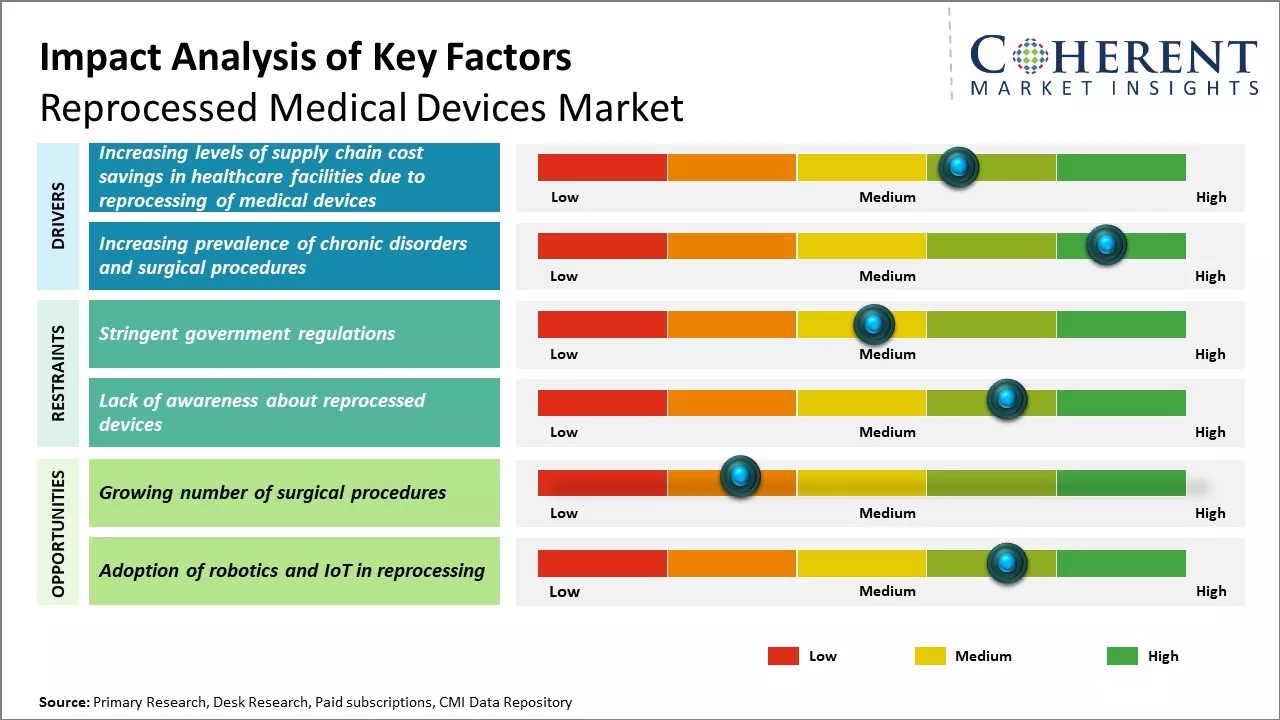
Key Takeaways
- Based on Device Type, the Laparoscopic Device segment leads the market holding an estimated share of 38.3 % in 2026, owing to the prevalence of cardiovascular disease.
- Based on Type, the Third-Party segment is projected to dominate with a share of 76.3 % in market in 2026, supported by the growing demand for third-party reprocessors.
- Based on End User, the Hospital & Clinics segment is projected to account for 46.7 % of the market share in 2026, driven by its convenience and cost advantages.
- Based on Region, North America is projected to lead the global reprocessed medial device marker in 2026 with a 49.9 % in 2026, due to the strong industry presence. While, Asia Pacific is considered to be the fastest growing region during the forecast period due to the growing healthcare expenditure.
Market Overview
The reprocessed medical devices market is driven by the rising demand to lower healthcare costs. As medical devices are expensive, reprocessing helps reduce costs for patients and providers. The trend of improved reprocessing technologies is also supporting the market growth. Advancements in inspection and reconditioning techniques ensure that reprocessed devices meet high standards of safety and performance. Additionally, as the population ages and the burden of chronic diseases grows, more procedures will utilize these cost-efficient reprocessed alternatives to new medical devices. The market opportunity is substantial given the large replacement market for devices that are retrieved after use.
Current Events and Its Impact
Current Events | Description and its Impact |
Global Supply Chain Disruptions |
|
Growing Economic and Budgetary Pressures on Healthcare Providers |
|
Pricing Analysis of Reprocessed Medical Devices
- Cost Reduction Compared to New Devices
- Reprocessed medical devices are typically priced 30% to 70% lower than their brand-new counterparts.
- Example: A new single-use cardiac catheter might cost $1,000, while a reprocessed one could be priced around $300–$700, depending on the device type and condition.
- Pricing Factors Influencing Cost
- Device Type and Complexity: More complex devices (e.g., pacemakers, defibrillators) have higher reprocessing costs, affecting final price.
- Number of Reprocessing Cycles: Devices reprocessed multiple times may have discounted pricing but must meet safety standards.
- Sterilization and Testing Costs: Advanced sterilization and rigorous quality testing add to costs, influencing pricing.
- Regulatory Compliance: Compliance with FDA and other regulations adds to operational costs and pricing.
- Market Demand and Supply: Higher demand devices may command slightly higher prices due to market dynamics.
- Service Provider Margins: Pricing also depends on the reprocessing company’s operational efficiencies and margin goals.
- Current Industry Events of 2026
- Market Size Estimation
- Regional Breakdown
- Competitive Landscape
- Customer Intelligence
- Segmental Analysis
- Pricing Analysis
- Key Market Drivers, Challenges & Future Trends
- Customized Insights Section
Reimbursement Scenario for Reprocessed Medical Devices
A reprocessed medical device that meets the FDA’s regulatory requirements is eligible for payment and coverage by Medicare on the same terms as a non-reprocessed device. Generally, Medicare reimburses devices that the FDA has legally approved under the Federal Food, Drug, and Cosmetic Act (FDCA), provided they are considered “reasonable and necessary” for diagnosing or treating an illness or injury, or for improving the function of a malformed body part.
Specifically, according to guidance from the Centers for Medicare & Medicaid Services (CMS), reprocessed devices that comply with FDA standards qualify for coverage under Medicare Part B just as non-reprocessed devices do. This same coverage approach extends to procedures performed with reprocessed devices in other Medicare-covered settings.
Segmental Insights
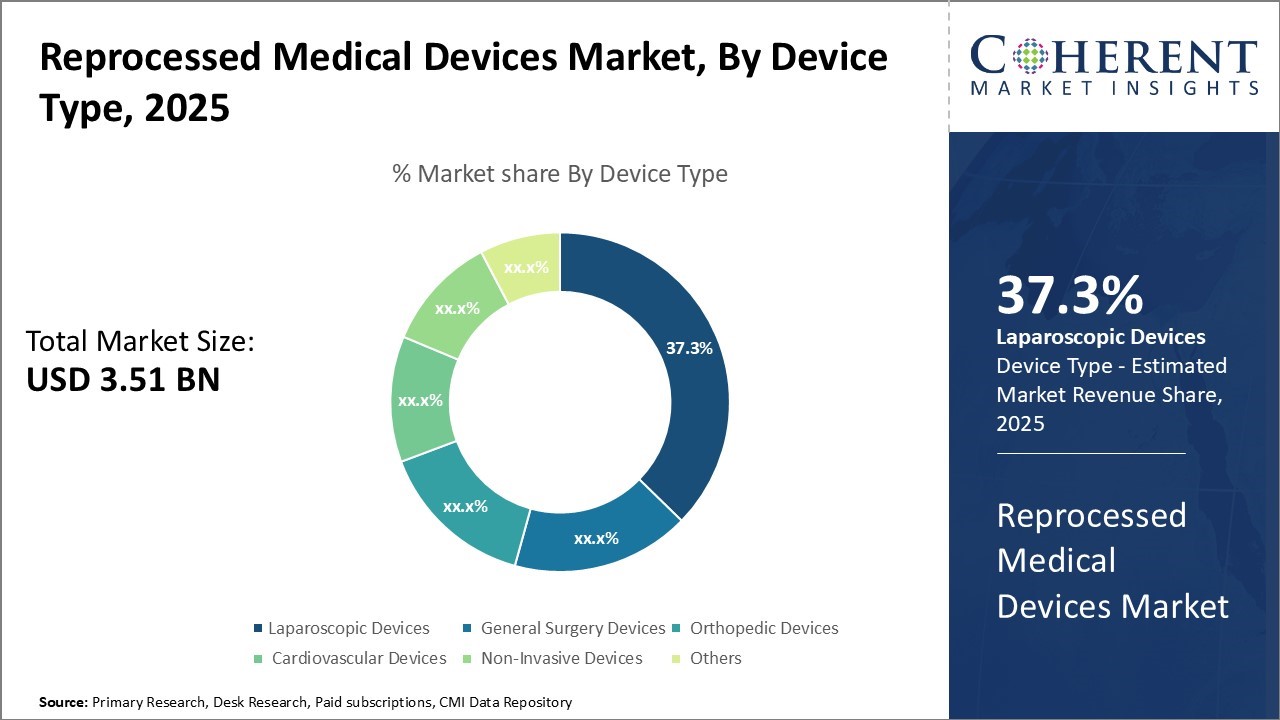
Reprocessed Medical Devices Market Insights, By Device Type: Growing Prevalence of Cardiovascular Diseases Drives the Cardiovascular Devices Segment
The device type segment includes laparoscopic devices, general surgery devices, orthopedic devices, cardiovascular devices, non-invasive devices, and others. The cardiovascular devices segment is anticipated to hold 38.3% of the market share in 2026. Cardiovascular diseases, particularly heart disease and stroke, are the leading causes of death globally. The rising sedentary lifestyles and unhealthy dietary patterns have led to a substantial increase in risk factors like obesity, diabetes and high blood pressure. This in turn is fueling the incidence of various heart conditions that require surgical procedures and devices for treatment. The aging population also presents a major driver as cardiovascular problems are highly common among the elderly. Moreover, technological advancements have enabled minimally invasive procedures using reprocessed cardiovascular devices, helping reduce medical costs significantly. The reuse of such devices provides sustainable solutions while ensuring safety and efficacy standards are met. Several governments and healthcare organizations worldwide are promoting reprocessing as a means to expand access to cardiovascular treatments, which is further reprocessed medical device market share.
In March 2025, MicroPort MedBot launched its Toumai SP laparoscopic surgical robot that have received approval from China’s National medical products Administration (NMPA). This launched is a significant advancement in the integration of robotic technology within China’s surgical landscape. The Toumai SP system is designed to enhance precision and control in minimally invasion surgeries. This
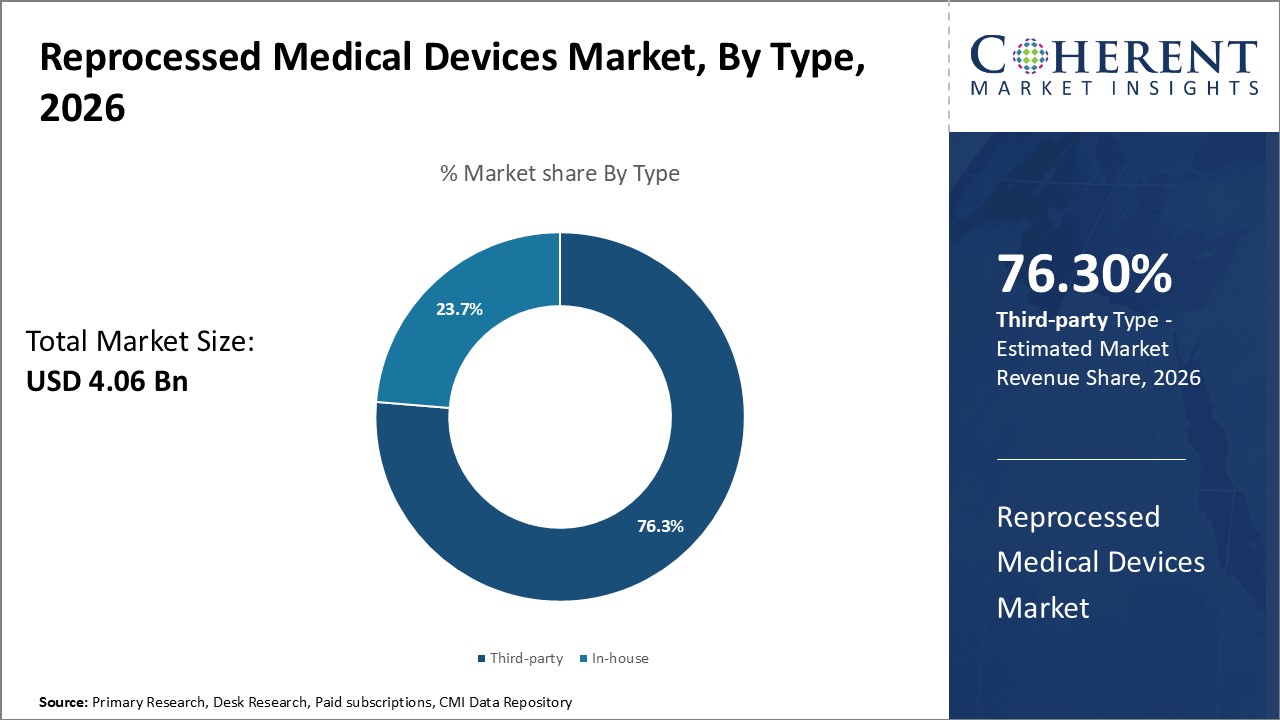
Reprocessed Medical Devices Market Insights, By Type: Growing Demand for Third-party Reprocessors
The type segment includes third-party and in-house. Third-party contributes the highest share of the reprocessed medical devices market and is projected to hold 76.3% of the market share in 2026. Reprocessing medical devices internally requires substantial infrastructure, trained personnel and quality certifications that increases costs for individual healthcare facilities. In contrast, third-party reprocessors have dedicated facilities, technical know-how, and strict regulatory guidelines in place to efficiently remanufacture devices. They can leverage volume to reduce turnaround times and offer competitive pricing for hospitals. Third-party services also eliminate the need for operator training and inventory management in individual centers. The complexity of reprocessing tasks like disassembly, cleaning, inspection, repair, and testing favors the reliance on expert third-party providers over in-house solutions. Strict regulatory oversight further makes the bar for self-clearance very high. Overall, outsourcing to well-established third-party reprocessors presents a more viable option for most healthcare facilities.
Reprocessed Medical Devices Market Insights, By End User: Convenience and cost advantages drive the hospital segment
The end user segment includes hospitals & clinics, diagnostic centers, ambulatory surgical centers, and others. Hospitals & clinics contribute the highest share of the reprocessed medical devices market and is projected to hold 46.7% of the market share in 2026. Healthcare budgets remain under immense pressure due to rising medical costs and limited public funding in most countries. This has compelled providers to explore more affordable alternatives that do not compromise on quality and safety. Reprocessed devices offer pricing discounts of up to 50-70% compared to originals. The savings on device costs can then be channelized towards upgrading other hospital services or improving access through community outreach. Reuse also supports the ethical and environmental priority of extending device lifespan. Moreover, reprocessors have demonstrated that functionality and sterilization standards of refurbished devices are at par with new ones. This addresses a key concern among hospitals and eases adoption. The expansion of approved reprocessing services regionally also improves procurement availability for many healthcare facilities. Overall, cost savings and access to high-quality critical care continue driving hospitals to leverage reprocessed medical devices.
Regional Insights
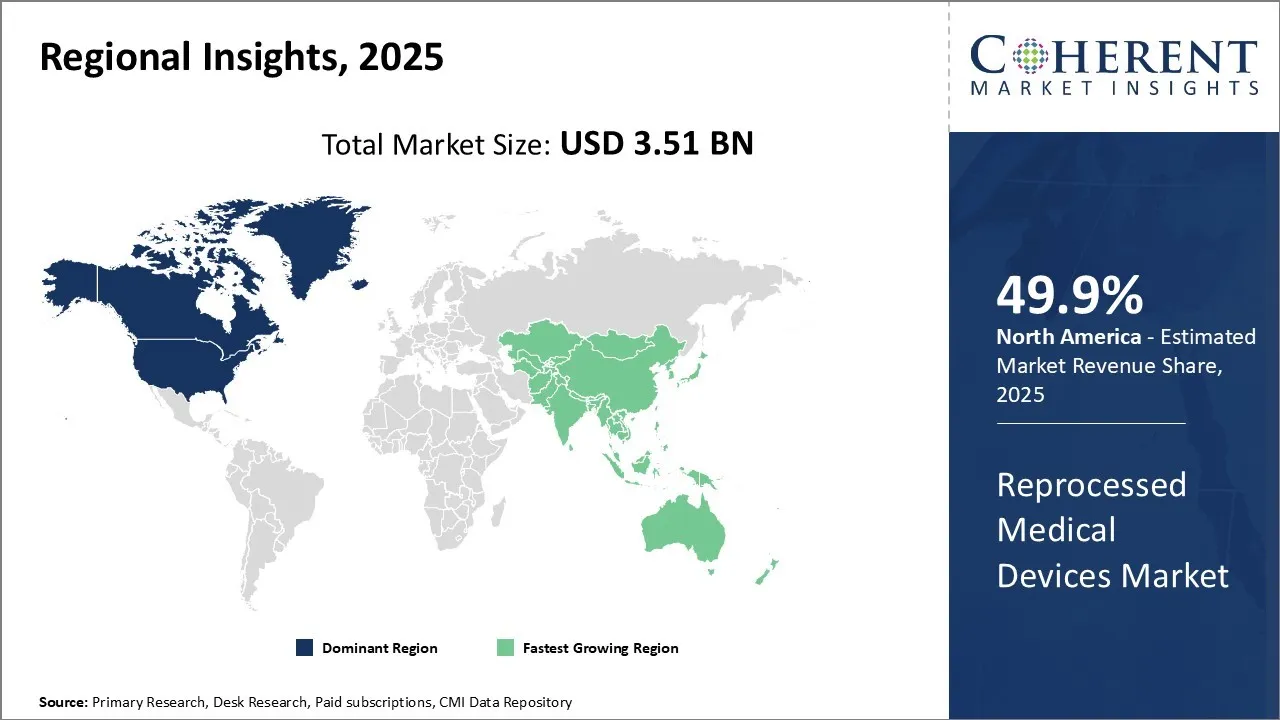
North America Reprocessed Medical Devices Market Analysis and Trends
North America has established itself as the dominant player in the global reprocessed medical devices market and is expected to hold 49.9% of the market share in 2026. The region has a very well-developed medical devices sector with ample opportunities for reprocessing of devices. Most major players involved in reprocessing activities have their headquarters located in North America, allowing them to leverage the region's infrastructure and expertise. Moreover, the favorable regulations related to reprocessing in the US boosts investor confidence and new business openings in this space. Many hospitals and clinics also outsource their reprocessing needs to regional third-party reprocessors, ensuring continuous demand. With the rise in healthcare costs, reprocessed instruments provide an affordable alternative for facilities without compromising on quality. In 2020, U.S. hospitals saved $372 million by using reprocessed medical devices, which cost 25 to 40% less than new ones. Additionally, cutting down on medical waste led to even more savings. According to data from AMDR, if all hospitals adopted the reprocessing practices of the top 10% of hospitals, the total annual savings could have reached an extra $2.28 billion in 2020. This is further adding to the reprocessed medical device market demand.
Asia Pacific Reprocessed Medical Devices Market Trends
Asia Pacific reprocessed medical devices market is experiencing significant growth. Countries like India, China, Japan, and South Korea are witnessing exponential growth opportunities. While import-reliant in nature initially, the presence of low-cost skilled labor and developing infrastructure has encouraged local manufacturing activities in recent years. Regional governments are supporting the sector through various initiatives in order to reduce healthcare spending and improve access to services. Southeast Asian countries have especially warmed up to the value proposition offered by reprocessed instruments. Burgeoning medical tourism coupled with rising income levels is expanding the customer base rapidly. Several international OEMs are also setting up local reprocessing units to target Asian markets and compete with global third-party reprocessors. With growing healthcare expenditures, cost-effective solutions, such as reprocessed devices, would become increasingly crucial for Asia Pacific to achieve universal health coverage goals.
United States Reprocessed Medical Devices Market Trends
The rising healthcare waste in United States is driving the adoption of reprocessed medical devices. The U.S. healthcare sector generates about 5 million tons of waste each year, which averages to around 29 pounds per hospital bed every day. Single-use devices (SUDs), commonly used in hospitals, account for nearly 80% of the healthcare industry’s carbon footprint through their production, transportation, usage, and disposal. Reprocessing medical devices can significantly reduce costs for hospitals and clinics by extending the lifecycle of expensive single-use devices.
Market Players, Key Development, and Competitive Intelligence
Key Developments
- In January 2025, Syensqo, a leading global provider of advanced performance material and chemical solution and MezLight LLC, specialists in medical device solutions, collaborated to bring an innovative surgical lighting system to market that features major components molded in Radel polyphenyl sulfone (PPSU).
- In July 2024, Innovative Health Inc. formed a strategic alliance with MC Healthcare to promote the reprocessing of medical device as a sustainable practice within healthcare setting, the aim is to enhance awareness and implementation of device reprocessing in hospital and healthcare facilities.
- In November 2023, Medline Industries, LP., a private healthcare company, announced that it has increased the square footage of its facility in Redmond, U.S., which reprocesses medical items destined for landfills. The site grew by around 52,000 square feet.
- In October 2023, GE HealthCare, a global medical technology company, and reLink Medical, an all-in-one online medical equipment store, announced a partnership to provide asset management solutions to healthcare providers to help reduce medical device waste, increase operational efficiency, and maximize equipment utilization. This collaboration includes a standardized medical equipment disposition approach that entails selling, recycling, or donating obsolete equipment.
Reprocessed Medical Devices Market Driver
Increasing levels of supply chain cost savings in healthcare facilities due to reprocessing of medical devices
Increasing level of supply chain cost savings in healthcare facilities due to the reprocessing of medical devices are expected to drive growth of the reprocessed medical devices market. The use of reprocessed medical devices is expected to constantly growth, driven by increasing healthcare costs and the rising demand for cost-effective solution.
Increasing prevalence of chronic disorders and surgical procedures
The increasing prevalence of chronic disorders is expected to drive the growth of the market during the forecast period. The forecast period's market dynamics are impacted by the increasing prevalence of chronic diseases. The market for medical device reprocessing is growing as a result of an increase in the prevalence of chronic diseases and surgical operations. For instance, according to data published in National Institutes of health (NIH), globally, over 310 million major surgeries are performed each year, around 40 - 50 million in USA and 20 million in Europe.
Reprocessed Medical Devices Market Opportunities
Growing number of surgical procedures
Rising healthcare costs and budget constraints have increased the demand for cost-effective alternatives like reprocessed devices. As baby boomers age, the demand for surgical procedures will rise, benefiting remanufacturers. Many devices are now designed for multiple uses, making reprocessing more feasible, thus creating lucrative growth opportunities for market development over the forecasted period.
Market Report Scope
Reprocessed Medical Devices Market Report Coverage
| Report Coverage | Details | ||
|---|---|---|---|
| Base Year: | 2025 | Market Size in 2026: | USD 4.06 Bn |
| Historical Data for: | 2020 To 2024 | Forecast Period: | 2026 To 2033 |
| Forecast Period 2026 to 2033 CAGR: | 15.6% | 2033 Value Projection: | USD 11.19 Bn |
| Geographies covered: |
| ||
| Segments covered: |
| ||
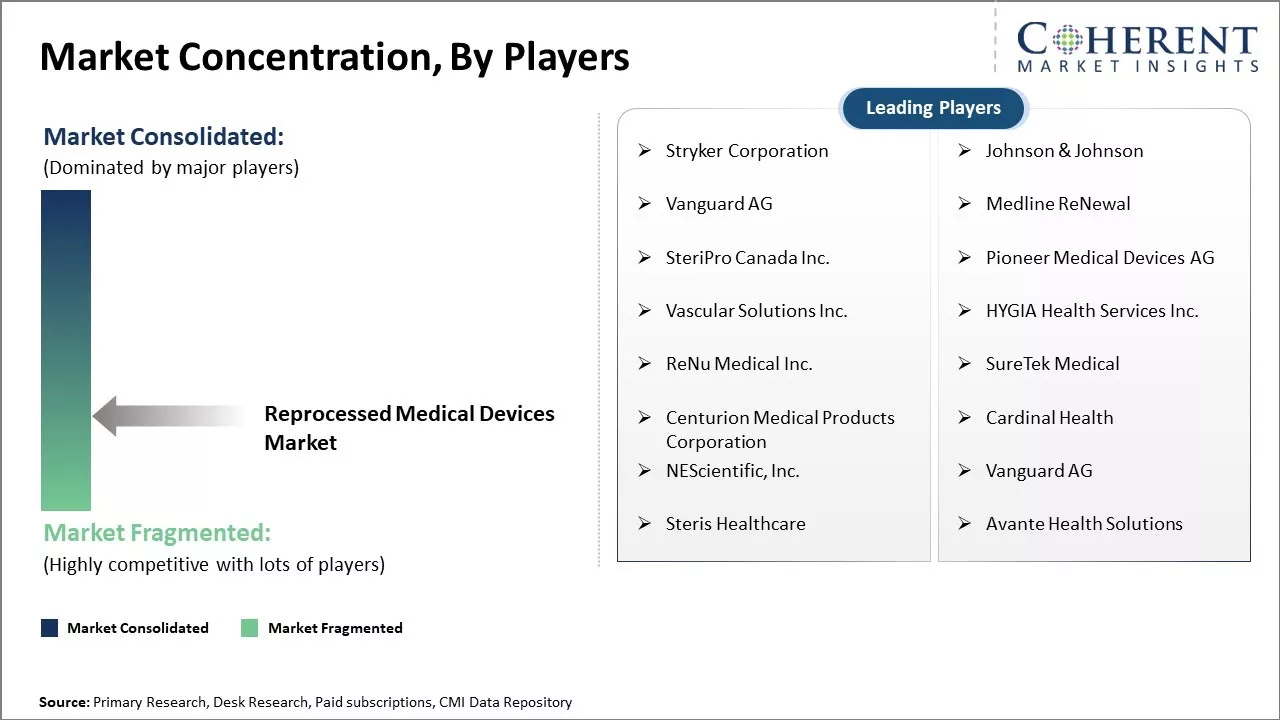
| Companies covered: | Stryker Corporation, Johnson & Johnson, Vanguard AG, Medline ReNewal , SteriPro Canada Inc., Pioneer Medical Devices AG, Vascular Solutions Inc., HYGIA Health Services Inc., ReNu Medical Inc., SureTek Medical, Centurion Medical Products Corporation, Cardinal Health, NEScientific, Inc., Vanguard AG, Steris Healthcare, and Avante Health Solutions | ||
| Growth Drivers: |
| ||
| Restraints & Challenges: |
| ||
Market Segmentation
- Device Type Insights (Revenue, USD Bn, 2021 - 2033)
- Laparoscopic Devices
- General Surgery Devices
- Orthopedic Devices
- Cardiovascular Devices
- Non-Invasive Devices
- Others
- Type Insights (Revenue, USD Bn, 2021 - 2033)
- Third-party
- In-house
- End User Insights (Revenue, USD Bn, 2021 - 2033)
- Hospitals & Clinics
- Diagnostic Centers
- Ambulatory Surgical Centers
- Others
- Regional Insights (Revenue, USD BN, 2021 - 2033)
- North America
- U.S.
- Canada
- Latin America
- Brazil
- Argentina
- Mexico
- Rest of Latin America
- Europe
- Germany
- U.K.
- Spain
- France
- Italy
- Russia
- Rest of Europe
- Asia Pacific
- China
- India
- Japan
- Australia
- South Korea
- ASEAN
- Rest of Asia Pacific
- Middle East
- GCC Countries
- Israel
- Rest of Middle East
- Africa
- South Africa
- North Africa
- Central Africa
- North America
- Key Players Insights (Revenue, USD Bn, 2021 - 2033)
- Stryker Corporation
- Johnson & Johnson
- Vanguard AG
- Medline ReNewal
- SteriPro Canada Inc.
- Pioneer Medical Devices AG
- Vascular Solutions Inc.
- HYGIA Health Services Inc.
- ReNu Medical Inc.
- SureTek Medical
- Centurion Medical Products Corporation
- Cardinal Health
- NEScientific, Inc.
- Vanguard AG
- Steris Healthcare
- Avante Health Solutions
Sources
Primary Research Interviews from the following stakeholders
Stakeholders
- Interviews with hospital procurement managers, sterilization department heads, biomedical engineers, device reprocessing technicians, healthcare facility administrators, and regulatory affairs specialists across leading global healthcare markets.
Databases
- U.S. Food and Drug Administration (FDA) Medical Device Reports (MDR) Database
- European Medicines Agency (EMA) Device Registry
- World Health Organization (WHO) Medical Devices Database
- National Health Service (NHS) Digital Data – Device Utilization and Reprocessing
- Ministry of Health and Family Welfare (India) – Medical Device Regulations and Statistics
- Centers for Medicare & Medicaid Services (CMS) – Hospital Data
- Japan Pharmaceuticals and Medical Devices Agency (PMDA) Database
- Health Canada Medical Devices Active Licence Listing (MDALL)
- Global Health Observatory (GHO) Data Repository
Magazines
- Medical Device and Diagnostic Industry (MD+DI)
- Infection Control Today
- Healthcare Purchasing News
- Biomedical Instrumentation & Technology
- Journal of Hospital Infection (news and updates sections)
- Healthcare Hygiene Magazine
- Medical Product Outsourcing (MPO)
- Modern Healthcare
Journals
- Journal of Medical Devices (ASME)
- American Journal of Infection Control
- Journal of Hospital Infection
- International Journal of Medical Informatics
- Biomedical Instrumentation & Technology
- Infection Control & Hospital Epidemiology
- Journal of Healthcare Engineering
- Journal of Clinical Engineering
Newspapers
- The New York Times – Health & Science
- The Guardian – Healthcare and Medical Technology
- The Times of India – Health & Medicine
- The Washington Post – Health Policy
- The Wall Street Journal – Healthcare Section
- Financial Times – Healthcare and Pharmaceuticals
- South China Morning Post – Medical Technology
Associations
- Association for the Advancement of Medical Instrumentation (AAMI)
- International Federation of Infection Control (IFIC)
- Healthcare Sterile Processing Association (HSPA)
- Medical Device Innovation Consortium (MDIC)
- International Medical Device Regulators Forum (IMDRF)
- American Hospital Association (AHA)
- European Association of Hospital Managers (EAHM)
- Indian Association of Medical Device Industry (IAMDI)
Public Domain Sources
- U.S. Centers for Disease Control and Prevention (CDC) – Healthcare-associated Infections and Device Reprocessing Guidelines
- World Health Organization (WHO) – Safe Use of Reprocessed Medical Devices
- Ministry of Health and Family Welfare (India) – Guidelines on Sterilization and Reuse of Medical Devices
- U.S. National Institutes of Health (NIH) – Research Publications on Device Reprocessing
- European Commission – Medical Device Regulation (MDR) Documentation
- Health Resources and Services Administration (HRSA) – Hospital Data and Device Utilization
- OpenFDA – Public Medical Device Data
- NITI Aayog – Healthcare Innovation and Medical Device Policy Reports
Proprietary Elements
- CMI Data Analytics Tool, and Proprietary CMI Existing Repository of information for last 8 years
*Definition: The reprocessed medical devices market consists of medical equipment and instruments that have been reprocessed or refurbished after use in hospitals and medical facilities. These devices include surgical instruments like forceps and retractors, endoscopes, orthopedic implants and components, and other equipment that can be cleaned, disinfected, sterilized, tested, repaired if necessary, and marketed to be used again by healthcare providers. Reprocessing helps reduce medical waste while providing more affordable device options for hospitals and patients.
Get access to 250+ pages report
Every segment, forecast, competitor profile and data table behind the analysis above — available for instant download.
- ESOMAR Member
- ISO 9001:2015 Certified
- D-U-N-S Registered
- GDPR & CCPA Compliant
Missing comfort of reading report in your local language? Find your preferred language:
Transform your Strategy with Exclusive Trending Reports
Frequently Asked Questions
The Reprocessed Medical Devices Market is estimated to be valued at USD 4.06 Bn in 2026, and is expected to reach USD 11.19 Bn by 2033.
The CAGR of the Reprocessed Medical Devices Market is projected to be 15.6% from 2026 to 2033.
Increasing levels of supply chain cost savings in healthcare facilities due to reprocessing of medical devices and increasing prevalence of chronic disorders and surgical procedures are the major factors driving the growth of the reprocessed medical devices market.
Stringent government regulations and lack of awareness about reprocessed devices are the major factors hampering the growth of the reprocessed medical devices market.
In terms of device type, cardiovascular devices is estimated to dominate the market revenue share in 2026.
Stryker Corporation, Johnson & Johnson, Vanguard AG, Medline ReNewal, SteriPro Canada Inc., Pioneer Medical Devices AG, Vascular Solutions Inc., HYGIA Health Services Inc., ReNu Medical Inc., SureTek Medical, Centurion Medical Products Corporation, Cardinal Health, NEScientific, Inc., Vanguard AG, Steris Healthcare, and Avante Health Solutions are the major players operating in the market.
North America is expected to lead the reprocessed medical devices market.