

Status Epilepticus Market Size and Forecast — 2026-2033
The Global Status Epilepticus Market size is estimated to be valued at USD 1.30 billion in 2026 and is expected to reach USD 2.34 billion by 2033, exhibiting a compound annual growth rate (CAGR) of 8.7% from 2026 to 2033.
Overview
Status epilepticus is a severe neurological emergency in which seizures persist for more than five minutes or occur repeatedly without recovery of consciousness. It can arise from uncontrolled epilepsy, stroke, infections, traumatic injuries, metabolic imbalances, or sudden withdrawal from antiepileptic drugs. The condition is classified into convulsive, non-convulsive, generalized, focal, and refractory forms, each requiring timely diagnosis—often supported by EEG—and rapid administration of intravenous antiepileptic therapy to prevent brain injury and systemic complications.
Advancements in emergency care, continuous EEG technology, and improved antiepileptic formulations have strengthened treatment outcomes, yet delayed recognition and rising incidence remain ongoing challenges. Effective management relies on fast clinical response, coordinated pre-hospital care, and accessible neurological services. Increasing awareness among caregivers and healthcare providers, alongside investment in acute care systems, continues to be crucial for reducing morbidity and mortality associated with status epilepticus.
Key Takeaways
In the product types segment, Intravenous antiepileptics dominate due to their rapid seizure-control capability. Monitoring equipment grows fastest with AI-enabled EEG adoption. Oral drugs support maintenance, while emergency devices enable quick intervention. Other options include emerging neurostimulation technologies.
In the treatment setting, Hospital ICUs dominate because patients require intensive monitoring and advanced interventions. Telemedicine grows fastest, expanding remote expertise access. Pre-hospital care stabilizes patients early, while ambulatory and rehabilitation services support ongoing management and recovery.
In the application segment, generalized status epilepticus leads due to high prevalence and urgent treatment needs. Refractory cases grow fastest amid unmet clinical demand. Focal, non-convulsive, and other forms require specialized diagnostics, individualized therapy, and enhanced monitoring solutions.
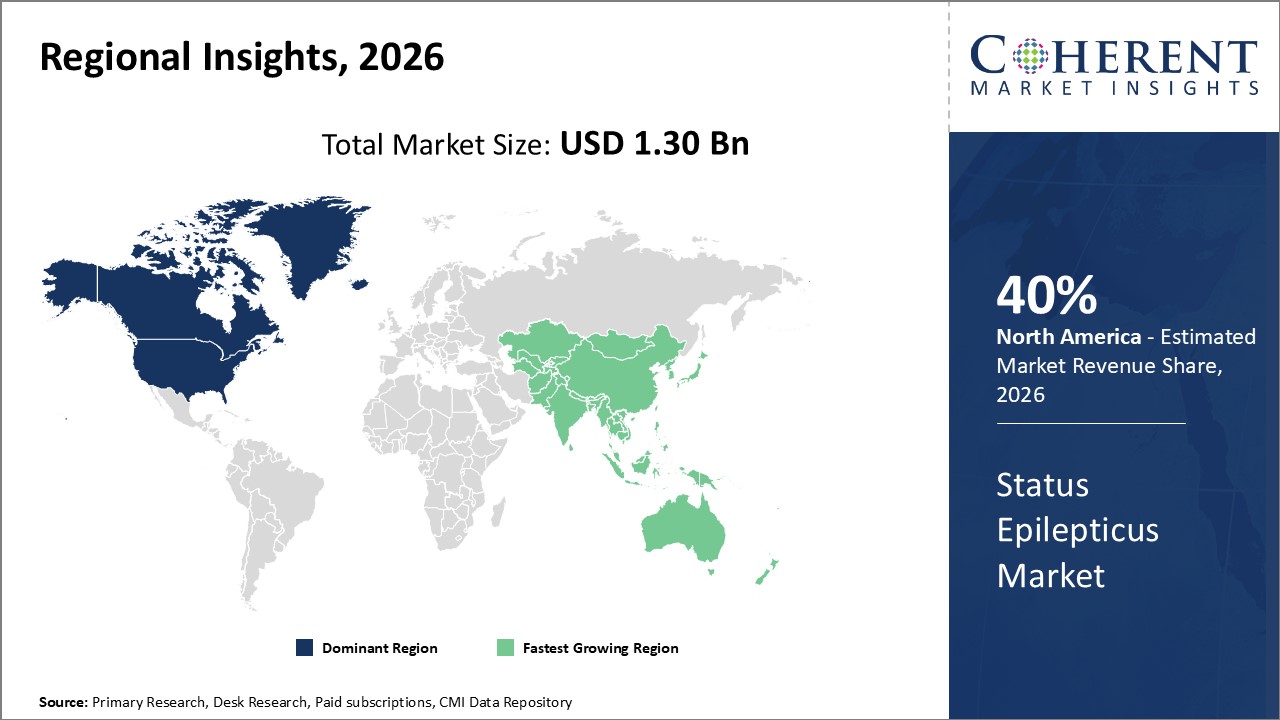
North America dominates, holding over 40% share due to strong healthcare infrastructure, R&D investment, and major pharmaceutical presence. Asia Pacific grows fastest, driven by rising neurological cases and expanding healthcare access. The U.S. remains central with high annual admissions, advanced therapies, and strong federal support for neurological research.
Status Epilepticus Market Segmentation Analysis
Status Epilepticus Market Insights, By Product Type
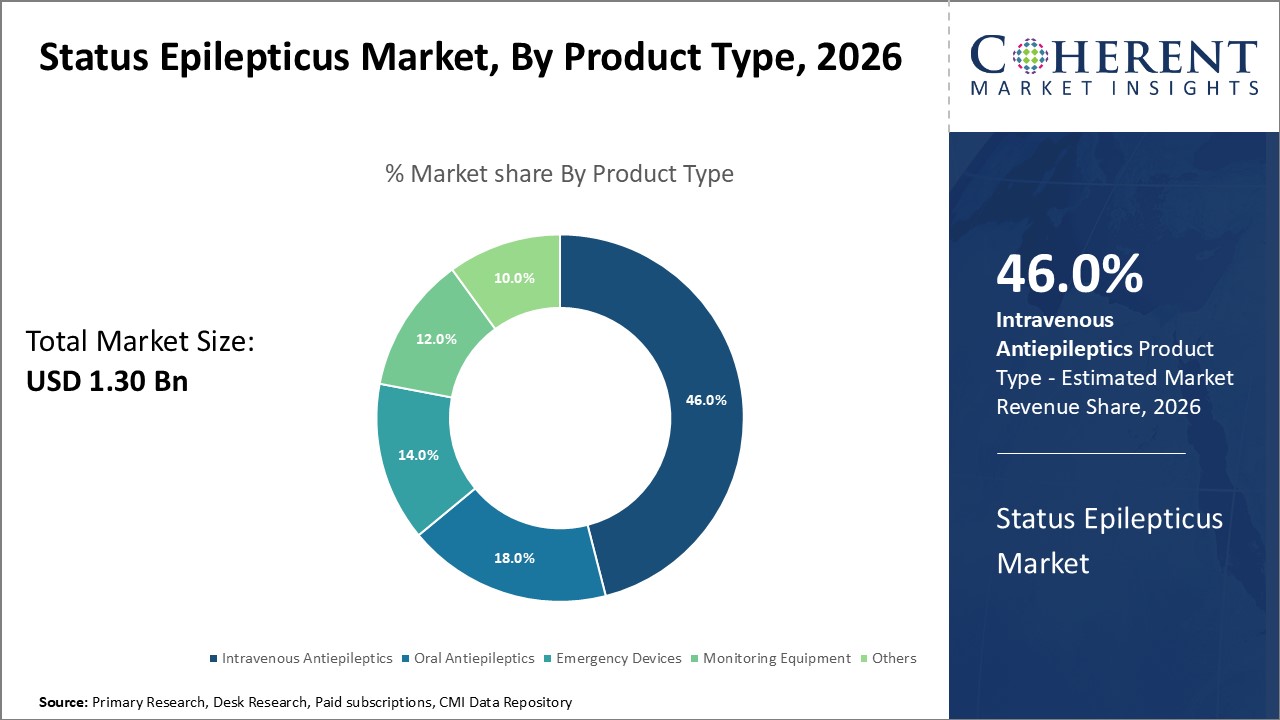
Intravenous Antiepileptics dominate due to their critical role in rapid seizure control and improved patient stabilization. Monitoring Equipment is the fastest-growing segment, driven by rising adoption of AI-integrated continuous EEG and video-EEG systems. Oral Antiepileptics support post-episode maintenance, while Emergency Devices provide quick pre-hospital intervention through rectal and nasal delivery. The Others category includes emerging neurostimulation technologies undergoing clinical evaluation.
Status Epilepticus Market Insights, By Treatment Setting Type
Hospital ICU dominates due to the need for intensive monitoring and rapid access to advanced interventions for severe cases. Growth is supported by rising neurological emergency admissions and expanding critical care capacity. Telemedicine Support is the fastest-growing subsegment, enabling remote specialist guidance and faster intervention in underserved regions. Pre-hospital Care focuses on paramedic-delivered therapies to control seizures early, while Ambulatory Care supports outpatient monitoring. Others include rehabilitation and follow-up services.
Status Epilepticus Market Insights, By Application Type
Generalized Status Epilepticus dominates due to its higher prevalence and urgent need for immediate intervention, drawing significant therapeutic and clinical research focus. Refractory Status Epilepticus is the fastest-growing subsegment, driven by unmet treatment needs and active development of second-line and novel therapies. Focal Status Epilepticus requires targeted drug approaches based on seizure origin, while Non-convulsive forms remain difficult to diagnose, encouraging investment in advanced monitoring tools. Others include rare and specialized variants requiring individualized care.
Status Epilepticus Market Trends
Recent years show a major shift from drug-only management to integrated care models that combine device-based interventions, telemedicine, and continuous remote monitoring.
Adoption of AI-driven diagnostic tools is rising, enabling early detection of status epilepticus episodes and improving clinical decision-making in emergency settings.
In 2026, several tertiary hospitals reported over a 31% improvement in diagnostic accuracy after deploying AI algorithms for real-time EEG interpretation.
Demand for connected monitoring systems is increasing as hospitals prioritize faster identification of seizure patterns and automated alerts for high-risk patients.
Personalized medicine is gaining momentum, with biomarker-guided treatment approaches being tested for refractory status epilepticus.
Pilot studies across Europe and North America indicate strong potential for biomarker-driven protocols to redefine management standards in the coming years, especially for treatment-resistant patients.
Status Epilepticus Market Insights, By Geography
North America Status Epilepticus Market Analysis and Trends
In North America, the dominance in the Status Epilepticus market is underpinned by advanced healthcare infrastructure, substantial R&D investments, and a well-established patient care ecosystem. The region accounts for over 40% of the industry share, bolstered by the presence of major pharmaceutical companies and device manufacturers such as Pfizer Inc. and Medtronic plc. Favorable reimbursement policies and high awareness about neurological emergency care further fuel market growth.
Asia Pacific Status Epilepticus Market Analysis and Trends
The Asia Pacific exhibits the fastest growth with a CAGR surpassing 10%. This is driven by rising incidence of neurological disorders, expanding healthcare access in countries like India and China, and strategic government initiatives to improve acute care delivery. Increasing import volumes of diagnostic equipment and antiepileptic pharmaceuticals signal rapid market maturation. Notable contributions come from companies like UCB Pharma and Eisai, investing in market penetration through collaborations with regional healthcare systems.
Status Epilepticus Market Outlook for Key Countries
USA Status Epilepticus Market Analysis and Trends
The USA continues to play a central role in the Status Epilepticus market, supported by an advanced healthcare system and strong pharmaceutical research capabilities. Companies such as Pfizer Inc. and Neurelis Inc. have introduced innovative therapies and devices that significantly enhance current treatment approaches. The country records more than 150,000 hospital admissions for status epilepticus each year, which drives consistent demand for acute care interventions and specialized neurological services. In addition, sustained federal investments in neurological research are accelerating the development of new pipeline therapies, reinforcing the nation’s leadership position and creating favorable conditions for continued market growth.
Analyst Opinion
Early intervention strongly drives market demand, with 2024 clinical data showing that timely benzodiazepine administration reduced ICU admissions by 16%. This highlights increasing dependence on rapid-acting therapies and standardized emergency care protocols.
Adoption of continuous EEG monitoring is expanding diagnostic capacity. Hospitals in North America reported a 20% rise in advanced EEG device imports in 2026, reflecting rapid uptake of real-time monitoring tools that support faster seizure detection and treatment escalation.
Regional pricing regulations significantly shape revenue patterns. In Europe, government-imposed price caps on antiepileptic drugs have created supplier-side pricing pressures but improved affordability, leading to a 10% increase in patient enrollment in treatment programs within the past year.
Rising neurological emergencies continue to elevate treatment demand. Asia Pacific recorded a 12% year-on-year increase in 2024 hospitalizations related to traumatic brain injuries and stroke sequelae, expanding the patient pool requiring acute status epilepticus management.
Together, these demand-side factors—early intervention impact, adoption of advanced diagnostics, regulatory-driven pricing shifts, and increasing neurological case loads—are shaping treatment utilization patterns and reinforcing the need for rapid, accessible, and technology-enabled care solutions.
- Current Industry Events of 2026
- Market Size Estimation
- Regional Breakdown
- Competitive Landscape
- Customer Intelligence
- Segmental Analysis
- Pricing Analysis
- Key Market Drivers, Challenges & Future Trends
- Customized Insights Section
Market Scope
| Report Coverage | Details | ||
|---|---|---|---|
| Base Year: | 2026 | Market Size in 2026: | USD 1.30 billion |
| Historical Data for: | 2020 To 2024 | Forecast Period: | 2026 To 2033 |
| Forecast Period 2026 to 2033 CAGR: | 8.7% | 2033 Value Projection: | USD 2.34 billion |
| Geographies covered: |
| ||
| Segments covered: |
| ||
| Companies covered: | UCB Pharma, Eisai Co., Ltd., Pfizer Inc., Novartis AG, Sun Pharmaceutical Industries Ltd., Teva Pharmaceutical Industries Ltd., Lundbeck A/S, Allergan (AbbVie), GlaxoSmithKline plc, Mylan N.V., Medtronic plc, Stryker Corporation, Johnson & Johnson, Bio-Pharmaceutical Enterprises, Hikma Pharmaceuticals PLC, Zogenix, Inc., Bial - Portela & Cª, S.A., and Axogen Inc. | ||
| Growth Drivers: |
| ||
Status Epilepticus Market Growth Factors
Rapid advancements in drug delivery methods for status epilepticus are improving clinical outcomes and treatment compliance. Faster-acting injectable formulations are seeing a 25% rise in adoption, especially in ICU settings where rapid intervention is essential. Broader healthcare insurance coverage is expanding treatment accessibility, particularly in emerging regions such as India and Brazil, where affordability has historically been a barrier. The growing burden of neurological disorders in aging populations across developed nations continues to drive consistent demand for effective management approaches.
Government initiatives aimed at strengthening acute neurological care infrastructure are further supporting uptake across regions like the Middle East and Africa. Additionally, rising investment in clinical epilepsy research is accelerating the development of innovative therapeutics for refractory cases, reinforcing positive growth momentum within the treatment landscape.
Status Epilepticus Market Development
In Oct 2026, Viatris has acquired Aculys Pharma, gaining exclusive rights to Spydia nasal spray in Japan and select Asia-Pacific markets. Approved in June 2026, Spydia is the first intranasal therapy for status epilepticus, offering rapid, out-of-hospital seizure intervention. This acquisition strengthens Viatris’ portfolio in acute neurological care and enhances its CNS therapy footprint across the region.
Zeto, Inc. has launched NeuroPulse, the first AI-powered status epilepticus software integrated with full 10-20 EEG, in collaboration with encevis. This platform enables automated seizure and status epilepticus detection, providing real-time bedside alerts. Trained on over 21,400 hours of EEG from 800+ patients, it enhances ICU and emergency care by allowing timely interventions, reducing brain injury risks. NeuroPulse leverages AI for accurate seizure burden assessment and integrates with Zeto’s wearable EEG and cloud platform, expanding access to neurologist-reviewed EEG interpretation and improving critical care monitoring for patients at high risk of prolonged seizures.
Key Players
Leading Companies of the Market
UCB Pharma
Eisai Co., Ltd.
Pfizer Inc.
Novartis AG
Sun Pharmaceutical Industries Ltd.
Teva Pharmaceutical Industries Ltd.
Lundbeck A/S
Allergan (AbbVie)
GlaxoSmithKline plc
Mylan N.V.
Medtronic plc
Stryker Corporation
Johnson & Johnson
Bio-Pharmaceutical Enterprises
Hikma Pharmaceuticals PLC
Zogenix, Inc.
Bial - Portela & Cª, S.A.
Axogen Inc.
Leading companies are increasingly engaging in strategic collaborations with healthcare providers to optimize patient outcomes. For instance, Pfizer enhanced its distribution network in North America through partnerships with hospital chains, leading to a 14% revenue growth in emergency antiepileptic therapeutics in 2024. Similarly, Novartis adopted aggressive R&D investments in developing rapid-acting treatment formulations, resulting in a 20% increase in market penetration in Europe in 2026.
Status Epilepticus Market Future Outlook
The Status Epilepticus market is expected to grow steadily, driven by innovations in diagnostics, therapeutics, and integrated care models. AI-enabled EEG systems and tele-neurology platforms are improving early detection and remote specialist intervention, enhancing patient outcomes. Rapid-acting and targeted antiepileptic therapies are gaining adoption, addressing unmet needs in refractory cases. Expanding healthcare infrastructure and insurance coverage, particularly in emerging regions, will increase accessibility to advanced treatments. Investments in critical care units, continuous monitoring technologies, and clinical research further support market expansion. Overall, technological integration and R&D advancements position the market for sustained growth globally.
Status Epilepticus Market Historical Analysis
The Status Epilepticus market has experienced steady growth over the past decade, driven by rising prevalence of neurological disorders and increased awareness of acute seizure management. Historically, hospitals and intensive care units dominated treatment settings due to the need for immediate intervention and continuous monitoring. Intravenous antiepileptics remained the primary treatment, supported by clinical guidelines emphasizing rapid seizure cessation. Early adoption of EEG and video-EEG monitoring expanded diagnostic capabilities, while incremental innovations in emergency delivery devices and oral maintenance therapies contributed to broader treatment access. Government initiatives and growing R&D investments further shaped market evolution, setting the stage for current technological advancements and emerging care models.
Sources
Primary Research Interviews:
Neurologists
Epileptologists
ICU Specialists
Clinical Pharmacologists
Databases:
ClinicalTrials.gov
Epilepsy Foundation Research Database
WHO Neurological Disorders Database
PubMed – Status Epilepticus Studies
Magazines:
Neurology Today
Epilepsy & Behavior
Medical Device & Diagnostic Industry (MD+DI)
Neurology Times
Journals:
Epilepsia
Seizure – European Journal of Epilepsy
Journal of Clinical Neurophysiology
Epilepsy Research
Associations:
International League Against Epilepsy (ILAE)
American Epilepsy Society (AES)
World Health Organization – Neurology Programs
European Academy of Neurology (EAN)
Get access to 250+ pages report
Every segment, forecast, competitor profile and data table behind the analysis above — available for instant download.
- ESOMAR Member
- ISO 9001:2015 Certified
- D-U-N-S Registered
- GDPR & CCPA Compliant
Missing comfort of reading report in your local language? Find your preferred language:
Transform your Strategy with Exclusive Trending Reports
Frequently Asked Questions
Leading companies include UCB Pharma, Eisai Co., Ltd., Pfizer Inc., and Novartis AG, which have sustained market leadership through strategic partnerships, innovation, and expanded distribution.
The market is expected to grow from USD 1.30 billion in 2026 to USD 2.34 billion by 2033, reflecting a CAGR of 8.7%.
Hospital ICUs are the largest end users, given their role in managing acute and emergency status epilepticus cases.
The market will see growing integration of AI in diagnostics, personalized therapy development, and expanded emergency device adoption, enhancing clinical outcomes.
The landscape is moderately consolidated, with competition around innovation, pricing pressures, and regulatory hurdles shaping market dynamics.
Strategies include partnerships with healthcare providers, direct hospital engagement, expansion in emerging markets, and investment in R&D for next-generation therapeutics.