

Sterile Lancets Market Size and Forecast – 2026 To 2033
The Sterile Lancets Market is anticipated to grow at a CAGR of 7.8% with USD 2.5 Bn in 2026 and is expected to reach USD 3.8 Bn in 2033. Rising diabetes prevalence, increased blood-glucose monitoring, growing home-based testing, and the demand for safer single-use devices drive the sterile lancets market. Globally, 589 million people currently live with diabetes, including 107 million in the South-East Asia (SEA) Region. This number is projected to rise to 185 million in the SEA Region by 2050.
Key Takeaways
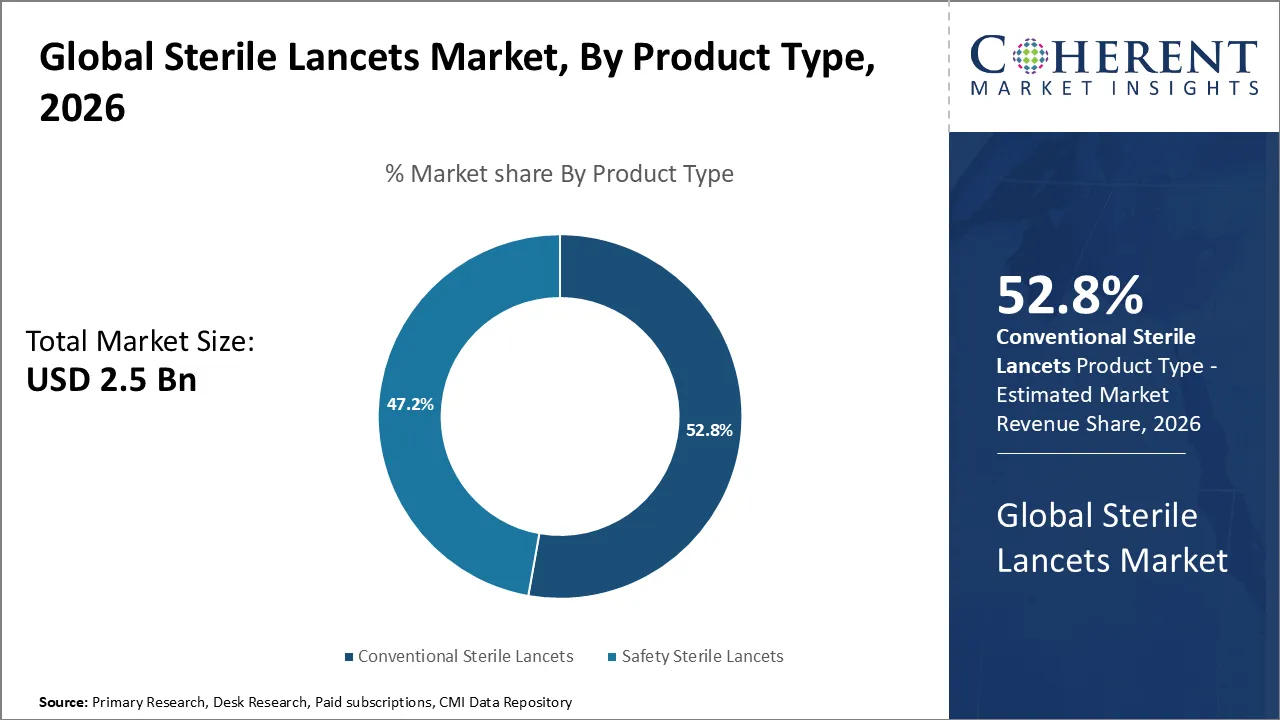
- Conventional Sterile Lancets hold the largest market share of 52.8% in 2026 owing to its growing prevalence of diabetes. In India, more than 100 million people are estimated to have diabetes, while approximately 136 million have prediabetes.
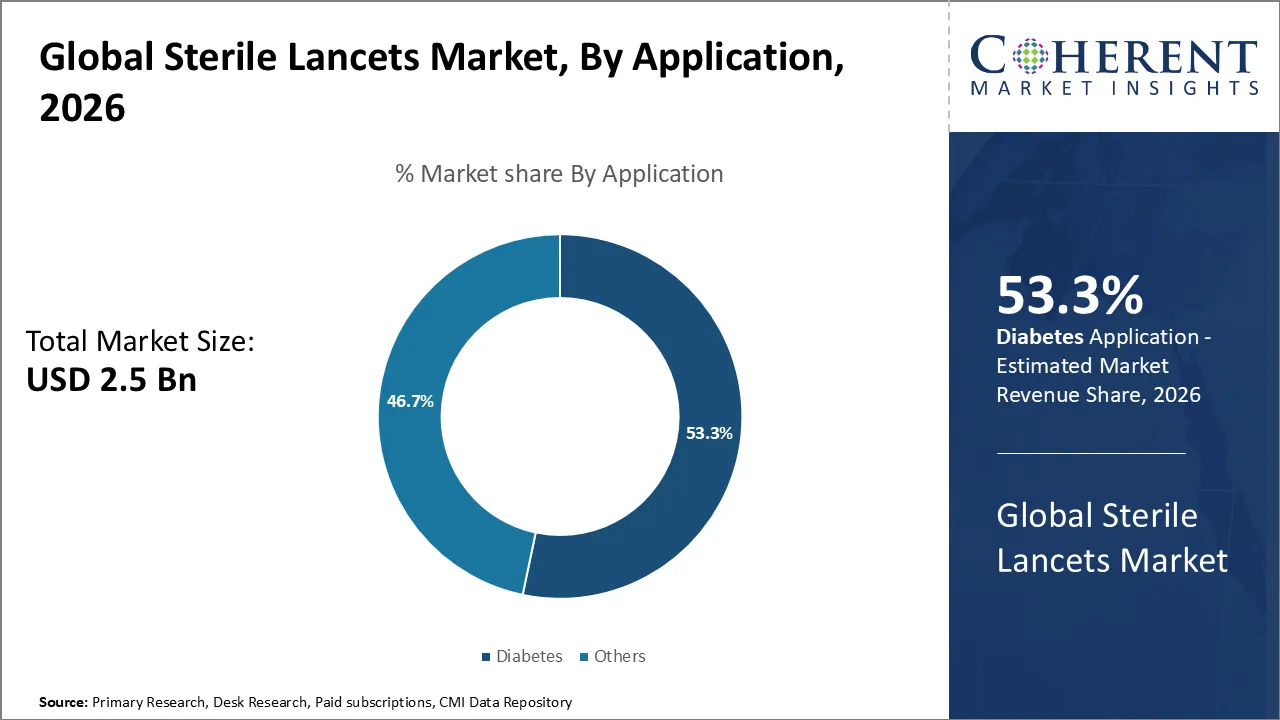
- Diabetes expected to hold largest market share of 53.3% in 2026 owing to the growth of home-based diabetes management.
- Hospital Pharmacies acquired the largest market share of 42.8% in 2026 owing to its rising demand for point-of-care glucose testing.
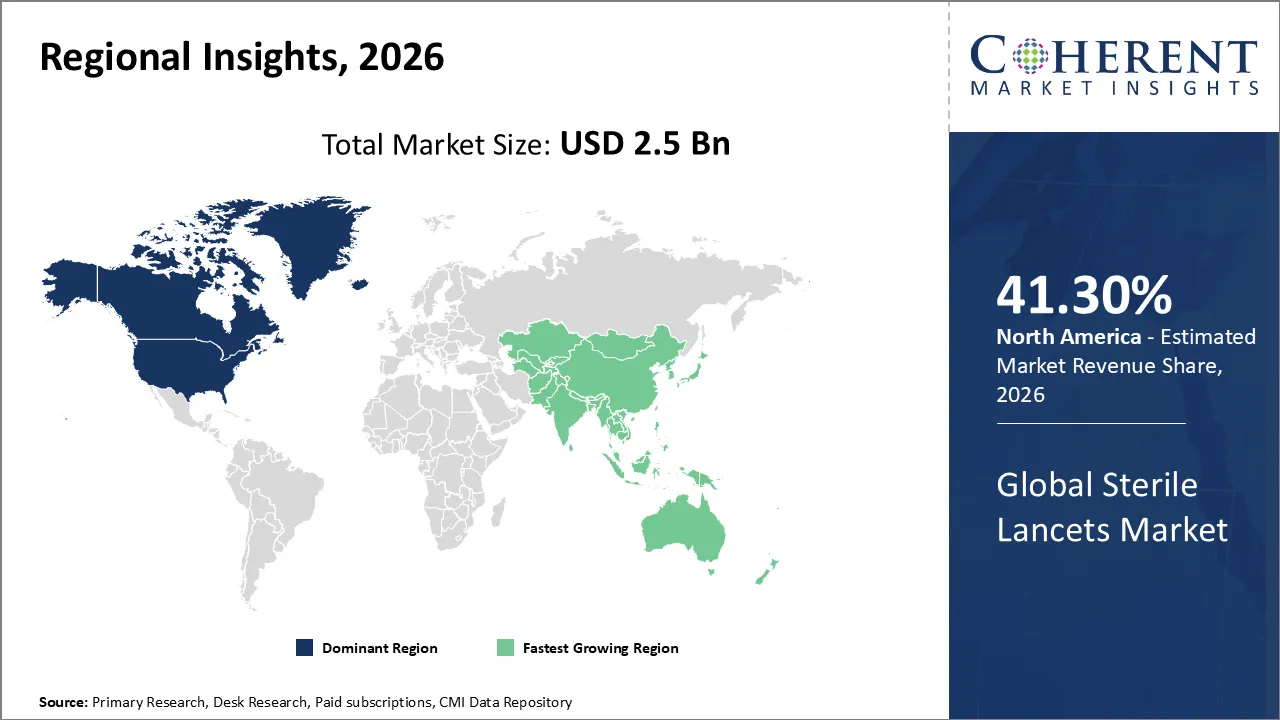
- North America is expected to acquire the dominant share of 41.3% in 2026 owing to the growing demand for home healthcare. Approximately 12 million Americans receive home healthcare services annually.
Current Events and Their Impact
Current Event | Description and its Impact |
India’s Intensified Special NCD Screening Campaign – 2025 |
|
India’s continued expansion of the National Programme for Prevention and Control of NCDs (NP-NCD) |
|
Segmental Insights
- Current Industry Events of 2026
- Market Size Estimation
- Regional Breakdown
- Competitive Landscape
- Customer Intelligence
- Segmental Analysis
- Pricing Analysis
- Key Market Drivers, Challenges & Future Trends
- Customized Insights Section
Why is Conventional Sterile Lancets Acquiring the Largest Market Share?
Conventional Sterile Lancets hold the largest market share of 52.8% in 2026. The conventional sterile lancets segment benefits from the growing need for routine blood-glucose monitoring among people managing diabetes at home and in healthcare facilities. Patients and healthcare providers favor these lancets because they offer affordability, ease of use, broad availability, and compatibility with widely used lancing devices. Growing diabetes awareness, expanding home healthcare, increasing point-of-care testing, and the need for safe, single-use blood-sampling products further drive demand. Established healthcare distribution networks and strong familiarity among patients and professionals also support continued adoption.
Diabetes expected to hold largest market share
Diabetes expected to hold largest market share of 53.3% in 2026 owing to the increasing diabetes screening and diagnosis. The expanding diabetic population is driving sterile lancet demand as patients increasingly monitor their blood-glucose levels regularly. Individuals managing diabetes at home and in clinical settings use lancets for routine capillary blood sampling. Increased adoption of self-monitoring, broader use of insulin therapy, and greater awareness of diabetes care further boost demand. Healthcare professionals use sterile lancets for point-of-care glucose testing and ongoing patient monitoring. The expansion of home healthcare and improved diabetes detection also increases the use of sterile lancets across healthcare facilities. For instance, Sol-Millennium Medical Inc., a global medical device company focused on patient safety, clinical efficiency, and healthcare outcomes, unveiled a dedicated U.S. B2B e commerce platform, b2b.solm.com. The new platform enables healthcare providers across the United States to purchase directly from Sol Millennium streamlining procurement, improving availability, and providing direct access to a broad portfolio of safety engineered medical devices.
Which Distribution Channel Segment dominates the market?
Hospital Pharmacies acquired the largest market share of 42.8% in 2026. Hospital pharmacies increase sterile lancet demand by supplying essential blood-sampling products for diabetes management and routine patient care. Rising hospital admissions, greater use of point-of-care glucose testing, and frequent blood-glucose monitoring encourage healthcare facilities to maintain adequate lancet inventories. According to the American Hospital Association’s 2026 Fast Facts, U.S. community hospitals reported approximately 33.5 million admissions. Hospitals also prioritize sterile, single-use products to strengthen infection-control practices. Expanding inpatient diabetes management, surgical procedures, critical-care services, and centralized procurement further boost demand. Improved healthcare infrastructure and wider adoption of hospital-based diagnostic services continue to expand the use of sterile lancets.
Sterile Lancets Market Trends
- Growing adoption of self-monitoring blood glucose (SMBG) increases the use of sterile lancets as people with diabetes increasingly monitor glucose levels outside clinical settings. The International Diabetes Federation (IDF) estimates that 589 million adults aged 20–79 years were living with diabetes worldwide in 2024, equivalent to approximately 1 in 9 adults.
- Increasing prevalence of diabetes worldwide supports recurring demand for blood-glucose monitoring supplies. WHO reported that the number of people living with diabetes increased from 200 million in 1990 to 830 million in 2022, while diabetes prevalence among adults aged 18 years and older reached 14% in 2022, up from 7% in 1990.
- Expansion of home healthcare and remote patient monitoring supports the use of glucose-monitoring devices outside traditional healthcare facilities. The U.S. Centers for Medicare & Medicaid Services (CMS) recognizes remote patient monitoring as a model in which patients can collect health data such as glucose levels using connected medical devices and transmit the information to healthcare providers.
Regional Insights
North America dominates owing to technological developments in lancing systems
North America is expected to acquire the dominant share of 41.30% in 2026. North America’s high diabetes burden drives demand for sterile lancets as patients require regular blood-glucose monitoring. Patients increasingly use self-monitoring practices and home healthcare services, which boosts recurring lancet consumption. Advanced healthcare infrastructure, widespread point-of-care testing, and greater diabetes-management awareness further increase demand. Hospitals and clinics use sterile, single-use lancets to support infection-control practices. Well-established medical-device distribution networks, substantial healthcare spending, and the growing adoption of advanced lancing technologies continue to support the regional sterile lancets market. Researchers published results from the ZIRCON trial (NCT03849118), which evaluated TLX250-CDx (Zircaix; Zr-girentuximab) as an imaging agent in patients with an indeterminate renal mass suspected of clear cell renal cell carcinoma (ccRCC). The company is now preparing to resubmit its biologics license application (BLA) for the imaging agent.
Asia Pacific Sterile Lancets Market Trends
The Asia Pacific sterile lancets market is driven by rising diabetes prevalence and growing demand for regular blood glucose monitoring. Consumers increasingly adopt home-based healthcare, while large patient populations in China and India sustain demand for single-use blood-sampling devices. Healthcare providers are expanding diagnostic infrastructure and implementing diabetes screening programs, further supporting market growth. Aging populations, wider use of point-of-care testing, improved healthcare access in emerging economies, and growing adoption of safety-engineered lancets also contribute to increasing regional demand.
United States Sterile Lancets Market Trends
The United States sterile lancets market continues to grow as more people with diabetes regularly monitor their blood glucose levels. Consumers increasingly adopt home-based healthcare, while greater awareness of preventive health management encourages frequent testing. Healthcare providers also promote single-patient use and infection-control practices, strengthening demand for safe, disposable lancets. Manufacturers further drive adoption by introducing innovative designs that reduce pain, offer adjustable penetration depths, and incorporate enhanced safety features for convenient blood sampling in healthcare facilities and home-care environments.
Japan Sterile Lancets Market Trends
Japan’s sterile lancets market continues to grow as more people manage diabetes and use self-monitoring blood glucose devices. Rising awareness of preventive healthcare also encourages consumers to adopt convenient blood-sampling products. Japan’s aging population further increases demand for minimally invasive testing solutions. Japan’s population aged 65 and older accounts for a record 29.6% of the total population, representing approximately 36.24 million people. Healthcare providers and consumers are expanding home-based care and self-testing, which supports lancet use. Manufacturers are also improving lancet safety, convenience, and disposable designs. Government initiatives that encourage diabetes self-management and early detection further support market demand.
Who are the Major Companies in Sterile Lancets Industry
Some of the major key players in Sterile Lancets are Becton, Dickinson and Company, F-Hoffmann La Roche AG, Nipro Corporation, Ypsomed AG, Sanofi, Sarstedt AG & Co., Jiangsu Huida Medical Instruments Co. Ltd., Allison Medical, Inc., and A. Menarini Diagnostics
Key News
- In May 2026, India introduced a national framework for childhood diabetes that provides universal screening for children from birth to 18 years, along with free diagnosis, lifelong insulin therapy, glucose-monitoring supplies, and follow-up care at public health facilities.
Market Report Scope
Sterile Lancets Market Report Coverage
Report Coverage | Details | ||
Base Year: | 2025 | Market Size in 2026: | USD 2.5 Bn |
Historical Data for: | 2020 to 2024 | Forecast Period: | 2026 to 2033 |
Forecast Period 2026 to 2033 CAGR: | 7.8% | 2033 Value Projection: | USD 3.8 Bn |
Geographies covered: |
| ||
Segments covered: |
| ||
Companies covered: | Becton, Dickinson and Company, F-Hoffmann La Roche AG, Nipro Corporation, Ypsomed AG, Sanofi, Sarstedt AG & Co., Jiangsu Huida Medical Instruments Co. Ltd., Allison Medical, Inc., and A. Menarini Diagnostics | ||
Analyst Opinion
- Sterile lancets are not a discretionary diabetes accessory; they are a recurring-use component of blood glucose monitoring. In my view, this is the most important structural point for the sterile lancets market. The 2026 American Diabetes Association Standards of Care notes that many individuals using blood-glucose monitoring alone may require finger-stick testing 6–10 times per day, although frequency varies by patient and treatment regimen. It also cites a database study of almost 27,000 children and adolescents with type 1 diabetes, where each additional daily blood-glucose check was associated with a 0.2 percentage-point reduction in HbA1c and fewer acute complications. This creates a fundamentally different demand profile from one-time medical consumables: every additional monitoring episode can translate into another lancet.
- The strongest opportunity is therefore not simply more diabetes patients, it is greater testing intensity per patient. The evidence already shows a direct relationship between monitoring frequency and clinical management in several patient groups. Historical U.S. data found that 86.7% of insulin-treated adults with diabetes were checking blood glucose at least daily, compared with 63.4% across all adults with diabetes in 2006. More importantly for lancet manufacturers, insulin-intensive patients can generate substantially higher recurring consumption because testing may occur before meals, at bedtime, around exercise, and whenever hypoglycemia is suspected.
- Sterility and single-use design are becoming purchasing requirements rather than marketing features. Healthcare procurement to increasingly favor sterile, disposable, patient-specific lancets because the infection-control argument is unusually concrete. The CDC explicitly recommends single-use, auto-disabling fingerstick devices for assisted blood-glucose monitoring and states that lancets should never be reused. The FDA likewise states that single-use disposable blood lancets minimize the risk of transmitting bloodborne pathogens and recommends labeling blood-lancet devices for single-patient use only.
- The market’s premium segment should increasingly be defined by safety engineering, not simply needle sharpness or gauge. The distinction matters because healthcare providers are dealing with a blood-contact device, not an ordinary disposable. CDC guidance specifically recommends lancets that permanently retract upon puncture, adding a safety layer for both patient and provider. That gives auto-retractable and auto-disabling formats a defensible product proposition, particularly where multiple patients are being tested.
- Emerging-market demand should not be underestimated, but affordability will determine how much of the clinical need converts into actual lancet consumption. The WHO's 2025 assessment of diabetes-management technologies specifically included lancets, blood-glucose meters and test strips when evaluating availability, pricing and affordability, emphasizing that these devices need to be safe, good-quality and affordable. This is important because the clinical need for monitoring does not automatically translate into high-frequency testing when patients face out-of-pocket costs or limited access to monitoring supplies. In other words, the next phase of sterile-lancet adoption will be shaped as much by affordability and distribution as by diabetes incidence.
- The shift toward connected glucose-monitoring ecosystems does not eliminate the sterile-lancet opportunity; it changes where the demand sits. Connected meters, mobile applications and digital diabetes-management platforms are designed to make glucose monitoring more actionable. A 2024 analysis involving 103,400 U.S. users with self-reported type 2 diabetes specifically examined changes in blood-glucose testing after connecting meters with a diabetes self-management application. This reinforces the broader industry direction toward digitally supported monitoring.
- Ultimately, the sterile lancets market has a stronger recurring-consumption logic than its low unit price suggests. The product may be inexpensive relative to a glucose meter, but its utilization is repeated—sometimes multiple times every day—and clinical protocols can require substantially different monitoring frequencies depending on therapy. The ADA's current guidance explicitly recognizes that some people using blood-glucose monitoring alone may perform 6–10 finger sticks daily. That means the commercial opportunity is less about increasing the value of an individual lancet and more about capturing a greater share of repeated testing episodes through safety, comfort, reliability, distribution and institutional adoption.
Speak to the analyst
Want personalized insights?
Take the findings above to one of our principal consultants, or have the report rebuilt around the segments, geographies and competitors you actually track.
Market Segmentation
- By Product Type: (Revenue, USD Bn, 2021-2033)
- Conventional Sterile Lancets
- Safety Sterile Lancets
- By Application: (Revenue, USD Bn, 2021-2033)
- Diabetes
- Others
- By Distribution Channel: (Revenue, USD Bn, 2021-2033)
- Retail Pharmacies
- Hospital Pharmacies
- Online Pharmacies
- By Region: (Revenue, USD Bn, 2021-2033)
- North America
- U.S.
- Canada
- Latin America
- Brazil
- Mexico
- Argentina
- Rest of Latin America
- Europe
- Germany
- U.K.
- France
- Italy
- Spain
- Russia
- Rest of Europe
- Asia Pacific
- China
- India
- Japan
- Australia
- South Korea
- ASEAN
- Rest of Asia Pacific
- Middle East
- GCC
- Israel
- Rest of Middle East
- Africa
- South Africa
- Central Africa
- North Africa
- North America
- Key Players
- Becton, Dickinson and Company
- F-Hoffmann La Roche AG
- Nipro Corporation
- Ypsomed AG
- Sanofi
- Sarstedt AG & Co.
- Jiangsu Huida Medical Instruments Co. Ltd.
- Allison Medical, Inc.
- A. Menarini Diagnostics
Sources
Primary Research interviews
- Manufacturers and suppliers of sterile, single-use, and safety lancets
- Medical device distributors and wholesalers
- Hospitals, diagnostic laboratories, clinics, and diabetes-care centers
- Healthcare professionals, nurses, phlebotomists, and laboratory personnel
- Procurement and purchasing professionals in hospitals and healthcare systems
- Diabetes educators and blood-glucose-monitoring professionals
- Retail pharmacy and medical-device distribution channels
- End users and patients using lancets for blood-glucose monitoring and other capillary blood sampling applications
Databases
- U.S. Food and Drug Administration (FDA) medical device databases and 510(k) records
- PubMed / MEDLINE
- ClinicalTrials.gov
- World Health Organization (WHO) data and publications
- International Diabetes Federation (IDF) data and publications
- Centers for Disease Control and Prevention (CDC) databases and publications
- National health statistics and healthcare databases
- Government trade and customs databases
- National statistical offices and public healthcare databases
Magazines
- Diabetes-focused healthcare and professional publications
- Medical Device Network
- Medical Design & Outsourcing
- MDDI (Medical Device and Diagnostic Industry)
- Diagnostic and laboratory industry publications
- Hospital and healthcare management publications
- Pharmaceutical and medical-device trade publications
Journals
- Diabetes Care
- Diabetes Technology & Therapeutics
- Journal of Diabetes Science and Technology
- Clinical Laboratory Science
- Postgraduate Medicine
- European Journal of Pain
- Journal of Clinical Laboratory Analysis
- Journal of Medical Devices
- International Journal of Medical Devices and Pharmaceutical Research
- Peer-reviewed publications indexed in PubMed/MEDLINE
Newspapers
- The New York Times
- The Wall Street Journal
- Financial Times
- The Guardian
- Reuters
- The Times of India
- The Economic Times
- Major national and regional newspapers covering healthcare, medical devices, diabetes, and diagnostics
Associations
- World Health Organization (WHO)
- International Diabetes Federation (IDF)
- American Diabetes Association (ADA)
- American Association for Clinical Chemistry (AACC)
- Association for Diagnostics & Laboratory Medicine (ADLM)
- European Association for the Study of Diabetes (EASD)
- Diabetes UK
- National and regional diabetes associations
- National medical-device and laboratory associations
Public Domain sources
- U.S. Food and Drug Administration (FDA) regulatory documents, device classifications, 510(k) clearances, and safety guidance
- Centers for Disease Control and Prevention (CDC) infection-control and blood-glucose-monitoring guidance
- World Health Organization (WHO) guidelines on capillary blood sampling, infection prevention, and blood collection
- International Diabetes Federation (IDF) diabetes statistics and self-monitoring blood-glucose guidance
- ClinicalTrials.gov clinical trial records
- PubMed/MEDLINE abstracts and bibliographic records
- National government healthcare statistics
- National customs and trade statistics
- Government regulatory and medical-device registration databases
- Publicly available hospital, laboratory, and healthcare-system statistics
- Public company regulatory filings and investor disclosures, where applicable
Proprietary Elements
- CMI Data Analytics Tool, and Proprietary CMI Existing Repository of information for last 10 years
Get access to 250+ pages report
Every segment, forecast, competitor profile and data table behind the analysis above — available for instant download.
- ESOMAR Member
- ISO 9001:2015 Certified
- D-U-N-S Registered
- GDPR & CCPA Compliant
Missing comfort of reading report in your local language? Find your preferred language:
Transform your Strategy with Exclusive Trending Reports
Frequently Asked Questions
The Sterile Lancets Market is anticipated to grow at a CAGR of 7.8% with USD 2.5 Billion = in 2026 and is expected to reach USD 3.8 Billion in 2033.
Sterile lancets are primarily used for capillary blood sampling, particularly for blood-glucose testing in diabetes management.
Diabetes represents the largest application because glucose monitoring can require repeated finger-stick testing.
Conventional sterile lancets benefit from their low cost, broad availability, ease of use, and compatibility with commonly used lancing devices.
Safety sterile lancets are gaining attention because healthcare providers increasingly prioritize infection prevention and needlestick-risk reduction.
Hospital pharmacies benefit from centralized procurement and the continuous need for blood-sampling supplies across inpatient care, and diabetes management.