

Tinnitus Management Market Size and Share Analysis- 2026 To 2033
The Tinnitus Management Market size is anticipated to grow at a CAGR of 4.1% with USD 3.05 Bn in 2026 and is expected to reach USD 4.04 Bn in 2033. The primary drivers are defined by the rising prevalence of tinnitus, expanding elderly populations, increasing noise-induced hearing loss, and growing demand for symptom management. According to a peer-reviewed systematic review available through the U.S. National Institutes of Health, tinnitus affects approximately 14% of adults worldwide, representing more than 740 million people. This is strengthening demand for hearing aids, sound generators, masking devices, digital therapeutics, cognitive behavioral therapy, tinnitus retraining therapy, and neuromodulation solutions across hospitals, ENT clinics, audiology centers, clinics, and homecare settings.
Key Takeaways
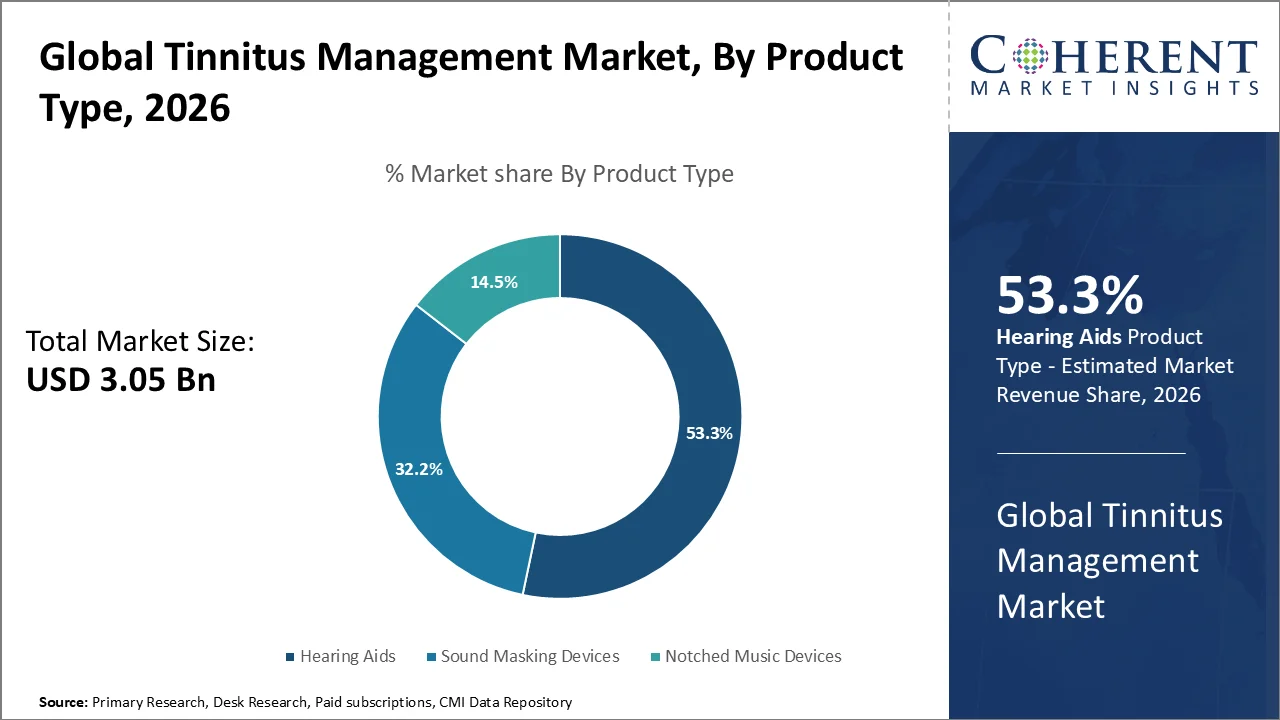
- The hearing aids segment is likely to dominate the market with 53.3% in 2026. The segment’s growth is owing to the high prevalence of hearing loss among tinnitus patients. Around 28.8 million U.S. adults could benefit from using hearing aids.
- The clinics segment is set to lead with 54.2% in 2026. The segment’s growth is owing to the increasing demand for specialized tinnitus diagnosis, hearing assessments, counselling, and personalized device fitting.
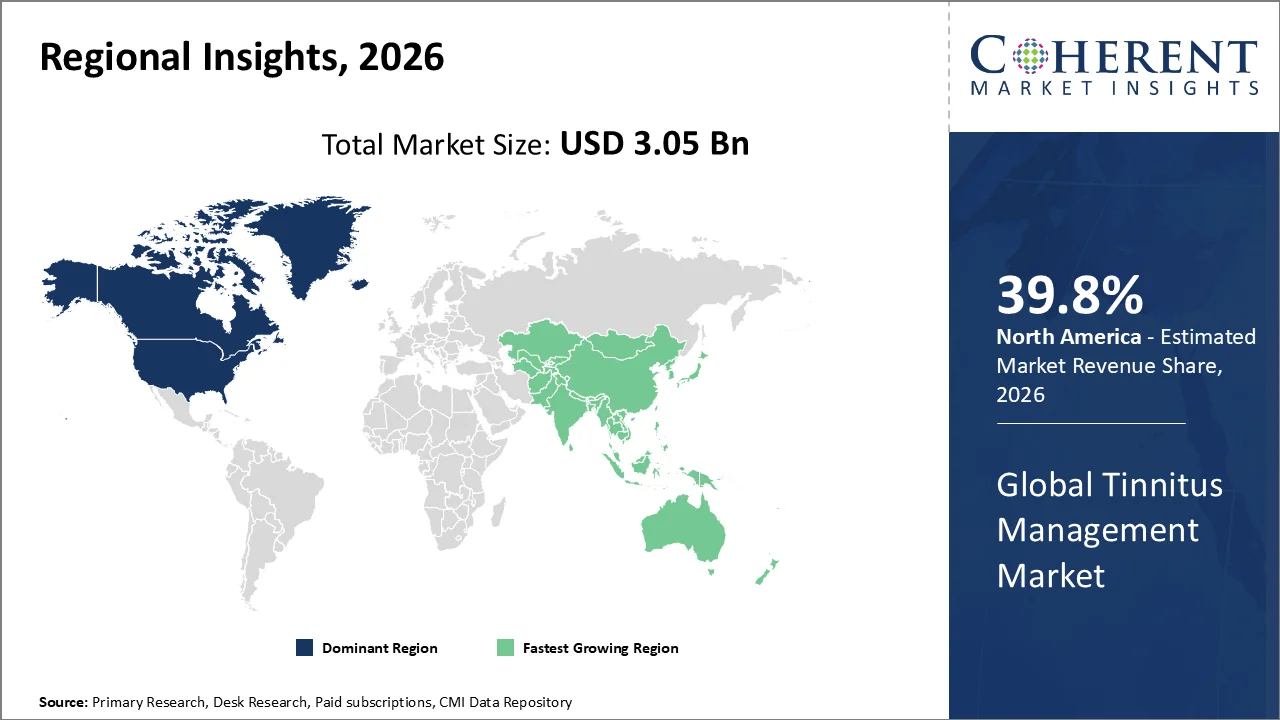
- North America is expected to acquire the prominent share of 39.8% in 2026. The region’s growth is owing to the advanced audiology infrastructure, high treatment awareness, and widespread tinnitus prevalence.
Segmental Insights
Why is Hearing Aids Segment Acquiring the Largest Share?
On the basis of product type, the hearing aids segment is projected to account for the largest Tinnitus Management Market share of 53.3% in 2026. The segment’s growth is owing to the direct clinical use in patients who have both bothersome tinnitus and hearing loss.
The 2024 VA/DoD tinnitus guideline suggests hearing aids for tinnitus management in adults with hearing loss and notes that sound-generator modes are available in most hearing aids. In one reviewed randomized controlled trial involving 61 participants, hearing aids plus tinnitus care produced a significantly greater reduction in tinnitus functional impact at 12 months than care alone. This dual function amplifying environmental sound while optionally delivering tinnitus-oriented sound therapy supports prescription demand and product differentiation.
In July 2026, ClinicalTrials.gov registered Sonova-sponsored study NCT07711249 to evaluate the clinical benefit of an integrated hearing-aid tinnitus feature in adults with chronic tinnitus after at least 12 weeks of feature activation, strengthening the evidence pipeline for combination devices.
- Current Industry Events of 2026
- Market Size Estimation
- Regional Breakdown
- Competitive Landscape
- Customer Intelligence
- Segmental Analysis
- Pricing Analysis
- Key Market Drivers, Challenges & Future Trends
- Customized Insights Section
Clinics hold the Largest Market Share
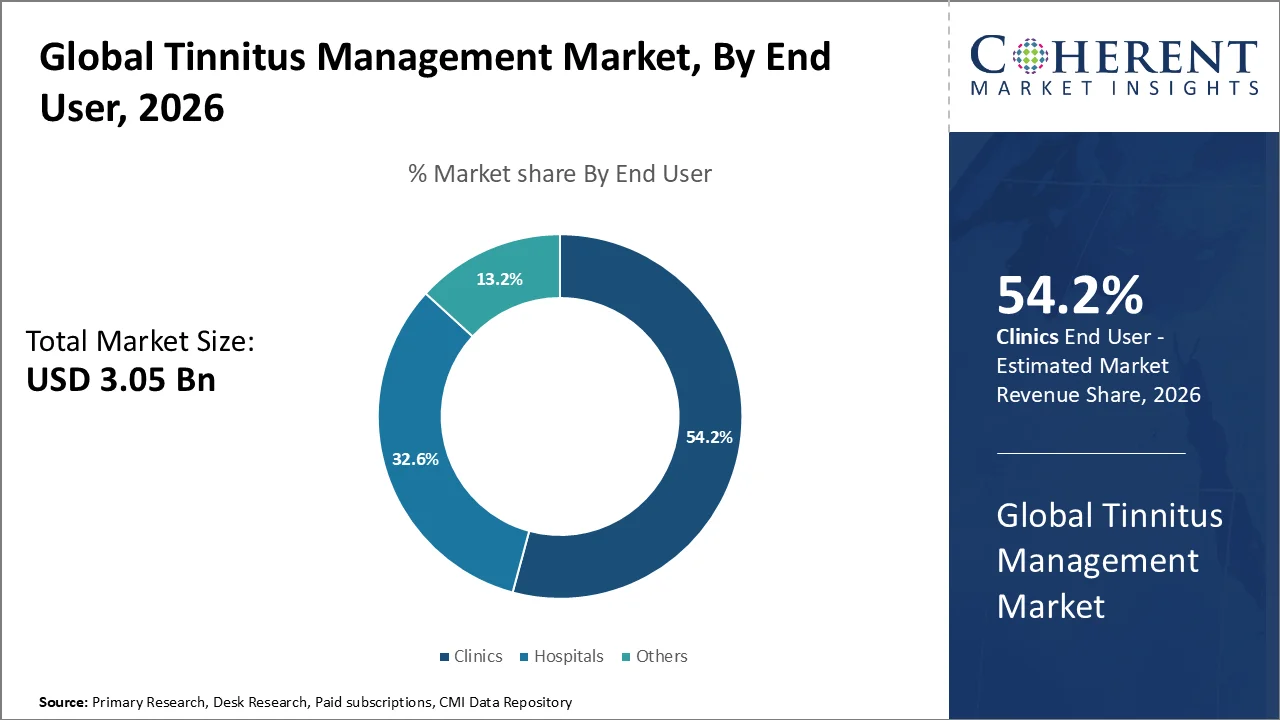
On the basis of end user, the clinics segment lead with a major 54.2% share in 2026. The growth is owing to the need for audiological assessment, hearing tests, tinnitus severity evaluation, counseling, hearing-aid fitting, sound therapy, and follow-up monitoring delivered by trained professionals.
The U.S. National Institute on Deafness and Other Communication Disorders states that approximately 27% of adults with tinnitus report symptoms persisting for more than 15 years, supporting repeated clinic visits and long-term management.
Market Drivers
Rising Bimodal Neuromodulation Innovation Is Transforming the Tinnitus Management Market in the U.S.
The U.S. is becoming an important commercialization center for tinnitus-specific neuromodulation. Historically, tinnitus management has relied mainly on education, counseling, hearing aids, sound enrichment, cognitive behavioral therapy, and treatment of underlying medical or psychological conditions. Newer medical devices are expanding the market by attempting to influence the neural activity associated with tinnitus through coordinated sensory stimulation.
On March 2023, the U.S. Food and Drug Administration granted De Novo authorization to Neuromod Devices’ Lenire Tinnitus Treatment Device under De Novo number DEN210033. The device combines acoustic stimulation delivered through headphones with mild electrical stimulation applied to the tongue. The authorization created a regulated pathway for a combined acoustic and electrical external-stimulation device intended for tinnitus relief.
In April 2026, the Atlanta VA Health Care System introduced Lenire to its tinnitus management program. The VA stated that the non-invasive device combines auditory tones delivered through headphones with mild electrical pulses applied to the tongue.
Emerging Pipeline Innovation: Major Breakthrough in the Tinnitus Management Market
The tinnitus management pipeline is shifting toward non-invasive, drug-free technologies designed for use in clinics and at home. This transition is expanding the emerging device segment by supporting longer treatment periods, remote symptom monitoring, and broader patient access beyond specialist settings. Continued clinical evaluation of neuromodulation and inner-ear interventions is also strengthening the pathway from early research to future commercialization.
A key July 2026 development is RestorEar Devices’ recruiting U.S. study of ReBound, a wearable system that delivers mild therapeutic hypothermia to inner-ear structures. The randomized, sham-controlled trial is expected to enroll 40 adults with chronic subjective tinnitus, divided equally between active-treatment and control groups. Participants undergo one 30-minute clinic session before using their assigned device at home for six months. Investigators will assess tinnitus severity, functional effects, adherence, device use, and adverse events. With primary completion estimated for November 30, 2026, ReBound remains investigational but highlights growing pipeline diversification.
Current Events and Their Impact on the Tinnitus Management Market
Current Event | Description and its Impact |
2026 Medicare Advantage Hearing Benefits and Coverage Limitations in the U.S.
|
|
Mandatory EUDAMED Medical Device Registration in the European Union |
|
Tinnitus Management Market Trends
- The rising adoption of tinnitus care combining hearing aids, sound therapy, counselling, and cognitive behavioural interventions is supporting the individualized symptom management.
- Personalized digital sound programs, smartphone applications, and remote audiology services is improving the treatment accessibility, monitoring, and engagement across underserved populations.
- Bimodal neuromodulation is gaining attention as device-based innovation expands beyond masking. The FDA classifies Lenire as a combined acoustic and electrical stimulation device for temporary tinnitus relief.
- The aging populations and exposure to occupational and recreational noise is increasing tinnitus incidence, thereby strengthening the demand for hearing rehabilitation. As of 2026, WHO reports that over 430 million people require rehabilitation for disabling hearing loss, while more than 25% of adults aged above 60 years are affected. Tinnitus prevalence also rises with age and is commonly associated with age-related or sound-induced hearing loss.
- Expanding veteran healthcare programs and virtual care pathways is broadening the access to tinnitus management. The U.S. Department of Veterans Affairs recorded tinnitus among 3.58 million compensation recipients in its 2025 report. A VA virtual group-care program showed that 68% of participating veterans improved their sense of control over bothersome tinnitus, while 67% reported improved quality of life.
Regional Insights
North America Dominates Owing to the High Patient Burden and Advanced Device Adoption
The North America region accounts for 39.8% of the market share in 2026. The region’s growth is owing to the large patient pool, occupational noise exposure, audiology infrastructure, and early access to clinician-supervised technologies.
Statistics Canada reported that 37% of Canadian adults aged 19–79, equivalent to approximately 9.2 million people, experienced tinnitus during the previous year. Around 7% reported bothersome symptoms that affected sleep, concentration, or mood. The CDC’s National Institute for Occupational Safety and Health also reports that about 8% of U.S. workers have tinnitus, supporting demand for screening, counseling, hearing aids, sound therapy, and neuromodulation.
In April 2026, Neuromod Devices launched its Lenire tinnitus treatment device in Canada through 21 specialized clinics across five provinces. The non-invasive bimodal neuromodulation therapy combines tongue and sound stimulation, supported by clinical evidence showing sustained symptom relief for patients.
Asia Pacific Tinnitus Management Market Trends
Asia Pacific is expected to witness strong growth in market over the forecast period. The region’s growth is owing to the regulators and researchers advance device-based care.
In South Korea, a ClinicalTrials.gov record updated in April 2026 reported that 36 patients completed a randomized, sham-controlled study of Soricle, a Class III device combining transcutaneous vagus nerve stimulation with sound stimulation. Participants used the device daily for 8 weeks, demonstrating evaluation of neuromodulation-based tinnitus therapy. In New Zealand, the Australian New Zealand Clinical Trials Registry listed a 2025 study of the QCore sound-therapy system involving 20 tinnitus patients and 20 matched controls with treatment prescribed for 1 hour daily over 12 weeks.
In September 2025, Neuromod Devices secured the approval from Australia’s Therapeutic Goods Administration for Lenire following MDSAP certification. The milestone enables commercialisation of the non-invasive bimodal
High Tinnitus Prevalence and Occupational Noise Exposure is Accelerating the Tinnitus Management Market in United States
In United States, the Tinnitus Management Market is influenced by the substantial patient base, mature hearing-device industry, veteran-care infrastructure, specialized audiology centers, and early regulatory adoption of tinnitus-specific neuromodulation.
A March 2026 analysis of 125,252 participants in the Apple Hearing Study estimated a weighted prevalence of any tinnitus at 30.8% and bothersome tinnitus at 11.6%. Self-rated hearing ability was the strongest identified risk factor, and occupational noise exposure was associated with higher odds of both any and bothersome tinnitus. The study was based on a volunteer, app-based cohort and should therefore be interpreted within its study-design limitations.
China Tinnitus Management Market Trends
China’s tinnitus management market is expanding as persistent symptom burden and device innovation increase demand for assessment and sound-based care. In February 2025, China’s National Healthcare Security Administration stated that persistent tinnitus affects fewer than one in ten people, thereby highlighting a sizeable population requiring structured management.
In May 2026, Wuxi Qinger Voice Technology’s AI-powered tinnitus rehabilitation device entered Wuxi’s community rental service catalog. The system precisely matches tinnitus frequency and loudness, generates personalized sound therapy, and is already being successfully clinically applied at Beijing Tongren Hospital.
Who are the Major Companies in Tinnitus Management Industry
Some of the major key players in Tinnitus Management Market are Sivantos, Inc., Starkey Hearing Technologies, Inc., GN Hearing A/S, Widex A/S, Oticon Inc., Neuromod Devices Ltd., Neuromonics, Inc., Puretone Ltd., and Cochlear Americas, Inc.
Key News
- In March 2026, the Tinnitus & Hearing Center of Arizona introduced Oticon Zeal, an AI-powered, rechargeable completely-in-the-canal hearing aid. The discreet device improves speech clarity, reduces background noise, supports Bluetooth connectivity, and enables personalized tinnitus sound therapy through its app.
- In February 2026, Science Corporation partnered with Neurosoft Bioelectronics to advance minimally invasive, fully implantable brain-computer interfaces for tinnitus and other neurological disorders. The collaboration provides Neurosoft access to Science’s clinical-grade engineering platform, accelerating product development, clinical translation, and commercialization.
Market Report Scope
Tinnitus Management Market Report Coverage
| Report Coverage | Details | ||
|---|---|---|---|
| Base Year: | 2025 | Market Size in 2026: | USD 3.05 Bn |
| Historical Data for: | 2020 To 2024 | Forecast Period: | 2026 To 2033 |
| Forecast Period 2026 to 2033 CAGR: | 4.1% | 2033 Value Projection: | USD 4.04 Bn |
| Geographies covered: |
| ||
| Segments covered: |
| ||
| Companies covered: | Sivantos, Inc., Starkey Hearing Technologies, Inc., GN Hearing A/S, Widex A/S, Oticon Inc., Neuromod Devices Ltd., Neuromonics, Inc., Puretone Ltd., and Cochlear Americas, Inc. | ||
| Growth Drivers: |
| ||
| Restraints & Challenges: |
| ||
Analyst Opinion
- Tinnitus management is driven by substantial unmet clinical need. Surveys estimate that 10% to 25% of adults experience tinnitus, while more than 1.5 billion people globally live with some degree of hearing loss. This creates sustained demand for diagnosis, counselling, hearing devices, and long-term symptom-management services.
- The market is transitioning from general coping and masking products toward clinically evaluated, prescription-based technologies. FDA authorization of a bimodal neuromodulation category and real-world evidence involving 220 U.S. patients demonstrate the commercial potential of tinnitus-specific medical devices.
- Evidence-based tinnitus care focuses on cognitive behavioural therapy, hearing-aid assessment, patient education, as well as sound-based interventions. The clinical guidelines recommend CBT for persistent, bothersome tinnitus and hearing aids when documented hearing loss is present. This is supporting the wider adoption of multidisciplinary clinics, digital therapeutics, audiology devices, and personalized programs across developed and emerging markets.
Speak to the analyst
Want personalized insights?
Take the findings above to one of our principal consultants, or have the report rebuilt around the segments, geographies and competitors you actually track.
Market Segmentation
- By Product Type (Revenue, USD Bn, 2021-2033)
- Sound Masking Devices
- Hearing Aids
- Notched Music Devices
- By End User (Revenue, USD Bn, 2021-2033)
- Clinics
- Hospitals
- Others
- By Region (Revenue, USD Bn, 2021-2033)
- North America
- U.S.
- Canada
- Latin America
- Brazil
- Mexico
- Argentina
- Rest of Latin America
- Europe
- Germany
- U.K.
- France
- Italy
- Spain
- Russia
- Rest of Europe
- Asia Pacific
- China
- India
- Japan
- Australia
- South Korea
- ASEAN
- Rest of Asia Pacific
- Middle East
- GCC
- Israel
- Rest of Middle East
- Africa
- South Africa
- Central Africa
- North Africa
- North America
Sources
Primary Research Interviews
- Audiologists
- Otolaryngologists and ENT specialists
- Neurologists
- Hearing aid specialists and dispensers
- Tinnitus treatment center managers
- Hospital administrators
- Medical device manufacturers and distributors
- Key opinion leaders (KOLs) in audiology and otolaryngology
Databases
- World Health Organization (WHO)
- National Institute on Deafness and Other Communication Disorders (NIDCD)
- National Institutes of Health (NIH)
- Centers for Disease Control and Prevention (CDC)
- Organisation for Economic Co-operation and Development (OECD)
- Institute for Health Metrics and Evaluation (IHME)
Magazines
- The Hearing Review
- Audiology Today
- ENT & Audiology News
- Tinnitus Today
Journals
- Hearing Research
- Otology & Neurotology
- Journal of the American Academy of Audiology
- International Journal of Audiology
- Ear and Hearing
- Frontiers in Audiology and Otology
Newspapers
- The New York Times
- The Guardian
- The Wall Street Journal
- The Washington Post
Associations
- American Tinnitus Association
- Tinnitus UK
- American Academy of Audiology
- American Academy of Otolaryngology–Head and Neck Surgery
- European Tinnitus Network
- British Society of Audiology
Public Domain Sources
- Company Annual Reports and Investor Presentations
- Government Health Ministry Publications
- National Hearing Health and Epidemiological Reports
- Clinical Trial Registries Such as ClinicalTrials.gov
- Medical Device Regulatory Databases
- Product Launches, Press Releases, and Regulatory Approvals
Proprietary Elements
- CMI Data Analytics Tool
- Proprietary CMI Existing Repository of Information for Last 10 Years
Get access to 250+ pages report
Every segment, forecast, competitor profile and data table behind the analysis above — available for instant download.
- ESOMAR Member
- ISO 9001:2015 Certified
- D-U-N-S Registered
- GDPR & CCPA Compliant
Missing comfort of reading report in your local language? Find your preferred language:
Transform your Strategy with Exclusive Trending Reports
Frequently Asked Questions
The Tinnitus Management Market is expected to reach USD 4.04 Bn in 2033.
Major players operating in the global Tinnitus Management Market include Sivantos, Inc., Starkey Hearing Technologies, Inc., GN Hearing A/S, Widex A/S, Oticon Inc., Neuromod Devices Ltd., Neuromonics, Inc., Puretone Ltd., and Cochlear Americas, Inc.
The high device costs, lack of insurance coverage, and a scarce clinical treatment pipeline are the key factors hampering growth of the market.
The rising patient prevalence, an aging global population, and technological advancements in digital health is boosting the demand for Tinnitus Management.
The Tinnitus Management Market is anticipated to grow at a CAGR of 4.1% between 2026 and 2033.
Among regions, North America is expected to account for a largest market share in the global Tinnitus Management Market over the forecast period.
The market outlook remains positive due to aging global population, rising noise exposure, and advanced digital technologies.