
Xylo Oligosaccharides Market Size and Share Analysis – Growth Trends and Forecasts (2026–2033)
The global Xylo Oligosaccharides Market size is anticipated to grow at a CAGR of 3.2%, from USD 31.04 Mn in 2026 to USD 38.64 Mn by 2033. The major growth driving factors include increasing demand for prebiotic ingredients, rising consumer awareness of digestive health, growing incorporation of xylo oligosaccharides in functional foods and dietary supplements, and expanding application in animal nutrition. A study published in The Journal of Basic and Applied Zoology, October 1, 2026 reported that supplementation of 250 mg/kg xylo oligosaccharides (XOS) improved growth performance, intestinal health and antioxidant activity in broiler chickens fed with 10% rice bran as a replacement for maize.
Key Takeaways
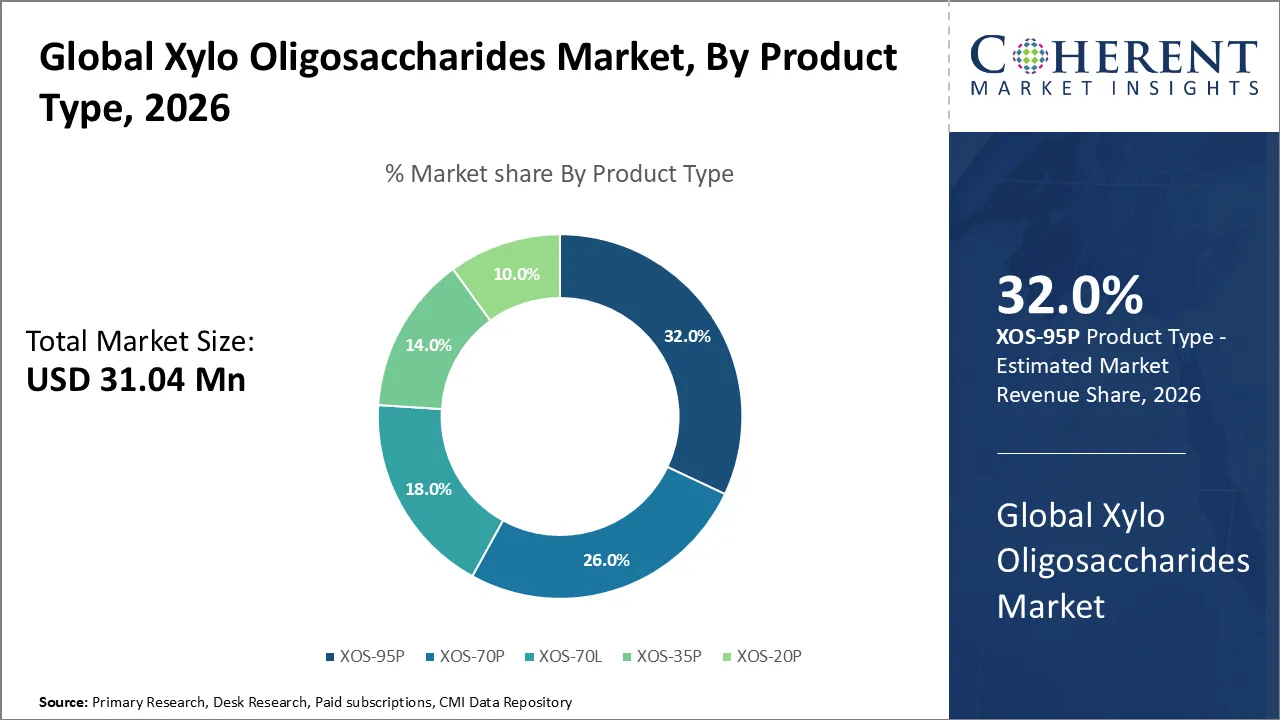
- The XOS-95P segment is projected to hold the largest market share in 2026. Its segment is growing on account of its high purity, its suitability for premium prebiotic formulations and its growing use in functional foods and dietary supplements. A 2025 study published in Food Research International used commercially available XOS with 95% purity to study the prebiotic effects and cross-feeding interactions of XOS with gut microbiota, thus highlighting the value of high-purity preparations in advanced nutritional research.
- The nutraceuticals & pharmaceuticals segment is anticipated to lead with 38% in 2026. Growth is being driven by increasing demand for gut-health supplements, microbiome-targeted nutritional products and functional prebiotic ingredients. In 2026, a study published in Springer Nature’s npj Gut and Liver found that 42 adults were given XOS supplements daily for four months.
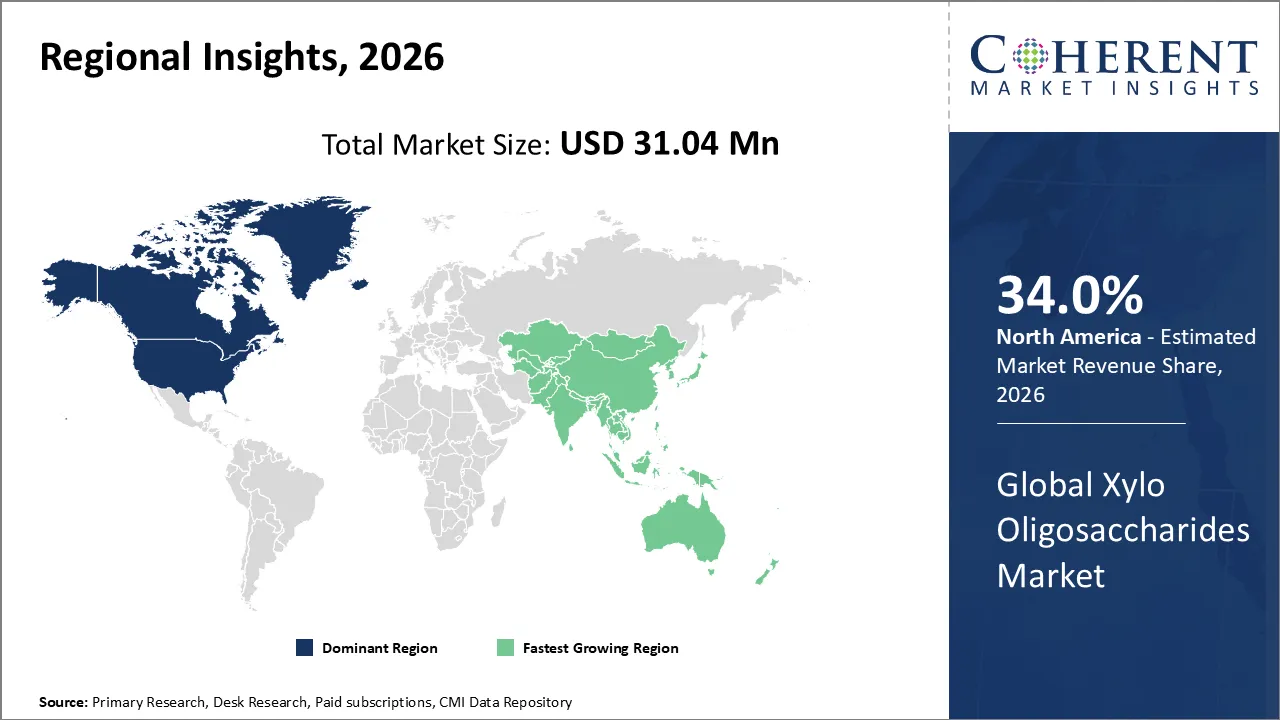
- North America is expected to have a dominant market share of 34% by 2026. The demand in the region is backed by the established dietary supplement industry, functional food manufacturers and the increasing use of prebiotic ingredients in animal nutrition. Alltech’s 2026 Agri-Food Outlook shows that the U.S. produced around 267.38 Mn metric tons of compound feed in 2025, making it one of the largest feed-producing countries in the world and a huge potential market for specialty feed ingredients, including XOS.
Market Drivers
Rising Demand for Functional Foods and Prebiotic Ingredients is Accelerating the Xylo Oligosaccharides Market
The global Xylo Oligosaccharides Market is witnessing increasing demand due to rising consumer interest toward digestive health, gut microbiome management and functional nutrition. Xylo oligosaccharides (XOS) are being eyed by food and beverage makers as a prebiotic ingredient for dairy, nutritional beverages and fiber-fortified foods. Their functional properties and compatibility with various food formulations are opening new avenues of product development.
A study published in International Journal of Dairy Technology in May 2026 looked at an orange-flavored whey beverage fortified with 2.5% XOS. The stability of XOS under ohmic-heating conditions of 20–40 V and 100–300 Hz was investigated by the researchers. Research indicates continuous development of XOS-enriched beverages and sophisticated processing technologies for functional food applications.
Advancements in Sustainable Production Technologies are Strengthening the Xylo Oligosaccharides Market
Technological advancements in enzymatic hydrolysis and biomass processing are acting as a major growth driver of the xylo oligosaccharides market. Increasingly, agricultural residues such as corncobs, wheat straw and sugarcane bagasse are being considered as alternative raw materials for the production of XOS by manufacturers and researchers. These methods provide possibilities for improvement of extraction efficiency, utilization of resources, and potentially reduce production costs.
A study published in the Journal of Agricultural and Food Chemistry in 2026 showed an integrated hydrothermal process for XOS extraction from corncobs. A maximum XOS yield of 58.14% was obtained at optimized conditions of 2% ascorbic acid, 150°C and 70 minutes, calculated against xylan content of raw corncobs. The results show the potential of more efficient biomass-conversion processes to produce value-added prebiotic ingredients.
Current Events and Their Impact on the Xylo Oligosaccharides Market
Current Event | Description and its Impact |
U.S. FDA Proposes Mandatory GRAS Notification Requirements for Food Ingredients (August 2026) |
|
U.S. FDA Reviews Animal Food Ingredient Approval and Evaluation Programs (September 2026) |
|
- Current Industry Events of 2026
- Market Size Estimation
- Regional Breakdown
- Competitive Landscape
- Customer Intelligence
- Segmental Analysis
- Pricing Analysis
- Key Market Drivers, Challenges & Future Trends
- Customized Insights Section
Segmental Insights
Why is XOS-95P Acquiring the Largest Market Share?
On the basis of product type, the XOS-95P segment is estimated to account for the largest Xylo Oligosaccharides Market share of 32% in 2026. The segment’s growth is attributed to its high purity, concentrated prebiotic content, and suitability for dietary supplements, functional foods, and pharmaceutical formulations. XOS selectively feeds beneficial gut microbes and is garnering research interest for use in functional supplements and microbiome related products.
Research published in March 2026 in Journal of Agricultural and Food Chemistry proved that an enzymatic production process produced more than 90% XOS products as xylobiose, xylotriose and xylotetraose, and free xylose was below 0.5%. Research highlights Advances in the production of low degree of polymerization XOS concentrated fractions and applications in functional nutrition.
In June, BSH Ingredients produced a commercial batch of Organic Xylooligosaccharides Powder 95% (XOS-95P) with a purity of 95.8% XOS, exceeding the minimum specification of 95%. The company said it tested the batch under GB/T 23528-2025 and is supplying the ingredient for dietary supplements, functional foods and premium prebiotic formulations.
Why Does the Nutraceuticals & Pharmaceuticals Segment Hold the Largest Market Share?
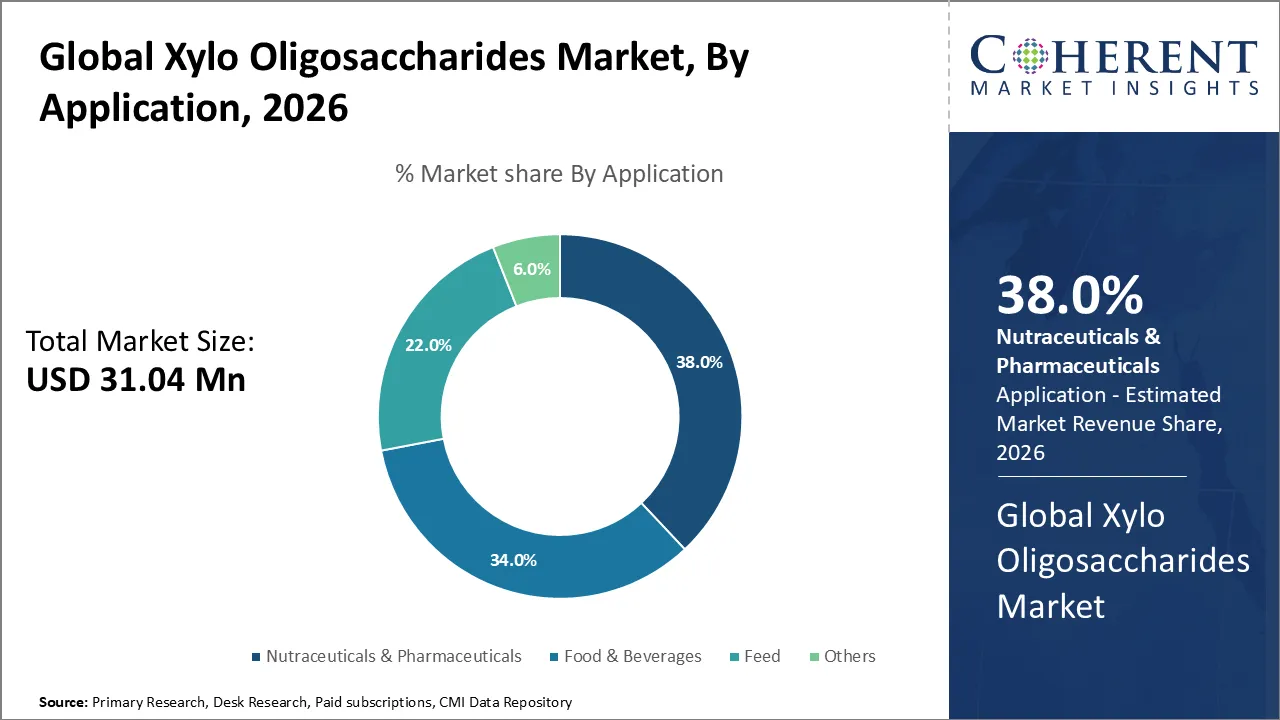
On the basis of application, the Nutraceuticals & Pharmaceuticals segment is projected to lead the Xylo Oligosaccharides Market with a 38% share in 2026. The segment’s growth is driven by increasing interest in gut microbiome management, digestive-health supplements, and prebiotic-based nutritional formulations. XOS selectively promote beneficial intestinal microorganisms, which is prompting more research into the potential uses of XOS in functional supplements and microbiome-targeted products.
In July 2026, a study on XOS from sorghum stalk biomass was performed to evaluate its prebiotic properties. Under the experimental condition, the prebiotic index of the resulting XOS was 1.74 ± 0.04 compared to galacto-oligosaccharides (1.12 ± 0.03) and inulin (1.27 ± 0.08) with Lactobacillus salivarius. These results demonstrate the potential of selected XOS formulations for further development as functional prebiotic ingredients.
In September, AIDP Inc. highlighted its branded PreticX® xylooligosaccharide (XOS) ingredient in a product-development guide for functional foods and nutritional products. The company unveiled PreticX as a prebiotic ingredient designed for the creation of gut-health formulations and for broadening prebiotic applications beyond conventional dairy products.
Xylo Oligosaccharides Market Trends
- The growing demand for selective prebiotic ingredients has resulted in the creation of XOS formulations that selectively feed good gut microbes. Interest in microbiome-specific nutrition solutions is growing. A study in Gut Microbes in 2026 investigated the xylo-oligosaccharide utilization capacity of 27 human-origin Bifidobacterium longum strains.
- The increasing use of XOS in functional foods and synbiotic packaging indicates the growing opportunities other than the traditional market of dietary supplements. In 2025, researchers developed a bilayer film containing Bifidobacterium animalis and XOS, which improved the probiotic activity and prolonged the shelf life of strawberries in Food Packaging and Shelf Life. This study suggests the potential for XOS-based food preservation technologies.
- The growing interest in valorization of agricultural waste and sustainable biorefineries has led manufacturers to look for alternative raw materials to the production of XOS. A 2026 study in Waste and Biomass Valorization reported a 37% combined yield of XOS from the hemicellulose in brewers’ spent grain by steam explosion and enzymatic hydrolysis, indicating the potential of conversion of brewing by-products into value-added prebiotic ingredients.
Regional Insights
North America Dominates Owing to Strong Nutraceutical Demand and Established Functional Food Infrastructure
North America is estimated to hold the largest share of the Xylo Oligosaccharides Market in 2026 with 34.0% The region’s market position is backed by the presence of established dietary supplement manufacturers, growing consumer interest in digestive health, and rising research on microbiome-targeted nutritional ingredients. The existence of specialized suppliers for prebiotic ingredients and functional food makers further encourages the commercialization of XOS.
In September 2026, researchers at University of California, Davis demonstrated an integrated biorefinery process for the production of xylo-oligosaccharides from almond shells. The XOS yield reached up to 68.9% under the optimal hydrothermal conditions, which was approximately 18.1 g/L in a controlled experimental environment.
Asia Pacific Xylo Oligosaccharides Market Trends
Asia Pacific is expected to witness the fastest growth in the Xylo Oligosaccharides Market during 2026–2033. Regional expansion is supported by increasing demand for functional foods, investments in specialty ingredient manufacturing, and the growing availability of agricultural raw materials. China, India, and Southeast Asian countries are emerging as important markets for prebiotic ingredients and advanced nutritional formulations.
In May 2026, the national standard GB/T 23528.3-2025 on quality requirements for xylo oligosaccharides was issued by China. The standard, issued by the State Administration for Market Regulation and the Standardization Administration of China, offers a specific quality framework for XOS products. Such a development is good for standardized manufacturing practice and may boost buyer confidence in Chinese XOS ingredients.
Advancements in Sustainable Prebiotic Production and Functional Nutrition Research are Accelerating the Xylo Oligosaccharides Market in the United States
The U.S. Xylo Oligosaccharides Market is growing with the increasing opportunities from the demand for functional dietary ingredients, advancements in prebiotic research, and improvements in agricultural biomass processing. The country’s established food biotechnology industry and nutritional ingredient manufacturers are driving research into the production of XOS from renewable agricultural residues. Such developments may enhance the availability of domestic ingredients and support applications in dietary supplements, functional foods and animal nutrition.
In September 2026, researchers at the University of California, Davis demonstrated an integrated biorefinery process for the production of xylo-oligosaccharides from almond shells. Under the optimal hydrothermal conditions, the XOS yield was as high as 68.9%, which was approximately 18.1 g/L in a controlled experimental environment.
China's Expanding Functional Ingredient Manufacturing and Biotechnology Investments are Strengthening the Xylo Oligosaccharides Market
The China Xylo Oligosaccharides Market is expected to grow at a substantial rate during the forecast period. The developed functional carbohydrate manufacturing industry, availability of agricultural raw materials, and investments in biotechnology production aid the development of the market in the country. Manufacturers are ramping up production capabilities and extending global distribution as consumption of prebiotic ingredients in functional foods, nutritional supplements and animal feed grows.
In February 2026, Shandong Bailong Chuangyuan Biotechnology Co., Ltd. announced an investment of RMB 10 million to set up a wholly owned subsidiary, Bailong Chuangyuan (Nanjing) Biotechnology Co., Ltd. The company is engaged in the functional food ingredients business with a product portfolio comprising xylo oligosaccharides, fructooligosaccharides, galactooligosaccharides, resistant dextrin and other specialty carbohydrates.
Who are the Major Companies in Xylo Oligosaccharides Industry
Some of the major key players in Xylo Oligosaccharides Market are Fengyuan Zhongke, Hebi Taixin, Hengfeng Sugar, Huaian Baimai Keyu, Kanwei Biologic, Longlive, Suntory, Suzhou Xiankuo, and Yatai.
Key News
- In October 2024, SIRIO Pharma, a global nutraceutical CDMO, will launch GummiBiotics at CPHI Milan, featuring gummies enhanced with xylo-oligosaccharides for nutraceutical and healthcare brands.
Market Report Scope
Xylo Oligosaccharides Market Report Coverage
Report Coverage | Details | ||
Base Year: | 2025 | Market Size in 2026: | USD 31.04 Mn |
Historical Data for: | 2020 to 2024 | Forecast Period: | 2026 to 2033 |
CAGR: | 3.2% | 2033 Value Projection: | USD 38.64 Mn |
Geographies covered: |
| ||
Segments covered: |
| ||
Companies covered: | Fengyuan Zhongke, Hebi Taixin, Hengfeng Sugar, Huaian Baimai Keyu, Kanwei Biologic, Longlive, Suntory, Suzhou Xiankuo, and Yatai. | ||
Growth Drivers: |
| ||
Restraints & Challenges: |
| ||
Analyst Opinion
- The global Xylo Oligosaccharides Market is expected to benefit from increasing demand for high-value prebiotic ingredients and cost-efficient production technologies. A September 2026 scientific review identified modeled XOS production costs ranging from USD 3.67 to USD 18.36 per kg, depending on feedstock and processing methods. The integrated biorefinery strategies can lower the production costs by 30–50% and improve the commercial viability of XOS manufacturers.
- Technological advances in the extraction and purification of XOS provide manufacturers with the opportunity to expand their high purity ingredient portfolios. In June 2026, a scientific article was published, in which it is reported that the combination of hydrolysis and membrane filtration processes allows obtaining XOS with purity of 92-96%. Such developments support the potential commercialization of premium grades of XOS for nutraceuticals, dietary supplements and specialized functional food formulations, pending validation at industrial scale.
- The increasing clinical substantiation, product differentiation and competitive manufacturing economics are expected to drive the long-term growth of Xylo Oligosaccharides Market. A study published in October 2025 tested six dietary fibers, including XOS, using microbiota from 10 human donors, and emphasized the significance of measuring individual differences in prebiotic responses. The digestive health ingredients market is growing and manufacturers who invest in scientific proven formulations and application specific products could be able to gain a competitive edge.
Speak to the analyst
Want personalized insights?
Take the findings above to one of our principal consultants, or have the report rebuilt around the segments, geographies and competitors you actually track.
Market Segmentation
- By Product Type (Revenue, USD Mn, 2021-2033)
- XOS-95P
- XOS-70P
- XOS-70L
- XOS-35P
- XOS-20P
- By Application (Revenue, USD Mn, 2021-2033)
- Nutraceuticals & Pharmaceuticals
- Food & Beverages
- Feed
- Others
- By Region (Revenue, USD Mn, 2021-2033)
- North America
- U.S.
- Canada
- Latin America
- Brazil
- Mexico
- Argentina
- Rest of Latin America
- Europe
- Germany
- U.K.
- France
- Italy
- Spain
- Russia
- Rest of Europe
- Asia Pacific
- China
- India
- Japan
- Australia
- South Korea
- ASEAN
- Rest of Asia Pacific
- Middle East
- GCC
- Israel
- Rest of Middle East
- Africa
- South Africa
- Central Africa
- North Africa
- North America
Sources
Primary Research Interviews
- Xylo oligosaccharides (XOS) manufacturers and suppliers
- Prebiotic ingredient manufacturers and formulation specialists
- Food and beverage product development professionals
- Nutraceutical and dietary supplement manufacturers
- Biotechnology researchers and enzymatic processing specialists
- Animal feed manufacturers and nutrition experts
- Key opinion leaders (KOLs) in gut microbiome research and functional nutrition
Databases
- World Bank
- Food and Agriculture Organization (FAO)
- United States Department of Agriculture (USDA)
- Organisation for Economic Co-operation and Development (OECD)
- UN Comtrade Database
- PubMed – National Library of Medicine
- European Food Safety Authority (EFSA)
- U.S. Food and Drug Administration (FDA)
Magazines
- Food Ingredients First
- Nutraceuticals World
- Nutritional Outlook
- FoodNavigator
- Food Business News
- Feed Strategy
Journals
- Food Chemistry
- Journal of Agricultural and Food Chemistry
- Food Research International
- Carbohydrate Polymers
- International Journal of Biological Macromolecules
- Journal of Functional Foods
- Food & Function
- Bioresource Technology
Newspapers
- The New York Times
- The Wall Street Journal
- Financial Times
- The Economic Times
- China Daily
Associations
- International Scientific Association for Probiotics and Prebiotics (ISAPP)
- Institute of Food Technologists (IFT)
- International Food Information Council (IFIC)
- American Society for Nutrition (ASN)
- Council for Responsible Nutrition (CRN)
- International Probiotics Association (IPA)
- American Feed Industry Association (AFIA)
Public Domain Sources
- Company Annual Reports and Investor Presentations
- Government Food Safety and Regulatory Publications
- University Research Publications and Scientific Studies
- Patent Databases such as WIPO, USPTO, and Google Patents
- Publicly Available Prebiotic Ingredient Research Reports
- FDA GRAS Notices and EFSA Scientific Opinions
- Agricultural Production and Biomass Utilization Statistics
- Product Specifications and Technical Data Sheets from XOS Manufacturers
Proprietary Elements
- CMI Data Analytics Tool
- Proprietary CMI Existing Repository of Information for the Last 10 Years
Get access to 250+ pages report
Every segment, forecast, competitor profile and data table behind the analysis above — available for instant download.
- ESOMAR Member
- ISO 9001:2015 Certified
- D-U-N-S Registered
- GDPR & CCPA Compliant
Missing comfort of reading report in your local language? Find your preferred language:
Transform your Strategy with Exclusive Trending Reports
Frequently Asked Questions
The global Xylo Oligosaccharides Market is expected to reach USD 38.64 Mn by 2033, compared to USD 31.04 Mn in 2026.
Major players operating in the global Xylo Oligosaccharides Market include Fengyuan Zhongke, Hebi Taixin, Hengfeng Sugar, Huaian Baimai Keyu, Kanwei Biologic, Longlive, Suntory, Suzhou Xiankuo, and Yatai.
High initial investment costs, complex extraction and purification processes, and relatively high production costs are the key factors hampering market growth.
Increasing demand for prebiotic ingredients, growing awareness of digestive health, rising incorporation of XOS in functional foods and dietary supplements, and expanding applications in animal nutrition are driving market growth.
The Xylo Oligosaccharides Market is anticipated to grow at a CAGR of approximately 3.2% between 2026 and 2033.
North America is expected to account for the largest market share of 34% in 2026, while Asia Pacific is projected to be the fastest-growing region during the forecast period.
Xylo oligosaccharides are short-chain carbohydrates composed of xylose units. They function as prebiotic ingredients that support the growth of beneficial intestinal bacteria and are commonly derived from plant-based materials rich in xylan.