
Micro Molding Materials Market Analysis & Forecast: 2026-2033

Micro Molding Materials Market Size and Forecast – 2026 – 2033
The Global Micro Molding Materials Market size is estimated to be valued at USD 1.40 billion in 2026 and is expected to reach USD 2.60 billion by 2033, exhibiting a compound annual growth rate (CAGR) of 9.4% from 2026 to 2033.
Global Micro Molding Materials Market Overview
Micro molding materials are specialized polymers, elastomers, and metals used to manufacture extremely small, high-precision components through micro injection molding or related processes. Common materials include medical-grade thermoplastics such as PEEK, polycarbonate, polypropylene, nylon, and liquid silicone rubber, chosen for their flow, strength, and biocompatibility. These materials must exhibit excellent melt stability, fine feature replication, and consistent performance at micron-scale tolerances. Additives, fillers, or colorants are tightly controlled to avoid defects. Material selection depends on application requirements like mechanical strength, flexibility, chemical resistance, thermal stability, and regulatory compliance, especially in medical, electronics, and microfluidic devices.
Key Takeaways
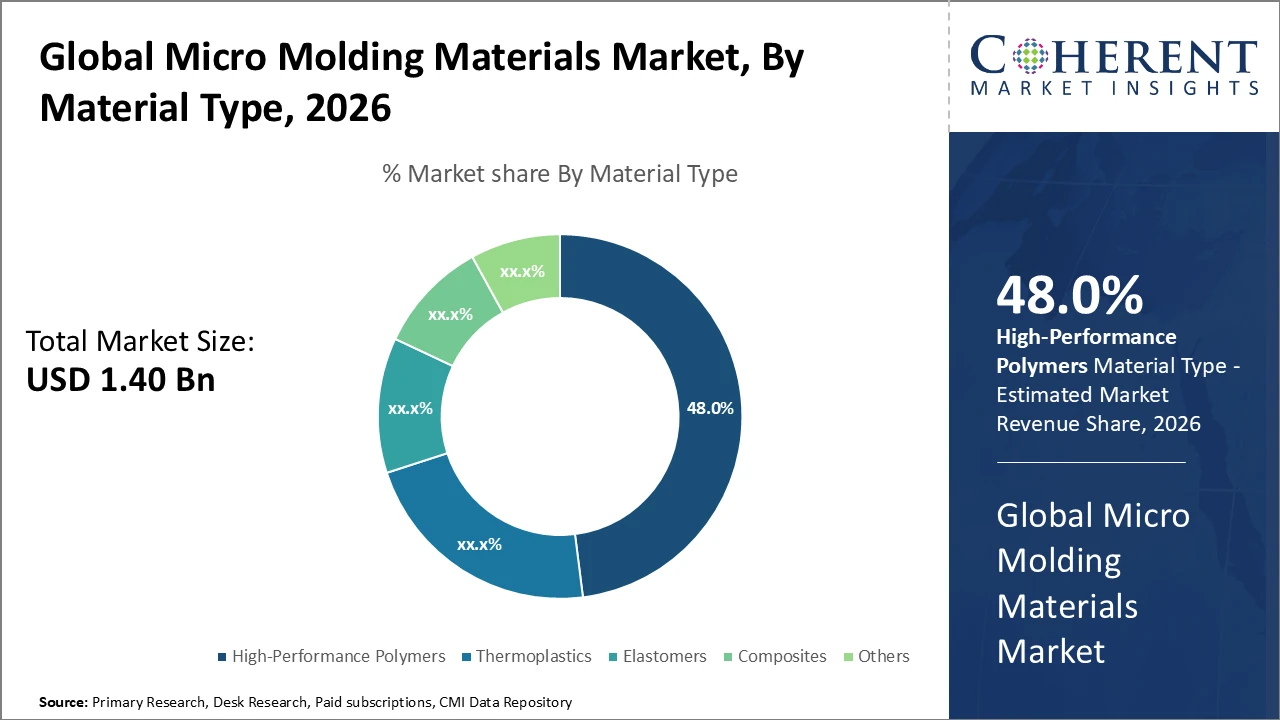
The high-performance polymers segment dominates the micro molding materials market with nearly 48% share, driven by superior thermal and mechanical properties suitable for medical and automotive applications. Thermoplastics and elastomers remain important for flexible, cost-efficient applications.
Microelectronics is the largest application segment, fueled by rising demand for miniaturized components in consumer electronics and wearable devices. Medical device applications are growing rapidly due to increasing use of minimally invasive surgical tools.
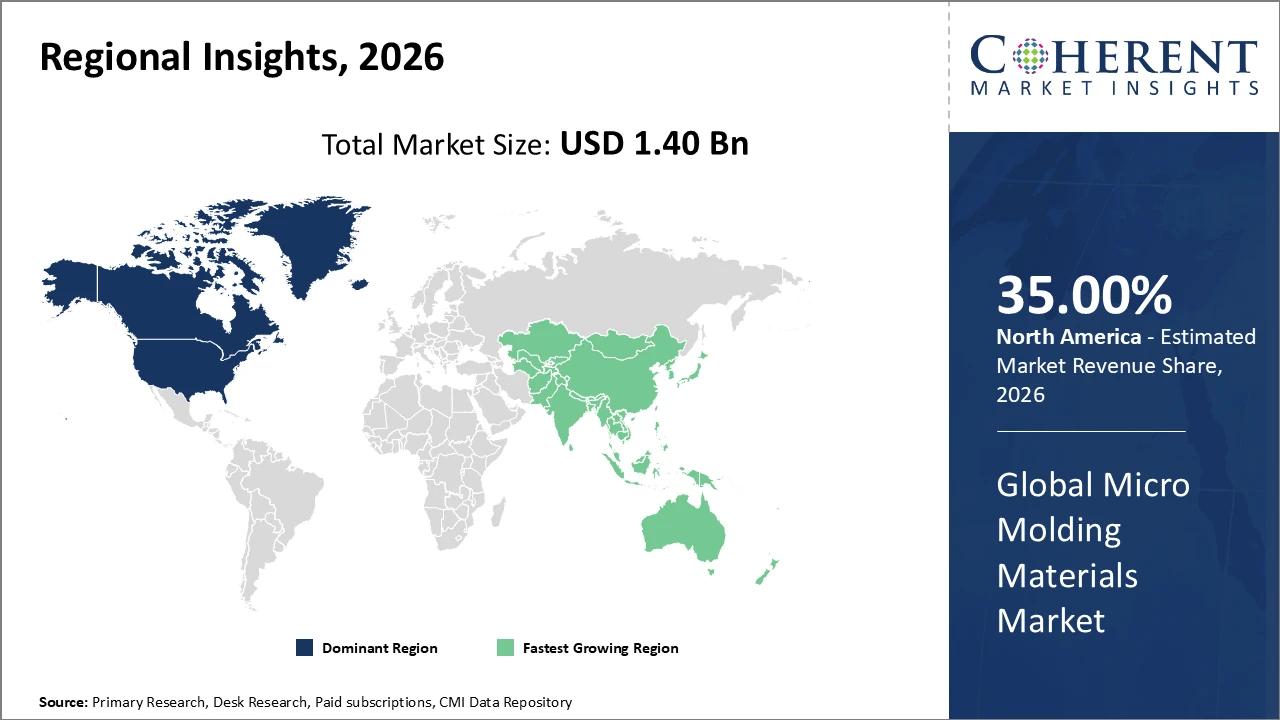
North America holds the largest regional market share of over 35%, supported by advanced manufacturing infrastructure and strong healthcare and electronics demand. Asia Pacific exhibits the fastest CAGR, exceeding 11%, driven by investments in semiconductor fabrication and automotive electronics in China, Japan, and South Korea.
Europe maintains substantial influence, backed by established automotive and medical device sectors and regulatory focus on sustainable materials, offering long-term growth opportunities.
Micro Molding Materials Market Segmentation Analysis
To learn more about this report, Request Free Sample
Micro Molding Materials Market Insights, By Material Type
High-performance polymers dominate the micro molding materials market with a 48% share, driven by their exceptional mechanical strength, thermal stability, and chemical resistance, making them essential for critical applications in microelectronics, medical devices, and precision engineering. The fastest-growing subsegment is composites, particularly nano-reinforced materials, which provide enhanced durability, functionality, and performance in demanding environments. Thermoplastics cater to cost-sensitive applications with moderate performance requirements, while elastomers offer flexibility and resilience for specialized uses.
Micro Molding Materials Market Insights, By Application
Microelectronics dominates the micro molding materials market, driven by the demand for smaller, high-precision components in consumer and industrial electronic devices. Medical devices represent the fastest-growing application segment, supported by miniaturization trends and stringent regulatory requirements for biocompatible, high-purity materials. Automotive components show steady growth, fueled by innovations in electric vehicles and lightweight, high-performance parts. Consumer electronics maintain a strong presence, while industrial equipment applications leverage micro molding for specialized components.
Micro Molding Materials Market Insights, By End-User Industry
Electronics and semiconductors dominate the micro molding materials market, driven by the demand for micro-scale, high-precision components in advanced processors and circuit devices. The healthcare sector is the fastest-growing, supported by the rise of minimally invasive procedures that require specialized micro-molded products. Automotive applications show steady growth, fueled by the increasing use of lightweight, high-performance components in electric vehicles. Industrial and consumer goods sectors, though smaller, continue to adopt micro molding technologies for customized, miniaturized parts, highlighting the versatility of these materials across diverse applications and the growing importance of precision manufacturing in multiple industries.
Micro Molding Materials Market Trends
The micro molding materials market is experiencing strong growth driven by demand for materials with enhanced durability and multifunctionality.
In 2026, the use of nanocomposites increased significantly, delivering up to 25% improvement in thermal conductivity compared to traditional polymers, boosting performance in microelectronics and medical device applications.
Adoption of biopolymers has risen due to stricter environmental regulations and growing consumer awareness, expanding sustainable product offerings and reducing carbon footprint.
Digitization of molding processes, including advanced quality control and automation, is improving production efficiency and precision, contributing to market revenue growth and competitive advantage.
Micro Molding Materials Market Insights, By Geography
To learn more about this report, Request Free Sample
North America Micro Molding Materials Market Analysis and Trends
In North America, the micro molding materials market is dominated by the United States, which accounts for over 35% of the region’s total industry share. This leadership is supported by well-established infrastructure for medical device manufacturing and advanced microelectronics sectors. Favorable government policies promoting advanced manufacturing, research grants for biocompatible polymers, and a robust supplier network further strengthen the market position. Major companies such as DuPont and Arkema have played a key role through continuous product innovation and regional manufacturing expansions, driving growth and reinforcing North America’s prominence in the global micro molding materials industry.
Asia Pacific Micro Molding Materials Market Analysis and Trends
Meanwhile, Asia Pacific is witnessing the fastest growth in the micro molding materials market, with a CAGR exceeding 11%. This expansion is driven by rapid industrialization, the rise of automotive electronics manufacturing hubs in China, Japan, and South Korea, and government-supported semiconductor fabrication incentives. Rising middle-class consumption and increasing adoption of bio-based polymers for microcomponents further fuel demand. Industry leaders such as SABIC and Mitsui Chemicals have strengthened their regional presence through joint ventures and capacity expansions, leveraging the dynamic ecosystem to meet growing demand and capitalize on emerging opportunities in the Asia Pacific micro molding materials market.
Micro Molding Materials Market Outlook for Key Countries
USA Micro Molding Materials Market Analysis and Trends
The U.S. remains a key market for micro molding materials, supported by advanced healthcare device and semiconductor industries. In 2025, U.S. manufacturers accounted for 28% of global production of specialized micro molding materials, driven by significant investments in R&D and production automation. Companies like Celanese Corporation expanded their portfolios with high-temperature resistant polymers designed for microelectronic components, enhancing product performance and reliability. Strict regulatory frameworks emphasizing safety, biocompatibility, and quality further encourage innovation and adoption of advanced materials. These factors collectively sustain consistent revenue growth, reinforce the U.S.’s global market leadership, and position it as a hub for technological advancement in micro molding materials.
Germany Micro Molding Materials Market Analysis and Trends
Germany’s micro molding materials market is driven by its strong automotive, medical device, and industrial manufacturing sectors, where precision and high-performance materials are critical. In 2025, the adoption of bio-based and high-performance polymers increased, supported by government incentives promoting sustainable production and stricter environmental regulations. Leading companies invested in localized production facilities, optimizing supply chains and accelerating innovation in micro-molded components. The market also benefits from Germany’s well-integrated value chains and export capabilities, enabling significant contributions to Europe’s overall industry. Emerging trends include the use of nanocomposites for enhanced thermal and mechanical properties and digitalization of molding processes for improved efficiency and precision.
Analyst Opinion
The surge in demand for advanced polymers with superior mechanical and thermal stability is a key driver of market growth. In 2025, consumption of high-performance polymers for micro molding applications, especially healthcare-grade materials, increased by over 15%, supporting more precise and reliable component fabrication and boosting market revenue.
Price fluctuations in raw materials such as polyether ether ketone (PEEK) and liquid crystal polymers (LCP) influence market dynamics. In 2024, suppliers reported an average 7% cost increase due to supply chain disruptions in Asia Pacific, affecting market share among cost-sensitive manufacturers and encouraging innovation in alternative compounds.
Imports of micro molding materials into North America rose by 12% in 2026, driven by increased microelectronic device production. This highlights the impact of regional manufacturing capacities and trade relations on market growth, as U.S. firms diversify sourcing from global suppliers.
Expanding applications in automotive electronics, especially electric vehicles, accelerated adoption of high-temperature resistant micro molding materials. Production capacity for these specialized materials grew by nearly 20% in 2025, reflecting the industry’s readiness to meet sector-specific demand.
Market Scope
| Report Coverage | Details | ||
|---|---|---|---|
| Base Year: | 2025 | Market Size in 2026: | USD 1.40 billion |
| Historical Data for: | 2020 To 2024 | Forecast Period: | 2026 To 2033 |
| Forecast Period 2026 to 2033 CAGR: | 9.4% | 2033 Value Projection: | USD 2.60 billion |
| Geographies covered: |
|
||
| Segments covered: |
|
||
| Companies covered: | Arkema Group, BASF SE, Celanese Corporation, Covestro AG, DuPont, Eastman Chemical Company, Evonik Industries AG, SABIC, Solvay SA, Mitsui Chemicals | ||
| Growth Drivers: |
|
||
Uncover macros and micros vetted on 75+ parameters: Get instant access to report
Micro Molding Materials Market Growth Factors
The micro molding materials market is experiencing strong revenue growth driven by the increasing adoption of microelectronics and nano-scale medical device manufacturing, where high mechanical strength and biocompatibility are essential. Advances in polymer science have produced new grades capable of withstanding extreme thermal and chemical conditions, broadening application possibilities. Government initiatives supporting miniaturized medical devices, coupled with stringent quality regulations, are further encouraging material innovations to meet compliance standards. Additionally, the rising use of micro molding in automotive lightweighting and electric vehicle components enables manufacturers to reduce vehicle weight while maintaining strength and durability, supporting sustained market expansion.
Micro Molding Materials Market Development
In October 2025, the American Injection Molding (AIM) Institute announced the launch of its Plastics Technology Certificate Program, a flexible, credential-based initiative created to address the growing global demand for professional injection molding training.
Key Players
Leading Companies of the Market
Arkema Group
BASF SE
Celanese Corporation
Covestro AG
DuPont
Eastman Chemical Company
Evonik Industries AG
SABIC
Solvay SA
Mitsui Chemicals
Several leading companies have pursued forward integration and strategic partnerships to strengthen production capabilities in the micro molding materials market. For instance, a major player expanded its high-performance polymer production facility in the U.S. in 2025, achieving a 25% increase in production volume, particularly targeting automotive applications. Simultaneously, other companies made significant investments in sustainable micro molding materials, which contributed to a 17% rise in market share for bio-based polymers in 2026. These strategies demonstrate how capacity expansion and sustainability-focused innovation are driving competitive advantage and supporting overall market growth.
Micro Molding Materials Market Future Outlook
The micro molding materials market is expected to experience robust growth driven by rising demand for miniaturized, high-precision components across electronics, healthcare, and automotive sectors. Advancements in high-performance polymers, nanocomposites, and bio-based materials will expand application possibilities while meeting sustainability and regulatory requirements. The increasing adoption of micro molding in electric vehicle components, wearable devices, and minimally invasive medical tools will further fuel market expansion. Emerging economies in Asia Pacific are projected to lead growth due to industrialization and government incentives, while digitization and automation in manufacturing will enhance production efficiency, precision, and competitiveness, shaping a dynamic and innovation-driven market through 2033.
Micro Molding Materials Market Historical Analysis
The micro molding materials market has witnessed steady growth over the past decade, driven by demand for precision components in electronics, healthcare, and automotive sectors. High-performance polymers, thermoplastics, and elastomers have historically dominated the market due to their thermal stability, mechanical strength, and versatility. North America and Europe led early adoption, supported by advanced manufacturing infrastructure and strong R&D investment, while Asia Pacific emerged as a key production hub. Market expansion was propelled by trends in miniaturization, lightweighting, and medical device innovation. Over time, sustainability and regulatory compliance increasingly influenced product development, laying the foundation for current advancements in bio-based and high-performance micro molding materials.
Sources
Primary Research Interviews:
Polymer manufacturers and suppliers
R&D engineers and material scientists
Automotive, aerospace, and electronics industry specialists
Medical device developers using micro molding materials
Databases:
ICIS Chemicals
Magazines:
Plastics Today
Polymer Technology Magazine
Materials Today
CompositesWorld
Chemical & Engineering News
Journals:
Journal of Applied Polymer Science
Polymer Engineering and Science
Progress in Polymer Science
Macromolecular Materials and Engineering
Journal of Materials Science
Newspapers:
Financial Times (Materials & Manufacturing)
The Wall Street Journal (Chemicals & Industry)
The Economist (Materials & Technology)
Reuters (Chemicals & Materials)
Associations:
American Chemistry Council (ACC)
Society of Plastics Engineers (SPE)
European Chemical Industry Council (Cefic)
International Association of Plastics Distribution (IAPD)
Plastics Europe
Share
Share
Yash Doshi is a Senior Management Consultant. He has 12+ years of experience in conducting research and handling consulting projects across verticals in APAC, EMEA, and the Americas.
He brings strong acumen in helping chemical companies navigate complex challenges and identify growth opportunities. He has deep expertise across the chemicals value chain, including commodity, specialty and fine chemicals, plastics and polymers, and petrochemicals. Yash is a sought-after speaker at industry conferences and contributes to various publications on topics related commodity, specialty and fine chemicals, plastics and polymers, and petrochemicals.

Credibility and Certifications

860519526


9001:2015

27001:2022


Need a Custom Report?
We can customize every report - free of charge - including purchasing stand-alone sections or country-level reports
Customize NowJoining thousands of companies around the world committed to making the Excellent Business Solutions.
View All Our Clients