Walking Assist Device Market Analysis & Forecast: 2026-2033

Walking Assist Device Market Size and Forecast – 2026 – 2033
The Global Walking Assist Device Market size is estimated to be valued at USD 3.5 billion in 2026 and is expected to reach USD 6.2 billion by 2033, exhibiting a compound annual growth rate (CAGR) of 8.5% from 2026 to 2033.
Global Walking Assist Device Market Overview
The Walking Assist Device market encompasses a range of products designed to support mobility and enhance independence for individuals with walking impairments. Key products include canes, crutches, walkers, rollators, and knee scooters, each tailored to specific patient needs and mobility levels. Advanced solutions feature powered exoskeletons and robotic walking aids that provide rehabilitation support and assistive movement for patients with neurological or musculoskeletal conditions. Devices are increasingly integrated with ergonomic designs, lightweight materials, and smart sensors to improve safety, comfort, and user experience. Growing demand in healthcare, rehabilitation centers, and home care settings is driving product innovation and adoption across global markets.
Key Takeaways
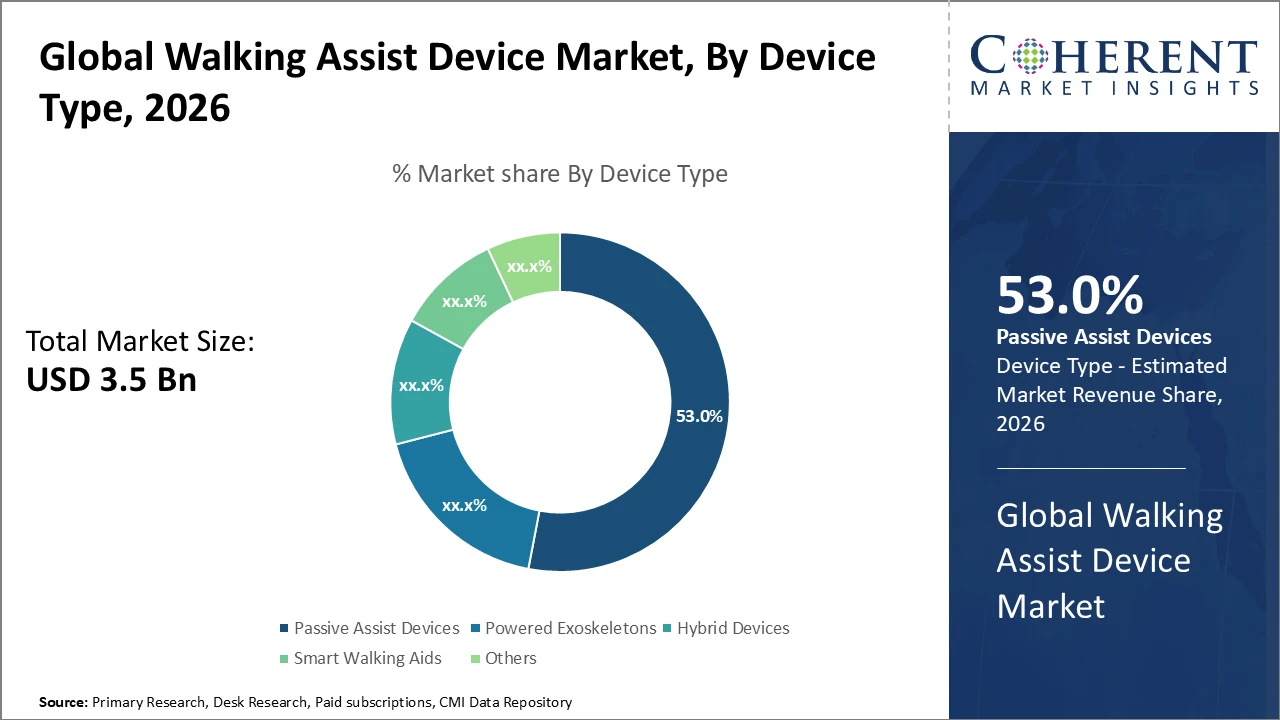
In Device Type, Passive Assist Devices dominate the market with a 53% share, driven by their affordability and ease of use across various healthcare settings. Powered Exoskeletons are the fastest-growing segment due to advanced technological integration and enhanced rehabilitation capabilities.
Hospitals lead the End User segment, representing over 40% of the market, supported by rising post-operative rehabilitation needs and established healthcare infrastructure. Home Care Settings are expanding rapidly as patients increasingly prefer outpatient mobility solutions.
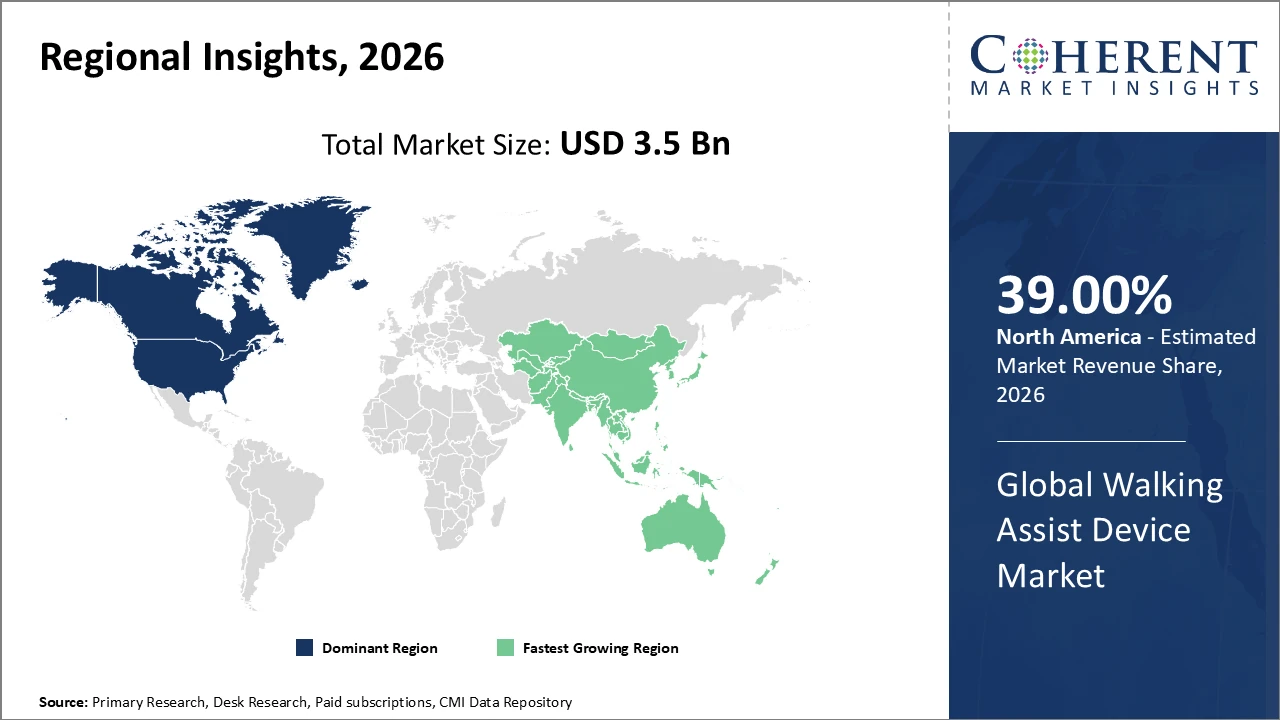
North America holds the largest regional market share, bolstered by strong healthcare infrastructure and healthcare spending exceeding 17% of GDP, facilitating device adoption.
Asia Pacific is the fastest-growing region, with a CAGR above 10%, driven by a growing geriatric population and government healthcare initiatives promoting mobility solutions.
Walking Assist Device Market Segmentation Analysis
To learn more about this report, Request Free Sample
Walking Assist Device Market Insights, By Device Type
Passive Assist Devices dominate the market with a 53% share, driven by their accessibility, cost-effectiveness, and ease of use in conventional rehabilitation and geriatric care settings. These devices provide essential mobility support without powered mechanisms, making them widely adopted across diverse healthcare environments. Powered Exoskeletons are the fastest-growing subsegment, supported by advancements in robotics and sensor technologies that enhance mobility for individuals with severe impairments and increase clinical acceptance through rising hospital integration. Hybrid Devices combine mechanical and electronic functionalities to address complex patient needs but maintain a smaller market presence. Smart Walking Aids, integrating IoT and AI for real-time gait analysis and feedback, are gaining traction among tech-savvy users, while Others encompass emerging experimental devices still under development.
Walking Assist Device Market Insights, By Technology
Mechanical Devices hold a major share of the walking assist device market due to their simplicity, reliability, and cost-effectiveness, making them widely used for basic mobility support in rehabilitation and daily care. Sensor-Based Devices are the fastest-growing subsegment, leveraging IoT connectivity, real-time feedback, and AI-enabled adaptive support to improve rehabilitation outcomes and user experience. Electronic Devices, equipped with motors and power-assist systems, offer enhanced mobility for individuals with severe impairments, though adoption is somewhat limited by higher costs and operational complexity. The Others category includes emerging technologies integrating biofeedback and neurostimulation, which remain niche due to early-stage development and limited commercialization.
Walking Assist Device Market Insights, By End-User
Hospitals dominate the walking assist device market, accounting for over 40% of the share, as they function as primary rehabilitation hubs with broad access to advanced mobility technologies integrated into patient care programs. Rehabilitation Centers are experiencing strong growth, driven by specialized therapeutic programs that require advanced device usage. Home Care Settings represent the fastest-growing segment, reflecting a shift in patient preference toward at-home recovery and mobility management, supported by the development of lightweight and user-friendly devices. Geriatric Care Facilities maintain steady demand due to the aging population and chronic mobility challenges, while Others, including outpatient clinics and assisted living facilities, contribute moderately to market revenue.
Walking Assist Device Market Trends
The Walking Assist Device market is increasingly focusing on intelligent and adaptive devices, with significant integration of machine learning and IoT technologies.
Sensor-based devices with real-time gait correction systems have seen a 25% adoption increase between 2024 and 2026, improving rehabilitation outcomes in clinical settings.
Material innovations, including carbon fiber composites and lightweight alloys, are enhancing device ergonomics and usability, driving broader market acceptance, especially in home care environments.
Integration with digital health platforms supports remote monitoring and tele-rehabilitation, enabling personalized and continuous patient care.
These trends collectively expand the market ecosystem, promoting scalable, technology-driven mobility solutions worldwide.
Walking Assist Device Market Insights, By Geography
To learn more about this report, Request Free Sample
North America Walking Assist Device Market Analysis and Trends
In North America, the Walking Assist Device market is dominated by strong healthcare infrastructure, high disposable income, and supportive government initiatives promoting assistive technologies. The United States accounts for over 45% of the regional market, driven by a growing geriatric population and the presence of leading manufacturers such as Ottobock and ReWalk Robotics. Hospitals and rehabilitation centers in the region prioritize advanced mobility solutions, while stringent safety and quality standards ensure reliable device adoption. Combined with increasing awareness of post-operative and geriatric rehabilitation needs, these factors reinforce North America’s leadership position and sustain steady growth in the walking assist device market.
Asia Pacific Walking Assist Device Market Analysis and Trends
The Asia Pacific Walking Assist Device market is experiencing the fastest growth, with a CAGR exceeding 10%, fueled by expanding healthcare access, rising aging populations, and increased investments in medical device manufacturing in countries such as China and India. Government initiatives supporting healthcare digitization, rehabilitation accessibility, and eldercare programs further drive market expansion. Companies are increasingly developing cost-effective and locally adapted devices to meet regional demand, including lightweight and portable solutions for home care. Combined with rising awareness of mobility challenges and rehabilitation needs, these factors position Asia Pacific as a key growth hub, offering significant opportunities for manufacturers and service providers in the walking assist device market.
Walking Assist Device Market Outlook for Key Countries
USA Walking Assist Device Market Analysis and Trends
The United States Walking Assist Device market is marked by rapid adoption of advanced technologies, with major contributions from leading companies such as Ekso Bionics and Sunrise Medical. Their innovative powered exoskeletons received regulatory approvals and achieved commercial success in 2025, driving market momentum. The country’s robust healthcare reimbursement framework, combined with specialized programs for veteran care, further supports demand for walking assist devices. In 2026, outpatient rehabilitation centers across the US increased device procurement by 18%, highlighting growing clinical integration and acceptance. These factors collectively strengthen market revenue growth and reinforce the US as a key leader in the global walking assist device market.
Germany Walking Assist Device Market Analysis and Trends
Germany’s Walking Assist Device market demonstrates steady growth, driven by a mature healthcare system, advanced rehabilitation infrastructure, and strong geriatric care demand. Hospitals and rehabilitation centers lead adoption, utilizing devices such as passive assist aids, powered exoskeletons, and sensor-based systems for post-operative and mobility-impaired patients. The market benefits from government support for eldercare and rehabilitation programs, as well as high awareness of advanced mobility solutions. Technological trends, including AI integration, lightweight materials, and portable designs, are being gradually adopted. Industrial partnerships and R&D investments further enhance product development, ensuring Germany maintains a stable and competitive position in the European walking assist device market.
Analyst Opinion
A key demand-side driver of market revenue is the increasing prevalence of mobility-related disorders, including osteoarthritis and neurological conditions. In 2025, over 300 million adults worldwide experienced mobility impairments, directly boosting walking assist device adoption in geriatric care and supporting strategies focused on durable, user-friendly devices.
Supply-side dynamics indicate rising production capacities, with manufacturers incorporating advanced automation and manufacturing technologies. In 2026, leading companies increased production by 15%, lowering unit costs and enabling competitive pricing strategies that facilitate overall market expansion.
Usage across hospitals and rehabilitation centers highlights market diversification, with North American hospital procurement rising 20% from 2024 to 2026 due to higher adoption in physical therapy programs.
Pricing optimization remains a critical micro-indicator, particularly in emerging markets where affordability affects demand. A 2025 survey showed a 5% price reduction led to a 7% increase in adoption among outpatient clinics in Asia Pacific, supporting targeted market growth initiatives.
Market Scope
| Report Coverage | Details | ||
|---|---|---|---|
| Base Year: | 2025 | Market Size in 2026: | USD 3.5 billion |
| Historical Data for: | 2020 To 2024 | Forecast Period: | 2026 To 2033 |
| Forecast Period 2026 to 2033 CAGR: | 8.5% | 2033 Value Projection: | USD 6.2 billion |
| Geographies covered: |
|
||
| Segments covered: |
|
||
| Companies covered: | Ottobock, ReWalk Robotics, Ekso Bionics, Hathaspace, Sunrise Medical, Medline Industries, Kaha Sciences, Bionik Laboratories, Mobility Research, Drive DeVilbiss Healthcare | ||
| Growth Drivers: |
|
||
Uncover macros and micros vetted on 75+ parameters: Get instant access to report
Walking Assist Device Market Growth Factors
The rise in global aging populations is a major growth driver for the walking assist device market, with the WHO projecting that over 1.5 billion people will be aged 60 or above by 2026, significantly increasing demand for mobility support solutions. Technological advancements, including sensor integration and IoT connectivity, have given rise to smart walking aids that enhance user experience and clinical outcomes, with 2025 clinical trials reporting a 20% improvement in patient mobility. Additionally, increased government healthcare spending in North America and Europe, through subsidies and reimbursement policies, supports market growth. Expanding awareness and adoption in home care settings, influenced by pandemic-driven remote healthcare management, further boost market revenue and growth opportunities globally.
Walking Assist Device Market Development
In June 2025, Genrobotics unveiled India’s first robotic-assisted pediatric gait trainer, G-Gaiter Paediatric, designed to support rehabilitation for patients with mobility impairments such as stroke-related paraplegia, traumatic spinal cord injury, cerebral palsy, and Parkinson’s disease.
Key Players
Leading Companies of the Market
Ottobock
ReWalk Robotics
Ekso Bionics
Hathaspace
Sunrise Medical
Medline Industries
Kaha Sciences
Bionik Laboratories
Mobility Research
Drive DeVilbiss Healthcare
Entities such as Ottobock have undertaken extensive R&D initiatives, culminating in the launch of advanced powered exoskeletons in 2025, which contributed to a 12% revenue increase over 18 months. Similarly, ReWalk Robotics pursued strategic collaborations with rehabilitation centers, improving the integration of its devices into clinical protocols and expanding its market presence across North America by 15% in 2026, reflecting the effectiveness of partnership-driven growth strategies in the walking assist device market.
Walking Assist Device Market Future Outlook
The Walking Assist Device market is expected to experience strong growth in the coming years, driven by rising global aging populations, increasing prevalence of mobility-related disorders, and growing demand for home-based rehabilitation solutions. Technological advancements, including AI-enabled sensors, IoT integration, and smart exoskeletons, will enhance user experience, safety, and clinical outcomes. Expanding government healthcare initiatives, reimbursement policies, and geriatric care programs in North America, Europe, and Asia Pacific will further support market expansion. Additionally, rising awareness and adoption of portable, user-friendly devices in home care and outpatient settings will create significant opportunities, positioning the market for sustained growth globally.
Walking Assist Device Market Historical Analysis
The Walking Assist Device market has witnessed steady growth over the past decade, driven by increasing awareness of mobility impairments and the need for rehabilitation support among aging populations. Historically, passive assist devices such as canes, walkers, and crutches dominated due to their affordability and ease of use. Over time, technological innovations introduced powered exoskeletons, sensor-based devices, and smart walking aids, expanding applications in hospitals, rehabilitation centers, and home care. Early adoption in North America and Europe set the stage for market expansion, while growing geriatric populations and rising healthcare expenditure in Asia Pacific began shaping new growth opportunities, establishing a strong global market foundation.
Sources
Primary Research Interviews:
Hospitals, rehabilitation centers, and outpatient clinics
Home healthcare providers and geriatric care facilities
Medical device manufacturers and distributors
Physical therapy and occupational therapy specialists
Magazines:
Medical Device & Diagnostic Industry (MD+DI) – Mobility Devices
HealthTech Magazine – Rehabilitation & Assistive Technologies
Rehab Management – Walking and Mobility Innovations
Assistive Technology News – Device Trends and Case Studies
Journals:
Journal of Rehabilitation Medicine
Disability and Rehabilitation: Assistive Technology
Archives of Physical Medicine and Rehabilitation
Assistive Technology Journal
Frontiers in Medical Technology & Therapeutics
Newspapers:
The Wall Street Journal – Medical Devices & Rehabilitation Technology
Financial Times – Healthcare Technology Innovations
Reuters – Medical Devices & Mobility Solutions
Bloomberg – Rehabilitation and Assistive Device Market
Nikkei Asia – Medical Device Manufacturing and Healthcare
Associations:
American Physical Therapy Association (APTA)
International Society of Wheelchair Professionals (ISWP)
European Assistive Technology Information Network (EASTIN)
International Society for Prosthetics and Orthotics (ISPO)
Share
Share
Manisha Vibhute is a consultant with over 5 years of experience in market research and consulting. With a strong understanding of market dynamics, Manisha assists clients in developing effective market access strategies. She helps medical device companies navigate pricing, reimbursement, and regulatory pathways to ensure successful product launches.

Credibility and Certifications

860519526


9001:2015

27001:2022


Need a Custom Report?
We can customize every report - free of charge - including purchasing stand-alone sections or country-level reports
Customize NowJoining thousands of companies around the world committed to making the Excellent Business Solutions.
View All Our Clients