

Global 3D Bioprinting Market Analysis & Forecast: 2026-2033
The 3D bioprinting market is estimated to be valued at USD 3.44 Bn in 2026 and is expected to reach USD 10.08 Bn by 2033, growing at a compound annual growth rate (CAGR) of 16.6% from 2026 to 2033
Key Takeaways
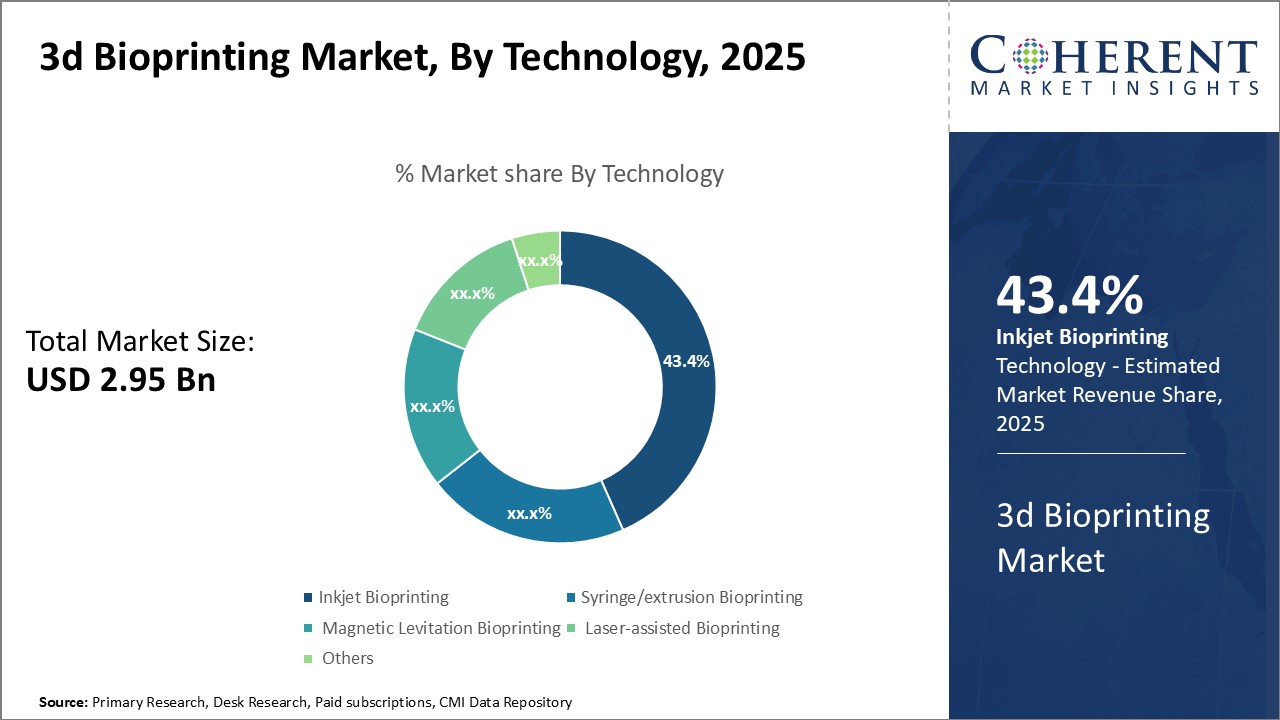
- By Technology, Inkjet bioprinting is projected to hold the largest market share of 44.4% in the 3D bioprinting sector by 2026.
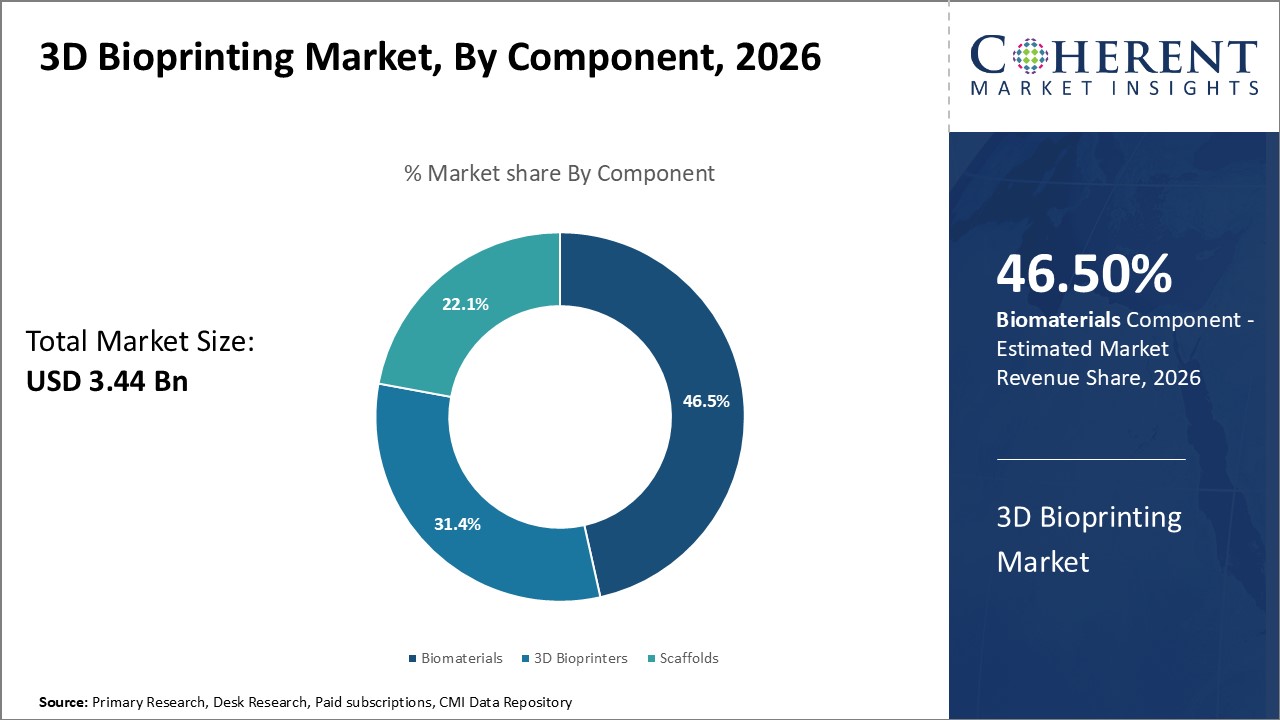
- By Component, Biomaterials are anticipated to contribute 46.5% of the market share in 2026.
- By Application Insight: Drug testing and development is expected to account for 35.78% of the market by 2026.
- By Regional Insight: North America is projected to maintain its lead in the global 3D bioprinting market with a 36.7% share in 2026.
Market Overview
The global 3D Bioprinting Market is experiencing steady growth, fueled by advancements in tissue engineering, regenerative medicine, and drug development. The technology enables the precise fabrication of living tissues and organ models, offering significant advantages in personalized medicine and pharmaceutical testing. Key growth drivers include increased R&D investment, demand for alternative testing models, and rising organ transplant shortages. North America leads the market, followed by Europe and Asia Pacific, with strong healthcare infrastructure and innovation hubs accelerating adoption and commercialization.
Current Events and its Impact on the 3D bioprinting market
Current Event | Description and its impact |
Accelerating Investments in Regenerative Medicine |
|
Technological Advancements and Automation in Bioprinters |
|
Regulatory Shifts and Standardization Efforts |
|
Role of Advanced technologies: 3D bioprinting market
Advanced technologies play a pivotal role in accelerating the growth and capabilities of the 3D bioprinting market. Innovations in bioink formulation—such as smart hydrogels, decellularized extracellular matrices, and stimuli-responsive materials—enhance the biocompatibility, precision, and structural integrity of printed tissues.
Next-generation bioprinters equipped with high-resolution inkjet, extrusion, and laser-assisted technologies enable the creation of complex, multi-layered biological structures that closely mimic human tissue architecture. Integration with AI and machine learning is improving process automation, real-time monitoring, and optimization of print parameters, thereby increasing reproducibility and reducing error rates.
Additionally, advancements in microfluidics and organ-on-a-chip technologies are expanding the scope of 3D bioprinting in drug screening and disease modeling. Cloud-based platforms and digital modeling tools also support remote design, simulation, and customization of biological constructs. These technological advancements are not only enhancing research outcomes but also bringing 3D bioprinting closer to clinical and commercial scalability in regenerative medicine and pharmaceuticals
- Current Industry Events of 2026
- Market Size Estimation
- Regional Breakdown
- Competitive Landscape
- Customer Intelligence
- Segmental Analysis
- Pricing Analysis
- Key Market Drivers, Challenges & Future Trends
- Customized Insights Section
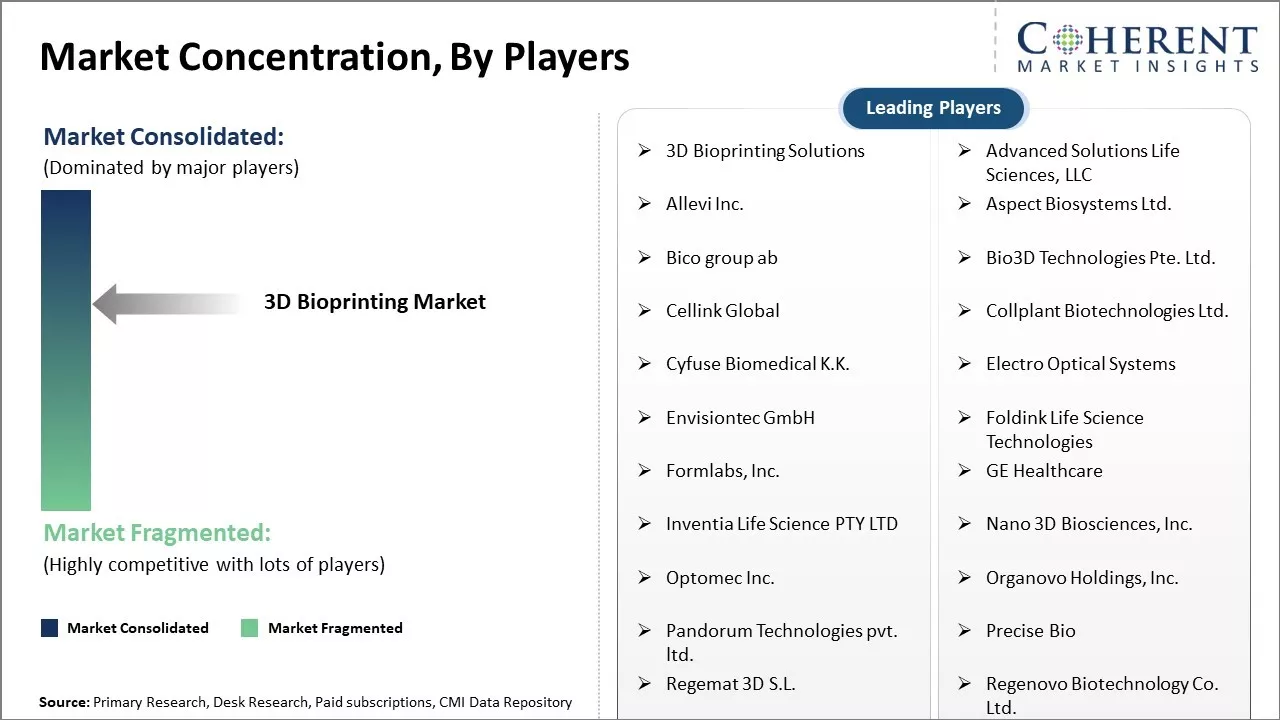
Market Concentration and Competitive Landscape
3D Bioprinting Market Trends
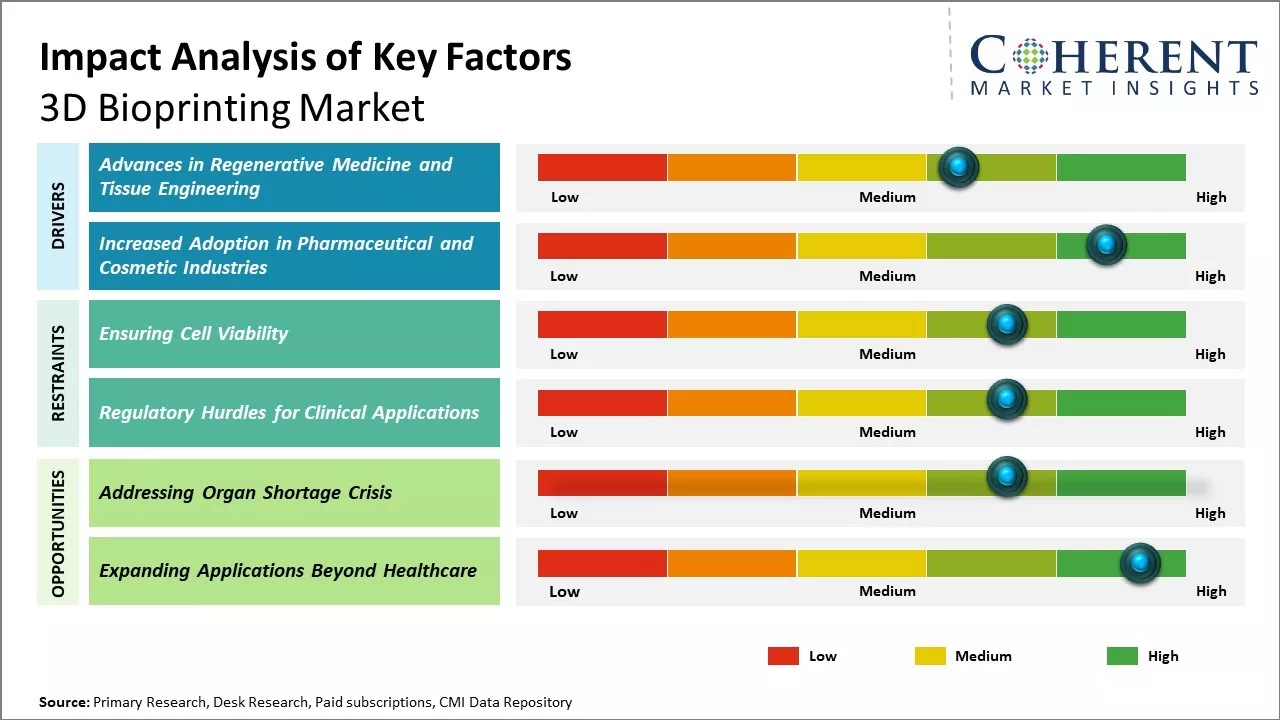
Advances in Regenerative Medicine and Tissue Engineering
3D bioprinting has opened new avenues for advancements in regenerative medicine and tissue engineering. Traditional tissue engineering techniques have limitations in developing complex living tissue constructs that mimic natural tissues. With 3D bioprinting, researchers can bio print tissues and organs layer-by-layer with variable cell types, growth factors and biomaterials to better recapitulate the biological, mechanical and structural properties of natural tissues. Complex 3D printed tissues have been made containing blood vessels which was challenging to achieve earlier. Bioprinting also allows printing of patient-specific tissues with potential for disease modelling and development of personalized treatment options.
For instance, in May 2022, Regemat 3D which is a creator of living tissue technologies, secured over USD 545,000 to advance its 3D bioprinting technology, encompassing software, a bioreactor, materials, and accessories. The firm's portfolio includes the BIO V1 and REG4LIFE 3D bioprinters designed for disease modeling, drug testing, and organ-on-a-chip applications. The BIO V1 offers precise movements in the X, Y, and Z axes, while the REG4LIFE facilitates independent Z-axis movement, enabling the use of two syringes on multi-well plates.
In April 2025, Reuters reported on a team of Australian biomedical engineers who created a flexible robot capable of performing 3D bioprinting inside the human body. This innovative, minimally invasive technology enables biomaterial printing directly at tissue damage sites, advancing potential surgical repair and regenerative medicine applications.
Increased Adoption in the Pharmaceutical and Cosmetic Industries
The burgeoning applications of 3D bioprinting in the pharmaceutical and cosmetic industries is emerging as pivotal drivers for the 3D bioprinting market. In drug discovery, the utilization of 3D bioprinted human tissues facilitates effective compound screening, toxicity analysis, and the development of tissue-based assays.
This approach enhances the predictability and reliability of preclinical studies, surpassing the limitations of conventional 2D cell culture models. The pharmaceutical sector is actively embracing bioprinting to expedite the development of new drugs and bio-therapeutics, with a focus on personalized approaches.
The dynamic landscape of the healthcare sector in India, identified as one of the fastest-growing industries, contributes significantly to the 3D bioprinting market's growth. With the sector projected to triple to USD 133.44 billion ( INR 8.6 trillion) by 2022 and India's commitment to increasing public healthcare spending from 1.2% to 2.5% of GDP by 2025, these trends create a favorable environment for the adoption and expansion of 3D bioprinting technologies in the country. This convergence of factors positions the 3D bioprinting market to experience substantial growth, driven by the increasing demand across diverse applications in the pharmaceutical and cosmetic sectors.
In April 2025, Medical Xpress reported that a team from the National University of Singapore combined AI with 3D bioprinting to personalize oral soft tissue grafts. Their method optimizes parameters to create customized gingival grafts, enhancing precision and reducing patient discomfort.
Opportunities in the 3D bioprinting market
Addressing Organ Shortage Crisis
The ability to custom design and print living grafts, implants and eventually whole organs on demand could revolutionize transplants and regenerative medicine. It offers potential solutions for replacing damaged tissues and addressing organ shortages. As bioprinting methods advance, opportunities will grow in healthcare, drug testing and cosmetics.
Segmental Insights
3D Bioprinting Market Insights, By Technology
Inkjet bioprinting is projected to hold the largest market share of 44.4% in the global 3D bioprinting market by 2026. This segment leads due to its ability to print high-resolution, complex structures using multiple bioinks simultaneously.
The drop-on-demand technology, coupled with advancements in nozzle design, supports precise deposition of cells and biomaterials, making it suitable for both tissue engineering and pharmaceutical testing. Its low cost, high speed, and compatibility with low-viscosity bioinks further contribute to widespread adoption across academic institutions and biotech firms
3D Bioprinting Market Insights, By Component
Biomaterials are anticipated to account for 46.5% of the 3D bioprinting market in 2026. These materials—including hydrogels, decellularized extracellular matrices, ceramics, and synthetic polymers—are critical for mimicking the native cellular environment in engineered tissues.
They provide structural support, cell adhesion, and nutrient diffusion properties essential for tissue development. Ongoing innovation in bioink composition and crosslinking methods is expanding the functional range of biomaterials, reinforcing their dominant role in clinical and research applications.
3D Bioprinting Market Insights, By Application
The drug testing and development segment is expected to contribute 35.78% to the global market share by 2026. 3D bioprinting enables the creation of physiologically relevant tissue models that improve the predictability of preclinical studies. These models offer enhanced insights into drug efficacy, toxicity, and pharmacokinetics, supporting the shift toward personalized medicine.
The reduced reliance on animal testing and the potential to lower R&D costs make bioprinted tissues highly attractive for pharmaceutical companies aiming to optimize and accelerate drug pipelines.
Regional Insights
North America 3D Bioprinting Market Trends and Analysis
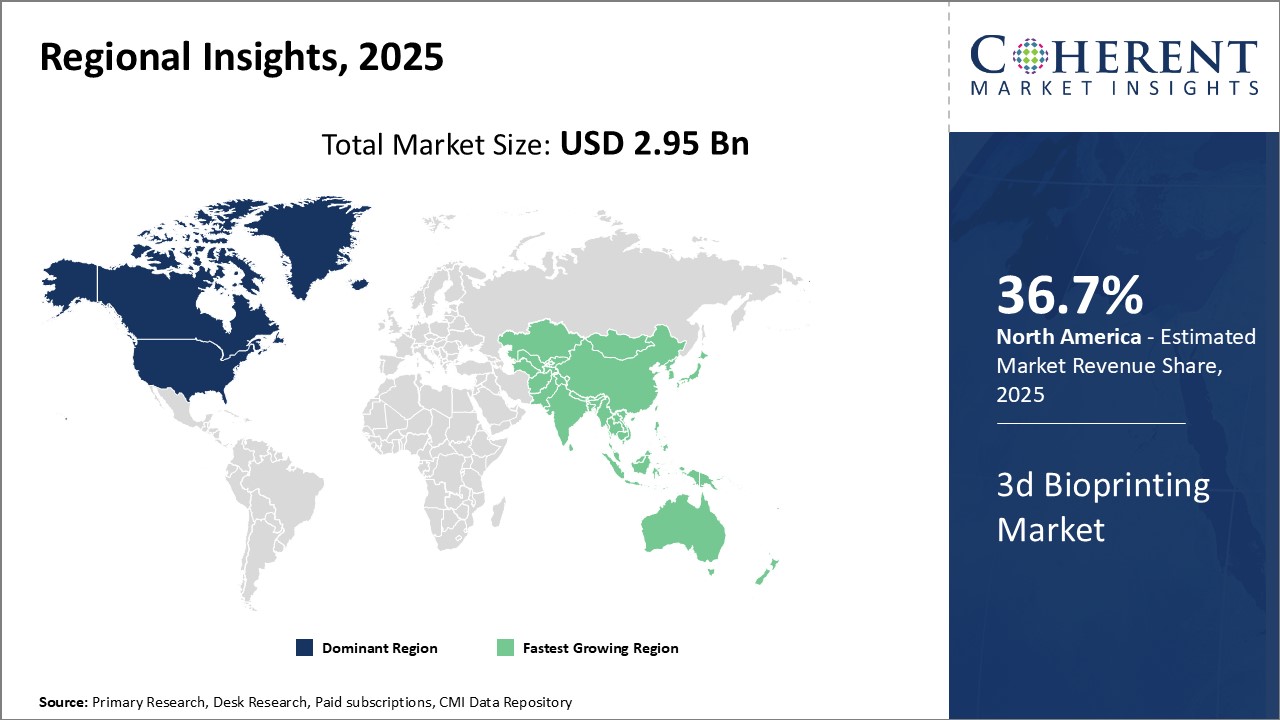
North America is projected to maintain its lead in the global 3D bioprinting market with a 36.7% share in 2026, with the United States acting as the primary growth driver. The region benefits from a well-established biotechnology and pharmaceutical ecosystem, significant R&D funding, and active collaboration between research institutions, medical device manufacturers, and bioprinting startups. Favorable regulatory frameworks and early adoption of advanced technologies further reinforce North America's leadership in bioprinting innovation and commercialization.
Europe 3D Bioprinting Market Trends and Analysis
Europe holds a significant share in the global 3D bioprinting market, supported by a strong focus on healthcare innovation, regenerative medicine, and personalized therapeutics. Countries such as Germany, the United Kingdom, France, and the Netherlands are leading bioprinting research initiatives and clinical collaborations. EU-backed funding for biomedical research and emphasis on reducing animal testing in drug development are also key factors contributing to regional market growth.
3D bioprinting market Dominating Countries
United States and Canada
The United States leads the global 3D bioprinting market, driven by robust R&D funding, a mature biotechnology ecosystem, and a high level of integration between academia, startups, and pharmaceutical giants. The country’s advanced manufacturing infrastructure and favorable regulatory environment support rapid commercialization of bioprinting technologies.
Additionally, major investments by the NIH, NSF, and private sector in regenerative medicine and personalized healthcare accelerate market innovation.
Market Report Scope
3D Bioprinting Market Report Coverage
| Report Coverage | Details | ||
|---|---|---|---|
| Base Year: | 2025 | Market Size in 2026: | USD 3.44 Bn |
| Historical Data for: | 2020 To 2024 | Forecast Period: | 2026 To 2033 |
| Forecast Period 2026 to 2033 CAGR: | 16.6% | 2033 Value Projection: | USD 10.08 Bn |
| Geographies covered: |
| ||
| Segments covered: |
| ||
| Companies covered: | 3D Bioprinting Solutions, Advanced Solutions Life Sciences, LLC, Allevi Inc., Aspect Biosystems Ltd., Bico group ab, Bio3D Technologies Pte. Ltd., Cellink Global, Collplant Biotechnologies Ltd., Cyfuse Biomedical K.K., Electro Optical Systems, Envisiontec GmbH, Foldink Life Science Technologies, Formlabs, Inc., GE Healthcare, Inventia Life Science PTY LTD, Nano 3D Biosciences, Inc., Optomec Inc., Organovo Holdings, Inc., Pandorum Technologies pvt. ltd., Precise Bio, Regemat 3D S.L., Regenovo Biotechnology Co. Ltd., Renishaw plc., Revotek co., ltd., Rokit Healthcare, inc., Stratasys Ltd.Vivax Bio, LLC, and Vivax Bio, LLC | ||
| Growth Drivers: |
| ||
| Restraints & Challenges: |
| ||
Analyst Viewpoint – 3D Bioprinting Market
- Analysts maintain a highly optimistic outlook on the global 3D bioprinting market, driven by its transformative potential in regenerative medicine, drug discovery, and personalized healthcare. The technology’s ability to fabricate complex biological structures with precision is enabling breakthroughs in tissue engineering, organ modeling, and preclinical testing.
- Experts emphasize that increasing R&D investments, growing collaboration between biotech firms and academic institutions, and the integration of AI and automation are key accelerators of market growth. The rising demand for alternatives to animal testing and the push for more accurate disease models are also positioning bioprinting as a disruptive force in pharmaceutical research.
- Regionally, North America is expected to maintain leadership due to its strong biotech ecosystem and favorable regulatory environment. However, Asia Pacific is rapidly gaining traction as the fastest-growing region, supported by expanding research infrastructure, government funding, and competitive manufacturing capabilities in countries like China, Japan, and South Korea.
3D Bioprinting Market: Key Development
- In June 2025, BIO INX launched READYPCL INX a polyester‑based volumetric bioink for Readily3D printers. BIO INX introduced its first polyester‑based resin optimized for high-speed volumetric printing, supported by its “plug-and-print” platform aimed at seamless integration.
- In March 2025, Stanford University’s Mark Skylar‑Scott Lab releases the $250 ‘Printess’ open‑source bioprinter. This modular, desktop bioprinter supports advanced techniques like multimaterial direct ink writing (DIW) and multinozzle configurations all at an ultra‑low price of $250. It enables research-grade performance within a budget suitable for teaching labs and underfunded institutions.
- In March 2025, TU Eindhoven researchers unveiled a single‑cell resolution bioprinter using Xolography. The team from Eindhoven University demonstrated a volumetric photopolymerization technique called Xolography, achieving 20‑micron resolution, sufficient to print tissues at single‑cell This breakthrough pushes bioprinting toward ultra‑precise tissue engineering, accelerating development of transplantable tissues and highly detailed organ models for drug testing, signaling a leap toward clinical readiness.
- In September 2024, Allevi (now 3D Systems) launched their Cyfuse 3D Kenzan printer for scaffold-free bioprinting. The Cyfuse 3D Kenzan printer automates the extrusion-free, needle-based placement of spheroids to create scaffold-free tissue constructs ideal for vascularized tissues and organ models.
- In June 2024, Organovo completed preclinical trials using bioprinted liver tissue. Organovo announced successful preclinical studies demonstrating that its 3D-bioprinted liver tissues maintained full hepatic functionality over extended incubation periods
Market Segmentation
- By Technology (Revenue, USD Bn, 2021 - 2033)
- Syringe/extrusion Bioprinting
- Inkjet Bioprinting
- Magnetic Levitation Bioprinting
- Laser-assisted Bioprinting
- Others
- By Component (Revenue, USD Bn, 2021 - 2033)
- 3D Bioprinters
- Biomaterials
- Scaffolds
- By Application (Revenue, USD Bn, 2021 - 2033)
- Drug Testing and Development
- Regenerative Medicine
- Food Testing
- Research
- Others
- By Region (Revenue, USD Bn, 2021 - 2033)
- North America
- U.S.
- Canada
- Latin America
- Brazil
- Argentina
- Mexico
- Rest of Latin America
- Europe
- Germany
- U.K.
- Spain
- France
- Italy
- Russia
- Rest of Europe
- Asia Pacific
- China
- India
- Japan
- Australia
- South Korea
- ASEAN
- Rest of Asia Pacific
- Middle East & Africa
- GCC Countries
- South Africa
- Israel
- Rest of Middle East & Africa
- Key Players Insights
- 3D Bioprinting Solutions
- Advanced Solutions Life Sciences, LLC
- Allevi Inc.
- Aspect Biosystems Ltd.
- Bico group ab
- Bio3D Technologies Pte. Ltd.
- Cellink Global
- Collplant Biotechnologies Ltd.
- Cyfuse Biomedical K.K.
- Electro Optical Systems
- Envisiontec GmbH
- Foldink Life Science Technologies
- Formlabs, Inc.
- GE Healthcare
- Inventia Life Science PTY LTD
- Nano 3D Biosciences, Inc.
- Optomec Inc.
- Organovo Holdings, Inc.
- Pandorum Technologies pvt. ltd.
- Precise Bio
- Regemat 3D S.L.
- Regenovo Biotechnology Co. Ltd.
- Renishaw plc.
- Revotek co., ltd.
- Rokit Healthcare, inc.
- Stratasys Ltd.Vivax Bio, LLC
- Vivax Bio, LLC
Sources
The Stakeholders Consulted
- Biomedical engineers and 3D printing technologists
- Manufacturers and suppliers of bioprinters, bioinks, and medical scaffolding materials
- Hospital procurement managers and clinical R&D heads
- Regulatory compliance experts from FDA, EMA, and CDSCO
- Researchers in tissue engineering, regenerative medicine, and organ-on-chip systems
- Life sciences venture capitalists and technology commercialization officers
- End-users across academic research institutions, pharmaceutical companies, and biotechnology firms
Databases Opened
- U.S. National Institutes of Health (NIH) – Biomedical Research Funding Database
- European Commission CORDIS – EU-Funded Bioprinting Projects
- World Health Organization (WHO) – Global Health R&D Data
- Indian Council of Medical Research (ICMR) – Medical Device and Innovation Database
- World Bank Open Data – Healthcare Infrastructure Indicators
- ScienceDirect, SpringerLink – Biomedical and Additive Manufacturing Journals
Magazines & Trade Publications
- 3D Printing Industry
- Medical Design & Outsourcing
- Biofabrication Journal
- MedTech Dive
- Nature Biotechnology – News & Analysis Section
Scientific and Industry Journals
- Biofabrication (IOP Science)
- Tissue Engineering Part A, B, C
- Journal of Biomedical Materials Research
- Advanced Healthcare Materials
- International Journal of Bioprinting
- Biomaterials Science
Newspapers & Media Outlets
- The Wall Street Journal – Healthcare & Technology
- Bloomberg – Life Sciences Innovation
- Reuters – Biotechnology and Medical Devices
- The Economic Times – Health Tech & Pharma Section
- Business Standard – Healthcare Innovation News
Associations and Regulatory Bodies
- U.S. Food and Drug Administration (FDA) – Center for Devices and Radiological Health (CDRH)
- European Medicines Agency (EMA) – Medical Devices Division
- Indian CDSCO – Medical Device Regulatory Body
- American Society for Testing and Materials (ASTM) – Committee F04 on Medical and Surgical Materials and Devices
- International Society for Biofabrication (ISBF)
- National Centre for Additive Manufacturing (NCAM), India
Public Domain Sources
- U.S. FDA – Bioprinting Guidance and White Papers
- European Commission – Additive Manufacturing and Biotech Reports
- World Bank – Medical Technology Infrastructure Insights
- UNESCO – Reports on Global Biomedical Innovation
- OECD – Health Innovation and Biotechnology Statistics
Proprietary Research Elements
- CMI Data Analytics Tool
- Proprietary CMI Repository of Market Data (covering past 8 years)
- CMI Expert Interviews and Transcripts (focused on bioprinting applications, bioink development, and regenerative medicine adoption trends)
Get access to 250+ pages report
Every segment, forecast, competitor profile and data table behind the analysis above — available for instant download.
- ESOMAR Member
- ISO 9001:2015 Certified
- D-U-N-S Registered
- GDPR & CCPA Compliant
Missing comfort of reading report in your local language? Find your preferred language:
Transform your Strategy with Exclusive Trending Reports
Frequently Asked Questions
The 3d Bioprinting Market size is estimated to be valued at USD 3.44 Bn in 2026, and is expected to reach USD 10.08 Bn by 2033
The CAGR of the global Market is projected to be 16.6% from 2026 to 2033.
Advances in regenerative medicine and tissue engineering and increased adoption in pharmaceutical and cosmetic industries are the major factor driving the growth of the market
Ensuring cell viability and regulatory hurdles for clinical applications are the major factors hampering the growth of the market
In terms of technology, inkjet bioprinting is estimated to dominate the market revenue share in 2026.
3D Bioprinting Solutions, Advanced Solutions Life Sciences, LLC, Allevi Inc., Aspect Biosystems Ltd., Bico group ab, Bio3D Technologies Pte. Ltd., Cellink Global, Collplant Biotechnologies Ltd., Cyfuse Biomedical K.K., Electro Optical Systems, Envisiontec GmbH, Foldink Life Science Technologies, Formlabs, Inc., GE Healthcare, Inventia Life Science PTY LTD, Nano 3D Biosciences, Inc., Optomec Inc., Organovo Holdings, Inc., Pandorum Technologies pvt. ltd., Precise Bio, Regemat 3D S.L., Regenovo Biotechnology Co. Ltd., Renishaw plc., Revotek co., ltd., Rokit Healthcare, inc., Stratasys Ltd.Vivax Bio, LLC, and Vivax Bio, LLC are the major players.
North America is expected to lead the global market in 2026.