

Unmanned Aerial Vehicle Market Analysis & Forecast
The unmanned aerial vehicle market is estimated to be valued at USD 34.85 Bn in 2026 and is expected to reach USD 71.44 Bn by 2033, growing at a compound annual growth rate (CAGR) of 10.8% from 2026 to 2033.
Key Takeaways
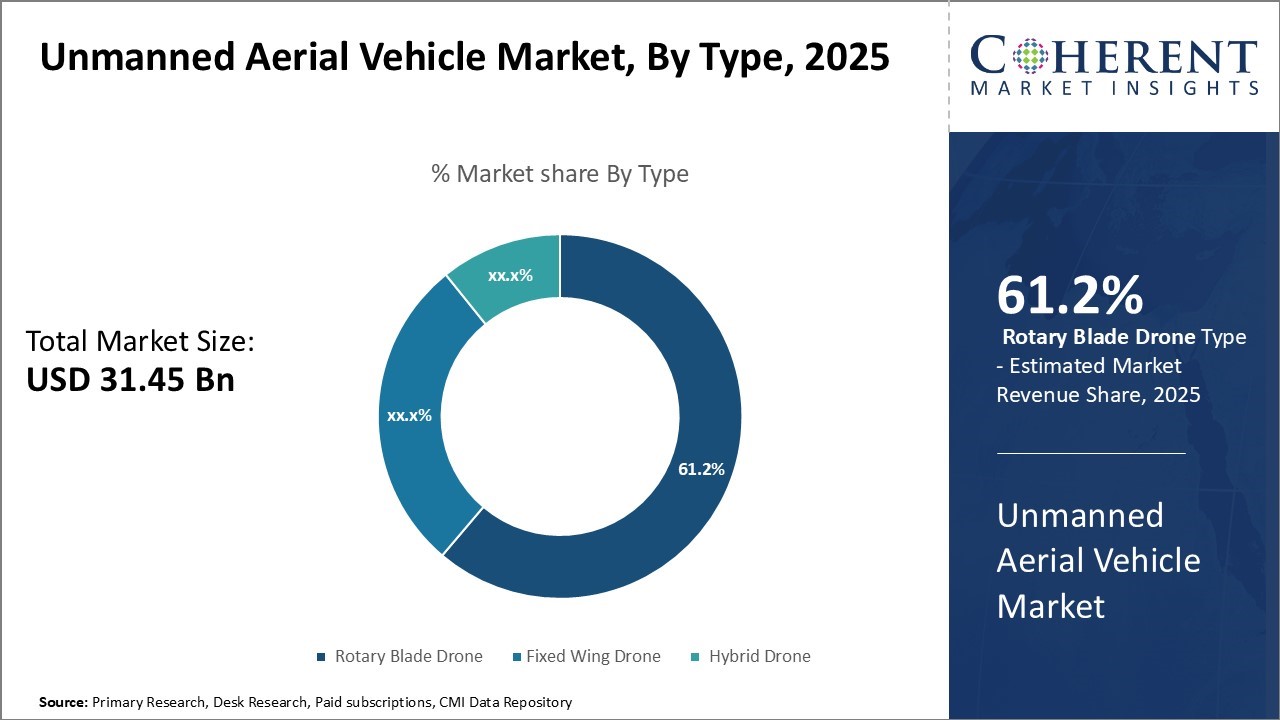
- Based on the Type, the rotary blade segment dominates the market with a share of 62.2% due to increased versatility.
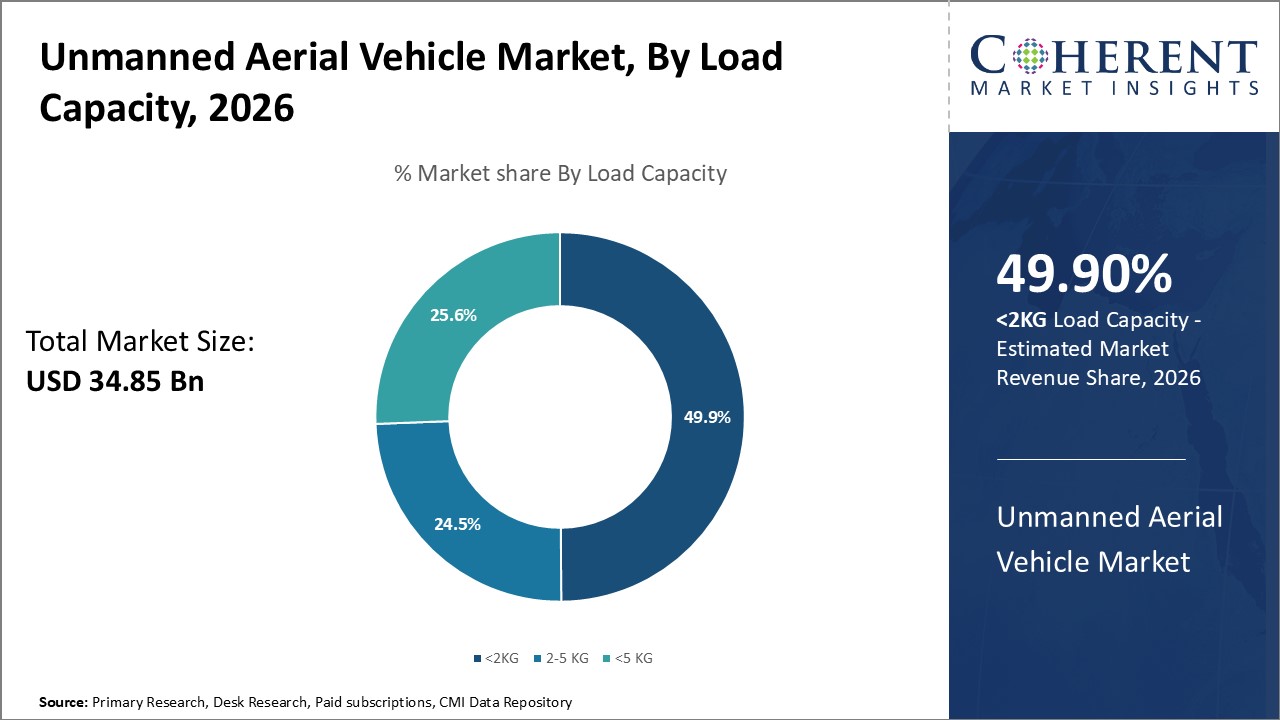
- Based on the Load Capacity, the sub-2 kg segment dominates the market with a share of 49.9% due to affordability.
- Based on the Application, the aerial photography segment dominates the market with a share of share of 34.9% due to its wide-ranging uses.
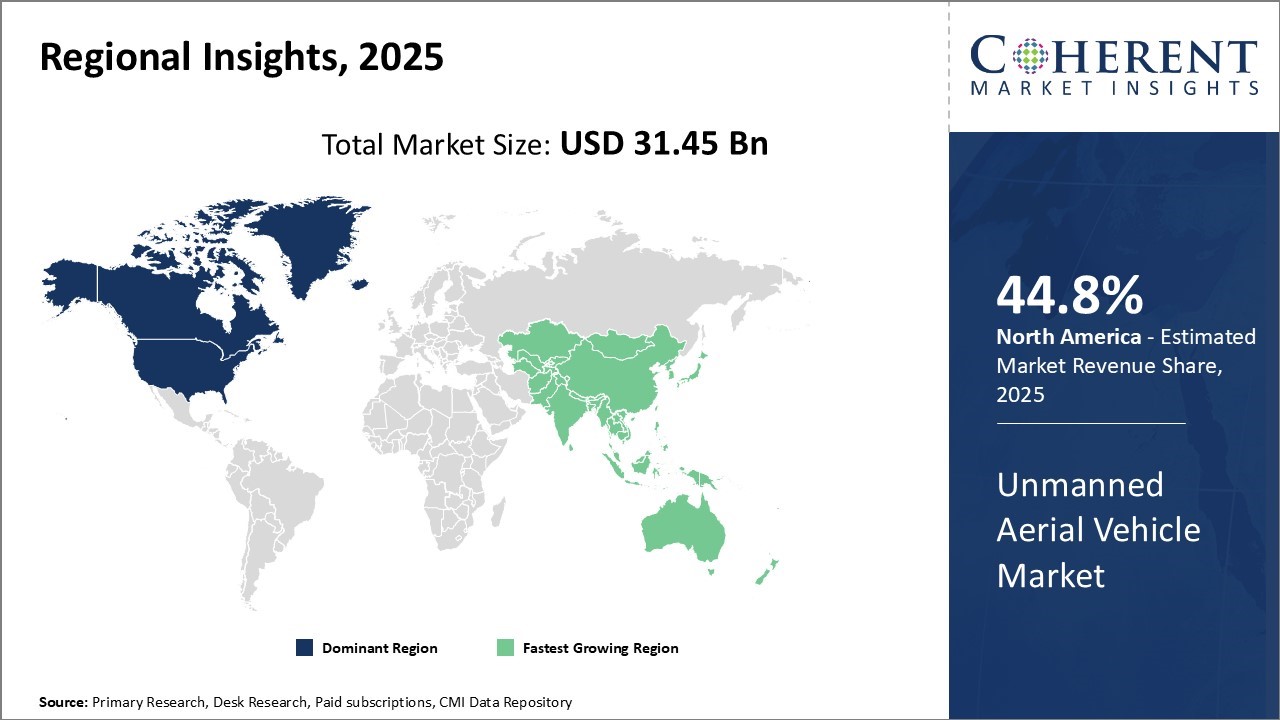
- On the basis of Region, North America has dominated the global unmanned aerial vehicle market. The region is expected to account a market share of 44.8% in 2026.
Market Overview
The market is expected to witness significant growth due to increasing applications of UAVs across various commercial sectors. UAVs are increasingly being used for applications like surveying, product delivery, agriculture, inspections, and others. This growing adoption across industries like logistics, consumer goods, agriculture, etc., is expected to drive the demand for UAVs during the forecast period. Furthermore, ongoing technological advancements are making UAVs more capable in terms of payload capacity, flight time, and range. Advancements in the field of data analytics, artificial intelligence, and 5G communication are further expanding the potential uses of UAVs. Emerging applications of drone swarms and delivery drones are projected to open new avenues for unmanned aerial vehicle market growth in the coming years.
Current Events and Their Impact on the Unmanned Aerial Vehicle Market
Current Events | Description and its impact |
AI and Swarm Technology Advancements |
|
. Regulatory and Market Expansion Dynamics |
|
Battery Technology and Endurance Breakthroughs |
|
Geopolitical Conflict-Driven Innovation in Ukraine |
|
End-user Feedback and Unmet Needs in the Unmanned Aerial Vehicle Market
End-user Feedback
- Limited Flight Time & Battery Life
Users often mention short flying time as a major issue, especially in areas like farming, mapping, and watching large areas where longer flights are needed. - Poor Connectivity & Signal Range
Drones used in far-off or crowded places face problems with weak signals, GPS failure, or interference, which affects how well they work. - Complex User Interfaces & Training Requirements
Many drone systems are hard to use and need special training, making them less friendly for small businesses or new users who prefer easy-to-use, ready-to-fly options.
Unmet Needs
- Long-Endurance UAVs at Affordable Cost
There is a strong need for drones that can fly for longer times without being too expensive—this is especially important for tasks like border patrol, farming, and emergency services. - Improved Autonomy and AI Integration
Users want drones that can fly by themselves, make smart decisions, avoid obstacles, and plan their paths without human help. - Integrated Data Analytics Platforms
End-users want drones that not only collect data but also help understand it using smart tools and simple visuals for quicker actions.
- Current Industry Events of 2026
- Market Size Estimation
- Regional Breakdown
- Competitive Landscape
- Customer Intelligence
- Segmental Analysis
- Pricing Analysis
- Key Market Drivers, Challenges & Future Trends
- Customized Insights Section
Role of Artificial Intelligence (AI) in Unmanned Aerial Vehicle
Artificial Intelligence (AI) plays a transformative role in the development and operation of Unmanned Aerial Vehicles (UAVs), enhancing their autonomy, responsiveness, and effectiveness in complex environments. AI enables UAVs to process real-time data, recognize patterns, make autonomous decisions, and adapt to dynamic situations without human intervention—critical capabilities for both surveillance and combat operations.
For instance, in May 2025, Latvian defense startup Origin Robotics launched “BLAZE,” an AI-driven autonomous counter-drone system engineered to detect and neutralize fast-moving aerial threats. By leveraging AI, BLAZE offers a highly responsive and cost-effective alternative to traditional gun-based air defense systems and expensive missile interceptors. This innovation underscores AI’s growing role in modern defense technologies and positions Origin Robotics to expand its footprint in the European and NATO defense markets amid escalating regional security challenges.
Segmental Insights
Unmanned Aerial Vehicle Market Insights, by Type
The rotary blade segment dominates the market due to increased versatility
Rotary blade drone is expected to contribute the highest market share of 62.2% in 2026. Rotary blade drones, commonly known as quadcopters, can vertically take off and land, hover, and move freely in any direction. This multidimensional mobility enables rotary blade drones to be deployed in a wider range of applications compared to other drone types. Their ability to hover in place allows for more precise data and image capture. The vertical take-off and landing functionality also improves accessibility to inspect areas that are difficult to reach. Rotary blade drones are particularly useful for indoor applications like warehouse inventory monitoring. Their agility also makes them well-suited for industrial inspection of infrastructure like bridges, wind turbines, and cell towers.
In October 2024, Denel Aerospace unveiled a new Rotary Wing Unmanned Aerial System (RW-UAS), specifically developed for surveillance missions. The system is designed to deliver real-time situational awareness along with high-resolution data on objects and terrain.
Unmanned Aerial Vehicle Market Insights, by Load Capacity
The sub-2 kg segment dominates the market due to affordability
The sub-2 kg segment is expected to contribute the highest market share of 49.9% in 2026. Drones with payloads under 2KG generally have more basic designs and lower performance capabilities compared to heavier models. However, their smaller size and simpler components translate to more affordable price points, making them accessible to a wider consumer and commercial base. Lighter drones are suitable for hobbyists and recreational uses as well as professional applications that don't require lifted payloads. Their lower costs also appeal to applications where drones need to be replaced or upgraded frequently, such as agricultural field monitoring. As drone technology advances, sub-2 kg models continue to offer strong value, ensuring their popularity.
For instance, in Australia, as per the Civil Aviation Safety Authority (CASA) people are allowed to fly a very small drone or remotely piloted aircraft (RPA) that weighs 2 kilograms or less for work or business purposes. This is known as the "sub-2 kg excluded category" because people do not need a remote pilot licence (RePL) or a remotely piloted aircraft operator's certificate (ReOC) to fly it. Examples of people who may use drones in this category include photographers, filmmakers, real estate agents, researchers, construction workers, tradespeople, and staff from government or community service organizations. This is further proliferating the unmanned aerial vehicle market share.
Unmanned Aerial Vehicle Market Insights, by Application
The aerial photography segment dominates the market due to its wide-ranging uses
Aerial photography is expected to contribute the highest market share of 34.9% in 2026. Aerial photography has become a popular method for real estate, travel, and other industries to showcase properties and destinations from an elevated viewpoint. Drone photography is also gaining favor for event coverage, surveillance, filmmaking, and other uses. The housing of high-resolution cameras on drones allows for precise image capturing over large areas in a short period. This has made aerial drones an efficient replacement for manned aircraft in applications like infrastructure inspection, survey mapping, and emergency response. Moreover, drone selfie offerings have grown aerial photography into an engaging hobby. The widespread commercial and recreational applications continue driving robust demand for drone-based aerial photography services and solutions. For instance, Garuda Aerospace introduced "Droni," a personal drone for photography enthusiasts, highlighting the growing trend of using UAVs for aerial photography.
Regional Insights
North America Unmanned Aerial Vehicle Market Trends
North America has dominated the global unmanned aerial vehicle market. The region is expected to account for a market share of 44.8% in 2026. It has been the case for many years owing to strong defense budgets and early adoption of UAV technologies by the military and homeland security agencies in the U.S. and Canada. The U.S. accounts for the most prominent share of the market in the region due to heavy investments in R&D by defense organizations such as DARPA and IARPA, as well as private technology companies working in collaboration with them. Several critical UAV projects aimed at intelligence, surveillance, and reconnaissance missions are based out of facilities in the U.S., making it a leader in military drone technologies.
The presence of top UAV manufacturers like General Atomics and Northrop Grumman has also ensured that North America remains the center for the design, development, and production of high-end military UAVs. This leadership in core technologies has enabled the region to export many types of armed and unarmed drones to allies. The per capita defense expenditure in the U.S. and Canada remains higher than most other nations, allowing sustained procurement of UAVs to replace aging fleets and upgrading of platforms to incorporate the latest innovations. For instance, the US Naval Air Warfare Center Weapons Division recently tested a Solid Fuel Integral Rocket Ramjet (SFIRR) launched from a drone. This is further propelling the unmanned aerial vehicle market revenue.
Asia Pacific Unmanned Aerial Vehicle Market Trends
The Asian market, especially China, has emerged as the fastest-growing regional market for unmanned aerial vehicles. Significant growth in the country's defense budget has translated into massive contracts for domestic UAV developers to meet military requirements. Civilian use of drones is also witnessing a boom, with e-commerce and surveillance applications driving demand. Many local manufacturers have come up who offer cost-competitive solutions compared to American and Israeli brands. For instance, SwissDrones introduced the SDO 50 V2, a multipurpose VTOL helicopter UAV, in the Asia-Pacific region, emphasizing its BVLOS capabilities and high payload capacity.
China Unmanned Aerial Vehicle Market Trends
China's large drone industry is fueled by government incentives for the development of core technologies as well as a preference given to local companies in public procurements. This is enabling indigenous production to meet both military and non-military UAV needs with positive implications for import substitution. The availability of low-cost options is stimulating new applications, while export opportunities are expanding in Asia Pacific and Africa. For instance, China is also a major player in the UAV market, with the development of platforms like the TP1000, a large cargo drone capable of carrying a 1-ton payload.
United States Unmanned Aerial Vehicle Market Trends
The growth of the United States Unmanned Aerial Vehicle (UAV) market is supported by rising demand in areas like farming, building, and delivery services. Improvements in technology, such as longer battery life, smart navigation, and better cameras, are helping drones do more tasks. Helpful government rules and higher defense budgets are also encouraging drone use. In addition, the need for better ways to handle worker shortages, weather tracking, and emergency response is speeding up drone use in both business and defense sectors. For instance, the American company Raytheon (RTX Corporation) conducted the first helicopter launch of the Coyote LE SR, a UAV designed for reconnaissance, surveillance, electronic warfare, and more.
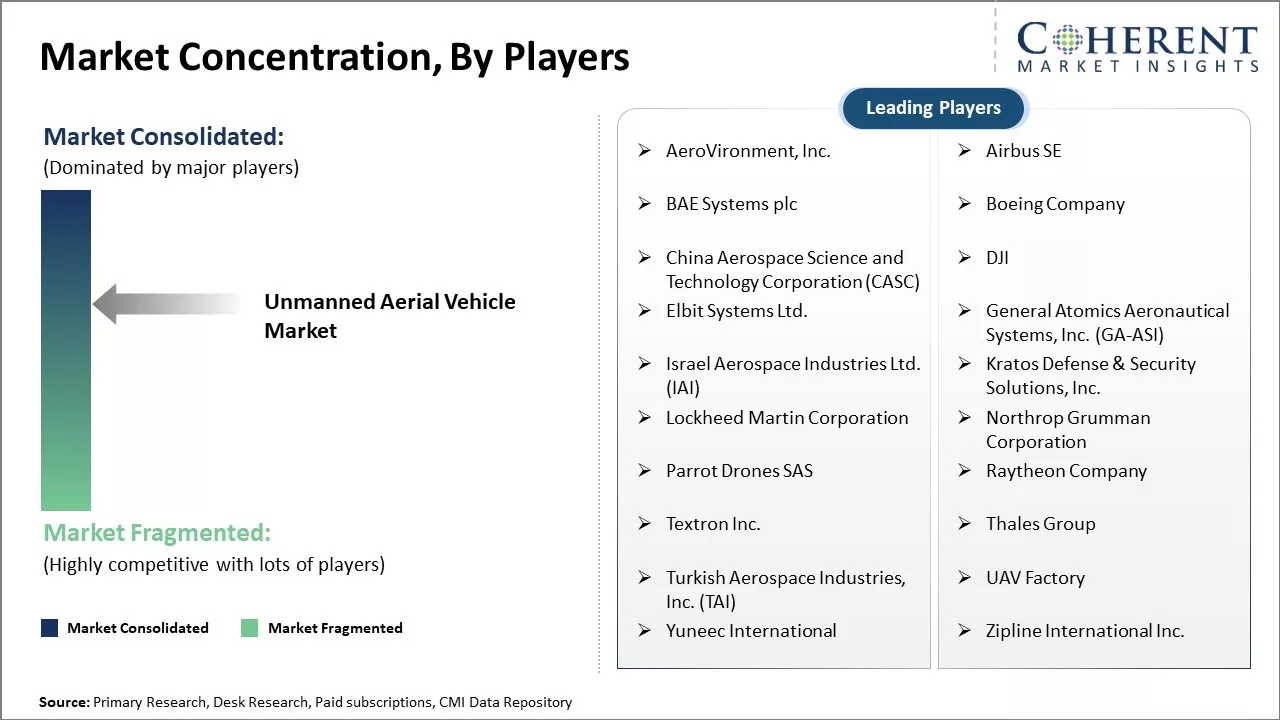
Market Concentration and Competitive Landscape
Unmanned Aerial Vehicle Industry News
- In May 2025, China plans to launch the Jiu Tian drone mothership, a long-range UAV with a 7,000 km range, 15,000 m altitude, and a 16,000 kg take-off weight. It can transport up to 6,000 kg of equipment, including surveillance gear and ammunition.
- In June 2025, French drone maker Parrot unveiled its Anafi UKR compact UAVs at the Paris Air Show. Originally designed for Ukrainian forces, the drones are now aimed at broader defense and public safety use.
- In April 2025, Optiemus Unmanned Systems launched four new UAVs at Milipol India 2025, highlighting India's "Atmanirbhar Bharat" and "Make in India" initiatives.
- In February 2025, ideaForge Technology Limited introduced the NETRA 5, a future-proof UAV designed for critical missions and featuring AI-driven capabilities for tasks like detecting military assets.
Market Report Scope
Unmanned Aerial Vehicle Market Report Coverage
| Report Coverage | Details | ||
|---|---|---|---|
| Base Year: | 2025 | Market Size in 2026: | USD 34.85 Bn |
| Historical Data for: | 2020 To 2024 | Forecast Period: | 2026 To 2033 |
| Forecast Period 2026 to 2033 CAGR: | 10.8% | 2033 Value Projection: | USD 71.44 Bn |
| Geographies covered: |
| ||
| Segments covered: |
| ||
| Companies covered: | AeroVironment, Inc., Airbus SE, BAE Systems plc, Boeing Company, China Aerospace Science and Technology Corporation (CASC), DJI, Elbit Systems Ltd., General Atomics Aeronautical Systems, Inc. (GA-ASI), Israel Aerospace Industries Ltd. (IAI), Kratos Defense & Security Solutions, Inc., Lockheed Martin Corporation, Northrop Grumman Corporation, Parrot Drones SAS, Raytheon Company, Textron Inc., Thales Group, Turkish Aerospace Industries, Inc. (TAI), UAV Factory, Yuneec International, and Zipline International Inc. | ||
| Growth Drivers: |
| ||
| Restraints & Challenges: |
| ||
Unmanned Aerial Vehicle Market Growth Drivers
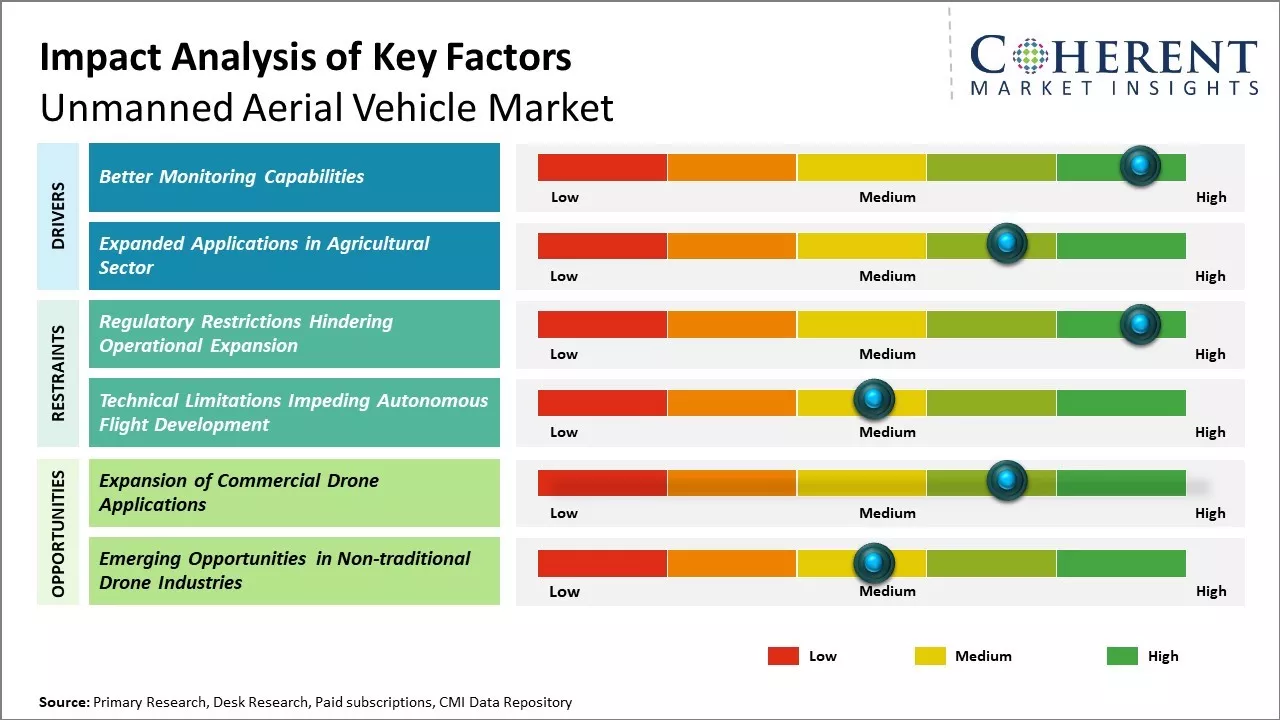
Better Monitoring Capabilities
The usage of unmanned aerial vehicles provides various organizations with the ability to monitor hard-to-reach locations efficiently. UAVs equipped with cameras and other sensors allow constant monitoring of infrastructure, areas of interest without putting human lives at risk. For example, oil and gas companies routinely use drones to monitor the conditions of offshore rigs and pipelines in remote ocean locations. Similarly, government agencies responsible for border security find UAVs extremely useful for continuous surveillance of long border areas. Drones also help forest departments keep a close eye on forest fires and poaching activities. The power sector leverages drones to inspect transmission lines and wind turbines placed in mountains or offshore. The construction industry has also found drones beneficial to monitor the progress of projects situated in difficult terrains. Given their advantages over manned aircraft or helicopters in performing monitoring tasks in tough areas, more industries and agencies are expected to incorporate UAVs into their operations. This is expected to drive further demand for sophisticated multicopters and fixed-wing drones equipped with advanced cameras in the coming years.
For example, in April 2023, the Romanian government finalized an agreement valued at USD 321 million with Turkey to purchase 18 Turkish Bayraktar B2 drones, known for their advanced intelligence features and offensive capabilities. This is further accelerating the unmanned aerial vehicle market demand.
Expanded Applications in the Agricultural Sector
The agricultural industry is increasingly adopting unmanned aerial vehicles for a variety of precision tasks. Drones equipped with cameras and analytical software help farmers closely monitor crops and detect issues like drought, pests, or diseases at an early stage across large fields. This enables timely remedial actions and minimizes crop losses. Similarly, UAVs aid in analyzing soil health through imaging and help plan fertilizer application accordingly to boost yields. Livestock farmers also use drones to keep tabs on herd health and grazing patterns. Post-harvesting, drones are used to spray pesticides with controlled dosage in orchards, which not only saves costs but also reduces the chances of human exposure.
Furthermore, UAVs assist in irrigation management by scanning fields to identify waterlogged or dry patches requiring attention. With a growing global population increasing pressure on limited arable land, technologies enhancing agricultural productivity, resource efficiency, and sustainability are attracting major investments. Therefore, the potential of unmanned systems in revolutionizing farm management practices through optimization of inputs is expected to spur their increased uptake significantly among crop and livestock producers across the world.
For instance, as of July 2023, data from the Federal Aviation Administration (FAA) reveals nearly 900,000 drones registered in the U.S. Among these, 416,095 were designated for recreational use, while 369,528 were registered for commercial activities. Additionally, the FAA granted 331,573 remote pilot certificates, reflecting the growing number of certified drone operators.
Market Opportunities: Expansion of Commercial Drone Applications
The utilization of drones in various commercial sectors, including agriculture, infrastructure monitoring, and delivery services, offers significant growth prospects. Ongoing technological advancements are effectively tackling hurdles related to autonomy, operational range, and battery longevity, thus enhancing the feasibility and efficiency of drone operations. Additionally, the gradual harmonization of regulations on an international scale is unlocking opportunities in the global drone market, fostering broader adoption and market expansion.
Analyst Opinion (Expert Opinion)
- The unmanned aerial vehicle (UAV) market is undergoing a fundamental realignment. While defense applications continue to account for a majority of global UAV procurement—estimated at over 60% of total platform acquisitions as of 2024—the innovation pipeline is increasingly being driven by commercial and dual-use imperatives.
- In the commercial UAV segment, technical specifications such as range, payload capacity, and endurance are increasingly commoditized. Instead, regulatory integration is emerging as a core differentiator. Companies that can navigate complex regulatory frameworks and obtain advanced operational certifications are positioned to achieve sustainable deployment at scale. Zipline, for example, has secured a Part 135 air carrier certification from the U.S. Federal Aviation Administration (FAA), enabling it to conduct BVLOS (beyond visual line of sight) deliveries across multiple states. Such authorizations are not merely compliance achievements; they represent a strategic asset that grants incumbency in high-barrier markets where many competitors remain grounded by limited operational clearances.
- While urban air mobility (UAM) continues to attract attention and investment, its commercial realization remains long-term and capital-intensive, hindered by airspace integration, safety standards, and public acceptance. In contrast, logistics applications—particularly middle- and last-mile delivery—are demonstrating immediate and scalable value. Alphabet’s Wing has surpassed 350,000 completed deliveries as of Q2 2024, while Amazon’s MK30 UAV aims to significantly reduce weather-related downtime and improve route flexibility in its revived Prime Air operations. The strategic priority in this space is clear: reducing the per-package delivery cost below $1 through autonomous scheduling, dynamic routing, and hybrid drone-truck logistics models. Unlike UAM, logistics UAVs already possess proven unit economics in select regions and can scale within existing regulatory corridors.
Speak to the analyst
Want personalized insights?
Take the findings above to one of our principal consultants, or have the report rebuilt around the segments, geographies and competitors you actually track.
Market Segmentation
- Type Insights (Revenue, USD Bn, 2021 - 2033)
- Fixed Wing Drone
- Rotary Blade Drone
- Hybrid Drone
- Load Capacity Insights (Revenue, USD Bn, 2021 - 2033)
- <2KG
- 2–5 KG
- <5 KG
- Application Insights (Revenue, USD Bn, 2021 - 2033)
- Aerial Photography
- Agriculture
- Emergency and Disaster Management
- Inspection & Monitoring
- Remote Sensing & Mapping
- Wildlife Research & Preservation
- Regional Insights (Revenue, USD Bn, 2021 - 2033)
- North America
- U.S.
- Canada
- Latin America
- Brazil
- Argentina
- Mexico
- Rest of Latin America
- Europe
- Germany
- U.K.
- Spain
- France
- Italy
- Russia
- Rest of Europe
- Asia Pacific
- China
- India
- Japan
- Australia
- South Korea
- ASEAN
- Rest of Asia Pacific
- Middle East & Africa
- South Africa
- GCC Countries
- Israel
- Rest of Middle East & Africa
- North America
- Key Players Insights
- AeroVironment, Inc.
- Airbus SE
- BAE Systems plc
- Boeing Company
- China Aerospace Science and Technology Corporation (CASC)
- DJI
- Elbit Systems Ltd.
- General Atomics Aeronautical Systems, Inc. (GA-ASI)
- Israel Aerospace Industries Ltd. (IAI)
- Kratos Defense & Security Solutions, Inc.
- Lockheed Martin Corporation
- Northrop Grumman Corporation
- Parrot Drones SAS
- Raytheon Company
- Textron Inc.
- Thales Group
- Turkish Aerospace Industries, Inc. (TAI)
- UAV Factory
- Yuneec International
- Zipline International Inc.
Sources
Interviews from the following stakeholders
Stakeholders
- Interviews with marketing managers, business development heads, UAV fleet operations managers, R&D directors, supply chain heads, and procurement officers involved in the manufacturing, deployment, and commercialization of unmanned aerial vehicles across defense, commercial, industrial, and recreational sectors.
- Specific stakeholders UAV manufacturers, component and subsystem suppliers (e.g., propulsion, payload, navigation systems), contract assemblers, software and autopilot solution providers, aerospace consultants, agricultural drone service providers, logistics & delivery drone operators, energy infrastructure inspectors, law enforcement agencies, disaster response teams, and regulatory compliance experts (aviation authorities, civil airspace regulators).
Databases
- UN Comtrade – Global Trade Statistics (HS Codes for UAVs and Related Components)
- ITC Trade Map – UAV Export/Import Trade Flow Data
- Eurostat – Aerospace Products and UAV Segment Statistics
- U.S. International Trade Commission (USITC) – Drone and Aerospace Technology Reports
- Directorate General of Foreign Trade (India) – UAV Imports/Exports and Aviation Sector Data
- National Bureau of Statistics (China) – Drone Industry Production and Sales Reports
- U.S. Census Bureau – Aircraft and Drone Trade and Commercial Use Reports
Magazines
- DroneLife
- Commercial UAV News
- Unmanned Systems Technology Magazine
- Inside Unmanned Systems
- Aerospace Manufacturing Magazine
- GPS World – UAV & Geospatial Applications Section
- Defense News – UAVs and Tactical Systems Coverage
Journals
- IEEE Transactions on Robotics and Automation – UAV Systems
- Journal of Intelligent & Robotic Systems
- Aerospace Science and Technology
- Sensors (MDPI) – UAV and Remote Sensing Technologies
- Journal of Field Robotics
- Remote Sensing Applications Society and Environment
- Journal of Aerospace Information Systems
Newspapers
- The Economic Times – Aerospace & Defense Technology Section
- Business Standard – Aviation, Technology, and Logistics Coverage
- The Hindu BusinessLine – Drones in Agriculture and Infrastructure
- Reuters – Global UAV Market and Defense Sector Insights
- Financial Times – Drone Economy and Air Mobility Market Analysis
Associations
- Association for Uncrewed Vehicle Systems International (AUVSI)
- Federal Aviation Administration (FAA), USA – UAV Rules and Market Trends
- Directorate General of Civil Aviation (DGCA), India – UAV Policy Framework
- European Union Aviation Safety Agency (EASA) – Drone Regulation Updates
- Drone Federation of India (DFI)
- Global UTM Association (GUTMA)
- International Civil Aviation Organization (ICAO) – RPAS/Drone Ecosystem Integration
Public Domain Sources
- International Civil Aviation Organization (ICAO) – Global Drone Integration Strategies
- Directorate General of Civil Aviation (India) – Drone Registration and Policy Data
- Federal Aviation Administration (FAA) – Part 107 Data and Drone Market Forecasts
- European Union Commission – Digital Sky and Drone Strategy Initiatives
- World Bank – Drone Deployment in Infrastructure & Agriculture Projects
- OECD – Future of Air Mobility and Emerging Drone Markets Reports
- United Nations Office for Outer Space Affairs (UNOOSA) – UAV Use in Disaster Management
Proprietary Elements
- CMI Data Analytics Tool and proprietary CMI repository of UAV market intelligence, competitive benchmarking, regulatory mapping, and technological adoption trends developed and validated over the past 8 years.
*Definition: The Unmanned Aerial Vehicle (UAV) market consists of companies involved in the research, development, manufacturing, and operation of drones, commonly known as unmanned aerial vehicles (UAVs). UAVs are aircraft without a human pilot onboard and are either controlled autonomously by computers in the vehicle or controlled remotely by a pilot on the ground or in another vehicle.
Get access to 250+ pages report
Every segment, forecast, competitor profile and data table behind the analysis above — available for instant download.
- ESOMAR Member
- ISO 9001:2015 Certified
- D-U-N-S Registered
- GDPR & CCPA Compliant
Missing comfort of reading report in your local language? Find your preferred language:
Transform your Strategy with Exclusive Trending Reports
Frequently Asked Questions
The Unmanned Aerial Vehicle Market is estimated to be valued at USD 34.85 Bn in 2026, and is expected to reach USD 71.44 Bn by 2033.
The CAGR of the Unmanned Aerial Vehicle Market is projected to be 10.8% from 2026 to 2033.
Better Monitoring Capabilities and Expanded Applications in the Agricultural Sector are the major factors driving the growth of the unmanned aerial vehicle market.
Regulatory Restrictions Hindering Operational Expansion and Technical Limitations Impeding Autonomous Flight Development are the major factors hampering the growth of the unmanned aerial vehicle market.
In terms of type, the rotary blade drone is estimated to dominate the market revenue share in 2026.
AeroVironment, Inc., Airbus SE, BAE Systems plc, Boeing Company, China Aerospace Science and Technology Corporation (CASC), DJI, Elbit Systems Ltd., General Atomics Aeronautical Systems, Inc. (GA-ASI), Israel Aerospace Industries Ltd. (IAI), Kratos Defense & Security Solutions, Inc., Lockheed Martin Corporation, Northrop Grumman Corporation, Parrot Drones SAS, Raytheon Company, Textron Inc., Thales Group, Turkish Aerospace Industries, Inc. (TAI), UAV Factory, Yuneec International, and Zipline International Inc. are the major players.
North America is expected to lead the unmanned aerial vehicle market in 2026.