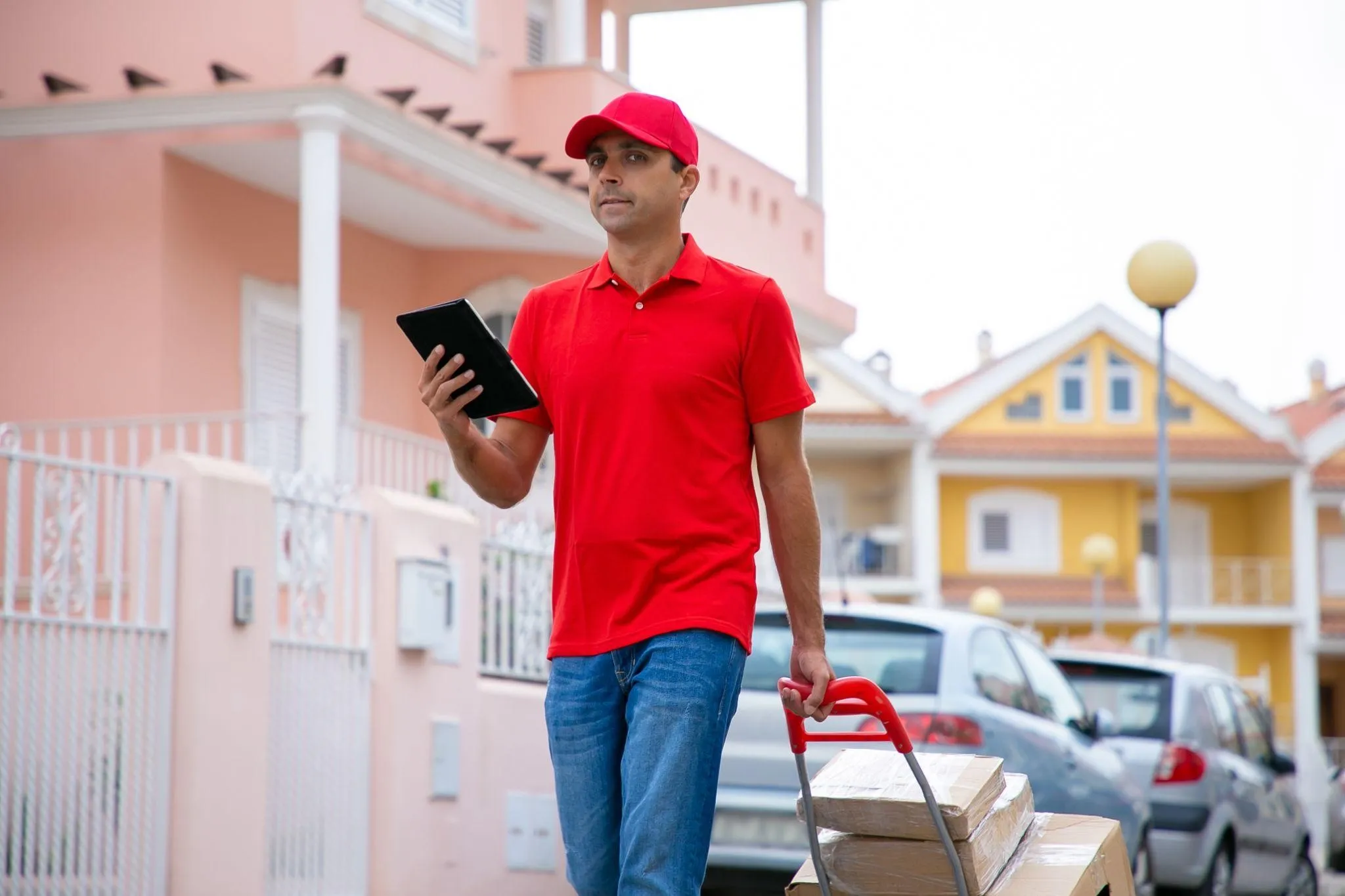
Last mile delivery is the final stage of the supply chain, in which a parcel moves from a local distribution center or delivery station to the customer's door. It is the most visible and usually the most expensive part of the journey, because every stop is a separate address and each failed attempt adds cost. Retailers now treat it as part of the customer experience, and shoppers judge a brand as much by when and how an order arrives as by what it contains.
The market is served by integrated carriers, retailer-owned networks, regional carriers, and technology-led crowdsourced platforms. They compete on speed, tracking, reliability at peak season, price, and the quality of their delivery data. High operating costs, traffic congestion, and urban regulation are the main constraints on the sector, and they push providers toward better routing, denser networks, and cleaner fleets.
Market Introduction
The demand is mostly generated by e-retailers, grocers, and on-demand companies where consumers expect timely deliveries and instant feedback. According to CMI, the rapid development of e-commerce and increased need for speedy deliveries are the two key factors driving this industry's growth. Software route optimization, drones, autonomous vehicles, and IoT have improved efficiency, while retailers have engaged more than one carrier at a time.
As per Coherent Market Insights, the Global Last Mile Delivery Market is valued at US$ 207.10 Billion in 2026 and is projected to reach US$ 378.59 Billion by 2033, growing at a CAGR of 9.0% during the forecast period of 2026 to 2033.
3 Key Market Trends
- E-commerce growth is pushing providers to add capacity: As online orders rise, carriers are adding vehicles, tracking tools, and storage close to customers. CMI cites Flipkart's partnership with neighborhood shops and small storage centers as an example, and Amazon announced in April 2025 a US$ 4 billion investment, to be spent by the end of 2026, to expand its delivery network in rural parts of the U.S. The impact is a wider and denser delivery footprint, and a rising cost of entry for smaller operators that cannot match this scale.
- Demand for quick delivery is moving inventory closer to the customer: Shoppers require same-day and next-day deliveries; therefore, local distribution centers, local delivery facilities, and small-sized fleets become preferred. CMI mentions the merger of DPDgroup in October 2023 with a local delivery company and the April 2025 takeover by InPost of 95.5% share of Yodel for US$ 136 million. Crowdsourced solutions like Roadie provide additional opportunities at the network edge, including launching RoadieXD in 2024 to carry heavy and bulky freight. The effect of this trend is reallocation of investments into short-distance rather than long-distance capacity, as well as tiered services allowing to adjust shipping speeds and prices.
- AI, route optimization, and cleaner fleets are changing operations: Providers use machine learning to predict delivery windows, adjust routes for weather and traffic, and give customers accurate arrival estimates. CMI cites Amazon's delivery-window predictions and FedEx's weather- and traffic-aware estimates, and notes growing interest in drones and electric vehicles. Cost is a concern, since CMI also records that U.S. tariffs could raise the cost of electric delivery fleets by 15-20%. The impact is lower cost per stop and fewer failed deliveries for operators that invest in data, while sustainability becomes a factor in carrier selection.
Last Mile Delivery Market Insights
At present the market is shaped by e-commerce volumes, consumer expectations of speed, and the cost of delivering to individual addresses. CMI names high operational costs, traffic congestion, and regulatory challenges in urban areas as the main restraints. External factors include tariffs, emissions rules such as the expansion of London's Ultra Low Emission Zone in August 2023 and the update to EU CO2 regulations in May 2025, and changes in labor and fuel costs. CMI also points to geopolitical disruption, such as Red Sea rerouting since March 2025, which strains final-mile efficiency because delayed goods require costly expedited delivery.
CMI sees its main opportunity in innovative delivery technology, especially drones, which can lower the cost of delivery and support on-demand and same-day models. Providers that combine dense local networks with accurate tracking and flexible capacity are best placed to win business from retailers who want to lessen their dependence on any single carrier.
Market Segmentation
The CMI report segments the last mile delivery market by service type, delivery mode, and region:
- By service type: B2C (business to consumer) and B2B (business to business).
- By delivery mode: road, drone, bicycle, walking, and others.
- By region: North America (U.S., Canada), Latin America (Brazil, Argentina, Mexico, and the rest of the region), Europe (Germany, U.K., Spain, France, Italy, Russia, and the rest of the region), Asia Pacific (China, India, Japan, Australia, South Korea, ASEAN, and the rest of the region), Middle East (GCC countries, Israel, and the rest of the region), and Africa (South Africa, North Africa, and Central Africa).
Two sub-segments, B2C from the service type segment and road from the delivery mode segment, are analysed below.
Sub-Segment Analysis
-
B2C (service type segment)
B2C is estimated to hold 66.8% of the market in 2026, the largest share of the service type segment. Growth comes from online shopping by households, from consumers' expectation of fast delivery with live tracking, and from retailers that compete on delivery promises and free returns. CMI names tech-savvy millennials and Gen Z shoppers as key demographic groups driving this trend. Typical uses are apparel, electronics, groceries, and household goods delivered to homes and pickup points. The segment also drives the technology agenda, since scheduled windows, photo confirmation, and delivery updates were built first for consumer parcels. Because it accounts for about two thirds of the market, B2C volumes set the pace for the whole sector, and carriers such as UPS, FedEx, Amazon, and Veho design their networks around residential density.
-
Road (delivery mode segment)
Road delivery services are projected to represent 73% of the market by 2026, having the largest market share of the delivery mode market segment. The delivery by road can be carried out using vans, trucks, and motorbikes, which are capable of delivering various sizes of parcels, reaching all kinds of locations, whether it is dense urban areas or the suburbs. CMI attributes its lead to well-established road infrastructure, lower cost than other modes for average-sized packages at scale, multi-stop capacity, and streamlined regulatory compliance. The growth will be propelled by the increase in delivery centers, multi-stop delivery, and gradual shift to electric vans like GoBolt. Road delivery services applications include same-day groceries and retail parcels, bulky parcels, and business parcels.
U.S. Country Analysis
The United States is the main market in North America Last mile delivery market. CMI links this position to demand for fast shipping from large retailers such as Amazon and Walmart, a dense population near major consumption centers, multi-stop routes that lower the cost per delivery, and strong consumer spending. Some recent examples include Amazon Hub Delivery, which began operations in June 2023 in small businesses in 23 states, and Amazon’s testing of its Prime Air drone deliveries in selected areas of the United States. In addition, Walmart entered into an agreement worth $520 million with Symbotic in February 2025 to automate its deliveries, according to CMI. Carriers are also adapting to the new environment; FedEx is launching its Network 2.0 network strategy, and UPS made an agreement with Amazon in January 2025 to reduce its Amazon deliveries by more than half by mid-2026.
How to Choose a Last Mile Partner: Key Considerations
The providers below are discussed against criteria that matter to retailers and logistics managers: technology, reliability, coverage, scalability, and sustainability. Each ties back to the market themes above.
- Technology integration: Real-time visibility, predictive delivery windows, and APIs should be tested in practice, since the value of tracking depends on how accurate and timely the data is. This links to the AI and route optimization trend.
- Reliability and peak capacity: On-time rates, damage claims, and customer complaint patterns show how a provider performs, and peak-season data and written capacity commitments show whether it can handle surges.
- Coverage and service levels: Not every parcel needs premium speed, so tiered options let shippers match service levels to shipment types, and a multi-carrier approach reflects the retailer behavior CMI describes.
- Sustainability: Fleet composition, such as the share of electric vehicles, is a useful test of environmental claims, particularly given emissions rules and the tariff pressure on electric fleet costs.
Piloting a provider before committing fully, and verifying its claims with data, reduces the risk of a poor fit.
Prominent Players in the Last Mile Delivery Industry
-
GoBolt
GoBolt is a Toronto-based third-party logistics company that offers warehousing, fulfillment, and same-day and next-day last mile delivery to e-commerce merchants in Canada and the U.S. It was founded in 2017 and expanded through the acquisition of BoxKnight in June 2022. The company operates an electric-vehicle delivery fleet and a platform that links warehouse and delivery data.
Its services include real-time tracking, a recipient app to change the delivery location, and route optimization. A November 2024 profile said the company planned to run 24-hour operations at selected fulfillment centers and enter new markets in 2025.
SWOT Analysis