
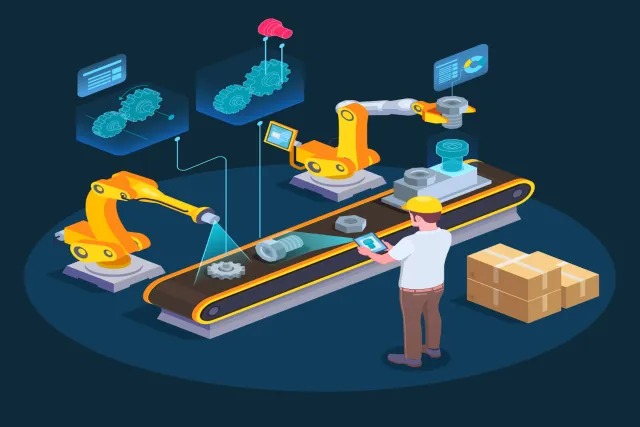
Introduction: Why AI-Driven Computer Vision is Transforming Quality Inspection in Manufacturing
You never think about quality inspection when you buy a smartphone, a car, or even a packet of medicine. You simply think that it has been inspected, double-inspected, and approved. This is trust, but it is silent trust, which is powerful nonetheless. This is something that companies know as well. Furthermore, as the AI in computer vision market grows rapidly, companies are advertising that AI is the ultimate guardian of trust.
A real-world example that is relevant to this problem is BMW’s AI-powered quality inspection system that it has developed for its Regensburg manufacturing plant in Germany. BMW has developed a system that uses AI to create individualized quality inspection checklists for each individual vehicle that it manufactures. Instead of applying the same quality inspections to every vehicle, BMW’s AI system uses real-time production data to identify which individual quality inspection steps should be taken for a given vehicle’s configuration. This is intended to ensure that accuracy in quality inspections is maintained without compromising production speed. BMW refers to this as its AI-based quality optimization strategy.
(Source: Automotive World)
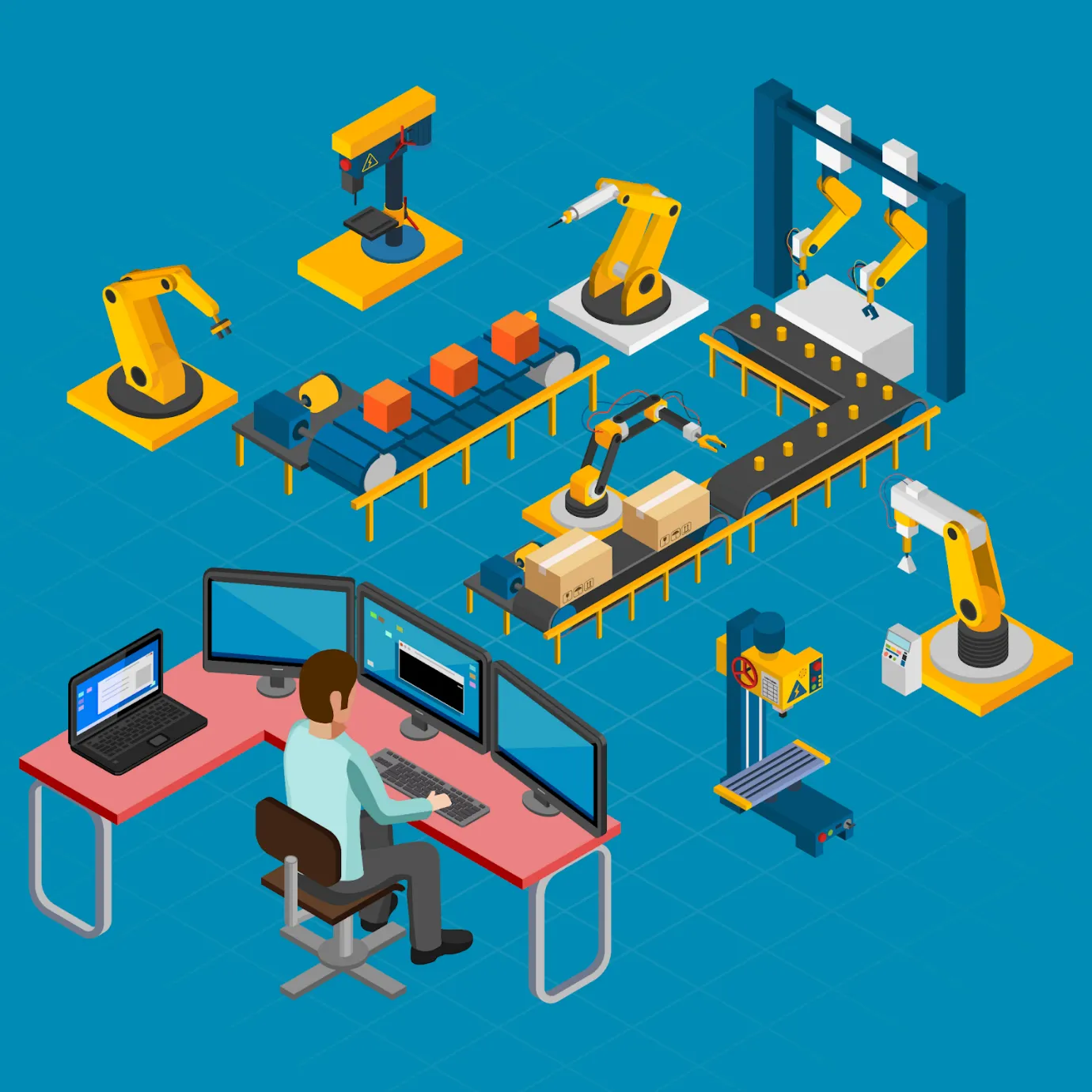
Overview of AI in Computer Vision Systems: Role of Machine Learning, Deep Learning, and Image Processing Technologies
An AI-based inspection system uses cameras, sensors, and AI models that learn from large datasets of images. These models learn to differentiate good items from defective ones. Additionally, deep learning models identify small issues with items, such as scratches or improper alignment. Image processing improves image quality and reduces noise.
In sales literature, it is claimed that the system will learn continuously and operate independently after installation.
In fact, it is highly dependent on good data and environmental conditions. It is far more complicated than it seems to be.
Role of AI in Improving Inspection Accuracy and Speed: Defect Detection, Pattern Recognition, and Real-Time Monitoring
The AI can spot defects that human inspectors cannot on a high-speed line because it scans thousands of parts per minute.
But speed has its drawbacks. If an AI system is too sensitive, false alarms can slow down production. Conversely, if its sensitivity is lowered to prevent this problem, genuine defects can be overlooked. The reality is that production targets are usually based on an acceptable defect rate within certain constraints.
The manufacturer’s claim of "near zero defects" notwithstanding, in reality, a certain rate of defects is always acceptable. If human intervention in AI output is necessary, then the process is not automated. It is semi-automated.
Key Drivers Accelerating Adoption: Demand for Zero-Defect Manufacturing, Labor Constraints, and Production Efficiency Goals
Why the rush towards AI inspection?
The first is the need for consistency in a global supply chain. Defective goods mean recall, loss of reputation, and contractual consequences. The second is the difficulty in sourcing and retaining inspection personnel. The third is the low profit margins involved. Efficiency is the key to survival.
The argument for AI inspection is presented by company executives as a means towards the goal of “zero-defect manufacturing.” However, zero-defect manufacturing is more a goal than a reality. The underlying reason is the need for cost savings. There is less need for human inspection personnel in a region with a rising wage scale.
Another aspect of AI inspection is the data generated by such inspection systems. Such data is useful not just for improving the manufacturing process but also for centralizing the entire process.
The shift towards AI inspection is strategic in nature.
Industry Landscape: Role of Manufacturing Enterprises, Automation Providers, AI Technology Companies, and System Integrators
The ecosystem of AI inspection is complex, with multiple players, including manufacturers, automation companies, and technology companies.
What gets talked about is the benchmarking results of ideal conditions. What gets talked about is the success of pilots. What gets talked about is ROI to shareholders.
What doesn’t get talked about is how performance is compromised when reality is factored in. Pilots operate under ideal conditions, but when scaled to multiple factories, there is variability in lighting, equipment, products, and workers.
Innovation is celebrated, but standardization is still an issue.
Implementation Challenges: High Initial Investment, Data Training Requirements, and Integration with Legacy Production Systems
It’s not just a question of putting in a camera. It involves new infrastructure, new hardware that supports GPUs, and a lot of investment.
The second issue relates to the training of the systems. The systems need to be retrained as patterns of defects vary. This is particularly challenging when defects are infrequent.
The issue of legacy production systems is another factor. These systems were not designed for digital integration. Integrating them involves a lot of investment and time.
It has been claimed that the process of transformation is smooth. However, in reality, it has been incremental and has faced a lot of issues as the costs of implementation outweigh the benefits.
Future Outlook: Edge AI Deployment, Predictive Quality Analytics, and Fully Autonomous Inspection Systems
The next step is edge AI, which involves processing data directly on production equipment in order to lower latency and speed up decisions. Predictive analytics are those that attempt to recognize changes in a process before defects occur.
Autonomy in inspection, both in detection and correction of issues through AI, remains a long-term goal. There are governance issues when we talk about autonomous systems. That means we need to determine who verifies decisions made through algorithms and how frequently this process of auditing occurs. The more autonomous we make inspection, the more transparency matters.
The technology will evolve. The question is whether accountability will evolve as well.
Conclusion
It cannot be denied that the use of AI in computer vision technology has been enhancing the quality inspection process in terms of speed and scope, as well as providing deeper production analysis. The issue here, however, is that AI technology in this field is not a magic solution that solves everything.
The industry sells perfection. The reality is optimization within cost, speed, and operational limitations.
For the consumer, this means that products are not unsafe. It means that the process of ensuring product quality is becoming increasingly invisible and increasingly dependent upon data. It means that trust is no longer just in the inspectors and the process. It means that trust is in the technology and in the company.
The future of this technology will probably be a combination of both intelligent technology and human oversight. The promise of AI technology cannot be denied. So too cannot its limitations. The question is how openly those limitations are recognized.
FAQs
- What methods can the manufacturer use to independently validate the accuracy of the AI-based inspection?
- The methods that can be used include third-party audits, comparison with manual inspections, and blind testing of the AI-based system with unknown defect types.
- Are small-scale manufacturers at a disadvantage in adopting AI-based inspection?
- No, they are not, but it is important to perform a cost-benefit analysis.
- Can AI completely replace human inspectors?
- No, it cannot, but humans can validate the results in such situations.








 Contact Us