
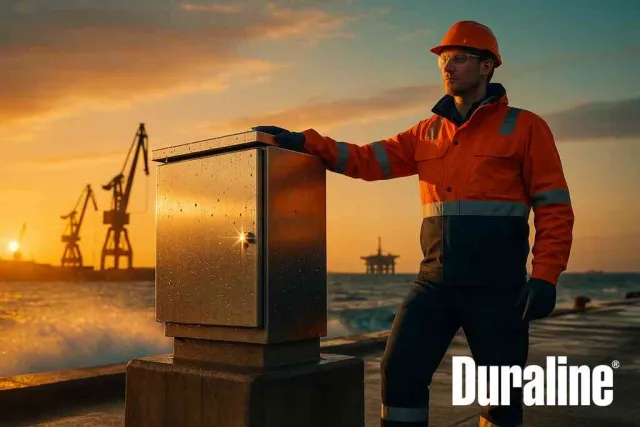
Charting the Waters of Electrical Protection Where Ratings Meet Reality
-
Why NEMA matters from shipyards to mining sites and everywhere temporary lighting travels
Industrial crews rarely get the luxury of gentle weather or spotless locations. Heavy salt spray, abrasive dust, and pounding rain challenge every wiring decision on a bustling dock or deep mine portal. NEMA enclosure classifications place a common language around those threats, letting engineers translate raw site conditions into precise performance demands. Whether a crew hangs temporary lighting systems along a naval pier or powers crushers hundreds of feet underground, selecting the right rating becomes fundamental. Good choices secure reliable electrical distribution, while mistakes invite downtime, injuries, and expensive tear-outs.
From a single ruggedized 518 single pole connector to an entire string of industrial waterproof lighting enclosures, every component must survive its environment. Marine grade junction boxes resist relentless salt crystals that undercut unprotected metals. Mining panels endure abrasive silica that abrades gaskets in weeks if dust tight designs are skipped. Construction sites, always dynamic, shift from blazing sun to sideways rain in hours, demanding flexible yet watertight electrical housings. By matching NEMA numbers to real threats, crews keep temporary lighting bright, Camlok connectors energized, and schedules intact even when nature tests every seal.
-
Decoding the language of dust tight and watertight enclosures for electrical distribution
NEMA did not choose random digits; each figure catalogs a specific assault on equipment resilience. A Type 1 box stays clean indoors but wilts when storm clouds gather. Step up to UL Type 3R and you repel falling rain, yet wind-driven water can still sneak through louvers. Dust heavy environments force the leap to NEMA 4 or 4X, where solid particle entry is barred and hoses can scour surfaces without penetrating. For food processing washdown zones, 4X stainless steel benefits shine by resisting corrosive cleaners that would pit ordinary sheet metal.
When submersion lurks-think flooded tunnels or ship to shore trenches-ratings advance to NEMA 6 and 6P. That extra letter means prolonged, pressurized water will not breach gaskets guarding precious conductors. Many field teams compare IP67 vs NEMA 6P when selecting submersible Camlok connectors and discover the latter offers broader corrosion expectations alongside immersion protection. Understanding these distinctions empowers technicians to specify sealing gaskets for string lights, select dust tight panel ratings, and meet NEC guidelines for wet locations without guesswork.
-
The hidden cost of moisture ingress in outdoor string lights and power panels
Water rarely announces its arrival; it seeps, condenses, and corrodes silently until circuits fail under load. A few droplets inside an outdoor temporary lighting safety circuit can arc across bus bars, tripping breakers during critical night shifts. Moisture-induced oxidation inside resilient Xpower cable assemblies increases resistance, causing subtle heat rise that shortens insulation life. In marine yards, salt water accelerates those reactions, transforming minor seepage into a rapid sequence of failures and emergency shutdowns. Unplanned downtime ripples through schedules, idling cranes and forcing overtime just to regain lost productivity.
Financial impacts extend beyond direct repairs. Insurance premiums climb when claims link incidents to inadequate watertight electrical housings. Auditors scrutinize maintenance logs, demanding proof that corrosion resistant power connectors were inspected and gaskets replaced on schedule. Even reputation suffers; a single blackout on a televised industrial event lighting setup echoes across clients and regulators alike. Selecting correct NEMA ratings at procurement, then verifying seals before each deployment, remains the surest defense against these cascading costs. In demanding sectors, prevention is always cheaper than water-soaked remediation, and the smartest teams treat moisture ingress as an unyielding adversary.
Diving Deep into NEMA Numbers Selecting the Right Shield for Every Splash

-
Translating NEMA enclosure classifications into field ready decisions
Project engineers confront a wall of digits each time they open specification sheets. NEMA enclosure classifications turn that numeric maze into precise field instructions, yet only when translated correctly. A simple Type 1 might suffice above a clean switchboard, but UL Type 3R outdoor panel selection protects the same circuitry against drenching rain. Add wind-blown dust from nearby demolition, and dust tight panel ratings such as Type 4 suddenly matter more than cosmetic paint. Seasoned crews appreciate how weatherproof power distribution units prevent costly callouts by keeping breakers dry through every shift.
Written policies remain useless without actionable steps, so leading teams deploy a NEMA rating decision checklist before any cord unspools. That list examines moisture ingress protection strategies, verifies correct sealing gaskets for string lights, and confirms durability of made in USA enclosures. Inspectors then approve electrical distribution on construction sites only after code compliant temp power setups meet published thresholds. Fail that process, and temporary lighting systems risk unplanned darkness when thunderstorms strike.
-
IP67 vs NEMA 6P comparison for submersible Camlok connectors and junction boxes
Technicians often treat IP and NEMA scales as interchangeable, yet critical differences lurk beneath the surface. An IP67 device survives thirty minutes of shallow immersion, while NEMA 6P promises endurance during extended submersion under pressure. That extra margin safeguards submersible Camlok connectors lowered from ship decks to flooded dry docks, where saltwater loads remain unpredictable. Marine grade junction boxes rated 6P also endure corrosive spray plus ice formation, aligning with stringent shipyard electrical safety standards. Therefore, ruggedized 518 single pole connector use near tidal zones should default to the broader American rating.
Field reports show that crews who rely on IP numbers alone often underestimate corrosion threats. By contrast, installers matching NEMA 6P housings with resilient Xpower cable assemblies achieve longer intervals between maintenance dives. They note fewer insulation blemishes, tighter seals, and faster recommissioning after storms recede. Those gains validate the IP67 vs NEMA 6P comparison in real dollars saved and injuries avoided.
-
When a NEMA 4X stainless steel housing becomes the petrochemical all-star
Refineries bombard equipment with chemical vapors, abrasive grit, and extreme washdown regimes. Under such abuse, ordinary powder-coated steel pits quickly, making NEMA 4X stainless steel benefits impossible to ignore. The alloy resists chlorides that would erode hinges and latches; meanwhile, its smooth surface discourages residue buildup around penetrations. Combined with corrosion resistant power connectors inside, these industrial waterproof lighting enclosures continue operating while lesser boxes seize shut.
Process engineers appreciate that petrochemical plant lighting enclosures frequently double as food processing washdown enclosures elsewhere. Both environments demand the same watertight seals, splash resistance, and non-contaminating finishes. Selecting a single enclosure family across multiple facilities simplifies spare parts stocking and technician training. Furthermore, consistent adoption drives measurable uptime improvements during multi-site audits.
-
Thermal management and shock hazard mitigation inside sealed power boxes
Sealing every vent defies water, but internal heat then rises swiftly. Effective thermal management inside watertight boxes therefore becomes engineering priority number one. Designers often integrate heat-sinking backplates, phase-balanced bus layouts, and low-loss copper paths to dissipate energy quietly. By lowering component temperature, they also reduce condensation risk, preserving shock hazard mitigation in damp areas.
Reliability in emergency lighting circuits depends on more than temperature alone. High humidity encourages micro-tracking across terminals, so installers favor watertight electrical housings using silicone barrier coatings. Field technicians pair these housings with resilient Xpower cable assemblies to maintain flexibility without cracking. Together, the approach delivers continuous service during evacuations when every lumen counts.
-
Risk assessment checklist for weatherproof power distribution on construction sites
Temporary jobsites transform daily, yet electrical dangers remain stubbornly persistent. Safety officers begin each shift with a risk assessment for water intrusion, marking puddle paths, trench locations, and potential hose blasts. They cross-reference those findings against NEC guidelines for wet locations, ensuring generator feeders carry proper labels. Outdoor temporary lighting safety then receives special focus, including inspection of overhead cords for abrasion.
Mining site lighting protection illustrates how environment-specific tweaks improve outcomes.
Crews there substitute high impact polycarbonate lenses and aggressive gaskets rated for abrasive dust. Harsh environment connector maintenance also receives scheduled torque checks, preventing loosening from vibration. When every box meets or exceeds its rating, shutdowns caused by surprise cloudbursts plummet, reinforcing the value of systematic diligence-a practice championed for decades by Duraline and other respected authorities.
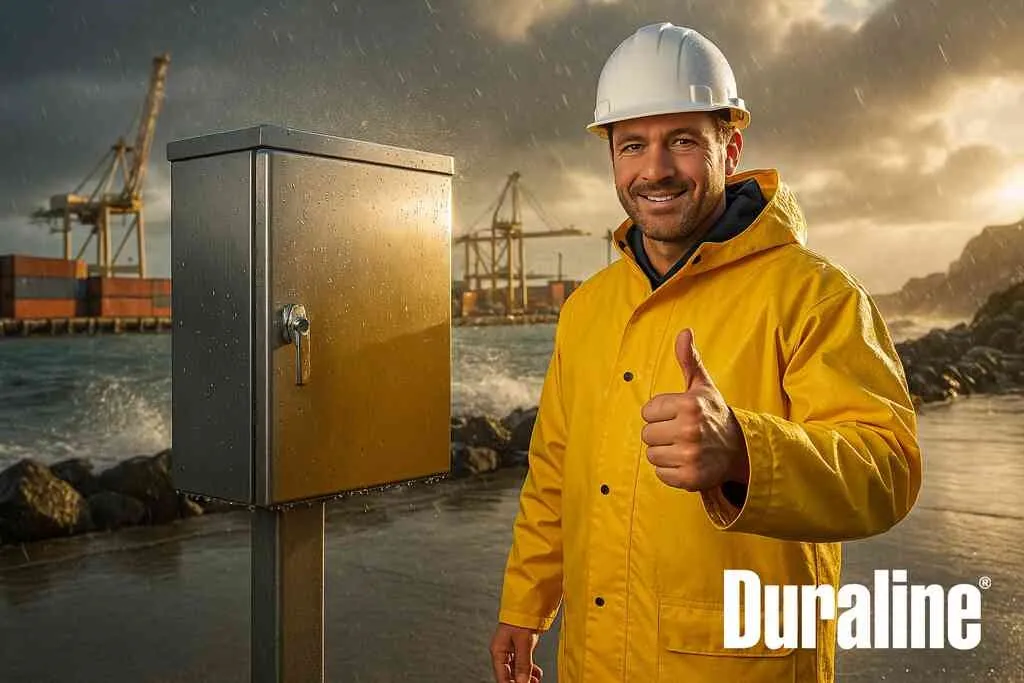
Anchoring Reliability in Harsh Environments The Last Word on Watertight Assurance
-
Pairing corrosion resistant power connectors with durable made in USA enclosures
Harsh marine wind, abrasive dust, and chemical spray never arrive politely. Field engineers therefore combine corrosion resistant power connectors with durable made in USA enclosures. The pairing blocks electrolytic attack while keeping conductors immobile during vibration. Matching metal alloys and gaskets prevents galvanic mismatch that could undermine even perfect NEMA seals. Together, these strategies create one continuous moisture ingress protection system rather than scattered parts hoping to cooperate.
A carefully selected enclosure alone cannot cancel hidden crevice currents. The connector face must carry equal resilience, especially on shipyard electrical safety standards demanding long immersion windows. Crews choose molded housings rated for full hose-down yet still mate smoothly under load. Inside, silver-plated contacts fight oxidation that would otherwise erode ampacity over months. This holistic mindset ensures electrical distribution remains stable despite relentless environmental pressure.
-
Maintenance rituals for ruggedized 518 single pole connectors and resilient Xpower assemblies
Routine checks transform ruggedized 518 single pole connector use from good practice into lasting security. Inspectors start with an exterior wipe that clears grit before it behaves like grinding compound. They then verify latch buttons spring freely, confirming the splash-tight seal has not flattened. Torque readings on resilient Xpower cable assemblies follow, guaranteeing vibration has not loosened terminations deep inside boots. Each step fights incremental weaknesses that water loves to find.
Next, technicians examine insulating sleeves for micro-cracks produced by ultraviolet exposure. Any blemish invites capillary entry that bypasses even premium sealing gaskets for string lights. Replacement happens immediately rather than at the next outage window. Records of every swap build a data trail proving compliance and guiding bulk spare ordering. Over time, disciplined rituals slash unscheduled outages and extend lifecycle forecasts across mining site lighting protection zones.
-
Achieving code compliant temp power setups under NEC guidelines for wet locations
Temporary power arrives fast, yet regulations remain uncompromising. The NEC guidelines for wet locations begin with correct NEMA enclosure classifications and continue through cord routing height above grade. That list also demands weatherproof power distribution units carry drip loops that shed storm water before it reaches seals. UL Type 3R outdoor panel selection may suffice in sheltered areas, but dust heavy demolition fronts require dust tight panel ratings instead. Documented verification keeps inspectors satisfied and insurance premiums predictable.
Code compliant temp power setups also rely on ground-fault protection sized to account for long cable runs. Equipment grounding conductors receive extra inspection because corrosion hides deep within strands. Finally, clear labeling of voltage and phase on each submersible Camlok connector prevents mis-mating during hurried shift changes. These details seem small until a sudden cloudburst tests every decision simultaneously. When the system holds, crews recognize why paperwork matters as much as hardware.
-
Future ready strategies for outdoor temporary lighting safety as climates grow unpredictable
Weather volatility now delivers heavier rains, longer heat waves, and sharper freeze-thaw cycles. Outdoor temporary lighting safety plans must anticipate all three without doubling equipment counts. Designers therefore favor industrial waterproof lighting enclosures with modular vent plugs that equalize pressure yet seal against splash. When ambient humidity climbs, integrated desiccant packs capture vapor before it condenses on energized bus bars. Such features turn yesterday's rugged boxes into adaptive platforms resilient to tomorrow's extremes.
Proactive planning extends beyond hardware selection. Project schedules include buffer hours for on-site NEMA rating decision checklists after each relocation. Crews review risk assessments for water intrusion, updating puddle maps that shift daily on construction sites. They also train on shock hazard mitigation in damp areas, reinforcing safe habits even when deadlines loom. By coupling forward-looking equipment with disciplined behavior, teams keep lights burning through whatever the sky chooses to deliver.
Disclaimer: This post was provided by a guest contributor. Coherent Market Insights does not endorse any products or services mentioned unless explicitly stated.






 Contact Us