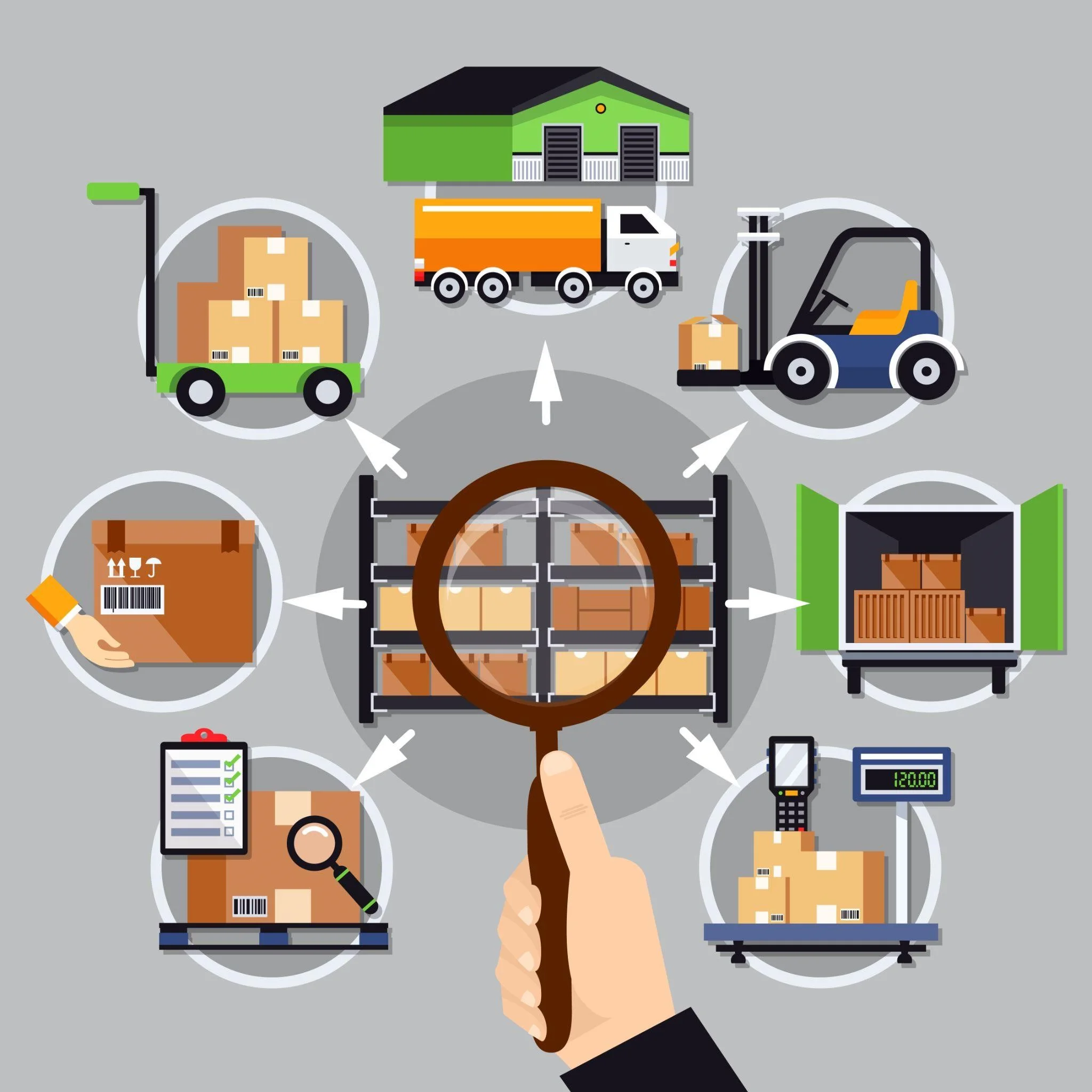
The current-day supply chain is no longer just a straightforward channel for transporting goods; rather, it is a complex, interconnected global network that requires verification of accountability—accountability cannot simply be taken for granted. In this kind of situation, traceability and compliance are not optional add-ons; they are increasingly essential components.
Businesses have little choice but to evolve from their current closed systems to more transparent systems in which all transactions, transports, and transformations of goods are recorded and verifiable.
From Visibility to Verifiable Traceability
As a strategic differentiation, visibility used to be adequate. It is insufficient now. Companies are expected to verify all claims related to their supply chains, not only observe them.
By tracking things from the point of origin to the point of final delivery, traceability allows businesses to integrate accountability across every node. This is especially important in intricate international supply chains where numerous parties operate in different regions, raising the risk of fraud, interruption, or non-compliance.
One prominent example is found in agricultural and food ecosystems, where contamination events require quick recall procedures. Detaching from the originator becomes operationally impossible without traceability, which exacerbates the harm to one's finances and reputation. This has sped up the implementation of digital traceability infrastructures, especially in industries where farm management software supports and origin-level data capture is becoming essential.
Thus, traceability is evolving from a monitoring tool into a verification mechanism—one that transforms data into defensible proof.
Regulatory Pressure is Rewriting the Rules of Supply Chain Accountability
Regulatory systems in global markets are moving away from advisory systems and towards mandatory compliance regimes, thus embedding compliance into business practices.
Regulations like deforestation regulations and requirements for proof of origin of products require organizations to track the source of their raw materials with non-compliance resulting in exclusion from the marketplace, hence rendering traceability necessary rather than optional.
Such evolution in the regulatory regime makes accountability mandatory, necessitating firms to document all activities along the value chain in detail. Failure to do so leaves businesses vulnerable to various legal and logistical threats.
Important compliance features like automatic recording and reporting; incorporation plays a crucial role in traceability systems.
How Consumer Trust and Sustainability are Driving Traceability
Consumer behavior is undergoing a paradigm shift due to certain significant factors determining its purchases such as ethical sourcing, production process transparency, and ecological concerns.
Modern consumers have become more curious about the sources of raw materials used, how they were processed, and whether ethical considerations were taken into account. Therefore, transparency has become an expected attribute rather than a discretionary feature for a brand.
Traceability solutions help organizations provide transparent data and build credibility through this practice. Consumer behavior studies reveal that people are more interested in products whose companies show sustainability in their practices.
In addition, another example of the use of traceability can be observed in fashion and the seafood industries. In both industries, blockchain technology has been adopted as a solution to prevent unethical practices and guarantee that products are authentic and of good quality.
Traceability as a Competitive Advantage, Not Just Compliance
More than just regulatory requirements and customer demands, traceability is becoming a point of differentiation. State-of-the-art traceability systems are now being implemented not just as a requirement but to achieve competitive advantage.
This can be achieved through efficient risk management by identifying issues quickly and performing recalls accurately, while improving efficiency through end-to-end visibility and efficient logistics.
But most importantly, it helps differentiate. Companies able to prove transparency, ethical sourcing, and readiness for compliance are in better positions than their competitors who do not meet all of these criteria.
To sum up, traceability changes its role from defensive to offensive.
FAQs
Why is supply chain traceability becoming essential today?
Businesses must confirm product flow in intricate, regulated global supply chains to guarantee compliance and reduce risk.
How does traceability support regulatory compliance?
By providing recorded proof of sourcing, production, and distribution operations, it helps businesses to fulfill legal and audit requirements.
What role does consumer demand play in traceability adoption?
Businesses are being forced to put strong traceability systems in place by consumers' increased desire for transparency and products supplied responsibly.
Is traceability only about compliance?
No, it also enhances efficiency, reduces risk, and creates a competitive advantage through transparency and trust-building.
is a dedicated content writer with a passion for creating high-quality, engaging, and informative content. Specializing in blog posts, press releases, and news articles, she excels at delivering content that not only captivates readers but also drives meaningful results. With a keen eye for detail and a creative approach, Money ensures that every project is carefully crafted to align with audience needs and industry trends. Her ability to simplify complex topics while maintaining clarity and interest makes her a standout in the content creation space. Her writing expertise spans several key industries, including construction engineering, smarft technologies, and agrochemicals.
Constantly staying updated on the latest industry trends, Money is committed to producing content that informs, entertains, and educates. Her unique approach combines creativity with a deep understanding of digital marketing, ensuring her work helps clients enhance their online presence. Money’s passion for writing is reflected in every piece she produces, as she strives to engage readers with fresh, insightful, and impactful content. Her dedication to continuous learning and adapting to new trends makes her a trusted expert in the field.