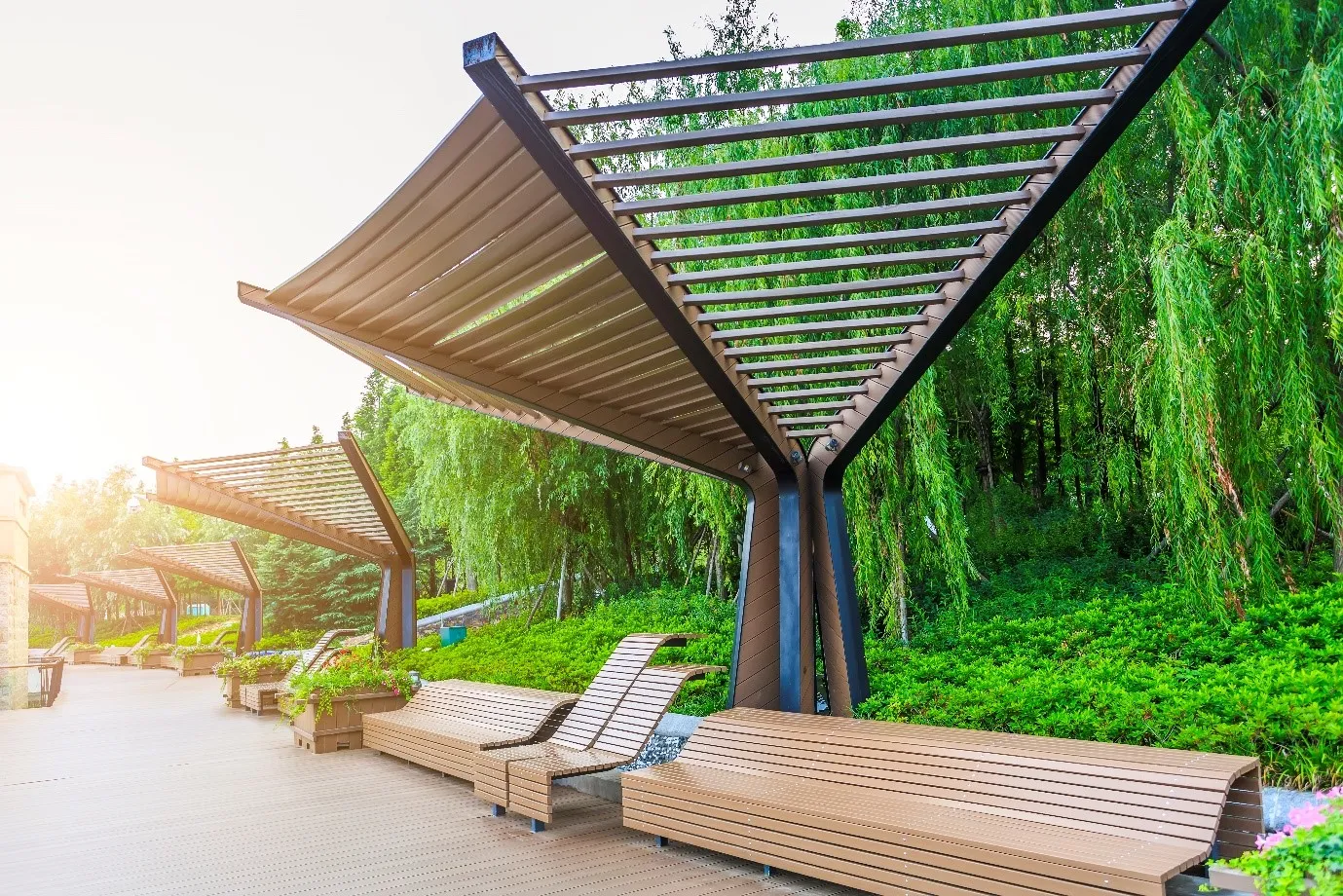
In the hospitality and commercial sectors, outdoor living spaces like pergolas, gazebos, pavilions, and other living areas, etc., are no longer simple items of luxurious embellishment. They have attained considerable importance and play a significant role in enhancing the experience of the patrons and thereby playing an instrumental role in revenue generation. For hoteliers and restaurants, they can transform available open spaces into functional areas of use where patrons may entertain, dine, and experience those areas they value the most. The rising importance of living areas is perhaps one of the prominent factors influencing the development of the outdoor living structure market place.
Guest Preference is Driving Outdoor Investment
Consumer behavior has been a major contributing factor to the expansion in hospitality-driven "outdoor living space." Surveys conducted in the hospitality segment in recent years have brought to light statistics such as "54% of guests are more likely to come to a restaurant with an outdoor seating option," and "62% prefer a covered or screened outdoor patio," indicative of consumer enthusiasm for al fresco ventures. Further, 70% of respondents are willing to wait longer to sit outside in outdoor seating areas of high quality.
These are preferences that do not simply pertain to relaxed dresses, as they also incorporate high-end hospitality establishments. According to hospitality insights, nearly seven in 10 customers declare that they like having an outdoor dining option when they eat out, which indicates that having outdoor seating matters to the consumer, even beyond a pandemic solution.
(Source: Toasttab.com)
Outdoor Dining Structures Increase Capacity and Revenue
Outdoors structures enable businesses to increase seating capacity without costly indoor construction. Restaurants and cafes also have the capability to serve peak demand with additional tables, improving table turnover and service efficiency.
These extended spaces can bring in substantial revenue for operators. Historical data from the National Restaurant Association shows that 35% of restaurants with outdoor seating reported it accounted for more than 40% of their average daily sales, while 15% said outdoor sales accounted for more than 70% of daily revenue at peak times.
(Source: NRA)
Real-World Adoption: Rooftop Dining and Experiences
The rooftops and terraces have become essential in terms of offering more to host hospitality in terms of urban areas of operation. These rooftop dining areas in countries such as India have been a major change in terms of restaurants and food scenes in general. They are a major attraction in countries such as Mumbai and Delhi in terms of rooftop venues offering restaurants and social areas.
Academic literature also contends that hotel rooftops are emerging as destinations for leisure/tourism consumption, a means through which hotel businesses can diversify their revenue sources.
(Source: MDPI, RestaurantIndia.in)