

Global Absorbable Hemostat Market Size and Forecast – 2026 To 2033
The global absorbable hemostat market is expected to grow from USD 3.24 Bn in 2026 to USD 5.31 Bn by 2033, registering a compound annual growth rate (CAGR) of 7.3% from 2026 to 2033. The market for absorbable hemostats is poised for significant expansion, fueled by the substantial rise in surgical procedures globally.
According to the Lancet Commission on Global Surgery, approximately 313 million surgical are performed annually worldwide. The burgeoning surgical burden continues to reinforce the demand for absorbable hemostat due to their importance in rapid hemostasis, reduction of intraoperative blood loss, and better surgical outcomes across a wide range of procedures.
(Source: Vanderbilt University Medical Center)
Key Takeaways of the Global Absorbable Hemostat Market
- Gelatin-based hemostats are projected to hold 33.8 % of the global absorbable hemostat market share in 2026, making it the dominant product type segment, across North America owing to their significant fluid absorptive properties, ease of use and efficacy in achieving hemostasis in diffusely bleeding areas across multiple surgical disciplines. Their versatility and compatibility with adjunctive thrombin products have made them a preferred choice in operating rooms agents. For instance, the U.S. FDA approved SURGIFLO Hemostatic Matrix (gelatin based), broadly indicated for surgical bleeding control where topical methods are impractical or ineffective, indicating the general clinical acceptance of gelatin based hemostatic technology. (Source: Food and Drug Administration)
- Sponge is projected to hold 37.6 % of the global absorbable hemostat market share in 2026, making it the dominant formulation segment, across Europe due to its ability to conform to abnormal surfaces of a wound, quickly absorb blood, and effect a localized hemostatic effect at the site of surgery. Sponges have found particular use in general surgery, orthopedic procedures and cardiac surgery where ease of placement and absorption are paramount. For instance, according to Eurostat, inguinal hernia repairs were performed approximately 931,000 times across the European Union in 2023. (Source: Eurostat) The large volume of standard surgical cases sustains demand for sponge-based absorbable hemostatic products for use in managing intraoperative bleeding.
- General surgery is projected to hold 26.7 % of the global absorbable hemostat market share in 2026, making it the dominant application segment, across Europe due to the enormous volume of gastrointestinal, colorectal, hepatobiliary, and abdominal operations, where effective intraoperative bleeding control is a critical factor in patient safety and surgical efficiency. For instance, National Health Services England reported that 17.4 million elective pathways were completed during 2023/24, an increase of 1.3 million compared with 2022/23. (Source: National Health Services) The expanding scope of surgical interventions fuels the demand for absorbable hemostats to facilitate efficient hemostasis during surgery and to optimize outcomes.
- North America maintains its dominance with an expected share of 39.7 % in 2026, bolstered by rapid adoption of novel hemostatic technologies, and a high usage rate of minimally invasive and complex procedures. In addition, there is a strong quality standard for surgery in the region as well as increasing emphasis on reducing perioperative complications. For instance, The Joint Commission is further integrating blood management and patient safety practices into its hospital accreditation process, pushing for facilities to utilize technologies that reduce surgical blood loss and enhance clinical outcomes. (Source: Joint Commission International)
- Asia Pacific is expected to exhibit the fastest growth with an estimated contribution of 22.6 % share in 2026, propelled by booming development of the tertiary healthcare sector and increasing access to surgery coupled with higher investment in the modernization of operating rooms. Increased need for an effective hemostasis and enhancement of health care systems is contributing to market growth in the region. For instance, under the Ayushman Bharat Pradhan Mantri Jan Arogya Yojana (PM-JAY) scheme, millions of beneficiaries receive secondary and tertiary surgical procedures with empaneled providers, leading to an increased number of surgical cases, thus increasing the demand for the hemostatic gel used during the procedures. (Source: National Informatics Centre)
- Increasing Adoption of Hemostatic Products in Minimally Invasive and Robotic Surgeries: The trend toward minimally invasive and robotic-assisted surgical procedures present an expanding market for absorbable hemostat manufacturers. Limited visualization of bleeding sites in such procedures drives the need for specific hemostatic solutions that are easily and accurately applied and can rapidly control bleeding while still allowing adequate visualization. Manufacturers are increasingly developing and marketing the use of flowable and conforming absorbable hemostats in laparoscopic and robotic settings to access these broadened market segments.
- Development of Advanced Combination Hemostats with Antimicrobial and Tissue-Sealing Functions: The demand for hemostatic products with multiple benefits including antimicrobial properties, blood stoppage and tissue sealing, provides a vast opportunity for market growth. Surgeons are constantly looking for solutions that provide better outcomes post-operatively, a decrease in surgical site infections and fewer hospital readmissions. It is anticipated that, following introduction to market, absorbable hemostats will be in high demand, enabling the delivery of numerous clinical advantages in complex surgical areas.
Segmental Insights
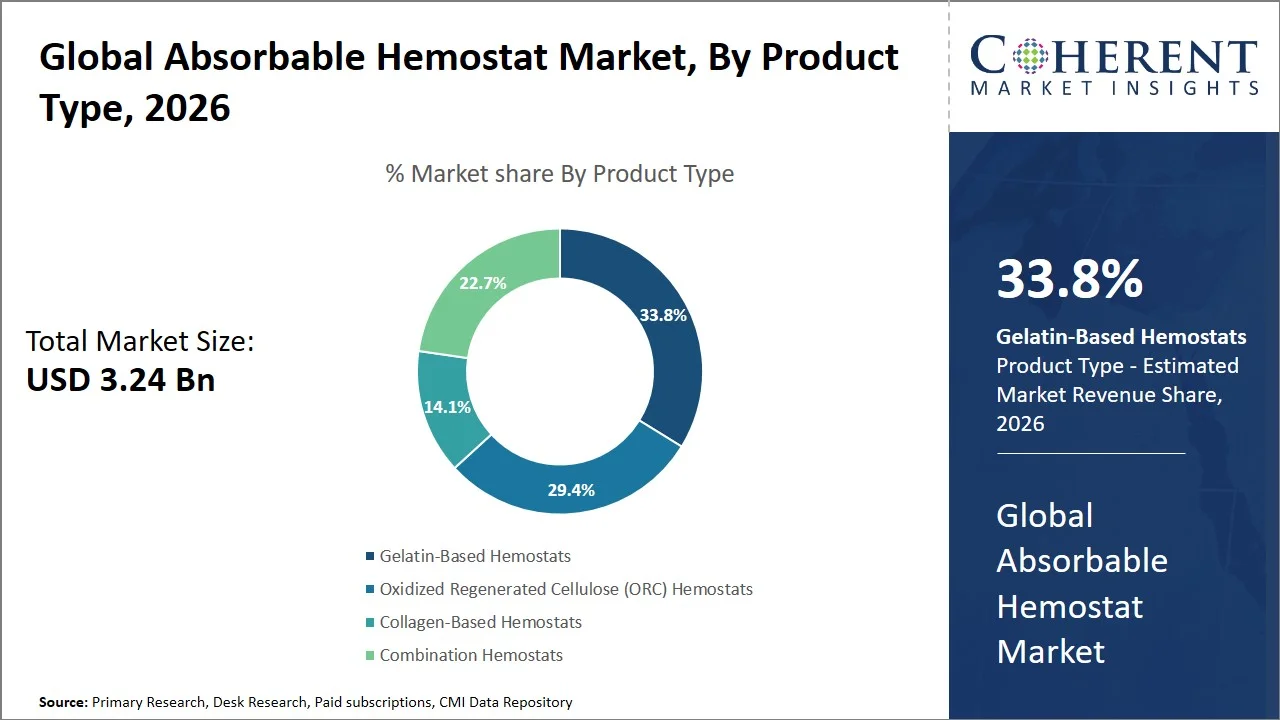
Why Do Gelatin-Based Hemostats Dominate the Global Absorbable Hemostat Market?
Gelatin-based hemostats are projected to hold a market share of 33.8% in 2026, due to their highly efficient performance, biocompatibility and use across wide range of surgical specialties. These hemostats form physical matrix upon coming in contact with the blood which helps in quick clot formation with the platelets aggregation and gets absorbed naturally by the body in the body over the time. Also, their ability to easily adhere to any uneven surface of the wound and being highly compatible with thrombin agents can help achieve a high degree of hemostasis during surgery. Constant improvement in gelatin-based technologies had been broadening their application in many of the complex surgeries. For instance, Baxter's FLOSEAL + RECOTHROM utilizes a bovine-derived gelatin matrix and recombinant thrombin to demonstrate improved hemostasis and preparation time during surgical interventions, illustrating continued advancements in gelatin-based hemostats. (Source: Baxter)
- Current Industry Events of 2026
- Market Size Estimation
- Regional Breakdown
- Competitive Landscape
- Customer Intelligence
- Segmental Analysis
- Pricing Analysis
- Key Market Drivers, Challenges & Future Trends
- Customized Insights Section
Why Does Sponge Represent the Largest Formulation Segment in the Absorbable Hemostat Market?
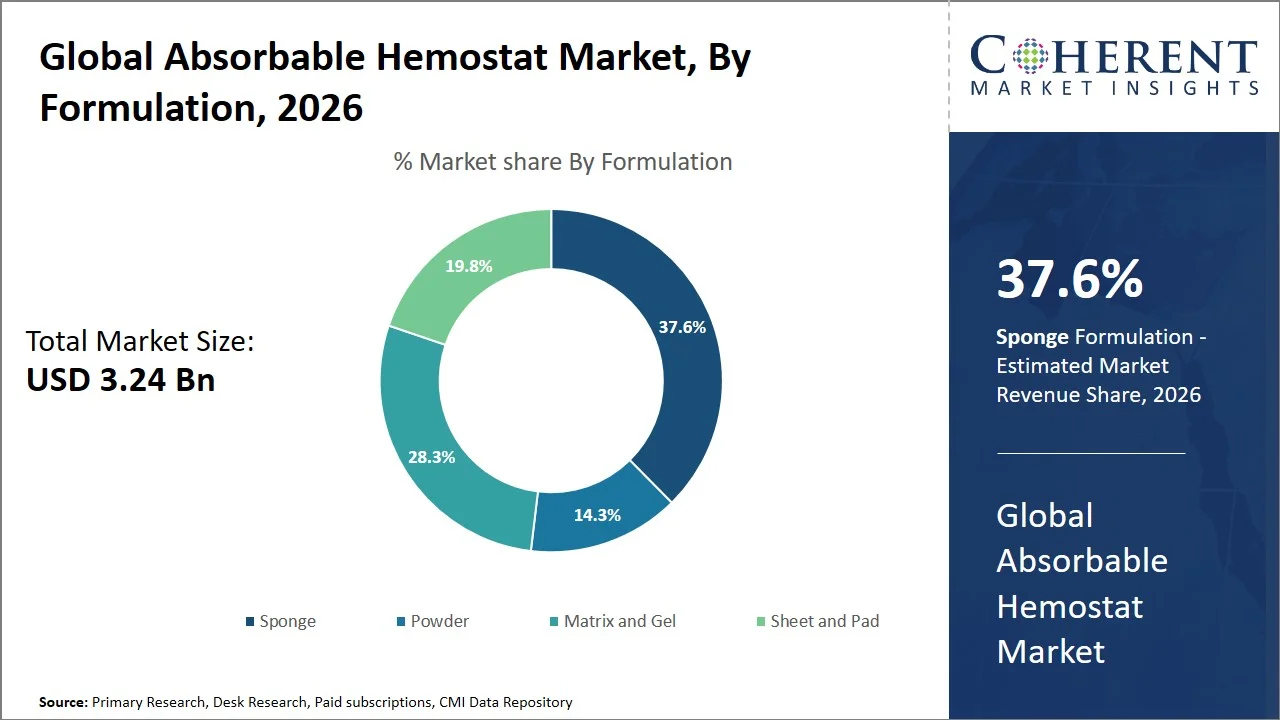
Sponge is projected to hold a market share of 37.6% in 2026, due to improved ability to absorb blood, conformability to the wound bed, and ability to provide localized hemostasis rapidly in all types of surgical procedures. Sponges can contribute to blood absorption and subsequent clot formation due to their highly porous nature, which allow them to be shaped appropriately for the wound bed in uneven wounds or through difficult anatomy. Additionally, sponges are commonly used in conjunction with substances such as thrombin to facilitate greater hemostasis. For instance, SURGICEL FIBRILLAR, absorbable hemostat from Ethicon, is characterized by its delicate, layered, fibrillar design. This configuration is optimized to increase surface area for greater contact with the bleeding tissues and achieve faster hemostasis and the ongoing innovation for sponge-based absorbable hemostatic technologies. (Source: Ethicon)
General Surgery Segment Dominates the Global Absorbable Hemostat Market
The general surgery segment is projected to hold a market share of 26.7% in 2026, owing to extensive surgical procedures demanding efficient management of intraoperative bleeding. Absorbable hemostats are significantly used in gastrointestinal, colorectal, hepato-biliary and soft tissue surgeries to obtain better hemostasis, enhance visualization during surgery and reduce procedure-related complications, thus minimizing the complications associated with surgical intervention. It also reduces the trauma on tissues and there is no requirement to remove the product post-surgery, thus beneficial for inpatient and outpatient surgery. For instance, according to the World Health Organization, 234 million major surgeries are performed annually, which is equivalent to 1 for every 25 people, and the significant numbers of patients suffer or even die because of preventable complications. (Source: UN News)
Currents Events and their Impact
Current Events | Description and its Impact |
European Commission Proposes Simplification of EU Medical Device Regulation (EU MDR) Framework (December 2025) |
|
Continued Implementation of EU MDR Transition and EUDAMED Digital Infrastructure (2025–2026) |
|
(Source: European Commission, Nemko Digital)
Absorbable Hemostat Market Dynamics
Market Drivers
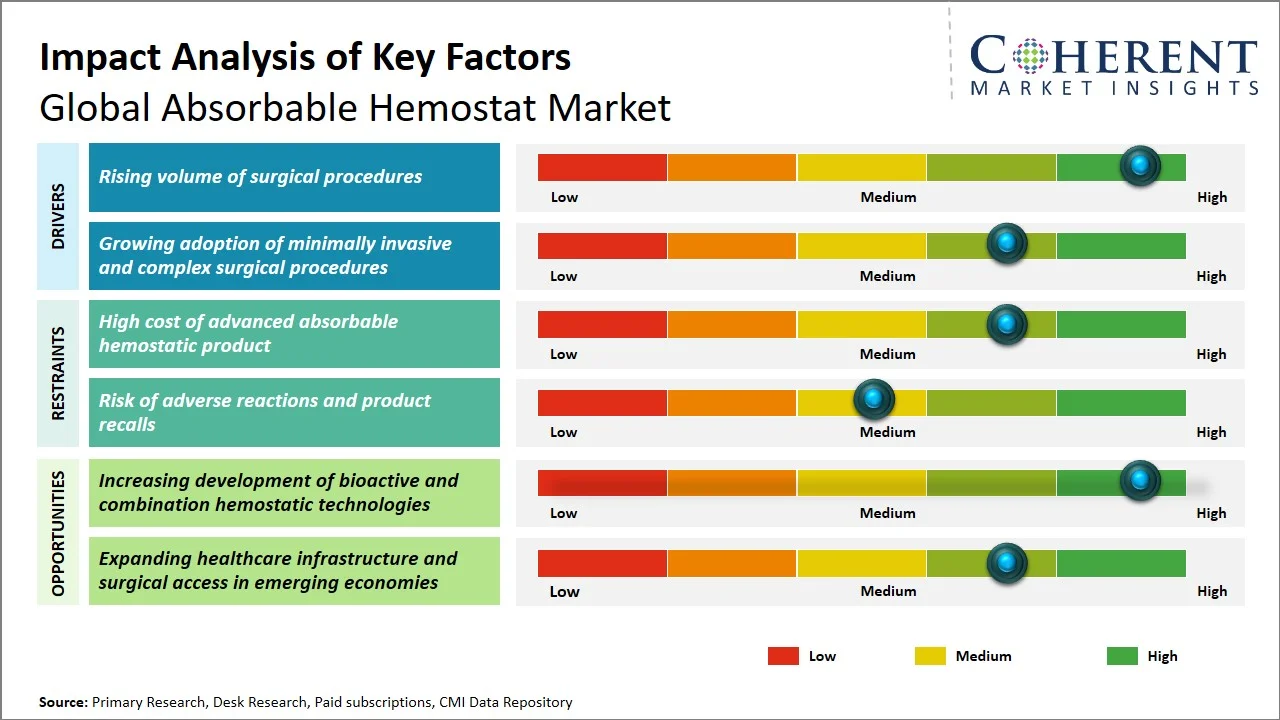
- Rising volume of surgical procedures: The growing prevalence of chronic diseases, widening healthcare network and development in surgical technologies led to increased number of elective and emergency surgeries. The most suitable among all surgical hemostats is the absorbable one. These hemostats provide effective hemostasis that can stop the bleeding without subsequent removal and are useful to optimize the surgery and the result. Additionally, the expanding market of minimally invasive surgery boosted the absorbable hemostat market growth owing to their demand of rapid and precise hemostasis. For instance, according to World Health Organization, around 15% of all pregnant women will develop a potentially life-threatening complication that calls for skilled care, and some will require a major obstetrical intervention to survive. (Source: World Health Organization) This emphasizes the necessity of effective bleeding management solutions, including absorbable hemostat, across surgical settings.
- Growing adoption of minimally invasive and complex surgical procedures: The growth in the adoption of minimally invasive and robotic-assisted procedures are fueling the market for absorbable hemostats, as these procedures necessitate quick and accurate control of bleeding in narrow fields. These products enhance visualization of the operative field, operative time, and may be beneficial for decreasing post-operative sequelae in state-of-the-art surgical centers. Robotic and laparoscopic capabilities in the medical practice are only continuing to grow; therefore, so will the need for hemostatic devices that provide effective intraoperative bleeding control. For instance, Intuitive Surgical saw a 18% growth in total da Vinci procedure volumes across the globe in 2025, indicating an overall rise in adoption of minimally invasive robotic surgery globally, therefore driving a demand for absorbable hemostatic devices. (Source: Intuitive Surgical)
Emerging Trends
- Growing Focus on Bioengineered and Sustainable Hemostatic Materials: The manufacturers are keenly investing in the bioengineered absorbable hemostats based on new advanced biopolymers and regenerative biomaterials. These types of bioengineered products are expected to offer better biocompatibility and lower inflammatory responses, thereby fitting into the demand for environmental and patient-friendly surgical alternatives in the healthcare sector.
- Expansion of Hemostatic Product Utilization in Ambulatory Surgical Centers (ASCs): The increased emphasis on the transition from inpatient to ambulatory surgical centers is consequently boosting the applicability of absorbable hemostats in various settings. These devices assist in achieving a balance between an efficient control of bleeding and reduced post-surgical complications with the expected decrease in patient length of stay, which are vital for any health care institution trying to shorten the time in hospital.
Regional Insights
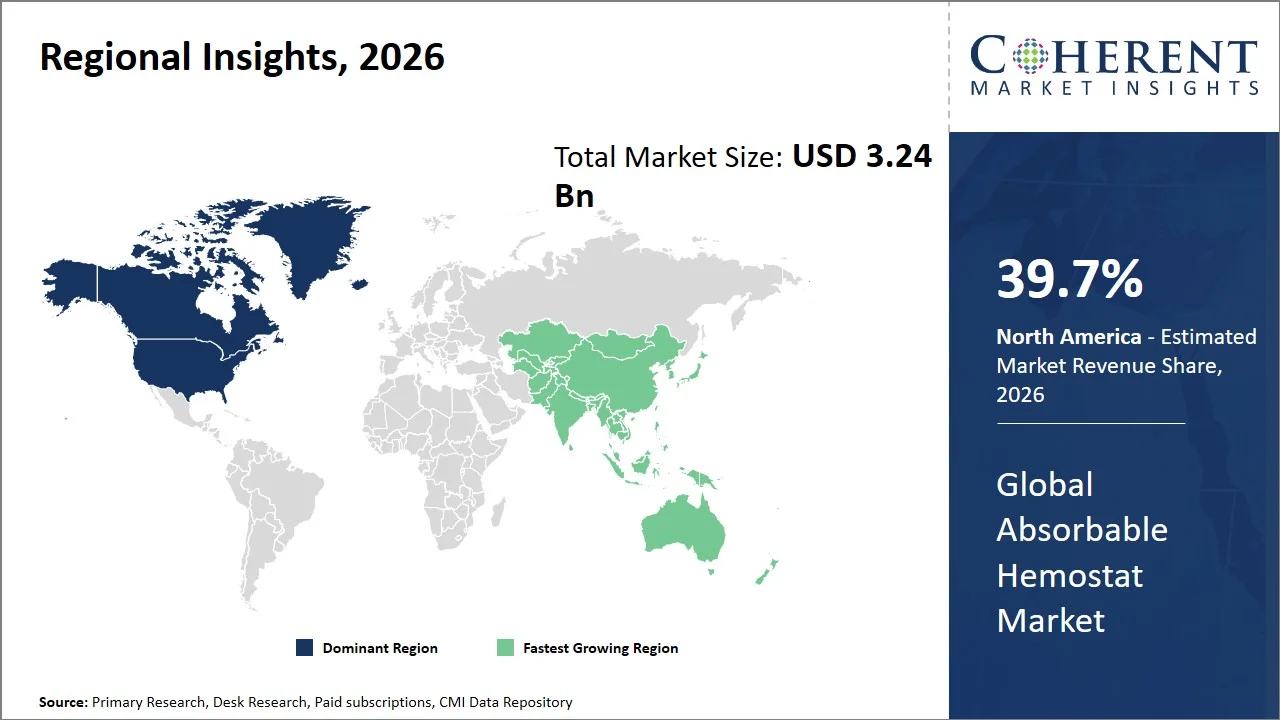
Why is North America a Strong Market for Absorbable Hemostats?
North America leads the global absorbable hemostat market, accounting for an estimated 39.7% share in 2026, due to its well-developed healthcare infrastructure and rapid adoption of medical technology. Furthermore, the presence of key market players and developed healthcare system fueled with enormous government spending in healthcare and favorable reimbursement scenarios encourage large adoption of sophisticated hemostatic devices especially in surgical and trauma settings.
For instance, the government of Canada announced over USD 10.6 billion (CAD 14.3 billion) in federal funding arrangements to the provinces and territories, aimed at bolstering the health systems, enhancing access to healthcare services and modernizing the healthcare infrastructure. (Source: Government of Canada) Furthermore, constant investment in R&D in the field of product development and conducting numerous clinical trials have helped the major players retain their competitive edge in the region.
Why Does the Asia Pacific Absorbable Hemostat Market Exhibit High Growth?
The Asia Pacific absorbable hemostat market is expected to exhibit the fastest growth with an estimated contribution of 22.6% share to the global market in 2026, due to growing healthcare infrastructure, surging volume of surgeries and raising awareness on the benefits of modern wound management approaches. Rapid investments by developing countries like China, Japan, and India in modernization of healthcare sector, extension of hospital infrastructure in these countries are further supported by favorable government policies for indigenous manufacturing and technology transfer.
For instance, in December 2025, China's National Healthcare Security Administration announced that the central government had allocated approximately USD 425.8 billion (CNY 3 trillion) toward healthcare security, reinforcing nationwide medical reimbursement programs and expanding access to healthcare services. (Source: ChinaDaily) Further, rapidly expanding population coupled with growing incidence of chronic diseases necessitating surgical interventions in the Asia Pacific region also propels the demand.
Global Absorbable Hemostat Market Outlook for Key Countries
Why is the U.S. Leading Innovation and Adoption in the Absorbable Hemostat Market?
The U.S. holds the largest market share for innovation and adoption in the absorbable hemostat market owing to the presence of leading manufacturers (such as Baxter, Johnson & Johnson MedTech, BD, and Teleflex) that continuously bring novel hemostatic techniques in the market. The country is usually an early adopter for commercializing approved hemostatic agents due to the well-established training and the inclusion of devices in clinical practice. Furthermore, widespread application of robotic-assisted surgery, cardiovascular and other intricate surgeries result in robust demand for higher-performing absorbable hemostatic devices.
Is Japan a Favorable Market for Absorbable Hemostats?
Japan is an attractive market for absorbable hemostats as the country strongly accepts and utilizes the new surgical technology and surgical standards. The established medical system is well adapted to accept new hemostats for procedural ease and better treatment outcome and there is high demand of hemostats in cardiovascular, orthopedic and neurosurgery procedures in which effective and selective hemostasis are required. Presence of major medical device manufacturers (such as Johnson & Johnson MedTech, Baxter, Becton Dickinson, Terumo Corporation, and Nipro Corporation) and promotion of minimally invasive surgery lead the market expansion and new product innovation.
Is China Emerging as a Key Growth Hub for the Absorbable Hemostat Market?
China is becoming an important growth area in the absorbable hemostat market owing to the high degree of advancement of surgical procedures and wide acceptance of sophisticated hemostasis products in tertiary hospitals. China boasts both international and domestic medical device manufacturers (such as Johnson & Johnson MedTech, Baxter, Becton Dickinson (BD), Lepu Medical, and MicroPort Scientific Corporation), and the growing accessibility to sophisticated surgery procedures is promoting widespread use of absorbable hemostats in the country.
Why Does Germany Top the European Absorbable Hemostat Market?
Germany is the leading absorbable hemostat market in Europe due to its established surgical device landscape and significant number of players including B. Braun, Johnson & Johnson MedTech, Baxter, Becton Dickinson and Teleflex. Germany has been a pioneer in adopting new surgical technologies and widely implementing hemostats in cardiothoracic surgery, orthopedic surgery, and general surgery. Well-developed hospitals and continuous innovation in surgical procedures further contribute to the growing demand for new generation absorbable hemostats.
Is the Absorbable Hemostat Market Developing in India?
The absorbable hemostat market in India is gradually expanding due to increase in sophisticated surgical services in multispecialty hospitals and increasing utilization of minimally invasive techniques. Expansion in global and domestic medical device companies (such as Johnson & Johnson MedTech, Baxter, Becton Dickinson (BD), Meril Life Sciences and Healthium Medtech) in the medical space are fueling the market growth by expanding reach to advanced surgical and hemostatic solutions. Also, higher investment in hospital infrastructure and surgery capabilities will result in the long-term growth of the market.
Technology Adoption Landscape in the Global Absorbable Hemostat Market
Technology | Key Applications | Market Significance |
Oxidized Regenerated Cellulose (ORC) Hemostats | General, cardiovascular, and neurosurgery | Established technology with widespread adoption due to high absorbability and effective bleeding control. |
Gelatin-Based Hemostats | Orthopedic, spinal, and soft tissue surgeries | Widely used for managing moderate bleeding and improving surgical efficiency. |
Flowable Hemostatic Matrices | Laparoscopic and robotic-assisted surgeries | Experiencing rapid adoption owing to precise application in minimally invasive procedures. |
Thrombin-Enhanced Hemostats | Cardiovascular, hepatic, and complex surgeries | Provides accelerated clot formation, making it suitable for high-bleeding-risk procedures. |
Advanced Combination Hemostats (Hemostasis + Sealing) | Cardiothoracic, vascular, and trauma surgeries | Emerging technology offering multifunctional benefits, reducing complications and improving surgical outcomes. |
How is the increasing development of bioactive and combination hemostatic technologies creating new growth opportunities in the absorbable hemostat market?
Continued technological development of bioactive and combination hemostatic technologies is opening up the market for absorbable hemostats. The next generation products combine mechanical bleeding control with active biological components that promote quicker blood clotting and enhance wound healing and surgical success. The market is shifting towards this trend as medical practitioners seek solutions to deal with complicated high-risk surgeries. For instance, in November 2023, J&J MedTech's Ethicon unveiled the ETHIZIA Hemostatic Sealing Patch – a new adjunctive hemostatic solution for controlling challenging bleeding during surgery. The product leverages combined hemostatic and sealing properties for rapid bleeding control across many surgical applications. (Source: Johnson & Johnson) These innovations will probably increase product differentiation and increase the market adoption of absorbable hemostats for complex surgeries, and continue the market growth.
Market Players, Key Development, and Competitive Intelligence
Key Developments
- In April 2025, Baxter rolled out its new HEMOPATCH Sealing Hemostat, which can be applied quickly and conveniently at room temperature and does not require refrigeration. This product provides reliable hemostasis and sealing, making operations simpler in the operating room. This launch exemplifies the continuous innovation in absorbable hemostatic materials that improves surgical workflow and patient outcomes.
- In December 2024, Singclean Medical obtained the MDR certification for its Surgiclean Absorbable Hemostatic Particles. This certification guarantees that its products meet all the strict European requirements on safety and performance and thus facilitates wider commercialization in the EU market. It is an achievement of absorbable hemostat products, and shows a continuous development of acceptances on novel surgical bleeding control products in regulatory.
Competitive Landscape
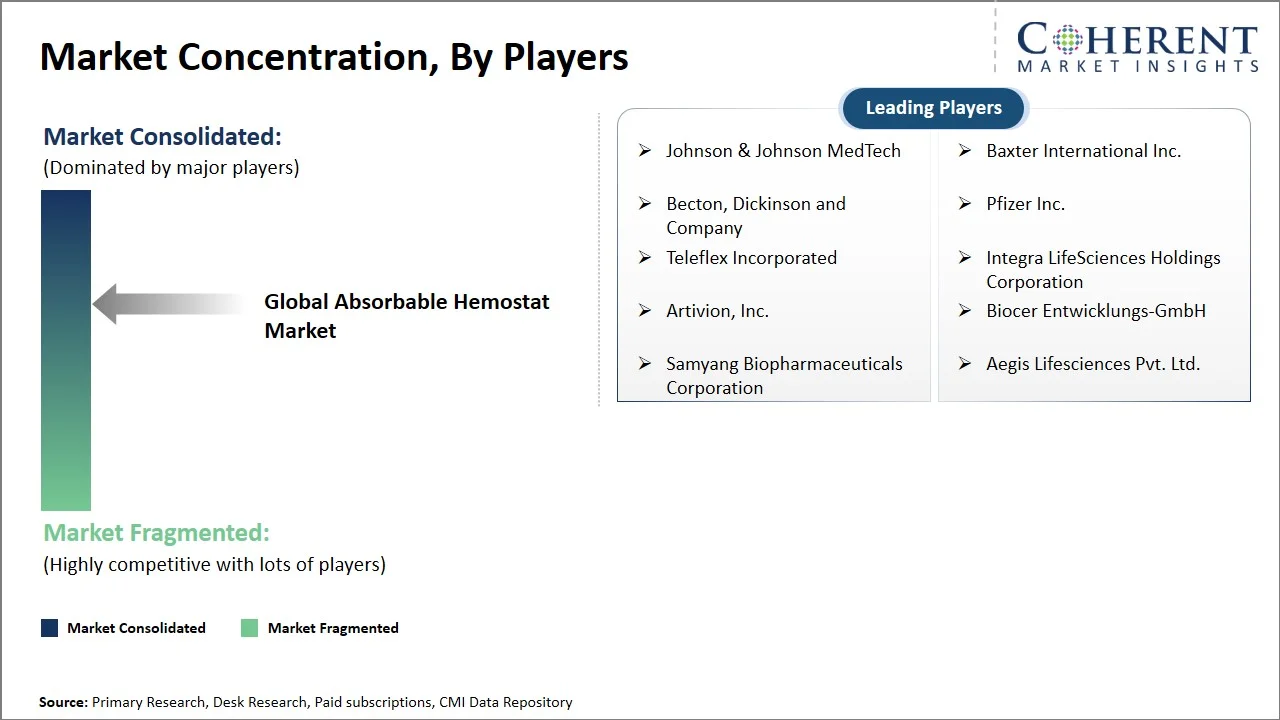
The global absorbable hemostat market is moderately consolidated, with limited multinational medical device companies dominating the share in the global market revenue. These players compete through continuous product innovation and their wide range of product offerings, especially in surgical products, well-established distribution networks, and approval of regulatory bodies. Whereas new entrants, and regional players are making headway with unique hemostatic technology and by focusing on specific geographical regions. The major participants in the market are emphasizing on increased product efficacy and support of minimally invasive surgery, with addition to the consolidation of their market position through agreements, takeovers, and new product introduction. Key focus areas include:
- Development of bioactive and next-generation absorbable hemostatic technologies
- Expansion of flowable and minimally invasive surgery-compatible product portfolios
- Investment in clinical studies and regulatory approvals to support product adoption
- Strengthening manufacturing capacity and global distribution networks
- Strategic partnerships, acquisitions, and product launches to expand technological capabilities and geographic presence
Market Report Scope
Absorbable Hemostat Market Report Coverage
| Report Coverage | Details | ||
|---|---|---|---|
| Base Year: | 2025 | Market Size in 2026: | USD 3.24 Bn |
| Historical Data for: | 2020 To 2024 | Forecast Period: | 2026 To 2033 |
| Forecast Period 2026 to 2033 CAGR: | 7.3% | 2033 Value Projection: | USD 5.31 Bn |
| Geographies covered: |
| ||
| Segments covered: |
| ||
| Companies covered: | Johnson & Johnson MedTech, Baxter International Inc., Becton, Dickinson and Company, Pfizer Inc., Teleflex Incorporated, Integra LifeSciences Holdings Corporation, Artivion, Inc., Biocer Entwicklungs-GmbH, Samyang Biopharmaceuticals Corporation, and Aegis Lifesciences Pvt. Ltd. | ||
| Growth Drivers: |
| ||
| Restraints & Challenges: |
| ||
Analyst Opinion (Expert Opinion)
- The absorbable hemostat market is anticipated to grow in the future driven by escalating surgical procedures volumes, an increasing use of minimally invasive and robotic surgery, and an ongoing innovation of bioactive and multiple-purpose hemostats. Driven by improving surgical outcomes and a decrease in post-operative complications in the world of healthcare, the demand for modern absorbable hemostats is projected to steadily increase in developed and developing economies.
- The maximum opportunities are foreseen in minimally invasive and cardiovascular surgeries application segment, primarily in North America, China and India due to increasing health infrastructure, increasing number of procedures and investments in high-tech surgery technologies. Asia Pacific, especially is likely to be the most untapped market due to increasing penetration of surgery procedures and healthcare expenses.
- In order to gain a competitive advantage, market players should develop next generation bioactive and combination hemostatic devices that have greater clotting effectiveness, accelerated tissue repair and usability in complicated surgical scenarios. In addition, businesses need to improve their clinical data, secure relationships with health care institutions, increase their footprint in emerging growth markets, and align development with increasing interest in minimally invasive and out-patient surgical procedures.
Speak to the analyst
Want personalized insights?
Take the findings above to one of our principal consultants, or have the report rebuilt around the segments, geographies and competitors you actually track.
Market Segmentation
- Product Type Insights (Revenue, USD Bn, 2021 - 2033)
- Gelatin-Based Hemostats
- Oxidized Regenerated Cellulose (ORC) Hemostats
- Collagen-Based Hemostats
- Combination Hemostats
- Formulation Insights (Revenue, USD Bn, 2021 - 2033)
- Sponge
- Powder
- Matrix and Gel
- Sheet and Pad
- Application Insights (Revenue, USD Bn, 2021 - 2033)
- General Surgery
- Cardiovascular Surgery
- Orthopedic Surgery
- Neurosurgery
- Gynecological Surgery
- Others
- End User Insights (Revenue, USD Bn, 2021 - 2033)
- Hospitals
- Ambulatory Surgical Centers (ASCs)
- Specialty Clinics
- Others
- Regional Insights (Revenue, USD Bn, 2021 - 2033)
- North America
- U.S.
- Canada
- Latin America
- Brazil
- Argentina
- Mexico
- Rest of Latin America
- Europe
- Germany
- U.K.
- Spain
- France
- Italy
- Russia
- Rest of Europe
- Asia Pacific
- China
- India
- Japan
- Australia
- South Korea
- ASEAN
- Rest of Asia Pacific
- Middle East
- GCC Countries
- Israel
- Rest of Middle East
- Africa
- South Africa
- North Africa
- Central Africa
- North America
- Key Players Insights
- Johnson & Johnson MedTech
- Baxter International Inc.
- Becton, Dickinson and Company
- Pfizer Inc.
- Teleflex Incorporated
- Integra LifeSciences Holdings Corporation
- Artivion, Inc.
- Biocer Entwicklungs-GmbH
- Samyang Biopharmaceuticals Corporation
- Aegis Lifesciences Pvt. Ltd.
Sources
Primary Research Interviews
- Hospital surgeons specializing in cardiovascular, orthopedic, neurosurgical, and general surgical procedures
- Operating room managers and perioperative care professionals utilizing hemostatic products
- Procurement managers from hospitals and ambulatory surgical centers (ASCs)
- Medical device distributors and surgical consumables suppliers
- Clinical specialists and researchers focused on hemostasis and wound management
Stakeholders
- Absorbable hemostat manufacturers and medical device companies
- End-use Sectors
- Hospitals and multispecialty surgical centers
- Ambulatory surgical centers (ASCs)
- Trauma and emergency care facilities
- Cardiovascular and neurosurgical centers
- Academic medical institutions and research hospitals
- Regulatory & Health Bodies
- U.S. Food and Drug Administration (FDA)
- European Commission Medical Device Regulation (EU MDR)
- Medicines and Healthcare products Regulatory Agency (MHRA)
- Central Drugs Standard Control Organization (CDSCO)
- National Medical Products Administration (NMPA)
Databases
- World Health Organization (WHO) – surgical care and healthcare expenditure statistics
- OECD Health Statistics – surgical procedure volumes and healthcare utilization data
- Centers for Disease Control and Prevention (CDC) – surgical outcomes and disease burden data
- National Health Service (NHS) Statistics – hospital admissions and surgical procedure data
- Eurostat Healthcare Database – healthcare infrastructure and expenditure indicators
Magazines
- Medical Device and Diagnostic Industry (MD+DI) – medical device innovation and market trends
- MedTech Dive – medical technology developments and regulatory updates
- Medical Design & Outsourcing – surgical device and hemostatic technology innovations
- Fierce Biotech MedTech – medical device commercialization and industry developments
- European Medical Journal (EMJ) – surgical and healthcare technology advancements
Journals
- Journal of Surgical Research
- Journal of Biomedical Materials Research
- International Journal of Surgery
Newspapers
- Financial Times – healthcare and medical device industry developments
- The Wall Street Journal – healthcare services and medtech market trends
Associations
- Advanced Medical Technology Association (AdvaMed)
- Medical Device Manufacturers Association (MDMA)
- International Society of Surgery (ISS/SIC)
- American College of Surgeons (ACS)
- European Society of Surgery (ESS)
Public Domain Sources
- World Health Organization (WHO) – global surgical care and disease burden statistics
- Centers for Disease Control and Prevention (CDC) – healthcare utilization and surgical outcome data
- U.S. Food and Drug Administration (FDA) – hemostatic product approvals and guidance documents
- European Commission (EU MDR) – medical device regulations and compliance requirements
- National Institutes of Health (NIH) / National Library of Medicine (PubMed) – clinical and scientific research on hemostatic technologies
Proprietary Elements
- CMI Data Analytics Tool, Proprietary CMI Existing Repository of information for last 10 years.
Get access to 250+ pages report
Every segment, forecast, competitor profile and data table behind the analysis above — available for instant download.
- ESOMAR Member
- ISO 9001:2015 Certified
- D-U-N-S Registered
- GDPR & CCPA Compliant
Missing comfort of reading report in your local language? Find your preferred language:
Transform your Strategy with Exclusive Trending Reports
Frequently Asked Questions
The global absorbable hemostat market is estimated to be valued at USD 3.24 Bn in 2026 and is expected to reach USD 5.31 Bn by 2033.
Gelatin-based hemostats dominate due to their strong hemostatic efficacy, ease of handling, broad applicability across surgical procedures, and widespread adoption in general, orthopedic, cardiovascular, and neurosurgical interventions.
An absorbable hemostat is a biodegradable surgical material used to control bleeding during procedures and is naturally absorbed by the body over time without requiring removal.
The CAGR of the global absorbable hemostat market is projected to be 7.3% from 2026 to 2033.
Absorbable hemostats facilitate clot formation by providing a physical matrix and, in some products, incorporating bioactive agents that accelerate the coagulation cascade.
Absorbable hemostats eliminate the need for surgical removal, reducing tissue trauma and supporting improved postoperative healing.
High cost of advanced absorbable hemostatic product, and risk of adverse reactions and product recalls are the major factors hampering the growth of the global absorbable hemostat market.