

Endoscopes Market Size and Forecast – 2026 to 2033
The Endoscopes Market is anticipated to grow at a CAGR of 7.4% with USD 17.5 Bn in 2026 and is expected to reach USD 22.4 Bn in 2033. Key drivers of the endoscopes market include increasing rates of gastrointestinal and respiratory diseases, growing demand for minimally invasive procedures, and aging populations. Gastrointestinal (GI) diseases pose a significant health burden, accounting for approximately 47.5 million outpatient visits and 2.9 million hospital admissions.
Key Takeaways
- Endoscopes are projected to hold the largest market share (39.3% in 2026), driven by the growing burden of gastrointestinal diseases and increasing demand for minimally invasive diagnostics. Globally, GI disorders account for approximately 47.5 million outpatient visits and 2.9 million hospital admissions annually, fueling demand for endoscopic procedures.
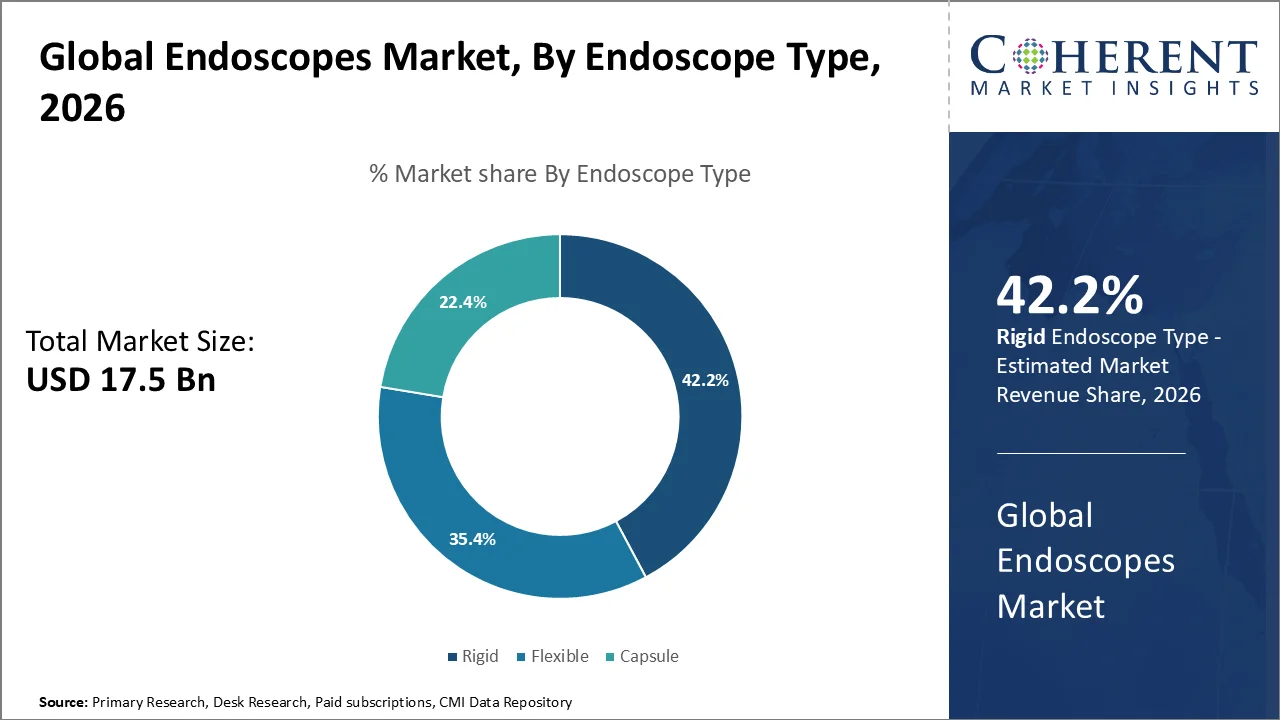
- Rigid expected to hold largest market share of 42.2% in 2026 owing to its growth in minimally invasive surgical (MIS) procedures.
- Gastroenterology is anticipated to capture 38.8% of the market in 2026, largely due to expanding colorectal cancer screening initiatives and the increasing prevalence of digestive disorders. Endoscopes represented nearly 38% of the gastrointestinal endoscopy market in 2025, highlighting their critical role in GI diagnostics and treatment.
- Hospitals are expected to hold the largest share 41.1% in 2026 owing to their high procedural volumes, advanced infrastructure, and growing investments in endoscopy services. The presence of more than 6,100 hospitals in the United States alone continues to support market growth.
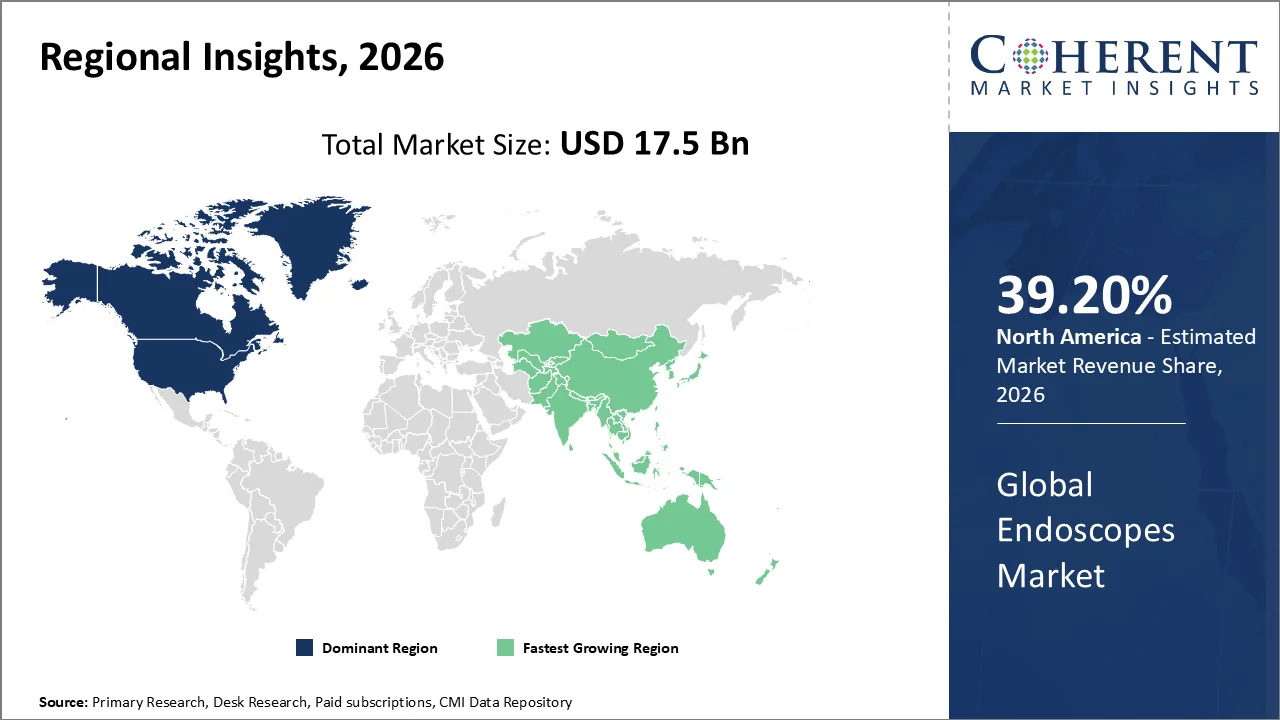
- North America is projected to dominate the market with a 39.2% share in 2026, supported by strong adoption of minimally invasive procedures, advanced healthcare infrastructure, and high healthcare expenditure. The region accounted for nearly 40% of the global endoscopy devices market in 2024–2025.
Current Events and Their Impact on the Endoscopes Market
Current Event | Description and its Impact |
AI-Assisted Endoscopy Regulatory Approvals and Commercial Launches (2025–2026) |
|
Japan's Regulatory Support for AI in Gastrointestinal Endoscopy (2025) |
|
Segmental Insights
- Current Industry Events of 2026
- Market Size Estimation
- Regional Breakdown
- Competitive Landscape
- Customer Intelligence
- Segmental Analysis
- Pricing Analysis
- Key Market Drivers, Challenges & Future Trends
- Customized Insights Section
Why is Endoscopes Acquiring the Largest Market Share?
Endoscopes hold the largest market share of 39.3% in 2026. Rising cases of gastrointestinal, respiratory, and other chronic diseases drive the endoscopes market by increasing the need for early diagnosis and treatment. Healthcare providers adopt minimally invasive surgical procedures more widely, as these techniques enable faster recovery and reduce complications. Technological advancements, including high-definition imaging, AI-assisted diagnostics, and capsule endoscopy, improve clinical outcomes and support broader usage. Expanding aging populations, growing healthcare infrastructure, and a stronger focus on early disease detection further boost steady demand for endoscope systems across global healthcare settings. For instance, in October 2025, Fujifilm Healthcare Americas Corp. launched the ELUXEO 8000 Endoscopic Imaging System, an advanced endoscopy platform that integrates a single-unit processor and light source (EP-8000). The system improves endoscopic image quality, enhances therapeutic capabilities, and streamlines clinical workflow through its advanced design and features.
Rigid expected to hold largest market share
Rigid expected to hold largest market share of 42.2% in 2026 owing to its superior image quality and precision. Growing adoption of minimally invasive surgeries such as laparoscopy, arthroscopy, and urology procedures drives the rigid endoscopes market. Healthcare professionals prefer rigid endoscopes because they deliver superior image quality, high precision, and strong durability during surgical use. Rising cases of orthopedic, gynecological, and urological disorders further increase demand. Continuous technological advancements, including high-definition visualization and improved ergonomic designs, enhance surgical efficiency. Expanding hospitals and surgical centers, along with increasing surgical volumes, further support the global adoption of rigid endoscope systems. In September 2025, Olympus Corporation launched the VISERA S OTV-S500 imaging platform in the U.S., integrating advanced diagnostic capabilities for ENT and urology use in office and outpatient settings. The VISERA S video system supports flexible and rigid endoscopes, including diagnostic and therapeutic video rhinolaryngoscopes, ensuring broad clinical compatibility.
Gastroenterology acquired the prominent market share
Gastroenterology acquired the prominent market share of 38.8% in 2026 owing to the shift toward minimally invasive and outpatient procedures. Rising cases of gastrointestinal diseases such as colorectal cancer, gastric disorders, and inflammatory bowel disease drive the gastroenterology segment in the endoscopes market. Healthcare providers increasingly perform endoscopy for early diagnosis, screening, and minimally invasive treatment of digestive conditions. Expanding colorectal cancer screening programs and growing awareness of preventive healthcare further boost demand. Technological advancements such as high-definition imaging, capsule endoscopy, and AI-based detection improve diagnostic accuracy. Expanding hospital infrastructure and a growing preference for outpatient procedures also strengthen the global adoption of gastroenterology endoscopy solutions. For instance, in February 2026, the MUSC Shawn Jenkins Children’s Hospital launched the MUSC Advanced Pediatric Endoscopy Program and Pancreas Center, expanding access to specialized minimally invasive care for children and adolescents with complex pancreaticobiliary and gastrointestinal conditions.
Which End User segment dominates the market?
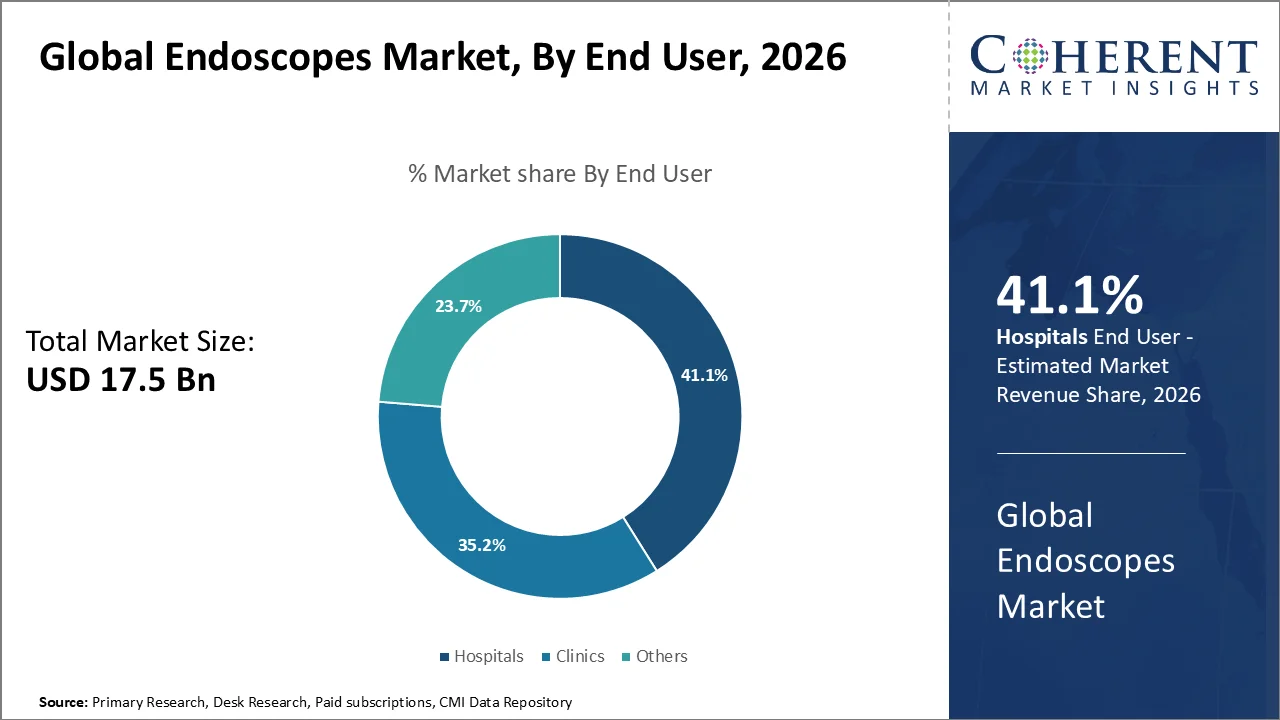
Hospitals capture the largest market share of 41.1% in 2026. Rising hospital admissions for gastrointestinal, respiratory, and chronic diseases increase demand for endoscopy systems in hospitals. Healthcare providers rely on endoscopic procedures to ensure accurate diagnosis, emergency care, and minimally invasive treatments. Hospitals adopt advanced endoscopic technologies to enhance surgical precision and improve patient outcomes. Growing surgical volumes, expanding specialized departments, and a stronger focus on infection control further support usage. Strong healthcare infrastructure and continuous investments in modern medical equipment also boost the adoption of endoscopes across hospital settings worldwide.
Endoscopes Market Trends
- Growing use of disposable and single-use endoscopes is driven by infection control concerns and the need to reduce cross-contamination. Research indicates that contamination rates in reusable duodenoscopes have ranged from 5% to 15% despite reprocessing, accelerating the shift toward single-use alternatives.
- Expansion of colorectal cancer screening programs continues to boost procedure volumes worldwide. The World Health Organization estimates that colorectal cancer accounts for approximately 1.9 million new cases annually, making colonoscopy one of the most widely utilized endoscopic procedures for early detection.
- Favorable reimbursement policies and expanding healthcare coverage are improving access to endoscopic procedures. In the United States, more than 65 million Medicare beneficiaries have access to covered screening colonoscopies and other endoscopic procedures, supporting higher procedure adoption rates and market growth.
Regional Insights
North America dominates owing to rapid technological innovation and adoption
North America is expected to acquire the dominant share of 39.2% in 2026. Strong healthcare infrastructure and rapid adoption of advanced medical technologies drive the endoscopes market in North America. Healthcare providers widely perform endoscopic procedures for early diagnosis and minimally invasive surgeries, improving patient outcomes and reducing recovery time. High prevalence of gastrointestinal, respiratory, and chronic diseases increases procedural demand. Gastrointestinal (GI) disorders are widespread in the U.S., with about 60% of adults reporting frequent GI symptoms and up to half of Americans diagnosed with or suspecting a GI condition, contributing to a substantial healthcare and economic burden. In May 2026, Johnson & Johnson has launched the interactive “Gut Tunnel” experience in Singapore and introduced educational programs across Asia Pacific to support people living with inflammatory bowel disease (IBD). The initiative promotes endoscopic remission as a key treatment goal under its Dual Control campaign.
Asia Pacific Endoscopes Market Trends
The Asia Pacific endoscopes market grows as healthcare providers increasingly prefer minimally invasive surgical procedures that shorten recovery time and reduce hospital stays. Rising cases of gastrointestinal disorders, cancers, and respiratory diseases drive higher demand for endoscopic solutions. India records approximately 1.6 million new cancer cases annually, with 1 in 9 individuals expected to develop cancer during their lifetime.
United States Endoscopes Market Trends
The rising prevalence of respiratory, and urological disorders drives demand in the United States endoscopes market, while the growing elderly population increases the need for frequent diagnostic and therapeutic procedures. Urological disorders pose a significant health burden in the U.S., affecting more than half of the population during their lifetime, generating millions of healthcare visits, and contributing to over $11 billion in annual medical costs. Healthcare providers increasingly prefer minimally invasive surgeries because they shorten recovery time and reduce hospital stays, which boosts adoption. Manufacturers continue to advance technologies such as high-definition imaging, flexible and disposable endoscopes, and robotic-assisted systems. Expanding outpatient care facilities and a strong healthcare infrastructure further strengthen market growth. For instance, Pentax Medical Co. has launched the Slim Linear Ultrasound Endoscope (EG-3270UK) in the U.S. as its newest ultrasound endoscope. The device incorporates advanced transducer design and ultrasound imaging technology, making it the company’s slimmest linear GI echoendoscope.
Japan Endoscopes Market Trends
Japan’s endoscopes market grows due to its rapidly aging population, which drives higher demand for gastrointestinal and other diagnostic procedures. Increasing cases of chronic diseases, including colorectal cancer, also boost usage. In Japan, non-communicable diseases account for approximately 82% of all deaths. Driven by one of the world's oldest populations, over 90% of adults aged 75 and older have at least one chronic condition, while around 80% live with two or more chronic illnesses. A strong healthcare system and widespread adoption of minimally invasive surgeries further support market expansion. Ongoing advancements in imaging technology and device miniaturization enhance diagnostic precision and patient outcomes. Government screening initiatives and broad hospital access promote routine endoscopic examinations across various clinical settings nationwide. For instance, Japan-based Olympus has launched OLYSENSE CAD/AI, a cloud-based suite of AI-powered applications that marks its first step toward an intelligent endoscopy ecosystem. The system helps clinicians detect, characterize, and analyze lesions in the upper and lower gastrointestinal tract.
Who are the Major Companies in Endoscopes Industry
Some of the major key players in Endoscopes are Medtronic plc, Olympus Corporation, Hoya Corporation, Fujifilm Holdings Corporation, CONMED Corporation, Stryker Corporation, DePuy Synthes, Boston Scientific Corporation, Smith and Nephew, and Cook Medical, Inc.
Key News
- In July 2025, FUJIFILM (Thailand) Ltd. introduced the ELUXEO 8000 Endoscopy System and the 800 Series ELUXEO Endoscopes in Thailand for the first time, advancing healthcare diagnostics and patient treatment through its comprehensive health innovations.
Market Report Scope
Endoscopes Market Report Coverage
| Report Coverage | Details | ||
|---|---|---|---|
| Base Year: | 2025 | Market Size in 2026: | USD 17.5 Bn |
| Historical Data for: | 2020 To 2024 | Forecast Period: | 2026 To 2033 |
| Forecast Period 2026 to 2033 CAGR: | 7.4% | 2033 Value Projection: | USD 22.4 Bn |
| Geographies covered: |
| ||
| Segments covered: |
| ||
| Companies covered: | Medtronic plc, Olympus Corporation, Hoya Corporation, Fujifilm Holdings Corporation, CONMED Corporation, Stryker Corporation, DePuy Synthes, Boston Scientific Corporation, Smith and Nephew, and Cook Medical, Inc. | ||
Analyst Opinion
- Endoscope adoption is fundamentally driven by clinical necessity rather than cyclical demand. Gastrointestinal cancers alone account for over 5.3 million new cases globally each year, with colorectal cancer being one of the most frequently diagnosed, directly sustaining continuous endoscopic screening and biopsy demand across healthcare systems.
- Endoscopy is now central to both diagnosis and minimally invasive treatment. More than 40 million endoscopic procedures are performed annually in the United States alone, ranging from colonoscopies to upper GI examinations, highlighting how deeply embedded endoscopy has become in routine clinical pathways rather than being an optional diagnostic tool.
- Early detection mandates are strengthening procedural volumes, particularly in colorectal cancer screening programs. In countries like Japan and South Korea, national screening initiatives actively encourage regular colonoscopy use, with clinical evidence showing that routine screening can reduce colorectal cancer mortality by up to 60%, reinforcing endoscopy as a life-saving intervention rather than a discretionary procedure.
- Technological advancements are materially reshaping procedural outcomes and physician preference. High-definition and AI-assisted endoscopy systems are now improving polyp detection rates by over 20–30% in clinical studies, while capsule endoscopy and robotic-assisted systems are expanding access to previously hard-to-reach anatomical regions, accelerating adoption in both hospital and ambulatory surgical settings.
Speak to the analyst
Want personalized insights?
Take the findings above to one of our principal consultants, or have the report rebuilt around the segments, geographies and competitors you actually track.
Market Segmentation
- By Product Type (Revenue, USD Bn, 2021-2033)
- Endoscopes
- Gastroscopes
- Arthroscopes
- Colonoscopes
- Laparoscopes
- Enteroscopes
- Bronchoscopes
- Cystoscopes
- Ultrasound Endoscopes
- Others
- Visualization System
- Endo Therapy Devices
- Others
- Endoscopes
- By Endoscope Type (Revenue, USD Bn, 2021-2033)
- Rigid
- Flexible
- Capsule
- By Applications (Revenue, USD Bn, 2021-2033)
- Gastroenterology
- Arthroscopy
- General Surgery
- Pulmonology
- Urology
- Gynecology
- Others
- By End User (Revenue, USD Bn, 2021-2033)
- Hospitals
- Clinics
- Others
- By Region (Revenue, USD Bn, 2021-2033)
- North America
- U.S.
- Canada
- Latin America
- Brazil
- Mexico
- Argentina
- Rest of Latin America
- Europe
- Germany
- U.K.
- France
- Italy
- Spain
- Russia
- Rest of Europe
- Asia Pacific
- China
- India
- Japan
- Australia
- South Korea
- ASEAN
- Rest of Asia Pacific
- Middle East
- GCC
- Israel
- Rest of Middle East
- Africa
- South Africa
- Central Africa
- North Africa
- North America
Sources
Primary Research interviews
- Ophthalmologists, gastroenterologists, ENT specialists, and minimally invasive surgeons across tertiary hospitals and ambulatory surgical centers
- Biomedical engineers and endoscopy device procurement managers from hospital networks and diagnostic chains
- Clinical staff involved in gastrointestinal cancer screening programs and interventional endoscopy units
Databases
- PubMed clinical studies on endoscopic diagnosis and minimally invasive procedures
- World Health Organization (WHO) disease burden and cancer screening datasets
- OECD Health Statistics for procedure volumes and healthcare utilization trends
- National cancer registries and hospital discharge databases
Magazines
- Gastroenterology & Endoscopy-focused clinical practice magazines
- Medical device innovation and minimally invasive surgery trade publications
- Hospital management and surgical technology magazines
Journals
- The Lancet Gastroenterology & Hepatology
- Gastrointestinal Endoscopy (ASGE journal)
- Surgical Endoscopy
- Endoscopy journal (ESGE publication)
- Journal of Minimally Invasive Surgery
Newspapers
- Financial Times healthcare coverage
- The New York Times health section
- The Guardian health and science reporting
- Nikkei Asia healthcare and medical technology updates
Associations
- American Society for Gastrointestinal Endoscopy (ASGE)
- European Society of Gastrointestinal Endoscopy (ESGE)
- World Endoscopy Organization (WEO)
- American College of Surgeons (ACS)
- Japan Gastroenterological Endoscopy Society (JGES)
Public Domain sources
- World Health Organization (WHO) reports and fact sheets
- National health ministry publications and screening program data
- CDC (Centers for Disease Control and Prevention) cancer statistics
- Government hospital utilization and procedure reporting portals
- Open-access clinical trial registries (ClinicalTrials.gov)
Proprietary Elements
- CMI Data Analytics Tool
- Proprietary CMI Existing Repository of information for last 10 years
Get access to 250+ pages report
Every segment, forecast, competitor profile and data table behind the analysis above — available for instant download.
- ESOMAR Member
- ISO 9001:2015 Certified
- D-U-N-S Registered
- GDPR & CCPA Compliant
Missing comfort of reading report in your local language? Find your preferred language:
Transform your Strategy with Exclusive Trending Reports
Frequently Asked Questions
The global endoscopes market is estimated to surpass USD 22.4 Bn By 2033.
Major players operating in the global endoscopes market include Medtronic plc, Olympus Corporation, Hoya Corporation, Fujifilm Holdings Corporation, CONMED Corporation, Stryker Corporation, DePuy Synthes, Boston Scientific Corporation, Smith and Nephew, and Cook Medical, Inc.
Among product type, endoscopes segment dominated the market, owing to the new product launches with increased preference for minimally invasive procedures.
Increasing incidence of gastrointestinal and other diseases, globally is one of the major factors that is expected to propel growth of the market over the forecast period.
The global endoscopes market is estimated to exhibit a CAGR of 7.4 % over the forecast period.
Among regions, North America is expected to hold dominant position in the market over the forecast period.