

Africa Hospital Investment Opportunity Market Size and Forecast – 2026 To 2033
The Africa hospital investment opportunity market is expected to grow from USD 3,049.8 Mn in 2026 to USD 4,703.5 Mn by 2033, registering a compound annual growth rate (CAGR) of 6.4% from 2026 to 2033. The Africa hospital investment opportunity market is poised for significant expansion, fueled by the large-scale investment requirements for healthcare infrastructure across the continent.
The African Development Bank estimates that Africa currently requires about USD 26 billion in annual health-infrastructure investment, compared with only around USD 4.5 billion in annual government capital expenditure, highlighting a substantial financing gap.
Key Takeaways of the Africa Hospital Investment Opportunity Market
- Public is projected to hold 63.9 % of the Africa hospital investment opportunity market share in 2026, making it the dominant type segment. Public-sector hospital development remains significant as governments and development institutions fund large-scale capacity expansion. For instance, in July 2025, the African Development Bank approved a USD 46 million loan for Nigeria’s Sokoto State Health Infrastructure Project, supporting a 1,000-bed teaching hospital, three zonal hospitals with 450 beds, and six primary healthcare centers.
- Small-size hospitals are projected to hold 47.2 % of the Africa hospital investment opportunity market share in 2026, making it the dominant bed size segment. Investment in smaller and decentralized healthcare facilities is gaining traction as investors target underserved communities and expand access beyond major urban hospitals. For instance, in 2025, International Finance Corporation (IFC) committed up to USD 24.3 million to Nigeria Sovereign Investment Authority (NSIA) advanced medical services in Nigeria to roll out 13 diagnostic centers, two oncology centers, and three catheterization laboratories across 13 states.
- Infectious disease is projected to hold 35.3 % of the Africa hospital investment opportunity market share in 2026, making it the dominant specialty segment. Continued investment in infectious-disease preparedness and treatment infrastructure is supporting this segment, particularly in regions exposed to recurrent outbreaks. For instance, in January 2024, WHO reported that Zimbabwe had established two new 10-bed cholera treatment centers in Harare to reduce pressure on the Beatrice Road Infectious Disease Hospital and bring treatment closer to affected communities.
Segmental Insights
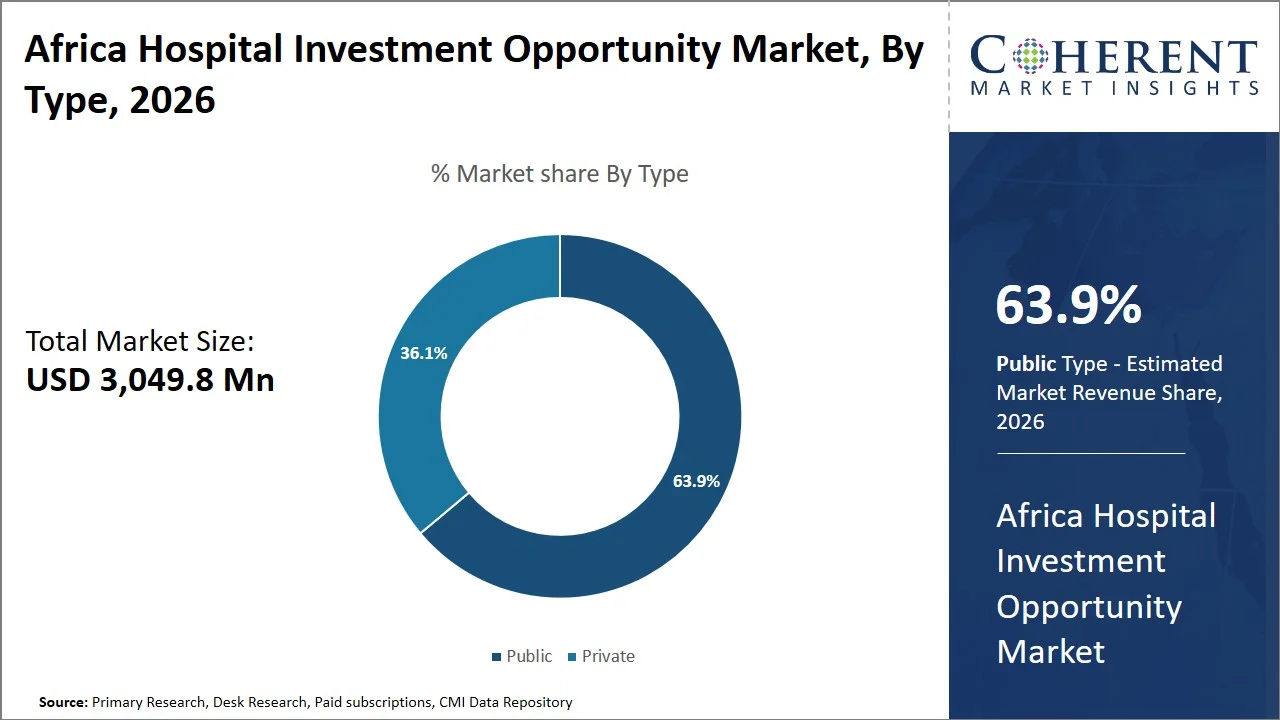
Why Do Public Dominate the Africa Hospital Investment Opportunity Market?
Public is projected to hold a market share of 63.9% in 2026, due to their leading role in provision of access to affordable healthcare services to disadvantaged, or underserved population groups. The provision of infrastructure development projects and financing by government continues to reinforce public hospital capacity, technological modernity, and service coverage. For instance, in September 2025, the African Development Bank issued a grant of USD 571,471 (EUR 494,130) to the Government of Ghana to develop investment-ready projects aimed at scaling-up waste-management at Korle Bu Teaching Hospital the country’s major public tertiary institution.
- Current Industry Events of 2026
- Market Size Estimation
- Regional Breakdown
- Competitive Landscape
- Customer Intelligence
- Segmental Analysis
- Pricing Analysis
- Key Market Drivers, Challenges & Future Trends
- Customized Insights Section
Why Does Small-Size Hospitals Represent the Largest Bed Size Segment in the Africa Hospital Investment Opportunity Market?
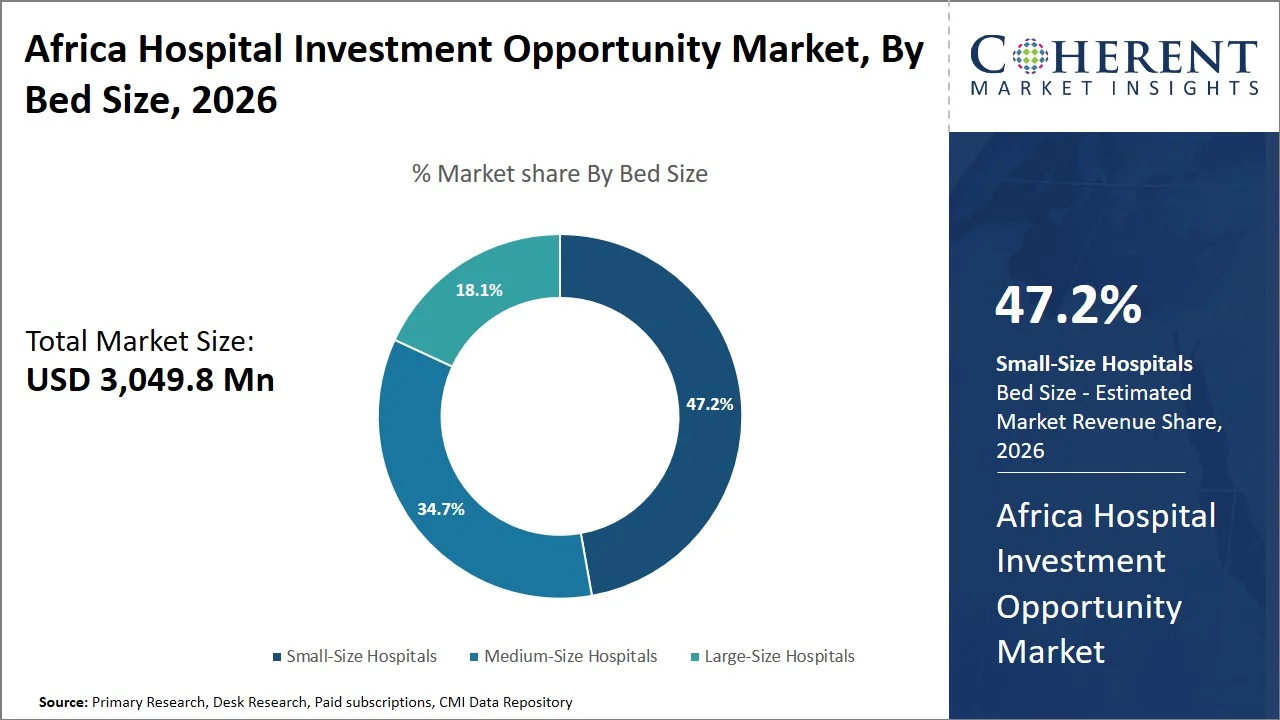
Small-size hospitals are projected to hold 47.2% of the market share in 2026, driven by its low capital investment needs and appropriate nature for decentralized health care system. The small-size hospitals allow for convenient construction closer to more population-dense areas and to fulfill necessary diagnostic, outpatient, emergency and referral medical needs. For instance, in April 2025, Avon Medical Practice Limited, a subsidiary of Heirs Holdings commissioned a 50-bed ultramodern multispecialty medical hospital in Surulere, Lagos, featuring modern diagnostics, maternity and gynecology and pediatric, neonatal services including renal dialysis. (Source: NewsMakers)
Infectious Disease Segment Dominates the Africa Hospital Investment Opportunity Market
The infectious disease segment is expected to hold 35.3% of the Africa hospital investment opportunity market share in 2026, owing to the prevalent communicable diseases burden and high requirement for dedicated isolation, outbreak response facilities. Continuous growth in investments in dedicated infectious disease care facility and diagnostic capacity is contributing towards this growth. For instance, in February 2025, the Ministry of Health of South Sudan in partnership with the World Health Organization (WHO) has reopened an infectious diseases unit of 15 beds in Nimule, to improve treatment and preparedness for disease control and prevention of cross-border outbreaks.
Current Events and their Impact
Current Events | Description and its Impact |
African Development Bank Invests USD 33.64 Million in Rwanda’s Health Workforce and Infrastructure (January 2026) |
|
International Finance Corporation (IFC) Invests USD 15 Million to Strengthen Healthcare Infrastructure Across Egypt and East Africa (February 2026) |
|
Africa Hospital Investment Opportunity Market Dynamics
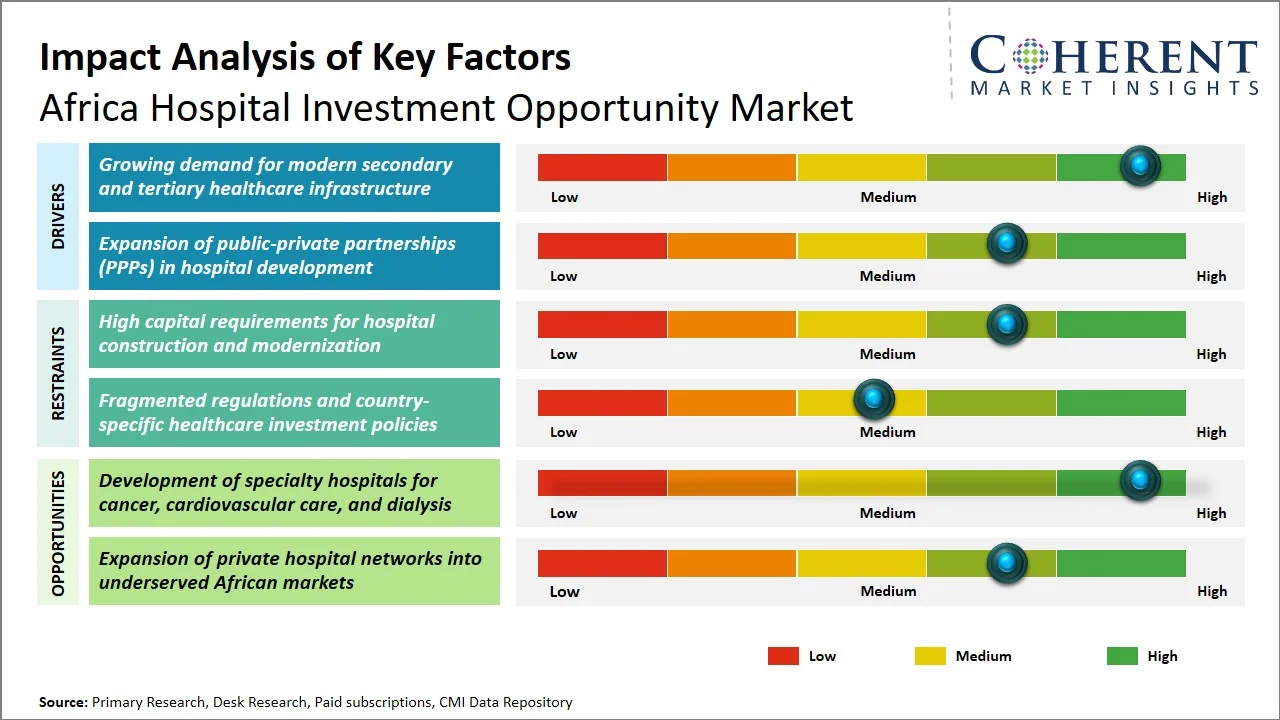
Market Drivers
- Growing demand for modern secondary and tertiary healthcare infrastructure: The expanding population and rising burden of chronic diseases are increasing demand for modern secondary and tertiary healthcare facilities, particularly in underserved regions. Limited access to advanced diagnostics, specialist surgery, and intensive care is encouraging investment in new and expanded hospital capacity. For instance, in April 2026, the African Development Bank disclosed the USD 87 million expansion of Andalusia Egypt Holding, which is planned to increase capacity from 229 to 445 beds and expand its clinic network from 62 to 85 clinics in Egypt.
- Expansion of public-private partnerships (PPPs) in hospital development: The expansion of public-private partnerships (PPPs) is driving hospital investment by enabling governments to combine public healthcare infrastructure with private-sector financing, technology, and operational expertise. PPP models can accelerate the development and modernization of healthcare facilities while improving access to specialized services. For instance, in February 2024, the International Finance Corporation (IFC) partnered with Côte d’Ivoire’s Ministry of Health to structure two PPPs covering laboratory and imaging services across 14 public hospitals, serving approximately 6.7 million people.
- Rising Investment in Healthcare Infrastructure Rehabilitation: The need to rehabilitate and restore aging or damaged healthcare facilities is creating additional investment opportunities across Africa, particularly where existing hospitals require upgrades to become operational and resilient. This expands the market beyond greenfield hospital construction to include facility rehabilitation, medical infrastructure upgrades, and restoration projects. For instance, in October 2025, the African Development Bank and International Organization for Migration (IOM) signed a USD 62 million agreement to rehabilitate 20 healthcare facilities across four states in Sudan, alongside improvements to supporting water and sanitation infrastructure.
Emerging Trends
- Modular and Prefabricated Hospital Development: Investors and healthcare authorities are increasingly considering modular construction to shorten project timelines and enable flexible expansion of hospital capacity. This approach is particularly relevant for markets requiring rapid deployment of modern facilities across multiple locations.
- Smart Hospital and Integrated Digital Infrastructure: New hospital projects are increasingly incorporating connected medical systems, electronic records, facility-management platforms, and smart-hospital technologies from the design stage. This is shifting investment priorities from physical capacity alone toward digitally integrated hospital environments.
- Hub-and-Spoke Healthcare Network Models: Hospital investment is increasingly moving toward interconnected networks that combine major referral hospitals with smaller facilities and decentralized care points. This model allows investors to extend specialized services beyond major cities while improving referral pathways and asset utilization.
Recent Hospital Investment and Expansion Projects Across Africa, 2024–2026
Country | Investor / Financing Partner | Hospital / Project | Investment / Financing | Capacity / Scope | Year |
Nigeria | International Finance Corporation (IFC) & Nigeria Sovereign Investment Authority (NSIA) | NSIA Advanced Medical Services Expansion | USD 154.1 Mn | 13 diagnostic centers, 3 oncology centers and 3 catheterization laboratories across 13 states | 2026 |
Côte d’Ivoire | International Finance Corporation (IFC) & Farah Group | Farah Oncology & Ophthalmology Centers | USD 45 Mn | 60-bed oncology center and dedicated ophthalmology center in Abidjan | 2026 |
Nigeria | African Export-Import Bank (Afreximbank) & King’s College Hospital London | African Medical Centre of Excellence, Abuja | USD 300 Mn | Tertiary facility specializing in oncology, hematology, and cardiology | 2025 |
Ghana | Government of Ghana | Healthcare Infrastructure Program | USD 155 Mn | Hospital and medical-training infrastructure projects nationwide | 2025-2028 |
South Africa, Botswana, Ghana & Mozambique | International Finance Corporation (IFC) & Lenmed Hospital Group | Lenmed Healthcare Expansion | USD 133 Mn | Expansion from 2,318 to almost 3,000 hospital beds | 2024 |
Nigeria | African Finance Corporation (AFC) | African Medical Centre of Excellence, Abuja | Up to USD 40 Mn | 500-bed specialist hospital focused on oncology, cardiology, and hematology | 2024 |
Ghana & Nigeria | Japan International Cooperation Agency (JICA) & CarePoint | Hospital & Clinic Expansion | USD 3 Mn | Expansion of hospitals and clinics | 2025 |
How is the development of specialty hospitals for cancer, cardiovascular care, and dialysis creating new growth opportunities in the Africa hospital investment opportunity market?
Africa represents a growing area of opportunity for specialty hospitals in response to increased demand for oncology, cardiovascular and kidney services with a deficit in the available high-level care in Africa. Specialty hospitals in Africa have the potential to bridge these service gaps, increase dependence on local care for these diseases, and bring some of the latest diagnostics to Africa. For instance, in April 2026, African Development Bank announced the USD 60 million IASO Medipark in Lagos, Nigeria project, which will serve as a 140-bed hospital offering oncology, cardiology, Nephrology, ICU and surgery to patients.
Market Players, Key Development, and Competitive Landscape
Key Developments
- In July 2026, Remgro completed its USD 947 million acquisition of full ownership of Mediclinic Southern Africa, following the fulfillment of all transaction conditions. The deal gives Remgro control of a major private healthcare network operating across South Africa and Namibia, strengthening private-sector investment and consolidation in African hospital infrastructure.
- In June 2024, the International Finance Corporation (IFC) partnered with Lenmed Hospital Group through a USD 10.7 million (R200 million) senior loan to expand healthcare services across South Africa, Botswana, Ghana, and Mozambique. The financing supports new facility acquisitions, medical equipment, and additional medical staff, with Lenmed planning to increase its hospital-bed capacity from 2,318 to nearly 3,000.
- In February 2024, Roha Medical Campus in Ethiopia received a USD 42 million first financing injection to support the development of its planned hospital campus. The investment highlights growing private-sector capital deployment in Africa’s hospital infrastructure and creates opportunities for advanced healthcare facilities and medical services.
Competitive Landscape
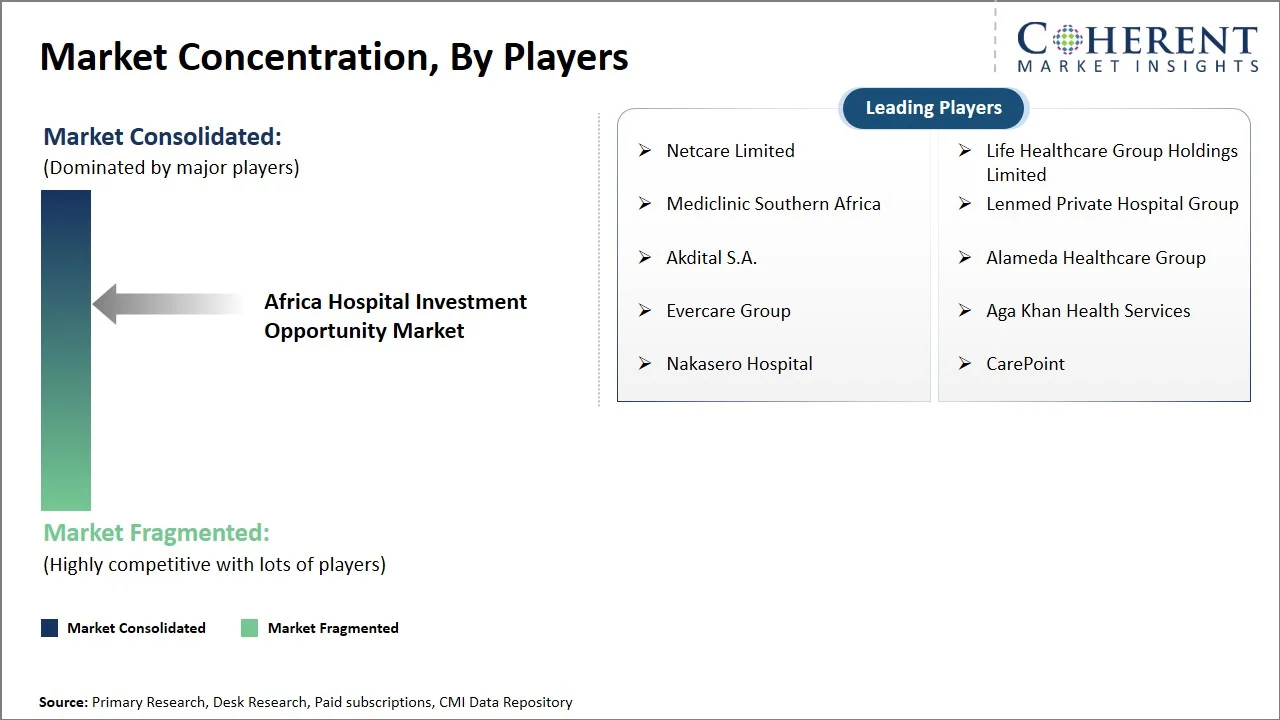
The Africa hospital investment opportunity market is moderately fragmented, with competition gradually shifting toward consolidation as private hospital groups, institutional investors, and development-finance institutions pursue network expansion and strategic acquisitions. Market participants are focusing on multi-country hospital platforms, specialty-care facilities, public-private partnerships, and technology-enabled infrastructure to capture underserved demand and achieve operational scale. Key focus areas include:
- Expansion and consolidation of regional and multi-country hospital networks
- Investment in specialty hospitals and high-demand services, including oncology, cardiac care, diagnostics, and dialysis
- Public-private partnerships and institutional financing for new and upgraded hospital infrastructure
- Adoption of digital health, advanced medical technologies, and integrated hospital systems to improve efficiency and service capacity
Market Report Scope
Africa Hospital Investment Opportunity Market Report Coverage
| Report Coverage | Details | ||
|---|---|---|---|
| Base Year: | 2025 | Market Size in 2026: | USD 3,049.8 Mn |
| Historical Data for: | 2020 To 2024 | Forecast Period: | 2026 To 2033 |
| Forecast Period 2026 to 2033 CAGR: | 6.4% | 2033 Value Projection: | USD 4,703.5 Mn |
| Segments covered: |
| ||
| Companies covered: | Netcare Limited, Life Healthcare Group Holdings Limited, Mediclinic Southern Africa, Lenmed Private Hospital Group, Akdital S.A., Alameda Healthcare Group, Evercare Group, Aga Khan Health Services, Nakasero Hospital, CarePoint | ||
| Growth Drivers: |
| ||
| Restraints & Challenges: |
| ||
Analyst Opinion (Expert Opinion)
- The future of the Africa hospital investment opportunity market will increasingly move from standalone hospital development toward integrated healthcare platforms that combine hospitals with specialty centers, diagnostics, ambulatory services, and digital health capabilities. In our view, this model will become more attractive because investors can diversify revenue streams, improve utilization of expensive medical infrastructure, and create scalable healthcare networks across multiple cities and countries. Over the longer term, consolidation among fragmented private providers is likely to accelerate as larger platforms seek operational scale and stronger bargaining power.
- The maximum growth opportunity lies within private and public-private partnership (PPP) hospital investments focused on specialty and tertiary care in Nigeria, particularly in oncology, cardiovascular care, renal care, and advanced diagnostics. Nigeria offers the combination of a large addressable patient population, significant gaps in specialized hospital capacity, and strong demand for private healthcare, making it particularly attractive for investors capable of developing facilities in major urban centers while extending services into underserved secondary cities.
- In order to create an advantage for themselves, the competitors should avoid competing solely through hospital-bed additions and instead build asset-light, scalable healthcare platforms around each investment. We believe an edge will come from combining modular infrastructure with specialty-care capabilities, local physician partnerships, centralized procurement, digital patient-management systems, and multiple care-delivery formats. Investors that can replicate this model across countries while adapting to local regulations, workforce availability, and payer structures should be better positioned to achieve faster expansion and more sustainable returns.
Speak to the analyst
Want personalized insights?
Take the findings above to one of our principal consultants, or have the report rebuilt around the segments, geographies and competitors you actually track.
Market Segmentation
- Type Insights (Revenue, USD Mn, 2021 - 2033)
- Public
- Private
- Bed Size Insights (Revenue, USD Mn, 2021 - 2033)
- Small-Size Hospitals
- Medium-Size Hospitals
- Large-Size Hospitals
- Specialty Insights (Revenue, USD Mn, 2021 - 2033)
- Infectious Disease
- Neurology
- Dermatology
- Nephrology
- Cardiology
- Oncology
- Others
- Key Players Insights
- Netcare Limited
- Life Healthcare Group Holdings Limited
- Mediclinic Southern Africa
- Lenmed Private Hospital Group
- Akdital S.A.
- Alameda Healthcare Group
- Evercare Group
- Aga Khan Health Services
- Nakasero Hospital
- CarePoint
Sources
Primary Research Interviews
- Hospital CEOs, Chief Investment Officers, and Healthcare Infrastructure Investors
- Public and Private Hospital Administrators and Healthcare Project Developers
- Healthcare Investment, Private Equity, and Infrastructure Fund Executives
- Government Health Ministry Officials and Public-Private Partnership (PPP) Specialists
Stakeholders
- Government Ministries of Health and Public Health Authorities
- Private Hospital Groups and Healthcare Operators
- Hospital Developers and Healthcare Real Estate Investors
- Private Equity, Infrastructure, and Institutional Investors
- Development Finance Institutions and Multilateral Organizations
- Public-Private Partnership (PPP) Authorities and Advisors
- Medical Equipment, Technology, and Healthcare Infrastructure Providers
- Health Insurance Companies and Healthcare Financing Organizations
- End-use Sectors
- Specialty and Tertiary Care Hospitals
- General and Secondary Care Hospitals
- Teaching and Academic Medical Centers
- District and Regional Hospitals
- Faith-Based and Nonprofit Hospitals
- Diagnostic and Ambulatory Healthcare Centers
- Regulatory & Health Bodies
- World Health Organization (WHO) – Regional Office for Africa (AFRO)
- Africa Centres for Disease Control and Prevention (Africa CDC)
- African Union (AU) – Health, Humanitarian Affairs and Social Development
- African Development Bank (AfDB) – Health Infrastructure and Healthcare Investment
- National Ministries of Health and Healthcare Regulatory Authorities across African countries
- International Finance Corporation (IFC) – Africa Healthcare and Infrastructure Investment
Databases
- WHO Global Health Observatory (GHO) – Health Infrastructure and Hospital Indicators
- World Bank DataBank – Health Expenditure and Healthcare Infrastructure Data
- African Development Bank Data Portal – Health and Infrastructure Indicators
- WHO African Health Observatory – Country Health Systems and Services Profiles
- UNESCO Institute for Statistics – Health Workforce and Education Indicators
Magazines
- Africa Health Business
- Africa Health Journal
- Health Business
- African Business
- Healthcare Africa
Journals
- African Health Sciences
- Health Policy and Planning
- BMC Health Services Research
- The Lancet Regional Health – Africa
- International Journal of Health Planning and Management
Associations
- African Health Economics and Policy Association (AfHEA)
- Africa Healthcare Federation
- West African Private Healthcare Federation (WAPHF)
- African Health Business
- African Hospital Federation / regional healthcare associations
Public Domain Sources
- World Health Organization (WHO) – Regional Office for Africa
- African Development Bank (AfDB) – Strategy for Quality Health Infrastructure in Africa 2022–2030
- World Bank – Africa Health and Healthcare Financing Data
- Africa Centres for Disease Control and Prevention (Africa CDC)
- International Finance Corporation (IFC) – Africa Investment Data
- African Union (AU) – Health and Healthcare Development Initiatives
- National Ministries of Health across Africa
- African Health Observatory / WHO AFRO country health-system profiles
Proprietary Elements
- CMI Data Analytics Tool, Proprietary CMI Existing Repository of information for last 10 years.
Get access to 250+ pages report
Every segment, forecast, competitor profile and data table behind the analysis above — available for instant download.
- ESOMAR Member
- ISO 9001:2015 Certified
- D-U-N-S Registered
- GDPR & CCPA Compliant
Missing comfort of reading report in your local language? Find your preferred language:
Transform your Strategy with Exclusive Trending Reports
Frequently Asked Questions
The Africa hospital investment opportunity market is estimated to be valued at USD 3,049.8 Mn in 2026 and is expected to reach USD 4,703.5 Mn by 2033.
Public dominate due to substantial government involvement in healthcare infrastructure development, public hospital expansion, and state-backed investments to address healthcare capacity gaps across African countries.
Hospital investment opportunity refers to the potential for investors to finance, develop, acquire, expand, or modernize hospital infrastructure and services to meet growing healthcare demand.
The CAGR of Africa hospital investment opportunity market is projected to be 6.4% from 2026 to 2033.
Investment opportunities are concentrated in hospital construction, expansion, modernization, specialized care facilities, and technology-enabled healthcare infrastructure.
Nigeria, South Africa, Egypt, Kenya, Ghana, and Ethiopia offer significant hospital investment potential due to healthcare infrastructure gaps and growing demand.
Growing healthcare demand, limited public capacity, rising middle-class spending, and increasing demand for specialized medical services are driving private hospital investment.