

Dental Software Market Analysis & Forecast 2026-2033
Global dental software market is estimated to be valued at USD 2.07 Bn in 2026 and is expected to reach USD 3.94 Bn by 2033, exhibiting a compound annual growth rate (CAGR) of 9.6% from 2026 to 2033.
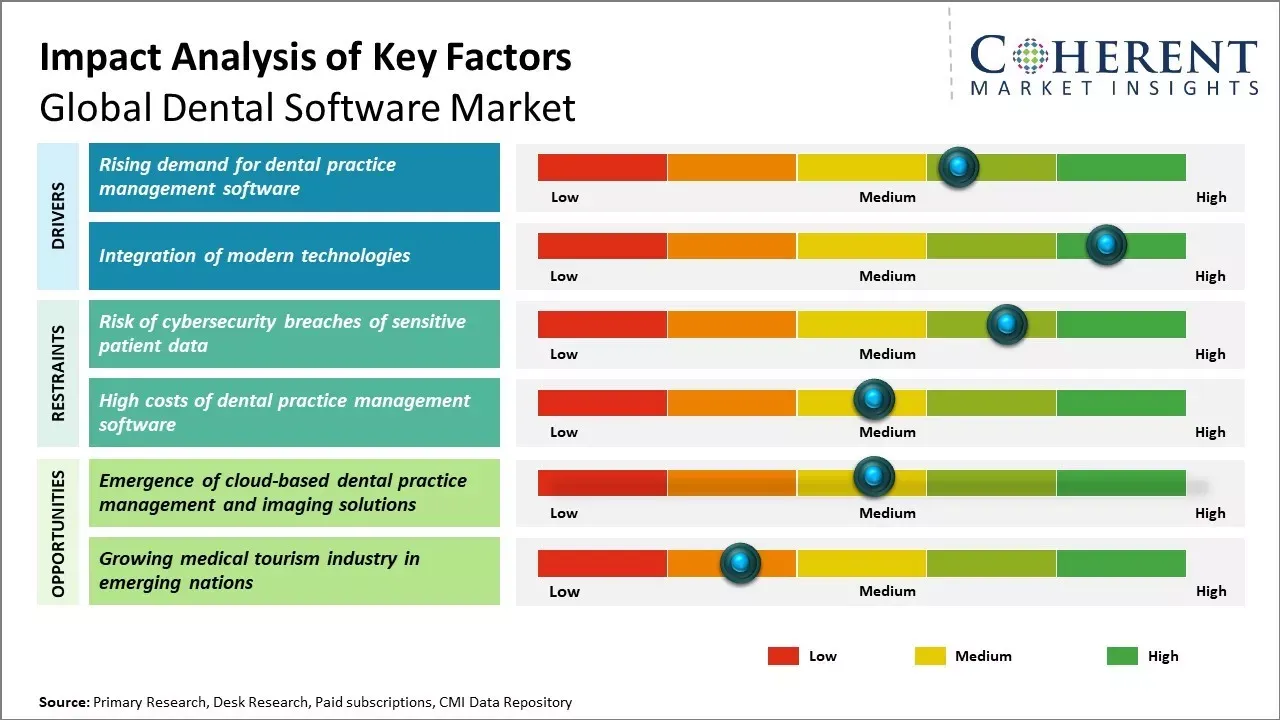
Key Takeaways
- By Application, the patient record & communication sub-segment is holding 59.8% shares in 2026, due to the rising demand for centralized digital systems that improve data accessibility and interoperability.
- By Deployment, the cloud deployment model is estimated to contribute the highest share of the dental software market and is projected to hold 79.3% of the market share in 2026, owing to shift toward cloud-based platforms.
- By End User, Dental clinics segment is projected to account for the largest share of the dental software market, estimated at 43.3% in 2026. The increasing digitalization of dental practices and the need to streamline administrative and clinical workflows are key factors boosting adoption.
- North America is projected to remain the dominant region in the global dental software market, accounting for 40.2% of the market share in 2026.
Market Overview
The global dental software market is experiencing robust growth, driven by the rising digitalization of dental practices, increased focus on patient engagement, and demand for efficient clinical workflow management. Key solutions include appointment scheduling, billing, imaging integration, and electronic health records. Dental clinics are leading adopters, supported by the need for cost-effective and scalable software. Cloud deployment is gaining momentum for its flexibility and remote accessibility.
Current Events and its Impact on the Dental Software Market
Current Event | Description and its impact |
Recent Product Innovations and Launches |
|
Strategic Alliances and Capital Investments |
|
Technological Advancements Driving Market Expansion |
|
Role of Technological Advancement in the Dental Software Market
Technological advancements are playing a pivotal role in transforming the global dental software market. Innovations such as cloud computing, artificial intelligence (AI), machine learning, and 3D imaging integration are enhancing the efficiency, accuracy, and accessibility of dental care. Cloud-based platforms offer real-time access to patient records, enabling seamless data sharing and remote consultations, especially beneficial for multi-location practices and tele-dentistry.
AI-powered tools assist in diagnostic support, treatment planning, and predictive analytics, improving patient outcomes and workflow automation. Additionally, the integration of dental imaging with electronic health records (EHRs) allows for more precise and data-driven decision-making. Voice recognition, automated billing, and appointment scheduling further reduce administrative burdens on dental staff.
These technologies not only optimize clinic operations but also elevate the overall patient experience. As digital transformation accelerates, technological innovation will continue to be a cornerstone of growth and competitive differentiation in the dental software market.
- Current Industry Events of 2026
- Market Size Estimation
- Regional Breakdown
- Competitive Landscape
- Customer Intelligence
- Segmental Analysis
- Pricing Analysis
- Key Market Drivers, Challenges & Future Trends
- Customized Insights Section
Pricing Analysis of the Dental Software Market
The pricing structure of dental software varies significantly based on deployment model, features offered, and practice size. Cloud-based solutions typically operate on a subscription model, with monthly fees ranging from $100 to $800 depending on the number of users, storage capacity, and included functionalities such as imaging integration, billing, and patient communication tools.
On-premise software often involves a one-time licensing fee, which can range from $2,000 to $10,000, along with additional costs for maintenance, updates, and IT support. Basic practice management tools are priced lower, while comprehensive platforms offering AI diagnostics, EHR integration, and analytics capabilities command premium pricing.
Customization, training, and scalability options also influence overall costs. Small and mid-sized clinics prefer cost-effective, modular solutions, while large dental service organizations invest in enterprise-grade platforms. As competition intensifies and cloud adoption rises, vendors are increasingly offering flexible pricing plans and tiered subscriptions to cater to diverse practice needs and budgets.
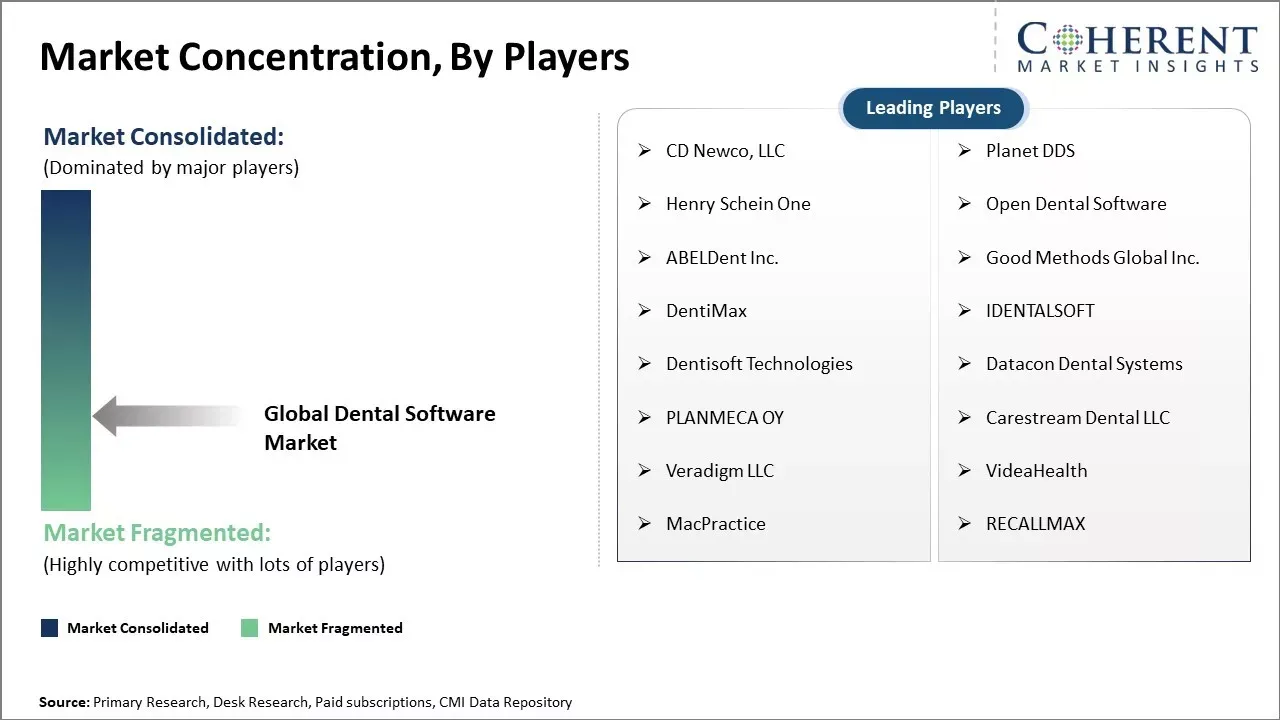
Market Concentration and Competitive Landscape
Dental Software Market Trends
- Rising demand for dental practice management software
With the growing complexity of dental practices and rising pressures to reduce costs and boost efficiency, the demand for robust dental practice management software has increased tremendously in recent years. Traditional paper-based methods for managing patient records, billing, insurance claims, and appointment scheduling have become outdated and inefficient.
Dental practice management software allows practices to digitize and streamline these operations in one centralized system. It ensures smooth workflows, timely follow-ups with patients, proper documentation of treatments, and hassle-free billing and claims processing. Moreover, dental practice management software offers valuable data-driven insights that help dental professionals enhance the patient experience and decision making. Features like analytics dashboards provide actionable information on practice performance, treatment trends, top referral sources, and more.
In June 2025, The Times of India reported that King George’s Medical University in Lucknow has introduced laser-assisted root canal treatment (RCT) using Er:YAG, Nd:YAG, and diode lasers reducing procedure time and pain while improving precision. Though not software per se, the adoption of laser-integrated digital workflows reflects growing digitization and computer-assisted technology integration in modern dental care systems.
- Integration of modern technologies
There is a growing interest among dental professionals and patients in advanced dental technologies like cone beam CT scans, intraoral cameras, imaging software and digital x-rays that enhance accuracy of diagnoses and treatment outcomes. Concerns around radiation exposure from traditional x-rays are spurring wider use of digital alternatives. To leverage modern tools and cater to evolving patient needs, dental practices require specialized software solutions that allow seamless integration of these technologies.
Dental software vendors are addressing this need by developing programs compatible with the latest dental equipment and tools. Features like tools for 3D imaging and scans, digital recordkeeping of x-rays, and screen sharing functionalities are attractive to dental practices. These offer productivity gains over peripherals or manual workarounds. The availability of such specialized yet affordable software encourages dental practices to invest in innovative technologies.
In June 2025, The Times of India also reported that Inamdar Multispeciality Hospital in Pune has inaugurated a 24×7 Dental & Face Surgery Clinic, equipped for trauma and implant care. Such clinics increasingly rely on advanced digital diagnostic and treatment planning software, including imaging and surgical simulation tools, to support complex procedures and improve patient outcomes.
Opportunities in the Dental Software Market
- Emergence of cloud-based dental practice management and imaging solutions
Cloud software eliminates the need for large upfront investments in hardware and infrastructure. It allows dental practices of all sizes to access advanced features and functionalities traditionally available only to large enterprise customers.
The low total cost of ownership along with flexibility and scalability offered by cloud makes it attractive for small and medium dental clinics. With cloud, dental practices can focus more on patient care rather than IT maintenance and upgrades. This enables more dentists to adopt practice management and imaging software.
Segmental Insights
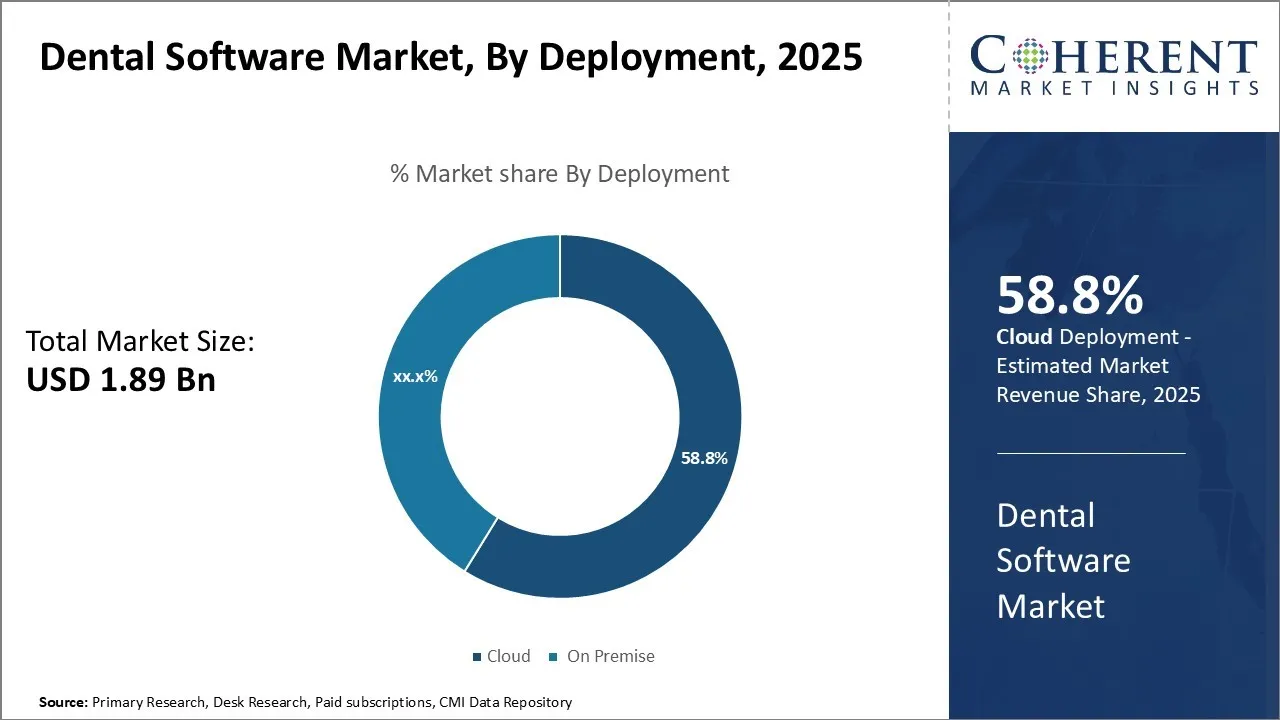
Global Dental Software Market Insights, By Deployment
The cloud deployment model is expected to lead the global dental software market, projected to hold 59.8% of the market share in 2026. Cloud-based dental software is gaining popularity due to its lower upfront investment, ease of access from multiple devices, automatic system updates, and strong data security features.
These platforms offer high scalability, enabling dental practices whether independent clinics or large dental service organizations to expand their capabilities without major infrastructure changes. Seamless integration with imaging devices, billing systems, and telehealth tools makes cloud deployment the preferred choice for modern dental practitioners.
With growing emphasis on flexibility, real-time collaboration, and remote practice management, the cloud segment is poised to remain at the forefront of dental software innovation.
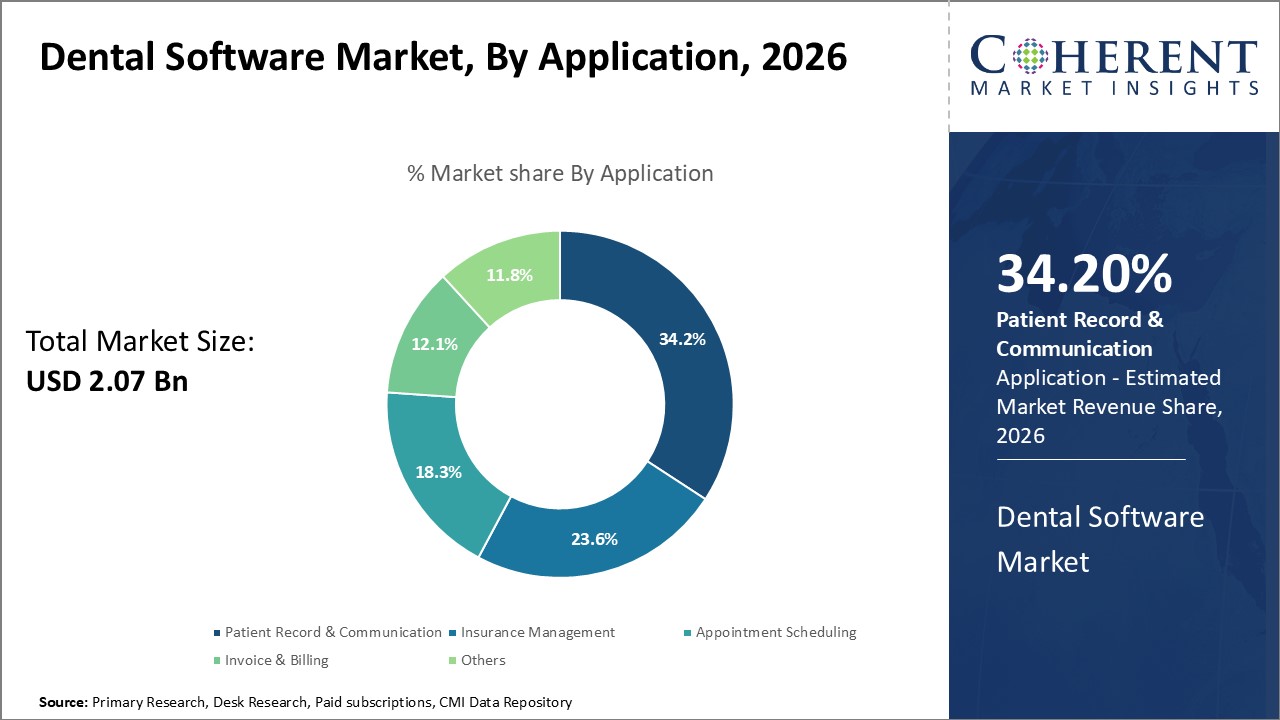
Global Dental Software Market Insights, By Application
The application segment is witnessing significant growth in the Patient Record & Communication sub-segment due to rising demand for centralized platforms that facilitate easy data access, communication, and workflow automation. Dental practices are embracing these systems to simplify management of patient histories, appointment scheduling, and post-treatment follow-ups.
A key driver of this trend is the increasing adoption of Dental Software with digital X-ray viewing, which allows practitioners to access radiographic images alongside patient records in real time. This integration enhances diagnostic accuracy, streamlines treatment planning, and eliminates the need for separate imaging systems. The ability to securely share patient data, ensure compliance with healthcare standards, and access clinical insights instantly is proving essential in modern dental care.
Furthermore, AI-driven features like predictive analytics, auto-reminders, and virtual assistance are transforming the way dental professionals interact with patients and manage their practice. These advancements are significantly improving both patient outcomes and operational efficiency, fuelling the adoption of communication- and record-centric applications across dental settings.
Global Dental Software Market Insights, By End User
Dental clinics are projected to account for the largest share of the dental software market, estimated at 43.3% in 2026. This dominance is attributed to the increasing digitalization of clinic operations and the growing need to streamline both administrative and clinical workflows. Dental clinics are leveraging software solutions to improve appointment scheduling, digital charting, billing, and diagnostics.
With a focus on enhancing patient experience and practice productivity, clinics are adopting easy-to-use platforms that offer comprehensive functionalities tailored to their needs. The demand is particularly strong among small and medium-sized practices, which seek affordable, scalable, and cloud-enabled solutions. As digital transformation becomes essential to remain competitive, dental clinics will continue to be the primary end users driving market growth in the years ahead.
Regional Insights
North America Dental Software Market Trends and Analysis
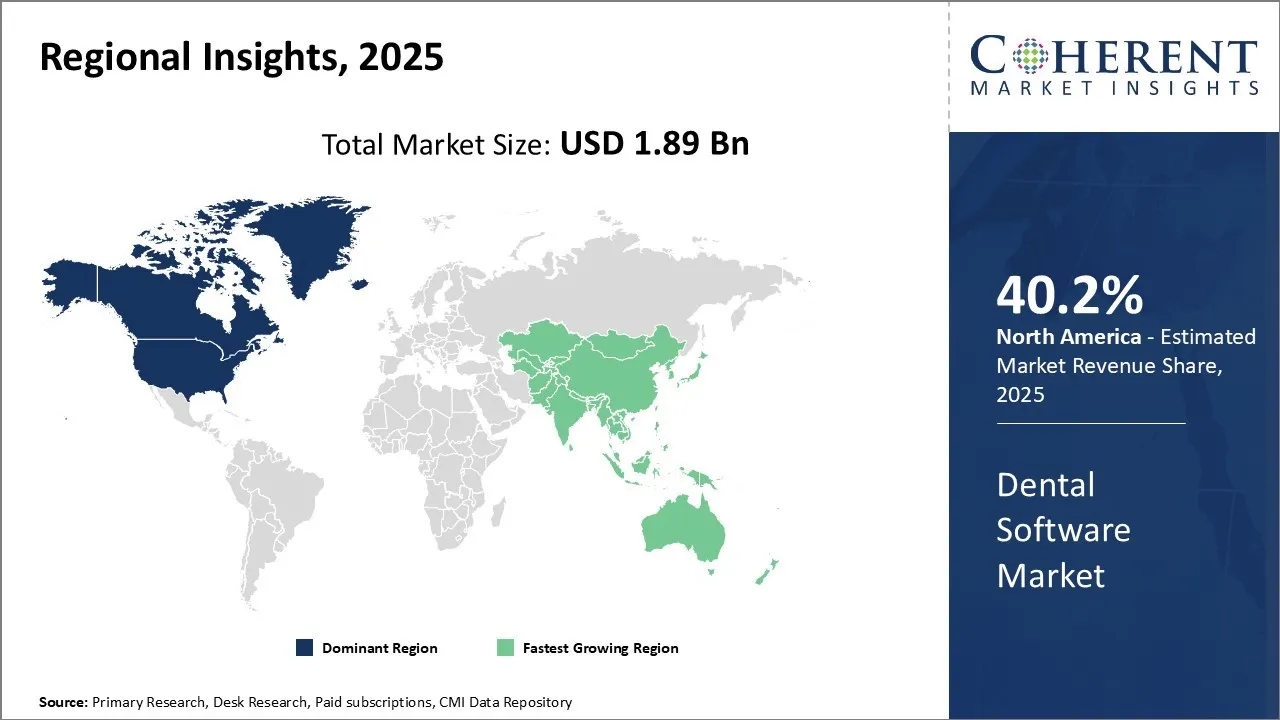
North America is projected to remain the dominant region in the global dental software market, accounting for 40.2% of the market share in 2026. This regional leadership is driven by the strong presence of established industry players such as Henry Schein, Patterson Companies, and Carestream Dental, who continue to innovate and expand their software offerings to meet evolving dental practice needs.
The region benefits from high adoption rates of digital healthcare solutions, supported by a well-established IT infrastructure and favourable reimbursement policies that encourage technology integration in dental care. U.S. dental practices are early adopters of cloud-based platforms, AI-enabled tools, and patient engagement software, contributing to market maturity and consistent demand growth.
Moreover, ongoing R&D investments and strategic partnerships aimed at enhancing software interoperability and compliance with HIPAA and other health IT standards have further cemented North America's leadership.
The demand for scalable, user-friendly, and secure dental management systems continues to rise in both urban and rural settings, driven by the growing focus on operational efficiency, improved patient experiences, and clinical accuracy. With a robust digital ecosystem and continued policy support, North America remains a critical engine for the global dental software market’s growth.
Dental software market Dominating Countries
United States and Canada
The United States is the clear leader in the global dental software market, driven by its advanced healthcare IT infrastructure, high adoption of digital technologies, and a large base of private dental practices. The presence of major industry players such as Henry Schein, Patterson Companies, and Carestream Dental positions the U.S. as a hub of innovation in dental software solutions, including cloud-based platforms, AI-driven analytics, and integrated imaging systems.
Early adoption of technologies like teledentistry and electronic health records (EHR) is enhancing operational efficiency and improving patient outcomes across dental clinics and group practices. Supportive regulatory frameworks, such as HIPAA compliance mandates, further incentivize investment in secure and interoperable digital solutions. The increasing focus on patient engagement tools and data-driven practice management continues to accelerate the growth of the U.S. dental software market.
Canada complements the U.S. market with its robust, publicly funded healthcare system and growing focus on digitizing dental services to improve access and quality of care. Canadian dental practices are increasingly integrating cloud-based management tools and EHR platforms to streamline operations, especially in remote and underserved communities.
Market Report Scope
Dental Software Market Report Coverage
| Report Coverage | Details | ||
|---|---|---|---|
| Base Year: | 2025 | Market Size in 2026: | USD 2.07 Bn |
| Historical Data for: | 2020 To 2024 | Forecast Period: | 2026 To 2033 |
| Forecast Period 2026 to 2033 CAGR: | 9.6% | 2033 Value Projection: | USD 3.94 Bn |
| Geographies covered: |
| ||
| Segments covered: |
| ||
| Companies covered: | CD Newco, LLC, Planet DDS, Henry Schein One, Open Dental Software, ABELDent Inc., Good Methods Global Inc., DentiMax, IDENTALSOFT, Dentisoft Technologies, Datacon Dental Systems, PLANMECA OY, Carestream Dental LLC, Veradigm LLC, VideaHealth, MacPractice, RECALLMAX | ||
| Growth Drivers: |
| ||
| Restraints & Challenges: |
| ||
Analyst Viewpoint – Dental Software Market
- The global dental software market is set for sustained growth, fuelled by increasing digitalization of dental practices, rising patient expectations, and demand for operational efficiency.
- Analysts highlight a significant transition toward cloud-based platforms that offer flexibility, scalability, and remote access features increasingly vital in both urban and rural healthcare delivery. The growing use of AI diagnostics, patient communication, and workflow automation is transforming traditional practice management and enabling more personalized care.
- Technological advancements such as integrated imaging systems, voice-assisted charting, and mobile-friendly applications are improving clinical accuracy and streamlining administrative tasks. Favourable reimbursement policies, particularly in North America and parts of Europe, along with regulatory emphasis on electronic health records, are further boosting adoption. Analysts also note increased investment and partnerships aimed at expanding platform capabilities and enhancing cyber security.
- As the market matures, success will depend on vendors' ability to deliver affordable, user-centric, and interoperable solutions that cater to practices of all sizes.
Dental Software Market: Key Development
- In March 2025, Curve Dental integrated Bola AI into its cloud platform, enabling dentists to dictate clinical notes, perio charting, and restorative documentation via voice recognition. This feature significantly reduces manual charting time, improves documentation accuracy, and streamlines workflows empowering clinicians to focus more on patient care.
- In July 2024, CareStack introduced Overjet’s FDA-cleared AI tool for automatic analysis of dental X-rays within its PMS. This integration enhances diagnostic precision, strengthens patient education tools, and elevates clinical confidence in image-driven decisions.
- In April 2024, numerous dental offices reported seamless migration from on-premise systems (like Dentrix) to Curve’s cloud platform, facilitated by Curve’s support team. Simplified migration ensures data integrity, reduces IT overhead, and accelerates digital adoption especially among tech-averse practices.
Market Segmentation
- By Deployment (Revenue, USD Bn, 2021 - 2033)
- Cloud
- On Premise
- By Application (Revenue, USD Bn, 2021 - 2033)
- Invoice & Billing
- Insurance Management
- Appointment Scheduling
- Patient Record & Communication
- Others
- By End User (Revenue, USD Bn, 2021 - 2033)
- Hospitals
- Dental Clinics
- Others
Regional Insights (Revenue, USD Bn, 2021 - 2033)
- North America
- U.S.
- Canada
- Latin America
- Brazil
- Argentina
- Mexico
- Rest of Latin America
- Europe
- Germany
- U.K.
- Spain
- France
- Italy
- Russia
- Rest of Europe
- Asia Pacific
- China
- India
- Japan
- Australia
- South Korea
- ASEAN
- Rest of Asia Pacific
- Middle East
- GCC Countries
- Israel
- Rest of Middle East
- Africa
- South Africa
- North Africa
- Central Africa
- North America
- Company Profiles
- CD Newco, LLC
- Planet DDS
- Henry Schein One
- Open Dental Software
- ABELDent Inc.
- Good Methods Global Inc.
- DentiMax
- IDENTALSOFT
- Dentisoft Technologies
- Datacon Dental Systems
- PLANMECA OY
- Carestream Dental LLC
- Veradigm LLC
- VideaHealth
- MacPractice
- RECALLMAX
Sources
The Stakeholders Consulted
- Dental clinic owners and practitioners
- Hospital IT administrators and health informatics officers
- Dental software developers and cloud solution providers
- Regulatory advisors and healthcare compliance consultants
- Dental associations and certification boards
- Telehealth and digital health platform integrators
- Academic institutions and dental colleges
- End-users including solo practices, group practices, and dental service organizations (DSOs)
Databases Opened
- Centers for Medicare & Medicaid Services (CMS) – Health IT Dashboard
- U.S. Department of Health and Human Services (HHS) – EHR Adoption and Use Statistics
- World Health Organization (WHO) – Digital Health & Oral Health Data
- Health Canada – Digital Health and Clinical IT Reports
Magazines & Trade Publications
- Dental Products Report
- Dental Economics
- Dentistry Today
- Dental Tribune
- Becker’s Dental + DSO Review
- Healthcare IT News – Dental Software and EMR Integration Features
Scientific and Industry Journals
- Journal of Dental Research
- International Journal of Medical Informatics
- Journal of Healthcare Information Management
- Journal of Dental Education
- BMC Oral Health
- Health Informatics Journal
Newspapers & Media Outlets
- The Wall Street Journal – Health Tech and Digital Care
- Bloomberg – Health IT and Software Markets
- Reuters – Healthcare Technology & AI in Dentistry
- The Economic Times – Health & Digital Care Sector
- Business Standard – Healthcare Technology and Practice Management
Associations and Regulatory Bodies
- American Dental Association (ADA)
- U.S. Food and Drug Administration (FDA) – Dental Software Guidance
- Health Level Seven International (HL7)
- Office of the National Coordinator for Health IT (ONC)
- Health Information and Management Systems Society (HIMSS)
- European Dental Association (EDA)
- Dental Council of India (DCI)
Public Domain Sources
- U.S. National Institute of Dental and Craniofacial Research (NIDCR)
- European Commission – Digital Health and Oral Health Initiatives
- NHS Digital – Dentistry IT and Software Adoption Reports
- World Bank – Global Healthcare Infrastructure and Technology Data
- OECD Health Statistics – Health IT Investment and Utilization Reports
Proprietary Research Elements
- CMI Data Analytics Tool
- Proprietary CMI Repository of Dental Market Data (covering past 8 years)
- CMI Expert Interviews and Transcripts (focused on dental software, practice management systems, and health IT integration)
Get access to 250+ pages report
Every segment, forecast, competitor profile and data table behind the analysis above — available for instant download.
- ESOMAR Member
- ISO 9001:2015 Certified
- D-U-N-S Registered
- GDPR & CCPA Compliant
Missing comfort of reading report in your local language? Find your preferred language:
Transform your Strategy with Exclusive Trending Reports
Frequently Asked Questions
The Dental Software Market size is estimated to be valued at USD 2.07 Bn in 2026, and is expected to reach USD 3.94 Bn by 2033.
The CAGR of the global Market is projected to be 9.6% from 2026 to 2033.
Rising demand for dental practice management software and integration of modern technologies are the major factor driving the growth of global dental software industry.
Risk of cybersecurity breaches of sensitive patient data and high costs of dental practice management software are the major factor hampering the growth of global market.
In terms of application, patient record & communication segment is estimated to dominate the market in 2026.
CD Newco, LLC, Planet DDS, Henry Schein One, Open Dental Software, ABELDent Inc., Good Methods Global Inc., DentiMax, IDENTALSOFT, Dentisoft Technologies, Datacon Dental Systems, PLANMECA OY, Carestream Dental LLC, Veradigm LLC, VideaHealth, MacPractice, RECALLMAX are the major players.
North America is expected to lead the global dental software industry.