

Global Antimicrobial Dressing Market Size and Forecast – 2026 To 2033
The global antimicrobial dressing market is estimated to be valued at USD 1.85 Bn in 2026 and is expected to reach USD 2.62 Bn by 2033, exhibiting a compound annual growth rate (CAGR) of 5.1% from 2026 to 2033. This sustained growth is a result of increasing demand for sophisticated wound care solutions, fueled by rising occurrences of chronic and acute wounds, and a continuously increasing global aging population. This growth is further fueled by technological developments and increasing awareness about infection control.
Key Takeaways of the Global Antimicrobial Dressing Market
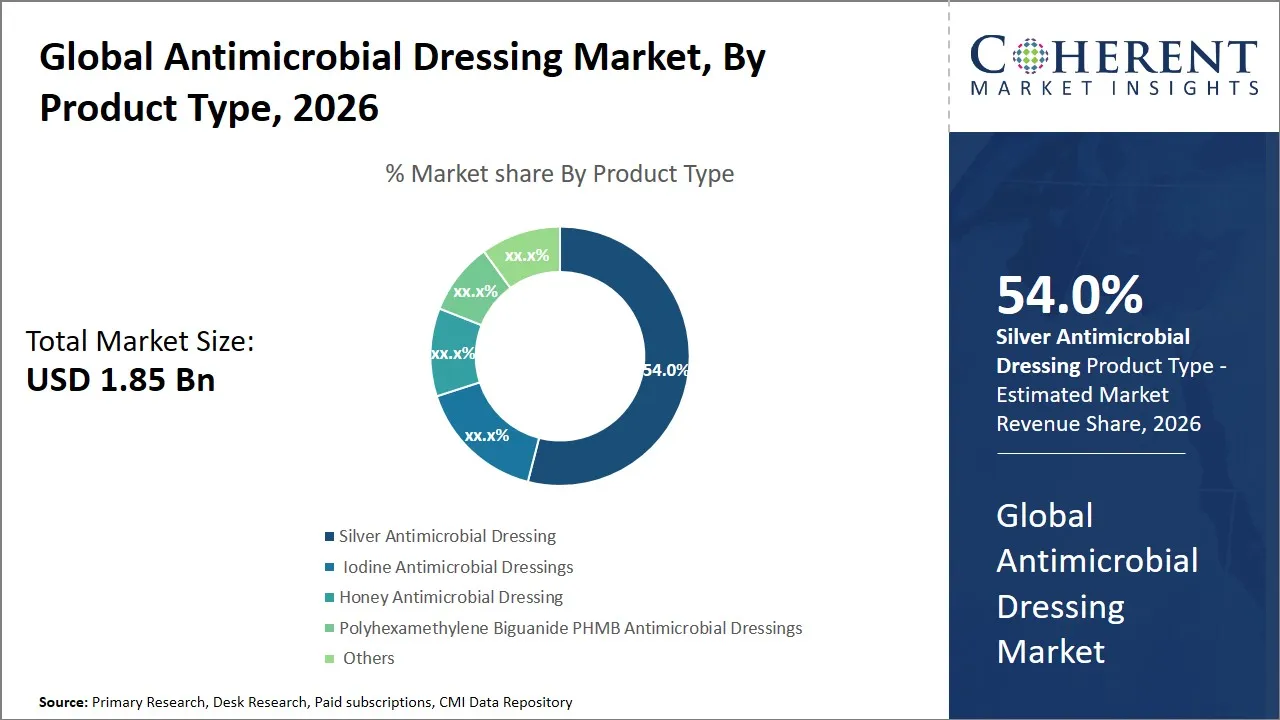
- The silver antimicrobial dressing segment is expected to dominate the antimicrobial dressing market, accounting for 54.0% share in 2026.
- The foam dressings segment is expected to capture 25.0% of the global antimicrobial dressing market share in 2026.
- The chronic wounds segment is expected to dominate with 58.0% of the market share in 2026.
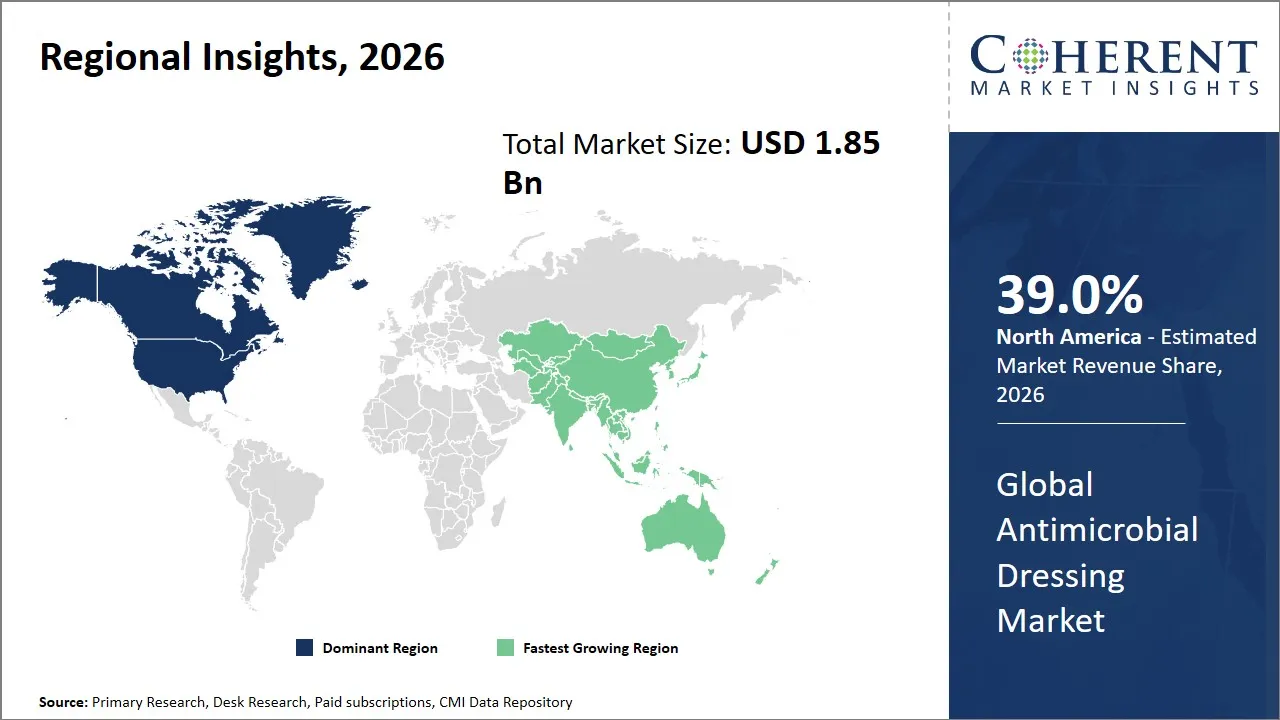
- North America is expected to dominate the global antimicrobial dressing market in 2026, accounting for 39.0% share. Asia Pacific is expected to show the fastest growth, holding a market share of 8.6% in 2026.
Market Overview
- The antimicrobial dressing market is fueled by the increasing incidence rate of chronic wounds, surgical site infections, and burn wounds, for which advanced wound care solutions are required to prevent infections and accelerate the healing process.
- The increasing incidence rate of hospital-acquired infections and awareness about infection control practices are fueling the antimicrobial dressing market growth in the global healthcare sector.
- The increasing elderly and diabetic populations have resulted in an increased incidence rate of ulcers and chronic wounds with poor healing rates, thus fueling the antimicrobial dressing market growth.
- Recent advancements in wound care have led to the development of effective antimicrobial treatments. These include silver dressings, iodine dressings, and bioactive dressings.
Currents Events and their Impact
Current Events | Description and its Impact |
Rising Focus on Infection Prevention and Advanced Wound Care Programs |
|
Advancements in Smart and Bioactive Antimicrobial Dressings |
|
Segmental Insights
- Current Industry Events of 2026
- Market Size Estimation
- Regional Breakdown
- Competitive Landscape
- Customer Intelligence
- Segmental Analysis
- Pricing Analysis
- Key Market Drivers, Challenges & Future Trends
- Customized Insights Section
Why Does the Silver Antimicrobial Dressing Segment Dominate the Global Antimicrobial Dressing Market in 2026?
Silver antimicrobial dressing segment is expected to hold the largest share of 54% in 2026, because of the wide range of antimicrobial properties they offer, which are effective in a wide range of applications. The antimicrobial properties of the silver antimicrobial agents have proven effective in disrupting the cell walls of microbes, thereby interfering with the enzymatic and oxidative processes in the microbes.
The sustained release properties of the agents, therefore, create an effective healing environment, which makes them effective in the management of chronic wounds, diabetic ulcers, and surgical wounds. The agents are effective in the management of biofilms, which are a major hindrance in the healing process, thus gaining the trust of healthcare professionals.
The segment’s leadership is also backed by the balance of antimicrobial activity and biocompatibility. The use of silver dressings is flexible and extends beyond various types of wounds. Burns and post-operative wounds are included in the category. There is an increasing focus on evidence-based wound care. There are clinical studies showing improved healing and lower infection rates. Innovations in the form of foams, hydrogels, and films, as well as the importance of infection control and antimicrobial resistance, are also supporting the already strong market presence of the silver antimicrobial dressings.
For instance, in August 2024, according to a meta-analysis article published in the National Library of Medicine, it is indicated that there is an improvement in wound healing using silver-based dressings compared to conventional wound dressing. This is because the healing time is reduced and the rate of infection is decreased using the silver dressing. This is due to the sustained release of silver ions that prevent the formation of biofilm in the wound, which is a hindrance to wound healing. Silver-based wound dressing is effective in wound healing.
(Source: National Library of Medicine)
Why Does the Foam Dressings Segment Dominate the Global Antimicrobial Dressing Market in 2026?
The foam dressings segment is expected to hold the largest share of 25% in 2026, due to their high absorbency capacity, which is highly effective in managing wounds such as pressure ulcers, diabetic foot ulcers, and venous leg ulcers that exhibit moderate to heavily exuding wounds. The capacity of foam dressings in providing an optimal moisture balance ensures faster healing while reducing the risk of maceration. In addition, foam dressings provide a cushion effect that protects wounds from any form of trauma, thereby providing comfort to patients, which is important in ensuring that patients comply with high levels of comfort.
This is further enhanced by the versatility and high level of functionality that foam dressings have shown in providing improved infection control, especially in managing wounds by carrying various antimicrobial agents such as silver, iodine, and PHMB. In this case, product innovations in ensuring that they are breathable and reduce skin irritations have shown that they are effective in both acute and chronic wounds. Overall, they are easy to use and reduce dressing changes, thereby reducing treatment costs.
The Chronic Wounds Segment Dominates the Global Antimicrobial Dressing Market
The chronic wounds segment is expected to hold the largest share of 58% in 2026, owing to the increasing prevalence of various diseases such as diabetic foot ulcers, venous leg ulcers, and pressure ulcers. These wounds have a longer healing time, high infection risk, and coexisting factors such as diabetes and vascular disease. Therefore, there is a need to provide effective wound care solutions. Also, there is a high risk of microbial colonization, which leads to biofilm formation, making wound healing more complex. Therefore, there is a need to use antimicrobial dressings to provide effective wound healing.
This is further supported by the need to use dressings that provide exudate management, moist wound healing, and targeted antimicrobial activity. Advanced wound care products, such as silver, iodine, and PHMB dressings, provide effective solutions to manage these wounds while providing improved healing. Also, there is a high prevalence of lifestyle disorders, which is increasing day by day, especially due to the increasing age group. Therefore, there is a high prevalence of chronic wounds, which is further supported by guidelines that recommend using antimicrobial dressings to manage chronic wounds effectively, thus maintaining their market share.
Hospital Infection-Control Protocols and Compliance Rates
Hospitals are equipped with measures to control infections, as advocated by the World Health Organization and the Centers for Disease Control and Prevention, to reduce the incidence of healthcare-associated infections (HAIs) in patients. The infection-control measures include hand hygiene, sterilization, environmental monitoring, and wound care management, wherein the use of antimicrobial dressings is important. The level of compliance with these measures may vary, but the use of audits and technology is becoming more common in monitoring these measures. The more the compliance, the lower the infection rates, the shorter the hospital stay, which, in turn, increases the demand for antimicrobial wound care products.
Hospital Infection-Control Compliance Overview
Protocol Area | Typical Compliance Range | Monitoring Method | Impact on Infection Control |
Hand Hygiene | 60% – 85% | Direct Observation, Digital Monitoring | Reduces cross-contamination |
Sterilization & Disinfection | 80% – 95% | Audit Checks, Validation Systems | Ensures equipment safety |
Environmental Monitoring | 70% – 90% | Surface Cultures, Air Sampling | Controls microbial load |
Wound Care Protocols | 75% – 90% | Clinical Audits, Dressing Protocols | Prevents wound infections |
Antibiotic Stewardship | 65% – 85% | Prescription Audits | Reduces resistance risk |
Regional Insights
North America Antimicrobial Dressing Market Analysis and Trends
North America is estimated to hold the largest share of 39% in 2026, owing to existing healthcare infrastructure coupled with the availability of medical technologies. Government support in the form of healthcare policies also adds to the growth of the antimicrobial dressing market in this region. The availability of key players in the medical field, such as 3M, Medline Industries, and Smith & Nephew, is another major factor for the growth of the antimicrobial dressing market in this region. Trade factors also play an important role in the growth of the antimicrobial dressing market in this region due to the efficient approval system of the FDA.
For instance, the U.S. Food and Drug Administration has proposed a more stringent classification for antimicrobial wound dressings by labeling some as Class II or Class III devices based on the risk of antimicrobial resistance.
(Source: U.S. Food & Drug Administration)
Asia Pacific Antimicrobial Dressing Market Analysis and Trends
The Asia Pacific is expected to exhibit the fastest growth in the market with 8.6% share in 2026, driven by rapid modernization and expansion in healthcare infrastructure in emerging economies such as China, India, Japan, and South Korea. Government investments in public healthcare, increased awareness about wound care, and a rise in lifestyle-related diseases have increased the market’s growth rate. The entry and expansion of multinational corporations such as Johnson & Johnson, Mölnlycke Health Care, and Coloplast into local markets through partnerships and joint ventures have increased product availability in these regions. In addition, low manufacturing costs and increased trade liberalization have accelerated market expansion in this region. Government policies that support healthcare reforms and innovation in medical devices have created a favorable business environment for market growth.
For instance, in November 2025, the Indian government improved the Indian medical device ecosystem through a series of regulatory measures and incentive packages like the Production Linked Incentive Scheme and amendments to the Medical Device Rules, with the aim of enhancing domestic production and improving the overall quality of medical devices.
(Source: BioSpectrum Asia Edition)
Antimicrobial Dressing Market Outlook for Key Countries
How is the U.S. Helping in the Growth of the Antimicrobial Dressing Market?
The U.S. market for antimicrobial dressing is fueled by a strong base of healthcare services, with high levels of adoption of sophisticated wound care solutions. The regulatory policies set by the FDA provide scope for innovation, while maintaining high-quality products for antimicrobial dressings. Companies such as 3M, Smith & Nephew, and Medline have a strong market presence, launching sophisticated wound care solutions, especially for chronic wounds, burns, and surgical wounds. The market is boosted by increasing awareness of infection control in hospitals, as well as reimbursement policies that favor innovative wound dressings.
How is Germany Helping in the Growth of the Antimicrobial Dressing Market?
Germany's edge in the marketplace stems from its status as a European healthcare center, known for its stringent quality benchmarks and government efforts to protect patients. The nation is also a hub for medical devices, with companies such as B. Braun Melsungen and Lohmann & Rauscher establishing their presence there. These firms specialize in creating antimicrobial and sophisticated wound care solutions. The healthcare policies in Germany are in support of innovative wound care solutions such as medical dressings, especially in hospitals and clinics, due to a large number of elderly patients with chronic wounds. The smooth flow of trade between European nations ensures that the market operates smoothly.
Key Drivers for the Growth of the India Antimicrobial Dressing Market
India has a growing market for antimicrobial dressing owing to the increasing number of cases of diabetic ulcers, burns, and surgical wounds. There is also an increasing focus on infection prevention in healthcare. Government initiatives for the improvement of healthcare infrastructure in rural areas are major growth drivers for the antimicrobial dressing market. The presence of local players such as Opto Circuits and multinational companies such as Johnson & Johnson helps in the penetration of the market. Reforms and improvements in the reimbursement system are helping in the standardization of the market.
Japan Antimicrobial Dressing Market Trends
Japan is a mature and technologically advanced market with a focus on research and development for healthcare products. It has an elderly population, and this has helped the demand for antimicrobial dressings for chronic wound management. Nipro Corporation and Smith & Nephew are the major players in the market. They are known for the quality and innovation of the products. The healthcare policies and insurance are well established in the country. There are stringent regulations in the country for the use of advanced wound care dresses. Trade practices are also helping the introduction of innovations in the wound care segment.
Market Players, Key Developments, and Competitive Intelligence
Key Developments
- The next generation of Smith & Nephew's ALLEVYN COMPLETE CARE foam dressing was launched in March 2026. This wound healing and pressure injury prevention dressing shows improved performance, such as high exudate absorbency and bacterial resistance.
- In September 2025, researchers at University of Nebraska Medical Center (UNMC) introduced an innovative "smart bandage" designed to enhance wound healing via chemical and electrical stimulation while reducing scarring.
- In March 2025, Mölnlycke Health Care announced the acquisition of P.G.F. Industry Solutions, a manufacturer of wound cleansing solutions (Granudacyn), in an effort to expand its wound care business.
- In January 2024, 3M Health Care won a US$ 34.2 million U.S. government contract to develop advanced wound treatment solutions with a focus on infection prevention and wound healing. This will expand their antimicrobial and advanced dressings offerings.
Top Strategies Followed by Global Antimicrobial Dressing Market Players
Player Type | Strategic Focus | Examples |
Established Market Leaders | Intensive R&D efforts in the development of high-performance antimicrobial dressing products that are effective, biocompatible, and user-friendly. Strategic alliances, global distribution networks, and regulatory expertise are used in building market position and leadership. | 3M Company continues to expand its advanced wound care portfolio through innovation in infection prevention technologies, while Smith & Nephew focuses on developing advanced foam and antimicrobial dressings for improved clinical outcomes, and Mölnlycke Health Care offers products like Mepilex Ag that combine antimicrobial action with patient comfort. |
Mid-Level Players | Intensive efforts in the development of cost-effective high performance antimicrobial dressing products are targeting the price-sensitive market. This will include strategies in manufacturing efficiencies, differentiation, and technology alliances in building the capability and expanding their market position. | Medline Industries provides affordable antimicrobial wound care products with wide hospital distribution, while Coloplast offers a balanced portfolio of cost-effective wound care solutions, and Paul Hartmann AG focuses on delivering high-quality yet economically viable advanced dressings across global markets. |
Small-Scale Players | Development of innovative products such as biodegradable materials, nano-technology-based antimicrobial materials, etc. Building alliances to serve the market and increasing the market visibility and flexibility. | Axio Biosolutions develops bioengineered wound care products for trauma and chronic wounds, while Marine Polymer Technologies focuses on biopolymer-based antimicrobial dressings, and Next Science Limited offers anti-biofilm wound care solutions targeting infection-resistant wounds. |
Market Report Scope
Antimicrobial Dressing Market Report Coverage
| Report Coverage | Details | ||
|---|---|---|---|
| Base Year: | 2025 | Market Size in 2026: | USD 1.85 Bn |
| Historical Data for: | 2020 To 2024 | Forecast Period: | 2026 To 2033 |
| Forecast Period 2026 to 2033 CAGR: | 5.1% | 2033 Value Projection: | USD 2.62 Bn |
| Geographies covered: |
| ||
| Segments covered: |
| ||
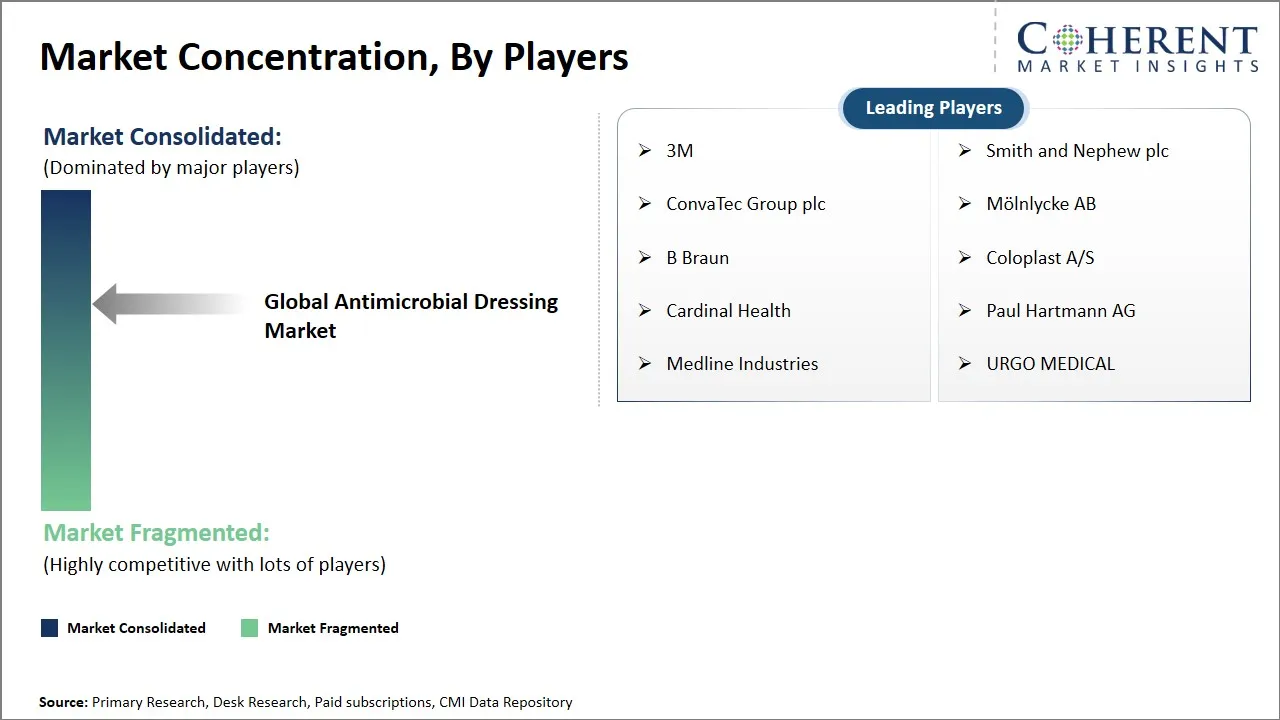
| Companies covered: | 3M, Smith and Nephew plc, ConvaTec Group plc, Mölnlycke AB, B Braun, Coloplast A/S, Cardinal Health, Paul Hartmann AG, Medline Industries, and URGO MEDICAL | ||
| Growth Drivers: |
| ||
| Restraints & Challenges: |
| ||
Global Antimicrobial Dressing Market Dynamics
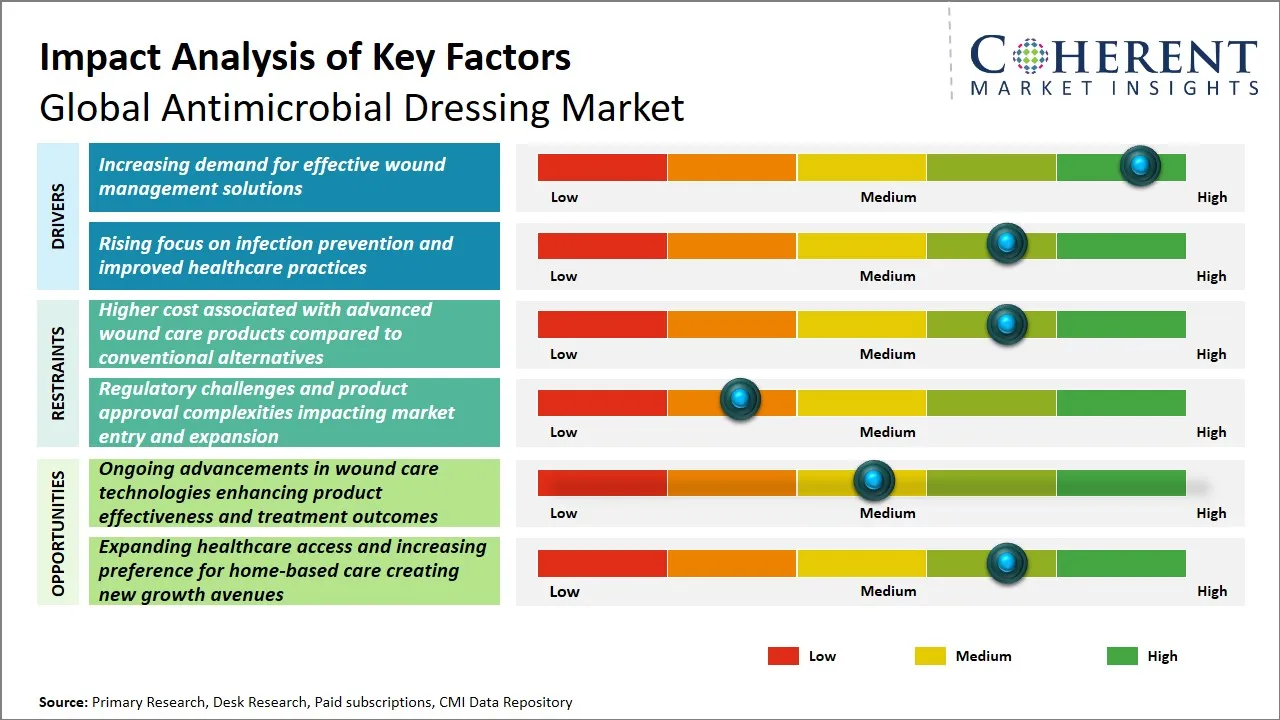
Antimicrobial Dressing Market Driver - Increasing Demand for Effective Wound Management Solutions
The increasing number of chronic wounds, surgical site infections, and diabetic ulcers has greatly increased the need for advanced wound care products, thus creating a high demand for antimicrobial dressings. Generally, conventional dressings do not offer adequate protection against microbial infections, thus increasing healing time.
However, antimicrobial dressings, which have agents such as silver, iodine, or honey, offer improved protection against infections, thus inhibiting microbial growth, thereby creating a conducive environment for faster healing. Furthermore, increasing awareness among patients and healthcare professionals about infection prevention and wound healing is motivating them to use such innovative products.
Finally, as hospitals around the world strive to reduce patients' hospitalization time, thus cutting down on healthcare expenses, there is a critical need to use effective wound care products that can prevent infections and promote faster healing. All these factors have created a high demand for antimicrobial dressings, thus motivating their use in hospitals and homes.
For instance, in April 2025, according to the World Health Organization, there has been a prevalence of 11% of patients affected by surgical site infections in low- and middle-income countries, which has resulted in an increase in hospitalization time, treatment expenses, and potential complications. This has led to a greater need to effectively manage wounds and infections, which has resulted in a greater use of advanced antimicrobial dressing materials in such scenarios.
(Source: World Health Organization)
Antimicrobial Dressing Market Opportunity - Ongoing Advancements in Wound Care Technologies Enhancing Product Effectiveness and Treatment Outcomes
The continuous innovations in wound care technologies have presented an immense growth opportunity for the antimicrobial dressing market due to the significant improvements in the effectiveness of the product. Innovations in antimicrobial dressing technology include the incorporation of nanotechnology, smart technology, and bioactive technology. Innovations in wound care technology have revolutionized the field in such a way that wounds heal at a much faster rate and complications resulting from chronic wounds are reduced. Innovations in antimicrobial dressing technology include the incorporation of nanoparticles in the dressing, which may include elements such as silver, honey, and iodine.
This ensures that the dressing is effective in fighting a broad spectrum of microbes, including antibiotic-resistant bacteria. Additionally, smart dressing technology allows for the monitoring of wound conditions such as pH, moisture levels, and temperature in real time using sensors. This ensures that appropriate care is given for optimal healing conditions. This is critical in the care and management of chronic wounds such as diabetic foot ulcers, pressure ulcers, and venous leg ulcers. This is due to the reduced length of stay in the hospital and the cost savings.
In addition to this, the increasing trend of using personalized and precise medicine in wound care is also contributing to the rising need for advanced antimicrobial dressing products that can be tailored according to the specific requirements of individual patients, thus increasing the overall success rate in the treatment of wounds. As technology in wound care continues to grow and develop, these advanced antimicrobial dressing products are likely to have a larger market share in the future as they meet the increasing need for effective and sustainable wound care solutions in the healthcare sector.
For instance, in January 2025, a study published in Biosensors and Bioelectronics ((available on ScienceDirect) developed a wireless smart wound dressing that can monitor wound biomarkers such as MMP-9 in real-time while at the same time releasing antibacterial silver nanoparticles to heal the wound.
(Source: Biosensors and Bioelectronics)
Analyst Opinion (Expert Opinion)
- The antimicrobial dressing market is driven by factors like an increase in the incidence of chronic wounds, an increase in surgeries, and a greater need to prevent infections. This is expected to create a steady growth rate in the antimicrobial dressing market.
- The trend of adopting advanced wound care products is becoming increasingly popular, and there is a greater trend of healthcare practitioners preferring to use antimicrobial dressings instead of normal products to attain better results.
- Innovations in silver, PHMB, and bioactive dressings, as well as advancements in smart and moisture-retentive technology, are helping to increase the effectiveness of antimicrobial products.
- Despite the fact that there is a lot of growth potential in the antimicrobial dressing market, there are a few factors like the high cost of products and the emergence of antimicrobial resistance, which may act as a hindrance to the growth of the market, but overall growth is expected.
Speak to the analyst
Want personalized insights?
Take the findings above to one of our principal consultants, or have the report rebuilt around the segments, geographies and competitors you actually track.
Market Segmentation
- Product Type Insights (Revenue, USD Bn, 2021 - 2033)
- Silver Antimicrobial Dressing
- Iodine Antimicrobial Dressings
- Honey Antimicrobial Dressing
- Polyhexamethylene Biguanide PHMB Antimicrobial Dressings
- Others
- Dressing Type Insights (Revenue, USD Bn, 2021 - 2033)
- Foam Dressings
- Alginate Dressings
- Hydrogel Dressings
- Hydrocolloid Dressings
- Film Dressings
- Composite Dressings
- Application Insights (Revenue, USD Bn, 2021 - 2033)
- Chronic Wounds
- Acute Wounds
- End User Insights (Revenue, USD Bn, 2021 – 2033)
- Hospitals
- Clinics
- Ambulatory Surgical Centers
- Home Healthcare Settings
- Regional Insights (Revenue, USD Bn, 2021 - 2033)
- North America
- U.S.
- Canada
- Latin America
- Brazil
- Argentina
- Mexico
- Rest of Latin America
- Europe
- Germany
- U.K.
- Spain
- France
- Italy
- Russia
- Rest of Europe
- Asia Pacific
- China
- India
- Japan
- Australia
- South Korea
- ASEAN
- Rest of Asia Pacific
- Middle East
- GCC Countries
- Israel
- Rest of Middle East
- Africa
- South Africa
- North Africa
- Central Africa
- North America
- Key Players Insights
- 3M
- Smith and Nephew plc
- ConvaTec Group plc
- Mölnlycke AB
- B Braun
- Coloplast A/S
- Cardinal Health
- Paul Hartmann AG
- Medline Industries
- URGO MEDICAL
Sources
Primary Research Interviews
Industry Stakeholders
- Antimicrobial dressing and advanced wound care product manufacturers
- Medical device and wound care product development specialists
- Biotechnology and biomaterials researchers
- Hospital procurement managers (wound care & infection control)
- Regulatory experts in medical devices and wound care products
- Distributors and suppliers of wound care and surgical consumables
End Users
- Wound care specialists and dermatologists
- Surgeons and infection control physicians
- Nurses and hospital wound care teams
- Clinical microbiologists
- Home healthcare providers and caregivers
- Patients using advanced wound care products
Government and International Databases
- World Health Organization (WHO) – Infection Prevention & Control Reports
- Centers for Disease Control and Prevention (CDC) – Healthcare-Associated Infection (HAI) Data
- U.S. Food and Drug Administration (FDA) – Medical Device Databases
- European Medicines Agency (EMA) – Medical Device & Safety Data
- National Institutes of Health (NIH) – Wound Healing & Infection Research
Trade Publications
- Medical Device Network
- Pharmaceutical Technology
- BioPharma Dive
- Healthcare Purchasing News
- Wound Care Advisor
Academic Journals
- Wound Repair and Regeneration
- Journal of Wound Care
- Advances in Wound Care
- International Wound Journal
- Journal of Clinical Microbiology
Reputable Newspapers
- The New York Times – Health Section
- The Guardian – Science & Health
- Financial Times – Healthcare
- The Hindu – Health
Industry Associations
- Association for the Advancement of Wound Care (AAWC)
- Wound Healing Society (WHS)
- European Wound Management Association (EWMA)
- American College of Surgeons (ACS)
- Biotechnology Innovation Organization (BIO)
Public Domain Resources
- ClinicalTrials.gov
- WHO Global Health Observatory
- NIH PubMed Database
- CDC Infection Control Publications
- U.S. FDA Medical Device Databases
Proprietary Elements
- CMI Data Analytics Tool: Proprietary analytics tool to analyze real-time market trends, consumer behavior, and technology adoption in market
- Proprietary CMI Existing Repository of Information for Last 10 Years
Get access to 250+ pages report
Every segment, forecast, competitor profile and data table behind the analysis above — available for instant download.
- ESOMAR Member
- ISO 9001:2015 Certified
- D-U-N-S Registered
- GDPR & CCPA Compliant
Missing comfort of reading report in your local language? Find your preferred language:
Transform your Strategy with Exclusive Trending Reports
Frequently Asked Questions
The global antimicrobial dressing market is estimated to be valued at USD 1.85 billion in 2026 and is expected to reach USD 2.62 billion by 2033.
The CAGR of the global antimicrobial dressing market is projected to be 5.1% from 2026 to 2033.
Increasing demand for effective wound management solutions and rising focus on infection prevention and improved healthcare practices are the major factors driving the growth of the global antimicrobial dressing market.
Antimicrobial dressings play an important role in the management of infection by controlling the growth of bacteria and other organisms in the wound bed. They help in the maintenance of a moist environment for healing, reduce the chances of complications arising, and promote the regeneration of tissues. This has led to improved patient outcomes and has thus become an important part of the current wound care practices.
Antimicrobial dressings are developed with antimicrobial materials such as silver ions, iodine compounds, PHMB, medical honey, and antimicrobial polymers. These materials have broad-spectrum antimicrobial activity and are incorporated into various types of dressings.
Higher cost associated with advanced wound care products compared to conventional alternatives and regulatory challenges and product approval complexities impacting market entry and expansion are the major factors hampering the growth of the global antimicrobial dressing market.
In terms of product type, silver antimicrobial dressing is estimated to dominate the market revenue share in 2026.