

Non-Vascular Stents Market Size and Share Analysis: (2026 - 2033)
The global non-vascular stents market is estimated to be valued at USD 1,399 Mn in 2026 and is projected to grow at a compound annual growth rate (CAGR) of 4.7% during the forecast period (2026-2033), reaching USD 1,920 Mn by 2033. This growth can be attributed to rising prevalence of gastrointestinal, urological, and respiratory tract disorders, increasing demand for minimally invasive procedures, and growing adoption of advanced endoscopic and interventional technologies.
Key Takeaways from the Non-Vascular Stents Market Report
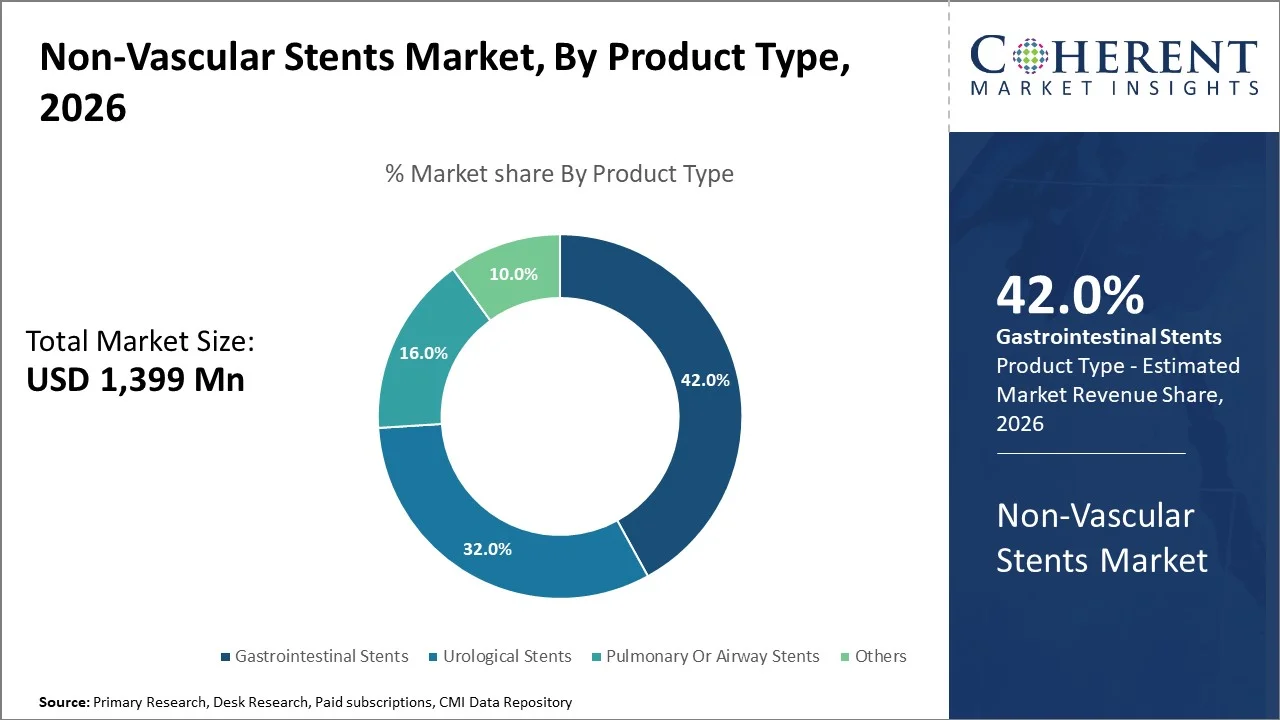
- Gastrointestinal stents are expected to account for the largest market share of 42% in 2026, due to their use in treating esophageal, biliary, and colorectal obstructions and increasing adoption in minimally invasive management of gastrointestinal cancers and strictures. For example, clinical studies report that malignant colorectal stenting achieves approximately 70%–92% clinical success in relieving obstruction.
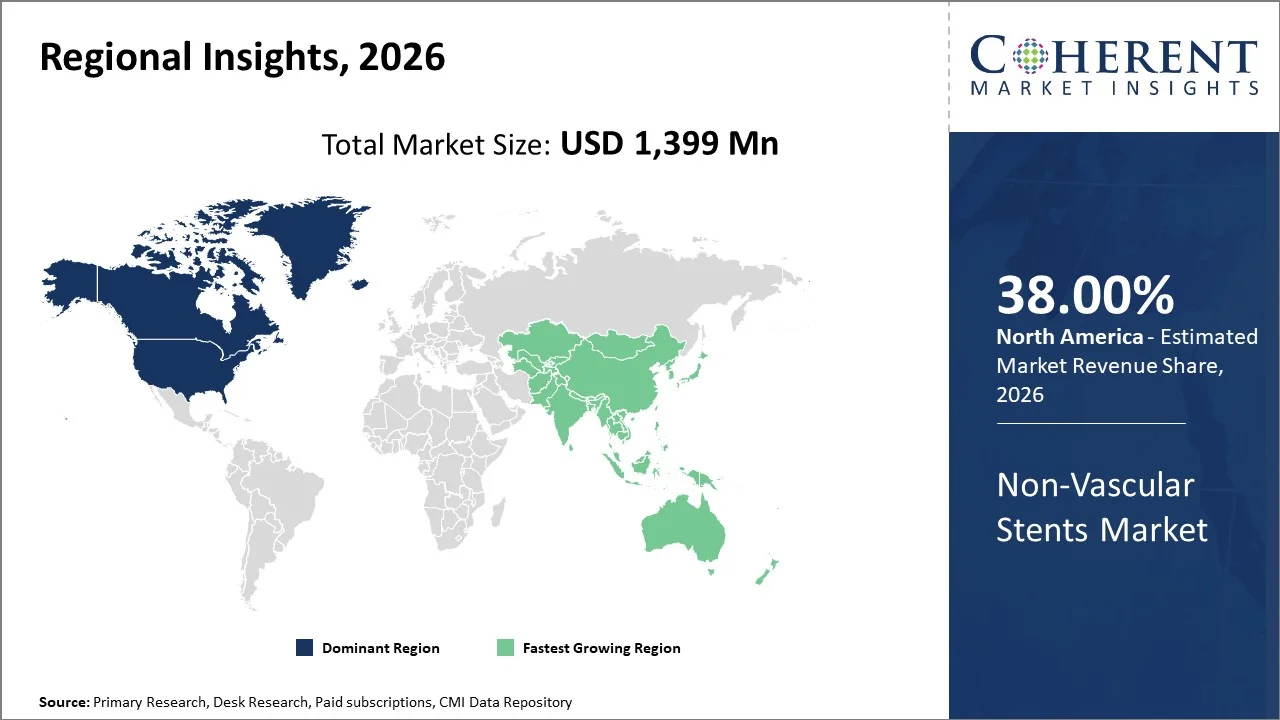
- North America is set to dominate the global non-vascular stents industry with a share of 38% in 2026, owing to rising burden of chronic diseases, increasing adoption of minimally invasive procedures, and advanced hospital infrastructure. For instance, up to 20% of patients with colorectal cancer may develop bowel obstruction, often requiring endoscopic or surgical decompression.
- Asia Pacific, holding a share of 28% in 2026, is poised to emerge as the most lucrative market for non-vascular stent manufacturers during the forecast period, thanks to expanding patient pool and increasing healthcare access. For example, Asia accounts for approximately 49% of global cancer cases according to GLOBOCAN (IARC). This high disease burden, especially of gastrointestinal cancers, is expected to drive increased adoption of stent-based minimally invasive interventions, thereby boosting sales of non-vascular stents.
Non-Vascular Stents Market Overview
The global non vascular stents market is poised to register steady growth during the forecast period. This is primarily due to increasing prevalence of gastrointestinal, urological, and airway obstruction conditions, rising burden of cancers such as esophageal and colorectal cancers, surging demand for advanced medical devices, and growing preference for minimally invasive endoscopic procedures.
Non-vascular stents are a family of devices used for a variety of applications, including esophageal, biliary, colonic, tracheal, and bronchial implantations. Non-vascular stents are implanted using minimally invasive procedures. These procedures offer faster recovery, reduced pain, and shorter hospital stays.
Non-vascular stents are increasingly used in the treatment of gastrointestinal, pulmonary, and urological diseases. Thus, rising cases of these chronic conditions are expected to create a conducive environment for the growth of non-invasive stents during the forecast period.
Increasing geriatric population is also playing a key role in boosting non-invasive stent sales globally. Older people are more susceptible to cancer-related obstructions, bile duct and urinary tract complications, and chronic respiratory disorders. This, in turn, is expected to drive demand for stent-based interventions during the forthcoming period.
Biodegradable stents, especially bioabsorbable gastrointestinal stents, are gaining popularity because they gradually degrade and are absorbed by the body. Bioabsorbable stents eliminate the need for a secondary removal procedure and reduce complications associated with stent retrieval. Similarly, drug-eluting designs help prevent tumor ingrowth, reduce inflammation, and extend stent patency, further enhancing therapeutic effectiveness.
Segmental Insights
Which Product Type Dominates the Non-Vascular Stents Market?
Gastrointestinal Stents Lead the Market with Over Two-Fifths Share in 2026
According to Coherent Market Insights’ latest non-vascular stents market analysis, gastrointestinal stents segment is projected to lead with a share of 42% in 2026. This is attributable to high prevalence of gastrointestinal cancers and related obstructions such as esophageal strictures and biliary blockages, which require effective palliative and therapeutic interventions.
According to the International Agency for Research on Cancer (IARC), gastrointestinal (GI) cancers account for one in four cancer cases and one in three cancer-related deaths globally. As the burden of these conditions continues to rise, the demand for gastrointestinal stents is expected to grow proportionately.
Rising popularity of stent therapy for gastrointestinal diseases and increasing preference for minimally invasive endoscopic procedures are also supporting segment growth. Similarly, growing aging population, which is more prone to digestive tract disorders, is expected to positively impact sales of gastrointestinal stents during the forecast period.
- Current Industry Events of 2026
- Market Size Estimation
- Regional Breakdown
- Competitive Landscape
- Customer Intelligence
- Segmental Analysis
- Pricing Analysis
- Key Market Drivers, Challenges & Future Trends
- Customized Insights Section
Non-Vascular Stents Market Growth Drivers
Rising Burden of Chronic and Obstructive Diseases: Increasing prevalence of chronic and obstructive disorders is providing a strong impetus for the growth of the non-vascular stents market. There is a rise in cases of chronic conditions such as gastrointestinal cancers, urological disorders, and pulmonary and airway diseases like COPD. For example, according to the National Kidney Foundation, each year, more than 500,000 people visit the emergency room due to kidney stones.
Similarly, gastrointestinal cancers account for approximately 4.8–5.2 million new cases annually worldwide. This, in turn, is expected to drive demand for non-vascular stents such as urological stents, gastrointestinal stents, and pulmonary stents. These conditions often require stent placement to maintain organ patency and relieve obstruction.
Non-Vascular Stents Market Opportunities
Shift Towards Minimally Invasive Procedures: Rising adoption of minimally invasive procedures is expected to create lucrative growth opportunities for the non-vascular stents market during the forecast period. There is a growing shift from open surgery to endoscopic and minimally invasive treatments, as they offer shorter hospital stays, faster recovery, reduced complications and infection risks, and lower overall treatment costs. This, in turn, is making non-vascular stenting a preferred clinical option.
Non-Vascular Stents Market Trends
Technological Advancements in Stent Design: Innovation is expanding both the usage and effectiveness of stents. Companies are developing biodegradable stents/bioabsorbable stents, drug-eluting and coated stents, and improved materials such as nitinol and advanced polymers, along with enhanced self-expanding designs. These innovations improve safety, reduce complications, and broaden clinical applications.
Similarly, advancements in minimally invasive delivery techniques, such as endoscopic ultrasound (EUS)-guided stent placement, are further improving procedural precision and outcomes. A recent example is Boston Scientific’s AXIOS stent system, used for endoscopic ultrasound (EUS)-guided drainage in gastrointestinal conditions like pancreatic fluid collections. The system combines a lumen-apposing metal stent with an electrocautery-assisted delivery device, improving minimally invasive placement and procedural accuracy.
Non-Vascular Stents Market Innovations
Material Innovation and Better Biocompatibility
Continuous material innovation and improved biocompatibility are positively impacting non-vascular stents market growth. Top manufacturers are developing stents that are safer, more durable, and better tolerated by the body. Advances in materials such as nitinol, next-generation polymers, and bioresorbable compounds are enabling stents that offer higher flexibility, improved radial strength, and reduced risk of tissue irritation, migration, or blockage.
Surface modifications like drug-eluting and anti-microbial coatings are also being widely adopted to minimize infection risk and prevent restenosis, especially in gastrointestinal, biliary, and respiratory applications. A practical example is the increasing clinical use of advanced nitinol-based self-expanding stents in biliary and esophageal strictures, which provide better conformability to complex anatomies and improved long-term patency compared to earlier stainless-steel designs. This shows the market’s shift toward safer and more biocompatible implant solutions.
Current Events and Their Impact on the Non-Vascular Stents Market
Current Event | Description and its Impact |
High Global Burden of Gastrointestinal Cancers |
|
Rising Preference for Minimally Invasive Endoscopic Management of GI Obstructions |
|
Regional Insights
North America Remains at the Epicenter of Non-Vascular Stents Market Growth
North America is expected to retain its dominance over the global non-vascular stents market during the forecast period, capturing a share of 38% in 2026. This can be attributed to high disease burden, availability of advanced medical devices, and rising adoption of minimally invasive therapies.
High prevalence of chronic respiratory diseases that often require airway-related interventions and stenting support is boosting North America non-vascular stents market. For example, the U.S. Centers for Disease Control and Prevention (CDC) reports that about 16 million Americans are diagnosed with chronic obstructive pulmonary disease (COPD), a major condition linked to airway narrowing and obstruction that can require interventional treatment in severe cases. This high disease burden is driving demand for non-vascular stents, especially airway stents.
Asia Pacific to Emerge as Central Hub for Non-Vascular Stent Companies
Asia Pacific is anticipated to emerge as a hotbed for manufacturers of non-vascular stents during the forecast period, holding a share of 25% in 2026. This is mostly due to expanding healthcare access, rising aging population, increasing burden of chronic diseases, and rising preference for palliative and quality-of-life treatments
Growing prevalence of chronic kidney disease (CKD), which increases the need for ureteral and related non-vascular stenting procedures, is fostering growth of Asia Pacific non-vascular stents market. According to a peer-reviewed study published in The Lancet Global Health, the global CKD prevalence is estimated at around 9.1% of the population, with Asia contributing a large share due to its population size and rising diabetes and hypertension rates. This increasing disease burden in nations like China and India is driving non-vascular stent demand.
Non-Vascular Stents Market Outlook – Country-wise
U.S. Non-Vascular Stents Market Trends
The United States is expected to remain a leading market for non-vascular stent technologies during the forecast period. This is mostly due to advanced healthcare infrastructure, high procedure volumes, and strong adoption of minimally invasive treatments. Rising incidence of chronic respiratory and urological disorders that require airway, biliary, or urinary tract stenting is also boosting sales of non-vascular stents in the nation.
China Non-Vascular Stents Market Forecast
The non-vascular stents market in China is expected to grow steadily during the assessment period. This can be attributed to expanding healthcare access, rising geriatric population, and increasing burden of chronic diseases such as kidney and respiratory disorders. Similarly, supportive government healthcare reforms and growing adoption of minimally invasive procedures are supporting market expansion.
Who are the Major Companies in the Non-Vascular Stents Market?
Some of the major players in Non-Vascular Stents Market are Allium Medical, Boston Scientific, C.R. Bard, ELLA-CS, S.R.O, EndoChoice, Merit Endotek, Taewoong Medical, and Xlumena.
Key Strategies Adopted by Industry Players
Leading facial tissue companies are adopting various organic and inorganic strategies to boost their revenue as well as gain a competitive edge over the industry. These include product innovation, development of advanced biocompatible and drug-eluting stents, collaborations, mergers and acquisitions, geographical expansion, and regulatory approvals.
For instance, manufacturers are increasingly investing in next-generation stent technologies with improved flexibility, anti-migration features, and enhanced drug delivery capabilities to treat conditions in the gastrointestinal, biliary, and urological tracts more effectively. In addition, companies are partnering with hospitals and research institutes to accelerate clinical trials and expand product adoption across emerging markets.
- In October 2025, Olympus signed an international distribution agreement with W. L. Gore & Associates. Under this agreement, Olympus will distribute the GORE VIABIL Biliary Endoprosthesis as part of its EndoTherapy portfolio.
- In July 2024, CGBIO announced that its ARISTENT biliary stent received approval from Japan’s Pharmaceuticals and Medical Devices Agency (PMDA). This approval supports CGBIO’s expansion of its gastrointestinal stent products in Japan.
Market Report Scope
Non-Vascular Stents Market Report Coverage
| Report Coverage | Details | ||
|---|---|---|---|
| Base Year: | 2025 | Market Size in 2026: | USD 1,399 Mn |
| Historical Data for: | 2020 To 2024 | Forecast Period: | 2026 To 2033 |
| Forecast Period 2026 to 2033 CAGR: | 4.7% | 2033 Value Projection: | USD 1,920 Mn |
| Geographies covered: |
| ||
| Segments covered: |
| ||
| Companies covered: | Allium Medical, Boston Scientific, C.R. Bard, ELLA-CS, S.R.O, EndoChoice, Merit Endotek, Taewoong Medical, and Xlumena. | ||
| Growth Drivers: |
| ||
| Restraints & Challenges: |
| ||
Analyst Opinion (Expert Opinion)
- Non-vascular stents are used to open blocked passages in the body, mainly in the urinary tract, bile ducts, esophagus, and airways, helping restore normal fluid or air flow.
- Kidney stone disease is acting as a catalyst triggering sales of ureteral stent use. According to the National Kidney Foundation, about 10% of people will develop a kidney stone at some point in their lifetime. The condition often requires procedures where stents are placed to support urine flow after treatment.
- Most non-vascular stent procedures are done using minimally invasive endoscopic techniques, which generally reduce hospital stay and recovery time compared to open surgery.
- Demand is increasing due to a growing aging population and higher cases of conditions like cancer-related strictures, gallstones, and chronic urinary blockages, which often require stent placement to maintain passage openness.
Speak to the analyst
Want personalized insights?
Take the findings above to one of our principal consultants, or have the report rebuilt around the segments, geographies and competitors you actually track.
Market Segmentation
- By Product Type Insights ( Revenue, USD Mn, 2021 - 2033)
- Urological Stents
- Gastrointestinal Stents
- Pulmonary Or Airway Stents
- Others
- By Region Insights ( Revenue, USD Mn, 2021 - 2033)
- North America
- U.S.
- Canada
- Latin America
- Brazil
- Argentina
- Mexico
- Rest of Latin America
- Europe
- Germany
- U.K.
- Spain
- France
- Italy
- Russia
- Rest of Europe
- Asia Pacific
- China
- India
- Japan
- Australia
- South Korea
- ASEAN
- Rest of Asia Pacific
- Middle East
- GCC Countries
- Israel
- Rest of Middle East
- Africa
- South Africa
- North Africa
- Central Africa
- North America
- Key Players
- Allium Medical
- Boston Scientific
- R. Bard
- ELLA-CS
- R.O
- EndoChoice
- Merit Endotek
- Taewoong Medical
- Xlumena
Sources
Primary Research interviews
- Cardiologists
- Interventional radiologists
- Hospital procurement managers
- Medical device distributors
- Healthcare administrators
- Key opinion leaders in cardiovascular treatment
Databases
- PubMed
- Medline
- Scopus
- Embase
- National Library of Medicine (NLM)
- ClinicalTrials.gov
- World Bank Data
- OECD Health Statistics
- WHO Global Health Observatory
Magazines
- Medical Device & Diagnostic Industry (MD+DI)
- Cardiovascular Business
- The Lancet Digital Health (industry insights section)
- Medical Economics
- BioSpectrum.
Journals
- Journal of the American College of Cardiology (JACC)
- Circulation
- European Heart Journal
- Journal of Vascular and Interventional Radiology
- Catheterization and Cardiovascular Interventions
Newspapers
- The Hindu
- The Times of India
- The Economic Times
- The Guardian
- The New York Times
- Reuters Health coverage
Associations
- American Heart Association (AHA)
- European Society of Cardiology (ESC)
- World Health Organization (WHO) cardiovascular programs
- National Heart, Lung, and Blood Institute (NHLBI)
- Society of Interventional Radiology (SIR)
Public Domain sources
- Government health ministry publications
- FDA device approvals database
- EMA medical device reports
- NIH reports
- World Bank open data
- WHO reports
- Academic institutional repositories
Proprietary Elements
- CMI Data Analytics Tool
- Proprietary CMI Existing Repository of information for last 10 years
Get access to 250+ pages report
Every segment, forecast, competitor profile and data table behind the analysis above — available for instant download.
- ESOMAR Member
- ISO 9001:2015 Certified
- D-U-N-S Registered
- GDPR & CCPA Compliant
Missing comfort of reading report in your local language? Find your preferred language:
Transform your Strategy with Exclusive Trending Reports
Frequently Asked Questions
The global Non-Vascular Stents Market is estimated to be valued at USD 1,399 Mn in 2026.
The global Non-Vascular Stents Market value is expected to reach USD 1,920 Mn by 2033.
The global market is poised to exhibit a CAGR of 4.7% from 2026 to 2033.
Major growth factors include rising prevalence of gastrointestinal, urological, and respiratory tract disorders, growing adoption of minimally invasive procedures, and advancements in stent technologies
Gastrointestinal stents segment is set to lead the market with a share of 42% in 2026.
Some major companies in the Non-Vascular Stents Market include Allium Medical, Boston Scientific, C.R. Bard, ELLA-CS, S.R.O, EndoChoice, Merit Endotek, Taewoong Medical, and Xlumena.
North America, with 38% share in 2026, is set to lead the market during the forecast period.