

Global Aseptic Dressing Market Size and Forecast – 2026 To 2033
The global aseptic dressing market is expected to grow from USD 4.6 Bn in 2026 to USD 7.4 Bn by 2033, registering a compound annual growth rate (CAGR) of 7.1% from 2026 to 2033. The market for aseptic dressing is poised for significant expansion, fueled by growing incidence of chronic wounds and an increase in the number of surgical operations requiring more advanced infection prevention and wound treatment solutions.
According to Intermountain Health, approximately 6.5 million people in the U.S. suffer from chronic wounds, while 1-2% of the population in developed nations will develop chronic wounds at some point during their lifetime, indicating increased worldwide demand for aseptic dressing products.
(Source: Intermountain Health)
Key Takeaways of the Global Aseptic Dressing Market
- Foam dressings are projected to hold 31.8 % of the global aseptic dressing market share in 2026, making it the dominant product type segment, with considerable penetration in North America due to their stringent guidelines regarding infection prevention and excellent wound management techniques in the U.S. and Canadian health systems. Hospitals in this region are widely employing high absorbency foam dressings in the treatment of surgical, diabetic, and pressure ulcers under a comprehensive and standardized clinical wound care protocol. For instance, the Centers for Disease Control and Prevention (CDC) has consistently stressed the prevention of surgical site infections and healthcare-associated wound complications via systematic infection control and wound management protocols in health care facilities. (Source: Centers for Disease Control and Prevention)
- Surgical wounds are projected to hold 36.9 % of the global aseptic dressing market share in 2026, making it the dominant application segment, particularly in Europe attributed to the widespread implementation of surgical site infection surveillance systems and post-operative wound care standards in Germany, the U.K. and France which helps to support the widespread use of modern wound management concepts. The advanced asepsis techniques to prevent surgical wound infection are increasingly recognized in health care systems throughout Europe. For instance, NHS hospitals remain under surveillance programs by the UK Health Security Agency for national surgical site infection surveillance, in an attempt to enhance infection control and wound care.
- Hospitals and clinics are projected to hold 54.2 % of the global aseptic dressing market share in 2026, making it the dominant end user segment, across Asia Pacific largely driven by increased investment in health care infrastructure at a fast pace, surgical operations and improved hospital infection control systems throughout China, India, Japan and Southeast Asia. With expanding programs for patient safety and wound care, hospitals and clinics throughout the region are moving toward utilizing sterile wound dressing materials. For instance, the National Patient Safety Implementation Framework (NPSIF) introduced by India advocates for infection prevention, reduction of HAIs and better clinical practices within hospitals which ensures appropriate and swift adoption of the advanced solutions for asepsis in wound management in clinical settings. (Source: Ministry of Health and Family Welfare)
- North America maintains its dominance with an expected share of 38.1 % in 2026, bolstered by the high penetration of sophisticated antimicrobial wound care products, an increase in surgical procedures performed on outpatients, and robust implementation of infection prevention measures within hospitals throughout the U.S. and Canada. There is also increased use of silicone foam dressings, silver wound care products, and post-operative infection control therapies within various specialized wound care centers and in acute care settings throughout the region. For instance, Healogics, LLC operates as the largest network of wound care centers in the U.S. and serves as a support structure for chronic wound, diabetic ulcer and post-operative wound care services. (Source: Healogics, LLC)
- Asia Pacific is expected to exhibit the fastest growth with an estimated contribution of 25.9 % share in 2026, propelled by swift hospital infrastructure growth, the escalating burden of diabetic wounds and high-level uptake of novel wound care technology in China, India, Japan and South Korea. Throughout Asia Pacific, clinicians are continuing to implement the use of antimicrobial foam dressings, hydrofiber dressings and novel post-operative wound care routines, in order to manage and reduce infection, while enhancing patient recovery. For instance, Nipro Corporation is extending its range of medical devices and wound care products throughout the region to meet increasing demand for high technology and efficient wound care within hospitals and clinical settings. (Source: Nipro Europe Group Companies)
- Rising Demand for Advanced Post-Surgical Infection Management: There has been a rising interest towards decreased surgical site infections and post-operative healing of wounds. This development has caused an increase in the utilization of advanced aseptic dressing products by hospitals and surgical care centers. Healthcare professionals have been employing the use of antimicrobial dressing with moisture-balance and atraumatic dressings to better handle the wound of surgical cuts and high-risk wounds. The expanding use of infection prevention standards will also lead to an increased usage of high quality sterile wound care products across the world.
- Expansion of Home-Based Chronic Wound Care Solutions: There are considerable growth opportunities within the aseptic dressings sector due to the rise in home care and outpatient wound management. Companies are in the process of developing patient friendly, self-adhesive, long wear aseptic dressings suitable for treating diabetic ulcers, pressure sores and chronic wounds in the elderly at home. Due to increased decentralization of wound care and decreased hospitalization time, demand for aseptic home care dressings is predicted to increase in the future.
Segmental Insights
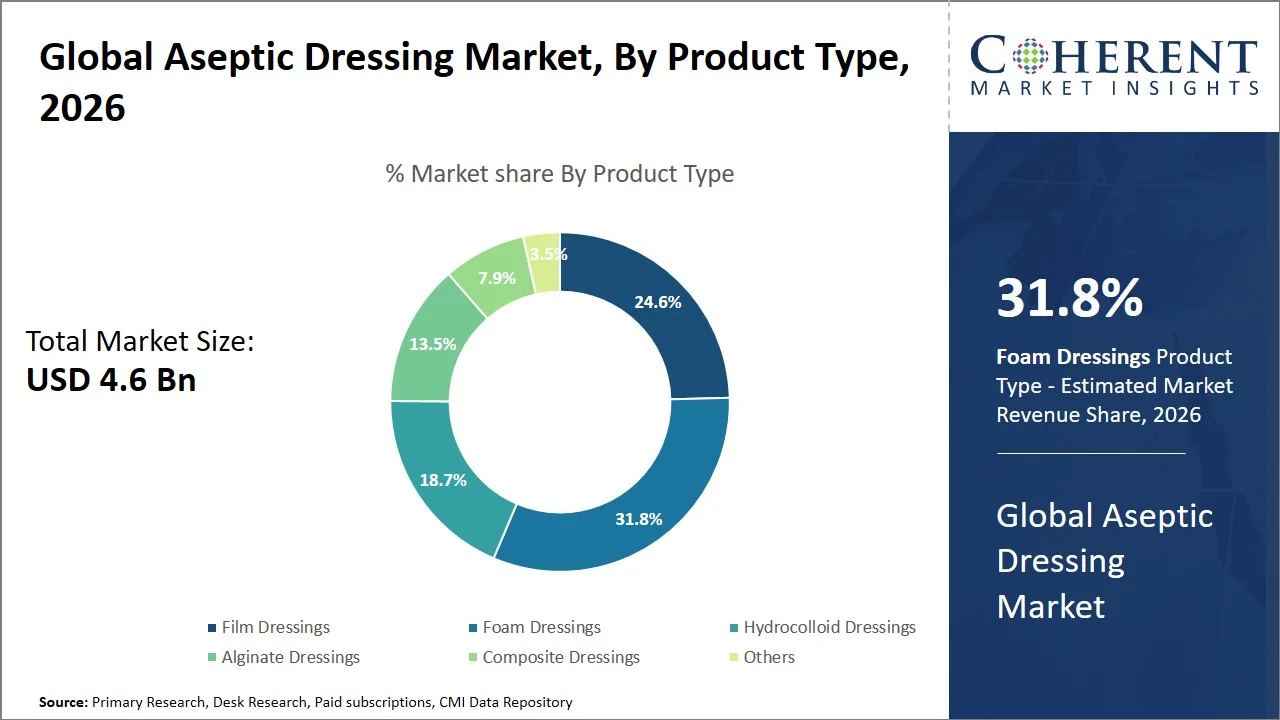
Why Does the Foam Dressings Segment Dominate the Global Aseptic Dressing Market?
Foam dressings are projected to hold a market share of 31.8% in 2026, owing to their absorption capacity, exudate management features and ability to maintain a moist wound healing environment. Foam dressings are extensively used in managing chronic wounds, pressure ulcers, diabetic foot ulcers, burns, post-surgical wounds in order to minimize risk of infection and protect sensitive wounds against ambient bacteria. Soft compressible matrix, atraumatic removal and reduced skin maceration contribute to the excellent clinical performance of foam dressings used in hospitals, wound care clinics and nursing homes.
Growing usage of novel, multifunctional products such as antimicrobial foam dressings and multilayer foam dressings are anticipated to grow the market application of foam dressings for critical wound and infection care therapies in future. For instance, Molnlycke Health Care's Mepilex Border Flex is a foam dressing that features superior exudate absorption and atraumatic removal properties and is indicated for use on a wide variety of chronic and post-surgical wound management applications. Patient comfort and wound trauma and contamination risks are minimized using this dressing which incorporates Flex Technology and a Safetac contact layer. (Source: Mölnlycke Health Care)
- Current Industry Events of 2026
- Market Size Estimation
- Regional Breakdown
- Competitive Landscape
- Customer Intelligence
- Segmental Analysis
- Pricing Analysis
- Key Market Drivers, Challenges & Future Trends
- Customized Insights Section
Why Do Surgical Wounds Represent the Largest Application Segment in the Global Aseptic Dressing Market?
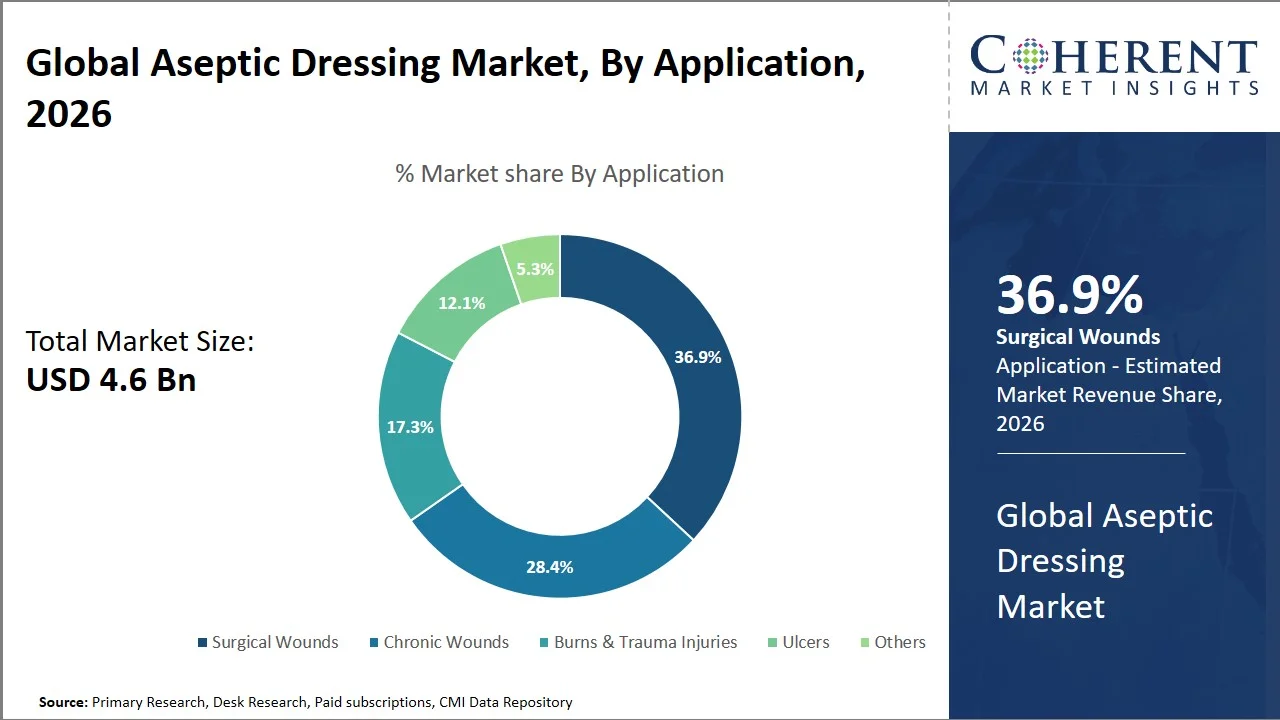
Surgical wounds are projected to hold a market share of 36.9% in 2026, owing to an increase in the number of surgical procedures and awareness about the prevention of Surgical Site Infections (SSIs). Aseptic dressings are extensively used for the management of post-operative wounds as they prevent the wound from contamination by maintaining the sterile conditions. Aseptic dressings efficiently manage the exudate, provide a secure fixation and are non-traumatic to the wound bed and surrounding skin upon removal. Increasing prevalence of minimally invasive surgery techniques coupled with the rising percentage of old and immune compromised population who need to treat advanced wounds is a key driver for increase in the demand of high performance surgical wound dressings.
Hospitals and surgical units have started adopting the best practice of wound management, based on evidence-based research aiming for decreasing the risk of infection and reducing complications. For instance, Tegaderm surgical dressings from 3M Health Care, are developed for both post operative incision coverage and aseptic wound care procedures. The dressings feature transparency for easy wound visualization, bacterial barriers for waterproof protection and effective adherence to promote the reduction of contamination at surgical sites, leading to an environment conducive to optimum healing. (Source: 3M)
Hospitals and Clinics Segment Dominates the Global Aseptic Dressing Market
The hospitals and clinics segment is projected to hold a market share of 54.2% in 2026, owing to higher patient traffic, they largely utilize the sterile wound care dressings for their treatments on surgery, traumas, burns, chronic wound care and thus account for a significant chunk in global aseptic dressing market. Hospitals and clinics demand for more sophisticated sterile dressings to manage infections occurred in healthcare settings, improve post-operation healing processes, adopt standard protocols for infection control, and due to growing number of post-operative surgeries, treatment of diabetes wounds, and bed sore treatment, increasing scale of consumption of antimicrobial and moisture balancing dressing products is observed inorganized settings. Moreover, availability of wound care specialist, usage of evidence-based treatment protocols in wound care practices are also fueling the demand for advanced sterile dressing technologies in hospitals & clinics worldwide.
For instance, ConvaTec Group Plc provide AQUACEL Ag+ Extra dressings to hospitals and wound care centers, with these products designed to treat surgical wounds, diabetic ulcers and wounds at risk of infection and other chronic wounds. The dressing combines Hydrofiber technology and ionic silver technology, and provides support for exudate management, bacterial management and promotes enhanced wound healing within both acute and long-term care settings. (Source: Convatec Inc.)
Currents Events and their Impact
Current Events | Description and its Impact |
CMS Introduces Reimbursement Reforms for Advanced Wound Care Products in the U.S. (July 2025) |
|
EU MDR Enforcement Continues to Reshape Advanced Wound Care Product Compliance in Europe (December 2025) |
|
(Source: Centers for Medicare & Medicaid Services, European Commission)
Global Aseptic Dressing Market Dynamics
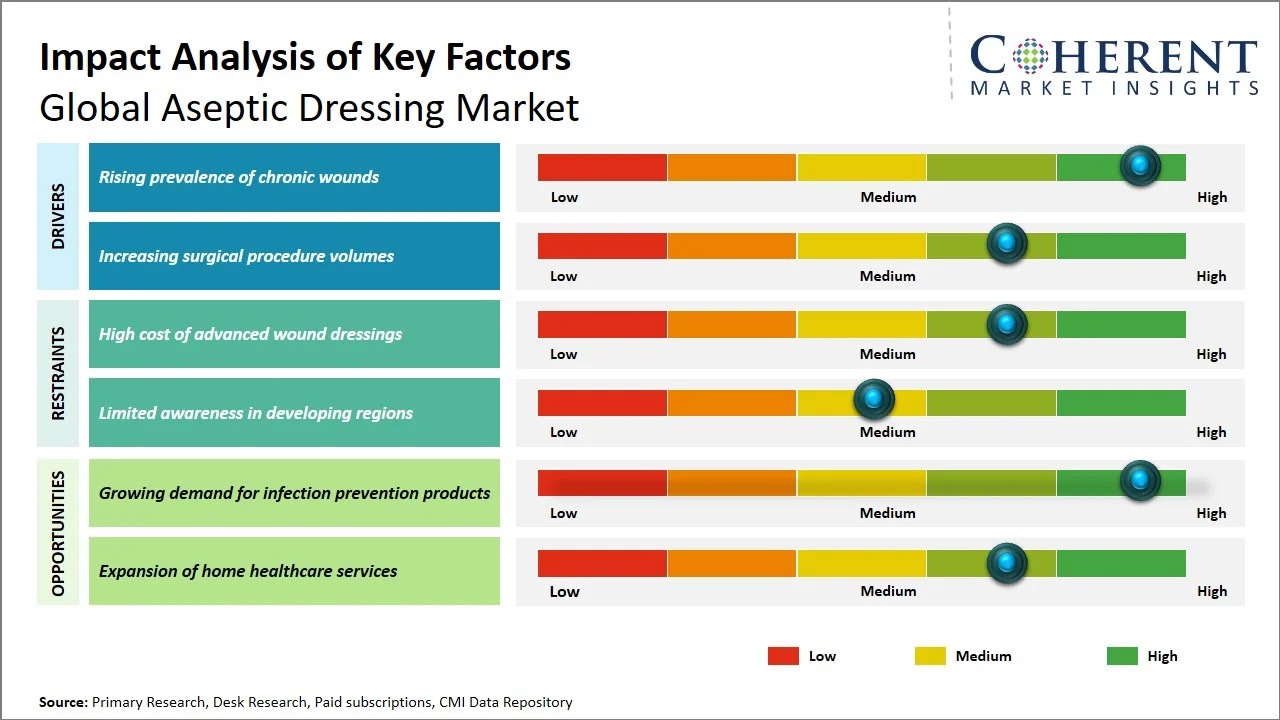
Market Drivers
Rising prevalence of chronic wounds
The accelerating prevalence of various chronic wounds including diabetic foot ulcers, venous leg ulcers and pressure ulcers are among the key factors emerging as the driving forces for the growth of aseptic dressing market globally. Chronic wounds are by nature slow to heal, as compared to acute wounds. They exhibit intrinsic barriers to healing and are often prone to microbial infection which can cause further morbidity. Usage of aseptic dressings provides a sterile environment to the wound which significantly reduces infection and hastens wound healing process. This factor gains immense importance in view of a larger aging population across the globe and the rising incidence of lifestyle diseases such as diabetes, stroke, vascular diseases among other non-healing wounds.
Furthermore, the overall increased awareness among healthcare practitioners and patients regarding better wound management results in an overall increased inclination towards usage of aseptic dressings products providing enhanced protection. For instance, according to the International Diabetes Federation (IDF), 11.1% or 1 in 9 – of the adult population (20-79 years) is living with diabetes, with over 4 in 10 unaware that they have the condition. Additionally, the projections indicate that 1 in 8 adults, approximately 853 million, will be living with diabetes by 2050. (Source: International Diabetes Federation)
Increasing surgical procedure volumes
The growing volume of surgeries around the world is driving the growth of aseptic dressings used in wound management and infection prevention post-surgery. Hospitals and surgical care units are employing superior antimicrobial and moisture balancing dressings in order to avoid the surgical site infections, effectively manage surgical wounds and enhance patient recovery in orthopedic, cardiovascular, cosmetic as well as general surgical procedures. The increasing emphasis on reducing the incidences of hospital acquired infections coupled with decreasing the duration of stay for patient in the hospital is aiding the wide spread utilization of sterile wound care products in the healthcare establishments. For instance, according to global initiative for children’s surgery every year, 313 million operations take place around the world, yet only 6.5% takes place in the poorest third of the world, representing the people that need surgical care the most. (Source: Global Surgery)
Emerging Trends
- Rising Adoption of Antimicrobial and Silver-Based Aseptic Dressings: More hospitals and clinics across the world are using antimicrobial and silver containing aseptic wound dressings to prevent infection and accelerate healing in chronic, traumatic, and post-surgical wounds. Antimicrobial and other advanced wounds dressings have great potential to provide better bacterial barriers, moisture and exudate balancing functions which make them extremely attractive for advanced wound care applications.
- Increasing Integration of Regenerative and Bioactive Wound Care Technologies: The trend for innovative aseptic dressing products to incorporate regenerative tissue technology, collagen-based products and bioactive wound healing elements is increasing. To this end, manufacturers are looking at developing, new wound products to promote tissue regeneration, reduce healing times and achieve better treatment outcomes for diabetic ulcers, burns and hard-to-heal wounds.
Regional Insights
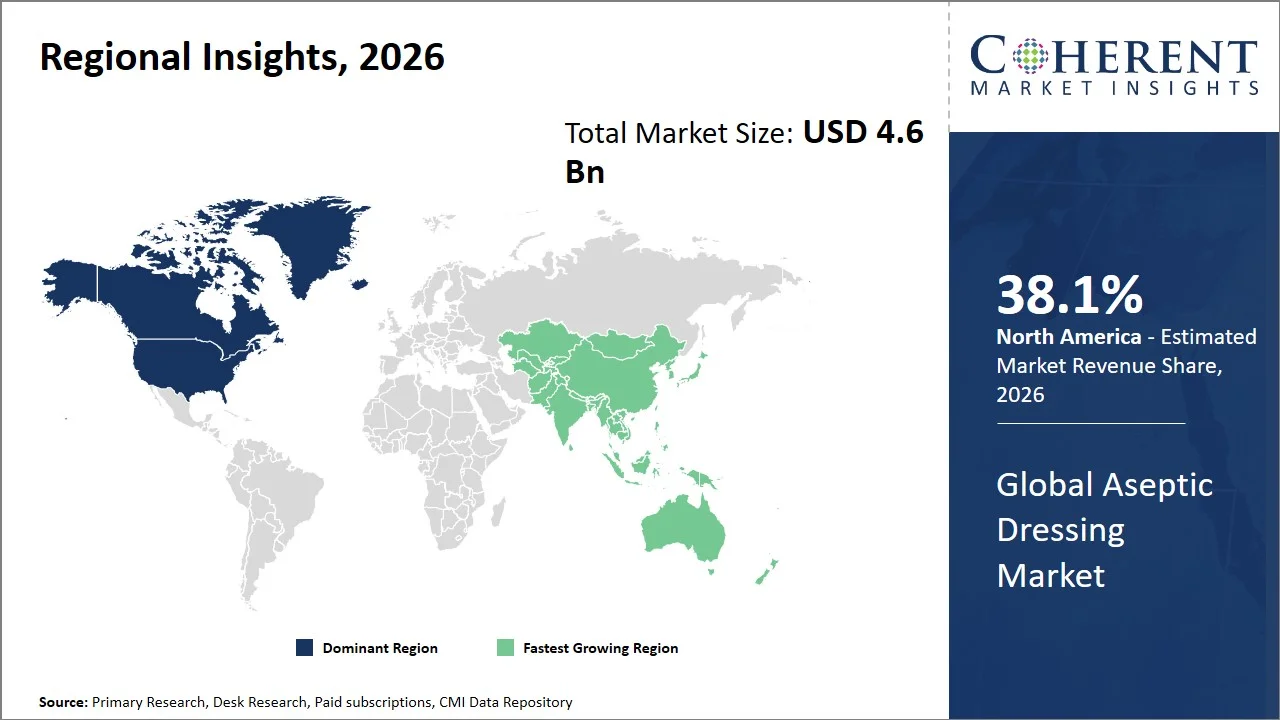
Why is North America a Strong Market for Aseptic Dressing?
North America leads the global aseptic dressing market, accounting for an estimated 38.1% share in 2026, attributed to the presence of well-established healthcare infrastructure, advanced wound care technologies and high standards of safety norms, regulations and approvals by the Food and Drug administration (FDA). High investment in R&D by medical device manufacturers and the introduction of new innovative products will further boost the market growth in the forecast period.
Furthermore, strong relationships with key healthcare bodies and high penetration of healthcare products suppliers such as 3M Company, Coloplast, Cardinal Health will facilitate the effective communication of product benefits and hence, will drive market growth. Favorable reimbursement scenario, high healthcare expenditure and patient safety initiatives introduced by government and private healthcare insurers will lead to increase in end user adoption of aseptic dressings in hospitals and outpatient clinics across North America. For instance, the Centers for Medicare & Medicaid Services (CMS) is providing reimbursement coverage for advanced wound care management and diabetic foot ulcer care in the Medicare payment systems, facilitating the expanded use of antimicrobial and aseptic dressing products in U.S. hospitals.
Why Does the Asia Pacific Aseptic Dressing Market Exhibit High Growth?
The Asia Pacific aseptic dressing market is expected to exhibit the fastest growth with an estimated contribution of 25.9% share to the market in 2026, due to developing healthcare infrastructure in developing countries such as India, Indonesia, Vietnam, Thailand, and the Philippines and growing awareness of wound care hygiene. The increasing prevalence of chronic disorders such as diabetes which necessitate wound care is also a factor behind the regional growth. The urbanization process and the improvement in disposable incomes have enhanced accessibility to modern healthcare facilities even in developing markets.
In countries such as China, India and Japan, the government has also announced extensive reforms and expenditure on healthcare to improve the standards of treatment. For instance, India's Ministry of Health and Family Welfare is actively developing the country's healthcare system by scaling up the Ayushman Bharat healthcare initiative and enhancing public health systems, leading to increased access to surgical care, infection control, and advanced wound therapy. (Source: National Health Authority) Further, support from trade policies and diminishing tariffs on medical devices further boosts the aseptic dressing market by improving product reach.
Global Aseptic Dressing Market Outlook for Key Countries
Why is the U.S. Leading Innovation and Adoption in the Aseptic Dressing Market?
The U.S. is the most innovative and widely adopted aseptic dressing market given the prevalence of advanced wound care manufacturers, fast pace of commercial introduction of bioactive and antimicrobial dressing technologies, and established use of evidence-based wound management practices throughout the healthcare sector. Adoption of silicone-based atraumatic dressing, regenerative wound matrix, and multilayer antimicrobial products for complex wound care remains robust. Furthermore, the wide use of sophisticated wound care protocols and the presence of special wound clinics (such as Healogics Wound Care Centers, Cleveland Clinic Wound Center, Johns Hopkins Center for Wound Healing, Stanford Advanced Wound Care Center) throughout the country will still foster the higher use of next-generation aseptic dressings in chronic, traumatic and post-surgical wounds.
Is U.K. a Favorable Market for Aseptic Dressing?
U.K. is a promising market for aseptic dressing because of its wide adoption of advanced wound management procedures, surgical site infection control programs (such as, National Infection Prevention and Control Manual (NIPCM), NHS Surgical Site Infection Surveillance Service, Getting It Right First Time (GIRFT) Programme) and community based chronic wound management programs (such as, NHS Community Wound Care Services, Tissue Viability Nurse Services, Leg Ulcer Community Care Programmes, NHS Diabetic Foot Care Pathways). Distributors and healthcare providers throughout the UK are frequently employing antimicrobial foam dressings, silicone atraumatic dressings and moisture-retentive wound products for the treatment of diabetic ulcers, pressure wounds and surgical site wounds. The availability of dedicated wound management services and increasing penetration of advanced dressing protocols in NHS treatment pathways ensures that superior aseptic dressing products will see strong uptake in both acute and long-term environments.
Is China Emerging as a Key Growth Hub for the Aseptic Dressing Market?
The aseptic dressing market is witnessing robust expansion within China owing to the rapid growth of advanced wound care manufacturing, rising preferences for contemporary hospital infection prevention protocols and expanded provision of specialist diabetic wound management services through country’s urban healthcare infrastructure. The hospital institutions in the country are progressively adopting antimicrobial foam, hydrocolloid and silver-based aseptic dressings for post-operative and chronic wound care indications. Moreover, developments in indigenous manufacturing infrastructure and emphasis on high-end advanced wound management products are also facilitating the ascension of China as an important industry player.
Why Does Germany Top the Europe Aseptic Dressing Market?
Germany is the leading aseptic dressing market in Europe owing to the well-developed and highly specialized infrastructure of wound care services, high adoption rate of advanced post-operative wound care management procedures (German hospitals recorded more than 16 million inpatient cases annually), and the extensive use of premium class antimicrobial wound dressing technologies in hospitals and rehabilitation centers. Wound care providers are increasingly using silicone atraumatic dressings, hydrofiber products and silver wound management products for complex surgical and chronic wound applications. Further, the competitive presence of advanced medical device manufacturers (such as Paul Hartmann AG, B. Braun SE, Lohmann & Rauscher GmbH & Co. KG) and the high clinical standardization of wound management procedures is further enhancing the market penetration of high-end aseptic dressing products.
Is the Aseptic Dressing Market Developing in Japan?
The aseptic dressing market in Japan is gradually expanding driven by escalating interest for advanced wound healing technologies, higher prevalence of minimally invasive surgical care procedures and rising penetration of high-performance antimicrobial dressing products in hospitals and long-term care facilities. Japanese healthcare facilities are giving more preferences to moisture managing wound healing approaches along with atraumatic dressing selections for the care of geriatrics and chronically ill patients. Furthermore, the robust Japanese medical technology industry and existence of wound care producers (such as Nipro Corporation, ALCARE Co., Ltd., Hogy Medical Co., Ltd.) would continue to propel the aseptic dressing market.
Regulatory Landscape Governing the Global Aseptic Dressing Market
Region | Authority & Classification | Approval Pathway | Key Regulatory Insight |
North America | U.S. Food and Drug Administration (FDA) – aseptic dressings are regulated as medical devices under 21 CFR wound dressing classifications | FDA 510(k) clearance pathway for substantial equivalence; PMA required for high-risk advanced wound products | Strong emphasis on sterility assurance, biocompatibility testing, antimicrobial claims validation, and infection prevention compliance for wound dressing products |
Europe | European Medicines Agency (EMA) and European Commission MDR framework – aseptic dressings classified under EU Medical Device Regulation (MDR 2017/745) | CE marking through notified body assessment and conformity evaluation under MDR requirements | Increasing regulatory scrutiny on clinical evaluation, post-market surveillance, product traceability, and safety documentation for advanced wound care products |
Asia Pacific | National Medical Products Administration (NMPA) China, CDSCO India, PMDA Japan – wound care and sterile dressing device regulations | Country-specific medical device registration and quality compliance approval pathways | Rapid strengthening of GMP compliance, local clinical data requirements, and quality management systems for imported and domestic wound care products |
Latin America | ANVISA Brazil and COFEPRIS Mexico – medical dressing and wound care device regulations | Medical device registration, local representation, and regulatory dossier submission requirements | Growing harmonization with international medical device standards and increasing focus on sterile healthcare product quality compliance |
Middle East & Africa | Saudi Food and Drug Authority (SFDA), UAE Ministry of Health, South African Health Products Regulatory Authority (SAHPRA) | Product registration, import approvals, and compliance with medical device safety regulations | Rising regulatory modernization and increasing adoption of international sterility, labeling, and infection prevention standards for wound care products |
How is the growing demand for infection prevention products creating new growth opportunities in the aseptic dressing market?
As the emphasis on sterilized wound management and infection control continues to expand among hospitals and outpatient clinics, the market for aseptic dressing will experience unprecedented growth, as the need for infection control products and wound management products proliferates. With an alarming increase in the frequency of diabetic ulcers, burns, chronic wounds and post-surgical infections, the population of patients requiring aseptic wound management products is growing correspondingly. This has led to the accelerated use of modern aseptic dressings with antimicrobial properties, where available, for wound minimization.
For instance, according to World Health Organization, approximately 11% of surgical patients in low- and middle-income countries develop surgical site infections. However, surgical site infections are not just a problem for poor countries. In the U.S. they contribute to patients spending more than 400,000 extra days in hospitals at an additional cost of USD 900 million per year. (Source: World Health Organization) The increasing clinical and economic burden of these infections is leading to increased global demand for effective aseptic wound care and infection prophylaxis products.
Market Players, Key Development, and Competitive Intelligence
Key Developments
- In November 2025, Solventum announced that it had entered into a binding agreement to acquire Acera Surgical, as part of its plan to broaden its range of advanced wound care products, regenerative tissue therapies and related products. The acquisition broadens Solventum’s access to synthetic tissue matrix and complex wound management technologies targeted at the acute care setting. The move indicates further industry focus on the development of novel solutions to the healing of wounds and sophisticated aseptic wound care products for difficult wounds.
- In May 2025, Mlnlycke Health Care acquired P.G.F. Industry Solutions GmbH, the producer of Granudacyn wound cleansing products, as part of its strategy to augment its wound care product portfolio globally. The acquisition is part of Mlnlycke's investment in advanced wound management and infection prevention solutions for wound management practices in acute and chronic wound applications. The move is part of industry trend to focus on comprehensive wound care products and sterile treatment methods in the aseptic dressing market.
Competitive Landscape
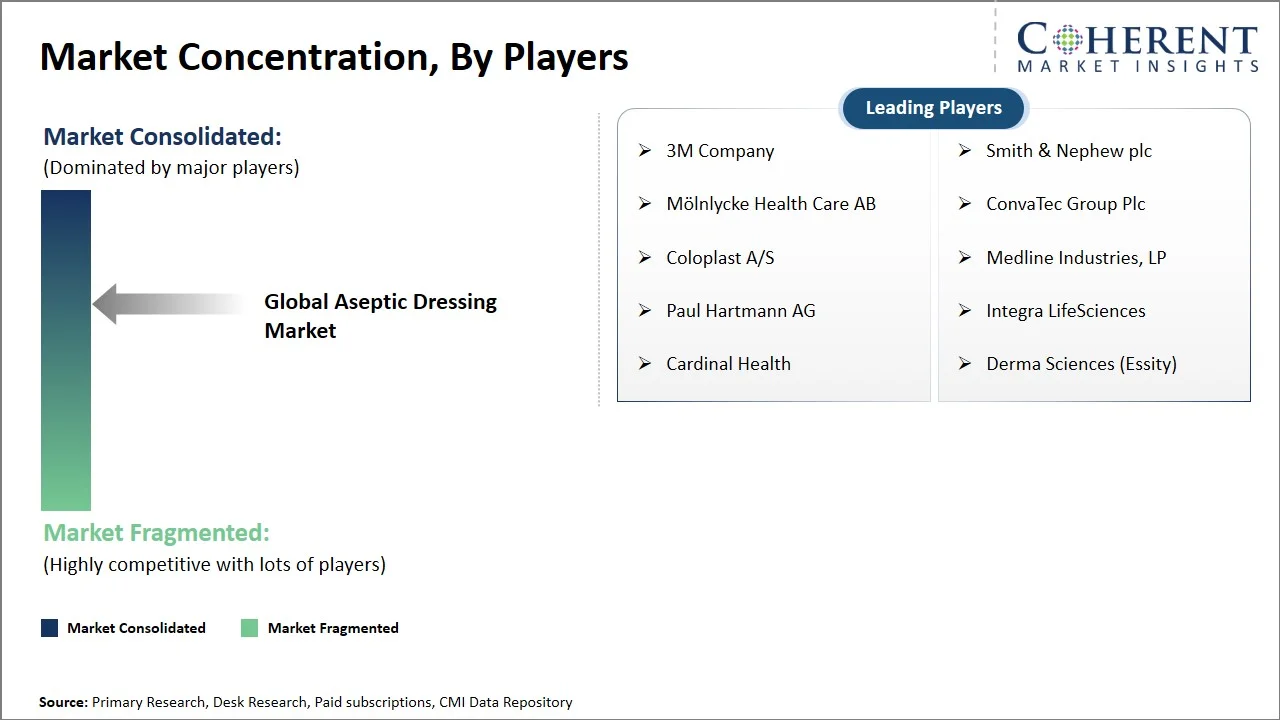
The global aseptic dressing market is highly competitive, with multinational wound care companies leading the market through innovations for advanced infection prevention therapies, bioactive wound care management products and regenerative wound healing solutions. Industry players are investing in developing markets of antimicrobial and moisture-balancing products and in Silicone-based atraumatic dressing technology with proven pathogen barrier capabilities as they strive to accelerate healing and limit the risk of hospital acquired infections. Strategic acquisition and merger, growth of advanced wound care segment portfolios and chronic wound therapies is observed to be key strategies adopted by industry players. Key focus areas include:
- Development of antimicrobial and bioactive aseptic dressing technologies
- Expansion of advanced chronic wound and post-surgical wound care portfolios
- Integration of regenerative tissue repair and atraumatic dressing solutions
- Investment in moisture-management and infection prevention wound care products
- Strategic acquisitions and partnerships to strengthen advanced wound care capabilities
Market Report Scope
Aseptic Dressing Market Report Coverage
| Report Coverage | Details | ||
|---|---|---|---|
| Base Year: | 2025 | Market Size in 2026: | USD 4.6 Bn |
| Historical Data for: | 2020 To 2024 | Forecast Period: | 2026 To 2033 |
| Forecast Period 2026 to 2033 CAGR: | 7.1% | 2033 Value Projection: | USD 7.4 Bn |
| Geographies covered: |
| ||
| Segments covered: |
| ||
| Companies covered: | 3M Company, Smith & Nephew plc, Mölnlycke Health Care AB, ConvaTec Group Plc, Coloplast A/S, Medline Industries, LP, Paul Hartmann AG, Integra LifeSciences, Cardinal Health, and Derma Sciences (Essity) | ||
| Growth Drivers: |
| ||
| Restraints & Challenges: |
| ||
Analyst Opinion (Expert Opinion)
- The aseptic dressing market is anticipated to grow in the future owing to the increasing prevalence of chronic wounds, the growing number of surgeries and the increased awareness about the necessity to prevent infection and for advanced wound care. The market is soon expected to shift from the traditional wound management practices to more technologically advanced systems involving bioactive components, antimicrobial materials, regenerative tissue systems and moisture balancing abilities. The increasing utilization of home healthcare and outpatient wound management services are expected to further result in higher demand for aseptic dressing products that are simple to use and require less frequent changing durations.
- The maximum opportunities are foreseen for advanced chronic wound care indications within U.S. and German markets with higher healthcare expenditure, matured wound care infrastructure and higher incidences of diabetic ulcers, pressure ulcers and postoperative wound complications. Moreover, the progressive elderly population and growing utilization of biologic and regenerative wound care products are likely to generate lucrative opportunities for advanced aseptic dressing companies. Market entry opportunities also exist in China and India with improving hospital infrastructure and knowledge regarding aseptic management.
- In order to gain a competitive advantage, market players should focus on the development of new antimicrobial, regenerative and aseptic dressing technologies to enhance healing efficiency and reduce the infection risk. Companies should also focus on strategic acquisitions, broadening their portfolio of advanced wound care products and the development of a cost-effective range of products for hospitals and home healthcare. Building on relationships with hospitals, wound care clinics and outpatient care centers and focusing on dressing material that is sustainable and patient friendly will also aid the market positioning and product differentiation in the future.
Speak to the analyst
Want personalized insights?
Take the findings above to one of our principal consultants, or have the report rebuilt around the segments, geographies and competitors you actually track.
Market Segmentation
- Product Type Insights (Revenue, USD Bn, 2021 - 2033)
- Film Dressings
- Foam Dressings
- Hydrocolloid Dressings
- Alginate Dressings
- Composite Dressings
- Others
- Application Insights (Revenue, USD Bn, 2021 - 2033)
- Surgical Wounds
- Chronic Wounds
- Burns and trauma Injuries
- Ulcers
- Others
- End User Insights (Revenue, USD Bn, 2021 - 2033)
- Hospitals and Clinics
- Ambulatory Surgical Centers
- Home Healthcare
- Specialty Wound Care Centers
- Others
- Distribution Channel Insights (Revenue, USD Bn, 2021 - 2033)
- Hospital Pharmacies
- Retail Pharmacies
- Online Channels
- Others
- Regional Insights (Revenue, USD Bn, 2021 - 2033)
- North America
- U.S.
- Canada
- Latin America
- Brazil
- Argentina
- Mexico
- Rest of Latin America
- Europe
- Germany
- U.K.
- Spain
- France
- Italy
- Russia
- Rest of Europe
- Asia Pacific
- China
- India
- Japan
- Australia
- South Korea
- ASEAN
- Rest of Asia Pacific
- Middle East
- GCC Countries
- Israel
- Rest of Middle East
- Africa
- South Africa
- North Africa
- Central Africa
- North America
- Key Players Insights
- 3M Company
- Smith & Nephew plc
- Mölnlycke Health Care AB
- ConvaTec Group Plc
- Coloplast A/S
- Medline Industries, LP
- Paul Hartmann AG
- Integra LifeSciences
- Cardinal Health
- Derma Sciences (Essity)
Sources
Primary Research Interviews
- Wound care specialists and surgical care professionals utilizing advanced aseptic dressing products
- Hospital infection control managers supervising sterile wound management procedures
- Healthcare professionals managing chronic wound and post-operative care treatments
- Advanced wound care researchers and regenerative medicine specialists
- Home healthcare providers utilizing antimicrobial and atraumatic dressing solutions
- Medical device and wound care product development specialists supporting advanced dressing technologies
Stakeholders
- Aseptic dressing manufacturers and advanced wound care solution providers
- End-use Sectors
- Hospitals and surgical care centers
- Chronic wound care and diabetic ulcer treatment clinics
- Home healthcare and long-term patient care facilities
- Trauma and burn treatment centers
- Academic research institutes and regenerative wound care laboratories
- Contract manufacturing organizations (CMOs) and healthcare product distributors
- Regulatory & Health Bodies: U.S. Food and Drug Administration (FDA) – wound dressing safety and medical device regulations, European Medicines Agency (EMA) – medicinal product and advanced wound care quality guidelines, Centers for Disease Control and Prevention (CDC) – infection prevention and wound care surveillance standards, World Health Organization (WHO) – wound management and infection control guidelines, Central Drugs Standard Control Organization (CDSCO), India – medical dressing and healthcare product regulations, National Medical Products Administration (NMPA), China – wound care product approval and compliance framework
Databases
- CDC National Healthcare Safety Network (NHSN) – healthcare-associated infection and wound management data
- WHO Global Health Observatory – chronic wound and healthcare burden statistics
- FDA Medical Device Databases – wound dressing approvals and safety information
- OECD Health Statistics – healthcare expenditure and surgical procedure data
- European Centre for Disease Prevention and Control (ECDC) – infection prevention and antimicrobial resistance statistics
Magazines
- Wound Care Advisor – advanced wound management and dressing technology trends
- MedTech Outlook – medical device and wound care product developments
- Medical Design & Outsourcing – wound care innovation and healthcare device manufacturing updates
- Healthcare Packaging – sterile healthcare packaging and aseptic product trends
- Advanced Wound Care News – chronic wound treatment and regenerative care developments
Journals
- International Wound Journal
- Journal of Wound Care
- Advances in Skin & Wound Care
- Wound Repair and Regeneration
- Burns & Trauma
Newspapers
- Financial Times – healthcare and medical technology industry developments
- The Wall Street Journal – medical device and wound care business trends
- The New York Times (Health Section) – chronic disease and wound management developments
- The Guardian (Health & Science) – healthcare innovation and infection prevention trends
Associations
- Wound Healing Society (WHS)
- European Wound Management Association (EWMA)
- Association for the Advancement of Wound Care (AAWC)
- American Professional Wound Care Association (APWCA)
- Advanced Medical Technology Association (AdvaMed)
Public Domain Sources
- World Health Organization (WHO) – wound care and infection prevention statistics
- Centers for Disease Control and Prevention (CDC) – chronic wound and healthcare surveillance data
- U.S. Food and Drug Administration (FDA) – medical dressing and wound care guidelines
- European Medicines Agency (EMA) – advanced wound care and medicinal product standards
- National Institutes of Health (NIH) – chronic wound prevalence and wound healing research data
Proprietary Elements
- CMI Data Analytics Tool, Proprietary CMI Existing Repository of information for last 10 years.
Get access to 250+ pages report
Every segment, forecast, competitor profile and data table behind the analysis above — available for instant download.
- ESOMAR Member
- ISO 9001:2015 Certified
- D-U-N-S Registered
- GDPR & CCPA Compliant
Missing comfort of reading report in your local language? Find your preferred language:
Transform your Strategy with Exclusive Trending Reports
Frequently Asked Questions
The global aseptic dressing market is estimated to be valued at USD 4.6 Bn in 2026 and is expected to reach USD 7.4 Bn by 2033.
Foam dressings dominate due to their superior absorbency, moisture retention capability, cushioning protection, and effectiveness in managing moderate-to-high exuding wounds.
An aseptic dressing is a sterile wound care product designed to protect wounds from microbial contamination and support safe healing under hygienic conditions.
The CAGR of the global aseptic dressing market is projected to be 7.1% from 2026 to 2033.
Rising prevalence of chronic wounds and increasing surgical procedure volumes are the major factors driving the growth of the global aseptic dressing market.
High cost of advanced wound dressings and limited awareness in developing regions are the major factors hampering the growth of the global aseptic dressing market.
In terms of application, surgical wounds are estimated to dominate the market revenue share in 2026.