

Smart Home Medical Device Market Size and Forecast — 2026 - 2033
The Global Smart Home Medical Device Market size is estimated to be valued at USD 15.80 billion in 2026 and is expected to reach USD 35.40 billion by 2033, exhibiting a compound annual growth rate (CAGR) of 11.6% from 2026 to 2033.
Overview
The Smart Home Medical Device Market offers a wide range of products designed to enhance health monitoring and patient care at home. Key products include remote patient monitoring devices, wearable health trackers, smart blood pressure monitors, glucose monitors, and pulse oximeters. Additionally, connected thermometers, smart inhalers, and home ECG devices are increasingly adopted. These devices integrate with mobile apps and cloud platforms to track, analyze, and share real-time health data with healthcare providers. Advanced solutions also include AI-enabled health assistants and fall detection sensors, improving elderly care and chronic disease management while promoting convenience, accuracy, and proactive healthcare.
Key Takeaways
The Chronic Care Management segment leads with a commanding share driven by continuous patient demand for home-based health monitoring and management technologies, supported by stable reimbursement structures.
Smart Glucose Monitors dominate the device category, emphasizing the global diabetes epidemic's influence on market direction.
Bluetooth-enabled devices capture almost half of the connectivity technology segment owing to their low power consumption and wide device compatibility.
North America holds the largest industry share due to advanced healthcare infrastructure, supportive regulatory frameworks, and high disposable incomes facilitating technology adoption.
Asia Pacific offers the fastest-growing market conditions, buoyed by increasing geriatric populations, expanding healthcare investments, and urbanization trends, with CAGR substantially outpacing global averages.
Europe remains a mature yet steadily expanding market, supported by breakthroughs in regulatory harmonization across member countries.
Smart Home Medical Device Market Segmentation Analysis
Smart Home Medical Device Market Insights, By Device Type
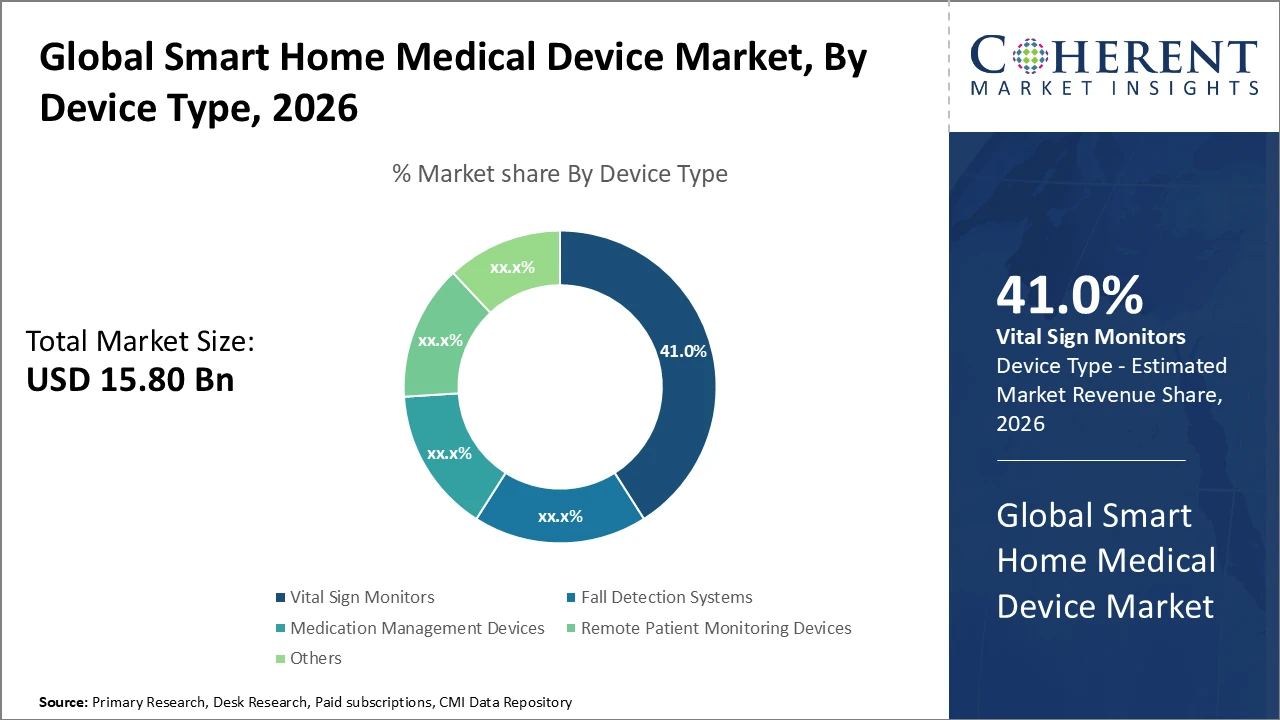
Vital Sign Monitors Monitors lead the market with a 41% share, driven by the rising global prevalence of diabetes and the need for continuous glucose monitoring that provides real-time data and alerts for improved glycemic control. Wearable ECG Monitors are the fastest-growing segment, benefiting from compact designs and integration with mobile health platforms for early detection of cardiac anomalies. Connected Blood Pressure Monitors continue steady growth due to their critical role in managing hypertension. Remote Patient Monitoring Kits, supporting multiple parameters, are increasingly used in chronic and post-operative care. Other niche devices address specialized diagnostic needs, expanding home healthcare solutions.
Smart Home Medical Device Market Insights, By Application
Chronic Care Management commands a 44% market share, driven by patients with long-term conditions like diabetes, cardiovascular diseases, and respiratory disorders increasingly relying on real-time health monitoring. Elderly Care is the fastest-growing segment, fueled by demographic shifts and the emphasis on independent living combined with health monitoring to reduce institutionalization costs. Post-operative Monitoring is gaining momentum as home recovery solutions become more preferred, while Wellness & Fitness addresses broader consumer interest in preventive health. Other segments include specialized applications with targeted device adaptations, supporting niche medical needs and enhancing the overall adoption of smart home medical technologies.
Smart Home Medical Device Market Insights, By Connectivity Technology
Bluetooth-enabled devices hold a commanding 46% market share, driven by low power consumption, ease of pairing, and broad smartphone compatibility, making them widely adopted across medical device categories. Cellular devices are the fastest-growing technology, fueled by expanding 5G networks and the need for continuous data transmission independent of local networks, especially benefiting remote and underserved regions. Wi-Fi-enabled devices remain relevant in homes with strong network infrastructure, supporting high-speed connectivity for health monitoring. Zigbee and other technologies serve niche applications that require mesh networking, low latency, or specialized communication protocols. Together, these connectivity solutions are shaping the smart home medical device landscape.
Smart Home Medical Device Market Trends
AI-driven predictive analytics in smart home medical devices are transforming healthcare from reactive to proactive management.
In 2026, AI-equipped devices reduced emergency hospital visits by 12% in clinical pilot programs across Europe.
Interoperability with digital health platforms and telemedicine apps has become a key growth driver, enabling seamless data exchange and real-time alerts.
Multi-parameter monitoring devices in compact wearables are rising, driven by consumer preference for convenience and continuous health insights.
North America saw a 21% increase in sales volume of these multi-parameter wearable devices in 2025.
Smart Home Medical Device Market Insights, By Geography
North America Smart Home Medical Device Market Analysis and Trends
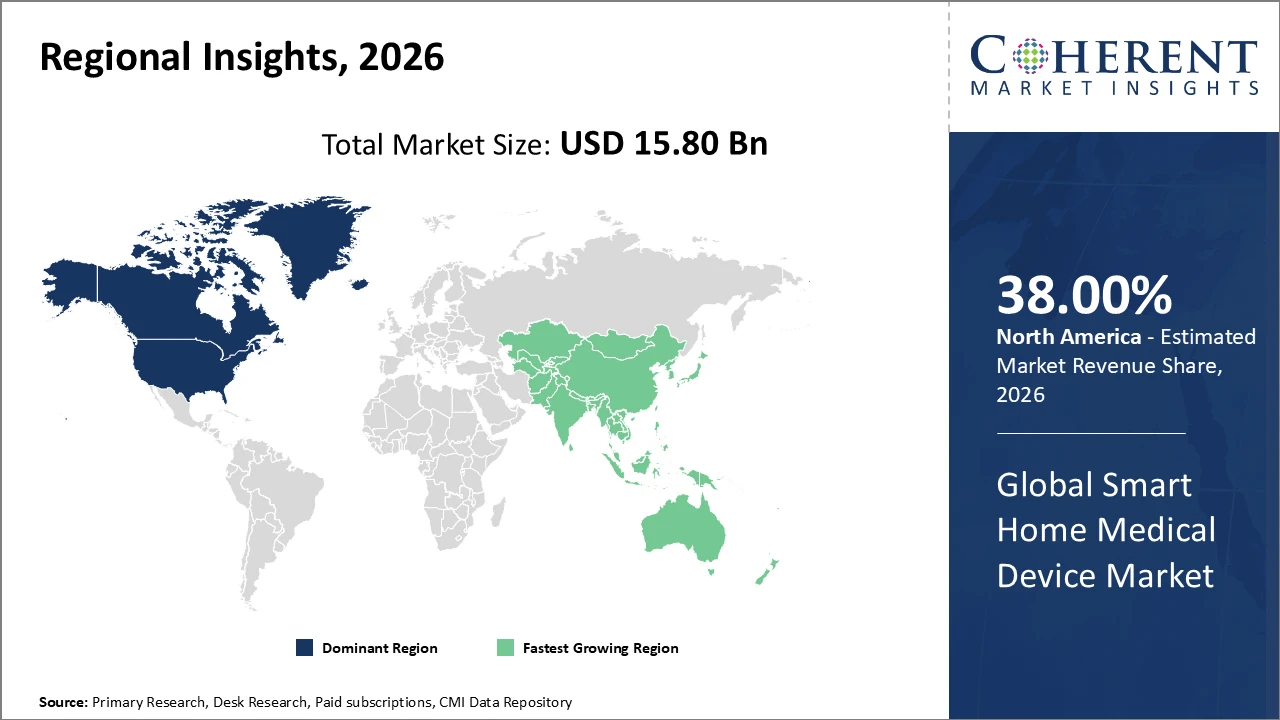
North America leads the Smart Home Medical Device market with approximately 38% market share, driven by advanced healthcare infrastructure and high adoption of remote health technologies. Key market players’ substantial investments in innovation and research further strengthen the region’s leadership. Additionally, government initiatives in the U.S. to integrate digital health solutions into standard care pathways are accelerating adoption and shaping industry trends. Widespread awareness of preventive healthcare, supportive regulatory frameworks, and high disposable incomes also contribute to the region’s dominance, making it a critical hub for the development and deployment of smart home medical devices.
Asia Pacific Smart Home Medical Device Market Analysis and Trends
Asia Pacific demonstrates the fastest growth in the Smart Home Medical Device market, with a CAGR exceeding 15%. This expansion is driven by rapidly aging populations in countries like Japan and China, the development of urban healthcare ecosystems, and increasing government support for digital health initiatives. Market players, including Samsung Electronics and Xiaomi, are actively entering the region with affordable and locally tailored smart devices, further accelerating adoption. Rising health awareness, improving infrastructure, and growing investments in technology-driven healthcare solutions are also contributing to the region’s dynamic market growth.
Smart Home Medical Device Market Outlook for Key Countries
USA Smart Home Medical Device Market Analysis and Trends
The U.S. market for smart home medical devices plays a central role in global growth, driven by widespread digital health adoption and strong reimbursement mechanisms. In 2025, over 40% of U.S. adults with chronic diseases used connected medical devices, contributing to annual market revenue exceeding USD 6 billion. Key players such as Medtronic and Philips Healthcare have introduced AI-driven monitoring devices targeting heart failure and diabetes patients, significantly reducing hospitalization rates. Additionally, integration with telehealth providers expanded patient access during the post-pandemic recovery phase, further supporting market expansion and reinforcing the country’s leadership in smart home healthcare solutions.
Germany Smart Home Medical Device Market Analysis and Trends
Germany’s Smart Home Medical Device market is growing steadily, supported by advanced healthcare infrastructure, strong regulatory frameworks, and high patient awareness of digital health solutions. Chronic disease management, particularly for diabetes and cardiovascular conditions, drives demand for connected monitoring devices. Integration with telemedicine platforms and AI-powered predictive analytics enhances care efficiency and patient outcomes. Wearable and multi-parameter devices are increasingly popular, reflecting consumer preference for convenience and continuous health tracking. Government initiatives promoting e-health adoption, combined with investments from leading companies, further stimulate market growth. Germany remains a key European hub for innovation and adoption in smart home medical technologies.
Analyst Opinion
Rising adoption of connected health technologies is a key demand-side driver. In 2025, smart home medical device adoption among U.S. patients with chronic illnesses increased by 34%, correlating with a 19% year-over-year growth in North American market revenue. Hospitals also increasingly use home care devices to reduce readmission rates, further boosting demand.
Supply-side advancements, including enhanced device interoperability standards, enabled broader market coverage in 2024. Production of key devices like smart glucose monitors rose by 28%, while competitive pricing in emerging economies accelerated exports by 22%, expanding global market share.
Elderly care and post-operative monitoring are the most lucrative application segments, with a 31% global surge in unit shipments in 2026. Case studies from Japan show hospital systems reduced patient recovery time by 15% using smart home devices, highlighting their impact on adoption and market dynamics.
Regulatory support in Europe and Asia Pacific promoting remote patient monitoring acted as a catalyst, reflected in a 16% CAGR in 2025, complemented by favorable reimbursement policies that lowered financial barriers for end users.
- Current Industry Events of 2026
- Market Size Estimation
- Regional Breakdown
- Competitive Landscape
- Customer Intelligence
- Segmental Analysis
- Pricing Analysis
- Key Market Drivers, Challenges & Future Trends
- Customized Insights Section
Market Scope
| Report Coverage | Details | ||
|---|---|---|---|
| Base Year: | 2025 | Market Size in 2026: | USD 15.8 billion |
| Historical Data for: | 2020 To 2024 | Forecast Period: | 2026 To 2033 |
| Forecast Period 2026 to 2033 CAGR: | 11.6% | 2033 Value Projection: | USD 35.4 billion |
| Geographies covered: |
| ||
| Segments covered: |
| ||
| Companies covered: | Philips Healthcare, Medtronic plc, Abbott Laboratories, ResMed Inc, Honeywell International Inc., Omron Healthcare, GE Healthcare, Fitbit, Samsung Electronics, Withings SAS | ||
| Growth Drivers: |
| ||
Smart Home Medical Device Market Growth Factors
The escalating prevalence of chronic diseases worldwide is driving strong demand for smart home medical devices, leading to widespread adoption across diverse demographics. Increased smartphone penetration and advancements in low-power wireless communication technologies have improved device accessibility and user experience, further boosting market revenue. Post-pandemic concerns over rising healthcare costs have encouraged both consumers and providers to favor remote monitoring solutions, supporting business growth. Additionally, government and health organization initiatives promoting home healthcare, including subsidies and reimbursement programs, have helped reduce financial barriers, further catalyzing market expansion and accelerating the adoption of smart home medical technologies.
Smart Home Medical Device Market Development
In 2025, Medtronic launched an advanced AI-enabled wearable glucose monitor that integrates real-time data analytics with mobile health apps. This device not only provides continuous blood sugar monitoring but also delivers predictive alerts for potential hypo- or hyperglycemic events, enabling proactive patient management. The development significantly improved patient adherence and reduced emergency hospital visits in clinical trials, reinforcing the role of AI-driven solutions in chronic disease care.
Key Players
Leading Companies of the Market
Philips Healthcare
Medtronic plc
Abbott Laboratories
ResMed Inc.
Honeywell International Inc.
Omron Healthcare
GE Healthcare
Fitbit
Samsung Electronics
Withings SAS
Several leading market players have actively expanded their presence through strategic acquisitions and partnerships. In 2025, Philips Healthcare collaborated with telehealth service providers, enhancing device compatibility and ecosystem integration, which contributed to a 25% increase in its North American market share. Additionally, Medtronic’s launch of AI-integrated home monitoring devices in 2024 drove an 18% revenue growth, strengthening its position across Europe and Asia Pacific. These strategic initiatives reflect a broader industry trend of combining technological innovation with collaborative networks to improve patient outcomes, increase device adoption, and consolidate market leadership globally.
Smart Home Medical Device Market Future Outlook
The Smart Home Medical Device market is poised for significant growth, driven by rising chronic disease prevalence, aging populations, and increasing demand for remote healthcare solutions. Advancements in AI, IoT, and multi-parameter wearable technologies will enable more proactive, personalized patient care. Integration with telehealth platforms and digital health ecosystems is expected to expand, enhancing real-time monitoring and predictive analytics. Regulatory support, favorable reimbursement policies, and growing consumer awareness will further fuel adoption across regions. Emerging markets, particularly in Asia Pacific and Latin America, offer substantial growth opportunities, while established markets in North America and Europe will continue to innovate and lead.
Smart Home Medical Device Market Historical Analysis
The Smart Home Medical Device market has experienced steady growth over the past decade, driven initially by the rising prevalence of chronic diseases and the increasing need for home-based healthcare solutions. Early adoption focused on basic monitoring devices such as blood pressure monitors and glucose meters, gradually expanding to wearable and connected devices with enhanced connectivity. Technological advancements in Bluetooth, Wi-Fi, and mobile health integration improved device accessibility and user experience. Strategic collaborations between device manufacturers and healthcare providers facilitated wider deployment. Additionally, regulatory support and growing awareness of preventive healthcare contributed to market expansion, laying the foundation for rapid adoption in subsequent years.
Sources
Primary Research Interviews:
Physicians specializing in chronic care management
Geriatricians and cardiologists
Home healthcare providers
Smart home medical device manufacturers
Databases:
World Health Organization (WHO) Health Statistics
Centers for Disease Control and Prevention (CDC)
Global Health Observatory
OECD Health Data
Magazines:
Medical Design & Outsourcing
Connected Health Magazine
MobiHealth News
HealthTech Magazine
Medical Device Network
Journals:
Journal of Medical Internet Research (JMIR)
Telemedicine and e-Health
Healthcare Technology Letters
Sensors
Newspapers:
The New York Times (Health)
The Guardian (Health)
Financial Times (Healthcare)
The Hindu (Health)
Reuters Health
Associations:
World Health Organization (WHO)
International Medical Device Regulators Forum (IMDRF)
Personal Connected Health Alliance (PCHAlliance)
Healthcare Information and Management Systems Society (HIMSS)
Connected Health Initiative
Get access to 250+ pages report
Every segment, forecast, competitor profile and data table behind the analysis above — available for instant download.
- ESOMAR Member
- ISO 9001:2015 Certified
- D-U-N-S Registered
- GDPR & CCPA Compliant
Missing comfort of reading report in your local language? Find your preferred language:
Transform your Strategy with Exclusive Trending Reports
Frequently Asked Questions
The market is led by key multinational companies including Philips Healthcare, Medtronic plc, Abbott Laboratories, and Johnson & Johnson, with each commanding significant market share through innovation and strategic alliances.
The market size is projected to reach USD 35.4 billion by 2033, growing at a CAGR of 11.6% from 2026 to 2033, reflecting strong demand for connected healthcare solutions.
Chronic Care Management remains the largest segment, attributed to the rising burden of chronic illnesses such as diabetes and cardiovascular diseases.
Adoption of AI-enabled predictive analytics, interoperability enhancements, and multi-parameter smart devices will drive notable market shifts, increasing user engagement and reducing healthcare costs.
The market is intensely competitive with focus on innovation, ecosystem connectivity, and regulatory compliance; challenges include device standardization and data security concerns.
Collaborations with telehealth providers, incremental product launches integrating AI, and expansion into emerging markets with tailored pricing strategies are frequently utilized.