

Blood Pressure Monitoring Devices Market Size and Forecast — 2026-2033
Blood Pressure Monitoring Devices Market is estimated to be valued at USD 2.67 Bn in 2026 and is expected to reach USD 5.26 Bn in 2033, exhibiting a compound annual growth rate (CAGR) of 10.2% from 2026 to 2033. The global blood pressure monitoring devices market is experiencing strong growth due to the increase in in geriatric population. Moreover, increasing prevalence of hypertension is expected to boost the market growth. However, factors such as lack of reimbursement policies are expected to hamper the market growth.
Global Blood Pressure Monitoring Devices Market : Regional Insights
- Based on geography, the global blood pressure monitoring devices market is segmented into North America, Europe, Asia Pacific, Latin America, and Middle East & Africa.
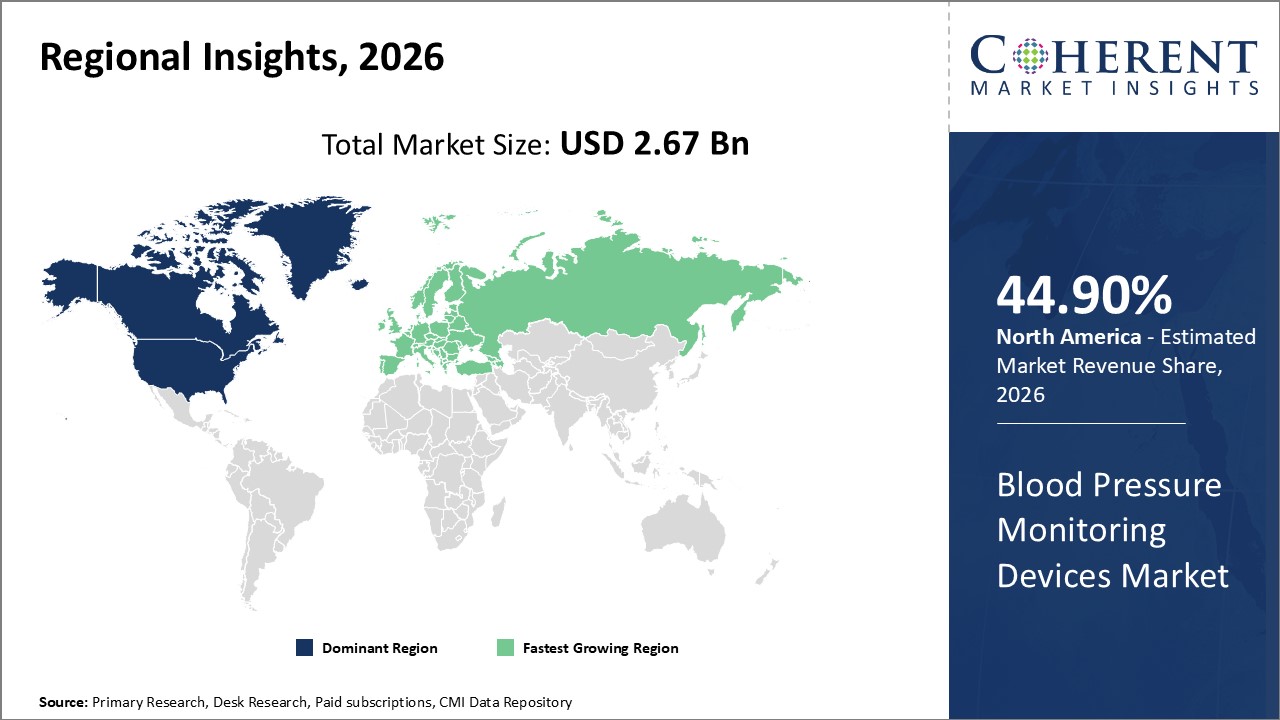
- Among regions, North America is expected to gain highest share in the market during the forecast period due to the increasing demand for blood pressure monitors caused by the growing burden of hypertensive patients in this region, North America currently holds a monopoly on the global market for blood pressure monitoring devices. According to the CDC, heart disease is the number one killer of men, women, and members of the majority of racial and ethnic groups in the country. Cardiovascular disease claims one life in the United States every 34 seconds. In the United States, heart disease claimed the lives of almost 697,000 people in 2020.
- Europe region is also expected to witness significant growth in the global blood pressure monitoring devices market due to increase in product approvals in these region. For instance, in September 2020, CardieX Limited announced that its subsidiary ATCOR received European Patent Office’s approval for its SphygmoCor technology. The technology measures central BP waveform and has cardiovascular features, with use of brachial cuff. It is anticipated to have more than 4,500 installations worldwide, including top 20 U.S. hospitals.
Figure 1. Global Blood Pressure Monitoring Devices Market Share (%), by Region, 2026
Global Blood Pressure Monitoring Devices Market Drivers:
Increase in geriatric population
- Increase in geriatric population in both developed and developing nations is expected to drive blood pressure monitoring devices market. For instance, For instance, according to the U.S. Census Bureau, the U.S. geriatric population is expected to reach 77 million by 2034. Thus, increasing geriatric population, which is at a higher risk to chronic conditions such as diabetes, cardiovascular disorders, and hypertension, is expected to boost the market growth.
- Moreover, independent living by geriatric population makes vital signs management, including blood pressure and heart rate monitoring, an important aspect of their health and well-being. This in turn is driving the growth of the global blood pressure monitoring devices market over the forecast period.
Increasing prevalence of hypertension
- Increasing prevalence of hypertension is expected to propel growth of the global blood pressure monitoring devices market over the forecast period. For instance, in September 2021, according to the article published in National Center for Biotechnology Information, in 2019, over 1 billion people with hypertension (83% of all people with hypertension in the world) lived in low-income and middle-income regions.
- Moreover, Hypertension, besides being the most prevalent, is also the leading cause of cardiovascular disease, premature mortality, and disability. It poses a significant economic burden. Nature Review states that awareness pertaining to hypertension and its treatment & management is significantly low in middle- income countries.
Global Blood Pressure Monitoring Devices Market Opportunities:
- R&D in blood pressure monitoring economies is expected to offer lucrative growth opportunities for players in the global blood pressure monitoring devices market. For instance, in September 2019, researchers from National Taipei University of Nursing and Health Sciences, Taiwan, reported that assessing the estimated Glomerular filtration rate, hypertension, body-mass index, and systolic blood pressure can be effective in modelling arterial stiffness risk assessments for community-dwelling individuals with a normal or slightly decreased estimated Glomerular filtration rate.
- Current Industry Events of 2026
- Market Size Estimation
- Regional Breakdown
- Competitive Landscape
- Customer Intelligence
- Segmental Analysis
- Pricing Analysis
- Key Market Drivers, Challenges & Future Trends
- Customized Insights Section
Blood Pressure Monitoring Devices Market Report Coverage
| Report Coverage | Details | ||
|---|---|---|---|
| Base Year: | 2025 | Market Size in 2026: | USD 2.67 Bn |
| Historical Data for: | 2020 To 2024 | Forecast Period: | 2026 To 2033 |
| Forecast Period 2026 to 2033 CAGR: | 10.2% | 2033 Value Projection: | USD 5.26 Bn |
| Geographies covered: |
| ||
| Segments covered: |
| ||
| Companies covered: | GE Healthcare, Koninklijke Philips N.V., Welch Allyn, Spacelabs Healthcare, A&D Company, Limited, SunTech Medical, Inc., OMRON Healthcare, Inc., American Diagnostic Corporation, Withings, Briggs Healthcare, Kaz, Inc., GF Health Products, Inc., Rossmax International Ltd. | ||
| Growth Drivers: |
| ||
| Restraints & Challenges: |
| ||
Global Blood Pressure Monitoring Devices Market Trends:
Increasing production capacities
- For instance, in March 2020, Hillrom, Inc.
- Major players in the market are also focused on providing services and products to at-risk Medicare Advantage members. For instance, in December 2019, Royal Philips collaborated with Humana Inc. to help improve care and health outcomes for select high-risk Medicare Advantage members. Under the collaboration, Humana has implemented two programs that leverage Philips’ medical alert services and remote member monitoring solutions to actively monitor at-risk Medicare Advantage members.
Global Blood Pressure Monitoring Devices Market Restraints:
- Lack of reimbursement policies: Unfavorable reimbursement policies are expected to hinder growth of the market. Reimbursement is not available for all types of blood pressure monitoring devices. For instance, in the U.S., Medicare provides reimbursement only for the ambulatory blood pressure monitors used for the diagnosis of white coat hypertension.
- High cost of blood pressure monitoring devices: Many developing or impoverished countries have a very low prevalence of the use of blood pressure monitoring equipment. Aside from that, these nations are unable to implement cutting-edge technology due to the high expenses of blood pressure monitoring equipment. Therefore, the market growth over the forecast period is being constrained by the high cost of blood pressure monitoring equipment.
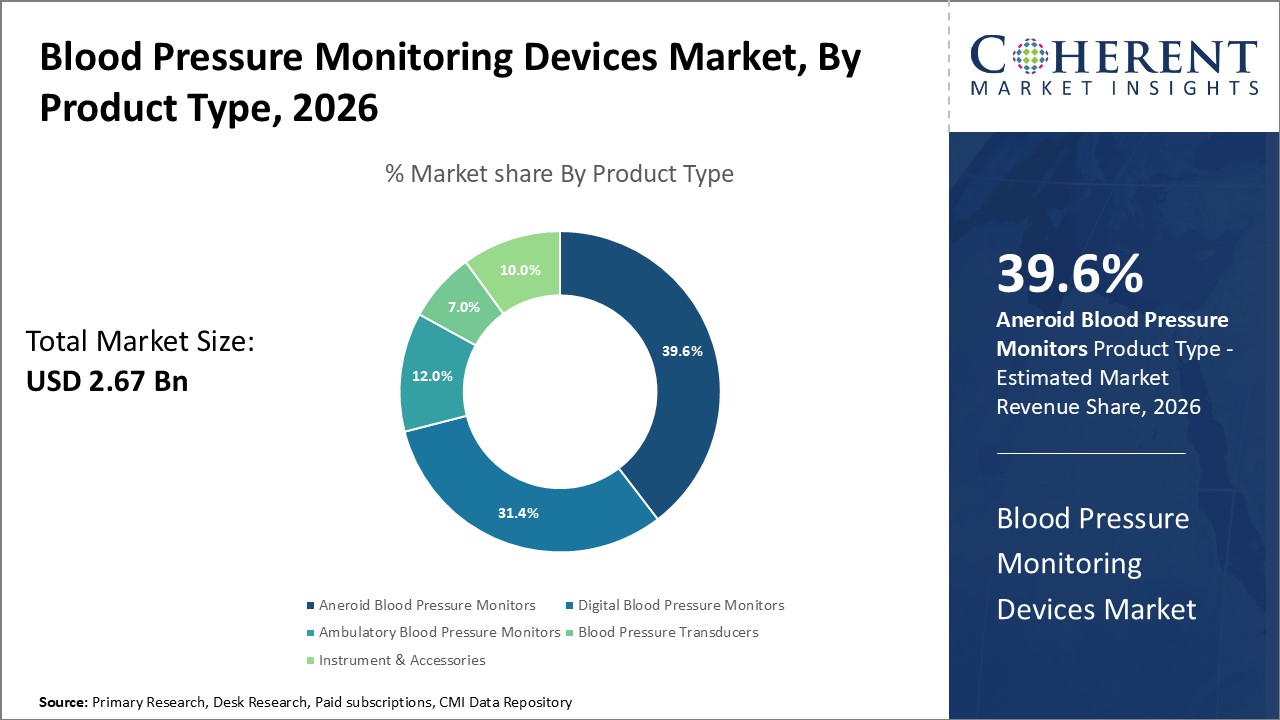
Figure 2. Global Blood Pressure Monitoring Devices Market Share (%), by Product Type, 2026
Global Blood Pressure Monitoring Devices Market Segmentation:
- The global blood pressure monitoring devices market report is segmented into Product type, End Use, and Region.
- Based on Product Type, the market is segmented into Aneroid Blood Pressure Monitors, Digital Blood Pressure Monitors, Ambulatory Blood Pressure Monitors, Blood Pressure Transducers, and Instrument & Accessories. Of which, Aneroid Blood Pressure Monitors segment is expected to dominate the blood pressure monitoring devices market over the forecast period due to associated advantages such as cost-effectiveness, ease of use, and accuracy.
- Based on End Use, the market is segmented into Hospitals, Homecare, Ambulatory surgical centers. Out of which, Hospitals segment is expected to dominate the market over the forecast period and this is attributed to the spike in hospital admissions due to chronic diseases like heart-related illnesses and other emergencies.
Global Blood Pressure Monitoring Devices Market : Key Developments
- In May 26, 2021, Biobeat, a global leader in wearable remote patient monitoring solutions for the healthcare continuum, announced today the launch of its new wearable and continuous ambulatory blood pressure monitoring (ABPM) chest-monitoring device.
- In July, 2020, Omron Healthcare Inc. and Mount Sinai Health System (New York City’s largest academic medical system) have done collaboration to offer patients the new VitalSight home blood pressure monitoring solution.
Global Blood Pressure Monitoring Devices Market : Key Companies Insights
- The global blood pressure monitoring devices market is highly competitive. During the forecast period, the government's initiatives, such as public blood pressure monitoring programmes to raise public awareness and maintain the database established by remotely operated BP monitors, are anticipated to fuel future growth
- Some of the key players in the global blood pressure monitoring devices market are GE Healthcare, Koninklijke Philips N.V., Welch Allyn, Spacelabs Healthcare, A&D Company, Limited, SunTech Medical, Inc., OMRON Healthcare, Inc., American Diagnostic Corporation, Withings, Briggs Healthcare, Kaz, Inc., GF Health Products, Inc., Rossmax International Ltd.
Sources
Primary Research Interviews
- Blood pressure monitor manufacturers (e.g., Omron, A&D Medical, Welch Allyn/Hillrom, Microlife, Withings)
- Cardiologists and primary care physicians prescribing home BP monitoring
- Digital health platforms offering remote BP telemonitoring
- Hospital procurement leaders sourcing ambulatory BP monitors (ABPM)
Stakeholders (Cardiovascular Diagnostics & Remote Monitoring Domain)
- Pharmacy retail chains selling OTC BP monitors
- Insurance payers reimbursing CPT codes for BP monitoring
- Wearable tech brands adding cuffless BP features
Databases
- WHO Global Hypertension Report
- US FDA 510(k) database – BP monitor clearances
- US CDC – Hypertension surveillance data
Magazines
- MedTech Dive
- Medical Design & Outsourcing
- Cardiology Today
Journals
- Hypertension (AHA)
- Journal of Hypertension (Wolters Kluwer)
- Blood Pressure Monitoring (LWW)
Newspapers
- Reuters – Health
- Financial Times – Health Tech
- The Lancet News
Associations
- American Heart Association (AHA)
- European Society of Hypertension (ESH)
- International Society of Hypertension (ISH)
Public Domain Sources
- NIH National Heart, Lung, and Blood Institute (NHLBI)
- WHO HEARTS technical package for hypertension
- ResearchGate publications on oscillometric BP accuracy, ABPM, and cuffless BP measurement
Proprietary Elements
- CMI Data Analytics Tool, Proprietary CMI Existing Repository of information for last 10 years.
*Definition: Blood pressure monitoring includes use of sphygmomanometer (aneroid sphygmomanometer, mercury sphygmomanometer and digital sphygmomanometer), automated blood pressure monitors, ambulatory blood pressure monitors, blood pressure transducers, and blood pressure instrument accessories.
Get access to 250+ pages report
Every segment, forecast, competitor profile and data table behind the analysis above — available for instant download.
- ESOMAR Member
- ISO 9001:2015 Certified
- D-U-N-S Registered
- GDPR & CCPA Compliant
Missing comfort of reading report in your local language? Find your preferred language:
Transform your Strategy with Exclusive Trending Reports
Frequently Asked Questions
The Blood Pressure Monitoring Devices Market is estimated to be valued at USD 2.67 Bn in 2026, and is expected to reach USD 5.26 Bn by 2033.
The CAGR of the Blood Pressure Monitoring Devices Market is projected to be 10.2% from 2026 to 2033.
Increase in geriatric population and Increasing prevalence of hypertension are fueling the growth of the market.
The Aneroid Blood Pressure Monitors segment is the leading component segment in the global blood pressure monitoring devices market.
Lack of reimbursement policies and High cost of blood pressure monitoring devices are major factors restraining growth of the global blood pressure monitoring devices market.
Major players operating in the market are GE Healthcare, Koninklijke Philips N.V., Welch Allyn, Spacelabs Healthcare, A&D Company, Limited, SunTech Medical, Inc., OMRON Healthcare, Inc., American Diagnostic Corporation, Withings, Briggs Healthcare, Kaz, Inc., GF Health Products, Inc., Rossmax International Ltd.