

Whole Slide Imaging Market Size and Share Analysis: 2026 - 2033
The global whole slide imaging market size is expected to reach approximately USD 1,300.46 Mn in 2026 and USD 2,640.59 Mn by 2033, growing at a CAGR of 12.7% throughout the forecast period (2026-2033).
Key Takeaways from the Whole Slide Imaging Market Report
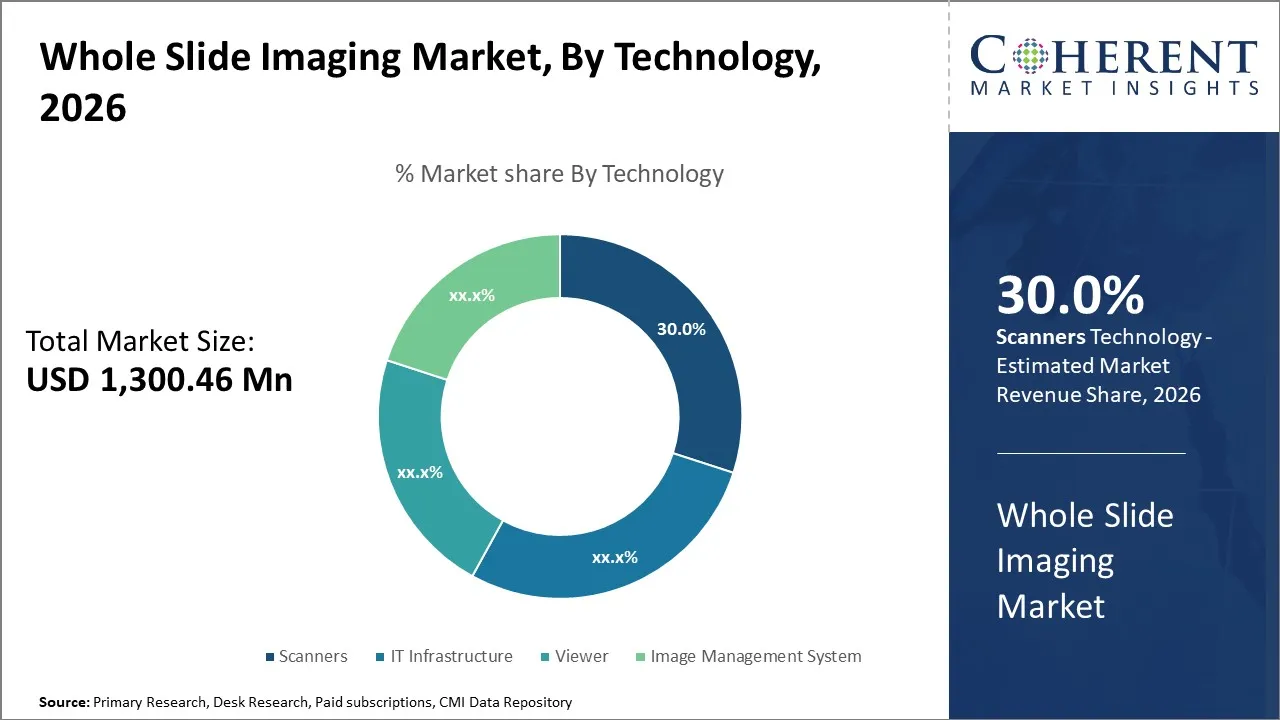
- Scanners dominates the technology segment, accounting for about 30% of the market share in 2026 as scanners are primary hardware that converts glass slides into digital images.
- Telepathology medication is expected to remain leading application segment accounting for 40% in the whole slide imaging market revenue in 2026, driven by workflow efficiency in pathology practice, rising adoption of remote diagnosis, and digital consultation.
- The research segment registered its dominance over the global whole slide imaging market with share of 46% in 2026 because need for continuous monitoring and complex care.
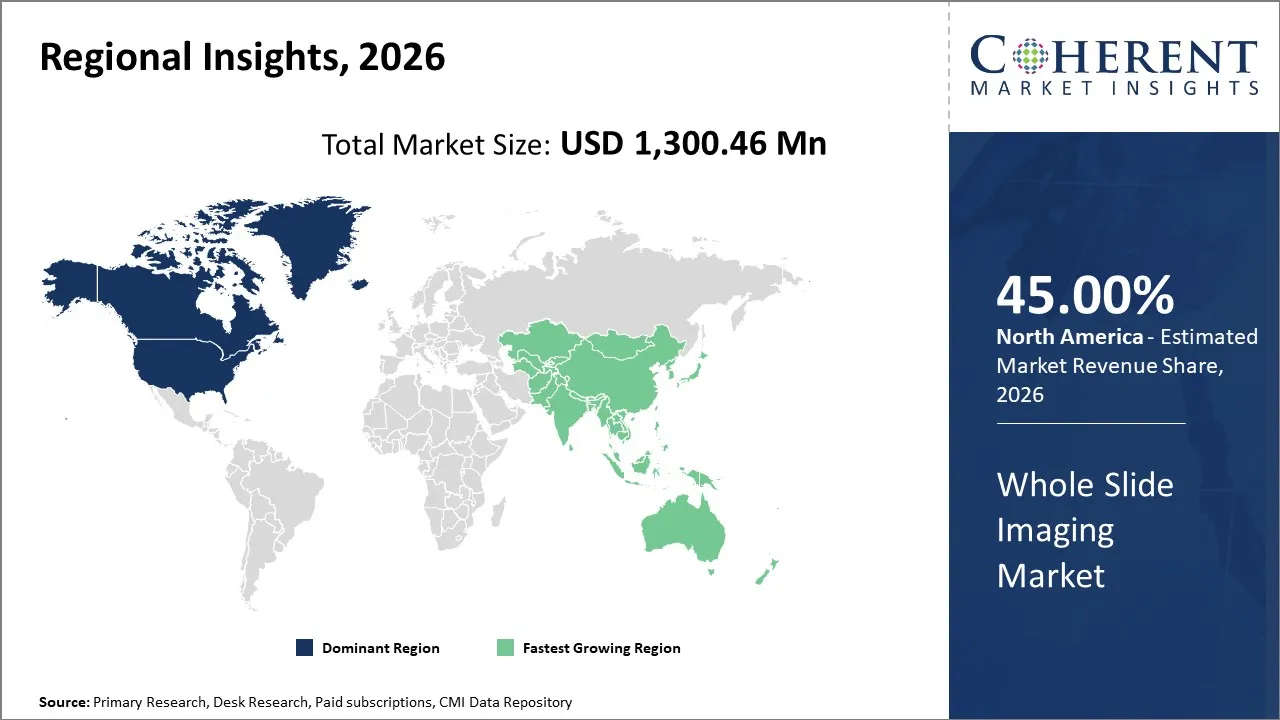
- North America is projected to dominate the global whole slide imaging market in 2026, with a share of over 45% due to strong presence of key pharmaceutical companies and advanced healthcare facilities.
Whole Slide Imaging Market Overview
Pathologists frequently use digital imaging to create static images utilizing optical cameras specifically designed for microscopes and, more recently, cellphones. With the advent of whole slide imaging (WSI) in 1999, it became possible to digitally create a high-resolution virtual slide (VS) from the complete tissue on a glass slide. Pathologists can view, handle, and examine tissues on a computer screen by using Whole Slide Imaging (WSI), which is the process of scanning conventional glass histology slides to produce high-resolution digital images. This technology, which replaces conventional microscopes with automated scanners, is essential for digital archiving, AI-driven diagnostics, and remote consultation. This digitization of slides offers improved data management capabilities, fosters collaborative endeavours, and streamlines communication with other health IT systems. Whole slide imaging is indispensable in intricate pathology and oncology contexts, as it accelerates workflow processes and augments diagnostic precision. The escalating adoption of digital pathology, telepathology, and artificial intelligence in diagnostic procedures, coupled with the increasing demand for remote consultations and improved workflow management, is significantly elevating the significance of the whole slide imaging market. The whole slide imaging market is gaining strategic momentum due to increase in epidemiology of cancer which has increased cancer diagnostic volumes, rising use of AI in pathology, and growing regulatory acceptance of whole slide imaging systems.
Current Events and Their Impact on the Whole Slide Imaging Market
Current Event | Description and its Impact |
Increasing adoption of AI-integrated pathology models |
|
Growing utilization of telepathology and remote diagnostics |
|
Segmental Insights
- Current Industry Events of 2026
- Market Size Estimation
- Regional Breakdown
- Competitive Landscape
- Customer Intelligence
- Segmental Analysis
- Pricing Analysis
- Key Market Drivers, Challenges & Future Trends
- Customized Insights Section
Whole Slide Imaging Market Insights, By Technology - Scanners Holds Dominant Technology in the Market
Based on technology, scanners are expected to lead the market, accounting for a revenue share of 30% in 2026. The scanner is the first and most important part of a whole slide imaging system, as it converts the physical glass slide into a digital image. AI analysis, remote diagnosis, image storage, viewing, and sharing are all impossible without scanning. Scanners are therefore the primary enabling technology available on the market. Diagnostic confidence in digital pathology is contingent upon the quality of the scanned image. Factors such as focus accuracy, resolution, and scan uniformity closely link to scanner performance. Customers prioritize advanced scanners that reliably capture images, as inadequate scanning can necessitate rescans and disrupt workflows. Furthermore, clinical validation and advancements in regulatory frameworks bolster the segment's growth. College of American Pathologists noted that U.S. Food and Drug Administration (U.S.FDA) ad-approved whole slide imaging systems are now used for primary diagnosis, and FDA-cleared systems are built around scanner-based platforms. This gives hospitals and pathology labs more confidence to invest first in scanners when moving from glass-slide workflows to digital pathology. Hence, the scanners segment dominates the market because of high capital importance, regulatory confidence, workflow impact and as it is the foundation of digital pathology
Whole Slide Imaging Market Insights, By Application - Telepathology to Remain Leading Application of Whole Slide Imaging
By application, the telepathology segment is slated to account for a prominent market share of 40% in 2026. By application, the telepathology segment is slated to account for a prominent market share of 40% in 2026. The telepathology segment dominates the market because it delivers immediate clinical value through remote diagnosis, faster expert consultation, improved urgent-case support, and better utilization of limited pathology workforce capacity. Telepathology allows pathologists to assess digital slides remotely, a boon for smaller labs, rural hospitals, and regions where specialist expertise is scarce. Because of this, it's among the most practical and scalable uses of whole slide imaging. Telepathology is important for procedures that require a quick response, such as frozen section diagnoses and immediate intraoperative consultations. Its growing acceptance is due to its clear clinical benefits and the ease of justifying its use, particularly as it enables hospitals to quickly access expert opinions from a distance.
Whole Slide Imaging Market Insights, By End User
Based on end user, research segment led the global whole slide imaging market with share of 46% in 2026. The research segment dominates the market as the whole slide imaging is central to biomarker discovery, AI development, clinical trials, multi-center collaboration, and large-scale digital tissue analysis, while clinical adoption has historically faced higher implementation barriers. Digital pathology is extensively utilized in clinical trials research for centralized pathology review, standardized scoring, and image-based biomarker assessment. This makes pharma, biotech, Contract Research Organization (CRO), and translational research settings major whole slide imaging users.
Regional Insights
North America Remains the Market Leader in 2026
North America is expected to dominate the global whole slide imaging market, accounting for a share of 45% in 2026. North America dominated the market because it combines regulatory readiness, clinical validation standards, coding support, high diagnostic volumes, strong cancer research activity, and the financial/IT capacity needed for digital pathology at scale. National Cancer Institutes (NCI) highlights systems like the Cancer Digital Slide Archive and maintains specialized digital pathology resources, such as tools for sharing and evaluating digital pathology data. North America remains at the forefront of clinical and scientific innovation in whole slide imaging due to NCI-funded work that actively uses whole-slide images for AI-driven cancer interpretation. Rising research activity in North America related to oncology, precision medicine, and AI-enabled pathology has driven the adoption of whole slide imaging across research and clinical settings.
For instance, on February 15, 2026, USC’s Media Communications Lab, research center within the University of Southern California (USC) reported new research on whole-slide image analysis aimed at improving AI-driven histopathology. The study uses multi-resolution feature encoding and ensemble classification to better detect tumor architectural patterns in digitized tissue slides, supporting more efficient and accurate digital pathology workflows.
Asia Pacific Whole Slide Imaging Market Trends
Asia Pacific is expected to grow at the fastest CAGR in the whole slide imaging market during the forecast period. The gap between available pathology capacity and diagnostic demand is a key development driver in Asia Pacific. Digital pathology assessments point out that whole slide imaging is particularly useful for remote consultation and support for centers with insufficient pathologists, whereas reviews of the region stress staff shortages, scarce resources, and antiquated technology in many labs. Because of this, whole slide imaging is appealing for both efficiency and accessibility. Large geographic areas, a mix of urban and rural healthcare access, and a reliance on referrals between central hospitals and smaller labs characterize many Asia Pacific nations. One of the main benefits of such systems is that whole slide imaging makes it possible for remote second opinions, case exchange, subspecialty consultation, and quicker review across sites. Adoption may therefore proceed more quickly than in markets that are already well-covered. Increasing incidence of cancer in the Asia Pacific region has estimated to drive the growth of the market in the near future.
For instance, according to the data published by the World Health Organization, with approximately 9.8 million new cases each year as of early 2026, cancer is Asia-Pacific's biggest cause of death and fastest-growing medical illness. Due to aging populations, urbanization, and changes in lifestyle, Asia accounts for 49% of the world's cancer burden, with lung, colorectal, and breast cancers being the most common. Cancer is the condition with the fastest rate of increase in incidence and cost over the last 18 months, according to over 50% of insurers in Asia Pacific. Rising cancer prevalence directly supports demand for slide scanners, image management, and AI-enabled pathology workflows.
Whole Slide Imaging Market Outlook – Country-wise
U.S. Whole Slide Imaging Market Forecast
The U.S. is the dominant country in the North America whole slide imaging market mainly because it has the strongest mix of regulatory readiness, oncology case volume, research infrastructure, and digital pathology commercialization. Increasing burden of cancer cases in U.S. has estimated to drive the growth of the market in the country. The number of oncology diagnoses in the United States is enormous. For instance, in 2025, according to National Cancer Institute, there were an expected 2,041,910 new cases of cancer in the U.S. in 2025, and SEER predicts a significant continuous incidence burden. The need for slide digitization and image analysis tools is directly impacted by an increase in biopsies, histopathology reviews, and cancer research. An estimated 14,690 children and teenagers between the ages of 0 and 19 will receive a cancer diagnosis in 2025, and 1,650 will pass away from the illness. Furthermore, in 2026, according to the data published by the American Cancer Society, it has been estimated that about 2.1 million new cancer cases in the U.S. in 2026, with more than 626,000 deaths. That kind of illness load generates a lot of biopsies, histology workflows, second-opinion demands, and archiving requirements, all of which contribute to the demand for world slide imaging.
China Whole Slide Imaging Market Trends
The China country leads the Asia Pacific whole slide imaging market due to its large volume of cancer diagnoses, extensive healthcare infrastructure, lack of pathologists in lower-tier regions, growing telepathology deployment, and robust government support for smart hospitals and AI-enabled medical equipment. Shortage and uneven distribution of pathologists in China have driven the growth of the market over the forecast period. The unequal distribution of pathology skills is a crucial factor contributing to the strong growth of WSI in China. According to a large Chinese telepathology research, there were 9,841 licensed pathologists in China, with about 70% of them working in tertiary hospitals in big cities. This immediately encourages the adoption of WSI by making centralized expert review, digital slide sharing, and remote consulting very advantageous.
Whole Slide Imaging Market News
- In March 2026, Hamamatsu Photonics K.K., electronic company, and Sakura Finetek Global, a company focused on advancing cancer diagnosis pathology instrumentation & consumables, signed collaboration to allow consistent, scan-ready slides and clear digital images to support confident clinical decisions with care for every patient. In order to help pathology teams move quickly from biopsy to diagnosis, both businesses are working together to reduce unpredictability and rework by coordinating reliable digitization with excellent slide preparation. The relationship is based on the same conviction that improving patient care is the ultimate goal of engineering excellence.
- In January 2026, Agilent Technologies Inc., consumer electronic company based in U.S., introduced Agilent S540MD Slide Scanner System, a whole slide imaging (WSI) digital scanner, commercially available for sale in key European markets. The introduction demonstrates Agilent's ongoing commitment to digital pathology, broadening its offering to satisfy the increasing need for high-throughput solutions in clinical labs.
- In March 2026, Proscia, a pathology AI startup, and Aiforia, a leader in AI-driven pathology diagnostics, announced a collaboration to hasten the adoption of AI-driven workflows in anatomic pathology labs worldwide. Through this partnership, Aiforia's AI-powered diagnostic apps and Proscia's Concentriq platform will be seamlessly integrated. Through this non-exclusive collaboration, Aiforia and Proscia hope to provide laboratories throughout the world with fully integrated, AI-driven digital pathology processes that could boost productivity, accuracy, and eventually improve patient outcomes.
Market Report Scope
Whole Slide Imaging Market Report Coverage
| Report Coverage | Details | ||
|---|---|---|---|
| Base Year: | 2025 | Market Size in 2026: | USD 1,300.46 Mn |
| Historical Data for: | 2020 To 2024 | Forecast Period: | 2026 To 2033 |
| Forecast Period 2026 to 2033 CAGR: | 12.7% | 2033 Value Projection: | USD 2,640.59 Mn |
| Geographies covered: |
| ||
| Segments covered: |
| ||
| Companies covered: | 3Dhistech, Visiopharm, Philips Healthcare, Olympus Corporation, Nikon Corporation, Leica Biosystems GmbH, Inspirata, Indica Labs, Hamamatsu Photonics KK, Definiens AG Mikroscan Technologies Inc., and Ventana Medical Systems Inc., among others | ||
| Growth Drivers: |
| ||
| Restraints & Challenges: |
| ||
Whole Slide Imaging Market Drivers
Increasing adoption of digital pathology to enhance lab efficiency
Rising adoption of digital pathology to improve lab efficiency has driven the growth of the market over the forecast period. Since whole slide imaging (WSI) is the underlying technology behind these advantages, increasing digital pathology adoption directly accelerates demand for whole slide imaging systems, software, storage, and services. Increasing adoption of digital pathology improves lab efficiency by reducing turnaround time, lowering manual slide handling, improving pathologist productivity, enabling automation, and supporting faster case sharing. For instance, in March 2026, Koninklijke Philips N.V., health technology company expanded its digital pathology portfolio with a cloud-enabled IntelliSite Pathology Solution on HealthSuite, aimed at helping pathology laboratories scale digital workflows, improve productivity, simplify IT management, and support routine clinical use of digital pathology. This reflects how vendors are introducing workflow-focused digital pathology solutions that can accelerate demand for whole slide imaging systems and related software infrastructure.
Increase in prevalence of cancer worldwide
Rising incidence of cancer is propelling growth in the entire slide imaging market by increasing the volume of biopsy and histopathology examinations. This is driving up demand for digital pathology solutions that facilitate remote consultation, enhance diagnostic workflow efficiency, and support AI-based cancer analysis. For instance, in January 2026, the American Cancer Society estimated the number of new cases of invasive cancer in the U.S. by type and sex in 2026. Overall, there will be around 2,114,850 new cancer diagnoses, or about 5800 cases every day. Additionally, there will be about 60,730 new cases of ductal carcinoma in situ and 122,680 new cases of cutaneous melanoma in situ in women in 2026.
Whole Slide Imaging Market Trends
Integration of AI into Routine Clinical Workflow
Integration of artificial intelligence into standard clinical practices can streamline case management, slide examination, annotation, and expedite reporting processes. This integration is driving expansion within the whole slide imaging market by enhancing pathology turnaround times, boosting productivity, enabling more objective biomarker evaluations, supporting precision oncology initiatives, and strengthening the clinical and financial rationale for widespread digital pathology adoption at the enterprise level. For instance, in June 2025, PathAI, a company focused on providing digital pathology and artificial intelligence (AI) solutions revealed that the AISight Dx is a digital pathology image management system approved by the U.S. Food and Drug Administration for use in primary diagnosis in clinical settings. This most recent accomplishment highlights the platform's ongoing innovation and PathAI's dedication to providing improved capabilities as the product develops, building on the first 510(k) clearance for AISight Dx (Novo). This clearance included a Predetermined Change Control Plan to facilitate future integrations more effectively.
Enterprise-Scale Implementation Follows Pilot Adoption
Enterprise adoption boosts overall whole slide imaging market expansion by generating recurring revenue streams. Vendors can continue to make money from cloud hosting, software licensing, data storage, interoperability tools, maintenance, upgrades, and AI modules once whole slide imaging is installed throughout a network. Launched on March 11, 2026, Philips' cloud-enabled IntelliSite Pathology Solution was specifically created to assist healthcare organizations in scaling digital pathology adoption and workflows. This illustrates how the market is moving away from one-time hardware sales and toward larger, ongoing platform relationships. The economic argument for whole slide imaging is strengthened by multi-site deployment, which promotes quicker purchasing choices. Cross-site case sharing, centralized review, remote consultation, and task distribution among pathology teams are all made possible by enterprise systems. Large health systems that prefer network-level efficiency over isolated digital pathology use find whole slide imaging more appealing because of these benefits.
Whole Slide Imaging Market Opportunities
Increasing Technology Advancement & Launch of New Product
Increasing technological advancement and the introduction of advanced slide imaging platforms has created significant opportunity for the growth of the whole slide imaging market. The whole slide imaging market is expanding, fueled by technological progress and the emergence of advanced platforms. These innovations are streamlining digital pathology, making it faster, more adaptable, and increasingly viable for everyday clinical practice. Improvements in optics, scanning precision, focus automation, and image processing all contribute to the improved clarity and consistency of digital slides. When the images are of superior quality, whole slide imaging becomes a more reliable tool for initial diagnoses, second opinions, and expert assessments. This, in turn, is driving broader adoption in hospitals and reference labs that demand diagnostic-grade performance. AI-enhanced operations, encompassing tissue detection, quality control, image analysis, and biomarker interpretation, are progressively facilitated by advanced slide imaging platforms. Consequently, whole slide imaging evolves into a more holistic platform for decision support, transcending its initial function as a simple digitization tool. The adoption of these platforms is on the rise within pathology laboratories that prioritize rapid, consistent, and precise diagnoses, as the value proposition shifts from "image capture" to "workflow plus analytics."
For instance, in February 2026, Delhi-based Ayukriyam Innovations' "Otoscope: A Fully Automated Hole Slide Imaging Diagnostic System" has received support from the Technology Development Board (TDB), Department of Science and Technology (DST), Government of India. The Otoscope platform combines AI-powered diagnostic capabilities with complete automation. The system's objective is to offer diagnostic procedures that are standardized, scalable, and capable of high-throughput processing. This approach enhances diagnostic precision and reduces dependence on imported, sophisticated imaging systems by leveraging domestic research and development, alongside AI-driven image analysis.
Analyst Opinion (Expert Opinion)
- According to experts’ opinion, baseline demand is being strengthened by increasing awareness of early and accurate disease diagnosis. Advances in high-resolution scanning, image management software, cloud-based data sharing, and AI-assisted image analysis have improved the speed, consistency, and quality of pathology assessments. These developments are helping pathologists review cases more efficiently, support second-opinion workflows, and improve diagnostic confidence, all of which are contributing to stronger market expansion.
- The market for whole slide imaging is estimated to grow significantly due to increasing support for precision medicine, digital pathology, and AI-enabled diagnostics. Hospitals, research institutes, and biopharmaceutical companies are increasingly adopting whole slide imaging platforms to improve diagnostic efficiency, enable remote consultations, and support biomarker-based research. The future outlook remains highly promising as awareness of digital pathology increases globally and healthcare providers continue shifting from conventional microscopy toward scalable and connected imaging ecosystems.
Speak to the analyst
Want personalized insights?
Take the findings above to one of our principal consultants, or have the report rebuilt around the segments, geographies and competitors you actually track.
Whole Slide Imaging Market Segmentation
- By Technology ( Revenue, USD Mn, 2020 - 2033)
- Scanners
- IT Infrastructure
- Viewer
- Image Management System
- By Application Insights (Revenue, USD Mn, 2020 - 2033)
- Anti-inflammatory Medication
- Telepathology
- Cytopathology
- Immunohistochemistry
- Hematopathologists
- By End User Insights ( Revenue, USD Mn, 2020 - 2033)
- Education
- Research
- Clinical
- By Region Insights (Revenue, USD Mn, 2020 - 2033)
- North America
- U.S.
- Canada
- Latin America
- Brazil
- Argentina
- Mexico
- Rest of Latin America
- Europe
- Germany
- U.K.
- Spain
- France
- Italy
- Russia
- Rest of Europe
- Asia Pacific
- China
- India
- Japan
- Australia
- South Korea
- ASEAN
- Rest of Asia Pacific
- Middle East & Africa
- GCC Countries
- Israel
- Rest of Middle East & Africa
- North America
- Key Players
- 3Dhistech
- Visiopharm
- Philips Healthcare
- Olympus Corporation
- Nikon Corporation
- Leica Biosystems GmbH
- Inspirata
- Indica Labs
- Hamamatsu Photonics KK
- Definiens AG Mikroscan Technologies Inc.
- Ventana Medical Systems Inc.
Sources
Primary Research Interviews
- Interviews with histopathologists, pathologists, and digital pathology specialists to understand workflow challenges, diagnostic accuracy requirements, and the adoption of whole slide imaging in routine clinical practice.
- Insights from imaging technology providers, product managers, and R&D professionals on advancements in whole slide scanners, image management software, and the integration of AI-based pathology solutions.
- Discussions with laboratory directors, hospital administrators, and procurement managers to assess purchasing decisions, cost considerations, infrastructure requirements, and factors influencing the adoption of digital pathology systems.
- Conversations about the role of whole slide imaging in research applications, biomarker development, and precision medicine initiatives with experts in diagnostic laboratories, academic researchers, and cancer research institutes.
Databases
- PubMed — Biomedical and pathology research studies related to digital pathology, whole slide imaging, image analysis, and cancer diagnostics.
- Web of Science — Research publications on digital pathology validation, scanner technologies, image management systems, and computational pathology applications.
- Scopus — Multidisciplinary scientific literature covering pathology imaging, laboratory digitization, artificial intelligence in pathology, and whole slide imaging workflows.
- ClinicalTrials.gov — Clinical trial registry for studies involving digital pathology, image-based diagnostics, biomarker research, and AI-enabled pathology applications.
Magazines
- Genetic Engineering & Biotechnology News (GEN)
- 360Dx
- LabPulse
- The Dark Report / Dark Intelligence Group
- Pharmaceutical Technology Magazine
- GenomeWeb
Journals
- Archives of Pathology & Laboratory Medicine
- Laboratory Investigation
- American Journal of Pathology
- Modern Pathology
- Journal of Clinical Pathology
Newspapers
- The New York Times — Health and Science Section
- The Guardian — Science and Health
- The Hindu — Science and Healthcare
- The Economic Times — Healthcare and Medical Technology
- Reuters — Healthcare, Medical Devices, and Diagnostics News
- The Wall Street Journal — Healthcare and Technology
Associations
- Association for Pathology Informatics (API)
- United States and Canadian Academy of Pathology (USCAP)
- Digital Pathology Association (DPA)
- College of American Pathologists (CAP)
- National Society for Histotechnology (NSH)
Public Domain Sources
- National Institutes of Health (NIH) / PubMed Central — Public research papers on digital pathology, AI in pathology, and whole slide imaging applications.
- ClinicalTrials.gov — Publicly accessible clinical trial information related to pathology digitization, diagnostics, and AI-based image analysis.
- College of American Pathologists (CAP) Guidelines — Publicly available validation and implementation guidance for whole slide imaging in diagnostic pathology.
- U.S. Food and Drug Administration (FDA) — Device approvals, regulatory guidance, and validation considerations for digital pathology and whole slide imaging systems.
Proprietary Elements
- CMI Data Analytics Tool
- Proprietary CMI Existing Repository of Information for the Last 8 Years
Get access to 250+ pages report
Every segment, forecast, competitor profile and data table behind the analysis above — available for instant download.
- ESOMAR Member
- ISO 9001:2015 Certified
- D-U-N-S Registered
- GDPR & CCPA Compliant
Missing comfort of reading report in your local language? Find your preferred language:
Transform your Strategy with Exclusive Trending Reports
Frequently Asked Questions
The global market is estimated to be valued at USD 1,300.46 Mn in 2026.
The global Whole Slide Imaging Market value is expected to reach USD 2,640.59 Mn by 2033.
The global market is poised to exhibit a CAGR of 12.7% from 2026 to 2033.
Major growth factors include increasing adoption of digital pathology to enhance lab efficiency and increase in prevalence of cancer worldwide.
High cost of whole slide imaging systems and stringent regulatory approvals
Some major companies in the 3Dhistech, Visiopharm, Philips Healthcare, Olympus Corporation, Nikon Corporation, Leica Biosystems GmbH, Inspirata, Indica Labs, Hamamatsu Photonics KK, Definiens AG Mikroscan Technologies Inc., and Ventana Medical Systems Inc., among others
North America, with 45% share in 2026, is expected to lead the market during the forecast period.