

Fusion Biopsy Market Size and Trends
The Global Fusion Biopsy Market is estimated to be valued at USD 861.5 Mn in 2026 and is expected to reach USD 1,564.8 Mn by 2033, exhibiting a compound annual growth rate (CAGR) of 8.9% from 2026 to 2033.
Key Takeaways
- By Biopsy Route, the Transrectal Segment is expected to contribute the highest share of the market with 54.1% in 2026, owing to its proven record of accuracy and minimal invasiveness.
- By Product, the Equipment segment is expected to contribute the highest share of the market with 54.2% in 2026 driven by the need for the latest technology solutions.
- By Application, the Prostate Cancer segment is expected to contribute the highest share of the market with 81.2% in 2026 driven by its growing incidence rates worldwide.
- North America is expected to top the global market with 38.3% share, followed by Asia Pacific with 27.7% share in 2026.
Market Overview
Advancements in biopsy devices and growing preference for minimally invasive procedures is expected to fuel the market growth during the forecast period. The market is witnessing positive trends with increasing adoption of fusion biopsy globally. Fusion biopsy helps overcome the issues with traditional biopsy methods by combining Magnetic Resonance Imaging (MRI) and ultrasound images to guide the biopsy needle to the suspected area, improving accuracy and maximizing tissue yields. As fusion biopsy provides real-time images to guide needle placement, it enables efficient sampling of tissues while reducing damage to nearby healthy tissues. This trend is expected to drive the demand for fusion biopsy devices.
Reimbursement Scenario for Fusion Biopsy Utilizing Unfold AI
The American Medical Association (AMA) has recently introduced a Category III CPT code, 0898T, effective July 1, 2024, to support reimbursement for advanced diagnostic services involving Unfold AI technology. This code facilitates billing for services that leverage Unfold AI's sophisticated analysis capabilities during prostate cancer evaluation.
Unfold AI enhances image-guided fusion biopsy procedures by integrating pathology data with advanced imaging analytics. The platform generates detailed estimation maps, enabling clinicians to precisely determine the extent and spatial distribution of prostate cancer within the prostate gland. This improves diagnostic accuracy and aids in personalized treatment planning.
Pricing Analysis for Fusion Biopsy
The MRI scan before biopsy typically costs between USD 500 and USD 1,500. The biopsy procedure itself, including physician fees and image guidance, ranges from USD 1,500 to USD 3,000. Pathology analysis adds about USD 200 to USD 500. Using Unfold AI for advanced analysis, covered by CPT code 0898T, can add roughly USD 200 to USD 800.
Additional costs include anesthesia (USD 100– USD 400) and facility fees (USD 500–USD 1,000). Consultations before and after the procedure may add USD 150 to USD 400.
Overall, fusion biopsy with Unfold AI analysis usually costs between USD 4,500 and USD 5,000, depending on location, facility type, and insurance coverage.
Though the upfront cost may be higher with AI integration, improved diagnostic precision can help reduce unnecessary treatments and lower long-term healthcare costs.
- Current Industry Events of 2026
- Market Size Estimation
- Regional Breakdown
- Competitive Landscape
- Customer Intelligence
- Segmental Analysis
- Pricing Analysis
- Key Market Drivers, Challenges & Future Trends
- Customized Insights Section
Segmental Insights
Biopsy Route Insights, By Biopsy Route
Transrectal Segment Dominates Due to Accuracy and Ease of Use
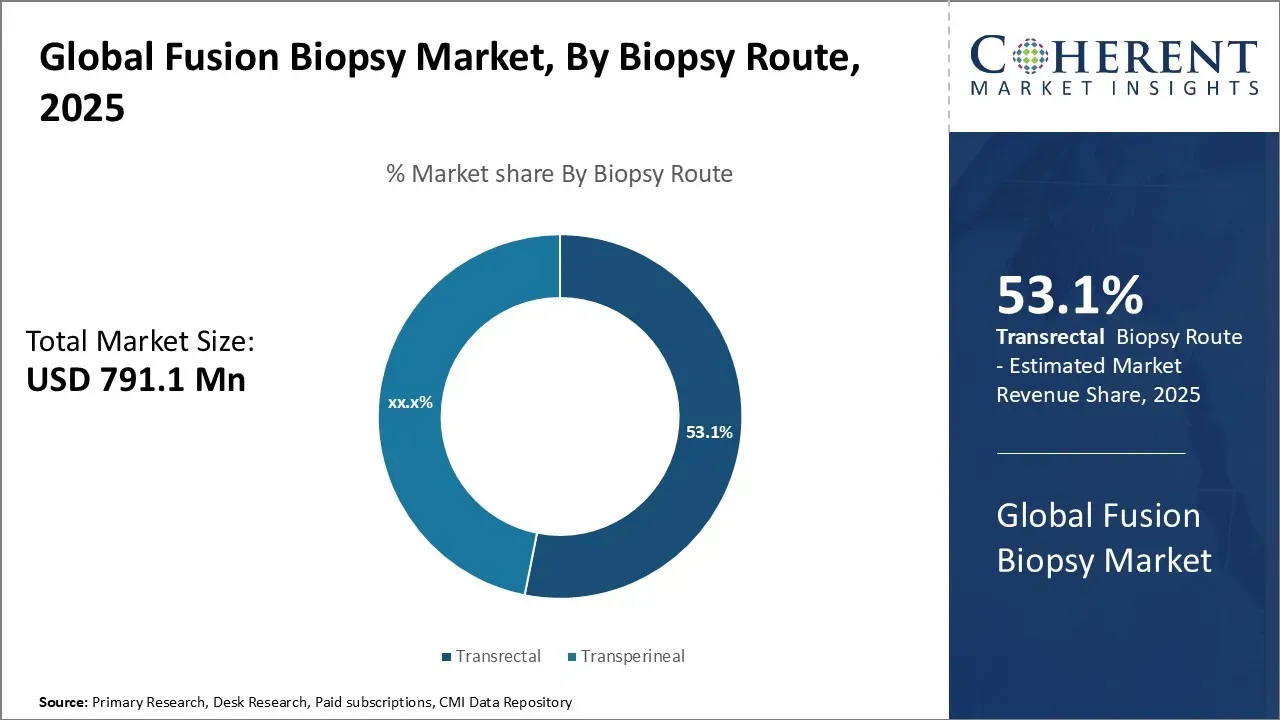
In terms of biopsy route, the transrectal segment is expected to contribute the highest share of the market with 54.1% in 2026 owing to its proven record of accuracy and minimal invasiveness. As prostate cancer screening has become more widespread, transrectal biopsy has emerged as the standard of care for initial prostate tumor detection and diagnosis. According to American Urological Association News, in September 2024, experts argue for adopting the transperineal approach, which significantly reduces sepsis risk and offers improved access to anterior prostate regions. This is because it offers real-time ultrasound guidance to help physicians reach the entire prostate with precision. It also eliminates the need for an incision which reduces pain and risk of infection compared to transperineal procedures.
Moreover, transrectal biopsies are generally well-tolerated by patients and do not require general anesthesia. These advantages have led to its preferential use over transperineal biopsy in most clinical settings for initial diagnosis. However, transrectal may have some limitation for repeat biopsies due to factors like needle damage from prior samples. This gap is expected to drive increased adoption of the transperineal route in future.
Fusion Biopsy Market Insights, By Product
Constant Technological Advancements Fuel Equipment Demand
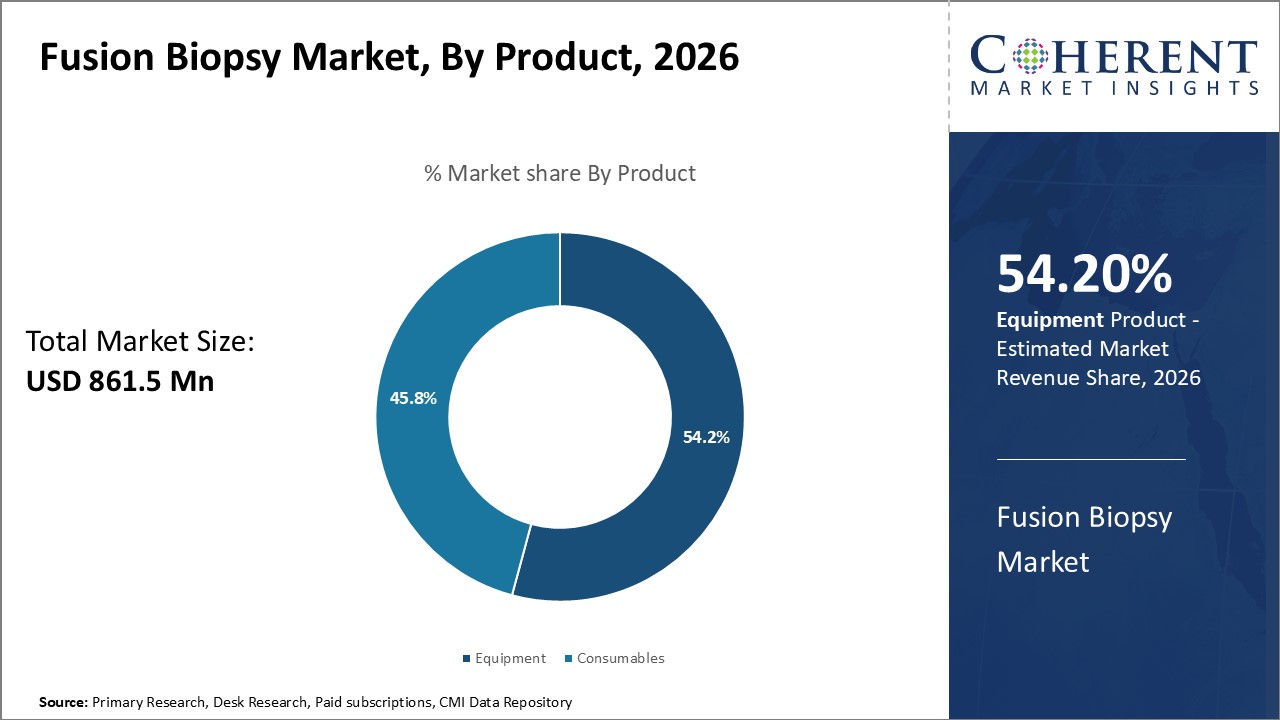
In terms of product, the equipment segment is expected to contribute the highest share of the market with 54.2% in 2026 driven by the need for the latest technology solutions. Physicians are demanding advanced fusion biopsy devices that integrate MRI/TRUS imaging for improved lesion targeting. This is spurring manufacturers to focus on developing novel biopsy guns, software for image registration, and platforms that enhance precision and diagnostic quality. Regular software and hardware upgrades are also required to support these fusion systems. Meanwhile, MRI machines continue to play a vital role in pre-biopsy mapping of prostate cancer. Manufacturers are designing new open and closed MRI systems specifically tailored for prostate interventions with improved ergonomics and workflow.
In May 2025, Royal Philips unveiled an integrated diagnostic approach aimed at improving prostate cancer care by connecting radiology and urology workflows. This innovation streamlines imaging, biopsy, and pathology into a unified system, enhancing diagnostic confidence and patient outcomes. The solution leverages AI and advanced imaging tools to enable more precise targeting during biopsies and better-informed treatment decisions.
Fusion Biopsy Market Insights, By Application
Rising Prostate Cancer Incidence Drives Diagnostic Applications
In terms of application, the prostate cancer segment is expected to contribute the highest share of the market with 81.2% in 2026 driven by its growing incidence rates worldwide. Prostate cancer is the second most commonly occurring cancer in men globally. According to American Cancer Society, about 1 in 8 men will be diagnosed with prostate cancer during their lifetime. With aging populations and adoption of Western lifestyles in developing nations, its diagnosis has significantly increased over past decades. Early detection through biopsy remains critical for treatment selection and success outcomes. This is resulting in unprecedented procedure volumes for urologists to confirm prostate cancer diagnosis, determine aggressiveness, and rule out malignancy for elevated Prostate-Specific Antigen (PSA) levels.
Regional Insights
North America Fusion Biopsy Market Analysis &Trends
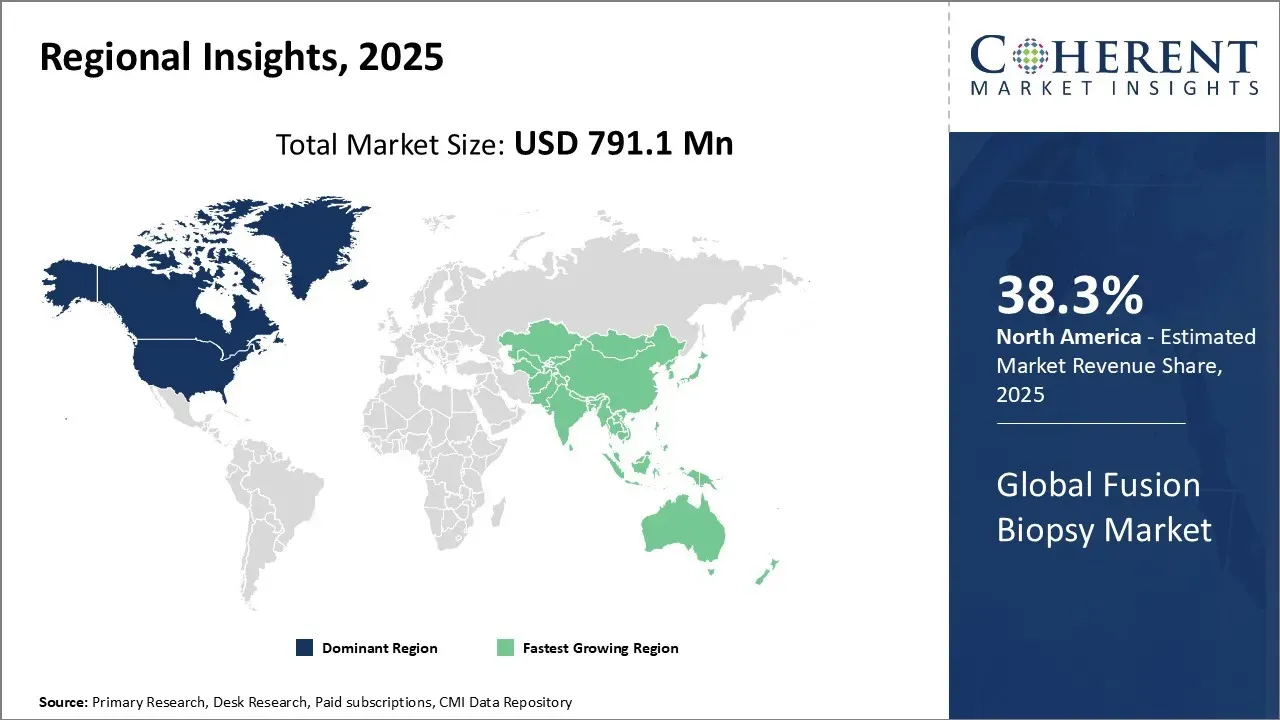
North America’s dominance in the fusion biopsy market with an estimated share of 38.3% in 2026 can be attributed to factors such as established healthcare infrastructure, favorable reimbursement policies, and presence of leading market players. The region has witnessed considerable technological advancements and comprehensive research efforts aiding the clinical adoption of fusion biopsy. Biopsy procedures in American healthcare are highly advanced, utilizing image-guided techniques like MRI and ultrasound for precision. Leading institutions such as Mayo Clinic and Johns Hopkins Medicine offer various biopsy types. Medicare and private insurers typically cover medically necessary biopsies, but coverage for advanced techniques like fusion biopsy can be inconsistent. Some insurers require pre-authorization, while others impose co-pays or deductibles that significantly impact out-of-pocket costs. This is further contributing to the fusion biopsy market share.
Asia Pacific Fusion Biopsy Market Analysis & Trends
Asia Pacific exhibits the fastest growth in the fusion biopsy market forecast with an estimated share of 27.7% in 2026 owing to increasing investments to develop healthcare facilities, rising medical tourism, and growing awareness among physicians and patients regarding novel diagnostic techniques. The region provides lucrative opportunities for market players to enhance their geographical presence. Medical tourism is extensively growing in Asia Pacific region due to affordable costs, advanced technology, and high-quality healthcare facilities. Countries like India, Thailand, and South Korea are leading destinations, offering image-guided and minimally invasive biopsy techniques at significantly lower prices than Western nations. Patients often seek MRI-guided fusion biopsy for cancer diagnostics, benefiting from shorter wait times and internationally accredited hospitals. Additionally, government incentives and private sector investments are enhancing infrastructure, making Asia a competitive hub for medical tourism.
Fusion Biopsy Market Outlook for Key Countries
U.S. Fusion Biopsy Market Trends
The U.S. drives the global fusion biopsy market due to its adoption of advanced diagnostic technologies, such as the biospperineal biopsy with 3D MRI fusion, which enhances cancer detection accuracy and reduces infection risks. In April 2023, UC San Diego Health was the first in San Diego to offer transperineal prostate biopsies, a minimally invasive procedure combined with 3D MRI fusion technology for improved cancer detection. Unlike traditional transrectal biopsies, this method avoids the rectum, significantly reducing infection risk and allowing the procedure to be performed in a clinic setting under local anesthesia. According to the National Institute of Health, in the United States, more than 2 million breast biopsies are performed annually. This is further accelerating the fusion biopsy market demand.
China Fusion Biopsy Market Trends
China fusion biopsy market has expanded rapidly, fueled by the nation's efforts to improve healthcare services and tackle the rising burden of prostate cancer. An aging population has contributed to a higher incidence of prostate cancer, driving the adoption of advanced diagnostic technologies. According to World Cancer Research Fund, China recorded the second-highest global prevalence of prostate cancer, with 1,467,854 cases reported in 2022. Currently, surgery is considered to be the dominating definitive treatment option for prostate cancer in China, with over 134,000 new prostate cancer surgeries according to the World Cancer Research Fund. This further proliferates the fusion biopsy market share.
U.K. Fusion Biopsy Market Trends
The U.K. drives the global fusion biopsy market by pioneering advanced diagnostic technologies such as MRI-US fusion-guided transperineal prostate biopsies (M-TTP). Centers like Cambridge Urology Partnership lead in innovation, offering purpose-built solutions with proven higher cancer detection rates and precise tumor mapping. The U.K.’s focus on integrating cutting-edge imaging with clinical expertise enhances diagnostic accuracy, influencing global standards in prostate cancer care and driving adoption of similar technologies worldwide. For instance, Cambridge Urology Partnership is promoting the use of MRI-TRUS fusion biopsy, a cutting-edge technique combining magnetic resonance imaging (MRI) with transrectal ultrasound (TRUS) for improved prostate cancer diagnosis.
Japan Fusion Biopsy Market Trends
Japan is experiencing growth in fusion biopsy market due to its aging population, according to World Economic Forum, In September 2023, more than 10% of Japan's population is now aged 80 or older, solidifying its position as the country with the world's oldest population. The Japanese government has initiated programs to improve cancer diagnostics and diagnostic technologies, including fusion biopsy.
In January 2026, Japanese startups are making strides in oncology with cutting-edge technologies that combine AI and focused ultrasound to revolutionize cancer detection and treatment. According to a Forbes report, companies like LPixel and T-ICU are developing precision tools that enhance early diagnosis and enable non-invasive tumor targeting. This innovation is backed by government funding and academic partnerships.
Market Players, Key Development, and Competitive Intelligence
Key Developments
- In March 2025, Pioneering research from the University of Oxford presents an MRI-Ultrasound fusion biopsy technique, a new biopsy method is reshaping how prostate cancer is diagnosed, potentially reducing unnecessary procedures and improving accuracy. The innovative approach uses MRI-targeted techniques to focus on suspicious areas, minimizing overdiagnosis of low-risk cancers while enhancing detection of aggressive tumors.
- In September 2024, Koelis, a global leader and innovator in prostate carecollaborated with DeepHealth to enhance prostate cancer care through the integration of DeepHealth’s AI-powered prostate MRI software with Koelis' Trinity 3D Ultrasound Platform. This collaboration aims to streamline the prostate MRI reading process and enable seamless MRI-US fusion for biopsy and treatment. The Koelis Trinity system combines 3D ultrasound imaging with MRI-US fusion guidance, offering unique prostate motion tracking software.
- In August 2024, Perineologic, a pioneer in transperineal prostate biopsy technology, announced a strategic investment from a group of private equity and hedge fund executives. This investment will support the company’s expansion and commercial sales efforts. CEO Mr. Matthew Allaway highlighted the endorsement of their vision and market leadership. With the new funding, Perineologic plans to accelerate market penetration of its Precision Point Transperineal Access System, known for its high cancer detection and low infection rates.
- In April 2023, FUJIFILM Healthcare, a pioneer in diagnostic imaging and information systems, launched the ARIETTA 65 IntuitiveFusion, an MRI-US fusion prostate biopsy system on April 6, 2023. This system combines FUJIFILM's ARIETTA 65 ultrasound and MedCom's BiopSee software to enhance prostate biopsy efficiency. The integration of the device and software enables miniaturization and high operability, supporting more efficient and accurate MRI-US fusion prostate biopsies with various advanced functions.
Market Report Scope
Fusion Biopsy Market Report Coverage
| Report Coverage | Details | ||
|---|---|---|---|
| Base Year: | 2025 | Market Size in 2026: | USD 861.5 Mn |
| Historical Data for: | 2020 To 2024 | Forecast Period: | 2026 To 2033 |
| Forecast Period 2026 to 2033 CAGR: | 8.9% | 2033 Value Projection: | USD 1,564.8 Mn |
| Geographies covered: |
| ||
| Segments covered: |
| ||
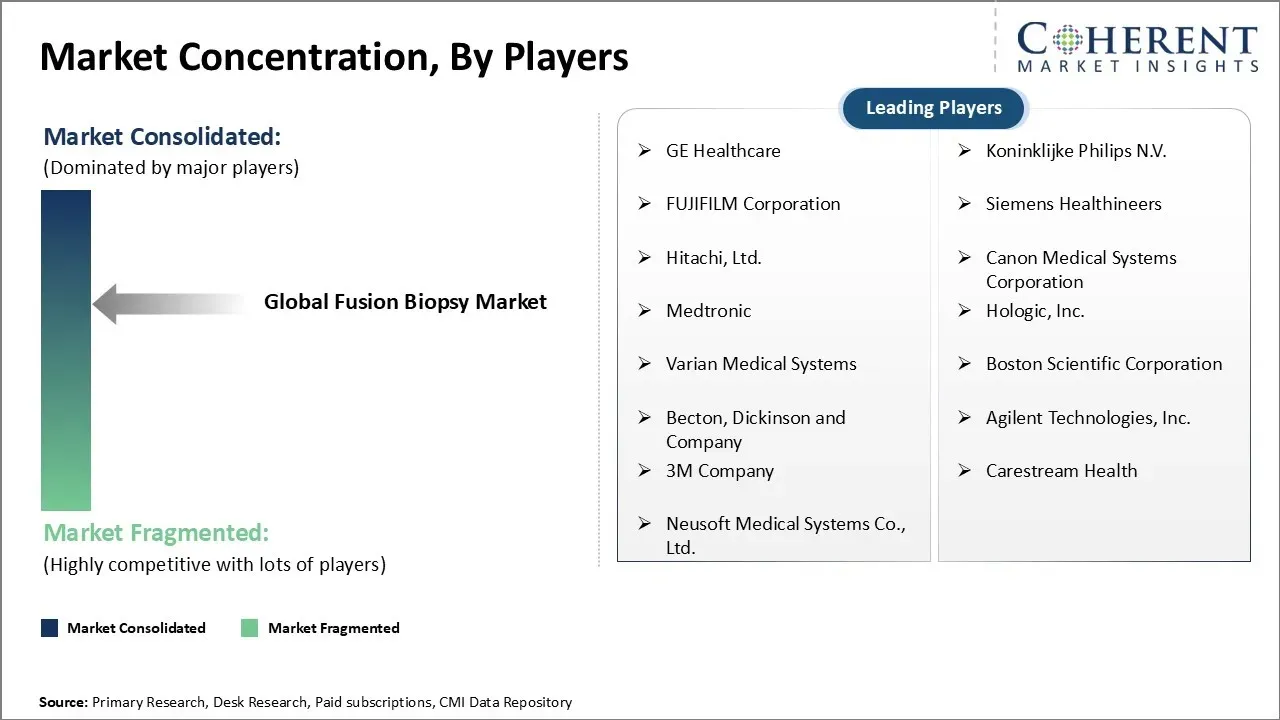
| Companies covered: | GE Healthcare, Koninklijke Philips N.V., FUJIFILM Corporation, Siemens Healthineers, Hitachi, Ltd., Canon Medical Systems Corporation, Medtronic, Hologic, Inc., Varian Medical Systems, Boston Scientific Corporation, Becton, Dickinson and Company, Agilent Technologies, Inc., 3M Company, Carestream Health, and Neusoft Medical Systems Co., Ltd. | ||
| Growth Drivers: |
| ||
| Restraints & Challenges: |
| ||
Fusion Biopsy Market Driver
Increasing prevalence of prostate cancer
The global fusion biopsy market is witnessing significant growth driven by the rising incidence of prostate cancer worldwide. Prostate cancer has become one of the most commonly occurring cancers in men. The rising prevalence can be attributed to many factors such as growing and aging global population, widespread adoption of prostate specific antigen testing, and changing lifestyle patterns in developing countries. Advanced medical technologies, wider health insurance coverage, and higher per capita healthcare spending have also improved access to advanced diagnostic tools in developed regions. In April 2024, as per Prostate Cancer Foundation, prostate cancer cases are projected to double from 1.4 million in 2020 to 2.9 million in 2040, with annual deaths rising by 85% to nearly 700,000, primarily in low- and middle-income countries (LMICs). The Lancet Commission highlights the need for early-detection programs for high-risk individuals, especially in LMICs, where late-stage diagnoses are common.
Fusion Biopsy Market Opportunity
Growing demand for minimally invasive diagnostic procedures
A key opportunity for the global fusion biopsy market is the rising demand for minimally invasive diagnostic procedures across the world. There is an increasing preference for procedures that are less painful, cause minimal trauma to tissues and enable faster recovery. Compared to conventional transrectal ultrasound (TRUS) biopsies which require multiple needles insertions, fusion biopsy provides precise tissue sampling with just one insertion guided by multi-parametric MRI images. This significantly reduces discomfort for patients and chances of infections. Given the growing geriatric population globally that is more averse to invasive treatments, the demand for painless and accurate diagnostic procedures like fusion biopsy is expected to grow steadily. Manufacturers have an opportunity to promote the enhanced patient experience, diagnostic accuracy, and quality of life benefits of fusion biopsy over traditional biopsies.
Analyst Opinion (Expert Opinion)
The global fusion biopsy market share is at a critical inflection point—driven not by volume, but by the urgent need for diagnostic precision and workflow efficiency in prostate cancer management. In my opinion, this market is evolving into a technology battleground where clinical accuracy, AI augmentation, and cross-modality imaging integration are redefining value—not price.
Traditional TRUS-guided biopsies have shown limitations, missing nearly 30% of clinically significant prostate cancers while over-diagnosing indolent cases. Fusion biopsy, by overlaying pre-acquired MRI with real-time ultrasound, addresses this by improving lesion targeting. A recent European Urology study (2023) found MRI-US fusion biopsy detected 94% of clinically significant prostate cancers, compared to just 51% via systematic biopsy. That detection differential is not incremental—it’s existential.
Innovation is rapidly bifurcating the market. On one end, companies like Koelis and Eigen are leading with precision fusion platforms that emphasize image elasticity and spatial fidelity. On the other, giants like Philips and GE Healthcare are embedding AI to reduce operator dependency. The result? A clear divide between commoditized imaging and systems that become cognitive extensions of the urologist.
The U.S. remains the dominant innovation crucible, not because of volume but because of reimbursement alignment with value-based outcomes. The CPT Category I code for mpMRI-targeted biopsy has cemented fusion techniques as the new gold standard. But it’s Germany and Japan where procedural protocol standardization is pushing adoption faster—driven by national screening mandates and aging populations.
Critically, the market is now being shaped by the next frontier: real-time AI-guided lesion detection and cloud-integrated platforms for longitudinal biopsy mapping. Recent FDA clearances of solutions like Avenda Health’s Unfold AI suggest that fusion is moving beyond hardware into predictive oncology. This is where the market will diverge between legacy platform players and next-gen integrators who offer not just detection, but decision support.
Speak to the analyst
Want personalized insights?
Take the findings above to one of our principal consultants, or have the report rebuilt around the segments, geographies and competitors you actually track.
Market Segmentation
- Biopsy Route Insights (Revenue, USD Mn, 2021 - 2033)
- Transrectal
- Transperineal
- Product Insights (Revenue, USD Mn, 2021 - 2033)
- Equipment
- MRI machines
- Ultrasound devices
- Fusion biopsy systems
- Others
- Consumables
- Biopsy needles
- Imaging contrast agents
- Others
- Equipment
- Application Insights (Revenue, USD Mn, 2021 - 2033)
- Prostate Cancer
- Others
- End User Insights (Revenue, USD Mn, 2021 - 2033)
- Hospitals
- Diagnostic Centers
- Ambulatory Care Centers
- Academic & Research Laboratories
- Others
- Regional Insights (Revenue, USD Mn, 2021 - 2033)
- North America
- U.S.
- Canada
- Latin America
- Brazil
- Argentina
- Mexico
- Rest of Latin America
- Europe
- Germany
- U.K.
- Spain
- France
- Italy
- Russia
- Rest of Europe
- Asia Pacific
- China
- India
- Japan
- Australia
- South Korea
- ASEAN
- Rest of Asia Pacific
- Middle East
- GCC Countries
- Israel
- Rest of Middle East
- Africa
- South Africa
- North Africa
- Central Africa
- North America
- Key Players Insights
- GE Healthcare
- Koninklijke Philips N.V.
- FUJIFILM Corporation
- Siemens Healthineers
- Hitachi, Ltd.
- Canon Medical Systems Corporation
- Medtronic
- Hologic, Inc.
- Varian Medical Systems
- Boston Scientific Corporation
- Becton, Dickinson and Company
- Agilent Technologies, Inc.
- 3M Company
- Carestream Health
- Neusoft Medical Systems Co., Ltd.
Sources
Primary Research Interviews from the following stakeholders:
Stakeholders:
- Interviews with radiologists, urologists, oncologists, hospital procurement managers, diagnostic imaging center directors, pathology lab heads, and healthcare administrators across key regional markets.
Specific stakeholders:
- Heads of radiology and urology departments at top hospitals and cancer centers (e.g., Mayo Clinic, AIIMS, Cleveland Clinic)
- Biomedical engineers and medical device procurement leads at multi-specialty hospitals and diagnostic chains (e.g., Fortis, HCA Healthcare)
- Clinical researchers and trial coordinators involved in prostate cancer diagnosis and intervention
- Imaging center owners and ultrasound/MRI integration specialists
- Health IT officers at hospitals utilizing image-guided biopsy platforms
- Product managers and R&D leads at medical imaging OEMs and software developers (e.g., MRI, ultrasound, image fusion platforms)
Databases:
- World Health Organization (WHO) Global Health Observatory
- Centers for Medicare & Medicaid Services (CMS) – Procedure Utilization and Costs
- European Medical Device Nomenclature (EMDN)
- Indian Ministry of Health and Family Welfare – Equipment and Procedure Stats
- OECD Health Statistics
- U.S. FDA 510(k) Medical Device Filings
- European Database on Medical Devices (EUDAMED)
- Japan Ministry of Health, Labour and Welfare – Biopsy & Imaging Devices
- Korea Health Industry Development Institute (KHIDI)
Magazines:
- Diagnostic Imaging Europe
- Imaging Technology News (ITN)
- Medical Device Network
- HealthCare Business News
- Radiology Today
- MedTech Insight (Device Launches & Trends)
- BioSpectrum (Medical Imaging Section)
- Tech+Medicine Review
Journals:
- Journal of Urology
- Radiology (RSNA)
- Journal of Clinical Oncology
- European Urology
- American Journal of Roentgenology
- Ultrasound in Medicine and Biology
- BMC Medical Imaging
- Nature Reviews Urology
Newspapers:
- The Wall Street Journal – Health & Medicine
- The Economic Times – Healthcare & Diagnostics
- The Hindu – Medical Devices Coverage
- Financial Times – Global Healthcare Innovation
- Japan Times – Medical Technology News
- South China Morning Post – Asia-Pacific Health Sector
Associations:
- American Urological Association (AUA)
- Radiological Society of North America (RSNA)
- European Association of Urology (EAU)
- International Society of Urological Pathology (ISUP)
- Society of Interventional Radiology (SIR)
- Indian Radiological and Imaging Association (IRIA)
- Asia Pacific Prostate Society (APPS)
- Medical Imaging & Technology Alliance (MITA)
Public Domain Sources:
- National Cancer Institute (NCI)
- U.S. National Institutes of Health (NIH)
- Indian Council of Medical Research (ICMR)
- U.S. Centers for Disease Control and Prevention (CDC) – Cancer Screening
- European Commission – Medical Technology Reports
- Japan Agency for Medical Research and Development (AMED)
- U.K. National Health Service (NHS) – Biopsy Guidelines
- WHO Technical Briefs on Non-Invasive Diagnostics
- NITI Aayog – Indian Medical Device Sector Analysis
- Reserve Bank of India – Healthcare Equipment Imports Reports
Proprietary Elements:
- CMI Data Analytics Tool, and Proprietary CMI Existing Repository of information for last 8 years
Get access to 250+ pages report
Every segment, forecast, competitor profile and data table behind the analysis above — available for instant download.
- ESOMAR Member
- ISO 9001:2015 Certified
- D-U-N-S Registered
- GDPR & CCPA Compliant
Missing comfort of reading report in your local language? Find your preferred language:
Transform your Strategy with Exclusive Trending Reports
Frequently Asked Questions
The global fusion biopsy market is estimated to be valued at USD 791.1 Mn in 2025 and is expected to USD 1,418.2 Mn by 2032.
The CAGR of the global fusion biopsy market is projected to be 8.7% from 2025 to 2032.
Increasing prevalence of prostate cancer and advancements in imaging technologies enhancing biopsy accuracy are the major factors driving the growth of the global fusion biopsy market.
High cost of fusion biopsy systems and risk of complications associated with biopsy procedures are the major factors hampering the growth of the global fusion biopsy market.
In terms of biopsy route, the transrectal segment is estimated to dominate the market revenue share in 2025.
GE Healthcare, Koninklijke Philips N.V., FUJIFILM Corporation, Siemens Healthineers, Hitachi, Ltd., Canon Medical Systems Corporation, Medtronic, Hologic, Inc., Varian Medical Systems, Boston Scientific Corporation, Becton, Dickinson and Company, Agilent Technologies, Inc., 3M Company, Carestream Health, and Neusoft Medical Systems Co., Ltd. are the major players.
North America is expected to lead the global fusion biopsy market in 2025.